标签: Suriname

苏里南

  • Monorath benadrukt preventie bij schooljeugd in Meerzorg

    Monorath benadrukt preventie bij schooljeugd in Meerzorg

    Justice and Police Minister Harish Monorath has spearheaded a significant educational initiative in Meerzorg, Commewijne district, emphasizing the critical role of preventive measures among youth populations. The comprehensive awareness program, orchestrated by neighborhood managers from Meerzorg-East and Meerzorg-West, specifically targeted fifth and sixth-grade students as part of a broader strategy to combat future criminal behavior.

    During the day-long educational session, authorities addressed multiple pressing social issues including substance abuse, weapon possession in educational institutions, and bullying prevention. The Justice and Police Ministry deployed specialized units including Domestic Violence experts, the Narcotics Brigade, and Public Education departments to provide students with authoritative information and practical guidance.

    Minister Monorath personally engaged with attendees, encouraging students to maintain academic focus while reinforcing the police force’s role as community partners rather than merely enforcement entities. The minister officially inaugurated the educational event, which represents a cornerstone of neighborhood management’s preventive approach to community safety.

    The high-profile event attracted numerous dignitaries including Assembly Member Ingrid Karta-Bink, District Commissioner Rajiv Ramsahai, and Eastern Regional Commander John Krishnadath. Organizers indicate plans to expand the successfully piloted program to additional neighborhoods and districts following thorough evaluation of its initial implementation.

  • Somohardjo: Laat mij in staat van beschuldiging worden gesteld

    Somohardjo: Laat mij in staat van beschuldiging worden gesteld

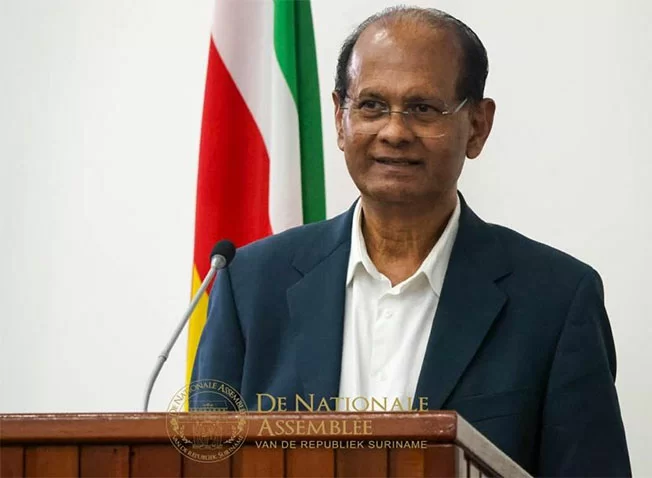
    PARAMARIBO – Bronto Somohardjo, parliamentary leader of the Pertjajah Luhur (PL) party and former minister, has publicly declared his full cooperation with the Public Prosecutor’s Office’s request to bring formal charges against him. In a striking political development, Somohardjo insists the National Assembly should process the prosecution request without hesitation or procedural delays.

    “I welcome being formally charged. I have nothing to conceal and fear no outcome. If the Public Prosecutor’s Office believes they have a case, let it be thoroughly investigated,” stated Somohardjo, demonstrating unprecedented openness toward judicial proceedings.

    The veteran politician emphatically rejected any intention to seek protection under political immunity or procedural technicalities. “I will not hide behind immunity or political safeguards. Let the complete truth emerge through proper legal channels,” he asserted during his press address.

    However, Somohardjo issued a significant caveat regarding the proper use of judicial authority: “What I will not accept is the weaponization of the Public Prosecutor’s Office to inflict political damage upon the coalition government. The justice system exists to administer fairness, not to wage political warfare.”

    The former minister concluded with a confident challenge to the judiciary: “Let the investigation proceed unimpeded. I remain unafraid of the truth, and ultimately it will demonstrate I have nothing to hide.”

  • Groente-export zakt van 65 naar 15 ton per maand: sector vraagt actie

    Groente-export zakt van 65 naar 15 ton per maand: sector vraagt actie

    Suriname’s agricultural industry is confronting a severe crisis, with representatives from the Federation of Surinamese Agrarians (FSA) raising urgent alarms during a meeting with Parliamentary Chairman Ashwin Adhin. The sector, comprising various subsectors including vegetable exports, poultry, fisheries, and agricultural women’s and youth organizations, reported dramatic declines in production and export capabilities that threaten the nation’s food security and economic stability.

    Statistical evidence presented during Monday’s meeting reveals a disturbing trend: vegetable exports have experienced a catastrophic decline from previous monthly averages of 65 tons to approximately 15 tons currently. The number of active exporters has similarly dwindled from 13 to just 7, indicating a sector in rapid decline. This alarming contraction demonstrates the vulnerability of Suriname’s agricultural infrastructure and the pressing need for policy intervention.

    A central concern highlighted by sector representatives involves the dysfunctional state of agricultural institutions and the inadequate implementation of existing legislation. Particularly troubling is the complete operational halt at the National Food Safety Institute Suriname, which was unanimously established by the National Assembly in 2021 to provide essential food safety standards and controls. This institution’s inactivity represents a significant setback for quality assurance and international market access.

    The poultry sector similarly emphasized the critical need to formalize developed standards into binding legislation to ensure professionalization and competitive capability. Meanwhile, the fisheries sector expressed concerns about developments at the Fish Inspection Institute, which despite maintaining a strong international reputation, faces internal challenges that threaten its effectiveness.

    Governance structures within agricultural institutions emerged as another critical issue, with sector representatives noting that excessive government dominance often disrupts the intended strengthening function of these organizations. The FSA advocated for expert, professional, and neutral government representation within such institutions, with principles clearly embedded in legislation to ensure stability beyond political cycles.

    Parliamentary Chairman Adhin acknowledged the sector’s concerns and emphasized the importance of robust, autonomously functioning institutions with government playing a facilitative and supervisory role. The FSA described the dialogue as constructive and open, expressing hope that the discussed challenges would lead to concrete measures to revitalize Suriname’s agricultural sector.

  • SRD 117 miljoen overgemaakt voor toelagen ziekenhuispersoneel

    SRD 117 miljoen overgemaakt voor toelagen ziekenhuispersoneel

    The Surinamese Ministry of Finance and Planning has confirmed the transfer of SRD 117.6 million (approximately $117 million) in outstanding allowances for hospital personnel, addressing growing tensions with healthcare unions. The funds cover multiple critical allowances for the first quarter of 2026, including bridging, recruitment, and retention payments, alongside clothing allowances and government contributions to regional medical facilities.

    This financial injection comes in response to recent ultimatums from health sector trade unions demanding timely payment of these essential benefits. The ministry emphasized that despite the disbursement already occurring through proper channels, various practical factors can occasionally cause processing delays within the payment system.

    The bridging allowance, a temporary support measure, was established to assist healthcare workers during the transitional period toward implementing a new wage structure for the sector. This interim solution aims to provide financial stability for medical professionals while authorities finalize the comprehensive compensation reform.

    Minister Adelien Wijnerman and Director Vincent Fernandes verified that the Central Bank of Suriname has transferred the full amount of SRD 117,657,390 to Finabank accounts designated for hospital disbursement. From this central repository, funds will be distributed to individual healthcare institutions’ accounts for subsequent allocation to medical staff.

    The ministry has issued an urgent appeal to healthcare workers to maintain service continuity, assuring them that the financial resources have now been released through established procedural channels.

  • Iran zet in op uithoudingsvermogen en energieverstoring in strijd tegen VS en Israël

    Iran zet in op uithoudingsvermogen en energieverstoring in strijd tegen VS en Israël

    Iran is executing a calculated strategy of attrition against the United States and Israel, emphasizing economic disruption and psychological pressure over conventional military superiority, according to regional security analysts. The Islamic Revolutionary Guard Corps (IRGC) maintains firm control over battlefield operations despite the loss of Supreme Leader Ayatollah Ali Khamenei in initial attacks, with experts noting the organization’s consolidation of power through the appointment of Mojtaba Khamenei as new Supreme Leader.

    The conflict has evolved into an existential struggle for Tehran, which analysts Fawaz Gerges of London School of Economics and Alex Vatanka of Middle East Institute describe as resembling a ‘wounded but increasingly dangerous animal.’ Iran’s military approach focuses on maximizing economic damage throughout the Gulf region, targeting energy infrastructure from Qatar to Saudi Arabia to increase costs for neighboring countries, European partners, and the United States while testing Washington’s political resolve.

    Despite President Donald Trump’s commitment to continue hostilities until Iran’s complete defeat, the confrontation appears to be transforming into a prolonged war of endurance. U.S. intelligence sources indicate significant depletion of Iran’s missile arsenal, though regional assessments suggest Tehran retains more than half of its pre-war stockpile, sufficient to sustain attacks for several weeks.

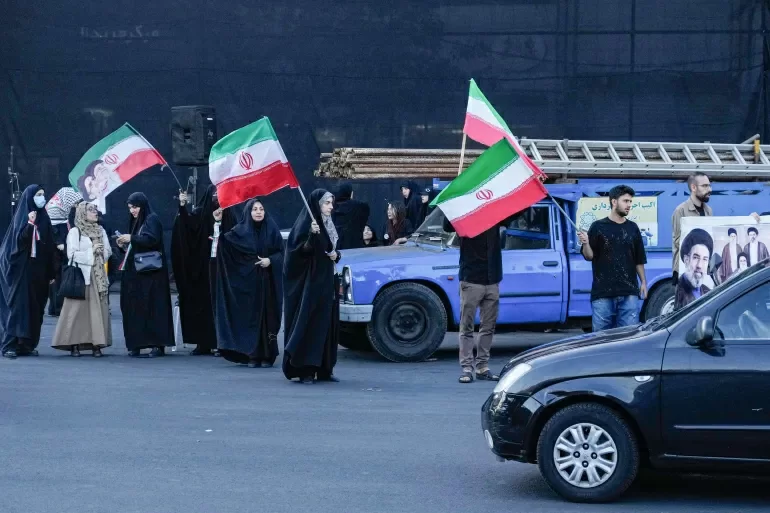
    Within Iran, daily life demonstrates remarkable resilience with shops and banks remaining operational during bombardements. The population shows no signs of mass protests or elite fragmentation, instead displaying strengthened national solidarity that potentially allows the regime to adapt to a war economy and consolidate control.

    Global markets are already feeling the conflict’s impact, with oil prices reaching record highs not seen since 2022. Brent crude surged due to disruptions in the Strait of Hormuz, a critical chokepoint for global oil exports, while aluminum prices also rose significantly indicating broader commodity market instability.

    Rising energy costs have triggered rationing measures and distribution restrictions worldwide, with multiple countries implementing temporary fuel sales regulations to prevent shortages. This creates increasing pressure on households and industries while heightening political tensions across multiple regions.

    Chinese Foreign Minister Wang Yi recently emphasized the global necessity for peace, stability, and dialogue, describing the Middle East situation as entering a delicate and dangerous phase where military escalation offers no solution. China advocates for immediate ceasefire and political dialogue with respect for national sovereignty and non-interference principles.

    The coming weeks will prove crucial as Iran bets on political exhaustion of its adversaries while the U.S. and Israel prepare to maintain military pressure. Regardless of outcome, the conflict has created an injured and unpredictable actor capable of further disrupting regional and global balance.

  • Column: President Jennifer Simons wordt flink beproefd

    Column: President Jennifer Simons wordt flink beproefd

    Suriname’s President Jennifer Simons faces a critical governance challenge as her administration’s promised anti-corruption campaign confronts mounting transparency issues across multiple state-owned enterprises. The President, who had emphatically pledged during her electoral campaign to combat corruption “without pardon” regardless of position or political affiliation, now oversees a series of escalating scandals that threaten to undermine public trust.

    The unfolding investigations reveal a pattern of irregularities throughout Suriname’s state apparatus. At LVV, multiple malversation probes remain ongoing, including an unfinished investigation into the previous management of the Milk Center. The situation worsened when the new director and deputy director of the Milk Center were compelled to resign after signing contracts with the State Health Fund for services at exorbitant rates, though their official termination status remains unclear.

    January witnessed the suspension of Grassalco CEO Wesley Rozenhout from the mining sector enterprise, which manages substantial interests including operations in Guyana. Concurrently, Guysure faces persistent questions regarding its share structure involving five individuals, creating tensions without satisfactory explanations.

    The State Health Fund itself saw its director dismissed, yet a comprehensive and transparent account of the facts and subsequent resolution remains elusive. Similarly, the Foundation for Forest Management and Supervision suspended Director General Ruben Ravenberg and terminated his contract after discovering his appointment violated established procedures through two separate contracts—one unknown to the board and involving only the minister and director. Ravenberg has engaged legal counsel and announced intentions to return to work, setting the stage for confrontation.

    At energy company EBS, tensions between CEO Leo Brunswijk, the executive board, and supervisory directors have escalated to the point where board members refused to meet under Leo’s leadership. Although President Simons discussed the matter on Monday, no official statement has emerged regarding the outcome.

    The central issue emerging across these cases is the administration’s failure to provide adequate transparency—a particularly sensitive matter given President Simons’ campaign promises of open governance. When officials face suspension, dismissal, or pressure without clear explanation, public distrust inevitably grows, undermining the fundamental confidence necessary for state enterprises to function effectively.

    President Simons now confronts a significant test of leadership—not because she bears personal responsibility for every institutional failure, but because her administration’s handling of these cases will determine whether Suriname truly transitions from the era of selective justice and cronyism that voters rejected.

  • Schorsing SBB-directeur leidt tot juridische strijd; Ravenberg gaat dinsdag toch aan het werk

    Schorsing SBB-directeur leidt tot juridische strijd; Ravenberg gaat dinsdag toch aan het werk

    A significant institutional conflict has emerged between Suriname’s Foundation for Forest Management and Supervision (SBB) and the Ministry of Land Policy and Forest Management (GBB) following the suspension of Director General Ruben Ravenberg. Official documents confirm the suspension takes effect Tuesday, March 10th, prompting Ravenberg to announce both his legal challenge and intention to report to work regardless.

    The ministry, through correspondence to attorney Murwin Dubois, maintains Minister Stanley Soeropawiro’s decision stands firm. Officials assert the suspension was implemented in full compliance with SBB’s statutory provisions and existing legal regulations. The ministry further stated that arguments presented by Ravenberg’s legal counsel provided insufficient grounds for reconsideration, leaving the suspension unequivocally in force.

    Legal representatives for Ravenberg have formally contested the suspension’s validity. Dubois & Partners argue the action fails to meet legal requirements under civil service legislation. According to their legal analysis, suspension of a government official only becomes permissible during criminal investigations or when dismissal for dereliction of duty or unreliability is under consideration. The firm emphasizes that the ministry’s own communication explicitly states no substantive judgment was made regarding Ravenberg’s performance, thereby eliminating legal justification for suspension.

    The SBB Staff Union has intervened to call for calm among personnel. In internal communications, the union clarified it had no official knowledge of circulating letters from the timber sector expressing concerns about the director’s position. The organization reported observing no exceptional unrest or consternation among staff despite external suggestions otherwise. Union leadership urged members to maintain composure and refrain from premature conclusions while monitoring developments closely.

    With the suspension deadline approaching, tensions threaten to escalate into physical confrontation at forestry institution facilities. Ravenberg’s declared intention to physically resist the suspension while the ministry maintains its legal validity sets the stage for potential institutional disruption. This developing situation now appears destined for judicial resolution, with potential implications for internal organizational dynamics and Suriname’s forest management governance.

  • Nieuwe directeur MI-GLIS, Belfor-Amoida legt nadruk op betrouwbare grondinformatie

    Nieuwe directeur MI-GLIS, Belfor-Amoida legt nadruk op betrouwbare grondinformatie

    In a formal ceremony at the Presidential Palace on Monday, Nita Belfor-Amoida was sworn in as the new Director of Suriname’s Management Institute for Land Registration and Land Information System (MI-GLIS). The inauguration was conducted by President Jennifer Simons and witnessed by Vice President Gregory Rusland, signaling the government’s heightened attention to land management reforms.

    President Simons emphasized the institution’s critical role in Suriname’s development framework, stating that MI-GLIS serves as the foundational pillar for recording and administering all real estate data nationwide. The institute bears legal responsibility for documenting and verifying information concerning the legal status of land and properties throughout the country.

    The head of state articulated that transparent and reliable land information constitutes an essential requirement for both government operations and citizen rights. ‘Clarity regarding property ownership between citizens and the state forms an indispensable component of national development,’ Simons asserted. She noted that authenticated land data proves vital for housing initiatives, agricultural programs, and resolving complex inheritance and property rights disputes.

    Simons further highlighted that land ownership conflicts have historically generated significant consequences for Surinamese families, making MI-GLIS’s accurate, efficient, and integrity-driven performance a governmental priority. She characterized land as both a fundamental factor of production and a prerequisite for national stability and development.

    The newly appointed director acknowledged her appointment represents a career milestone accompanied by substantial challenges. Belfor-Amoida expressed confidence that existing institutional obstacles could be systematically addressed through collaborative effort. ‘We must function as a unified team regardless of position—together we are strong,’ she declared in her inaugural address.

    Belfor-Amoida referenced her prior experience as a parliamentary faction expert, which she stated provided extensive training in legislative analysis. She committed to upholding legal compliance and regulatory adherence as guiding principles throughout her leadership tenure.

  • China: Diplomatieke samenwerking en vrede als antwoord op wereldwijde uitdagingen

    China: Diplomatieke samenwerking en vrede als antwoord op wereldwijde uitdagingen

    Chinese Foreign Minister Wang Yi articulated China’s foreign policy vision during a press conference on March 8, 2026, emphasizing the strengthening strategic partnership with Russia as a stabilizing force in global affairs. Speaking on the sidelines of the Fourth Session of the 14th National People’s Congress, Wang Yi, who also serves as a member of the Political Bureau of the CPC Central Committee, provided comprehensive insights into China’s diplomatic achievements and future directions.

    Against the backdrop of a rapidly evolving international landscape, Wang Yi highlighted the fundamental principles guiding China-Russia relations: mutual respect, equality, and multilateral cooperation. He characterized the bilateral relationship as a model for a new type of international relations, founded on non-confrontation and shared commitment to upholding international law and order.

    The Foreign Minister addressed multiple global hotspots, particularly calling for immediate ceasefire and political dialogue in the Middle East. He reiterated China’s stance on respecting national sovereignty and preventing further escalation of conflicts, while advocating for multilateral approaches to foster sustainable peace and stability in the region.

    Looking ahead to 2026, Wang Yi identified the upcoming APEC summit in Shenzhen as a priority platform for advancing China’s vision of an integrated Asia-Pacific community. The summit aims to develop concrete action plans emphasizing openness, innovation, and sustainable development.

    Regarding China-U.S. relations, Wang Yi emphasized the necessity of mutual respect and cooperation to reduce tensions and achieve sustainable progress. He also discussed China’s commitment to maintaining positive relations with neighboring countries, protecting Chinese citizens and businesses abroad, and supporting the Global South’s growing role in reshaping global governance.

    The Foreign Minister addressed relations with Europe, Japan, ASEAN nations, and India, while reaffirming China’s unwavering position on Taiwan. Wang Yi concluded by emphasizing China’s vision of building a community with a shared future for humanity, focused on peace, justice, and cooperation—a concept he noted is gaining increasing global recognition and will guide China’s diplomatic efforts throughout 2026 and beyond.

  • AZP viert 60 jaar zorg: regering investeert SRD 60 miljoen in modernisering

    AZP viert 60 jaar zorg: regering investeert SRD 60 miljoen in modernisering

    PARAMARIBO – Suriname’s Academic Hospital Paramaribo (AZP) celebrated its 60th anniversary with a major government commitment to healthcare modernization. Health Minister André Misiekaba announced a minimum investment of SRD 60 million to upgrade critical departments at the nation’s premier medical institution, founded on March 9, 1966.

    The anniversary celebrations featured an interfaith prayer gathering under the theme ‘Strong Together, Forward Together,’ reflecting on six decades of service to the Surinamese community. Hospital Director Claudia Redan emphasized that the institution’s legacy rests on its dedicated staff rather than physical infrastructure, describing healthcare work as a calling rather than mere employment.

    ‘Do good and don’t look back,’ Redan stated, addressing her team. ‘Working in healthcare isn’t just a job – it’s a vocation. Hundreds of patients depend on us daily, beyond what social media captures: 560 inpatients, over 100 emergency cases, and more than 2,000 outpatient visits.’

    Lloyd Pool, Chairman of the General Staff Union, acknowledged the persistent challenges faced by healthcare workers, noting that while thousands of employees have retired over six decades, ‘the hospital itself cannot retire – we continue for the community.’

    The substantial investment will fund several critical upgrades:
    • Doubling operational operating theater capacity
    • Expanding Intensive Care Unit (ICU) from current levels to 16 beds initially, then to 21 beds
    • Modernizing neonatal intensive care facilities
    • Accelerated renovation of Emergency Department services

    Additional initiatives will focus on recruiting specialized nurses and implementing measures to counter brain drain in the healthcare sector. Minister Misiekaba acknowledged existing challenges regarding salaries and allowances but reaffirmed the government’s commitment to supporting the sector.

    Describing AZP as an indispensable symbol of quality care in Suriname, the minister concluded: ‘This hospital cannot and must not fail. Congratulations on 60 years of dedication, and onward to the next 60 years.’