标签: Saint Vincent and the Grenadines

圣文森特和格林纳丁斯

  • ‘We have staked our mission as a gov’t’ on reviving SVG agriculture

    ‘We have staked our mission as a gov’t’ on reviving SVG agriculture

    Against a backdrop of cascading challenges ranging from climate-driven natural disasters to global economic volatility, Prime Minister Godwin Friday has made reviving St. Vincent and the Grenadines (SVG)’s agricultural sector a core priority of his administration, launching a transformative three-year initiative to train the next generation of young farmers.

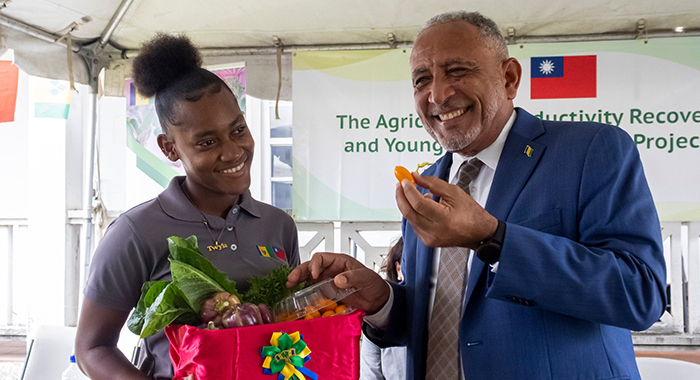
    Speaking at the official launch of the Agricultural Productivity Recovery and Young Farmers Training Project hosted at the Orange Hill Agricultural Biotechnology Centre, Friday emphasized that agriculture remains the foundational backbone of SVG’s national identity and long-term economic stability. “Anybody who thinks of St. Vincent and the Grenadines without agriculture, without a thriving agricultural backbone, doesn’t quite understand who we are as a people,” he told the assembled audience of trainee participants, established farmers, government officials and local hospitality industry representatives.

    Jointly implemented by SVG’s Ministry of Agriculture and the Taiwan Technical Mission, the program targets multiple pressing crises facing the island nation’s farming sector. After widespread devastation from Hurricane Beryl and a string of other climate shocks, the initiative aims to boost overall agricultural output by 10% through modernized production techniques and intensive skills training for 75 young new farmers.

    Friday framed the launch as a turning point after a prolonged period of struggle for SVG’s agricultural communities. “We continue to recover from the effects of repeated natural disasters, most recently Hurricane Beryl… The farmers of this country have been through hell, and they are still struggling to survive.” Beyond domestic climate impacts, the island nation also grapples with cascading external pressures stemming from geopolitical conflicts in the Gulf region and Ukraine, which have sent global prices for food, fuel and fertilizer soaring, disrupted critical supply chains, and amplified uncertainty across the global economy. “As a small island developing state, we are particularly vulnerable to these shocks,” Friday noted, adding that “boosting our agricultural sector, diversifying our agricultural production are so important for us at this time.”

    One of the most urgent challenges the initiative aims to address is the rapidly ageing farming workforce, a trend that threatens the long-term viability of SVG’s agriculture. “Those who currently work in this sector are getting older, and no matter how passionate they are about it, we know that we cannot sustain a vibrant agricultural sector if we have an ageing farming population,” the prime minister explained.

    By centering the program on youth engagement, digital and biotechnological innovation, and modern business skills, the project directly solves two key problems at once: it addresses the systemic gaps threatening the sector while creating new economic opportunities for young people. Friday added that the initiative reverses decades of job loss in agriculture, noting that a growing number of veteran farmers have abandoned their lands to take low-wage security positions in Kingstown, even when they would prefer to continue farming.

    “This initiative encourages our people to return to the land by offering a positive outlook for farmers, and especially because it creates meaningful opportunities for you, young people,” he said. Friday pointed out that young people make rational choices about their careers, and will choose to stay in agriculture if the sector offers them sustainable, competitive incomes: “That is reasonable. That is rational. It is for us to help them to realise that objective.”

    The prime minister stressed that the modern agriculture his administration is promoting is not a return to outdated, traditional farming practices. “This is not our father’s farming. This is not our grandparents’ farming. This is a new way of doing it to make it more productive,” he said. Investments in skills training, smart agricultural technologies, and new demonstration hubs in Orange Hill and Dumbarton are designed to drive this industry-wide shift.

    “We must combine farming with new technology and modern business practices. This will ensure that our agriculture remains sustainable, that our farmers become highly productive, and that farming will be attractive to young people, thereby creating the next generation of farmers,” Friday explained. He also drew a key distinction between expanding total production volume and improving productivity, arguing that efficiency is the key to competing with imported agricultural goods. “We talk about increasing production — that means you increase the quantum, the amount of stuff that we do — but the critical thing is improving productivity, that is to say, how efficiently we produce what we produce,” he said. For example, improving the quality and efficiency of local tomato production can convince local hotels to source locally instead of purchasing cheaper, lower-quality imported produce.

    Friday concluded by emphasizing that modern farmers must adopt an entrepreneurial mindset, just like any other business leader. “It comes from an approach by the farmer, in the same way that a business person will do… always looking for the next best thing to be able to increase the efficiency at what you do, and your competitiveness against other producers, whether they be from here or abroad.”


  • Police caught on video beating handcuffed man in Kingstown

    Police caught on video beating handcuffed man in Kingstown

    A viral social media video depicting multiple plainclothes police officers repeatedly assaulting a handcuffed man has triggered an official internal investigation by the Royal Saint Vincent and the Grenadines Police Force (RSVGPF), with top department leaders issuing a strong condemnation of excessive use of force.

    The silent footage, which circulated online after 10 a.m. local time on Thursday, was filmed on Hillsboro Street, located close to Coreas City Store and the area’s Central Market. In the video, the restrained man is thrown to the ground and struck multiple times by officers using both their fists and wooden truncheons. At one point, one officer is seen drawing his service weapon, even as the man remains in handcuffs for the entire duration of the incident.

    At least six other people appear alongside the victim in the clip, all believed to be plainclothes members of the RSVGPF. The group is gathered near a pickup truck, and one officer is identifiable by a t-shirt emblazoned with “SVG Police” on the back. As of the police force’s public statement, the exact date the footage was recorded has not been confirmed.

    Within hours of the video spreading across social platforms, the RSVGPF released an official public comment acknowledging the circulating content. “Their contents require no description from this office. The public has seen enough to expect a clear response,” the statement read. The department made clear that any form of police misconduct—including brutality, unlawful violence, intimidation, humiliation, and abuse of authority—has no place within its ranks.

    The police commissioner explicitly condemned any behavior by officers that fails to meet the force’s legal and professional standards. The statement emphasized that police authority is granted solely to protect communities, preserve public order, and enforce the law fairly. “It must never be used to punish, degrade, or overpower persons beyond what the law permits,” the statement added, noting that when officers cross this ethical and legal line, the damage extends far beyond the victim. Misconduct harms the individual targeted, erodes public trust in law enforcement, and undermines the work of the vast majority of officers who serve with discipline and restraint.

    Per the commissioner’s order, the RSVGPF has launched an immediate, full investigation into the incident captured in the video. Department leaders pledged the probe will be thorough, impartial, and rooted entirely in evidence, with investigators reviewing the footage itself, interviewing all relevant witnesses, examining surrounding context, and assessing the actions of every officer involved.

    The force has asked the public to allow the investigative process to proceed unimpeded to uncover the full truth. While the video raises urgent and serious questions, officials noted that a complete factual record must be established before any final actions are taken. The statement also guaranteed that there would be no special treatment for offending officers: if criminal conduct is confirmed, the full weight of the law will be applied, and if disciplinary violations are proven, internal action will be pursued aggressively, regardless of an officer’s rank, tenure, connections, or position.

    Beyond investigating the individual incident, the RSVGPF High Command will also conduct a broader review to identify any systemic gaps related to supervision, officer training, command oversight, or operational decision-making that may have contributed to the event. Corrective systemic changes will be implemented wherever evidence shows they are needed.

    The department acknowledged that the incident has already damaged public confidence in local law enforcement, and that verbal commitments alone cannot undo that harm. “That harm cannot be reversed by words. It must be answered by truth, accountability, and visible action,” the statement said. “The people of Saint Vincent and the Grenadines are entitled to firm policing. They are also entitled to lawful policing. The Royal Saint Vincent and the Grenadines Police Force will enforce both standards.”

  • A student’s plea — not to be ignored

    A student’s plea — not to be ignored

    This commentary is not a debate over the presence or absence of school police officers. Instead, it is an urgent appeal to policymakers, educators, and community leaders to center student voices when addressing the growing crisis of school violence. After all, it is students who live with this threat every single day — they understand its costs better than any outside expert. Just a few days ago, I had the privilege of sitting on the judging panel for a public speaking competition hosted by the dedicated English department at St. Vincent Grammar School. Six ambitious young finalists competed in front of their classmates and teachers, all vying for the chance to represent their campus at the national competition scheduled for the next academic year. What struck me most was the depth of their preparation and the raw passion they brought to the core topic of school violence. Every competitor delivered thoughtful, well-researched arguments that held the entire audience’s attention. Collectively, they made one critical point clear: school violence is no longer a rare, distant danger that only affects other communities. It is a frightening daily reality here, one that reveals deep, long-standing erosion in our society’s social, family, and educational structures — and it demands immediate, decisive intervention. The students outlined the many shapes school violence takes, from in-person bullying and physical assaults to verbal intimidation and the growing harm of cyberbullying. Rejecting surface-level solutions that only treat symptoms, they pushed for a root-cause approach, calling on stakeholders to examine the shared responsibility of key institutions: the family unit, schools, faith organizations like the church, and the broader community. It was 18-year-old student Mowani Latham’s address that moved the entire room to tears, striking a chord that no politician, psychologist, or veteran social commentator could match. When a student who lives with this reality speaks, the message hits differently than any expert analysis ever could. Latham walked listeners through the underlying causes of youth violence in schools, starting with the foundational role of family life. “To understand why violence happens, we have to go back to where children learn their first lessons,” Latham said. “How can we ignore the impact of family environment? The home is a child’s first classroom, and psychologists have long reminded us that children absorb what they live every day. If a child grows up in a home where anger is the only common language, where neglect is the standard, and where conflict never ends, they will grow up believing violence is an acceptable way to communicate. When they walk through the school gates, they don’t just bring their backpacks — they bring intergenerational trauma and harmful behavioral patterns they learned at home.” Latham also detailed how mainstream society and social media platforms glorify violent behavior, gradually desensitizing young minds to its harm. Turning to the responsibility of schools and faith communities, he pushed back against the narrative that all blame falls solely on families and street culture. “We can’t pin all the fault on the home and the streets,” he argued. “We have to look critically at our own educational institutions. Why are so many students disconnected from school life? We have to address the gap between what many of our current curricula teach and the actual needs of young people today. When a student leaves class every day convinced that what they’re learning has nothing to do with their survival or their future career, frustration builds. Boredom and a lack of sense of purpose become the perfect breeding ground for destructive mischief and violence.” The passionate speaker closed with a series of clear, pragmatic solutions, starting with a call to dramatically increase the number of trained, empathetic mental health counselors in every school. “Right now, we are starved for counselors who actually care about our well-being,” Latham said. “We have dozens of teachers who can walk us through solving for x in an algebra equation, but far too few professionals trained to help us understand our own self-worth. A student who is hurting internally doesn’t need a detention slip — they need someone willing to sit and listen.” He also called on local churches to step into a greater role, providing consistent moral guidance and positive adult role models, while partnering with schools to launch mentorship programs and create safe, supportive spaces where young people can learn core values like humility, forgiveness, and patience. Latham did not shy away from holding his own peers accountable, urging them to reject the dangerous myth that violence equals power and strength. “Let me speak directly to my fellow students,” he said. “We have to change the mindset that violence means you’re powerful. Violence isn’t strength. Noise isn’t power. Making people fear you isn’t respect. Real strength is having the courage to walk away from a conflict. Real power is being able to control your own emotions. As Nelson Mandela once said, ‘Education is the most powerful weapon which you can use to change the world.’ But if our schools remain battlegrounds, that weapon becomes dull and useless. Let us turn our schools back into what they were meant to be: places of growth and opportunity. We aren’t here to fight each other — we are here to fight for our futures. Every single student deserves to walk into school every morning feeling safe, not scared.” The question now is whether education stakeholders across the country will choose to listen to Latham’s appeal. He didn’t just speak for himself — he gave voice to the quiet, unheard plea of thousands of young people across St. Vincent who navigate this crisis daily. Unlike many commentators who only point out problems, Latham offered clear, actionable solutions that come from lived experience. It’s time to lend him and his fellow students your ear. This is an opinion piece written by Ann-Marie Ballantyne. The views expressed are the author’s own and do not necessarily reflect the editorial stance of iWitness News.

  • Jackson presents credentials as SVG’s ambassador to Cuba

    Jackson presents credentials as SVG’s ambassador to Cuba

    In a meaningful diplomatic milestone that closes a 20-year personal and professional circle, Angella Jackson has officially presented her credentials as Saint Vincent and the Grenadines’ (SVG) new ambassador to Cuba, marking a fresh chapter in the longstanding bilateral ties between the two Caribbean nations.

    Jackson, a professionally trained accountant who earned her higher education in Cuba, assumed her post as Kingstown’s top diplomatic representative in Havana starting March 1. Her path to the ambassadorial role traces back to 2007, when she graduated from Cuba’s University of Ciego de Avila with a bachelor’s degree in Accounting and Finance. Reflecting on the credential presentation ceremony, Jackson called the formal procedure “a wonderful experience for me”, noting the full-circle nature of her return to the island that shaped her early career.

    “I consider Cuba my second home, as I spent six years of my life here earning my bachelor’s degree in accounts and finance. It was, indeed, a heartwarming experience that 20-plus years later I am now here to serve and represent my country,” Jackson shared in comments after the official event.

    Diplomatic preparations for Jackson’s appointment began in mid-May, when she submitted a copy of her credentials to Cuban Vice Minister of Foreign Affairs Josefina Vidal Ferreiro in Havana on May 12. During that meeting, the two officials held cordial discussions focused on the future of bilateral cooperation. Jackson also recalled that SVG and Cuba first established formal diplomatic relations back in 1992 under SVG’s then New Democratic Party (NDP) administration.

    “And we have come full circle. We are back, with me representing our government and, specifically, our people. So it’s indeed a pleasure and an honour,” she added.

    The formal credential presentation to Cuban President Miguel Díaz-Canel took place on Thursday, May 14, 2026, where Jackson joined other new heads of diplomatic missions from across the globe at the ceremony held in Havana. A photo from the event captures (from left to right) Cuban Acting Minister of Foreign Affairs Gerardo Peñalver Portal, President Miguel Díaz-Canel, Ambassador Angella Jackson, and her two sons Afari Samuel and Jahfari Samuel at the official gathering.

    Jackson highlighted that she was received with full diplomatic honors during her visit, including a formal escort to Havana’s iconic Plaza de La Revolucion ahead of the ceremony. Following the official submission of her credentials to President Díaz-Canel, the two held a short, productive discussion. In the talks, President Díaz-Canel extended congratulations to SVG Prime Minister Godwin Friday on his recent election to office.

    The Cuban president also expressed gratitude for SVG’s consistent backing of Cuba in multilateral global forums, particularly SVG’s ongoing calls to end the decades-long economic blockade imposed on Cuba. For her part, Jackson thanked the Cuban leader for his country’s longstanding support to SVG over the decades. She conveyed warm personal greetings from Prime Minister Friday and SVG Minister of Foreign Affairs, Foreign Trade, Foreign Investment and Diaspora Affairs Dwight Fitzgerald Bramble, and reaffirmed SVG’s commitment to maintaining its solid partnership with Havana.

    Jackson’s appointment to the Havana ambassadorial post was first announced publicly by Bramble during a press statement in Kingstown on January 22, as part of a broader round of new appointments to heads of missions and consular posts around the world.

  • Let Taiwan contribute to the shared responsibility of reshaping global health

    Let Taiwan contribute to the shared responsibility of reshaping global health

    Nestled at the end of the decommissioned E.T. Joshua Airport runway, a transformative healthcare infrastructure project is steadily taking shape in St. Vincent and the Grenadines: the Arnos Vale Acute Care Hospital (AVACH), a landmark initiative born from 45 years of diplomatic partnership between Taiwan and the Caribbean nation, rooted in the shared values of interconnected development and people-centered progress.

    This new acute care facility is far more than a construction project—it is a tangible demonstration of Taiwan’s longstanding commitment to advancing mutual progress alongside St. Vincent and the Grenadines, a partnership that has already delivered critical connectivity infrastructure ranging from Argyle International Airport to the modernization of Kingstown Port. Once fully completed, AVACH will deliver comprehensive acute care and expand access to specialized allied health services, fundamentally reshaping how routine healthcare is delivered across the country.

    For generations of Vincentians, accessing advanced specialized care required costly, burdensome travel to other regional medical hubs. That reality is set to change with the opening of AVACH, which will bring life-saving care within the country’s borders, eliminating the financial and logistical barriers that have long limited access. Beyond expanding service access, the hospital will also strengthen St. Vincent and the Grenadines’ overall public health capacity, boosting the nation’s resilience to respond to domestic health crises and cross-border global health emergencies.

    AVACH is not the only example of the two nations’ deep collaborative work in public health. The Public Health Emergency Response System Enhancement Project, a four-year joint initiative, has delivered tailored training in emergency response and public health safety to more than 200 local police officers, firefighters, and medical professionals. Trained personnel from the program have already provided critical medical support for major international events hosted by St. Vincent and the Grenadines, including the CELAC Summit and the Cricket World Cup, serving both local residents and visiting global leaders while strengthening the country’s capacity to engage with the international community.

    As the 79th World Health Assembly (WHA) gets underway in Geneva, Switzerland from May 18 to 23 under the official theme “Reshaping Global Health — Shared Responsibility,” Taiwan is highlighting its proven track record as a capable, willing partner ready to share its public health expertise and experience with the global community. Leveraging its world-leading information and communications technology sector, Taiwan has built a world-class domestic healthcare system anchored by its comprehensive National Health Insurance program, cloud-based MediCloud infrastructure, widespread adoption of electronic medical records (implemented in 2010), a national telemedicine program launched in 2020, and a fully developed smart healthcare ecosystem that the country is eager to share with partners across the globe.

    The COVID-19 pandemic underscored a universal truth: real-time, cross-border information sharing is irreplaceable in the fight against transboundary emerging infectious diseases that do not recognize national borders. Despite being wrongfully excluded from the World Health Organization (WHO) and the WHA due to political pressure, Taiwan has leveraged its technological strengths to build a comprehensive, responsive infectious disease surveillance system. The country has consistently been among the first to detect and report new emerging cases to the WHO, sharing full viral gene sequences promptly to enable the global public health community to prepare and respond rapidly.

    At this year’s WHA opening, WHO Director-General Dr. Tedros Adhanom Ghebreyesus affirmed that the highest attainable standard of health is “not as a luxury for some, but a right for all.” Yet Taiwan remains locked out of participation in this year’s assembly, a contradiction that undermines the WHO’s stated core values. Taiwan is calling on the WHO to uphold its founding commitments to professional neutrality and allow Taiwan’s meaningful participation in all WHO meetings, activities, and formal mechanisms. Including Taiwan would strengthen the comprehensiveness and effectiveness of the global health architecture, letting this responsible, trusted global contributor fulfill its shared responsibility in reshaping the future of global public health.

    This op-ed is written by Fiona Huei-Chun Fan, Taiwan’s ambassador to St. Vincent and the Grenadines. The views expressed are solely those of the author and do not necessarily represent the official editorial stance of iWitness News.

  • ‘Major announcement’ about ULP’s ‘future trajectory’

    ‘Major announcement’ about ULP’s ‘future trajectory’

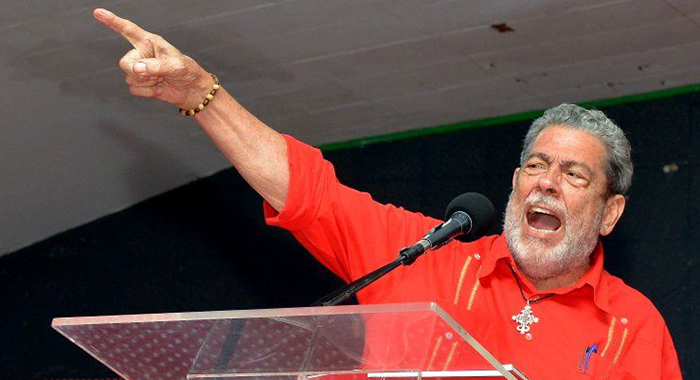
    Five months after suffering a historic defeat in the November 2025 general election that ended its 25-year consecutive run in power, St. Vincent and the Grenadines’ main opposition Unity Labour Party (ULP) has gathered its national leadership and grassroots supporters for its first post-election national council meeting in the capital city of Kingstown. The high-stakes gathering, which marked the party’s first major assembly of loyal members since the election, brought 617 delegates from every national constituency into the meeting hall, with an additional 150 passionate supporters gathering outside to demonstrate the party’s enduring grassroots strength, the ULP confirmed in an official press release.

    During the meeting, several party figures who lost their parliamentary seats in the 2025 poll delivered keynote remarks to attendees. These included former North Leeward Member of Parliament Carlos James, who lost his re-election bid after just one term in office — a first for the constituency in decades, as well as Orando Brewster, who became the first ULP candidate to lose the Central Leeward seat in 30 years after falling just 49 votes short of victory in 2025, following a 503-vote win for him there in 2020. Former Senator Ashelle Morgan also delivered widely noted remarks to the assembled delegates.

    The keynote address was delivered by Ralph Gonsalves, who serves as both Opposition Leader and ULP political leader, and was the only ULP candidate to win a parliamentary seat in the 2025 general election. Gonsalves delivered a rousing message of resilience and national reconciliation to the party’s rank-and-file members, urging attendees to reframe their election setback as a catalyst for future progress. He called for party members to prioritize grace and inclusivity, encouraging them to welcome voters who supported the winning New Democratic Party (NDP) in the election but have since grown dissatisfied with the new administration’s policies. Gonsalves emphasized that uniting with these disaffected voters would allow the ULP to work toward the betterment of all St. Vincent and the Grenadines, while also addressing and correcting the strategic mistakes the party made during last year’s election campaign.

    The 2025 election delivered a landslide victory to the NDP, which secured 14 of the 15 available parliamentary seats and won over 10,000 more popular votes than the incumbent ULP. This result marked the most lopsided election win for any party in the country since 1989, when the NDP won a clean sweep of all 15 parliamentary seats.

    During his address, Gonsalves also highlighted the work of the ULP’s newly activated People’s Defence Committee (PDC), a body established to process and advocate for citizen complaints against the new NDP administration. Gonsalves noted that the PDC is already providing critical support to two vulnerable groups: residents struggling to keep up with payments for land sold by the current government, and public sector workers who have been unfairly terminated from their roles after years of service, many targeted for their past association with the ULP. Official complaint forms are now available at ULP headquarters, and the party has assembled a cross-disciplinary team of legal experts and trade union representatives to assist complainants, Gonsalves confirmed.

    The PDC’s activation comes amid a ongoing controversy over last-minute land distribution carried out by the ULP cabinet in the days immediately before the 2025 election. On the same day as the ULP national council meeting, NDP Minister of Land Management Andrew John announced that the administration is nearly finished with a review of the distribution of more than 150 land parcels carried out by the outgoing ULP. John noted that while thousands of residents had applied for land through official channels, not all recipients of the pre-election land allocations were formal applicants, and urged the public to remain patient as the review concludes.

    At the close of the national council meeting, the ULP announced that it would convene a special meeting in June to set a firm date for a national party convention planned for later this year. The party also confirmed that the meeting had concluded with a major announcement outlining the ULP’s future trajectory, though it offered no additional details on the content of the announcement. In a closing statement, the ULP noted that the high turnout and clear strategic direction emerging from the Kingstown meeting signal that the party has re-energized following its election defeat, and remains deeply committed to advocating for the people of St. Vincent and the Grenadines as it rebuilds ahead of future electoral cycles.

  • Land Minister urges patience, says lawsuit could ‘open can of worms’

    Land Minister urges patience, says lawsuit could ‘open can of worms’

    A political standoff over controversial pre-election land allocations in St. Vincent and the Grenadines has escalated, with 215 land recipients threatening legal action against the newly installed New Democratic Party (NDP) government, while the nation’s housing and land chief is urging patience as a review of the deals nears completion.

    Housing and Land Management Minister Andrew John, speaking publicly during an interview with NBC Radio this Tuesday, addressed the growing tensions surrounding land parcels distributed by the previous Unity Labour Party (ULP) administration ahead of the last general election. The minister clarified that the current government has not moved to overturn all of the previous government’s land distribution decisions, but a full review of the process is required to ensure transparency and fairness.

    The threatened lawsuit comes after the NDP government halted further payments from the 215 recipients toward their land purchases. Representing the affected claimants, lawyer Adrian Odle confirmed that his legal team has interviewed all 215 Vincentians, who have alleged discriminatory treatment and breach of contract by the current government. Odle also noted that recipients across the country holding formal land contracts have been informed that no additional down payments or installments will be accepted by the state.

    John pushed back on the claims, questioning the circumstances of the last-minute land distribution that raised immediate red flags for his administration. He called the impending lawsuit “amusing”, arguing that the sheer volume of parcels allocated right before the election cycle, concentrated heavily in a single constituency, makes the original distribution politically questionable at face value. As a responsible governing body, the NDP has a binding obligation to audit the entire allocation process, the minister emphasized.

    Data shared by John shows that out of all the pre-election land distributions, more than 150 parcels were allocated in North Windward constituency alone: 67 in Tourama and 91 in Langley Park. The minister noted that not all recipients are residents of North Windward, a fact that deepens concerns about the original distribution’s motives. He openly questioned whether the previous ULP administration deliberately pushed through the last-minute allocations to sway the election outcome in key competitive districts.

    John pointed to a broader national context of land scarcity in St. Vincent and the Grenadines, with only North Windward and North Leeward holding surplus available land for distribution – parcels many citizens have historically avoided due to their proximity to the active La Soufrière volcano. Even so, all citizens deserve equal access to the limited available land, the minister said, which is why a full review is necessary.

    Since taking office and assuming his full portfolio, which also covers urban development and informal settlement upgrading, John revealed that his department inherited no centralized list of people who had formally applied for land allocations. Thousands of Vincentians have been waiting years for land allocation responses, he said, yet many of the pre-election parcels went to applicants who had never gone through the standard formal application process.

    John framed the threatened legal action as a move that will “open a can of worms” for recipients. Under the original land contract terms, purchasers have a 12-month window to complete required payments, a rule that has been widely ignored over the past 20 years, with thousands of people building homes on allocated land without fulfilling their payment obligations. If the lawsuit proceeds, the government will be forced to retroactively review all past breaches of contract, which could ultimately result in land being reclaimed from recipients who failed to meet their obligations – a route the current government has no desire to take, John said.

    The minister stressed that the NDP administration has not notified any recipient that they will lose their land, even though the original allocations were approved via Cabinet memo, a document that can be reversed by a new Cabinet. He rejected claims that the government is targeting or victimizing land recipients, noting that the review is rooted in a commitment to equitable distribution for all Vincentians, including the many long-time applicants who have yet to receive any response from the government despite years of waiting.

    “All we are asking is for some time to review, and the process is almost finished,” John reiterated, calling on affected recipients to wait for the outcome of the audit before moving forward with legal action.

  • Fisherman sentenced for rum bottle killing

    Fisherman sentenced for rum bottle killing

    A fatal confrontation that turned a casual gathering of friends into a devastating tragedy has concluded with a 10-year prison sentence for a 56-year-old fisherman from Calliaqua, Joel Ashton, widely known by the nickname Boat. The High Court in Kingstown handed down the penalty on Monday, with Justice Rickie Burnett presiding over the sentencing hearing for the unlawful killing of 42-year-old security guard Cameron Alexandar, who died from a blunt-force head injury in August 2023.

    The chain of events that led to Alexandar’s death began on August 26, 2023, when Ashton, Alexandar, and a group of mutual friends were socializing along the coast of Lowmans Bay. Alexandar and another attendee of the gathering pooled their funds to purchase a pint of high-strength rum, priced at just 8 Eastern Caribbean dollars. As the afternoon wore on, tension flared between the two men after Alexandar reportedly took a small bottle of rum from Ashton’s jacket pocket without permission.

    In the heat of the spontaneous conflict, Ashton struck Alexandar hard on the left side of the head with a full glass rum bottle, shattering the container on impact. Eyewitness accounts presented during the trial confirm that Alexandar did not retaliate for the blow, only asking in shock, “Just so?” Witnesses quickly noticed blood streaming from his ear, and after dipping his injury in the nearby sea, Alexandar returned to the area’s local shop before heading home for the night. That evening, his older son Jiovanni Stapleton checked on his father and found him asleep, choosing not to wake him.

    Alexandar reported to his security guard job the next day, with no obvious immediate issues, though his younger son told investigators he noticed unusual behavior: his father stared blankly into the distance and talked to himself. By August 28, just two days after the altercation, Alexandar’s condition declined sharply. His younger son found him unresponsive, foaming at the mouth and bleeding, and alerted Stapleton, who rushed the injured man to Milton Cato Memorial Hospital. Alexandar was admitted to the Intensive Care Unit, where he died from his injuries on August 30, 2023.

    A post-mortem examination conducted the following day by forensic pathologist Dr. Ronald Child confirmed the cause of death was blunt force trauma to the head, directly matching the injury caused by Ashton’s bottle strike. Over the course of the investigation, law enforcement officers visited the Lowmans Bay site multiple times to collect evidence. On September 24, 2023, Ashton turned himself in at the Questelles Police Station, accompanied by his defense attorney Grant Connel. He declined to provide a formal statement during an electronic interview, and authorities formally arrested him on suspicion of manslaughter, after he was overheard making incriminating statements during a visit to the crime scene with investigators. A nine-member jury subsequently found him guilty of the unlawful killing.

    During sentencing, Justice Burnett outlined the profound impact of Alexandar’s death on his two young sons, reading details from the official victim impact statement. Stapleton, the older son, told the court that his father was everything to him, and he still grieves the loss of his father’s voice, presence, and daily conversations. He explained that a core part of himself died with his father, a void that can never be filled. The traumatic nature of the killing has left lasting psychological scars: even hearing the word “rum” at public events triggers overwhelming bad memories that instantly change his mood. Since Alexandar’s death, the brothers’ lives have fallen into disarray: a family dispute forced Stapleton to leave the family home he shared with his father, and his younger brother has lost the critical paternal guidance he depended on. Despite the profound loss, Stapleton left the question of justice entirely in the court’s hands, and followed the trial closely even though he was not present for the final sentencing hearing.

    In determining the appropriate sentence, Justice Burnett followed Eastern Caribbean Supreme Court guidelines for manslaughter, which categorize offenses into four seriousness tiers: Category A (very high, 24-year starting sentence), Category B (high, 18-year starting point), Category C (medium, 12-year starting point), and Category D (low, 6-year starting point). After evaluating all evidence and case facts, the judge placed this offense in the minimum bracket of Category C, setting an initial 12-year sentence.

    Justice Burnett then assessed aggravating and mitigating factors. The use of the glass rum bottle as an improvised weapon was marked as an aggravating circumstance, but the court also confirmed there was no premeditation or advance planning for the attack, a key mitigating point. No further adjustment was made to the sentence at this stage. Additional mitigating factors came from Ashton’s prior good character: the court heard testimony from character witnesses confirming Ashton had no previous violent offenses, and no aggravating personal factors were presented on behalf of the prosecution. Finding that mitigating factors outweighed the single aggravating circumstance, the court reduced the sentence by two years, bringing the total penalty to 10 years.

    The court further deducted the two months and three days Ashton has already spent in remand custody, leaving a remaining term of nine years, nine months and 28 days to be served behind bars.

  • Man accused of attacking API head denied bail — again

    Man accused of attacking API head denied bail — again

    A 45-year-old Clare Valley resident facing three serious criminal charges, including attempted murder, has been refused bail for the third week in a row, following a fresh hearing at the Serious Offences Court on Monday.

    Keswert Slater, who is the cousin of acting Agency for Public Information head Nadia Slater – one of his alleged victims – appeared before Chief Magistrate Coling John for another procedural hearing in the case. Prosecution led by Police Inspector Renrick Cato told the court that Jean Slater, the 64-year-old aunt of Nadia Slater whom Keswert Slater is accused of attempting to kill, remains in hospital receiving ongoing medical treatment for the injuries she sustained in the alleged May 5 incident.

    The prosecution formally objected to the accused being released on bail, citing both the severity of the charges and the ongoing vulnerable condition of the primary alleged victim. Following the presentation of the prosecution’s position, Chief Magistrate John ruled that Slater would remain in custody and remanded him back to prison, with the next bail review scheduled to take place on June 1.

    The multiple charges against Slater all stem from the same incident that unfolded in Clare Valley on May 5 this year. In addition to the attempted murder charge connected to Jean Slater, he is also accused of trespassing on Nadia Slater’s residential property with the explicit intent to cause grievous bodily harm, and of carrying out that unlawful attack by inflicting serious bodily harm on the acting agency head.

    Because the charges have been presented on an indictable basis, Slater was not required to enter a formal plea during the procedural hearing. No further details about the potential motive for the alleged attack have been released to the public as the judicial process moves forward.

  • Bramble urges diaspora to turn remittances into investment

    Bramble urges diaspora to turn remittances into investment

    Against the backdrop of persistent economic challenges, St. Vincent and the Grenadines (SVG) is calling for a fundamental transformation in its long-standing relationship with its global diaspora community. At a recent diaspora outreach gathering hosted by Invest SVG in Toronto, Foreign Affairs and Foreign Investment Minister Dwight Fitzgerald Bramble laid out a bold new vision: moving the relationship “from barrels to businesses” to unlock sustainable, long-term national development. For decades, support from Vincentians living abroad has centered on three core pillars: cash remittances, care packages shipped in barrels, and charitable giving. Bramble was quick to emphasize that this traditional support has been invaluable to SVG’s economy and communities, keeping households afloat, funding student educations, and underpinning local growth. But he argued that this model, while still critical for meeting immediate family needs, is no longer sufficient to lift SVG to the next stage of development.

    Bramble’s call echoed a core theme running through the entire Toronto event: the need to shift from short-term consumption-focused support to long-term productive investment that builds lasting generational wealth. Crucially, the government does not ask diaspora members to stop sending remittances or care packages. Instead, officials want to expand this engagement to complement existing support with investment, industry expertise and global business networks. “While remittances help our families meet immediate needs, we need to think about long‑term investment, which has the power to build lasting generational wealth,” Bramble told attendees.

    Addressing a common misconception held both at home and abroad, Bramble noted that many SVG residents still frame “foreign investment” exclusively as large-scale corporate projects, while many diaspora members underestimate the impact of their individual contributions. He pointed to the power of cumulative small- to mid-sized investments: if just 10 Vincentians based in Canada each invest CA$50,000 back home, the combined impact would already move the needle on national growth. Scaled up across the full diaspora spread across North America, Europe and Asia, that impact would be transformative for the small island nation.

    Under the current New Democratic Party government, this new approach to diaspora engagement has become official policy. Bramble stressed that SVG cannot tackle its deep-seated socioeconomic challenges alone; policymakers cannot restructure and redevelop the national economy in isolation. Instead, the diaspora must be repositioned from an occasional source of donations to a core strategic partner in national development. “At the centre of any approach to development is the recognition that the diaspora is not peripheral to development, but central to it,” Bramble said. “This is not about Prime Minister Godwin Friday, this is not about Bramble… this is about us, St. Vincent and the Grenadines.”

    Unlike remittances and care packages, which are largely used for immediate consumption, intentional investment creates tangible, lasting benefits for the SVG economy. Investments generate local jobs, build long-term national assets, and expand the country’s productive economic base. Most importantly, Bramble argued, investment creates opportunities that allow Vincentian families to stay and build their lives in their home country, rather than being forced to migrate abroad for economic opportunity.

    Bramble connected his “from barrels to businesses” framework to specific, high-priority investment gaps that government and agency officials outlined earlier in the meeting. Key sectors open for diaspora investment include tourism, agriculture, affordable housing, agro-processing, the blue economy, and creative industries. Specifically, SVG currently faces unmet demand for additional tourism accommodation — from boutique hotels and villas to short-term Airbnb rentals — as well as increased farm output and value-added processed goods. Bramble noted that these are ideal spaces for diaspora members to convert their traditional informal support into structured, profitable business ventures. For example, many of the diaspora members who currently ship care barrels to family at home could, with government support, transition to owning the productive facilities that create the goods that go into those barrels — instead of shipping items to SVG, they can help build local industries that export goods from SVG to global markets.

    Framing the shift as a redefinition of what it means to engage with home, Bramble told attendees: “Home is not just a place we remember; it is a place we build.” He encouraged every diaspora member to view their existing remittances and care packages as a potential first step toward business ownership and enterprise, urging them to turn their existing love and commitment to their home country into job-creating, wealth-building investment.

    To ensure this new approach is more than just rhetoric, Bramble confirmed that the government is strengthening its institutional framework to support diaspora investment. His ministry, the national investment promotion agency Invest SVG, and the upcoming reconfiguration of SVG’s consulate in Canada are all being aligned to streamline investment facilitation, reduce bureaucratic fragmentation, and improve efficiency for diaspora investors. Bramble, who framed himself as a results-driven leader, told the crowd that failure is not an option for this new initiative, and that a functional support structure is already in place for interested investors. He closed with a direct appeal to the global Vincentian diaspora: “St. Vincent and the Grenadines’ future is dependent on your total commitment to the development of our country. Work with us, please, because we want to work with you. Let’s do this together.”