标签: Saint Vincent and the Grenadines

圣文森特和格林纳丁斯

  • ‘Number Seven’ returns to stage in SVG before NY debut

    ‘Number Seven’ returns to stage in SVG before NY debut

    A decades-long dream of sharing authentic Vincentian storytelling with the world is finally coming to fruition, as Ask Enterprise Ltd. has officially announced upcoming new productions of *Number Seven*, the acclaimed original work from revered Vincentian playwright Kevin Roderiques.

    The production will kick off with two local performances at Kingstown’s Peace Memorial Hall in St. Vincent and the Grenadines (SVG) on May 30 and 31. Following these domestic shows, the production will make history this October, when it becomes the first full-length Vincentian play written, directed, and performed entirely by Vincentian creatives to hit an Off-Broadway stage in New York City. The New York opening is scheduled for October 24, timed to coincide with SVG’s 47th Independence Day celebrations on October 27, turning the performance into a global celebration of Vincentian identity and culture.

    For nearly 30 years, Roderiques has been a foundational figure in shaping modern Vincentian theatre. His work consistently uses the performing arts as a platform to educate audiences, confront pressing local social issues, and center lived community experiences that are rarely shared on global stages. *Number Seven*, a tight, suspense-filled action drama, has already built a loyal following across the Caribbean: the play has earned rave critical reviews and won over audiences during prior runs in SVG, Grenada, and St. Lucia. Roderiques describes the work as a showcase of core Vincentian values, saying “*Number Seven* represents the very best of who we are as a people, our creativity, our resilience, and our ability to tell stories that matter.”

    “To finally bring this work to an Off-Broadway stage is a dream thirty years in the making. However, more importantly, it is a dream shared by every Vincentian who has ever believed that our stories deserve to be heard by the world,” the playwright added. All 12 cast members, all Vincentian actors, will appear in both the local and New York productions, serving as official cultural ambassadors for their small island nation throughout the project.

    Beyond the stage, the production carries a deep commitment to lifting up the next generation of Vincentians and strengthening ties with the global Vincentian diaspora. All proceeds from the May local performances will go toward two key initiatives. First, the funds will cover the international travel, accommodation, and on-ground logistics for the 12-person cast’s trip to New York, removing financial barriers that would otherwise prevent the all-Vincentian production from happening. Second, remaining proceeds will support the ongoing Agent Mentorship Programme, a free after-school initiative that works with boys aged 8 to 12 across SVG. The program uses theatre training to build critical life skills including self-esteem, self-discipline, and creative thinking, guiding at-risk young participants toward positive, productive futures.

    In reflecting on the full scope of the project, Roderiques emphasized that *Number Seven* is far more than a simple theatre production. “It is about showing our young people that dreams are valid. It is about connecting with Vincentians overseas and reminding them that home is always with them. And it is about proving that from our small nation, greatness can emerge,” he said.


  • SVG’s H20 Lions gain swimming experience in Barbados

    SVG’s H20 Lions gain swimming experience in Barbados

    A small but talented delegation from the Caribbean nation of St. Vincent and the Grenadines recently made its mark at one of the region’s top youth swimming competitions, turning in impressive performances against talented international opponents. H20 Lions Swim Academy, based in Questelles, was the official representative of the country at the 2024 Sonia O’Neal Memorial Invitational Swimming Competition, which ran from May 21 to 24 on the neighboring island of Barbados.

    Three rising young swimming stars carried the academy’s banner at the four-day event: Tezza Sutherland, who competed in the girls’ 9-10 age group, and Ezron Quashie and Tyler Forde, who raced in the boys’ 11-12 division. Leading the team through the competition were head coach Josel Williams and assistant coach Elise Quashie, who guided the young athletes through every step of the multi-day event.

    Hosted by the Barbados Aquatic Sports Association, the annual invitational draws skilled young swimmers from across the Caribbean. The competition is designed not just to crown top finishers, but also to foster friendly competition and good sportsmanship between emerging athletes from different regional nations.

    According to an official press release from H20 Lions Swim Academy, the team overcame unexpected hurdles to post strong results across their races. “Despite encountering a few challenges along the way, the young swimmers demonstrated remarkable determination, courage, and resilience in the pool,” the statement noted.

    For many of the St. Vincent and the Grenadines athletes, several of the race events they entered marked entirely new competitive experiences. Yet every competitor rose to meet the challenge, approaching new races with confidence and excitement. The countless hours of training and commitment the three swimmers put in ahead of the meet paid off in full: all three athletes achieved personal best times across their events, a milestone many young competitors spend months working toward.

    The value of the trip extended beyond just the on-pool results for the team’s coaching staff as well. The competition offered a unique chance for the academy’s coaches to observe racing strategies and training approaches from other regional programs, letting them expand their own professional knowledge and refine their coaching skills to better support future athletes at the academy.

    For community members who are interested in learning more about H20 Lions Swim Academy, enrolling a new swimmer, or connecting with the program, head coach Josel Williams can be reached directly at 432-8701. To follow more local sports and community news from St. Vincent and the Grenadines, readers can subscribe to the iWitness News WhatsApp Channel.

  • ‘Labour of love’ — calypsonians still last in line for Vincymas earnings

    ‘Labour of love’ — calypsonians still last in line for Vincymas earnings

    In a press briefing held Tuesday, May 19, 2026 in Kingstown for the upcoming 2026 iteration of Vincymas, the annual carnival celebration of St. Vincent and the Grenadines, Earl “Cabba” Bennett, president of the St. Vincent and the Grenadines Calypsonians Association, called attention to a longstanding inequity plaguing the island nation’s iconic cultural art form: calypsonians are the only major core stakeholders of Vincymas who receive no guaranteed payment for their work, even as every other participating group walks away with assured compensation.

    Bennett framed calypso performance as a practice sustained almost entirely by artists’ passion rather than financial reward, noting that most creators spend untold hours honing their work with no promise of payment. “For the most part, calypso is a labour of love,” Bennett told attendees. “You are like Billy Button … you work for nothing.”

    He drew a sharp contrast between the uncertain financial standing of calypsonians and other contributors to the festival, including musical bands, venue operators and assorted third-party service providers, all of whom receive guaranteed payment regardless of competition outcomes. Unlike these groups, calypsonians who fail to advance to the competition’s semi-final round walk away with no compensation at all. Only a tiny subset of performers see meaningful financial gains: artists who go on to win the coveted Calypso Monarch title or other top awards can earn a windfall, but this success is reserved for just a few, Bennett explained.

    Even amid this systemic lack of compensation, Bennett emphasized that calypsonians remain deeply committed to nurturing the art form and sustaining St. Vincent and the Grenadines’ national cultural identity. “Because if you don’t have a cultural foundation as an island, as a nation, you could be lost,” he said, highlighting the irreplaceable role that calypso plays in the social fabric of the small island nation.

    Bennett used the press conference to issue a public call for greater recognition of calypsonians’ contributions, urging local residents and business leaders to acknowledge the art form’s central place in the country’s heritage. “So understand the importance of calypsonians in the fabric of St. Vincent and the Grenadines, not underestimating their importance,” he said.

    The payment inequity is part of a broader need for increased sponsorship and community support across all sectors of Vincymas, Bennett added. He called on local entities to step up with donations when carnival groups including calypso organizations reach out for backing, noting that the festival delivers massive economic benefits to the entire country. “It brings in millions, millions of dollars in our economy… and we must recognise that the carnival plays an important role, an integral role, in buoying the economy,” he said.

  • Slater hooks Fisherman of the Year title with 929lb catch

    Slater hooks Fisherman of the Year title with 929lb catch

    On Monday, May 25, 2026, veteran angler Eli Slater from Clare Valley cemented his status as one of the region’s top competitive fishermen by successfully defending his Fisherman of the Year title at the annual Fisherman’s Day competition held at Kingstown Fish Market. The retired Coast Guard officer’s stunning 929-pound total catch put him at the top of the tournament’s highly competitive Class 1 division, earning him his second consecutive championship and third career victory in the event, with his first win dating back to 2007.

    This year’s Class 1 competition drew one of the strongest fields in the event’s recent history, with 107 participating anglers aboard 48 registered vessels. By the end of the competition day, only 28 boats returned to shore with qualifying catches, combining for a total aggregate haul of 5,872 pounds of fish across all participants.

    In addition to the coveted championship title, Slater took home a diverse prize package headlined by an EC$25,000 cash award. His other prizes included a new Samsung Galaxy S26, six bottles of marine engine oil, a navigational compass, a case of Hairoun beer, a case of Village Ram, and a curated package of local seamoss products.

    Speaking to reporters shortly after accepting his award, Slater expressed gratitude and satisfaction with his performance, crediting his win to a deliberate shift in fishing strategy that he adopted after gaining regional fishing experience. He explained that he switched to a semi-long line technique using live bait, a method he learned from a fellow angling colleague based in Grenada. While Slater took the top spot for total category weight, he also claimed second place in the separate single heaviest fish division with a 99.4-pound catch, falling only to Winston Hazelwood, who took that sub-award with a massive 143.7-pound individual fish.

    Rounding out the top three overall finishers in Class 1 were Oscar Richardson and Lamar Cordice. Richardson secured second place with a total catch of 742 pounds, earning him an EC$12,000 cash prize, a raincoat, a promotional “taste of Guinness” experience, a compass, and four bottles of engine oil. Cordice finished third with a 567-pound total haul, taking home EC$7,000 in cash, the same raincoat and Guinness experience package, a compass, four bottles of engine oil, and a $300 gift voucher from local retailer Lulley’s Tackle Shop. Richardson also claimed third place in the single heaviest fish category with a 94.5-pound catch.

    The annual competition draws competitive anglers from across the region each year, celebrating local commercial and recreational fishing culture while rewarding top performing participants with both cash and in-kind prizes from local and regional sponsors.

  • Agriculture Minister urges Vincies to focus on ‘food sovereignty’

    Agriculture Minister urges Vincies to focus on ‘food sovereignty’

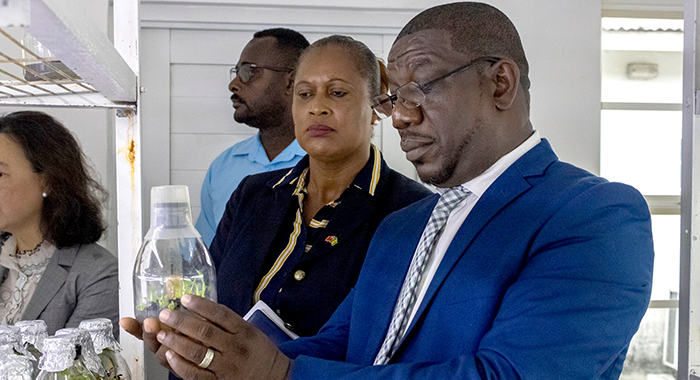
    Against a backdrop of growing global market volatility and climate uncertainty, St. Vincent and the Grenadines (SVG) has launched a transformative three-year agricultural initiative aimed at addressing long-standing vulnerabilities in the nation’s food system. The Agricultural Productivity Recovery and Young Farmers Training Project, a $3.1 million collaboration between SVG and Taiwan, was formally introduced at the Orange Hill Agricultural Biotechnology Centre by Agriculture Minister Israel Bruce, who opened the event by sounding a clear alarm over the Caribbean nation’s overreliance on imported food.

    Bruce emphasized that decades of heavy reliance on foreign food supplies have left SVG dangerously exposed to cascading global shocks, from geopolitical tensions to commodity price spikes. He specifically noted that ongoing conflicts involving the United States and Iran have driven sharp increases in fertilizer and fuel costs, pressures that other Caribbean nations have already passed to consumers. In SVG, Prime Minister Godwin Friday’s administration has absorbed these extra costs to protect local households from immediate price hikes, but Bruce warned this temporary relief can not mask the urgent need for systemic change.

    Beyond geopolitical volatility, the initiative also directly confronts four interconnected challenges: rising production costs, the accelerating impacts of climate change, an ageing national farming population, and fragmented, inefficient market structures. Bruce clarified that the project is far more than a post-disaster recovery measure; it is a deliberate effort to drive intergenerational renewal for SVG’s agricultural sector, framing the initiative as centered on three core pillars: partnership, purpose, and possibility.

    A key focus of Bruce’s speech was drawing a clear distinction between two critical concepts for SVG: food security and food sovereignty. He explained that true food security requires the nation to produce enough staple food to feed its population without excessive reliance on imports, pointing to current unhealthy dependencies: SVG imports Irish potatoes, onions, and garlic from Trinidad and Tobago, while lettuce and tomatoes arrive from the United States. This supply chain model, he argued, is inherently unstable, leaving the nation’s food access dependent on shipping schedules and cross-border trade dynamics that are completely outside SVG’s control. Food sovereignty, by contrast, centers on growing and celebrating food products unique to SVG’s identity as a sovereign nation, he added.

    To demonstrate that local innovation already points the way forward, Bruce highlighted ongoing agro-processing work by students at SVG’s community college, where young people are developing value-added local products ranging from cheese and barbecue-flavored dasheen chips to breadfruit tacos. He challenged local consumers, particularly secondary school students, to choose these homegrown alternatives over imported global products, swapping Mexican tacos sold in supermarkets for SVG’s own breadfruit version to build demand for local agriculture.

    The new project backs both goals: strengthening national food security while advancing SVG’s food sovereignty, with a strategic priority on core staples and high-nutrition crops grown for domestic consumption. A total of 75 young farmers will receive advanced targeted training through the initiative, while hundreds of additional smallholder farmers and agricultural extension officers will gain access to new agricultural technologies and business development support. Taiwan is contributing $2.5 million to the total project budget, with SVG’s government providing the remaining $630,000.

    Bruce pushed back against outdated perceptions of farming as an old-fashioned industry, stressing that the initiative is inviting young people into a dynamic, future-facing sector rather than asking them to step back in time. Modern Vincentian agriculture, he explained, leverages cutting-edge tools including drones, data sensors, farm management software, and climate-smart growing practices. It blends rigorous agronomic science with entrepreneurial creativity, training young producers to fill multiple roles: farm manager, technologist, digital marketer, and community leader. The training curriculum covers practical hands-on farming skills, business planning, digital farm management, value-added processing, and market access strategy, all designed to create a clear growth pathway for young agri-entrepreneurs, from small startup operations to scalable, profitable enterprises.

    Closing his remarks, Bruce framed the project as an investment in both literal and figurative seeds that will shape the nation’s future. The outcomes of this work, he said, will determine not only the food on Vincentian tables, but the long-term strength of rural communities and local economies, and the overall resilience of St. Vincent and the Grenadines for generations to come.

  • Calypso Association seeking more control over results

    Calypso Association seeking more control over results

    The St. Vincent and the Grenadines Calypsonians Association has advanced major structural reforms for the upcoming 2026 Vincymas carnival, locking in internal agreement on a revamped judging framework for the national calypso monarch competition and pushing forward with a revised approach to compiling contest results, association president Earl “Cabba” Bennett announced during a formal press briefing. Bennett confirmed that the updated scoring criteria, crafted by a dedicated internal review committee, has already been forwarded to the Carnival Development Corporation (CDC) for final institutional approval, kicking off the next phase of pre-carnival preparations.

    As a cultural art form deeply rooted in Caribbean storytelling and social commentary, calypso competitions rely on transparent, consistent judging to uphold the integrity of the contest. Bennett explained that the updated criteria were developed to address longstanding concerns about ambiguity in the original judging guidelines, rather than introducing a radical overhaul of how performances are scored. “As an association, we made the collective decision to revisit and revise this year’s scoring criteria to bring far greater clarity to the process,” Bennett told reporters. “The framework does not deviate dramatically from the old standards, but it eliminates confusion by breaking the core judging categories into clear, defined sub-elements. This restructuring is specifically designed to make the process much more straightforward for adjudicators tasked with scoring performances.”

    The cross-functional review team tasked with drafting the new criteria included a roster of seasoned calypso community figures: Janelle Allen, Marlon Nanton-James, Andrea Gaymes-Mohess, Cleve Scott, Willis Williams and Lennox Bowman. After months of internal consultations and revisions, the full association voted to approve the final draft, which is now pending CDC sign-off. “I’m proud to confirm that the entire association has reached consensus on the new scoring criteria, and we have formally submitted the proposal to the CDC for approval,” Bennett added.

    Beyond changes to judging guidelines, the association has also approved a sweeping overhaul of the results tabulation process used across all three stages of the national calypso monarch competition: preliminaries, semi-finals, and finals. Under the long-standing existing protocol, a CDC liaison officer is responsible for collecting completed score sheets from judges and transporting the documents to an independent auditor, who then enters the scores into digital systems to generate final rankings. The new process shifts the initial tallying responsibility directly to competition judges, who will calculate preliminary totals on-site before passing the scores to the auditor. Auditors will then conduct a formal verification audit to confirm the accuracy of the preliminary totals before final results are announced.

    Bennett framed this procedural shift as a positive step toward greater transparency and accountability for the competition, even as he acknowledged that some stakeholders may hold differing views on the change. “This year, the association and the individual calypso tents have agreed to the new model: judges will handle the initial tallying of scores, and the independent auditor will then complete their formal audit work to confirm or verify that the totals are correct. This is another change that, in my view, moves the process in the right direction. While some may have different perspectives on the reform, this is the formal decision of the Calypsonians Association.”

    In addition to competition reforms, Bennett addressed the operational structure of the association’s member calypso tents, clarifying that while tents fall under the overarching governance of the SVG Calypsonians Association, each tent retains full operational autonomy. “Yes, they operate under the governance of the St. Vincent and the Grenadines Calypsonians Association, but they have the autonomy to run their individual events according to their own vision, as long as all activities stay within the broader rules and regulations set by the association,” Bennett explained.

    Bennett also noted that tent leaders have been proactive this year in advocating for enhanced promotional support from the CDC, pushing for earlier advertising and better access to marketing resources to boost attendance and public engagement. “Tent leaders got an early start this year, and they have been pushing the CDC for stronger promotion of calypso events,” he said. “They have been requesting dedicated marketing tools and have approached the CDC to ask for early ad placements. It’s important to note that both sides already recognize the clear distinction between generic advertising and strategic, targeted marketing, as we work to align on promotional goals.”

    For the calypso association, these reforms and the push for expanded promotion are part of a broader, long-term strategy to safeguard the iconic cultural art form and strengthen its central role in St. Vincent and the Grenadines’ national identity. “We recognize that we need to connect more deeply with the public,” Bennett said. “Calypso has always been the voice of the people, and they are the audience we exist to please. Their support is what sustains this art form, so meeting their expectations is our top priority.”

  • Taiwan project trains pioneers of new generations of agriculture in SVG

    Taiwan project trains pioneers of new generations of agriculture in SVG

    On Tuesday, at the Orange Hill Agricultural Biotechnology Centre in St. Vincent and the Grenadines (SVG), a landmark new agricultural initiative officially kicked off, tying together investment in youth development, cutting-edge farming innovation, and 45 years of formal diplomatic relations between SVG and Taiwan. Fiona Huei-Chun Fan, Taiwan’s ambassador to SVG, opened the event by framing the Agricultural Productivity Recovery and Young Farmers Training Project against a shifting global agricultural landscape, where traditional farming practices are increasingly being augmented by science, technology and entrepreneurship.\n\nRecognizing that agriculture remains a foundational pillar of global food security and national economic resilience, Fan emphasized that the $2.5 million, three-year initiative is far more than an infrastructure investment — it is a targeted investment in human capital. Backed by funding from the Taiwanese government, the project will introduce SVG to advanced smart agriculture systems, including vertical farming setups and Internet of Things-powered environmental controls that enable hydroponic crop growth in regulated, climate-controlled environments.\n\nAt the core of the initiative, however, is support for the next generation of SVG farmers. Over the course of the program, 75 young farmers will participate in structured training, with the first cohort of 15 trainees already selected for an intensive five-month program that includes living stipends to support their participation. Beyond technical training, outstanding participants will gain access to personalized entrepreneurship coaching and partial seed funding to help turn their agricultural ideas into sustainable, profitable local businesses.\n\nFan stressed that the program was designed to integrate with SVG’s existing private sector, particularly the country’s key tourism and hospitality industries, to unlock new market opportunities for local producers. She pointed to the high-quality lettuce already produced by program participants as a proof of concept, noting that event attendees had overwhelmingly expressed interest in purchasing the crop. This demand, she explained, underscores a key lesson for emerging young farmers: modern agriculture is not just about growing crops, but about creating market-aligned value and building collaborative connections between producers, businesses and consumers.\n\nSpeaking directly to the first cohort of trainees, Fan framed them as trailblazers for a new generation of agriculture in SVG, entering a sector brimming with untapped economic opportunity. The launch of the project also came on the same day that SVG reaffirmed its public support for Taiwan’s inclusion in global health governance at the World Health Assembly (WHA) in Geneva. SVG’s Health Minister Daniel Cummings called on the World Health Organization to formally recognize Taiwan’s public health capabilities and contributions to global health, and to grant Taiwan observer or full membership status in the organization.\n\nFan called this act of support a clear demonstration of the deep, longstanding bonds between the two nations, aligning with the principle that global cooperation must include all actors, leaving no community behind. She extended deep gratitude to the government and people of SVG, and particularly to Prime Minister Godwin Friday, for his consistent, principled support. As 2024 marks the 45th anniversary of formal diplomatic relations between Taiwan and SVG, Fan noted that SVG’s stance at the WHA comes amid longstanding challenges Taiwan faces in securing meaningful participation in international intergovernmental bodies, and represents a powerful example of enduring friendship and principled global leadership.

  • Refurbishment of Little Tokyo could begin in June

    Refurbishment of Little Tokyo could begin in June

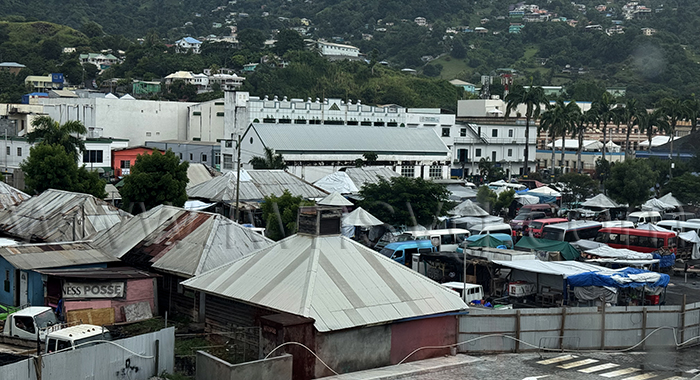
    Following its return to power in November’s general election, Saint Vincent and the Grenadines’ New Democratic Party (NDP) administration has given final approval to a sustainability-focused renovation project for Little Tokyo, Kingstown’s primary bus terminal, with construction poised to launch as early as June, according to Minister of Housing, Land Management, Urban Development and Informal Settlement Upgrading Andrew John.

    The bus terminal itself dates back more than 35 years, originally constructed with Japanese funding during the NDP’s previous term in office. After the Unity Labour Party (ULP) held office for 25 consecutive years, the infrastructure gradually fell into severe disrepair. John noted that the outgoing ULP administration had already drafted its own redevelopment plan for the site, which centered on large-scale concrete construction. Upon taking office, the new NDP government opted to conduct a full review of the inherited proposal before advancing.

    “Kingstown has no need for additional large concrete developments,” John explained in a public statement. “Instead, we tasked the Urban Development Corporation with designing a new concept that delivers an eco-conscious, business-friendly public space where visitors and locals can gather, relax, and even enjoy a cup of coffee.”

    The newly approved plan incorporates expanded green space across the terminal precinct, alongside comprehensive repairs to existing retail outlets and public restroom facilities. All upgrades are aimed at boosting the aesthetic appeal of Kingstown’s central transport hub, a key destination for commuters and visitors to the capital. The project is currently pegged at an estimated cost of 1 million Eastern Caribbean dollars, though John confirmed the final budget may shift slightly as the design team finalizes technical details.

    “I am impressed by the level of detail and care the team has put into this plan, and I am eager to see work get underway,” John added.

    Beyond the Little Tokyo project, the minister addressed longstanding public complaints about inadequate public toilet access across Kingstown. For years, residents have reported a lack of facilities that has forced some individuals to use outdoor public spaces, a problem that disproportionately harms elderly and vulnerable residents. John confirmed that upgrading these facilities is a top priority for the ministry to resolve this quality-of-life issue.

    The ministry is also advancing plans to renovate Kingstown’s historic former Court House and Parliament building, a project currently on hold awaiting technical guidance from the Eastern Caribbean Supreme Court. Once approved, the renovated structure will be repurposed to house the island’s civil court system. John also confirmed that a proposed new Hall of Justice planned for Beachmont is unlikely to break ground in 2024, and plans for a new permanent Parliament building have been paused indefinitely. Parliament currently operates out of a purpose-built temporary facility in Calliaqua, which John said meets all operational needs effectively. “The temporary facilities are excellent, and we will continue using them for the foreseeable future,” he noted.

  • Vincy jailed in France while fleeing charges in SVG gets 13 years at home

    Vincy jailed in France while fleeing charges in SVG gets 13 years at home

    A high-profile drug trafficking case that has stretched over a decade has concluded this week in St. Vincent and the Grenadines, with a 40-year-old fugitive receiving a substantial custodial sentence after evading justice for 10 years. The defendant, Rajiv Deshong, who will turn 41 in August, was found guilty by a nine-member jury on two counts: possession of 2,008 pounds (approximately 911,146 grams) of cannabis with intent to supply, and trafficking of the same massive volume of the controlled substance.

    The roots of the case stretch back to February 2014, when a joint enforcement operation by SVG’s Coast Guard and Drug Squad intercepted a high-speed “go-fast” vessel off the coast of Chateaubelair. The craft carried six men, including Deshong, and enforcement officers were forced to disable the boat’s engines after the occupants refused to comply with orders to halt.

    Four of Deshong’s co-defendants in the case — Daniele Baptiste, Calvert Prince, Ezekiel Robin, and Denzil Sam — were convicted and sentenced to prison terms ranging from 11 to 17 years back in 2017, and all have now completed their sentences. A fifth co-accused, sea captain Godfrey Cumberbatch, was fatally shot at his Glen home in June 2014, just one week ahead of a scheduled court hearing in the case. Deshong, for his part, absconded from SVG while out on bail awaiting trial shortly after the 2014 interception.

    After fleeing the country, Deshong was arrested and convicted on separate drug charges in France, where he served a 10-year prison sentence. He was deported back to St. Vincent and the Grenadines following the completion of his French sentence, allowing local authorities to finally prosecute him for the 2014 offences.

    During Tuesday’s sentencing hearing at the Kingstown High Court, Justice Rickie Burnett explained that sentencing was guided by the Eastern Caribbean Supreme Court’s binding guidelines for drug offences, which can only be departed from in extraordinary circumstances to serve the interests of justice. The court weighed four core sentencing aims: retribution, deterrence, crime prevention, and rehabilitation.

    A social inquiry into Deshong’s background painted a mixed portrait. The defendant completed only up to Form 4 of secondary school, has diabetes requiring ongoing medication, and holds trade skills in automotive repair and commercial agriculture. Community members and family described Deshong as calm, easy-going, and a highly capable farmer, and noted he has one dependent daughter who relies on him. Despite the jury’s guilty verdict, Deshong continues to maintain his innocence. Prior to the 2014 offence, Deshong had a history of migration: he moved to Canada in 2009, returned to SVG in 2012, migrated to Guadeloupe in 2013, and returned again to SVG before fleeing for good in 2014.

    Evidence was presented to the court regarding the ability of His Majesty’s Prison to accommodate Deshong’s diabetes, a non-communicable disease. Witness testimony was heard from two current inmates and acting prison Superintendent Dwayne Bailey, who outlined the existing protocols for medication access, dietary accommodation, and general patient care for incarcerated people with chronic conditions. After reviewing all testimony, Justice Burnett confirmed the court was satisfied that the prison system is able to provide adequate care for Deshong.

    In calculating the sentence for the possession charge, Justice Burnett noted Deshong stated he had little awareness of the full scale of the trafficking operation and held no senior position in the criminal network. The maximum penalty for this offence is 25 years imprisonment and a EC$5 million fine, and the court set an initial starting sentence of eight years and nine months. Aggravating factors — including the attempt to evade capture by forcing a coast guard chase, the large volume of drugs (worth an estimated EC$1 million or more), Deshong’s prior drug conviction in France, and his 10 years as a fugitive that delayed the trial — led the court to add four additional years to the sentence. After deducting the 12 months and 10 days Deshong has already spent on remand, the adjusted sentence for possession was 11 years, eight months and 20 days.

    For the second charge of drug trafficking, which carries a maximum sentence of life imprisonment, the court set a starting point of 10 years and six months. The same aggravating factors prompted a four-year increase, bringing the total to 14 years and six months. After deducting remand time, the adjusted trafficking sentence came to 13 years, five months and 20 days. Justice Burnett ruled that the two sentences will run concurrently, meaning Deshong will serve the longer of the two terms behind bars.

  • Mentally-ill baby killer to spend 20 more years in jail

    Mentally-ill baby killer to spend 20 more years in jail

    A shocking case of infant harm in St. Vincent and the Grenadines has concluded with a significant custodial sentence for the perpetrator. 24-year-old Jeremiah Samuel, a resident of Rose Hall, has been ordered to spend 19 years, nine months and six days behind bars for the kidnapping and killing of 1-year-old Janae Samuel-Wright in the North Leeward community on February 10, 2024.

    Justice Rickie Burnett handed down the concurrent sentences during a Friday hearing at the Kingstown High Court. Samuel faced two separate charges: manslaughter for the death of the infant, who was confirmed to be one of his relatives, and kidnapping. For the abduction charge alone, the judge issued a four-year, one-month and seven-day prison term. Under the rule of concurrent sentencing, however, Samuel will only serve the longer manslaughter sentence, rather than completing the terms back-to-back.

    A key mitigating factor cited in the case is that Samuel was living with an undiagnosed mental disorder at the time he committed the fatal crime. Local independent news outlet iWitness News, which first broke details of the sentencing, has announced it will release additional court documents, victim background, and community reaction in a forthcoming expanded report, and has invited readers to follow its updates via the outlet’s official WhatsApp Channel.