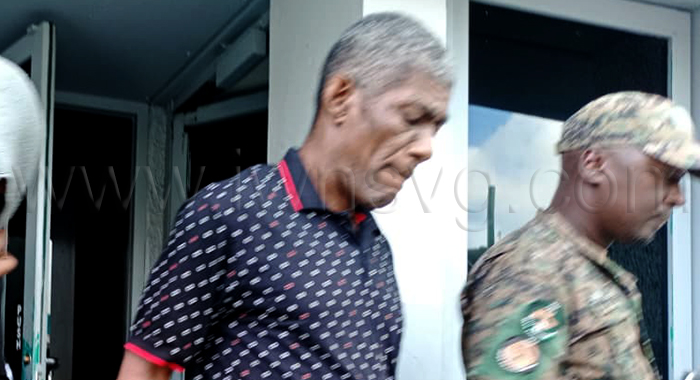
A fatal confrontation that turned a casual gathering of friends into a devastating tragedy has concluded with a 10-year prison sentence for a 56-year-old fisherman from Calliaqua, Joel Ashton, widely known by the nickname Boat. The High Court in Kingstown handed down the penalty on Monday, with Justice Rickie Burnett presiding over the sentencing hearing for the unlawful killing of 42-year-old security guard Cameron Alexandar, who died from a blunt-force head injury in August 2023.
The chain of events that led to Alexandar’s death began on August 26, 2023, when Ashton, Alexandar, and a group of mutual friends were socializing along the coast of Lowmans Bay. Alexandar and another attendee of the gathering pooled their funds to purchase a pint of high-strength rum, priced at just 8 Eastern Caribbean dollars. As the afternoon wore on, tension flared between the two men after Alexandar reportedly took a small bottle of rum from Ashton’s jacket pocket without permission.
In the heat of the spontaneous conflict, Ashton struck Alexandar hard on the left side of the head with a full glass rum bottle, shattering the container on impact. Eyewitness accounts presented during the trial confirm that Alexandar did not retaliate for the blow, only asking in shock, “Just so?” Witnesses quickly noticed blood streaming from his ear, and after dipping his injury in the nearby sea, Alexandar returned to the area’s local shop before heading home for the night. That evening, his older son Jiovanni Stapleton checked on his father and found him asleep, choosing not to wake him.
Alexandar reported to his security guard job the next day, with no obvious immediate issues, though his younger son told investigators he noticed unusual behavior: his father stared blankly into the distance and talked to himself. By August 28, just two days after the altercation, Alexandar’s condition declined sharply. His younger son found him unresponsive, foaming at the mouth and bleeding, and alerted Stapleton, who rushed the injured man to Milton Cato Memorial Hospital. Alexandar was admitted to the Intensive Care Unit, where he died from his injuries on August 30, 2023.
A post-mortem examination conducted the following day by forensic pathologist Dr. Ronald Child confirmed the cause of death was blunt force trauma to the head, directly matching the injury caused by Ashton’s bottle strike. Over the course of the investigation, law enforcement officers visited the Lowmans Bay site multiple times to collect evidence. On September 24, 2023, Ashton turned himself in at the Questelles Police Station, accompanied by his defense attorney Grant Connel. He declined to provide a formal statement during an electronic interview, and authorities formally arrested him on suspicion of manslaughter, after he was overheard making incriminating statements during a visit to the crime scene with investigators. A nine-member jury subsequently found him guilty of the unlawful killing.
During sentencing, Justice Burnett outlined the profound impact of Alexandar’s death on his two young sons, reading details from the official victim impact statement. Stapleton, the older son, told the court that his father was everything to him, and he still grieves the loss of his father’s voice, presence, and daily conversations. He explained that a core part of himself died with his father, a void that can never be filled. The traumatic nature of the killing has left lasting psychological scars: even hearing the word “rum” at public events triggers overwhelming bad memories that instantly change his mood. Since Alexandar’s death, the brothers’ lives have fallen into disarray: a family dispute forced Stapleton to leave the family home he shared with his father, and his younger brother has lost the critical paternal guidance he depended on. Despite the profound loss, Stapleton left the question of justice entirely in the court’s hands, and followed the trial closely even though he was not present for the final sentencing hearing.
In determining the appropriate sentence, Justice Burnett followed Eastern Caribbean Supreme Court guidelines for manslaughter, which categorize offenses into four seriousness tiers: Category A (very high, 24-year starting sentence), Category B (high, 18-year starting point), Category C (medium, 12-year starting point), and Category D (low, 6-year starting point). After evaluating all evidence and case facts, the judge placed this offense in the minimum bracket of Category C, setting an initial 12-year sentence.
Justice Burnett then assessed aggravating and mitigating factors. The use of the glass rum bottle as an improvised weapon was marked as an aggravating circumstance, but the court also confirmed there was no premeditation or advance planning for the attack, a key mitigating point. No further adjustment was made to the sentence at this stage. Additional mitigating factors came from Ashton’s prior good character: the court heard testimony from character witnesses confirming Ashton had no previous violent offenses, and no aggravating personal factors were presented on behalf of the prosecution. Finding that mitigating factors outweighed the single aggravating circumstance, the court reduced the sentence by two years, bringing the total penalty to 10 years.
The court further deducted the two months and three days Ashton has already spent in remand custody, leaving a remaining term of nine years, nine months and 28 days to be served behind bars.