标签: Saint Vincent and the Grenadines

圣文森特和格林纳丁斯

  • VIDEO: Gonsalves begs for a 6th term

    VIDEO: Gonsalves begs for a 6th term

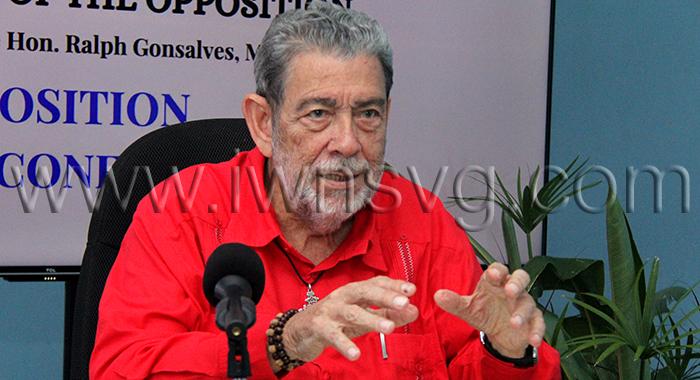
    In a fervent appeal to voters, 79-year-old Prime Minister Ralph Gonsalves urged former supporters of his Unity Labour Party (ULP) to grant the party a sixth consecutive term in office during the upcoming general election this Thursday. The plea came during the closing moments of a 50-minute speech delivered at Arnos Vale Playing Field, where Gonsalves emphasized the party’s achievements and vision for the future. His address aimed to rekindle support among disillusioned voters, highlighting the ULP’s commitment to national development and stability. The election, seen as a critical juncture for St. Vincent and the Grenadines, will determine whether the ULP continues its two-decade-long governance or faces a shift in political leadership.

  • Vote for Restoration

    Vote for Restoration

    In a thought-provoking commentary, Apostle Dr. Dillon Burgin reflects on the moral and cultural decline in St. Vincent and the Grenadines, urging a return to decency, respect, and accountability. He critiques the vulgarization of Vincentian culture, particularly through the weaponization of music, and laments the erosion of societal values, including the disregard for children and seniors. Burgin highlights the transformation of once-pristine communities like Cane Garden into chaotic spaces, where speeding vehicles and loud music disrupt the peace. He also points to the weakening of civic institutions, such as the absence of a robust farmers’ union and the diminished role of the National Youth Council. Burgin further decries the deterioration of educational standards, where students are admitted to high schools without adequate reading proficiency. He calls for a societal restoration, emphasizing the need for strong institutions, active civic organizations, and collective accountability. Burgin advocates for a political reset, urging Vincentians to vote for the New Democratic Party (NDP) as a step toward liberation from what he describes as a one-man dictatorship. However, he stresses the importance of holding the NDP accountable from day one and limiting their leadership tenure to prevent a repeat of past mistakes. Burgin’s vision is rooted in a party-less society, where governance is guided by principles rather than political affiliations. His impassioned plea is a call to action for Vincentians to reclaim their nation’s moral and cultural integrity.

  • ‘Street kid’ charged with murder (+Video)

    ‘Street kid’ charged with murder (+Video)

    Romano Warren, an 18-year-old from Ottley Hall, appeared before the Serious Offences Court in Kingstown on Monday, facing charges for the murder of Gary Bute, a teenager of the same age. The incident occurred on November 11, when Bute was fatally stabbed on Melville Street around 10:45 a.m. and later succumbed to his injuries in the hospital. During the court proceedings, Warren initially claimed to be 15 years old, but a detective presented his birth certificate, confirming his true age. Chief Magistrate Colin John informed Warren that he could not enter a plea at this stage and denied bail, scheduling a preliminary inquiry for January 6, 2026. Notably, Warren was unrepresented by legal counsel during the hearing. However, attorney Grant Connell, present in court but not directly involved in the case, suggested that the Bar Association could assign a lawyer to assist Warren. Connell proposed advancing the next hearing to Monday to facilitate this process. The case was adjourned accordingly, with Connell committing to discuss the matter with Bar Association President Shirlan ‘Zita’ Barnwell.

  • Gonsalves names Trinis lawyers allegedly interfering in SVG’s election campaign

    Gonsalves names Trinis lawyers allegedly interfering in SVG’s election campaign

    KINGSTOWN, St. Vincent — Prime Minister Ralph Gonsalves has raised concerns over the presence of eight Trinidadian lawyers and activists in St. Vincent, accusing them of attempting to interfere in the upcoming general election. Gonsalves, leader of the ruling Unity Labour Party (ULP), made these allegations during a youth rally, emphasizing that the opposition New Democratic Party (NDP) had brought these individuals to influence the electoral process. He warned that their activities could undermine the nation’s democratic integrity. Gonsalves highlighted that these lawyers must obtain proper work permits or CARICOM Skills National Certificates to operate legally in St. Vincent, labeling their current involvement as a criminal offense. He further criticized the NDP for what he described as ‘low-down worthlessness’ and attempts to disrupt the ULP’s campaign efforts. Gonsalves also expressed gratitude to Trinidad and Tobago’s Prime Minister Kamla Persad-Bissessar for clarifying that her party had not sanctioned any involvement in St. Vincent’s elections. However, he speculated that UNC financiers might be seeking to ‘buy this election’ for their own interests. The ULP, which has held power since 2001, is aiming for a sixth consecutive term in the December 1 poll.

  • SVG’s political circus

    SVG’s political circus

    As St. Vincent and the Grenadines approaches another election, the nation’s political culture has devolved into a spectacle of noise, distraction, and emotional manipulation. What should be a time for serious national reflection has been overshadowed by a festival of hype, handouts, and showmanship. The transformation of politics into entertainment has not only cheapened the electoral process but also jeopardized the country’s future.

  • A crippled police force

    A crippled police force

    In a poignant reflection on the state of law enforcement in St. Vincent and the Grenadines (SVG), a police officer has voiced deep concerns about the systemic failures crippling the Royal St. Vincent and the Grenadines Police Force. As the nation prepares for upcoming elections, the officer highlights the urgent need for accountability and reform to address the chronic issues plaguing the police force. The officer, who remains anonymous, describes a system marred by political interference, inadequate resources, and a lack of actionable policies. Despite the dedication of officers, the force is left underequipped, with police stations lacking functional vehicles and essential tools to combat crime effectively. The officer emphasizes that the failure to address these issues has left both law enforcement and citizens vulnerable, with criminals often staying one step ahead. The government’s inaction, described as both deliberate and cynical, has exacerbated the crisis, leaving the police force without the necessary support to fulfill its mandate of crime prevention and detection. As voters head to the polls, the officer urges them to prioritize public safety by demanding a clear, funded plan to restructure and resource the police force. The call for reform is not just about improving law enforcement but about ensuring the safety and security of all Vincentians. The officer concludes with a plea for voters to reject complacency and choose leaders who will take decisive action to address the challenges facing the police force and the nation as a whole.

  • No to kings!

    No to kings!

    In 2001, the United Labour Party (ULP) ascended to power in St. Vincent and the Grenadines, promising governance but accused of ruling with an iron fist. Led by Ralph Gonsalves, a figure often described as power-hungry and Marxist, the ULP’s rise was marked by what critics call the ‘Roadblock Revolution,’ a manufactured crisis that propelled them into office. Over the past 24 years, Gonsalves has entrenched himself as a dominant figure, consolidating power through strategic maneuvers and alliances, including the merger of the St. Vincent Labour Party (SVLP) with his Movement for National Unity (MNU) to form the ULP. Critics argue that his leadership mirrors the allegorical ‘Animal Farm,’ where promises of equality gave way to authoritarian control. Gonsalves’ tenure has been characterized by accusations of nepotism, corruption, and the creation of a subservient electorate dependent on state handouts like Poor Relief, food vouchers, and home appliances. These tactics, critics claim, are designed to secure loyalty and perpetuate his rule. As the nation heads to the polls, many Vincentians express a desire for genuine governance—a leader who prioritizes the interests of all citizens, transcending political affiliations. The upcoming election presents an opportunity for change, with the New Democratic Party (NDP) positioning itself as an alternative to the ULP’s entrenched regime. The outcome will determine whether St. Vincent and the Grenadines continues under Gonsalves’ rule or embarks on a new path of inclusive governance.

  • NOTICE: A VOTE FOR DWIGHT FITZGERALD BRAMBLE IS A WASTED VOTE

    NOTICE: A VOTE FOR DWIGHT FITZGERALD BRAMBLE IS A WASTED VOTE

    In a heated political development, the candidacy of Dwight Fitzgerald Bramble, the New Democratic Party’s representative for East Kingstown, has come under intense scrutiny. Critics argue that Bramble is constitutionally ineligible to serve as a Member of Parliament due to his Canadian citizenship. According to Section 26 (1) of the Constitution of Saint Vincent and the Grenadines, individuals who voluntarily acknowledge allegiance to a foreign power are disqualified from holding parliamentary office. Bramble, who holds Canadian citizenship and a Canadian passport, is accused of violating this provision. His nomination was formally challenged by East Kingstown electors on November 10, 2025, raising questions about the validity of his candidacy. Opponents urge voters to reconsider their support, labeling a vote for Bramble as ‘wasted’ given the legal uncertainties surrounding his eligibility. The case is expected to be a focal point in the upcoming election, with potential implications for the political landscape of Saint Vincent and the Grenadines.

  • Constitutional crises not a fallacy

    Constitutional crises not a fallacy

    A constitutional crisis is brewing in St. Vincent and the Grenadines (SVG) over the interpretation of sections 25 and 26 of the nation’s Constitution, which govern the eligibility of Commonwealth citizens to contest elections. Section 25 outlines the basic qualifications for election candidates, including being at least 21 years old, residing in SVG for 12 months before nomination, and demonstrating proficiency in English. However, Section 26 introduces a critical litmus test: candidates must not, by their own act, acknowledge allegiance, adherence, or obedience to a foreign power or state. The crux of the debate is whether a Commonwealth member state qualifies as a ‘foreign power or state’ under Section 26. Dr. A Linton Lewis, PhD, argues that Commonwealth countries, including Canada, are indeed foreign states relative to SVG, a position that contradicts Dr. Jason Haynes’ interpretation. Dr. Haynes contends that Section 25 explicitly permits Commonwealth citizens to contest elections, making it contradictory to disqualify them under Section 26. Dr. Lewis counters that the Constitution’s drafters clearly distinguished between SVG citizens and Commonwealth citizens, emphasizing that the latter must reside in SVG for seven years to apply for citizenship, underscoring their foreign status. He further asserts that the purpose of Section 26 is to prevent split loyalties, ensuring that elected representatives are fully committed to SVG. The looming crisis stems from the potential disqualification of Commonwealth citizens who may hold allegiance to their home countries, raising questions about the Constitution’s intent and the practical implications for SVG’s political landscape. As the debate intensifies, the issue remains unresolved, with the possibility of a constitutional challenge on the horizon.

  • Her next round of ‘breaking’ and ‘resetting’

    Her next round of ‘breaking’ and ‘resetting’

    During a recent youth rally, a ‘special guest’ took the stage to address the audience on behalf of the United Labour Party (ULP). However, her speech was less an endorsement and more a plea for assistance, a pattern familiar to those who know her well. Even Candyman, who introduced her, has previously noted this tendency after prolonged interactions. While I have been a lifelong supporter of Labour, my current uncertainty stems not from anger at the opposition New Democratic Party (NDP) but from dissatisfaction with how the ULP has managed key issues over the past five years, including the controversial vaccine mandate. Her speech did little to strengthen my allegiance to the ULP; instead, it deepened my reflection on Mike Browne’s commentary, pushing me toward abstaining from voting in the upcoming election. Her intelligence, eloquence, and confidence are undeniable, but she may not be what the ULP needs now. Her past remarks, such as labeling Curtis King a ‘disgrace’ and dismissing Keisal Peters as merely a ‘wardrobe and a hair salon,’ raise questions about her alignment with the party. Despite her criticisms of the NDP, their leadership remained silent, perhaps recognizing the underlying motivations behind her outbursts. As the ULP welcomes her into a visible role, internal warnings are emerging publicly, urging caution. Will the party heed these concerns, or will history repeat itself?