标签: Saint Vincent and the Grenadines

圣文森特和格林纳丁斯

  • Rubio wants C’bean to be part of new dynamic in Western Hemisphere

    Rubio wants C’bean to be part of new dynamic in Western Hemisphere

    BASSETERRE, St. Kitts – U.S. Secretary of State Marco Rubio addressed Caribbean Community (CARICOM) leaders during their 50th regular summit on Wednesday, outlining Washington’s commitment to forging a revitalized partnership with nations across the Western Hemisphere. In his closed-door remarks, Rubio emphasized a dual-focused strategy centered on combating transnational security threats and unlocking new economic opportunities, particularly in energy.

    Rubio identified transnational criminal organizations as the most urgent security challenge facing the region, noting their funding and power often rival or exceed that of the nation-states they threaten. He described an ‘interlocked challenge’ primarily fueled by narcotrafficking, which poses a direct danger to transit countries and ultimately to U.S. national security. The Secretary highlighted alarming levels of armament within these groups, acknowledging that weaponry often originates from the United States, and pledged intensified law enforcement cooperation to disrupt these supply chains.

    Drawing parallels to the destabilizing influence of drug cartels in Mexico, Rubio called for collective regional collaboration. He pointed to U.S. actions, including designating certain groups as terrorist organizations and sanctioning individuals who support them, as evidence of a serious commitment to this shared challenge.

    Shifting to economic cooperation, Rubio underscored energy as a critical area for partnership. He expressed U.S. interest in supporting Caribbean nations in responsibly exploring and developing their energy resources to generate wealth and prosperity for their citizens.

    A significant portion of the address focused on Venezuela, where Rubio stated without apology that the country is ‘better off today than it was eight weeks ago.’ He praised the progress made by interim authorities led by Delcy Rodríguez, citing the release of political prisoners, closure of the infamous Helicoide prison, and the redirection of oil revenue to benefit the people, including payroll for government services and purchases of essential medical equipment. While acknowledging a long road ahead, Rubio confirmed the U.S. has reopened its embassy in Caracas and is committed to supporting Venezuela’s transition from stability to recovery, ultimately contingent upon the legitimacy of fair democratic elections.

    Rubio concluded by framing U.S. prosperity and security as ‘intricately tied’ to that of the Caribbean Basin. He positioned his presence at the summit as a tangible demonstration of this commitment, aiming not to reset but to reinvigorate longstanding relationships. He pledged to make this partnership a personal priority for the remainder of his tenure, intending to leave a foundation of strong and stable relations for his successor.

  • Playaz Youth Academy win 7 games to end tourney undefeated

    Playaz Youth Academy win 7 games to end tourney undefeated

    The Playaz Youth Academy (PYA) has cemented its status as a premier youth basketball development program after achieving a perfect 7-0 record to claim the championship title at the 2026 SVGCC Invitational Basketball Competition. Their undefeated campaign demonstrated exceptional teamwork, strategic execution, and poise throughout the tournament.

    Team captain Tayon Burgin emerged as the tournament’s standout performer, earning triple honors as MVP of the Finals, Team MVP, and Team Most Improved Player. Burgin’s offensive prowess and leadership qualities proved crucial during pivotal moments of the competition.

    Defensive excellence was personified by Vice-Captain Zwayne Fisher, who received the tournament’s Top Defensive Player award. Fisher’s relentless defensive pressure, court awareness, and ability to neutralize opposing offenses were fundamental to the academy’s success. Aquando Henry also received defensive recognition while simultaneously contributing significant offensive production, providing crucial balance to the team’s overall strategy.

    The academy additionally celebrated two players who competed with other teams during the tournament: Temal Gopaul of DASGS All Stars earned Team MVP honors, while Kenroy Trimmingham of DTVE Ballers received Team Most Improved Player recognition.

    Head Coach Orlando ‘Coach Lando’ Fergusson emphasized that the achievement transcended basketball performance. ‘This victory represents our commitment to developing disciplined, well-rounded individuals who excel both on and off the court,’ Fergusson stated. ‘The players’ dedication to our system and their consistent attention to detail made this championship possible.’

    The undefeated season serves as validation for PYA’s holistic approach to player development, which emphasizes mentorship, discipline, and comprehensive athletic education.

  • Georgetown health group holds weeks of activities

    Georgetown health group holds weeks of activities

    The Georgetown Diabetics and Hypertensive group successfully concluded a comprehensive week of health-focused activities with a vibrant march and rally in the North Central Windward community earlier this month. The initiative, built around the empowering theme “Better Health Begins With Me,” aimed to combat two prevalent non-communicable diseases in the district.

    The week’s events commenced with a spiritual foundation through a church service at the Wesleyan Holiness Church on Mt Bentick’s Bay Road. This was followed by a series of practical health interventions, including widespread blood sugar and blood pressure screenings to facilitate early detection and management. A community soup sale and extensive outreach efforts were organized to raise awareness and foster a collective sense of responsibility toward personal health.

    The culmination occurred on Thursday with a mini health fair, a spirited march, and a motivational rally that drew participation from various groups across the district. The event was notably led by the Royal St. Vincent and the Grenadines Police Force Band, which preceded the procession from the Caratal bridge to the Chili Playing Field at 9:45 a.m. The playing field was transformed into a hub of wellness with multiple health booths providing essential services and information.

    A key highlight of the day was a communal exercise session, emphasizing the critical role of physical activity in preventing and managing chronic conditions. The feature address was delivered by the Minister of Health, Honorable Daniel Cummings, who underscored the government’s commitment to public health. Public health nurse Sister Glendareen Browne provided brief remarks, stating that diabetes (commonly called ‘sugar’) and hypertension (high blood pressure) are among the most common non-communicable diseases affecting the local population. The event was expertly chaired by Rosemary Muckette-Burke, the Nutritionist and Community Health Development Officer for the district.

  • Kamla hammers CARICOM; don’t talk to me about ‘zone of peace’

    Kamla hammers CARICOM; don’t talk to me about ‘zone of peace’

    In a striking address at the 50th Regular Meeting of CARICOM Heads of Government in St. Kitts and Nevis, Trinidad and Tobago Prime Minister Kamla Persad-Bissessar delivered a robust defense of her nation’s security partnership with the United States while issuing sharp criticism of regional counterparts for their silence on Venezuelan aggression.

    The Prime Minister articulated her government’s position with exceptional clarity, emphasizing that sovereign nations must determine their own foreign policy approaches based on national security requirements. She directly addressed what she termed ‘the elephant in the room’ – Trinidad’s cooperation with the Trump administration – framing it as an essential measure for combating transnational crime rather than a deviation from regional unity.

    Persad-Bissessar presented compelling statistics to substantiate her position, revealing that Trinidad and Tobago, with a population of 1.4 million, had recorded 623 murders in 2024, with 40% directly linked to firearms and narcotics trafficking originating from Venezuela. She challenged the regional concept of a ‘zone of peace,’ arguing that such rhetoric becomes meaningless when member states face existential security threats.

    The Prime Minister detailed how policy shifts in 2025 – including designating drug cartels as violent terrorist organizations and collaborating with US military operations – produced dramatic results: a 42% reduction in murder rates equating to 257 fewer deaths. She extended specific gratitude to President Trump, Secretary of State Marco Rubio, and US military forces for their assistance in combating narco-trafficking, arms smuggling, and illegal migration networks.

    Persad-Bissessar contrasted her government’s approach with what she characterized as inadequate regional support, noting that many CARICOM members lack the military capacity to provide meaningful assistance. She acknowledged Jamaica’s success in reducing murder rates through specialized legislation while noting Trinidad’s parliamentary challenges in implementing similar measures.

    The Prime Minister concluded with a firm declaration that partnership with the United States represents not a undermining of Caribbean unity but rather a defense of regional security interests, vowing to continue cooperation to eliminate destructive criminal forces from the hemisphere.

  • Jamaica PM says CARICOM is not a political union

    Jamaica PM says CARICOM is not a political union

    Jamaican Prime Minister Andrew Holness has delivered a paradigm-shifting address at the 50th CARICOM summit in Basseterre, fundamentally redefining the Caribbean Community’s operational philosophy. Contrary to popular perception, Holness emphasized that CARICOM constitutes an association of sovereign states rather than a political union, with no treaty obligations mandating unified foreign policies or supranational governance.

    The Prime Minister articulated a compelling vision for regional cooperation amidst accelerating global disruptions. “Climate shocks arrive faster than our financing mechanisms, criminal networks adapt faster than our institutions, and technological disruption reshapes economies faster than our regulatory frameworks,” Holness observed, highlighting the urgent need for responsive governance structures.

    Holness challenged conventional integration narratives, arguing that CARICOM’s strength lies not in uniformity but in its diversity of democratic expressions. “Variations in national perspectives are not a liability to be feared but a resource to be harnessed,” he asserted, framing member states’ differing risk assessments and priority sequences as natural expressions of sovereignty rather than institutional weakness.

    The address positioned regional security as a binding imperative, citing sophisticated transnational criminal networks that increasingly challenge state authority. Referencing Jamaica’s developed security architecture—forged through persistent violence—Holness proposed knowledge-sharing as organic integration: “Our region’s variability is not an obstacle to integration. It is integration, practical, organic and rooted in shared learning.”

    On geopolitical matters, Holness addressed Cuba’s escalating crisis with unprecedented candor, warning that economic hardship and energy shortages could trigger regional destabilization through migration and security spillovers. While affirming Jamaica’s commitment to democratic principles and market economies, he advocated for pragmatic U.S.-Cuba dialogue focused on humanitarian relief and de-escalation.

    The Prime Minister also delineated digital sovereignty as critical for Caribbean nations, noting that control over information platforms and algorithms now influences economic power as profoundly as physical resources historically did. He positioned the Caribbean Single Market and Economy (CSME) as the primary vehicle for building scalable digital infrastructure and economic resilience through flexible integration models.

    Holness concluded by framing CARICOM’s role as a community of democratic states offering cooperation rather than ideological bloc politics, emphasizing “principled realism” during global systemic transformation.

  • Don’t get trapped in or by Cuba

    Don’t get trapped in or by Cuba

    Cuba’s tourism industry, once hailed as the nation’s economic locomotive, now stands as a stark symbol of systemic failure and governmental mismanagement. The sector’s dramatic collapse has pushed the Caribbean nation toward its most severe economic crisis since the 1962 Missile Crisis, with far-reaching implications for both Cubans and international visitors.

    The industry’s trajectory reveals a complex history: initially privatized and mafia-controlled pre-1959 revolution, then abandoned due to criminal associations, before being resurrected as a Soviet alternative collapsed. The 2000s brought increased militarization under GAESA, a military conglomerate that now controls over one-third of Cuba’s GDP.

    Despite brief optimism during the Obama administration’s diplomatic thaw, which generated $3.3 billion in 2017 and supported nearly 500,000 direct and indirect jobs, the industry faced consecutive blows. Trump-era travel restrictions, COVID-19 pandemic disruptions, Ukraine conflict reducing Russian visitors, and most critically, fuel shortages resulting from U.S. pressure on Venezuela’s oil supply have created a perfect storm.

    Current visitor numbers tell a grim story: 2024 saw only 2.2 million tourists—less than half the 4.7 million recorded in 2018. This decline has devastated an economy that is approximately 15% smaller than its pre-pandemic peak.

    The situation has become so dire that Canada—historically Cuba’s largest tourism market with over 750,000 annual visitors—issued a February 2024 travel advisory warning citizens to avoid non-essential travel due to worsening shortages of fuel, electricity, and basic necessities. All Canadian airlines have suspended service indefinitely.

    Ricardo Torres, a Cuban economist at American University, describes the situation as “a disaster,” noting widespread public frustration with government investments in failing tourism infrastructure rather than addressing fundamental needs. Luxury hotels now stand as “gleaming symbols of inequality” amid nationwide power outages and humanitarian deterioration.

    The crisis extends beyond tourism, with experts describing Cuba’s energy generation, transportation, healthcare, agriculture, and water supply sectors as pushed to “the point of checkmate.” An estimated 10,000 tourism workers have fled the country, exacerbating the human capital crisis.

    This economic unraveling contrasts sharply with international diplomatic posturing, including past Canadian praise for Cuba’s “social rights” achievements while overlooking fundamental political freedoms. The growing disparity between governmental rhetoric and on-the-ground reality underscores the profound challenges facing ordinary Cubans, who increasingly view empty hotels not as potential economic saviors but as monuments to failed policies.

  • World Sailing Race Management Course delivered in SVG

    World Sailing Race Management Course delivered in SVG

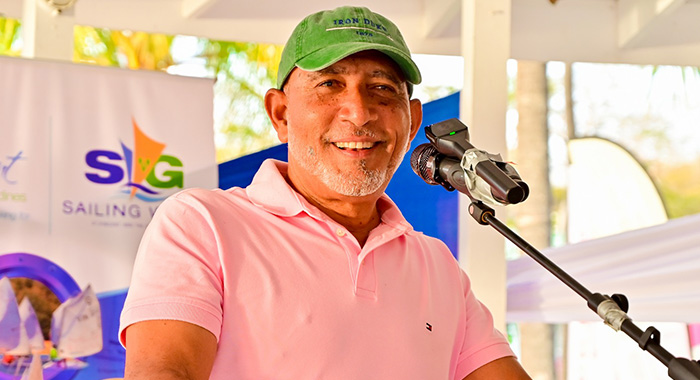
    St. Vincent and the Grenadines has taken a significant stride in developing its maritime sports infrastructure by hosting an official World Sailing Race Management Course – Level 1. The three-day intensive program took place from February 20-22 at the SVG Sailing Association Centre of Excellence, located at the Coconut Grove Beach Club.

    Fifteen enthusiastic participants from junior sailing clubs across Union Island, Bequia, Mayreau, and St. Vincent gathered to enhance their race management capabilities. The course also welcomed three representatives from the St. Vincent and the Grenadines Tourism Authority, who participated to gain practical expertise in preparation for the anticipated 2026 SVG Sailing Week, scheduled for March 29 to April 6.

    International sailing experts Becky Ashburn and Jeff Johnson, both renowned Olympic-level race officials from the San Diego Yacht Club, facilitated the training. Ashburn emphasized the critical importance of professional race management, noting: “What stood out here in SVG was the enthusiasm, commitment, and willingness to learn. These participants are building the skills that will allow local clubs and major regattas to be run safely, fairly, and to true international standards.”

    The curriculum blended theoretical classroom instruction with hands-on practical learning aligned with World Sailing’s global standards. Participants engaged with core competencies necessary for confidently managing club-level sailing events. Johnson explained the practical focus: “The goal of Level 1 is to teach officials the skills they can immediately use on the water. By the end of the course, participants understand not just the ‘how’, but the ‘why’ behind race management decisions.”

    This educational initiative represents part of World Sailing’s comprehensive global pathway designed to cultivate skilled race officials from grassroots to national levels. Participants universally praised the program for its practical applicability and international perspective.

    Nancy Saul-Demers from the Mayreau Junior Sailing Club shared: “This course opened my eyes to everything that goes into running a race that reflects World Sailing Association standards. I now feel much more confident in helping deliver regattas that better prepare our young sailors for higher-level competition.”

    Aina Browne of the SVG Tourism Authority highlighted the broader implications: “The training equipped local officials with the technical competencies to strengthen sailing events in St. Vincent and the Grenadines and to support the continued growth of our marine tourism sector.”

  • Record-smashing weekend for Blue Marlins

    Record-smashing weekend for Blue Marlins

    The Blue Marlins Swim Club made an extraordinary impact at the Barbados Aquatic Sports Association’s Long Course National Championships held last weekend, with a five-athlete delegation delivering exceptional performances. The team, comprising Hazen Da Briel, Belle Adams, Caghry Williams, Zane Da Briel, and Raya Adams, demonstrated remarkable competitive prowess throughout the event.

    Hazen Da Briel emerged as a standout performer, securing medals in nearly all his events with a total haul of 11 medals: 5 gold, 3 silver, and 3 bronze. His achievements were further elevated by breaking two Saint Vincent and the Grenadines Long Course National Records. He completed the 400m Individual Medley in 5 minutes 10.70 seconds and surpassed his own previous record in the 400m freestyle with a time of 4 minutes 29.78 seconds in the boys 15-17 age category.

    Zane Da Briel, Hazen’s younger brother, mirrored this excellence by medaling in every one of his races, collecting six silver medals. The promising swimmer, born in 2017, broke two longstanding national records – the 50m breaststroke with a time of 50.13 seconds (previously held since 2015) and the 50m backstroke record in 46.11 seconds.

    Belle Adams contributed significantly to the team’s success with three bronze medals in the 50m butterfly, 50m breaststroke, and 200m breaststroke events. Williams showcased his competitive edge by claiming gold in the 50m breaststroke and silver in the 100m breaststroke.

    The championships served as a testament to the athletes’ development, with all team members achieving personal best times that highlight their progressive improvement in competitive swimming. The Blue Marlins Swim Club continues its competitive season by participating in the Shrewsbury Aquatic Centre Invitational Swimming Championships at Ratho Mill from Thursday through Sunday.

  • ‘Please, let us quicken the pace,’ Friday tells CARICOM heads

    ‘Please, let us quicken the pace,’ Friday tells CARICOM heads

    In his inaugural address to CARICOM leaders, newly elected Prime Minister of St. Vincent and the Grenadines Godwin Friday delivered a powerful endorsement of regional integration while acknowledging the organization’s historical challenges. Speaking at the 50th Regular Meeting of CARICOM Heads of Government in St. Kitts, Friday emphasized the critical importance of collective action during increasingly perilous global conditions.

    The Vincentian leader, whose New Democratic Party secured a decisive 14-1 electoral victory ending nearly 25 years of incumbent rule, acknowledged his newcomer status while expressing optimism about bringing fresh perspectives to regional governance. Friday characterized CARICOM as “much maligned but still beloved,” noting that despite periods of near-collapse, failed meetings, and public criticism that sometimes labeled the organization “Carigone,” the integration spirit has not only endured but attracted new membership applications.

    Friday identified multiple pressing challenges requiring coordinated regional response, including climate change resilience, poverty elimination, workforce development, currency obstacles, and the humanitarian crisis in Cuba alongside security concerns in Haiti. He argued that in a world where international norms are shifting unpredictably, CARICOM members “need each other more than ever” to withstand political and economic headwinds.

    The Prime Minister proposed two fundamental shifts in CARICOM’s approach: greater transparency about accomplishments to enhance public awareness and credibility, and more inclusive engagement with citizenry rather than limiting discussions to government technocrats. He concluded with an urgent appeal to “quicken the pace” of integration efforts, recognizing that while the road ahead remains arduous, collective determination makes the journey viable and safer for future generations.

  • Marco Rubio to engage CARICOM leaders at summit in St Kitts and Nevis

    Marco Rubio to engage CARICOM leaders at summit in St Kitts and Nevis

    The 50th Regular Meeting of the CARICOM Heads of Government in St. Kitts and Nevis has become a focal point for complex diplomatic dynamics, featuring high-profile participation from US Secretary of State Marco Rubio and Trinidad and Tobago Prime Minister Kamla Persad-Bissessar. The gathering occurs against a backdrop of regional tensions following recent US military operations in Caribbean waters.

    Prime Minister Persad-Bissessar, making her first CARICOM appearance since returning to office in April, addressed Tuesday’s opening ceremony. Her attendance follows notable absences from previous regional meetings and comes amid strained relations with CARICOM leadership. The Trinidadian leader has previously characterized the regional body as an ‘unreliable partner’ and expressed concerns about interference in member states’ domestic affairs.

    Secretary Rubio’s scheduled Wednesday engagement represents a significant diplomatic outreach, with the State Department outlining priorities including regional security enhancement, combating illicit trafficking, and promoting economic growth. The visit aims to reaffirm Washington’s commitment to hemispheric stability and prosperity through existing frameworks like the Caribbean Basin Security Initiative (CBSI) and Shipriders Agreement.

    These diplomatic exchanges unfold alongside serious regional concerns regarding recent US military actions. The US Southern Command confirmed lethal kinetic strikes on February 13 and 16 targeting vessels allegedly operated by designated terrorist organizations engaged in narco-trafficking. Seven fatalities resulted from these operations, including two St. Lucian nationals. Authorities from St. Vincent and the Grenadines have confirmed these incidents occurred within their territorial waters, though no Vincentian casualties were reported.

    The summit also welcomes SVG’s newly elected Prime Minister Godwin Friday, attending his first CARICOM conference following his New Democratic Party’s victory in November elections. Security measures throughout the host nation have been significantly enhanced in preparation for the high-level gatherings.