标签: Saint Vincent and the Grenadines

圣文森特和格林纳丁斯

  • Marco Rubio to engage CARICOM leaders at summit in St Kitts and Nevis

    Marco Rubio to engage CARICOM leaders at summit in St Kitts and Nevis

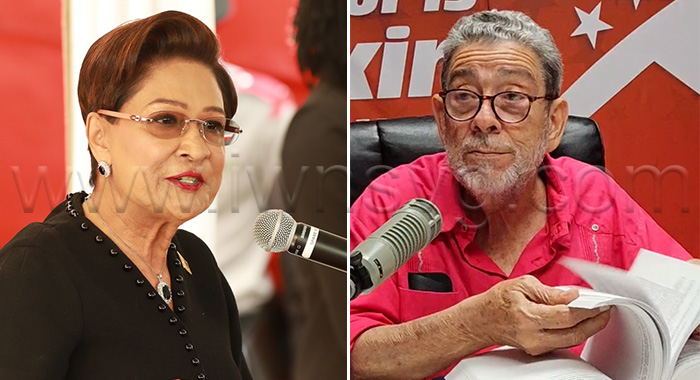
    The 50th Regular Meeting of the CARICOM Heads of Government in St. Kitts and Nevis has become a focal point for complex diplomatic dynamics, featuring high-profile participation from US Secretary of State Marco Rubio and Trinidad and Tobago Prime Minister Kamla Persad-Bissessar. The gathering occurs against a backdrop of regional tensions following recent US military operations in Caribbean waters.

    Prime Minister Persad-Bissessar, making her first CARICOM appearance since returning to office in April, addressed Tuesday’s opening ceremony. Her attendance follows notable absences from previous regional meetings and comes amid strained relations with CARICOM leadership. The Trinidadian leader has previously characterized the regional body as an ‘unreliable partner’ and expressed concerns about interference in member states’ domestic affairs.

    Secretary Rubio’s scheduled Wednesday engagement represents a significant diplomatic outreach, with the State Department outlining priorities including regional security enhancement, combating illicit trafficking, and promoting economic growth. The visit aims to reaffirm Washington’s commitment to hemispheric stability and prosperity through existing frameworks like the Caribbean Basin Security Initiative (CBSI) and Shipriders Agreement.

    These diplomatic exchanges unfold alongside serious regional concerns regarding recent US military actions. The US Southern Command confirmed lethal kinetic strikes on February 13 and 16 targeting vessels allegedly operated by designated terrorist organizations engaged in narco-trafficking. Seven fatalities resulted from these operations, including two St. Lucian nationals. Authorities from St. Vincent and the Grenadines have confirmed these incidents occurred within their territorial waters, though no Vincentian casualties were reported.

    The summit also welcomes SVG’s newly elected Prime Minister Godwin Friday, attending his first CARICOM conference following his New Democratic Party’s victory in November elections. Security measures throughout the host nation have been significantly enhanced in preparation for the high-level gatherings.

  • Deputy PM announces amnesty for cocaine found at sea

    Deputy PM announces amnesty for cocaine found at sea

    In an unprecedented move, St. Vincent and the Grenadines’ Deputy Prime Minister St. Clair Leacock has declared a formal amnesty program for citizens who discover and surrender cocaine found floating in maritime territories. This policy response comes directly after controversial US military operations within the nation’s exclusive economic zone in mid-February, which resulted in significant quantities of narcotics washing ashore.

    The amnesty initiative, modeled after previous gun surrender programs, guarantees immunity from prosecution for drug possession and trafficking charges to individuals who voluntarily turn over found cocaine to law enforcement authorities. Minister Leacock announced this policy during a broadcast on the ruling New Democratic Party’s radio program, framing it as both a practical crime prevention measure and an extension of his long-standing advocacy for ‘second-chance society’ principles.

    The development follows at least two criminal cases against fishermen allegedly found with substantial quantities of cocaine recovered from waters where US Southern Command conducted ‘narco-terrorist’ strikes on February 13 and 16. While the US military confirmed two lethal operations against drug trafficking vessels in the Caribbean region, it notably omitted specific location details—a point of diplomatic contention highlighted by Leacock, who emphasized that Washington failed to properly notify Kingstown about military actions within its jurisdiction.

    Legal representative Grant Connell, who is defending affected fishermen, previously characterized the phenomenon as a ‘sea lotto’ with potentially deadly consequences, noting that encounters with either criminal elements or law enforcement could result in grave outcomes for finders. The government’s approach aims to mitigate street violence and turf wars that might emerge from competing claims to the recovered narcotics, while encouraging cooperation with authorities through guaranteed protection from prosecution.

  • Joachim defends his appointment as NIS chair

    Joachim defends his appointment as NIS chair

    Stephen Joachim, the newly appointed Chairman of the National Insurance Services (NIS) board of directors, has publicly addressed the controversy surrounding his selection, asserting that his professional qualifications and experience render him ideally suited for the role. The Financial Controller of Mustique Company Ltd. defended his appointment during a Hot97 FM interview on Monday, acknowledging his past criticisms of the ruling New Democratic Party (NDP) administration while emphasizing the NIS’s critical national importance.

    Prime Minister Godwin Friday announced Joachim’s appointment last Friday, succeeding Lennox Bowman. The decision has sparked significant public debate, particularly on social media platforms where users have highlighted Joachim’s previous critical remarks about current government officials.

    Joachim responded to critics with philosophical acceptance, stating, ‘I am cool with that as far as politics goes, people criticise. I don’t care who want to cuss me and criticise me. I am not a party hack. Everybody is entitled to their opinion.’

    The incoming chairman revealed that following the 2025 general election, he engaged in discussions with NDP leadership about potentially chairing several boards, including the Bank of St. Vincent and the Grenadines, the National Lotteries Authority, and the Ottley Hall Marina. Joachim specifically advocated for the NIS chairmanship, describing it as ‘the most important entity going forward for the next foreseeable future’ because ‘the NIS deals with people’s lives.’

    Joachim expressed concerns about current pension payouts, questioning whether they are sufficient and if the system can afford increased benefits. He highlighted several policy disagreements, including the EC$500 payments to students successful in Caribbean Secondary Education Certificate examinations and the repayment of debts to NIS through real estate transfers instead of cash.

    The chairman-designate clarified that his role involves policy guidance rather than operational management: ‘The chairman is not someone who manages the affairs of the entity; the chairman is somebody who leads a board of directors who sets policy for the organisation.’ He noted the position carries minimal financial compensation—EC$1,000 monthly—dismissing suggestions that he accepted the role for monetary gain.

    Joachim acknowledged he hasn’t yet received formal appointment documentation but plans to meet with Prime Minister Friday next week to discuss his vision for the NIS’s future as a government institution, while maintaining his willingness to voice disagreements when necessary.

  • Storm victims living in tents had been evicted — Peters

    Storm victims living in tents had been evicted — Peters

    A stark housing crisis has emerged in St. Vincent and the Grenadines, 18 months after Hurricane Beryl’s devastation, with opposition Senator Keisal Peters revealing that numerous residents across the islands continue to inhabit temporary tents due to profound property shortages. The situation is particularly acute on Union Island, where displaced populations have occupied public infrastructure, including a community hard court now colloquially dubbed ‘Tent City.’

    This occupation has had tangible community repercussions, notably preventing the Union Island Secondary School from participating in the local netball championship due to the lost facility access. The parliamentary representative for the Southern Grenadines, Minister Terrence Ollivierre, confirmed the ongoing crisis, stating he had to implore tent residents to find alternative housing to restore community access to the court.

    The political discourse surrounding the delayed recovery has intensified. Minister Ollivierre directly challenged the previous Unity Labour Party (ULP) administration’s claims that a significant portion of damaged homes had been repaired or reconstructed. He cited figures from Deputy Prime Minister St. Clair Leacock indicating that many individuals remain in paid accommodations on the mainland, suggesting resettlement efforts are far from complete.

    In response, Senator Peters, who served as Minister of National Mobilisation in the former government, provided critical context. She explained that a resettlement subcommittee was established post-Beryl and uncovered a distressing trend: many affected individuals on Union Island were originally mainland migrants who moved for work. Peters alleged that numerous landlords seized the hurricane as an opportunity for ‘divine intervention,’ evicting tenants en masse and leaving them with no property to return to, thereby exacerbating the homelessness crisis.

  • Medals, personal best times for Vincy swimmers in Barbados meet

    Medals, personal best times for Vincy swimmers in Barbados meet

    A contingent of four elite swimmers from St. Vincent’s Black Sands Swim Squad made waves at the recently concluded Barbados National Long Course Swimming Championships, delivering a series of commanding performances that yielded an impressive collection of medals and numerous personal achievements.

    Leading the team’s remarkable success was Kione Deshong in the Boys 13–14 division, who emerged as a standout performer. Deshong dominated the competition, securing a total of six medals: two gold, three silver, and one bronze. His exceptional showing was further highlighted by achieving personal best times in four of his events, demonstrating significant technical progress and competitive prowess.

    In the highly competitive Boys 15–17 age category, Matthew Ballah delivered a masterclass in consistent excellence. Ballah’s powerful performances earned him two gold medals and two bronze medals, complemented by two personal best times. His achievements underscore his development as a formidable competitor in regional swimming circles.

    Teammate Seth Byron, also competing in the Boys 15–17 group, made valuable contributions to the team’s overall medal count. Byron captured two bronze medals while achieving one personal best time, showing notable improvement and competitive spirit throughout the championship meet.

    Completing the team’s successful campaign was Zariel Nelson, who added another bronze medal to the squad’s collective achievement while also recording one personal best time, rounding out an exceptionally successful competition for the Vincentian delegation.

    The athletes now turn their attention to the upcoming SAC Invitational Swim Meet, scheduled to take place at Shrewsbury Aquatic Centre in Ratho Mill from February 26th to March 1st. Organizers are encouraging families and supporters to attend the event and provide enthusiastic support as these talented swimmers continue their competitive season.

  • ‘Low risk’ of Nipah Virus in SVG

    ‘Low risk’ of Nipah Virus in SVG

    Health authorities in St. Vincent and the Grenadines have implemented enhanced surveillance protocols despite official assessments indicating minimal immediate threat from the Nipah Virus (NiV) within Caribbean territories. The Ministry of Health, Wellness, Environmental Health and Energy confirmed ongoing monitoring of international NiV developments while emphasizing the nation’s current absence of suspected or confirmed cases.

    According to epidemiological assessments coordinated through the Caribbean Public Health Agency, the entire region maintains a low-risk classification for the zoonotic pathogen. NiV originates in fruit bats (flying foxes) and transmits to humans through direct contact with infected animals, consumption of contaminated food products, or close exposure to infected individuals.

    The ministry outlined clinical manifestations ranging from mild influenza-like symptoms—including fever, cephalalgia, and respiratory complications—to severe neurological impairment marked by encephalitis and acute respiratory distress. Medical professionals have been alerted to recognize potential indicators, particularly among travelers from affected regions.

    While reaffirming the low probability of domestic transmission, health officials issued precautionary guidance for international travelers. Individuals returning from NiV-affected areas are advised to seek immediate medical consultation upon developing febrile conditions, respiratory abnormalities, or neurological symptoms, with compulsory disclosure of travel history to healthcare providers.

    The national health security framework remains activated through collaborative partnerships with regional and international health organizations, ensuring continuous risk assessment and readiness implementation. The ministry committed to providing public updates as the situation evolves, prioritizing population health protection through proactive containment strategies.

  • The NIS appointment and the people’s mandate

    The NIS appointment and the people’s mandate

    The recent electoral triumph in St. Vincent and the Grenadines marked a decisive shift in political leadership, with voters delivering a powerful repudiation of the previous administration’s perceived elitism and centralized power structures. Prime Minister Honourable Dr. Godwin Friday, who concurrently serves as Finance Minister, has been methodically constructing his governance framework with generally well-received appointments that demonstrate strategic alignment of skills and positions.

    This promising beginning, however, now faces significant challenges following the controversial designation of Mr. Stephen Joachim as chairman of the National Insurance Services (NIS). The announcement has triggered substantial discontent among core supporters of the ruling New Democratic Party (NDP), particularly those ordinary citizens who maintained party loyalty during its most difficult opposition years. Many describe the selection as a profound betrayal that contradicts campaign promises.

    While Mr. Joachim’s academic qualifications in accounting and law remain undisputed, his documented public history reveals a pattern of dismissive rhetoric toward NDP supporters across various media platforms over the past decade. This appointment has revived concerns about the party’s tendency to concentrate high-level positions among individuals from specific geographic areas—notably Kingstown, Cane Garden, Villa, Ratho Mill, and Bequia—while overlooking accomplished professionals from North Leeward, Central Leeward, North Windward, South Windward Constituencies, and Marriaqua.

    The nation possesses abundant qualified alternatives with expertise in financial investment, management, and pension administration who operate with more people-centric approaches suitable for leading national institutions. This decision risks perpetuating the damaging perception that the NDP leverages ordinary citizens for electoral support but excludes them from substantive leadership opportunities once in power.

    The current administration deserves opportunity to demonstrate governance competence, but this early personnel decision suggests a potential return to problematic patterns of elitism and tribal power concentration. The government’s commitment to genuine inclusive governance and the integrity of the electoral mandate now face crucial testing, requiring immediate corrective demonstration that the promised era of change remains on course.

  • In dramatic twist, magistrate vacates fisherman’s guilty plea, orders cocaine trial

    In dramatic twist, magistrate vacates fisherman’s guilty plea, orders cocaine trial

    In an extraordinary judicial development at the Layou Magistrate Court, Sebastian Audain of Lowmans Bay avoided potential incarceration or financial penalties on his 36th birthday Thursday after his cocaine case took an unexpected turn. District Magistrate John Ballah formally entered a “not guilty” plea for Audain regarding trafficking and possession charges involving 22.9 pounds of cocaine, effectively nullifying the defendant’s previous guilty plea entered Wednesday in Family Court.

    The courtroom drama unfolded as defense attorneys revealed significant procedural irregularities during the investigation phase. Attorney Grant Connell, representing co-accused Alvin Cyrus of Largo Height, raised concerns about improper police procedures, noting that both defendants were interviewed without legal counsel present despite prior legal representation.

    Connell detailed how police conducted secondary interviews with defendants absent their lawyers, obtaining admissions through questionable methods. “I can’t sit here knowing the factual matrix of what the police did to the two accused and just have the prosecution go through sentencing guidelines,” Connell asserted, calling such proceedings “a travesty of justice.”

    Prosecutor Shamrock Pierre countered that Audain had voluntarily elected to proceed with interviews without legal representation after being properly informed of his rights. The prosecutor expressed surprise that Connell hadn’t raised these concerns with lead defense attorney Jomo Thomas beforehand.

    Thomas, who had replaced Charmaine Walters as Audain’s counsel, initially maintained his client’s guilty plea but later withdrew his statement regarding unity on facts after consulting with Audain. Thomas revealed that his client had actually assisted police in locating the drugs and suggested external pressures influenced the disclosure.

    Magistrate Ballah, acknowledging issues of voluntariness and potential evidence admissibility concerns, determined that vacating the plea represented the safest judicial approach. Audain was granted bail set at EC$25,000 with one surety, required to surrender travel documents, and report to police twice weekly until case resolution. The court additionally implemented stop notices at all entry and exit ports.

  • SVG in talks with US about third-country ‘deportees’

    SVG in talks with US about third-country ‘deportees’

    St. Vincent and the Grenadines Prime Minister Godwin Friday has confirmed that the United States government has formally approached his administration, along with all Organization of Eastern Caribbean States (OECS) members, regarding the potential resettlement of third-country nationals. The diplomatic engagement centers on a proposed memorandum of understanding currently under negotiation between Kingstown and Washington.

    In an exclusive interview with state-owned NBC Radio on Thursday, Prime Minister Friday revealed that his government has submitted a draft response to US authorities and is awaiting further clarification. The Vincentian leader, who currently chairs the eight-member OECS bloc, emphasized that while the US initiative is being pursued through bilateral channels, Caribbean nations are coordinating their responses through regional mechanisms.

    “We have been presented with a memorandum of understanding for review and have engaged in negotiations with US authorities,” Friday stated. “This process mirrors similar engagements occurring across the OECS region, where we are collectively seeking to harmonize our approach.”

    The Prime Minister highlighted the particular significance of such agreements for the OECS, which maintains a unique regime of free movement among member states. Any immigration arrangement affecting one nation inherently impacts neighboring territories, creating compelling reasons for policy coordination.

    Friday acknowledged historical challenges in coordinating foreign policy within the Caribbean Community (CARICOM) and OECS frameworks but stressed that member states remain committed to developing unified approaches. The current negotiations include critical discussions regarding operational security protocols and implementation mechanisms for any potential resettlement program.

    While expressing willingness to maintain cooperative relations with traditional partners like the United States, the Prime Minister emphasized that any agreement must ensure reciprocity and address legitimate security concerns. The region seeks balanced arrangements that respect both international obligations and regional stability considerations.

  • Did NDP win?

    Did NDP win?

    A historical examination of political transitions in St. Vincent and the Grenadines reveals striking parallels between current administrative challenges and those faced by previous governments. In August 1984, newly elected Prime Minister James Mitchell’s NDP administration established a confidential committee to assess national debt and public financing. Chaired by economist Noel Venner and including future PM Arnhim Eustace, this committee was tasked with investigating 25 statutory bodies while formulating policy recommendations, demonstrating a structured approach to governmental transition.

    The current NDP administration under PM Ralph Gonsalves faces comparable debt disclosure scenarios—from the EC$190 million national debt revealed in 1984 to today’s staggering EC$3.5 billion burden. However, unlike Mitchell’s systematic approach, the present government confronts mounting criticism over its handling of administrative continuity.

    Public discourse has intensified regarding the prolonged retention of former ULP officials in decision-making positions across statutory bodies and ministries. Critics argue that remnants of the previous administration continue exercising authority unabated, creating frustration among voters who anticipated immediate change. Particularly concerning are reports from the Public Service Union indicating ongoing operational challenges within the Ministry of Health, where employees face persistent obstacles despite governmental directives.

    The core controversy centers on whether the NDP genuinely won the election or merely benefited from the ULP’s loss. This distinction carries significant implications for governance approaches. Many citizens expected swift removal of ULP-aligned officials from influential positions, yet two months post-election, key decision-makers from the previous administration remain entrenched.

    Observers note continued irregularities including arbitrary attendance patterns, substantial salary increases for certain officials (upwards of EC$2,000 monthly), and ongoing corruption concerns. The new administration’s perceived failure to implement even basic transitional measures—such as a moratorium on decisions by holdover officials—has been characterized as a ‘slap in the faces’ of change-seeking voters.

    The political miscalculation appears particularly acute given the upcoming electoral cycle. Commentators urge the administration to demonstrate greater political wisdom, noting that governance effectiveness must be balanced with acknowledgment of the political realities that brought them to power.