标签: Saint Vincent and the Grenadines

圣文森特和格林纳丁斯

  • Court to rule on reports from non-experts on mental health patient

    Court to rule on reports from non-experts on mental health patient

    A high-stakes legal challenge to the credibility of mental health fitness assessments in St. Vincent and the Grenadines is set for a ruling Monday at the Serious Offences Court, after three clinicians publicly admitted they lack specialized psychiatric training to evaluate defendants’ competence to stand trial. The case, brought forward by pro bono defense attorney Grant Connell, calls into question long-standing systemic gaps that have potentially put mentally ill defendants at risk of improper conviction and sentencing.

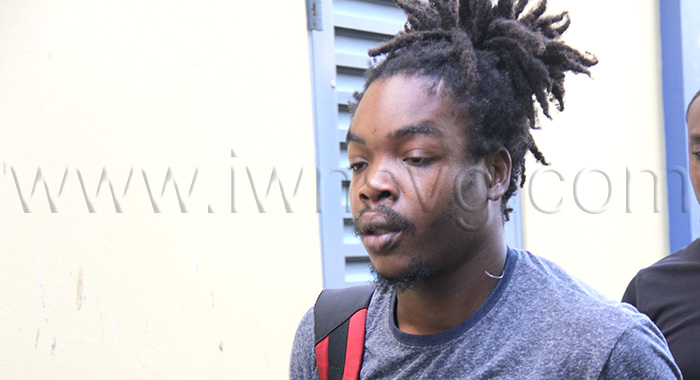
    Connell is representing 32-year-old Kesroy Williams, a Belair resident with a documented schizophrenia diagnosis who faces a second illegal firearms charge in 18 months. Williams was first arrested and jailed in December 2024 after pleading guilty to unlawful possession of a .38 pistol and three rounds of matching ammunition. At the time, he told arresting officers he kept two weapons, “one for a wedding and one for a funeral,” and requested that officers return his gun after he completed his sentence. A Mental Health Rehabilitation Centre (MHC) located in Glen deemed him fit to enter a plea, a finding that went unchallenged — until Connell observed Williams’ second hearing last month.

    Williams was arrested again in February this year on charges that he possessed an unlicensed modified .32 caliber firearm and three matching rounds at his home. When Connell arrived at court in March for what was expected to be a routine sentencing hearing, he said alarm bells went off as the unusual facts of the case were read aloud. In addition to Williams’ history of bizarre statements to police, he noted that Williams had approached passing police officers to voluntarily hand over his weapon, only to be ignored before being arrested later. Connell told reporters after Thursday’s preliminary hearing that the situation struck him as immediately off: “Which person tells you they have a firearm, one for a funeral, one for a wedding, gives it to police and asks for it back after their sentence? That is not the behavior of a legally competent person.”

    Suspicious of the MHC’s competency ruling that deemed Williams fit for trial, Connell requested Chief Magistrate Colin John summon the three clinicians who signed off on Williams’ latest assessment to testify under oath about their qualifications and assessment process. When the trio — Dr. Alisa Alvis, Dr. Micheal Stowe, and Dr. Franklyn Joseph — appeared in court Thursday, their testimony exposed systemic under-resourcing that shocks legal and public health advocates.

    Alvis, who heads the country’s Mental Health Services and was called on to sign off on Williams’ report, confirmed she holds a PhD in psychology but is not a licensed clinical physician authorized to prescribe medication, and is not formally specialized in psychiatric assessment for court proceedings. Stowe, a general practitioner, told the court he is still completing a master’s degree in psychiatry, and only completed a two-week psychiatric rotation as part of his basic GP training. Joseph, also a general practitioner, completed only a two-month psychiatric rotation during his own GP training. Most strikingly, Alvis told the court that St. Vincent and the Grenadines currently has no practicing licensed psychiatrists on staff at any public mental health facility.

    Beyond the lack of specialized training, the clinicians admitted they lack basic diagnostic tools required to complete comprehensive competency assessments. The team told the court they do not have access to standardized IQ testing, and cannot complete many of the lab and cognitive tests required to fully evaluate a defendant’s mental capacity. They also acknowledged they could not rule out additional undiagnosed conditions that could impact Williams’ competency.

    Connell’s questioning further probed the red flags around Williams’ ongoing treatment. Williams takes daily risperidone, a powerful antipsychotic medication commonly prescribed to manage schizophrenia symptoms. A well-documented side effect of the drug is 24-hour cognitive impairment, including problems with memory, concentration, and critical thinking. Connell pressed the team: how can a person constantly living with these side effects be expected to follow court proceedings, respond to cross-examination, and assist in their own defense?

    Even more troubling, Connell told the court he discovered that competency reports written by the two different GPs, 40 days apart for separate defendants, are identical word-for-word. He slammed the current assessment process as perfunctory and fundamentally flawed: “All they do is ask a handful of basic questions — do you hear voices? Do you know who the prime minister is? If you’re dressed properly and don’t have an outburst in the office, you’re labeled fit to plead. That’s absolute nonsense. They even admitted that Williams could have an episode mid-trial and strip off his clothes running out of court, but still called him competent.”

    In an interview after Thursday’s hearing, Connell said this systemic failure has gone on for years, putting countless mentally ill defendants at risk. He noted he is not criticizing the individual clinicians, who are working with severely limited resources, but is calling for urgent systemic reform. “You can’t gamble with people’s lives like this. When you lock a mentally ill person who isn’t competent to stand trial in prison, they face abuse from other inmates, improper medication dosing, even death. I already know of one young man who died in prison from a medication overdose because no qualified specialist was overseeing his care,” he revealed.

    Connell is calling on parliament to prioritize urgent legislation to fix the broken system, and push for the government to recruit at least three full-time qualified psychiatrists to oversee MHC’s court assessment services. “Even if you are a prisoner or living with mental illness, you are still a human being who deserves dignity and due process. This isn’t a political issue — this is a human rights issue that demands urgent action,” he said.

    Following Thursday’s testimony, Chief Magistrate Colin John announced he would issue his formal ruling on the challenge to the competency report on Monday. Prosecutor Inspector of Police Renrick Cato said the prosecution will consult with the Director of Public Prosecutions to map out the next steps once the ruling is issued.


  • ULP left HLDC in ‘fragile’ financial situation — report

    ULP left HLDC in ‘fragile’ financial situation — report

    Nearly five years after the Unity Labour Party (ULP), which held power in St. Vincent and the Grenadines for 25 consecutive years, was voted out of office in November 2021, new details are emerging about the long-term performance of state-owned enterprises that operated under its tenure. The incoming New Democratic Party (NDP) administration has been conducting a quiet, comprehensive review of these public entities, and early findings from the audit point to widespread mismanagement during the previous Ralph Gonsalves-led government.

    One of the first entities to face scrutiny is the state-owned Housing and Land Development Corporation (HLDC), a decades-old agency that has operated across successive administrations from both major political parties. Founded to drive planning and development of affordable residential and community land and housing for low-income households across St. Vincent and the Grenadines, the agency has been credited with delivering nearly 1,000 homes to vulnerable families over its 50-year history. It also played a key role in post-disaster recovery efforts, including repairing 40 homes severely damaged by Hurricane Beryl in 2024 and the 2021 eruption of the La Soufrière Volcano, and currently has 140 new housing units, including prefabricated units, in the pipeline or earmarked for construction.

    Despite this legacy of public service, the NDP administration’s audit reveals a wide range of critical failures in governance, strategic planning and financial management that have left the HLDC in a fragile position. While the agency’s board of directors meets statutory composition requirements, the report documents persistent underperformance, particularly around meeting attendance. In 2025, board meeting attendance fell far below the average for all state-owned enterprises assessed, with many sessions barely reaching the required quorum to conduct official business.

    Beyond attendance issues, the audit found no evidence that the HLDC has ever adopted formal strategic planning, a core function for public entities delivering long-term public services. The agency also fails to produce required annual work plans, and has never published statutory annual reports detailing its programmatic activities, as required by law. Its role in managing public-funded affordable housing projects has also shrunk steadily over time: most major government affordable housing initiatives, such as the flagship “Lives to Live” program, are now contracted directly to private construction firms and managed through the Ministry of Housing, sidelining the HLDC entirely. Today, the agency operates largely as a project manager for privately built middle-income housing developments, collecting only administrative and professional fees for its services, the report concludes.

    The most serious violation uncovered by the audit is the HLDC’s 14-year gap in completing legally required financial audits. The agency has not published an audited financial statement since 2012, a violation of Act No. 7 of 1976 that the report calls “an adverse reflection on governance, transparency, and financial hygiene.”

    Analysis of the HLDC’s internal management accounts from 2021 to 2025 paints a grim picture of the agency’s financial health. Profitability has swung wildly over the five-year period, with the HLDC posting net losses in three of the five years, and an average negative profit margin of 16% across the full period. Revenue, which is almost entirely generated from project activity, has fluctuated drastically: project revenue hit EC$5 million in 2022, plummeted to just EC$532,000 in 2023, fell to zero in 2024, then rose to EC$7 million in 2025. This volatility drove overall annual revenue from a peak of EC$7.33 million in 2022 to just EC$796,663 in 2024, before recovering partially to EC$4.35 million in 2025. Annual net results mirrored this instability: a EC$240,632 profit in 2021, a EC$61,444 loss in 2022, a EC$652,697 profit in 2023, a EC$813,447 loss in 2024, and a EC$209,675 loss in 2025.

    As of the end of 2025, the HLDC carries EC$6 million in overdue accounts payable, indicating the agency has consistently failed to settle its outstanding bills by their required due dates. The audit also uncovered a EC$9 million balance in deferred interest on a loan restructured with St. Vincent Cooperative Bank back in 2014; under the restructuring agreement, only principal payments have been made, with all interest payments pushed back, leading to the massive accumulated balance.

    While the report notes that the HLDC maintained adequate liquidity over the 2021-2025 review period, with enough current assets to cover short-term obligations, the situation has deteriorated sharply in recent years. By 2025, the agency’s liquidity ratio was barely above the regulatory benchmark, leaving no buffer to absorb unexpected financial shocks. Balance sheet strength has also weakened significantly: shareholders’ equity fell 40% from EC$5 million in 2023 to just EC$3 million at the end of 2025, eroded by annual operating losses and accumulated deficits, leaving taxpayers with a negative return on their public investment.

    The HLDC is not the only state-owned enterprise under review by the NDP administration. While an anonymous source with knowledge of the review process declined to name all entities currently being assessed, the source confirmed that the National Lotteries Authority is also part of the audit, noting that preliminary details about the authority’s performance have already been reported in other local media outlets.

    While the audit acknowledges that the HLDC has made meaningful contributions to socioeconomic progress, expanding affordable housing access and supporting social inclusion for low-income communities across the country over its decades of operation, it also makes clear that urgent structural and financial reforms are needed to restore the agency to functional, transparent public service.

  • Gonsalves knows about changing law to avoid the court — Kay

    Gonsalves knows about changing law to avoid the court — Kay

    A high-profile political dispute has erupted in St. Vincent and the Grenadines over a proposed constitutional amendment, with a former opposition senator bringing forward a years-old allegation of improper legislative maneuvering by current Opposition Leader Ralph Gonsalves and his Unity Labour Party (ULP).

    Kay Bacchus-Baptiste, a former New Democratic Party (NDP) senator and electoral candidate, made the claims while responding to ULP criticism of the sitting NDP government’s plan to amend the constitution to clarify candidate qualification requirements for public office. The controversy comes as the ULP has challenged the eligibility of two sitting NDP politicians — Prime Minister Godwin Friday, who has held a parliamentary seat since 2001, and East Kingstown Member of Parliament Dwight Fitzgerald Bramble, who won re-election to a second five-year term — ahead of the November 27, 2025 general election.

    The ULP’s two petitions, set for a joint hearing from July 28 to 30, argue that Friday and Bramble are disqualified from running for office because they voluntarily obtained Canadian citizenship, a claim that turns on the interpretation of existing constitutional language around candidate eligibility.

    Bacchus-Baptiste acknowledged that the NDP’s amendment proposal comes while the court cases are pending, but pushed back against ULP claims that the change is an improper attempt to influence the legal outcome. To counter the accusation, she recalled a 2000s incident when she and fellow activist Nicole Sylvester brought a legal challenge against a Gonsalves-led ULP government’s EC$1 levy on passengers traveling to the Grenadines via the main ferry terminal.

    At the time, Bacchus-Baptiste explained, the ULP administration imposed the fee without any legal authority to collect the charge. When the legal team prepared to file for an injunction to block the collection, the ULP rushed through a new regulation overnight to retroactively legalize the tax — directly pre-empting the court hearing.

    “When we were preparing to go to court the morning to deal with the injunction that we were applying for, we were presented with this regulation that they woke up the printery and got it done overnight, the minister, and presented it to us, effectively to bar our injunction,” Bacchus-Baptiste told iWitness News.

    The case was appealed to the Court of Appeal but never received a hearing, she said. The fee was eventually withdrawn after Gonsalves faced public pressure to drop the charge, leading Bacchus-Baptiste’s team to withdraw their appeal as the core issue was resolved. Bacchus-Baptiste said the incident proves Gonsalves is fully aware of the tactic of changing legislation to defeat pending court cases — the very action the ULP is now accusing the NDP of taking.

    However, the former senator emphasized that the NDP’s current proposal is fundamentally different from the ULP’s 2000s overnight regulatory change. St. Vincent and the Grenadines’ existing electoral law already requires candidates to hold Commonwealth citizenship to run for office, she explained. The amendment only fills a gap in the constitution’s definition section, rather than changing the existing eligibility rule. The clarification, she argued, has long been needed and is not an attempt to alter the rules of the election mid-stream.

    Bacchus-Baptiste also noted that the NDP’s current position on the constitutional language aligns with the party’s stance in 2009, when it campaigned against the ULP’s proposed constitutional changes. At that time, Gonsalves and his ULP administration campaigned in favor of the amendments, arguing that the changes would enshrine the right of any Commonwealth citizen residing in St. Vincent and the Grenadines to run for public office, a position consistent with the NDP’s current clarification push.

  • Luke would accept if court gives him seat he’s failed to win 4 times

    Luke would accept if court gives him seat he’s failed to win 4 times

    A long-running political dispute over a parliamentary seat in St. Vincent and the Grenadines has taken a new turn, as defeated opposition candidate Luke Browne has publicly stated he is ready to take office if the courts nullify the 2025 general election victory of ruling New Democratic Party (NDP) incumbent Dwight Fitzgerald “Fitz” Bramble.

    Browne, a former senator and health minister from the opposition Unity Labour Party (ULP), has lost four consecutive attempts to win the East Kingstown parliamentary seat, with the 2025 poll marking his poorest performance to date. Held on November 27, 2025, the election saw Bramble secure a second five-year term by a margin of 1,001 votes to Browne’s count. Official vote breakdowns show that while Bramble earned 172 more votes in 2025 than he did in his 2010 debut run, Browne received 582 fewer votes than in the 2020 election, even as total turnout dropped by 405 votes overall.

    Now, Browne and the ULP have filed an election petition arguing Bramble is constitutionally ineligible to hold the seat, because Bramble holds Canadian citizenship. Under St. Vincent and the Grenadines law, candidates who acknowledge allegiance to a foreign power are barred from serving in Parliament, a charge Browne says applies to Bramble, who obtained citizenship through his own voluntary action. The challenge is not isolated: ULP candidate Carlos Williams has filed a parallel petition against Prime Minister Godwin Friday, who defeated Williams to secure a sixth consecutive term in the Northern Grenadines constituency. Friday won that race by a landslide margin of 1,846 votes, earning 2,185 votes to Williams’ 339.

    In an interview broadcast on Hot 97 FM Friday, Browne addressed widespread questions about the legal challenge, confirming he would accept an automatic appointment to the East Kingstown seat if the court rules in his favor, rather than pushing for a new by-election. Browne’s legal position holds that any candidate who was unqualified to run in the first place cannot legally be declared the winner, regardless of election day results. He analogized the situation to Olympic competition: if a race winner is later disqualified for breaking competition rules, the second-place finisher is elevated to champion status by default.

    “There’s a good chance that they will be the automatic seating of Carlos Williams and myself,” Browne said during the interview, noting that he would accept the court’s outcome without objection. When pressed on whether he would feel comfortable taking a seat voters did not explicitly award him on election day, Browne pushed back, arguing that he was the only qualified candidate on the East Kingstown ballot. “The people had a right to vote for any of the qualified candidates on election day. It so happens that I was the only qualified candidate in East Kingstown,” he explained.

    Browne rejected claims that he is relying on technicalities to seize power, insisting his challenge is rooted in upholding existing constitutional rules. He also hit back at the NDP government’s planned constitutional amendment, scheduled to be introduced to Parliament next Tuesday, which would clarify the legal definition of “foreign power or state”. Browne accuses the NDP of rushing to rewrite the rules after the election to protect its two MPs if the court rules against them. “What they are seeking to do is, by any means necessary, change the rules of the game after the fact,” he said.

    The former health minister emphasized that he has always accepted past election outcomes and moved forward, but he is exercising his clear constitutional right to challenge ineligible candidates. He added that if the roles were reversed, the NDP would take the exact same legal action he is pursuing now. The ULP has repeatedly stated that the planned amendment is nothing more than a last-minute insurance policy for the ruling party’s vulnerable elected officials.

  • NDP’s position same as 2009; Gonsalves’ has shifted — lawyer

    NDP’s position same as 2009; Gonsalves’ has shifted — lawyer

    A long-simmering constitutional debate over candidate eligibility for general elections in St. Vincent and the Grenadines (SVG) has entered a critical new phase, with the newly elected New Democratic Party (NDP) government moving to codify a clarification that directly contradicts a dramatic shift in position by former prime minister Ralph Gonsalves and his Unity Labour Party (ULP).

    The controversy traces back to the 2009 constitutional referendum, when Gonsalves, then serving as prime minister, openly acknowledged that SVG’s founding constitution allowed any Commonwealth citizen — not just native-born or naturalized Vincentians — to qualify as a candidate in national general elections. At the time, Gonsalves pushed voters to approve constitutional changes that would narrow that eligibility, a position the NDP, then the opposition, campaigned against vigorously. The referendum was soundly defeated, leaving the original Commonwealth citizen eligibility rule intact.

    Now, 16 years later, the political landscape has flipped dramatically. After Gonsalves’ 25-year incumbent ULP government was defeated in the November 2025 general election, the former leader has reversed his 2009 stance. He now claims Commonwealth nations qualify as “foreign powers”, and has challenged the eligibility of two top NDP officials — Prime Minister Godwin Friday, who has represented Northern Grenadines in Parliament since 2001, and Foreign Affairs Minister Dwight Fitzgerald Bramble, first elected as MP for East Kingstown in 2020 — on the grounds that both hold Canadian citizenship obtained through their own application. The ULP has filed two electoral petitions, which are scheduled to go to trial in June, asking the courts to remove the two officials from their parliamentary seats.

    In response to the legal challenge, the NDP, which won a 14-1 supermajority in Parliament after the 2025 election, has brought forward a constitutional amendment for a parliamentary vote scheduled for Tuesday. The amendment would formally add a definition of “foreign power” to the constitution’s interpretation section, explicitly stating that a foreign power is any state that is not a member of the Commonwealth. Because the change only affects the definition section, not an entrenched core provision of the constitution, no new public referendum is required to enact it, and the amendment is all but guaranteed to pass given the NDP’s overwhelming parliamentary control.

    Kay Bacchus-Baptiste, a prominent constitutional lawyer and former NDP senator, has defended the government’s move, framing it as a long-overdue clarification rather than a substantive rewrite of the nation’s supreme law. Speaking to iWitness News earlier this week, she noted that the 2009 referendum result, which defeated all proposed constitutional changes, confirmed that the Vincentian public intended to keep the original Commonwealth citizen eligibility rule in place. She pointed out that the original constitution’s definition section never explicitly defined the term “foreign power”, even as the core text clearly restricts eligible candidates to Commonwealth citizens.

    “‘Commonwealth citizen’ is a clear definition,” Bacchus-Baptiste said. “Canada is part of the Commonwealth. So, it is clear. The law says that you have to be a Commonwealth citizen, which is different from the constitutions of other Caribbean nations like Dominica and St. Kitts, which restrict candidates to their own citizens.”
    Bacchus-Baptiste emphasized that Gonsalves’ own words from 2009 confirm that the original interpretation has long been understood: back then, Gonsalves himself acknowledged that any Commonwealth citizen with one year of residence in SVG could run for office, and campaigned to change that rule. She called the current ULP argument a complete reversal of the party’s long-stated position.

    “In our law, it says a Commonwealth citizen. That alone is a massive distinction that would be difficult to get over. And I do agree that enough has been said, and it should be clarified, because even Dr. Gonsalves himself had said that a Commonwealth citizen can run; he had said it over and over and wanted to amend it. Now he’s changing his mind or pretending that that is not what the law says,” she said. “It says that, and I commend this government for clarifying it by simply including in the definition section something that was omitted. That is what they’re doing and I commend them.”

    Gonsalves and ULP spokespeople have pushed back against the amendment, accusing the NDP government of enacting an “insurance policy” to pre-emptively protect its officials from a potential unfavorable court ruling in the upcoming petitions. In an about-face from his position during the 2015 post-election legal challenges brought by the NDP, Gonsalves said in an April 15 interview with Star Radio that the courts should be allowed to issue an independent ruling on the eligibility petitions.

  • Leacock renews call for Taiwan’s help with constituency dev’t fund

    Leacock renews call for Taiwan’s help with constituency dev’t fund

    As bilateral diplomatic ties between Taiwan and St. Vincent and the Grenadines mark their 45-year milestone, the Caribbean nation’s acting prime minister St. Clair Leacock has reaffirmed the long-standing partnership while publicly pushing for Taiwanese financial support for a new grassroots development program.

    Leacock made his remarks during celebrations that included a joint parade by a visiting Taiwanese naval squadron and the Royal St. Vincent and the Grenadines Police Force, held in Arnos Vale. Speaking directly to Taiwanese President Lai Ching-te, Leacock referenced a private conversation the two held during his official visit to Taipei earlier this year – the first cabinet-level visit from St. Vincent and the Grenadines since the New Democratic Party won national elections in November 2025, when Leacock led a four-member delegation to the island.

    Opening his address, Leacock praised the four-and-a-half decades of collaboration between the two sides, noting that geographic distance has never weakened their close friendship, in line with the proverb that distance never separates true family and friends. Over the years, Taiwan has contributed to key infrastructure projects including bridges, roads and hospitals in St. Vincent and the Grenadines, and provided agricultural support and educational scholarships for local students.

    However, Leacock stressed that significant development challenges remain for the small Caribbean nation. Acknowledging that widespread poverty persists across the country, he argued that existing assistance has not fully addressed grassroots economic needs. For nearly 20 years, Leacock – who also serves as the Member of Parliament for Central Kingstown – has championed the creation of a national constituency development fund, which would give elected representatives direct resources to address local needs and create sustained job opportunities for their constituents.

    He explained that the most frequent request he receives from local residents is for greater economic autonomy and more work opportunities, rather than relying on ad-hoc political assistance. The constituency development fund, he argues, would empower local representatives to deliver sustained support directly to communities, putting financial resources directly into the hands of constituents to reduce poverty and drive local growth. Leacock said he remains confident that Taiwan will agree to contribute to the new fund, repeating his appeal to President Lai three times to provide the urgently needed financing to help St. Vincent and the Grenadines achieve its national development goals.

    Leacock also added that the government of St. Vincent and the Grenadines remains deeply grateful for Taiwan’s long-standing support, noting that many Vincentian students who have taken up Taiwanese scholarships have chosen to build their careers in Taiwan, while the government hopes that expanded opportunities at home will encourage more graduates to return and contribute to national development.

  • VIDEO: Grieving mother on murder charge arrives in court

    VIDEO: Grieving mother on murder charge arrives in court

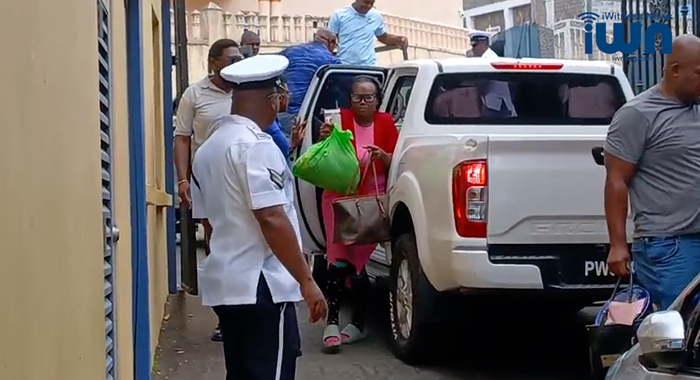
    A 46-year-old Layou security guard, grieving the fatal shooting of her son just seven days prior, has made her first court appearance alongside a 22-year-old local man, after the pair were hit with conspiracy and murder charges over the death of a 19-year-old labourer.

    Rosia John and Augustus Mathews, a Layou resident, face two formal criminal allegations connected to the killing of Perrance Mathews, a 19-year-old Layou-based labourer. Court documents outline that between April 10 and April 13, 2026, the two defendants conspired to carry out a plan that would have culminated in a murder. The second, more severe charge accuses them of intentionally and maliciously causing Perrance Mathews’ death by shooting him multiple times across his body.

    Authorities confirm the alleged crimes took place in Buccament, a coastal community in St. Vincent and the Grenadines. On Friday, April 17, 2026, John and Mathews appeared at Kingstown’s Serious Offences Court for the formal reading of their charges, an event that was captured on video by local media.

    The court appearance comes exactly one week after a double shooting in Kingstown’s Stoney Ground neighbourhood that claimed the life of John’s 29-year-old son, Enrique John, also known locally by the nickname Shoubu. Raheem Guy, 22, was also killed in that same April 10, 2026 attack. The overlapping timeline of the two violent incidents — the double killing that left Rosia John bereaved, followed just days later by her being charged in the murder of 19-year-old Perrance Mathews — has cast a spotlight on the surge of violent gun crime impacting the small Caribbean nation.

  • Top cop confirms link between Stoney Ground, Buccament killings

    Top cop confirms link between Stoney Ground, Buccament killings

    A wave of brazen, daylight gun violence that left three people dead across two communities in St. Vincent and the Grenadines has pushed the nation’s top law enforcement official to launch a full-scale operational crackdown on organized criminal activity, confirming a clear connection between the two separate shooting incidents that shocked the country over the weekend.

    Police Commissioner Enville Williams made the confirmation and announced the offensive in an official public address shared across social media channels, framing the brutal killings as a defining moment for the small Caribbean nation. In his address, Williams emphasized that the recent violence is far more than a routine law enforcement challenge—it is a direct attack on the country’s core values of peace and public safety.

    The string of violence began on the afternoon of April 10, when two men—29-year-old Enrique John, widely known by his alias Shoubu, and 22-year-old Raheem Guy, identified by sources as a close associate of John—were gunned down in the Stoney Ground neighborhood. John was killed inside a retail store at the local Russells Shopping Centre, a busy commercial hub, while Guy was fatally shot on the public sidewalk just outside the Caribbean Medical Imaging Centre, just steps away from the first shooting scene.

    Hours later, on Saturday, the body of 19-year-old Perrance Matthews, a relative of John from the Layou community, was discovered along the river defense embankment in Buccament Bay. Autopsy preliminary findings confirmed he died from multiple gunshot wounds to the head and chest. One additional person was wounded in the related violence, Williams confirmed.

    In the wake of the three deaths, Williams said the nation has reached an unavoidable crossroads: “There are moments in the life of a nation that demand more than mere observation, that demand a reckoning. Today, we stand at such a crossroad.”

    Calling the open violence “a direct assault on the peace, the dignity and the very soul of this country,” Williams said the public’s growing fear—sparked by the question of whether it is even safe to walk outside in their own communities—demanded a decisive response. “This is where we draw the line, and we’ll bring everything we’ve got to the fight,” he stated.

    The commissioner announced that the entire constabulary would shift from routine patrol to an absolute operational offensive against criminal networks. “We are focusing every lawful resource on this, and from here forward, our actions will speak louder than any words. We will be mobilising the machinery of the state to hunt down those who believe they can act without consequence,” Williams said.

    He issued a direct warning to both the perpetrators of the violence and anyone who aids them, saying: “To the criminal elements who believe they can transform the society into private hunting grounds, your arrogance is your undoing. Anyone who provides a roof, a vehicle or a wall of silence for these killers, you are not bystanders. You are accomplices to the destruction of your own country.”

    Williams added that law enforcement will dismantle the entire criminal infrastructure supporting the gun violence, using the full force of the law to target every person involved. He described the pattern of gun-related lawlessness as a dangerous cancer that must be stopped before it spreads to every town and village across the country, noting that national safety depends on the courage of everyday citizens.

    Acknowledging that the public’s anger and anxiety over the violence are completely justified, Williams called on residents to break their silence and share any information they have with authorities. “If you possess a single fragment of information, a name, a sighting, a whispered plan, bring it forward. Do not let misplaced loyalty become the solder under which more of our sons and daughters are buried,” he urged, warning against private retribution.

    “Vigilantism is not justice. It is the fuel that feeds the fire. Let the law be your shield and the police your sword,” he said. Williams also asked the public for patience in the coming days as the expanded operation unfolds, noting that all actions are being taken to protect the public good.

    To make it easier for residents to submit tips, the country’s Criminal Investigations Department and major crime units have posted dedicated hotlines—456-1801 and 457-1211—for anonymous tips. In the coming days, authorities will also launch a new QR code system that will allow residents to share information securely and freely, with all identities protected under the strictest confidentiality protocols.

    “This is the hour for our national resolve. This will not be defined by the violence of a few, but by the unity of many,” Williams said. “We will reclaim our streets, we will restore our peace, and we will ensure St. Vincent and the Grenadines remains a land where law and order are absolute.”

    As of the latest update, authorities have already made two arrests in connection with Perrance Matthews’ death. Rosia John, Enrique John’s mother, and 19-year-old Augustas Matthews, another Layou resident, have been charged with murder and conspiracy to murder. Rosia John additionally faces charges of cocaine possession and drug trafficking. Both suspects are scheduled to make their first court appearance later this Friday.

  • ‘We do not take this friendship for granted,’ Taiwan tells SVG

    ‘We do not take this friendship for granted,’ Taiwan tells SVG

    As the 45th anniversary of official diplomatic relations between St. Vincent and the Grenadines (SVG) and Taiwan approaches on August 15, senior diplomatic representatives from Taiwan have emphasized that the island nation deeply values its long-standing alliance with the Caribbean state, stating that the friendship is not taken for granted.

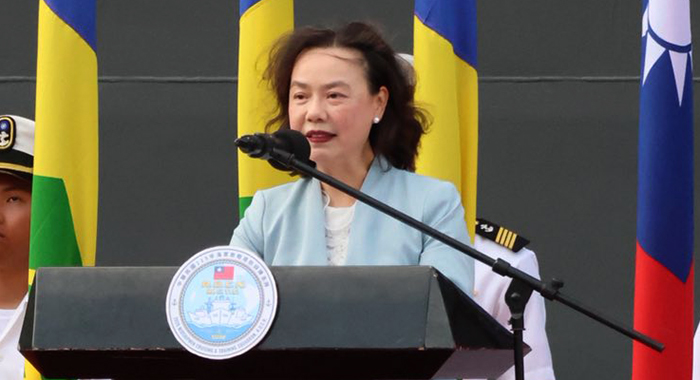
    The milestone commemoration took center stage on Wednesday at a public event in Arnos Vale, where a joint ceremonial parade was held by the 2026 Midshipmen Cruising and Training Squadron of Taiwan’s Navy and the Royal St. Vincent and the Grenadines Police Force.

    Addressing attendees at the gathering, Fiona Fan, Taiwan’s top envoy to Kingstown, framed the anniversary not as a mere formal commemoration, but as a celebration of a deep, unbreakable connection built over four and a half decades through reciprocal sincerity, mutually beneficial collaboration, and consistent mutual respect between the two sides.

    Fan highlighted the symbolic weight of the Taiwanese Navy squadron’s 50-day transoceanic journey, which took the vessel across the West Pacific Ocean and through the Caribbean Sea to reach SVG. She described the voyage as a tangible demonstration of courage, unwavering commitment, and steadfast resolve, adding that for Taiwan, the journey underscores a core conviction: peace is not a passive, guaranteed state. Instead, it must be actively protected, preserved, and reinforced through collective resilience and a commitment to global responsibility.

    Positioning Taiwan as a responsible actor in the international community, Fan asserted that the island remains a consistent force for positive global good, dedicated to advancing peace, stability, and widespread prosperity across the Indo-Pacific region and beyond. She noted that the 45-year partnership has evolved far beyond standard diplomatic engagement, delivering tangible, transformative development outcomes for SVG over the decades. These outcomes include key national infrastructure projects that Taiwan has supported through donations and concessional loans, such as the Argyle International Airport, the Rabacca Bridge, the country’s national library, and the ongoing expansion of the Arnos Vale acute care hospital.

    Looking ahead to the next chapter of bilateral cooperation, Fan shared that the two sides are set to explore new collaborative frontiers, including advances in smart agriculture, expanded access to improved healthcare, tech-driven innovation, targeted programming for youth and women’s empowerment, and the development of sustainable, community-centered tourism. Fan outlined Taiwan’s core vision for the partnership: a future where ongoing joint work continues to lift living standards and strengthen local communities across both nations.

    Amid widespread global geopolitical uncertainty, Fan noted that the enduring bilateral partnership sends a powerful message that resonates far beyond the borders of SVG and Taiwan. She extended sincere gratitude on behalf of Taiwan’s government and people to SVG for its long-standing, unwavering support for Taiwan’s meaningful participation in key international organizations, including the United Nations, the World Health Organization, and Interpol. Reaffirming the value Taiwan places on the alliance, Fan stated: “We do not take this friendship for granted. We honour it, we cherish it, and we remain committed to being a reliable partner, sharing knowledge, contributing expertise and working hand in hand for global well-being.” She closed her remarks by expressing hope that the friendship will continue to stand as a beacon of hope, a symbol of shared resilience, and a promise of a brighter shared future for the people of both nations.

    Speaking at the same event, Rear Admiral Ming-feng Chen, commander of the Taiwanese Navy training squadron, echoed these sentiments, noting that the joint military parade serves a dual purpose. Beyond showcasing the discipline, precision, and capability of both participating forces, the event is first and foremost a celebration of 45 years of deep friendship between two nations separated by thousands of miles of ocean but united by shared commitments to the values of freedom and democracy. Chen added that the joint performance by the Taiwanese Navy military band and the SVG police force band further highlights the deep harmony and shared alignment between the two countries. He concluded by thanking the government and people of SVG for their warm hospitality extended to the squadron during its visit, and offered a toast to the enduring, unshakable bond between the two nations.

  • Murder victim’s mother charged with murder, other crimes

    Murder victim’s mother charged with murder, other crimes

    A shocking development has emerged in a string of connected gang-related killings across St. Vincent and the Grenadines: the mother of one of two men gunned down in a public shooting spree last week has been arrested and charged with murder and conspiracy to commit murder in the death of a 19-year-old found dead in Buccament Bay over the weekend.

    Rosia John, whose 29-year-old son Enrique John — also known by the alias Shoubu — was killed in a two-minute shooting rampage in Stony Ground this past Friday, will appear before the Serious Offences Court this coming Friday to face her charges. She is accused alongside 19-year-old Augustas Matthews, also a resident of Layou, in the fatal shooting of Perrance Matthews, 19, whose body was recovered along Buccament Bay’s river defence with multiple gunshot wounds to the head and chest.

    In addition to the violent conspiracy and murder charges, John also faces separate counts of cocaine possession and drug trafficking. Local law enforcement rules in St. Vincent and the Grenadines prohibit bail for individuals accused of murder until a nine-month period has elapsed following arraignment, a restriction that means John will almost certainly be denied temporary release and will miss the opportunity to arrange or attend the funeral of her only child.

    This is not the first time John has made headlines for involvement with the criminal justice system. Nine years prior, police were forced to restrain her outside the Kingstown Magistrate’s Court after she attempted to instruct her son to hide his face as he was led away following an arraignment on statutory rape charges. The victim in that 2015 case was a minor between the ages of 13 and 15. John was a regular presence in court for her son throughout a string of subsequent criminal hearings, and multiple charges against him remained unresolved at the time of his death.

    Enrique John was not the only fatality in last Friday’s Stony Ground violence: his close associate 22-year-old Raheem Guy was also shot and killed on the sidewalk outside the Caribbean Medical Imaging Centre, while John died inside a shop at the Russells Shopping Centre. The spree marked the start of a deadly 24 hours that ended with the discovery of Perrance Matthews’ body in Buccament Bay the next day.

    Local authorities and community observers have linked all three killings to long-running gang warfare across the country. The conflict pits an alliance of factions from Central Kingstown and their Layou-based associates against a rival gang based in West Kingstown. Perrance Matthews, who went by the alias “Suspect”, was reportedly a former member of one of the involved groups who had left the faction and was in the process of attempting to rejoin at the time of his death. At the time of his own killing, Enrique John was still awaiting the verdict on two outstanding attempted murder charges against him.