A landmark milestone in the long-awaited overhaul of Saint Lucia’s flagship athletic facility is fast approaching, as the international consultant consortium leading the George Odlum Stadium rehabilitation drive is on track to deliver full finalized architectural blueprints, granular technical specifications, and fully itemized cost projections to the national government no later than the first week of December. This critical deliverable clears the path for the Caribbean island nation to restore the 22,000-square-metre venue to full functionality as a world-class hub for regional and international track and field and football competitions.
Overseen by the Ministry of Economic Development and Youth Economy, the comprehensive redesign initiative is tailored to bring the 24-year-old infrastructure into strict compliance with the global governing standards set by World Athletics and FIFA, two of sport’s most rigorous regulatory bodies. The project has been in active development for more than 18 months, following the closure of the public tender process for design, third-party review, iterative modification and on-site construction supervision just over one year prior to the upcoming submission date.
An anonymous source with direct, unpublicized knowledge of the project’s progress, who requested anonymity as they were not formally authorized to speak to local media outlet St Lucia Times, confirmed that the consultant team is in the final stretch of refining all project documentation. “They are at the final verification stage now, where every drawing line, structural calculation, and cost line item is being cross-checked to avoid gaps before handover,” the insider explained. “By the first week of December, the government will have every piece of technical data and the full, audited budget for the entire redevelopment in their hands.”
The scope of the planned upgrades extends far beyond basic structural repairs: the revamped venue will feature a brand new professional-grade synthetic warm-up track, dedicated, regulation-compliant zones for all field events, fully renovated athlete dressing rooms with anti-doping testing facilities, premium corporate hospitality booths for event sponsors, and a purpose-built modern media centre equipped with high-speed broadcast connectivity to support international event coverage.
Steering the entire planning process is a multi-stakeholder advisory committee that convened dozens of formal sessions over the past year and a half, with representation drawn from the Saint Lucia Athletics Association, the Saint Lucia Football Association, and national sports governing body Sports Saint Lucia Inc. Most recently in October, the full committee completed a full on-site walkthrough of the stadium to conduct a granular assessment of every area earmarked for upgrades, documenting existing wear and tear and adjusting design plans to align with on-ground conditions.
The cross-border consultant joint venture leading the design work is helmed by UK-based RLB Consultants, a global firm specializing in large-scale sports infrastructure construction, cost benchmarking and end-to-end project management. The team also includes Canada-headquartered Coles Caribbean, which brings decades of regional Caribbean development expertise, while local Saint Lucian firm Amana Consulting is responsible for all civil and structural engineering assessments tailored to the island’s tropical climate and seismic safety requirements. Project leads confirm that the final design package is only a matter of weeks away from full completion.
Once the government formally signs off on the submitted designs and cost projections, the next procedural phase will launch immediately: an open public tender call for pre-qualified local and international construction contractors to bid on the physical rehabilitation works. The multi-million-dollar project already has secured confirmed, earmarked funding streams: the Saudi Fund for Development allocated US$8 million specifically for the stadium redevelopment in its 2024 grant portfolio, while Saint Lucia’s Ministry of Finance has committed EC$2.5 million to cover all design costs, ongoing supervision services, and pre-construction site preparation works.
Originally completed as a goodwill infrastructure gift from the People’s Republic of China and opened to the public in 2002, the George Odlum Stadium was initially envisioned as the crown jewel of Saint Lucia’s southern regional development strategy, designed to nurture local athletic talent and put the island on the map as a premier Caribbean sports event host. It received a partial upgrade in 2009 to host the prestigious CARIFTA Games, the region’s flagship junior athletics championship, but its purpose as a sporting venue was abruptly interrupted later that same year, when a devastating fire at the nearby St Jude Hospital forced authorities to convert the entire stadium complex into an emergency temporary hospital to deliver critical care to local residents. For more than 15 years, the venue has operated exclusively as a makeshift health care facility, completely sidelining its original sporting purpose.
The planned stadium restoration is inextricably tied to the ongoing construction of the permanent new St Jude Hospital, which national government officials have confirmed is scheduled to be fully completed and operational by 2027. Once the new hospital doors open, health services will be fully relocated off the stadium grounds, freeing the site for the long-awaited sporting redevelopment. As part of the upcoming design review process, engineering teams will also conduct a full structural audit of all buildings on the stadium property to assess long-term wear and modifications accumulated over more than a decade of continuous use as a makeshift hospital, to ensure all upgrades meet modern safety and performance standards before any construction work breaks ground.
标签: Saint Lucia
圣卢西亚
-

Design and budget for new George Odlum Stadium expected next month
-
CCSS, SLSA dominate going into table tennis playoffs
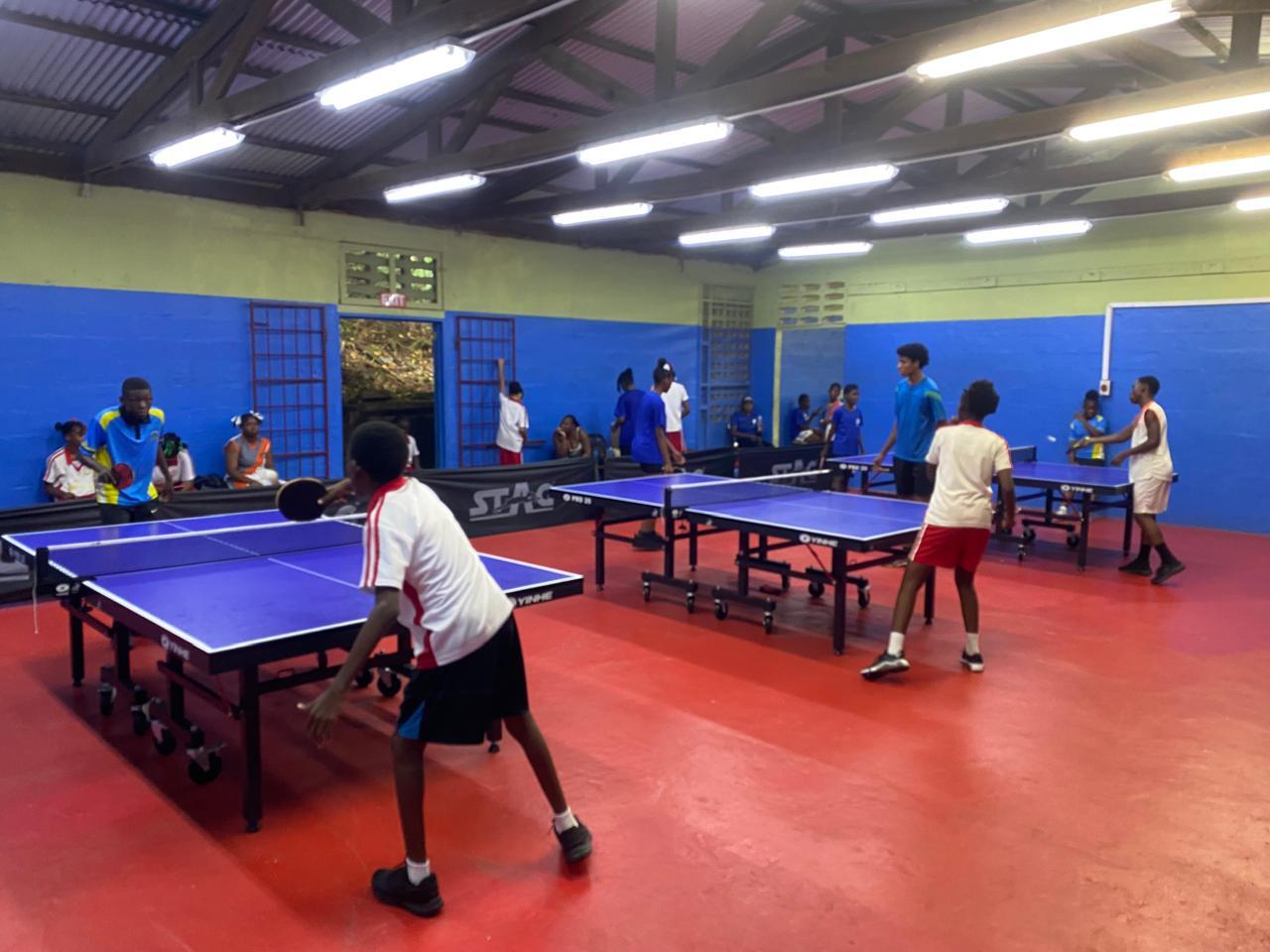
The highly anticipated 2026 Saint Lucia Inter-Secondary Schools Table Tennis Championships is set to shift to its competitive knockout phase next week, following the conclusion of all Group 4 preliminary matches at the Castries Table Tennis Centre this week. The upcoming round of 16 singles clashes and team quarterfinal fixtures will officially kick off at the Beausejour Gymnasium starting at 10 a.m. on November 10, showcasing the island’s most promising young table tennis talent.
In the boys’ team Group 4 division, Castries Comprehensive Secondary School (CCSS) delivered a flawless, dominant performance spearheaded by national team standout Leshon Francis. The squad, which also features unbeaten teammates Jay Alcee and Kareem Innocent, swept all three of its group stage opponents — Saint Lucia Sports Academy (SLSA), Corinth Secondary, and Sir Ira Simmons Secondary — with identical 3-0 scorelines to claim the top spot in the group and secure an undisputed spot in the team quarterfinals. The second quarterfinal berth from the group went to Corinth Secondary, whose campaign was anchored by standout displays from Jedd Desir and Kervan Marcel. The team earned hard-fought wins of 3-1 against Sir Ira Simmons, 3-2 over Babonneau Secondary, and a narrow 3-2 edge against SLSA to advance.
The girls’ team Group 4 matches were marked by tightly contested, nail-biting finishes throughout the draw. Led by national champion Shatal Charles, SLSA claimed first place in the group, edging out both Corinth Secondary and CCSS with razor-thin 3-2 victories. CCSS secured the group’s second knockout spot behind the consistent play of Lyzan Seraphin, Nefetari Godard, and Emma-Lee Wells, while Corinth Secondary rounded out the advancing girls’ team cohort with strong contributions from Elizabeth King and Laricia Oculien.
CCSS also put on an impressive showing across all singles qualification brackets, securing dozens of spots in the upcoming round of 16. In the under-13 boys’ category, Jay Alcee of CCSS earned a place, alongside Corinth Secondary’s trio of Jedd Desir, Jelanie Flermius, and Omari Matthew. The under-15 boys’ division will feature SLSA’s Omari McCaunley, plus CCSS’s Leshon Francis, Jay Alcee, and Jedd Desir. Francis and Alcee also locked in their spots in the under-19 boys’ draw, where they will be joined by McCaunley and his SLSA teammate Mitchel Deterville.
CCSS’s female athletes dominated their respective singles age groups, taking five out of six available under-13 girls’ qualification spots: Nefetari Godard, Emma-Lee Wells, Kezie Edwards, Hanah James, and Azelia Emmanuel claimed those berths, with the final spot going to Kelisa Antoine of Sir Ira Simmons. The CCSS squad completed a full clean sweep of all under-15 girls’ qualifying positions, with Lyzan Seraphin, Godard, Wells, and Edwards all advancing. For the under-19 girls’ division, Shatal Charles qualified for SLSA, Seraphin, Godard, and Wells moved through for CCSS, Amia JnMarie earned a spot representing Babonneau Secondary, and Elizabeth King secured her place for Corinth.
With Group 4 now fully wrapped up, the full field for the championship knockout rounds is confirmed. The boys’ team quarterfinals will see CCSS and Corinth Secondary join previously qualified sides Special Education Centre Vieux Fort, Vieux Fort Comprehensive, Soufriere Comprehensive, TVET Building Construction, Ciceron Secondary, and St. Mary’s College. The girls’ team quarterfinal lineup includes Vieux Fort Comprehensive, St. Joseph’s Convent, Entrepot Secondary, SLSA, CCSS, and Corinth Secondary. All upcoming matches will be hosted at the Beausejour Gymnasium, as the island’s top secondary school table tennis players compete for the 2026 championship titles.
*(Photo credits: Leshon Francis and Shatal Charles portraits courtesy of the Saint Lucia National Table Tennis Association)* -

SJC, Soufriere, CCSS, Beanefield eye U16 netball title
The highly anticipated Under-16 Netball Tournament, organized by the Ministry of Youth Development and Sports, has entered its decisive knockout stage, with just four elite secondary school teams remaining in contention for the national title. The semifinal showdowns are scheduled to unfold next Wednesday at the Beausejour Gymnasium, where the two winning sides will secure their spots in the tournament’s final championship match.
The path to the semifinals saw dominant group stage performances from two standout sides: St Joseph’s Convent (SJC) and defending title holders Soufrière Comprehensive (SCSS), who both swept their respective groups to claim top seeding positions. Joining them in the final four are Castries Comprehensive Secondary School (CCSS) and Beanefield Comprehensive, who locked in the second-place qualification spots from Group A and Group B respectively.
In Group A, SJC put on a flawless, undefeated campaign, finishing top of the standings with a perfect 15 points from three matches and a staggering +53 goal difference. The team cemented their pole position with a tight 18-13 victory over CCSS, converting every single one of their 18 shot attempts during the fixture. Star goal shooter Xanaiia Emmanus led SJC’s offensive charge with a perfect 14 goals from 14 attempts, while supporting goal attacks Skai St Claire and Leyla Sylvester each chipped in 2 goals to round out the total.
CCSS, the Group A runners-up, finished with 10 points and a +40 goal differential, anchored by strong performances in the shooting circle from goal shooter Valencia Seraphin, who sunk 12 of her 16 attempts, and goal attack Luwander Antoine, who added 1 goal from 6 chances. Third place in Group A went to Leon Hess Comprehensive, who finished on 5 points after a narrow 11-10 win over Entrepot Secondary, who exited the tournament without earning a single point. Leon Hess’s scoring was split perfectly between goal shooter Alexi Philip, who converted all 7 of her shots, and goal attack Onyella Enebeli, who landed all 4 of her attempts. For Entrepot, goal shooter Azaria Leon scored 7 from 11 and goal attack Jahnii Charlery added 3 from 7.
Over in Group B, defending champions SCSS asserted complete dominance across the southern zone fixtures, finishing top of the table with a maximum 20 points from four matches and an outstanding +98 goal difference. One of their standout group stage results was a 28-13 triumph over Choiseul Secondary played at the Micoud Court, where Harriel William led SCSS with 15 goals from 23 attempts, Steffi Paul netted 9 from 19, and Kheryss Ferguson contributed 4 from 7. For Choiseul, Malia Isidore scored 10 from 15 and Kevlyn Fostin added 3 from 9.
Beanefield Comprehensive secured Group B’s second semifinal spot with 15 points, punching their ticket to the knockout rounds after a dominant 16-4 away win over hosts Micoud Secondary. Notably, Beanefield’s entire 16-goal output in that fixture came from goal shooter Jerannie Marquis, who converted 16 of her 24 attempts, while goal attack Annia St Ange was unable to register a goal from her 4 shot attempts. For Micoud, Sashaly Martyr scored 3 goals from 6 tries and Shanequa Jn Baptiste added 1 goal. Choiseul finished third in Group B with 10 points, ahead of Vieux Fort Comprehensive on 5 points, while winless Micoud Secondary rounded out the group standings in last place.
The November 11 semifinal lineup at the Beausejour Indoor Facility will kick off with a first match pitting Group A winners SJC against Group B runners-up Beanefield Comprehensive. Immediately following the conclusion of that fixture, the second semifinal will see defending champions and Group B top seeds SCSS go head-to-head with Group A runners-up CCSS, with the two victors moving on to compete for the tournament’s overall title.
-

Breast cancer survivor shares journey in new memoir
When Anne Marie Herman walked into a routine mammogram appointment in September 2005, she expected a standard clean bill of health that would let her go back to her daily life with a reminder to return for screening 12 months later. What she received instead was a life-altering breast cancer diagnosis, a turning point she describes as one of the most unforeseen “detours” on her life’s path that would reshape her entire perspective on existence. That transformative journey is now laid bare in her newly released memoir, *Doing It My Way? With Prayer, Persistence and Detours*, which officially launched to the public in September of this year.
The memoir weaves together a full narrative of Herman’s life, from her modest upbringing to the milestones she reached through education, deep familial bonds, and abiding personal faith, before centering the grueling stretch of treatment that followed her diagnosis: invasive surgery, rounds of chemotherapy, and a prolonged period of physical and emotional upheaval where no outcome was guaranteed. In an interview with the St Lucia Times, Herman emphasized that her path to recovery was far from a story of unbroken fearlessness. “I am human, and there were difficult moments,” she acknowledged, noting that while her spiritual faith provided steady comfort through her darkest days, and her own stubborn persistence pushed her to take one small, manageable step forward at a time, she never claimed to be free of anxiety. True perseverance, she explained, is not the absence of fear, but the choice to keep moving forward even when fear is present, a feat she could never have pulled off without the unwavering support network of loved ones who stood by her through every phase of treatment.
Translating that deeply personal, traumatic chapter into a published book came with its own set of emotional hurdles. Putting pen to paper forced Herman to revisit long-buried memories of medical uncertainty, exhausting treatment sessions, and quiet, intimate moments of vulnerability shared with her family and care team. She was intentional about framing her story honestly, refusing to gloss over the pain of her experience while also rejecting the idea that her cancer battle should be allowed to overshadow the full, rich scope of her life.
The aftermath of her recovery rewrote Herman’s entire worldview: she developed a sharp, new awareness of how precious every ordinary day is, rejecting the habit of taking small, mundane moments for granted, while deepening her appreciation for meaningful connections, small acts of kindness, and unrushed time spent with the people she loves most. She is adamant that while breast cancer is a significant chapter of her life story, it never became her entire identity. “It has also reminded me that life can change unexpectedly. I cannot control every turn, but I can choose how I meet it,” she shared.
Even the question mark placed intentionally at the end of her book’s title is a deliberate, thoughtful choice. Herman explained that while she has always strived to make her own choices and chase her personal goals, her life path has never been entirely within her control, shaped as much by unforeseen external circumstances and the generosity of people who supported her as by her own decisions. For her, “doing it my way” now means taking full accountability for her own choices, while staying open to unexpected guidance, unplanned shifts, and serendipitous new opportunities she never could have planned for.
If she could travel back in time to speak to herself the day of her 2005 diagnosis, Herman says she would urge her younger, terrified self to take life one single day at a time, stop stubbornly refusing offers of help, hold fast to her faith, and remember that feeling fear does not have to mean fear gets to dictate her entire future. Now, she is sharing that lesson far beyond her own inner circle, hoping her memoir will serve as a source of gentle encouragement for other people navigating their own devastating, unforeseen hardships. She wants readers to understand that no single traumatic experience has the power to define their entire lives, and that holding onto hope even in the darkest moments can help them uncover new joys and possibilities they never could have imagined.
-

Legal cannabis is coming. But will banks accept the money?
As Saint Lucia edges closer to rolling out a fully regulated, legal cannabis economy, policymakers and industry overseers are confronting a foundational make-or-break barrier that must be resolved before the new sector can operate smoothly: securing access to formal banking services for all cannabis-linked operations.
This pressing challenge took center stage at the recent national Cannabis Banking and Financial Integrity Summit, which brought together cross-sector stakeholders including financial regulators, senior commercial bank representatives, government leaders, and the leadership of the island’s Regulated Substances Authority (RSA) to hash out viable pathways for integrating the upcoming cannabis sector into the country’s formal financial ecosystem.
Dylan Norbert Inglis, Chief Executive Officer of the RSA, emphasized that legalizing cannabis without providing regulated operators a clear route to deposit their earnings through mainstream financial channels would create a catastrophic structural gap in the entire regulatory framework. He posed a series of practical, urgent questions to summit attendees: “If our domestic banking system refuses to engage with and hold these funds, how will workers receive their salaries? How will local suppliers and vendors be compensated for goods and services? How will required tax payments and social security contributions ever be properly remitted?”
Inglis stressed that the banking access issue extends far beyond licensed cannabis cultivators, processing facilities and retail dispensaries. The ripple effect would touch every stakeholder in the expanded supply chain, from farm laborers, packaging suppliers and independent transport contractors to insurance providers and ancillary professional service firms, all of whom would handle revenue generated by the legal cannabis industry. Forcing all of this economic activity to operate exclusively in untraceable cash would not stop the flow of capital, Inglis warned—it would simply push the entire sector into a completely unmonitored grey space, eliminating the government’s ability to track activity, enforce rules, and root out illicit behavior.
For local commercial banks, however, participating in cannabis-related financial services carries significant inherent compliance risks. Most Saint Lucian financial institutions depend entirely on overseas correspondent banks to process cross-border transactions, and since cannabis remains classified as an illegal controlled substance in many major global markets, missteps in handling cannabis-linked funds could trigger severe regulatory penalties, loss of international transaction access, and reputational damage for local lenders.
Ron Leon, President of the Saint Lucia Bankers Association, noted that the island’s banking sector has not yet finalized a formal official position on cannabis-related accounts, but confirmed the industry is fully open to collaborative problem-solving to identify a practical, low-risk operational model. “We did not arrive at this summit with a pre-set, non-negotiable stance,” Leon explained. “We came here first to fully understand the parameters of this new sector, what adjustments we can make to our internal protocols, and what tweaks to existing regulatory guardrails might be possible, before we collectively formulate a formal association position.” He added that the core mandate of the local financial sector is to enable inclusive national economic growth, making it a natural partner in supporting the new legal industry.
To ease banks’ compliance concerns, the RSA is advocating for the rollout of a robust, end-to-end seed-to-sale digital tracking system that will log every stage of cannabis movement through the regulated supply chain, creating an immutable, auditable digital trail for every transaction. The system, dubbed “seed-to-sale-to-bank verification,” will allow banks to instantly trace any deposit from a licensed cannabis business all the way back to a verified, legal point of sale, eliminating ambiguity about the origin of the funds.
Saint Lucia’s Minister of Agriculture Lisa Jawahir emphasized that the government will not treat financial access as an afterthought to be addressed after the cannabis industry is already operational. “Any policy framework that legalizes an entire economic sector while leaving it completely financially isolated is fundamentally incomplete,” Jawahir told summit attendees. She noted that licensed cannabis enterprises deserve access to the exact same suite of standard financial services granted to all other legal businesses in the country, including checking and savings accounts, automated payroll processing, digital electronic transfers, and access to small business credit and loans.
Jawahir further pushed back against the idea that keeping the cannabis industry cash-only would reduce money laundering risks, arguing that the opposite is true. “An unbanked, cash-heavy industry poses far greater anti-money laundering and illicit activity risks than a fully regulated, transparent, banked sector,” she stated. The Saint Lucian government is on track to fully launch the regulated national cannabis industry by 2027, with the full supporting legislative package scheduled to be tabled for parliamentary debate and approval in the coming months. The event featured recorded photo documentation of stakeholder discussions, distributed by the Regulated Substances Authority, capturing interactions between RSA leadership, financial institution representatives, and cabinet officials during the summit proceedings. -
Team Saint Lucia to challenge for OECS Swimming title
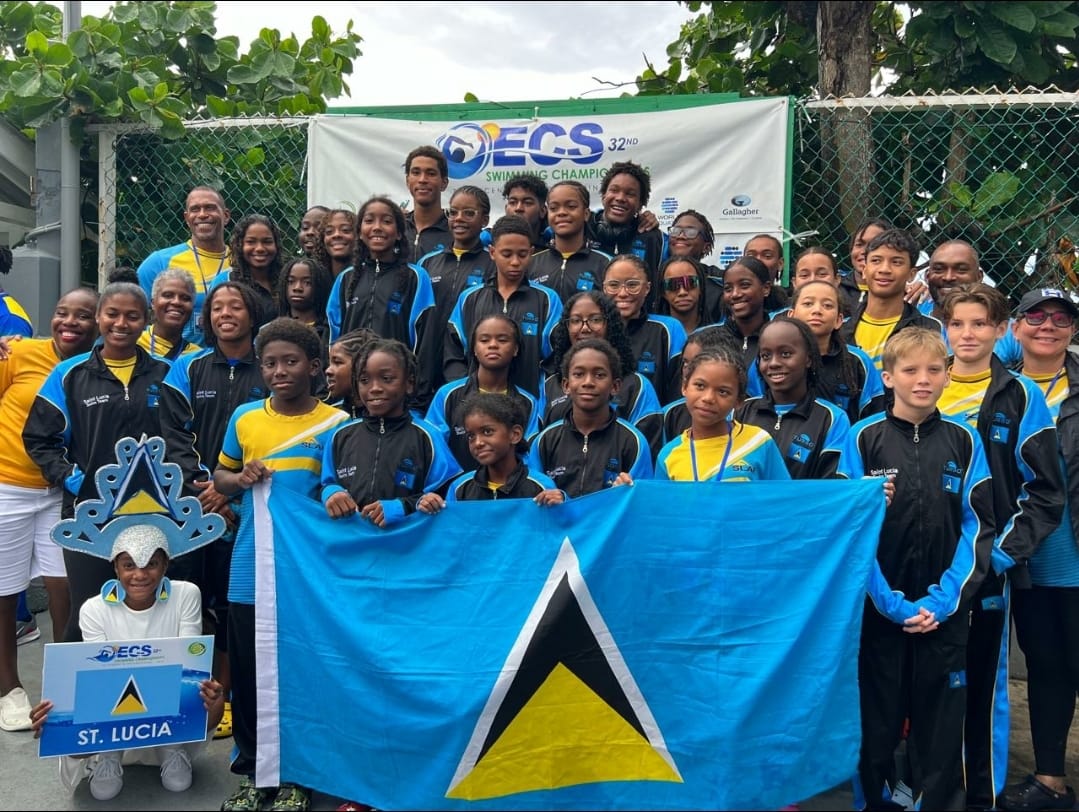
As the 34th edition of the Organisation of Eastern Caribbean States (OECS) Swimming Championships prepares to kick off this weekend at Saint Lucia’s Rodney Heights Aquatics Centre, the host nation’s 34-member competitive squad is gearing up to dethrone regional rivals and claim its first overall team crown since 2014. Coming off a narrow second-place finish at the 2025 tournament hosted by Saint Vincent and the Grenadines, where the team trailed defending champion Grenada by a mere 24.5 points, Saint Lucia’s swimming federation has curated a roster stacked with emerging junior talent and seasoned regional veterans, led by head coach Roosevelt Romain. The team’s deep junior divisions form a rock-solid foundation for high point accumulation: 9-10 boys standout Miles Andrew arrives fresh off claiming the individual high-point award at the recent national short course championships, while the 11-12 age group is anchored by CARIFTA Aquatics champions Tyler Dantes and Sapphire Parks. Dantes shaved his own national 50-metre backstroke record down to 29.57 seconds just last month, and Parks — who secured 10 gold medals and two regional records at the 2025 OECS meet — set five new national marks during national trials held in October. In the senior age brackets, established regional stars bring proven competitive pedigree: Jayden Xu leads the boys 15-17 category with top-tier performances across backstroke, breaststroke, and individual medley events, while US-based Tristan Dorville headlines the boys 18 and over division, competing across sprint and middle-distance freestyle and butterfly races. For the women’s 18 and over group, Olympian Mikail Charlemagne and national teammate Naekeisha Louis deliver elite experience in the 50-metre and 100-metre sprint events. The host team faces a notable setback with the absence of two key athletes: Noah Dorville and Fayth Jeffrey are currently in Dakar, Senegal representing Saint Lucia at the Youth Olympic Games, removing reliable podium-caliber points in middle-distance freestyle and individual medley events. Even so, the national swimming technical committee remains confident that the roster’s collective depth will keep Saint Lucia firmly in the title hunt across the three days of competition. This year’s championship will welcome more than 175 swimmers representing nine Eastern Caribbean territories, with defending champion Grenada and 2024 title winner Antigua & Barbuda positioned as the primary rivals vying for the top team ranking when the tournament wraps up on Sunday afternoon.
-

Soufriere, SALCC to clash for schools basketball crown
The highly anticipated 2026 Saint Lucia Under-19 Secondary School Basketball Championship is set to culminate in a blockbuster final next week, as two powerhouse programs secured their spots following hard-fought semifinal showdowns held Tuesday at the Beausejour Gymnasium. Two-time reigning title holders Sir Arthur Lewis Community College (SALCC) will face off against Soufrière Comprehensive Secondary School (SCSS), a three-time tournament finalist, in a matchup that pits consistent defending dominance against a hungry side eager to claim its first top prize.
The night’s second semifinal delivered edge-of-the-seat drama, as SCSS fended off a ferocious late comeback from Leon Hess Comprehensive Secondary School (LHCSS) to squeeze out a narrow 55-53 victory. SCSS carried a modest 27-23 lead into halftime before exploding for a dominant 21-10 third-quarter run that stretched their advantage to a commanding 48-33 heading into the final 10 minutes. LHCSS mounted an extraordinary last-ditch rally, outscoring their opponents 20-7 across the fourth frame, but ultimately fell just two points short of overturning the deficit. Tournament top scorer Curdin Jones turned in a historic all-around performance for SCSS, notching 34 points, 33 rebounds, six steals, two blocks and a single assist to anchor his side’s win. Support came from Sanchez Felix who added six points and 13 rebounds, Trenton Henry who pulled down 11 rebounds alongside three points, Kevon Gills with five points and six steals, and Aloysious William who contributed six rebounds, five steals and four assists. For LHCSS, sharpshooter McKhail Feliz led all scorers with 28 points, draining seven three-pointers in the process, while Sage Lewis posted a double-double of 16 points and 14 rebounds to go with five assists, three steals and two blocks, and Ahlil Cyril chipped in eight points.
The opening semifinal proved to be a far more controlled affair, as SALCC earned a decisive 48-29 victory over St Mary’s College (SMC) in a rematch of the 2025 championship final. The defending champions built their lead steadily, going up 14-12 after the first quarter, 26-18 at halftime, and 38-25 through three periods, before locking down defensively to hold SMC to a mere four points in the final frame. SALCC dominated the possession battle across the full 40 minutes, generating 13 more field goal attempts than their opponents courtesy of 10 extra rebounds and seven fewer turnovers. Nyel Joseph led SALCC’s balanced attack with 19 points, nine rebounds and four steals, while Mezan Lewis added 12 points, Romuald Wilson notched five steals to go with five rebounds and four points, and Shayne Edgar put up four points, five rebounds, four steals and four assists. SMC’s top performer was Jabarie Archibald with 12 points, six rebounds, six steals and two blocks, while Rollins Estwick turned in a standout defensive display with eight steals alongside two points, two rebounds and two blocks.
-
Teenager Zaheid St Ville died from strangulation; man charged
Law enforcement authorities in Saint Lucia have formally verified that human exhumed from a shallow unmarked grave in the Sarot district belongs to 16-year-old Zaheid Shervin St Ville, the adolescent who was reported missing to police just over two weeks prior to the grim discovery. The Royal Saint Lucia Police Force (RSLPF) outlined the timeline of the case in an official public statement, noting that St Ville was last spotted in public on October 16, prompting his family to file a formal missing person report with the Criminal Investigations Department on October 22. On October 31 at 8:22 a.m., responding officers acting on a tip about a suspected clandestine burial site launched an excavation of the Sarot location, leading to the recovery of the teen’s partial buried remains. A post-mortem examination held the following Monday confirmed the teen’s identity via family recognition, with official forensic findings ruling his death a homicide: the teen suffered fatal cerebral hypoxia, or oxygen deprivation to the brain, triggered by asphyxia caused by manual strangulation. RSLPF officials added that supplementary DNA testing will be conducted to cross-validate the positive identification for full procedural rigor. A 29-year-old local man identified as Noah Nurse has been formally served with a murder charge in connection with the teen’s killing. Nurse made his first appearance at the First District Court for a scheduled bail hearing on Wednesday, November 4, where the magistrate denied his application for release on bond and ordered him remanded to the Bordelais Correctional Facility. He is scheduled to make his next scheduled court appearance on December 1, 2026. Investigators with the CID have emphasized that the full probe into the exact sequence of events leading up to St Ville’s death, as well as any potential additional connected details, remains active and ongoing as of press time.
-
Beyond Anse Cochon: A closer look at boat licensing and safety rules
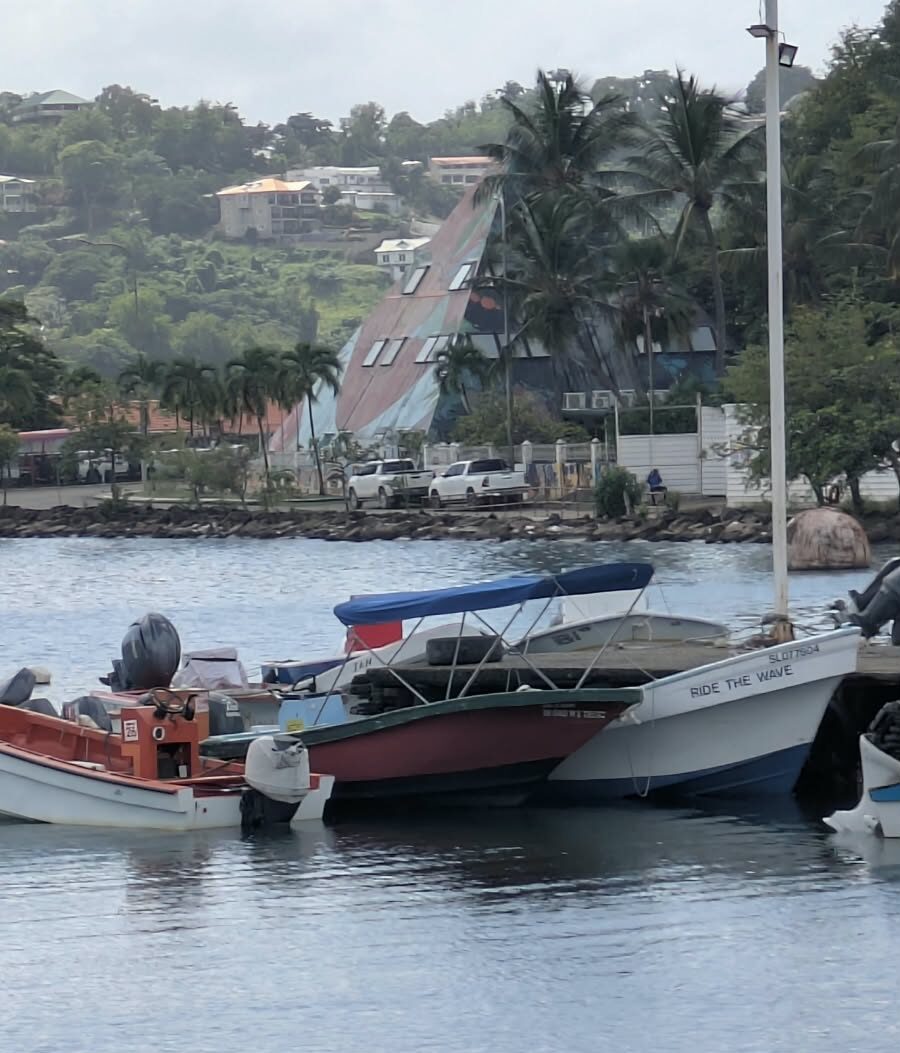
A sweeping public review of Saint Lucia’s maritime regulatory framework has been triggered by ongoing proceedings of the Commission of Inquiry probing the deadly July 18 collision between two local vessels, the *Cazorla Jr* and *Ocean Angel*, that claimed four lives and left multiple others injured. Testimony delivered during the inquiry’s public hearings laid bare glaring lapses in adherence to existing rules, including a damning admission from *Cazorla Jr* captain Tyson Hippolyte that he operated the passenger craft with a boatmaster licence that had expired all the way back in 2015, a lapse he claimed to have not noticed despite running the vessel at least three to four times in the lead-up to the 2026 crash. Further testimony revealed that neither vessel conducted mandatory pre-departure passenger safety briefings, distributed accessible life-saving equipment, or notified local lighthouse authorities of their planned voyages and passenger headcounts, prompting local media outlet *St Lucia Times* to request full official clarification of all existing maritime operational requirements from the country’s Maritime Affairs Unit. Head of Maritime Affairs Christopher Alexander outlined a tiered three-grade licensing system administered by the Saint Lucia Air and Sea Ports Authority (SLASPA) for all commercial boat operators, each valid for a three-year period. The highest tier, Grade 1, costs EC$510 and certifies operators to navigate exposed offshore waters, including inter-island routes connecting Saint Lucia to Martinique and St Vincent. The mid-tier Grade 2 licence, priced at EC$410, covers operations in inshore coastal zones such as the popular routes between Gros Islet, Marigot and Soufrière. The lowest Grade 3 tier, which costs EC$310, applies to operators working in sheltered protected waters, including those running jet skis and small recreational pleasure craft. To qualify for any boatmaster licence, applicants must submit a full formal application to the Maritime Affairs Director, accompanied by a valid recent medical clearance, a clean police background check, documented proof of first aid training, and verifiable prior seafaring experience or formal maritime qualifications. All candidates are also required to pass a 25-question written knowledge assessment, complete a practical on-water vessel manoeuvring test, and present their craft for a mandatory official safety inspection. Separate, distinct certification pathways apply for all vessel crew members: aspiring crew must first complete official training delivered either by the Maritime Police or a government-recognised accredited maritime institution, then have their training certificate formally authenticated by the Maritime Affairs Division. Crew candidates must also pass a 25-question written test and demonstrate competent on-water operation of a vessel travelling at 5 knots before being issued their own three-year crew licence, which carries an EC$210 processing fee. Vessel registration is a separate process administered by SLASPA and the Saint Lucia Ship Registry, with fees calculated based on the craft’s type, size, tonnage and intended use. Required registration documentation includes a completed application form, formal proof of ownership such as a bill of sale or builder’s certificate, valid identification for individual vessel owners or corporate registration documents for company-owned craft, and for vessels transferred from an overseas registry, a formal deletion certificate approving the transfer. Fishing vessels operate under a fully separate regulatory framework overseen by the Department of Fisheries under the national Fisheries Act, with a nominal EC$5 annual licence fee. Beyond licensing and registration, the Maritime Affairs Division enforces a robust set of mandatory safety guidelines for all commercial passenger excursion operators. These rules require all life jackets to be fitted with attached lights and whistles to aid emergency recovery of people overboard, with reflective tape permitted as a temporary alternative if dedicated lights are unavailable. At least one life ring attached to a 60-foot throw line must also be fitted with a dedicated emergency light, with additional throw lines required based on total passenger capacity. Captains are legally required to conduct a full pre-departure safety briefing for all passengers, demonstrate proper life jacket use, and confirm all life-saving equipment is clearly marked and stowed in easily accessible locations. Vessel masters are also mandated to ensure sufficient, appropriately trained crew are on board to maintain proper watchkeeping duties, with required headcounts adjusted to account for voyage timing, operating zone, on-board activities and the vessel’s specific design. Under Section 119 of the national Shipping Act Cap. 13.27, any vessel found operating with insufficient crew can be legally detained, and the vessel’s owner or master can face summary conviction fines of up to EC$5,000. All vessels operating sunset, evening or daytime local excursion routes must also notify the relevant local lighthouse before departure, sharing a full headcount of all passengers and crew on board as well as their estimated return time. Masters are required to conduct a formal headcount both before leaving shore and immediately upon returning, and must alert lighthouse staff promptly if the vessel faces unplanned delays, so authorities can coordinate emergency response support including deployment of the Police Marine Unit if needed. Operators running after-dark excursions are also required to secure explicit prior written authorisation from SLASPA, and adhere to all conditions attached to that approval. As an added recommended safety precaution, all local excursion operators are advised to deploy at least two dedicated private security guards or on-duty police officers on board before departure. The ongoing Commission of Inquiry, which was formally established to investigate the full circumstances of the fatal collision and conduct a top-to-bottom review of Saint Lucia’s existing maritime accident legislation, is also tasked with recommending updates to create a modernised national maritime act, and overhauling all existing procedures governing maritime operations, safety standards and incident investigations to prevent future fatal crashes.
-

Second person charged in Creators Alliance investigation
A resident of Babonneau in Saint Lucia, Sophia Pelage-David, has become the second individual to face formal money laundering charges linked to the catastrophic collapse of the fraudulent Creators Alliance investment network, a scheme that wiped out life savings for thousands of people across the Caribbean region. The national Financial Intelligence Authority (FIA) took Pelage-David into custody on Monday, November 2, before formally serving her with two counts of money laundering. She made her first court appearance at the First District Court the following day, where presiding magistrates approved her release on bail, set at $13,000 cash or an equivalent qualified surety arrangement. The next scheduled hearing for her case has been adjourned to December 10, 2026. Prosecutors from the FIA allege that over a 17-month window spanning January 23, 2024, to July 4, 2025, Pelage-David processed a cumulative total of $524,801.30 in financial transactions that investigators confirm are proceeds derived from the criminal operations of the Creators Alliance scheme. Under Section 28(1)(b) of Saint Lucia’s Money Laundering (Prevention) Act, Cap. 12.20, a conviction for these charges carries a maximum possible penalty of a $1 million fine, up to 15 years of imprisonment, or both sanctions combined. This arrest follows a prior round of enforcement action in September 2026, when Electra Fernand, a Gros Islet resident from the Massade community, was served with seven separate money laundering counts tied to roughly $1.062 million in suspected illicit funds linked to the same scheme. Fernand was also among a group of six individuals charged back in May 2025 for operating an unlicensed virtual asset business, in direct violation of the country’s Virtual Asset Business Act. The Creators Alliance platform launched across Saint Lucia and neighboring Caribbean territories around June 2024, marketing itself as a lucrative peer-to-peer investment opportunity that authorities later classified as an illegal pyramid structure. The unregulated scheme imploded without warning in March 2025, leaving thousands of retail investors across the region facing millions of dollars in unrecoverable financial losses. The FIA has emphasized that its full-scale, multi-jurisdictional investigation into all money laundering activities connected to the collapsed scheme remains active and ongoing, with more potential charges expected as evidence is compiled. In a public advisory released alongside the latest arrest announcement, the financial watchdog urged all members of the public to exercise extreme due diligence when approached with unregulated, unvetted investment offers, and to consult licensed independent financial professionals before committing any funds to verify the legitimacy of any opportunity.