标签: Saint Kitts and Nevis

圣基茨和尼维斯

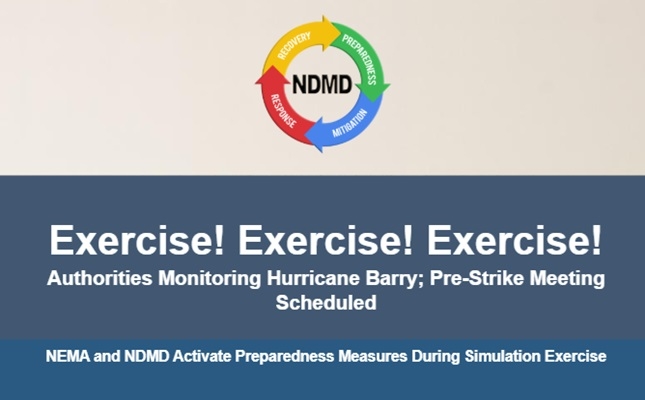
  • Exercise! Exercise! Exercise! SKN Authorities Monitoring Hurricane Barry; Pre-Strike Meeting Scheduled – June 22 @1:00 p.m

    Exercise! Exercise! Exercise! SKN Authorities Monitoring Hurricane Barry; Pre-Strike Meeting Scheduled – June 22 @1:00 p.m

    CHARLESTOWN, Nevis – June 22, 2026 – Disaster management authorities across St. Kitts and Nevis have activated early preparedness protocols and are maintaining constant surveillance of Hurricane Barry, as the storm system tracks toward the Caribbean island nation, according to an official press release from the Nevis Disaster Management Department (NDMD).

    As of 8:00 a.m. local time on Monday, the U.S. National Hurricane Center and the local St. Kitts and Nevis Meteorological Services placed Hurricane Barry at approximately 940 nautical miles east of the island chain, positioned at latitude 16.3° North and longitude 45.5° West. The storm is currently advancing west-northwest at a steady forward speed of 18 miles per hour.

    Up-to-date meteorological projections show that Hurricane Barry is on track to begin bringing adverse weather impacts to St. Kitts and Nevis within 48 to 72 hours. In response to the projected timeline, the joint team from the National Emergency Management Agency (NEMA) and NDMD launched preliminary preparedness steps hours ago, and have established continuous coordinated communication with meteorological officials and other critical response stakeholders across the country.

    To align all stakeholders ahead of the storm’s expected arrival, a formal pre-landfall coordination meeting has been called for 1:00 p.m. the same day at the NDMD’s Emergency Operations Centre (EOC) in Nevis. Attendees will use the session to audit existing preparedness arrangements, address gaps in pre-storm planning, and align inter-agency response protocols to ensure a rapid, organized reaction if the storm makes landfall.

    Officials are urging all residents across St. Kitts and Nevis to prioritize personal and family preparedness immediately. The public has been advised to stay alert for changing conditions, revisit and update their household emergency plans, stock up on necessary supplies including non-perishable food, water, medication, and emergency lighting, and rely only on official updates from NEMA, NDMD, and the national Meteorological Services for accurate information.

    Disaster management officials note that they will release additional public updates as new information on the storm’s track and intensity becomes available. The notification carries the repeated signal alert “Exercise! Exercise! Exercise!”, a standard designation for official pre-disaster preparedness mobilization in the region.

    This alert was distributed by SKNVibes.com as received via official press release, with no editorial alterations to content.
  • TDC Donates Emergency Response Kit to Strengthen Port Health Services at RLB Airport

    TDC Donates Emergency Response Kit to Strengthen Port Health Services at RLB Airport

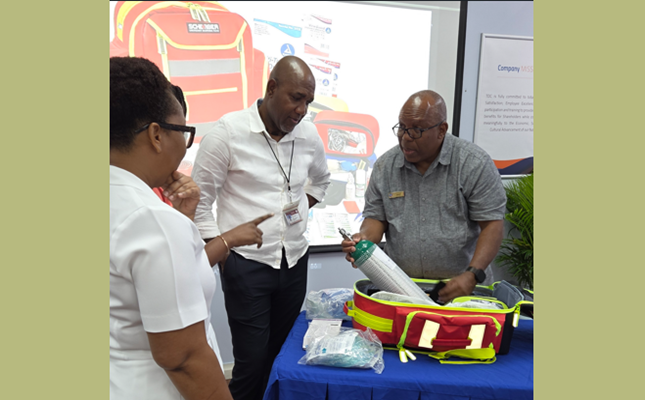
    BASSETERRE, St. Kitts – June 20, 2026 – In a landmark demonstration of corporate social responsibility, the TDC Group of Companies has donated a fully outfitted Scherber First Responder Backpack to the Port Health Unit at Robert L. Bradshaw (RLB) International Airport, aiming to reinforce the airport’s capacity to handle sudden medical emergencies for travelers and staff alike.

    The handover ceremony, held at TDC’s Basseterre headquarters, marked the latest step in the company’s long-standing commitment to supporting public health infrastructure across St. Kitts and Nevis. Lester Hanley, Chief Transportation and Logistics Officer at TDC, officially presented the kit to health authorities, outlining the critical gap the new equipment is designed to fill.

    As the largest ground handling service provider at RLB Airport, TDC identified the urgent need for dedicated on-site emergency supplies after observing multiple past incidents where fast, effective medical intervention was critical to passenger safety. Hanley explained that relying on aircraft onboard medical oxygen for on-ground emergencies creates costly and disruptive outcomes: if an aircraft’s supplemental oxygen is used during a ground-level incident, the plane is unable to depart until its supplies are replenished, causing cascading delays across flight schedules.

    The donated Scherber backpack is a purpose-built emergency response solution stocked with more than 250 individual first-aid and critical care items, including comprehensive supplies for emergency medical technician (EMT) response, emergency medical services (EMS) operations, trauma care, and oxygen administration. The kit also features four color-coded removable pouches for fast, organized access to supplies, plus a dedicated secure compartment for oxygen storage – a design tailored to the unique needs of high-traffic airport environments.

    “Recognizing this unmet need, TDC was eager to step in and equip the port health team with the tools they need to protect the traveling public,” Hanley said.

    Dr. Hazel Laws, Chief Medical Officer of St. Kitts and Nevis, accepted the donation on behalf of the Ministry of Health, praising TDC’s targeted contribution to the country’s public health preparedness. The donation arrives amid a strong rebound in tourism to the island nation: nearly 83,000 visitors have entered the country through RLB Airport in the first half of 2026, pushing passenger volumes to near pre-pandemic levels.

    “In an increasingly connected world, international travel drives economic and cultural growth for small island nations like St. Kitts and Nevis, but rising cross-border movement also brings greater responsibility to keep ports of entry safe and prepared for any event,” Dr. Laws noted. She emphasized that RLB Airport, as the country’s primary international entry point, is a high-volume setting where medical emergencies can occur without warning. In most cases, the Port Health Team is the first to arrive on scene, often several minutes before external ambulance services can reach the airport, making on-site access to high-quality equipment a matter of life and death.

    Dr. Laws added that the new emergency kit will fill a critical gap in the team’s existing resources, drastically cutting response times and improving outcomes for anyone experiencing a medical event at the airport. “This purpose-built kit gives our frontline health personnel all the essential supplies they need to effectively manage medical emergencies and other critical incidents. It will boost our preparedness, expand our response capacity, and directly advance the safety and well-being of travelers, airport employees, and the broader community,” she said.

  • Russia strikes St. Kitts and Nevis-registered vessel in Black Sea, injuring 3 crew members – WIC News

    Russia strikes St. Kitts and Nevis-registered vessel in Black Sea, injuring 3 crew members – WIC News

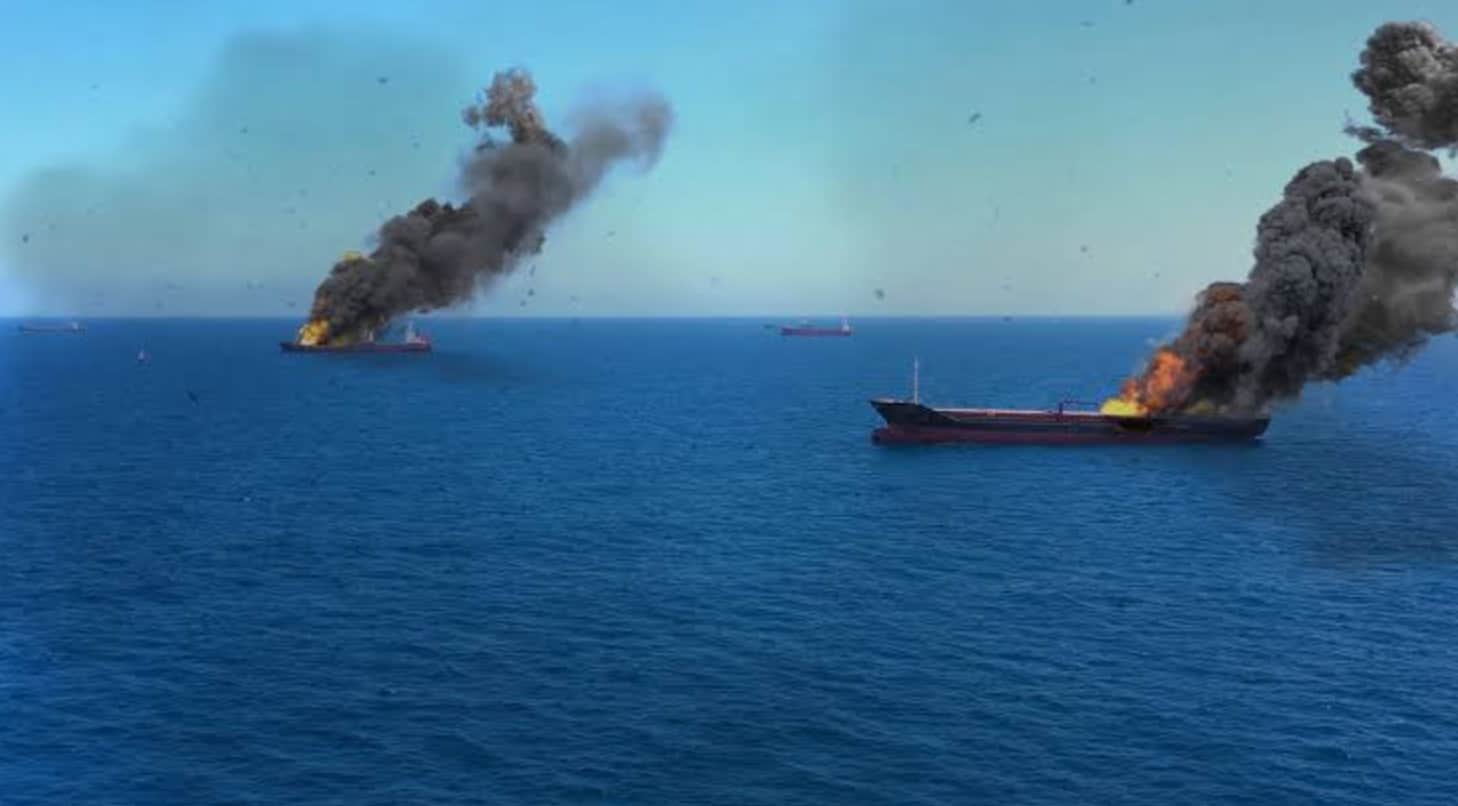
    In the latest escalation of targeted attacks against civilian maritime traffic in Ukraine’s Black Sea corridor, Russian drones struck two foreign-flagged cargo ships on June 19, leaving one crew member dead and five others injured, Ukrainian officials confirmed. The attack has renewed international alarm over Moscow’s campaign to disrupt global grain trade and undermine freedom of navigation in the key waterway.

    One of the targeted vessels was registered in Panama, and the other flies the flag of St. Kitts and Nevis. According to Oleksii Kuleba, Ukraine’s Deputy Prime Minister for Restoration and Minister for Development of Communities and Territories, the attack on the Panamanian-registered ship killed one crew member and wounded two more. The St. Kitts and Nevis-flagged vessel also sustained direct damage from the strike, leaving three of its crew members injured. Both ships were en route to a port in the Greater Odesa region to load grain for export when the drone attack occurred, per official details released by Ukrainian authorities.

    The strike ignited an onboard fire and knocked out critical navigation systems on the attacked vessels, though neither ship sank. Emergency response teams dispatched a patrol vessel to assist the damaged craft, and both have since resumed their voyages. Oleh Kiper, head of the Odesa Oblast Military Administration, emphasized that the incident is part of a broader, sustained Russian offensive against civilian shipping operating near Ukraine’s internationally recognized Black Sea maritime corridor.

    “This attack underscores the ongoing threat Russia poses to civilian shipping, legitimate international trade, freedom of navigation, and global food security,” Kiper stated, adding that port operations in the region have continued under heightened security protocols following the strike.

    For Kuleba, the June 19 attack is fresh evidence that Moscow is deliberately targeting critical infrastructure that supports global food supplies. “This is yet another proof that Russia is waging a war against freedom of navigation, international trade, and global food security,” Kuleba told Ukrainian state news agency Ukrinform. He called on the international community to formally classify these targeted attacks on civilian merchant vessels, crews and humanitarian export infrastructure as acts of terrorism, noting that the world cannot normalize the targeting of innocent civilian sailors by Russian forces.

    “Civilian crews, merchant ships, and the maritime infrastructure that supports humanitarian and export routes are under the sights. But such crimes should receive a clear international assessment – terrorism. The world cannot get used to civilian sailors becoming targets for Russian weapons,” Kuleba added.

    This latest incident fits a clear pattern of repeated Russian attacks on civilian maritime routes in the Black Sea, stretching back months. Since the outbreak of full-scale war in Ukraine, commercial vessels, grain shipments and port infrastructure in the region have faced consistent targeting. Just last month, Russian forces carried out multiple similar attacks: on May 18, a Russian Shahed drone struck a Chinese-flagged vessel in the corridor, just days before Russian President Vladimir Putin’s scheduled visit to Beijing. Eleven days later, on May 29, Russian drones hit three additional foreign-flagged ships in the same waterway. On June 8, a Russian attack on two Maritime Search and Rescue Service boats on a humanitarian mission left multiple casualties.

    The targeting of a St. Kitts and Nevis-registered vessel has sparked particular concern for the small Caribbean nation, whose open ship registry hosts thousands of internationally operating commercial vessels that sail across global trade routes.

  • Russia attacks Panama and St. Kitts and Nevis ships in Black Sea; one person killed and others injured

    Russia attacks Panama and St. Kitts and Nevis ships in Black Sea; one person killed and others injured

    In a new aggressive incident targeting civilian maritime traffic in the Black Sea, Russian unmanned aerial vehicles have attacked two commercial vessels flying the flags of Panama and St. Kitts and Nevis, leaving one crew member dead and five others wounded, Ukrainian officials confirmed Friday.

    Oleksii Kuleba, Ukraine’s Deputy Prime Minister for Restoration and Minister of Communities and Territories Development, shared the details of the attack via his Telegram channel, confirming the fatal casualties and varying degrees of injury among the civilian crews.

    “As a result of the attack by Russian UAVs on civilian vessels in the Black Sea, a crew member of a Panamanian-flagged vessel was killed, and two other sailors were injured, one of them severely,” Kuleba said in his statement. “My sincere condolences to the family and loved ones of the deceased.”

    The second vessel, registered under the flag of St. Kitts and Nevis, was also hit in the drone assault. Three crew members on board suffered minor injuries, Kuleba added.

    The Ukrainian official stressed that this attack is not an isolated event, but further evidence of Russia’s deliberate campaign against global rules-based maritime order. Kuleba pointed out that Russia is actively targeting civilian crews, merchant ships and critical maritime infrastructure that support the UN-brokered humanitarian and grain export routes that have been vital to stabilizing global food supplies since the start of the full-scale invasion.

    “This is yet another proof that Russia is waging a war against freedom of navigation, international trade, and global food security. Civilian crews, merchant ships, and maritime infrastructure that support humanitarian and export routes are targeted,” Kuleba said. “But such crimes must be clearly classified internationally as terrorism. The world cannot grow accustomed to civilian sailors becoming targets for Russian weapons.”

    This latest assault comes less than two weeks after another fatal Russian attack on Ukrainian civilian maritime assets in the same region. On June 8, Russian forces struck two civilian search and rescue boats that were carrying out a humanitarian mission within Ukraine’s established temporary maritime corridor, leaving multiple casualties. Separate Russian attacks on Ukrainian infrastructure in the southern Mykolaiv region on the same day as this latest drone strike also left one civilian dead, according to prior reports from Ukrainian news outlet Ukrinform.

  • New Joshua Obadiah Williams Primary School Set for January Opening

    New Joshua Obadiah Williams Primary School Set for January Opening

    BASSETERRE, St. Kitts — More than a year after breaking ground, the ambitious reconstruction of the Joshua Obadiah Williams Primary School in Molineux is moving toward completion, with government officials planning to welcome students to the upgraded facility at the start of the January 2027 academic term. All on-site construction work is on track to be finished by October 2026, according to updates from local public works authorities.

    The EC$8 million transformation project is being delivered by three construction firms working in parallel across different zones of the campus, keeping the build on schedule after 11 and a half months of steady progress. What was originally planned as a simple replacement of the aging original structure has evolved into a comprehensive expansion and modernization initiative that will serve both the school population and the entire surrounding Molineux community.

    Structural Engineer Jared Joseph shared project details during a recent press briefing, noting that the project team made a deliberate decision to go far beyond replicating the old school’s footprint. “It would have been straightforward to rebuild to the same dimensions and specifications we had before,” Joseph explained. “Instead, the Public Works Department opted to design a cutting-edge educational facility focused on lifting quality of life for students, staff and the whole neighborhood.”

    The scale of the upgrade is dramatic: the original 8,400-square-foot school has been expanded to roughly 25,500 square feet, tripling the total usable space of the campus. Every section of the facility has been reimagined to address longstanding gaps in the old building. Classrooms for students are now 50% larger than they were in the previous structure, providing more room for interactive learning and student movement. The new campus also features upgraded science laboratories, a dedicated student library, expanded faculty workspaces, private restrooms for teaching staff, and dedicated amenities for employees, including a larger staff lounge, a designated lunch area, and extra open spaces for relaxation and collaborative planning.

    One of the most community-focused additions to the campus is a new multi-purpose auditorium, a flexible space designed to meet multiple needs across different contexts. “The first role this space will fill is hosting the school’s assemblies, plays and student performances,” Joseph said. “But for local residents, it will operate as a public community center, and in emergency situations, it is engineered to serve as a certified hurricane shelter.”

    To support reliable operation during crises, the school is also outfitted with a large capacity cistern for water storage and a full-size backup generator, ensuring the facility remains functional during power outages or disruptions to public utilities, a critical feature for both daily operations and its emergency shelter role.

    Joseph emphasized that the project’s impact will extend far beyond the school gates. “We’re confident this development will deliver lasting benefits not just to teachers and students, but to the entire community,” he said. “We hope this model of inclusive, multi-purpose public infrastructure will be replicated in other districts across the country in coming years.”

    With structural work largely complete, the project is now moving into the final phase of fixture installation and interior finishing, all scheduled for completion by October. Government project leads confirmed that the timeline remains on track, and they are looking forward to welcoming the first cohort of students to the new facility when the January academic term begins.

  • Cricket West Indies Welcomes BRONX COLORS as Official Cosmetics Partner of West Indies Women for the T20 World Cup

    Cricket West Indies Welcomes BRONX COLORS as Official Cosmetics Partner of West Indies Women for the T20 World Cup

    ST. JOHN’S, Antigua – June 18, 2026 – Cricket West Indies (CWI) has announced a landmark new sponsorship agreement that pairs the West Indies Senior Women’s National Cricket Team with global urban-inspired cosmetics label BRONX COLORS for the upcoming ICC Women’s T20 World Cup 2026, hosted across England and Wales. Under the deal, BRONX COLORS will serve as the team’s Official Cosmetics Partner for the full duration of the tournament.

    This collaboration brings together one of the Caribbean’s most beloved and iconic sporting franchises with a beauty brand celebrated industry-wide for its core commitments to inclusivity, authentic self-expression, and empowering confidence. Per the terms of the partnership, BRONX COLORS branding will be featured on the non-leading sleeve of the West Indies Women’s matchday playing shirts for every match the team contests throughout the World Cup.

    Nicknamed the “Maroon Warriors”, the West Indies side has already kicked off their tournament campaign in the group stage, off to a promising start after defeating defending champions New Zealand in their opening fixture. The team enters the global competition with clear ambitions: advancing past the group stage into the knockout rounds, and ultimately challenging for the sport’s most prestigious T20 world title.

    Dario Barthley, CWI Event Manager who spearheaded negotiations to bring the partnership to fruition, welcomed BRONX COLORS into the West Indies cricket community, emphasizing the collaboration’s role in driving the ongoing global expansion of women’s cricket. “Cricket West Indies is absolutely delighted to welcome BRONX COLORS as an official partner of our Senior Women’s Team for this ICC Women’s T20 World Cup,” Barthley shared in a statement following the announcement. “This partnership is clear proof of the growing commercial appeal of women’s cricket, and the incredible value our players continue to build both on the pitch and beyond it. BRONX COLORS stands for confidence, individuality, and inclusivity – all traits that our women’s team embodies every single day. We are excited to work together through the tournament and build a long-term relationship that highlights both the unique personalities of our players and the shared values of both our organizations.”

    Tanita Caroline Le Roux, Head of Sales, Development & Communications at BRONX COLORS, echoed the enthusiasm for the cross-industry partnership, noting the strong alignment between the brand’s mission and the team’s identity. “We are incredibly proud to partner with the West Indies Senior Women’s Team during this landmark global moment for women’s cricket,” Le Roux said. “At BRONX COLORS, we have always believed that makeup is not about achieving perfection – it is a tool for confidence, identity, and self-expression. Modern beauty shoppers want more than just coverage; they seek quality, performance, accessible value, and products that help them show the world who they truly are. As color cosmetics rebounds and bold makeup makes a comeback in a more intentional, wearable, social-first format, this partnership lets us celebrate women who live confidence, individuality, and fearless expression both on and off the field. The West Indies Women embody energy, pride, resilience, and cultural power – all values that sit at the very core of the BRONX COLORS brand.”

    The new partnership marks another milestone in CWI’s ongoing strategy to boost the commercial profile of women’s cricket, while creating targeted, meaningful opportunities for aligned brands to connect with the passionate, global fanbase that follows West Indies cricket around the world.

  • Suite of Legislation passed in the National Assembly further strengthens the Federation’s financial sector

    Suite of Legislation passed in the National Assembly further strengthens the Federation’s financial sector

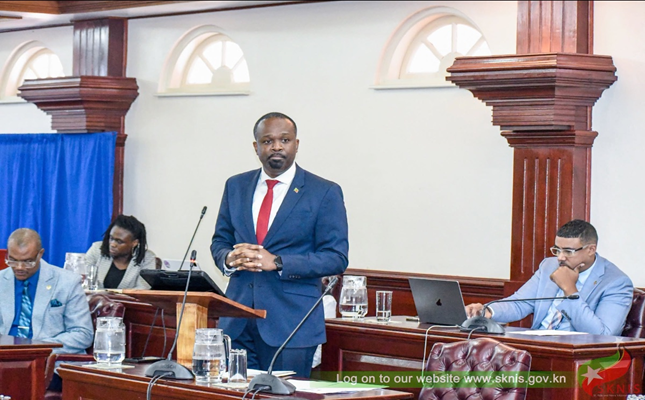
    BASSETERRE, Saint Kitts – On June 18, 2026, the Government of Saint Kitts and Nevis achieved a landmark legislative milestone, greenlighting a comprehensive package of five financial sector reform bills through the country’s National Assembly. The reforms are designed to reinforce the stability and integrity of the Federation’s financial system, and solidify its reputation as a trusted, compliant participant in the global financial ecosystem.

    The five amended pieces of legislation approved by lawmakers cover critical segments of financial regulation: the Financial Services Regulatory Commission (Amendment) Bill 2026, the Gaming (Control) (Amendment) Bill 2026, the Anti-Proliferation (Financing of Weapons of Mass Destruction) (Amendment) Bill 2026, the Virtual Asset (Amendment) Bill 2026, and the Anti-Terrorism (Amendment) Bill 2026. The legislative package was shepherded through the National Assembly by Honourable Konris Maynard, Minister of Public Infrastructure, Energy and Utilities, Domestic Transport, Information, Communication and Technology and Posts, with cross-support from fellow Members of Parliament.

    In his address introducing the bills to the chamber, Maynard emphasized the St. Kitts and Nevis government’s unshakable commitment to protecting the integrity, long-term stability, and international credibility of the country’s financial sector. “Today’s discussions reinforced a simple but important truth: protecting the integrity of our financial system is not merely a regulatory exercise, but rather a national responsibility,” Maynard told the assembly.

    The minister stressed that the updated regulatory framework approved by parliament is vital to protecting the nation’s global reputation, retaining the confidence of international partners and cross-border investors, and preserving unimpeded access to global financial markets. These reforms, he added, are also critical to upholding critical correspondent banking relationships that underpin the country’s economic activity, and maintaining the Federation’s status as an attractive, trusted jurisdiction for legitimate business and foreign direct investment.

    Crucially, the amendments update St. Kitts and Nevis’ existing regulatory rules to align with rapidly evolving international standards for financial regulation, anti-money laundering (AML), and counter-terrorism and proliferation financing (CTPF). The new rules also expand and strengthen oversight mechanisms across high-priority sectors of the national economy.

    Policy observers note that the passage of this legislative package underscores the government’s proactive stance on addressing emerging systemic risks that threaten small open financial jurisdictions, and highlights the administration’s ongoing commitment to transparency, accountability, and robust regulatory governance. The reforms also reaffirm the Federation’s strategic goal of remaining a competitive, secure, and well-governed international financial centre at a time when global regulators are tightening standards for virtual assets and non-bank financial services.

    St. Kitts and Nevis continues to collaborate closely with regional and international regulatory partners to keep its legislative and regulatory framework up to date, effective, and responsive to shifting conditions in the global financial landscape. Wednesday’s legislative action marks another significant step forward in the country’s long-term effort to safeguard its financial system from illicit activity, boost investor confidence, and lay the groundwork for sustained, inclusive economic growth that benefits current and future generations of the Federation.

  • Prime Minister Drew: Protecting People Must Remain Central to the Global Response to Sea-Level Rise

    Prime Minister Drew: Protecting People Must Remain Central to the Global Response to Sea-Level Rise

    On June 18, 2026, at the Berlin Climate Mobility Forum — a high-profile gathering co-hosted by the Global Centre for Climate Mobility (GCCM) and the Robert Bosch Stiftung focused on climate-driven displacement and adaptation — Prime Minister Dr. Terrance Drew of St. Kitts and Nevis delivered a urgent call to reorient global climate action around vulnerable communities, as Small Island Developing States (SIDS) already grapple with the irreversible, daily impacts of rising sea levels.

    Participating in a panel discussion centered on protecting human rights amid accelerating sea-level rise, Drew joined a cohort of global leaders, policy architects, climate researchers, and international development partners to share the on-the-ground reality of climate change for low-lying island nations. Unlike many regions still preparing for future sea-level rise impacts, Drew emphasized that his twin-island federation is already confronting the cascading harms of this climate crisis.

    “Our nation is not waiting for future consequences of sea-level rise — we are actively managing its harsh reality today,” Drew told the assembled audience. He detailed the overlapping threats already reshaping life across St. Kitts and Nevis: accelerating coastal erosion that eats away at populated shorelines, widespread degradation of protective coral reefs, more intense and destructive storm surges, and the permanent loss of culturally significant historic sites. These challenges, Drew argued, extend far beyond environmental harm — they directly erode fundamental human rights for local communities.

    “Sea-level rise is far more than a single-dimensional environmental issue,” Drew explained. “When we talk about protecting rights in this context, we are highlighting threats to every core pillar of human dignity: the right to life and safety, the right to housing and ancestral land, the right to food, clean water and basic necessities, the right to health, the right to stable livelihoods, and the right to preserve our culture, identity and shared heritage.”

    Drew stressed that any effective global response to sea-level rise must keep protecting vulnerable people at its core, rather than prioritizing abstract policy targets or economic interests. All resilience-building efforts, he added, should be designed to safeguard at-risk communities while preserving their inherent dignity, cultural heritage, and access to equitable opportunity.

    During the forum, Drew also showcased St. Kitts and Nevis’ forward-looking national development framework: the Sustainable Island State Agenda. This strategy anchors climate resilience, environmental stewardship, and community empowerment at the heart of all national policy, and the federation has already advanced targeted initiatives and global partnerships to strengthen coastal defense systems, support vulnerable coastal populations, and embed long-term sustainability across all sectors of the economy.

    The prime minister highlighted the impactful ongoing partnership between St. Kitts and Nevis and the GCCM as a model for effective global climate cooperation. He pointed to the joint Communities Climate Adaptation Facility as a successful example of how international collaboration can deliver practical, locally led solutions: the initiative provides critical financing and policy guidance to support community-driven adaptation projects that directly address the needs of at-risk groups.

    “Multilateralism — which I have long championed — and intentional global partnership are not just abstract ideals for us. They are our most valuable tools for recourse and our only clear pathway to survival,” Drew said.

    He further emphasized that climate adaptation strategies can only succeed if they are shaped by the people who bear the brunt of sea-level rise impacts. Long-term, effective solutions require coordinated collaboration between national governments, local communities, development partners, and civil society organizations to ensure interventions align with local realities, knowledge, and lived experiences, rather than being imposed from outside.

    As St. Kitts and Nevis continues to advocate for ambitious climate action on the global stage, Drew closed by reaffirming the federation’s unwavering commitment to working alongside international partners to protect the rights, livelihoods, and future prospects of all vulnerable populations disproportionately impacted by the climate crisis.

  • St. Peter’s to be restored to 24/7 water supply following key upgrades

    St. Peter’s to be restored to 24/7 water supply following key upgrades

    For decades, residents of St. Peter’s, a community on the Caribbean island of Saint Kitts, have navigated daily disruptions to their water access, a persistent consequence of underfunded and outdated infrastructure. That long-standing challenge is finally poised to be resolved, as the island’s Water Services Department (WSD) nears completion of key infrastructure upgrades that will bring round-the-clock running water to the area within days.

    The breakthrough comes on the heels of the launch of the new Basseterre Desalination Plant, which entered full operation in late February 2026. The plant has produced a consistent surplus of water that currently replenishes the Basseterre aquifer, creating extra capacity that can be redirected to underserved communities across the island. To unlock that surplus for St. Peter’s, however, WSD crews had to complete months of work to lay new distribution pipelines and source specialized pumping equipment.

    In a project update delivered to stakeholders on June 16, WSD Water Engineer Cromwell Williams shared that the new pump required for the expansion only arrived on Saint Kitts on June 12, with installation finalized three days later on June 15. Technical teams have already begun final performance testing of the new pipeline and pumping system to ensure it can deliver the full expected volume of additional water.

    Once testing wraps up, the system will add 150,000 gallons of water per day to St. Peter’s existing water network, a volume large enough to meet all residential demand around the clock. According to Williams, the upgrade will mark the first time the community has had uninterrupted 24/7 water access in more than 30 years, resolving a decades-long barrier to quality of life for local residents.

    This press update was originally issued by the St. Kitts-Nevis Information Service (SKNIS) and distributed via local media outlet SKNVibes.com on June 18, 2026.

  • TDC Invests in Leadership Development Through Three-Day Management Training Programme

    TDC Invests in Leadership Development Through Three-Day Management Training Programme

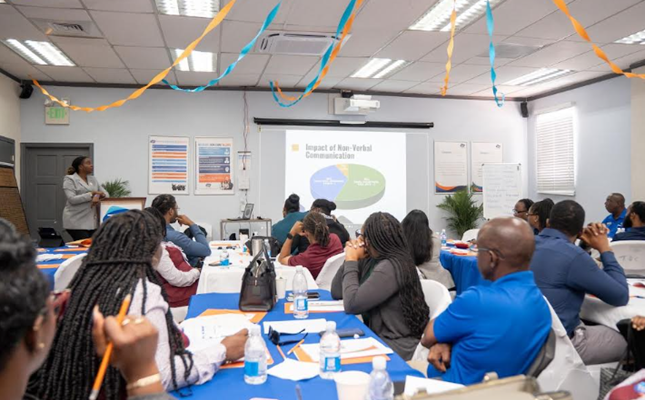
    In a strategic move to reinforce its long-term growth trajectory and cultivate high-capacity leadership across all operational levels, TDC Group recently concluded a three-day targeted management training program, held from June 15 to 17, 2026 at the company’s Fort Street training facility in Basseterre. Organized by TDC’s Human Resources Department, the initiative centers on the core theme “Leading Through People: Practical Leadership Skills for Management” and reflects the group’s sustained commitment to investing in professional talent development.

    Unlike one-size-fits-all corporate training programs, this initiative was structured to meet the unique demands of different leadership tiers within the organization. The curriculum was segmented by role: day one focused exclusively on upskilling frontline supervisors, day two catered to middle management, and the final day was designed for the company’s executive leadership team. This segmentation allowed participants to engage with content tailored directly to their day-to-day responsibilities and career growth objectives.

    Renowned regional business strategist and leadership consultant Dana Hayes-Burke led all training sessions. Throughout the program, participants took part in interactive discussions, hands-on practical exercises, and simulated real-world leadership challenges designed to build core competencies. Key skill areas covered included cross-team communication, employee engagement frameworks, data-informed decision-making, personal and team accountability, constructive conflict resolution, and people-centered leadership approaches that center employee well-being alongside performance goals.

    The program’s “Leading Through People” theme was intentionally chosen to highlight a shift away from traditional output-only management, emphasizing that sustainable organizational success grows from intentional relationship-building and empowered workforces. The curriculum underscores that effective leaders drive success by cultivating positive, inclusive workplace cultures that allow every team member to contribute their best work.

    Andrea James Wattley, Senior Human Resources Officer at TDC, emphasized that leadership development remains a top strategic priority for the group. “Strong leadership is the foundation of any growing, successful organization,” James Wattley explained. “By equipping our leaders at every level with practical, up-to-date management skills, we are not just improving individual performance—we are building an environment where all employees can thrive, and where our teams are inspired to deliver results that move our whole company forward.”

    For her part, facilitator Hayes-Burke challenged participants to reframe leadership as an ongoing journey of growth rather than a static role. She encouraged attendees to examine their existing leadership styles, embrace full accountability for team outcomes, and build adaptive approaches that work in today’s fast-changing, unpredictable business landscape. The training program forms one pillar of TDC’s broader enterprise-wide commitment to continuous employee development and organizational excellence, designed to ensure that all leaders have the tools they need to guide their teams effectively and advance the company’s long-term strategic goals.