标签: Saint Kitts and Nevis

圣基茨和尼维斯

  • Grey-Brooks Says Political Future Still Undecided After Stepping Down as PAM Leader

    Grey-Brooks Says Political Future Still Undecided After Stepping Down as PAM Leader

    BASSETERRE, St. Kitts – In a move that has shaken the country’s political landscape ahead of an upcoming general election, Natasha Grey-Brooks, the outgoing Political Leader of the People’s Action Movement (PAM), has confirmed she has not yet made a final decision about her future in public office after formally stepping down from the party’s highest leadership role.

    PAM made the announcement of Grey-Brooks’ departure earlier this week, framing the change as part of a broader internal restructuring effort as the party prepares for the imminent general election campaign. In an extended public statement shared across her social media channels, the attorney by profession revealed that her choice to resign came after months of deliberate, thoughtful contemplation.

    “After much prayer, deep reflection, and many difficult conversations, as you are aware, I have made the decision to step down as Political Leader of the People’s Action Movement,” Grey-Brooks wrote.

    Her exit comes against a backdrop of widespread public speculation over deep internal rifts within the 61-year-old political party. Unofficial reports circulating across social media have claimed that bitter internal infighting and a recent formal leadership challenge against Grey-Brooks contributed to her departure, though neither the claims of division nor the leadership challenge have been officially confirmed by party officials.

    Grey-Brooks openly acknowledged the heavy personal weight of her choice to step down, noting, “This has not been an easy decision. In fact, it has been one of the most difficult decisions of my life.”

    Looking back on her tenure leading the party, she described the role as one of the highest honors of her professional and public life. “Serving as your Political Leader has been one of the greatest honours I have ever known. It gave me the opportunity to travel throughout our beloved Federation, to sit in your homes, to listen to your stories, to share your joys and your struggles, and to better understand the hopes and dreams of the people of St. Kitts and Nevis,” she explained.

    “I entered this role because I genuinely believed, and still believe, that our country deserves the very best. Every decision I made, every meeting I attended, every sacrifice I endured was driven by one simple desire: to help build a stronger, fairer, and more prosperous St. Kitts and Nevis for every citizen,” she added.

    The outgoing leader also admitted that the position carried significant challenges from her first day in office, saying, “From the very first day I accepted this responsibility, it was a challenge. It was not easy.” She opened up about frequent moments where the weight of leadership felt unmanageable, and spoke specifically about the disproportionate pressures she faced as a woman working in Caribbean politics.

    “As a woman in politics, I quickly learned that we often have to work ten times harder to prove ourselves. We are scrutinized differently, judged more harshly, and expected to carry burdens that many never see. Yet I refused to allow those realities to define me,” Grey-Brooks said. “I pushed through every obstacle. I stood firm through criticism. I persevered through adversity. I gave everything I had. I have no regrets about giving my all.”

    Even as she leaves the leadership post, Grey-Brooks reaffirmed her unwavering commitment to the PAM party and its mission. “The People’s Action Movement is larger than any one individual. It is a proud institution that has served this nation for 61 years. It has shaped generations of leaders and contributed tremendously to the development of St. Kitts and Nevis,” she noted.

    She also extended sincere gratitude to her loyal supporters, both in her home constituency of East Basseterre and across the islands, particularly to those who stood by and defended her publicly during periods of intense criticism.

    For the immediate future, Grey-Brooks says she plans to step back from public political life, spending the coming weeks with family, close loved ones and a small circle of trusted political advisers before deliberating on what her next career and political move will be.

    With Grey-Brooks’ departure, PAM now enters what independent political observers have characterized as a critical rebuilding phase, as the party works to reorient itself ahead of the approaching general election. While no official date for the vote has been released by the government, all major political parties in St. Kitts and Nevis have already begun mobilizing grassroots supporters and laying campaign groundwork for what is widely expected to be one of the most fiercely contested general elections in the nation’s recent history.

  • Grenada records sharp decline in homicides as police tout crime-fighting gains

    Grenada records sharp decline in homicides as police tout crime-fighting gains

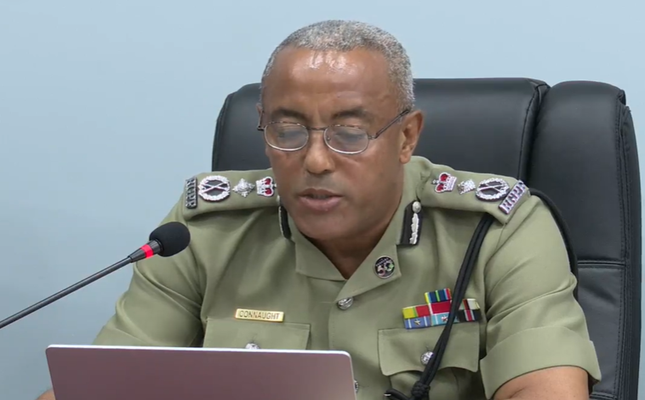
    St. Kitts, BASSETERRE – While a recent United States travel warning has put international visitors on alert for elevated crime risk in Grenada, the island nation’s top law enforcement official is highlighting major progress in violent crime reduction. During a press briefing held Monday, July 28, Royal Grenada Police Force (RGPF) Commissioner Randy Connaught announced that the country’s homicide rate has maintained a clear downward trajectory, even as non-violent property crime remains an ongoing challenge for local authorities.

    Data shared by Connaught shows that only three homicides have been recorded across Grenada in the first seven months of 2026. This marks a dramatic drop from the 10 homicides reported in all of 2025, which itself was a significant improvement from the 16 cases registered in 2024. The commissioner outlined the details of the 2026 cases, noting that one of the victims was 66-year-old Melva Wharwood, whose remains were found by law enforcement in the St. Andrew parish community of Mirabeau on May 3. In an earlier case dating to February 17, the body of Terrecheal Sebastian, a sales clerk from Tivoli, St. Andrew, was discovered in her hometown; police have already filed murder charges against a suspect in that killing.

    Connaught framed 2025 as a defining turning point for Grenada’s national crime reduction strategy. He explained that the RGPF closed out 2025 with a record-high case clearance rate for violent offenses, and that this investigative momentum has carried into the current year. The force, he emphasized, remains fully dedicated to stopping violent crime from becoming an accepted part of daily life on the island.

    Despite the positive homicide trends, Connaught did not downplay remaining public safety concerns. He warned that so-called crimes of opportunity — including burglary, home invasion, petty theft, and intentional property damage — are still prevalent across the country. To reduce resident and visitor risk, he issued a public call for increased precaution: “I urge the public to take precautions to prevent themselves from being a victim.”

    Commissioner Connaught’s optimistic update comes six months after the U.S. State Department revised its travel guidance for Grenada. In January, the agency upgraded the country’s travel advisory to Level 2, which urges all U.S. visitors to exercise increased caution due to crime. Unlike the prior advisory, the updated version removed labels for specific high-risk neighborhoods, but expanded its warning to note that violent incidents can occur in any area of the country.

    The U.S. advisory also outlines that U.S. citizens have been targeted in armed robberies, assaults, home burglaries, and sexual assaults in Grenada, with a small number of these attacks resulting in fatalities. It additionally advises that response times for local law enforcement are typically slower than what Americans would experience in the United States.

  • The future of Caribbean citizenship in a changing world

    The future of Caribbean citizenship in a changing world

    For decades, Citizenship by Investment (CBI) programmes have served as far more than just revenue streams for five Eastern Caribbean nations: Antigua and Barbuda, Dominica, Grenada, St Kitts and Nevis, and St Lucia. Beyond generating critical public funds, these initiatives have underwritten the construction of essential infrastructure, fueled the growth of the region’s core tourism sector, reinforced national fiscal stability, and created thousands of local jobs across the sub-region. Today, however, this foundational development model is confronting the most severe external threat in its history. Coordinated policy changes from the European Union and the United States are reshaping the global investment migration landscape, putting one of the Caribbean’s most vital sources of development financing at serious risk. As international pressure intensifies, regional governments face the delicate balancing act of navigating high-stakes diplomatic negotiations while maintaining open, transparent communication with domestic stakeholders.

    The most urgent challenge originates from Brussels. On June 25, 2026, European Commissioner for Internal Affairs and Migration Magnus Brunner delivered a formal ultimatum to all five Eastern Caribbean CBI states: completely wind down their programmes by June 1, 2028. This announcement represents a dramatic departure from the EU’s previous approach to CBI regulation. For years, European officials focused their criticism on specific administrative gaps, processing errors, and shortcomings in security vetting—concerns that regional governments have already invested millions of dollars to address. Operating under a unified regional framework, the five nations implemented sweeping regulatory reforms to align with international standards.

    But under the revised EU Visa Suspension Mechanism adopted on December 31, 2025, the very existence of an investor citizenship programme is now classified as an independent justification for revoking visa-free access to the Schengen Area. With an interim compliance deadline set for September 2026, Brussels has directly linked the value of Caribbean passports to the full dismantling of CBI. A loss of Schengen visa-free travel would drastically reduce the attractiveness of these programmes, opening a major gap in regional government budgets that rely on CBI revenue.

    Contrary to narratives that frame regional governments as unresponsive to international concerns, Eastern Caribbean nations have already moved to build a robust regional compliance regime. Antigua and Barbuda recently tabled new legislative amendments that require annual independent audits of CBI operations, mandate six-month public reporting, and introduce a new 30-day annual residency requirement for CBI citizens. These domestic changes align with the upcoming launch of the Eastern Caribbean Citizenship by Investment Regulatory Authority (ECCIRA), an independent regional oversight body set to begin operations in September 2026. In addition to enforcing standardised regulatory rules across the sub-region, ECCIRA will be empowered to set annual caps on total approved CBI applications, a reform specifically designed to address international concerns about unregulated growth of the programmes. Even with these sweeping changes, it remains unclear whether they will be enough to satisfy EU demands.

    Parallel to the EU’s ultimatum, the United States is advancing a set of aggressive new immigration policies that threaten to restrict travel and immigration pathways for nationals across the entire Caribbean Community (Caricom) region. A top policy shift is the expansion of the US non-immigrant visitor visa bond programme. Originally framed as a measure to reduce visa overstays, the new rules allow US consular officers to require refundable bonds ranging from $5,000 to $15,000 from temporary visa applicants during their interviews. For middle-class Caribbean families seeking to travel to the US for medical treatment, business opportunities, or visits to relatives, this new requirement creates a prohibitive financial barrier.

    Even more restrictive is a proposal currently under evaluation by the US Department of Homeland Security and the State Department, which would require certain green card applicants to post a refundable immigration bond of up to $100,000. The policy is designed to prevent applicants from becoming so-called “public charges,” with the funds held in US government escrow until the applicant obtains naturalised US citizenship—a process that takes a minimum of five years to complete.

    Furthermore, on July 15, 2026, US Representative Nancy Mace introduced the “Third World Immigration Moratorium Act,” legislation that aims to restrict entry from developing nations classified as security or vetting risks. While Grenada’s long-standing E-2 Non-immigrant Investor Visa treaty, in place since March 3, 1989, has not been explicitly targeted in the proposal, the growing trend of restrictive immigration legislation in Washington casts uncertainty over the future of existing bilateral mobility agreements between the US and Caribbean nations.

    In response to evolving international regulatory expectations, regional agencies are working to reframe CBI from a purely transactional purchase of citizenship to a long-term, mutually beneficial relationship between new economic citizens and their host country. A central pillar of this shift is the upcoming mandate requiring new CBI citizens to complete at least 30 days of residency in their host nation within their first five years of holding citizenship.

    In Grenada, the task of implementing this mandatory residency requirement falls to the Investment Migration Agency (IMA Grenada). Through its newly launched Diaspora Affairs Office, headed by Renée Moses, the agency is developing structured orientation programmes for new citizens during their 30-day stay. The goal extends far beyond simply meeting regulatory compliance: the initiative seeks to foster long-term, meaningful engagement between new economic citizens and Grenada’s local economy and communities. Instead of framing international regulatory demands as purely burdensome obstacles, the agency aims to leverage the capital, specialised skills, and global professional networks of CBI citizens to support Grenada’s priority development sectors, including healthcare, information and communications technology, agriculture, and youth entrepreneurship mentorship. By actively integrating CBI citizens as a “new diaspora,” local leaders hope to turn external compliance requirements into tangible domestic development assets.

    As the 2028 EU phase-out deadline approaches and US immigration policy grows increasingly restrictive, the Caribbean Community finds itself at a defining crossroads. While CBI revenues have funded transformative public and private development projects across the region, the current crisis has laid bare the risks of heavy reliance on an industry vulnerable to shifting external political decisions outside of Caribbean control.

    In this high-stakes environment, clear and consistent public communication is essential. Antigua and Barbuda Prime Minister Gaston Browne has already taken a prominent public role, vigorously defending the legitimacy of regional CBI programmes and reminding international partners of the critical role they play in Caribbean development. By contrast, Grenada’s official public response has been far more muted. While quiet diplomacy is a legitimate tool of foreign policy, analysts argue it must be paired with transparent communication to inform domestic citizens about the risks and ongoing negotiations.

    Regional governments are not facing this pressure as a result of flawed domestic policy choices; they are caught in the shifting currents of global geopolitics that extend far beyond the Caribbean. Even so, addressing this challenge requires open and honest public engagement. Caribbean citizens have a right to know how their leaders plan to protect existing treaty rights such as Grenada’s E-2 visa arrangement, manage the impact of restrictive US visa bond policies, and adapt structurally if the EU’s 2028 phase-out mandate is implemented.

    Beyond diplomatic negotiations, the region must accelerate efforts to diversify its economic base. If CBI revenues become less reliable in the coming years, sectors including tourism, renewable energy, digital services, international higher education, and expanded regional trade will grow in importance as pillars of economic resilience. National sovereignty, the analysis argues, is measured not only by a nation’s ability to negotiate effectively on the global stage, but by its willingness to prepare for uncertainty at home. That means communicating honestly with citizens, planning proactively for shifting global realities, and ensuring the Caribbean’s future never depends on a single source of economic strength.

  • NIA, Federal Government Resolve Outstanding Issues to Advance Destiny SSZ Project

    NIA, Federal Government Resolve Outstanding Issues to Advance Destiny SSZ Project

    CHARLESTOWN, NEVIS – July 27, 2026 – Following a marathon high-level negotiating session held at the Four Seasons Resort Nevis, all remaining outstanding disagreements between the Nevis Island Administration (NIA), the Federal Government of St. Kitts and Nevis, and private developers behind the proposed Destiny Special Sustainable Zone (SSZ) have been resolved, clearing a critical path forward for the transformative island development project. Nevis Premier Mark Brantley announced the breakthrough during his monthly press briefing on July 23, confirming that all four concerns identified by the federal cabinet following its internal review have been fully addressed during the cross-stakeholder talks.

    Before the meeting, Prime Minister Dr. Terrance Drew had formally notified Brantley of the four outstanding issues that had delayed the project’s progression through the required legislative approval process. With those hurdles now removed, the proposal can advance to the next phase of the multi-step regulatory review outlined under existing SSZ legislation.

    Brantley used the press conference to address growing public curiosity and some agitation around the project, walking stakeholders through the full legal approval framework to reinforce transparency and constitutional safeguards. Under the SSZ Act, any large-scale development seeking designation as a special sustainable zone must follow a structured four-stage review process: the proposal first receives review and approval from the NIA Cabinet, before moving to the Federal Cabinet for consideration, then passage by the Nevis Island Assembly, and final approval by the National Assembly of St. Kitts and Nevis.

    “This is a deliberate, multi-layered process designed to ensure every stakeholder has a voice, and every check on power is enforced before a project of this scale moves forward,” Brantley explained. “We are still in the very early stages of this review, and I have consistently emphasized to Nevisians that the law requires full public disclosure before any final vote takes place. There will be multiple opportunities for residents to weigh in, not just on the Destiny SSZ specifically, but on what kind of development the people of Nevis want to see on our south coast, and what shape that development should take.”

    The Premier also moved to ease public concerns that the project would compromise constitutional authority in key areas of governance. He confirmed that both he and Prime Minister Drew have prioritized upholding constitutional safeguards throughout negotiations, with core government powers – including the Director of Public Prosecutions’ authority over criminal justice matters, the Police Commissioner’s control over policing and national security, and the constitutional mandates of Customs and Immigration agencies – remaining fully intact under the project framework.

    Consistent with SSZ legislation, the finalized project agreement will be released to the full public before it is tabled for a vote in the Nevis Island Assembly, giving residents ample time to review terms, ask questions, and share feedback with their elected representatives. Brantley urged Nevisians to allow the legislatively prescribed process to unfold, noting that premature release of incomplete draft agreements would only create unnecessary confusion.

    “It would be irresponsible for governments to release multiple iterations of a working agreement while negotiations are still ongoing,” Brantley said. “We are not hiding anything – this is just how a deliberate, accountable legislative process works. Once the NIA and Federal Government have agreed on a final proposed version, we will bring it to parliament, and that is the version the public will be able to review and debate thoroughly.”

    If approved, the Destiny SSZ Project, earmarked for Nevis’ underdeveloped south coast, is positioned to become a landmark economic catalyst for the island. Projections indicate the project will deliver widespread, long-term benefits for Nevisians, including large-scale foreign direct investment, hundreds of new local employment opportunities, expanded tourism product offerings that will extend Nevis’ competitive edge in the Caribbean market, major upgrades to core public infrastructure, and sustained, inclusive economic growth for generations.

  • Sandy Point Benevolent Society to Host 14th Annual Dr. Stewart O. Williams Awards Gala

    Sandy Point Benevolent Society to Host 14th Annual Dr. Stewart O. Williams Awards Gala

    Bronx, New York – Ahead of the upcoming autumn, a beloved Caribbean diaspora community organization is preparing to celebrate service, honor legacy, and raise funds for ongoing charitable work. The Sandy Point Benevolent Society (SPBS) has announced that its 14th Annual Dr. Stewart O. Williams Awards Gala will take place on Saturday, September 5, 2026, running from 8:00 p.m. to 1:00 a.m. at the Maestros Catering Hall in the Bronx. This year’s gathering, themed “Rooted in Service, Grounded in Giving Back,” carries a bittersweet, meaningful weight for the organization and its members.

    This event marks SPBS’s first major annual gala since the passing of Dr. Stewart O. Williams, the group’s founder and long-serving president. Over decades of leadership, Williams’ clear vision and dedicated commitment turned SPBS into a cornerstone of support for education, philanthropy, and community connection among members of the Sandy Point community, as well as the wider Kittitian and Nevisian diaspora based in New York. The 2026 gala is designed not only to celebrate the far-reaching impact of Williams’ life work but also to reaffirm SPBS’s core mission of lifting up future generations through targeted service and giving.

    A core highlight of the evening will be the recognition of local changemakers who carry forward the spirit of service Dr. Williams championed. Five outstanding community contributors – Avril Francis, Shermin Stevens, Kylla Herbert, Vernice Williams, and Fitzroy Wilkin – will receive top awards for their exceptional work advancing community development. Three longstanding supporters of the organization, Samuel Jones, Jill Lewis, and Cathleen Hodge-Wilkin, will also be honored with special recognition for their consistent, steadfast backing of SPBS’s scholarship programs and charitable projects.

    All proceeds generated from the gala will go directly to the Dr. Stewart O. Williams Legacy Fund, a dedicated endowment that finances need-based educational scholarships, youth leadership development programs, and ongoing community outreach initiatives. The fund is structured to ensure that Williams’ lifelong commitment to service will continue to empower and lift up community members for decades to come, aligning perfectly with the organization’s founding mission.

    Beyond awards and fundraising, attendees will enjoy a full evening of celebration. The night will include fine dining, live entertainment, opportunities for fellowship among diaspora community members, and heartfelt tributes to Dr. Williams’ legacy. A traditional annual grand raffle will also be held, with standout prizes including a one-week Caribbean cruise, a two-night weekend stay at a four-star hotel in St. Kitts, and a $100 Amazon gift card.

    Individual tickets for the event are priced at $150 per person. SPBS has opened multiple avenues for support beyond individual ticket purchases, welcoming partnerships with corporate sponsors, local community organizations, diaspora alumni, and friends of the organization. Contributions can be made through event sponsorships, advertisement purchases in the event’s official Keepsake Magazine, raffle ticket purchases, or direct donations to the Dr. Stewart O. Williams Legacy Fund. Organizers note that every contribution will help expand educational access and strengthen community service programs that serve the diaspora for years to come.

  • TDC Mourns the Passing of Mr. Charles L. A. Wilkin, KC Former Director and Legal Counsel

    TDC Mourns the Passing of Mr. Charles L. A. Wilkin, KC Former Director and Legal Counsel

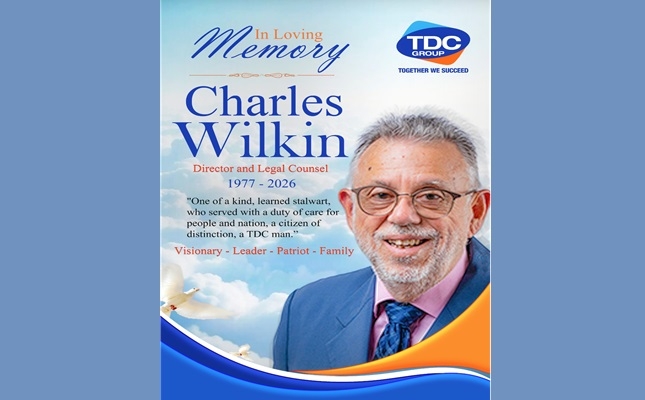
    One of the most enduring and influential figures in the leadership of St. Kitts Nevis Anguilla Trading and Development Company Limited (TDC), Charles L. A. Wilkin, KC, has passed away, prompting an outpouring of grief and tribute from the company’s board, leadership team, and entire workforce. In an official press release issued July 27, 2026, TDC confirmed the death of its former director and legal counsel, describing Wilkin as a distinguished attorney, respected business leader, and a foundational member of the TDC corporate family.

    Wilkin’s decades-long tenure with TDC began in 1977, and he remained committed to the organization’s mission and growth from that start through the final days of his life. Over the course of nearly 50 years of service, he delivered consistently trusted legal guidance, thoughtful strategic direction, and steady leadership that shaped the company’s corporate governance framework, fueled its sustained expansion, and laid the groundwork for its long-term market success.

    Throughout his career at TDC, Wilkin earned widespread respect and admiration from colleagues, fellow board members, employees, and corporate stakeholders alike. His professional reputation was built on uncompromising integrity, sharp institutional wisdom, meticulous professionalism, and an unwavering dedication to upholding the highest standards of excellence. He played a central, instrumental role in steering TDC through dozens of major corporate milestones and high-stakes strategic decisions, bringing calm perspective and thoughtful guidance to the table during periods of both rapid growth and unforeseen challenge.

    Beyond his specialized legal expertise, Wilkin emerged as one of the company’s most trusted strategic advisors, whose insight, sound judgment, and relentless commitment contributed immeasurably to TDC’s overall strength and long-term stability. His impact stretched far beyond the walls of the company’s boardroom, leaving behind a lasting legacy of dedicated service, institutional accountability, and principled leadership that continues to define the organization’s culture.

    TDC’s statement emphasized that the entire corporate community holds deep gratitude for Wilkin’s transformative contributions to both the company’s development and the broader business ecosystem of the region. Company leadership noted that his professional example will remain a touchstone of inspiration for future generations of TDC leaders and business professionals across St. Kitts and Nevis.

    On behalf of the full TDC community, the company extended its deepest and most heartfelt condolences to Wilkin’s immediate family, close friends, professional colleagues, and all those who had the privilege of working alongside him over his decades-long career. TDC also formally recognized Wilkin’s far-reaching contributions to the regional legal profession, global standards of corporate governance, and the broader economic development of St. Kitts and Nevis, acknowledging the profound, lasting impact he built through his distinguished decades of service. The statement closed with a final tribute: May he rest in eternal peace.

  • PAM confirms Grey-Brookes stepping down as Political Leader ahead of election campaign

    PAM confirms Grey-Brookes stepping down as Political Leader ahead of election campaign

    BASSETERRE, St. Kitts – As the Caribbean federation of St. Kitts and Nevis prepares for an imminent general election expected to be called within the next several weeks, one of the country’s major opposition parties has announced a high-stakes leadership shift to strengthen its campaign positioning.

    The People’s Action Movement (PAM) issued an official confirmation on July 27 that its current Political Leader, Natasha Grey-Brookes, has formally resigned from the top party post. Her resignation is scheduled to take effect on Friday, July 31, 2026. In the announcement, the party made clear that despite stepping down from the leadership role, Grey-Brookes remains fully committed to the party’s electoral push: she will still contest the competitive St. Christopher One constituency seat and work to secure a PAM election victory.

    Per PAM’s official media statement, Grey-Brookes’ choice to resign came following extended internal consultation and deliberate strategic reflection on the party’s path to the polls. Grey-Brookes, an attorney-at-law by profession, framed her departure from the leadership as a calculated strategic decision designed to unify the party, shore up its campaign performance, and improve its odds of winning enough seats to form the next national government. She added that stepping aside would free her from the broad responsibilities of party leadership to focus entirely on her own competitive constituency race and coordinate campaign efforts across all electorates.

    “At this critical time in our nation’s history, every decision must be guided by what gives our Party the strongest opportunity to earn the confidence of the people and to bring about the change our country so desperately needs,” Grey-Brookes said in the statement. “By stepping aside as Political Leader, I will be able to devote my full energy and attention to ensuring victory in each constituency,” she added.

    PAM’s statement reaffirmed the party’s continued confidence in Grey-Brookes and noted that the formal process to select a new Political Leader, conducted in full alignment with the party’s internal constitution, has already begun.

    Monday’s official announcement comes after days of swirling unconfirmed speculation across local social media platforms, which claimed that Grey-Brookes had been pushed out of the leadership role amid internal party dissent. Unverified reports additionally alleged that she faced a major revolt from members of the party’s executive committee during a recent closed-door meeting. As of the July 27 statement, neither Grey-Brookes nor PAM’s official party body has issued any public comment addressing these unsubstantiated claims.

    PAM has operated as the main opposition party in St. Kitts and Nevis for more than a decade, holding no control of the national government. In the upcoming election, the party is targeting an upset to unseat the incumbent St. Kitts-Nevis Labour Party administration, which is currently led by Prime Minister Dr. Terrance Drew.

  • CCCCC Launches Short Story Competition for CARICOM citizens

    CCCCC Launches Short Story Competition for CARICOM citizens

    On July 27, 2026, the Caribbean Community Climate Change Centre (CCCCC) launched an innovative new initiative to center youth voices in regional climate action: the CCCCC Youth Short Story Competition. Open exclusively to CARICOM citizens between the ages of 18 and 25, the competition invites young writers to craft original narratives responding to a targeted, forward-looking prompt: “Imagine a climate-secure future for the world. Inspired by the Caribbean.”

    Unlike traditional climate policy initiatives that lean heavily on technical data and scientific research, this competition frames storytelling as a core tool for driving climate progress. Lead Communications Specialist Danelle De Coteau-Campbell emphasized that climate action’s future depends just as much on shared narratives and inspired ideas as it does on empirical data. “Through this competition, we are inspiring the youth to imagine a climate secure Caribbean and to protect our culture, our people and our homes and this is our way of handing them the pen,” De Coteau-Campbell explained. “We are excited to see how participants will give life to their ideas and in doing so, inspire meaningful conversations about the future we all share.”

    The short story competition is not a standalone project, but rather a key component of CCCCC’s broader regional strategy to position young people as active, leading contributors to the Caribbean’s climate adaptation and mitigation efforts. It also aims to boost public awareness of the unique climate challenges facing Caribbean small island and coastal states, while highlighting homegrown solutions developed by regional stakeholders.

    Entry requirements are clear to ensure originality and accessibility: all submissions must be original, previously unpublished works between 1,500 and 2,500 words, and AI-generated content is strictly prohibited. Entries must be submitted through the official competition portal hosted on CCCCC’s website, caribbeanclimate.org, where prospective participants can also find full guidelines, eligibility rules, and judging criteria.

    To incentivize participation, the competition offers tangible prizes for top-placed entries: the first-place winner will receive a MacBook Neo, with additional prizes awarded to second and third place finalists.

    For more than two decades, CCCCC has led regional efforts to address climate change impacts across the Caribbean, a region disproportionately vulnerable to sea level rise, extreme weather events, and shifting climate patterns that threaten livelihoods, cultural heritage, and community stability. This competition marks a new approach to engaging the generation that will bear the brunt of future climate change, inviting them to shape the vision of the future they will help build.

  • Tickets on sale for Trinbago Knight Riders matches with all games at Queen’s Park Oval

    Tickets on sale for Trinbago Knight Riders matches with all games at Queen’s Park Oval

    As the 2026 Republic Bank Caribbean Premier League (CPL) approaches, the Trinbago Knight Riders franchise has officially confirmed that all five of their group-stage home matches will be hosted at the iconic Queen’s Park Oval in Port of Spain, Trinidad. The home stretch of the team’s group-stage campaign will run across 10 days, opening on August 26 and concluding on September 2, with fixtures against five competing CPL franchises: Saint Lucia Kings, Barbados Tridents, Jamaica Kingsmen, Guyana Amazon Warriors, and Antigua & Barbuda Falcons.

    Alongside the venue confirmation, event organizers have announced a minor adjustment to two previously scheduled matchups. When the full 2026 CPL calendar was first released, Trinbago Knight Riders were slated to meet Guyana Amazon Warriors on August 29 and Jamaica Kingsmen on August 31. To accommodate league adjustments, the two opponents have been swapped: Jamaica Kingsmen will now visit Queen’s Park Oval on August 29, and Guyana Amazon Warriors will face off against the home side on August 31. All other fixture details, including kickoff times and venue locations, remain unchanged from the original schedule.

    Since the CPL’s inaugural edition, Queen’s Park Oval has cemented its reputation as one of the most beloved and historic venues in the tournament. The ground has played host to some of the league’s most iconic and high-stakes matches, drawing passionate capacity crowds for decades of Caribbean cricket. This year’s five home fixtures are widely expected to draw thousands of local and traveling fans across the 10-day run of matches.

    As the CPL expands its regional reach and grows its global audience as one of the world’s top T20 cricket leagues, Queen’s Park Oval continues to stand as a cornerstone of the tournament’s success. For the 2026 season, Trinbago Knight Riders’ home campaign is set to deliver five nights of high-octane, world-class T20 cricket for supporters across Trinidad and Tobago and viewers around the world.

    For cricket fans eager to secure their spot in the stands, tickets for all five of Trinbago Knight Riders’ home fixtures are available for purchase now through the official CPL website, www.cplt20.com.

    The full updated schedule for Trinbago Knight Riders’ 2026 CPL home matches is as follows:
    – Wednesday, August 26, 2026, 7:00 PM: Trinbago Knight Riders vs Saint Lucia Kings
    – Friday, August 28, 2026, 8:00 PM: Trinbago Knight Riders vs Barbados Tridents
    – Saturday, August 29, 2026, 7:00 PM: Trinbago Knight Riders vs Jamaica Kingsmen
    – Monday, August 31, 2026, 5:00 PM: Trinbago Knight Riders vs Guyana Amazon Warriors
    – Wednesday, September 2, 2026, 7:00 PM: Trinbago Knight Riders vs Antigua & Barbuda Falcons

  • CARICOM launches Regional High School Youth in Agriculture Video Competition

    CARICOM launches Regional High School Youth in Agriculture Video Competition

    In a coordinated push to spark youth interest in Caribbean agriculture, the CARICOM Secretariat has officially launched the Regional High School Youth in Agriculture Video Competition, opening submissions for secondary schools across the 15-nation Caribbean Community. Announced by the CARICOM Secretariat on July 24, 2026, and publicized on July 27, the initiative brings together multiple leading regional and global agricultural bodies to amplify the voices and work of young people growing food and leading sustainable farming projects in their local communities.

    Organizers of the competition include the CARICOM Secretariat in partnership with the CARICOM Youth Advisory Body (YAB), the United Nations Food and Agriculture Organization (FAO), the Caribbean Agricultural Research and Development Institute (CARDI), and the Inter-American Institute for Cooperation on Agriculture (IICA). This cross-partnership collaboration reflects broad consensus across regional institutions about the urgent need to engage the next generation in addressing regional food security and building a sustainable agricultural economy.

    Participating high schools are invited to submit a 60-second original video that highlights student-led agricultural production activities on school grounds, centers student leadership, and articulates the critical role that agriculture plays in local communities, national economies, and the broader Caribbean region. The format is designed to be accessible to student creators, allowing them to lean into creativity, digital storytelling, and personal perspective to showcase their work rather than adhering to rigid reporting requirements.

    The submission deadline for all entries is September 4, 2026. Full competition guidelines, eligibility requirements, and submission instructions are available through official CARICOM channels. Three winning entries will receive cash prizes designed to support further school agricultural initiatives: first place takes home US$1,700, second place is awarded US$1,300, and third place receives US$1,000.

    At its core, the competition is a strategic outreach effort that targets multiple key goals for Caribbean agricultural development. First, it aims to raise public awareness of the growing role of young people in the regional agriculture sector, bringing visibility to youth-led projects that often fly under the radar. Second, it creates a platform to highlight successful student-led agricultural production programs across all CARICOM member states, creating opportunities for knowledge sharing between schools and communities. Third, the initiative seeks to educate participating students and their peers about the interconnectedness of agriculture to regional food security, environmental sustainability, and broader economic growth. It also showcases the innovative techniques, new ideas, and creative approaches that make modern agriculture an engaging and impactful field. Finally, competition organizers hope to challenge outdated narratives around farming as a static career, inspiring more young Caribbean people to consider agriculture as a viable, rewarding career path or entrepreneurial business opportunity.