
标签: Saint Kitts and Nevis

圣基茨和尼维斯

  • NEVLEC announces Reintroduction of Fuel Surcharge

    NEVLEC announces Reintroduction of Fuel Surcharge

    NIA CHARLESTOWN, Nevis – June 16, 2026 – The Nevis Electricity Company Limited (NEVLEC) has announced it will reintroduce a fuel surcharge for residential electricity customers and adjust existing surcharge rates for commercial clients, a policy change driven by relentless upward pressure and volatility in global fuel markets that has outstripped existing cost mitigation measures.

    The utility first adjusted domestic energy tariffs back in May 2024 in a deliberate effort to avoid bringing back a separate fuel surcharge for residential customers. At that time, the restructured tariff was designed to spread fuel costs into the adjusted baseline energy charge, shielding consumers from the full, abrupt impact of fluctuating fuel prices on their monthly utility bills. But persistent, sharp increases in global fuel costs have created unsustainable financial pressure on NEVLEC’s electricity generation operations.

    Internal data from the utility shows its actual fuel cost per kilowatt-hour (kWh) has surged dramatically in recent months: rising from $0.53/kWh in April 2026 to $0.76/kWh in May, and climbing again to $0.79/kWh as of June 2026. This steep upward trajectory has left the current tariff structure unable to absorb the full cost of fuel required to keep the island’s electricity service reliable and operational.

    In response to the market shifts, NEVLEC’s new surcharge policy will go into effect for the June 2026 billing cycle. While the full calculated surcharge based on current fuel costs stands at $0.79/kWh, the utility has approved a discounted rate of $0.69/kWh for domestic customers to soften the immediate financial impact on households. Commercial customers will be billed at the full, market-aligned calculated surcharge rate.

    NEVLEC emphasized that the reintroduced surcharge is not a permanent fixed fee. Rates will adjust dynamically alongside changes in global fuel prices, and the policy is classified as a temporary measure that will be re-evaluated once fuel markets stabilize. The utility says it will continue closely monitoring global fuel cost trends and adjust surcharge rates accordingly as market conditions shift.

    Acknowledging that higher utility costs create financial strain for all customer groups, NEVLEC framed the adjustment as a necessary step to protect the long-term reliability of Nevis’ electricity supply. The change allows the company to recover a portion of its increased fuel expenditures while continuing to deliver consistent power service across the island.

    To help customers offset higher monthly bills, NEVLEC has released a set of practical energy conservation tips for households and businesses. The guidance includes turning off lights, fans, televisions and unused appliances when not in use; unplugging device chargers and idle electronics; limiting air conditioning use and setting thermostats to an energy-efficient 24°C (75°F); keeping doors and windows closed when running air conditioning; switching to energy-efficient LED lightbulbs; running washing machines with full loads; avoiding leaving refrigerator doors open for extended periods; and ironing clothing in single batches to reduce repeated iron heating.

    NEVLEC reaffirmed its ongoing commitment to delivering consistent, reliable electricity service to all customers across Nevis as it navigates ongoing global energy market volatility.

  • Major bushfire erupts in Conaree as drought like conditions continue across St. Kitts – WIC News

    Major bushfire erupts in Conaree as drought like conditions continue across St. Kitts – WIC News

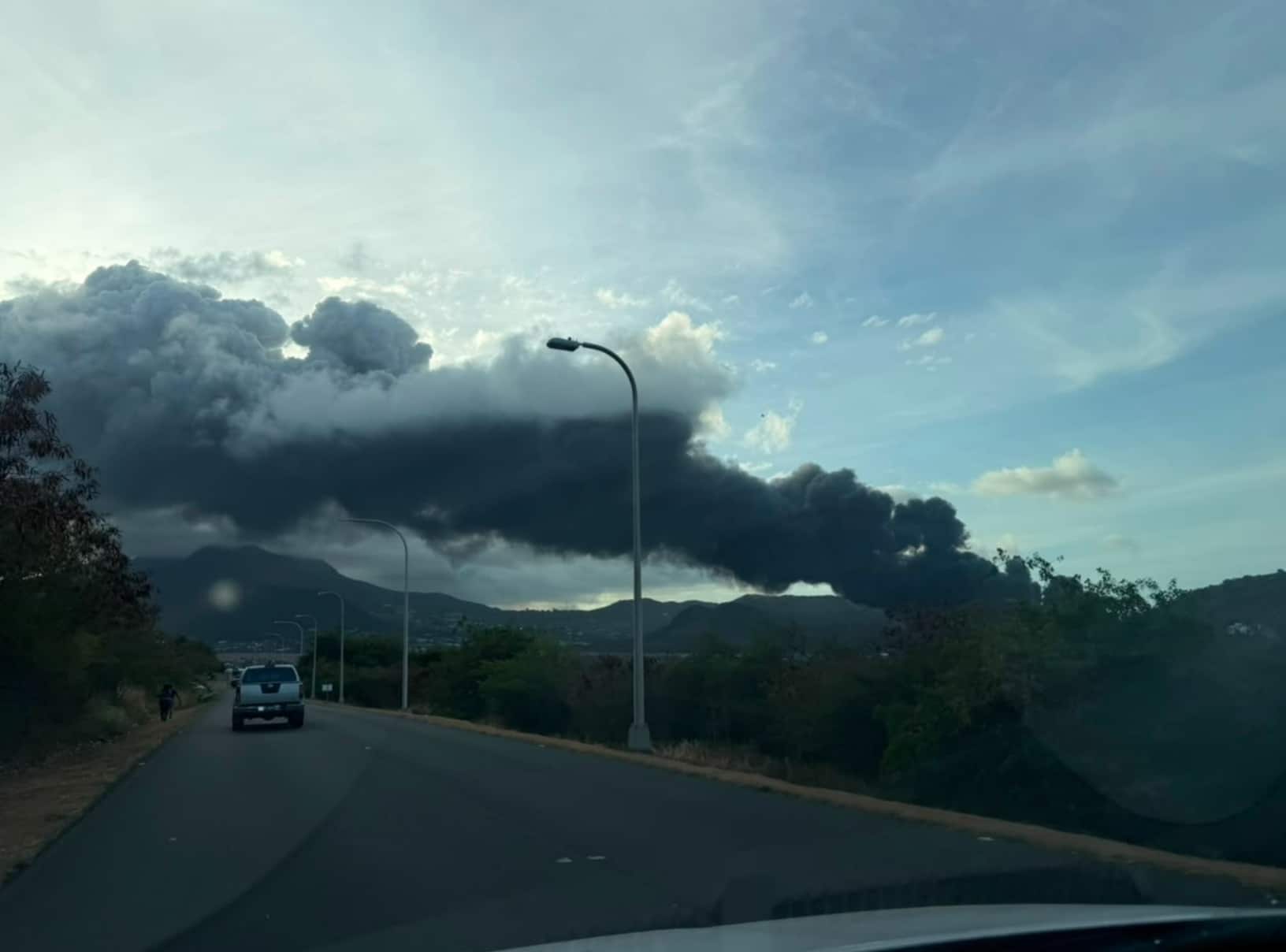
    A large, fast-spreading bushfire has broken out in the Conaree district of St. Kitts, marking the second significant wildfire event on the island in just seven days as record-breaking dry conditions continue to grip the Federation of St. Kitts and Nevis. According to official updates, the blaze ignited early on Monday, building in intensity steadily through the day amid tinder-dry vegetation, and by evening it had grown into a major fire. Dense, dark plumes of smoke from the fire were visible for kilometers across surrounding residential communities, prompting public warnings from local emergency management officials.

    This new fire follows closely on the heels of a major blaze that broke out just days earlier in the island’s Sandy Point region, also driven by prolonged drought. Notably, no injuries have been reported from either of the two recent large-scale fires. Even so, emergency authorities warn that the risk of additional blazes remains critically high across the entire island as long-term dry conditions hold.

    The string of bushfires comes as St. Kitts and Nevis faces one of its most severe drought events in recent memory. During a June 12 press briefing held by the National Emergency Management Agency (NEMA), meteorological service representatives confirmed that by the end of May 2026, the federation had received just 44% of its average long-term rainfall. Data collected by forecasters shows only 8.66 inches of rain had accumulated through the end of May, compared to the historical average of 15.5 inches for the same period.

    The prolonged dry spell is not expected to ease anytime soon, forecasters confirmed. Drought conditions are projected to persist through the entirety of the 2026 Atlantic hurricane season, driven by two climate phenomena: the ongoing El Niño event and regular incursions of dry, dusty air from the Sahara. Both systems are known to suppress rainfall across the Caribbean region for months at a time, extending the high-risk window for wildfires.

    During the briefing, officials explicitly flagged uncontrolled bushfires as the top hazard tied to the current drought. Parched, dead vegetation across the island creates ideal conditions for fires to ignite from even a small spark and spread at accelerated rates. St. Kitts Fire Chief Romel Williams added that the extended drought also places unique strain on emergency response teams: longer dry conditions stretch the wildfire season to an unprecedented length, increasing demand on limited firefighting personnel, equipment, and water resources.

    As of the latest update, emergency management teams are continuing to closely monitor both the Conaree fire and broader island conditions. NEMA and local fire officials have issued an urgent appeal to all St. Kitts residents to remain vigilant, avoid any activities that could spark new blazes, and report any signs of fire immediately, as elevated wildfire risk will remain in place for the foreseeable future.

  • Ireland revokes visa-free entry for St Kitts, Saint Lucia over CBI concerns

    Ireland revokes visa-free entry for St Kitts, Saint Lucia over CBI concerns

    In a major shift to its regional immigration alignment policy, Ireland has implemented new visa requirements for all nationals of three countries — Saint Kitts and Nevis, Saint Lucia, and Nicaragua — starting June 15, 2026. The policy change applies to every category of passport, including ordinary, diplomatic, and service passports, and even extends to transit travelers passing through Irish airports en route to other final destinations, who will now be required to hold a valid transit visa before entering the country.

    The new regulation was formally announced by Ireland’s Department of Justice, Home Affairs and Migration on June 11, 2026. Irish Migration Minister Colm Brophy framed the decision as a critical adjustment to bring Ireland’s immigration framework into line with policies already adopted by the United Kingdom and other European nations. A core driving force behind the move is Ireland’s long-standing membership in the Common Travel Area (CTA), a free-movement bloc with the United Kingdom that eliminates routine border checks between the two jurisdictions. Under this arrangement, any gap in visa screening protocols in one nation creates an immediate security vulnerability for the other, as individuals can easily cross the open border without additional inspection.

    The policy shift closely follows action taken by the United Kingdom earlier this year. In March 2026, the UK removed Nicaragua and Saint Lucia from its list of countries eligible for streamlined Electronic Travel Authorization (ETA) processing, pointing to growing numbers of irregular asylum claims and security risks tied to Saint Lucia’s Citizenship by Investment (CBI) program. While Ireland’s policy tracks the UK’s changes, it goes a step further: Ireland has also revoked visa-free access for Saint Kitts and Nevis, a nation whose citizens still retain visa-free entry privileges to both the UK and the Schengen Area.

    Irish authorities have implemented a grace period to accommodate pre-planned travel. Travelers from the three affected nations who booked their trips before June 15, 2026 and are scheduled to arrive in Ireland by July 14, 2026 will still be allowed to enter without a visa, provided they can present a valid passport and official documentation from their travel carrier confirming their booking date, personal details, flight number, and scheduled travel date. Additionally, any national of the three countries that already holds a valid Irish Residence Permit (IRP) is exempt from the new visa requirement and will not need to apply for a separate travel document.

    The change also comes in the wake of broader European action against Caribbean CBI programs. In late 2025, the European Union updated its visa suspension mechanism, explicitly listing the operation of unregulated investor citizenship programs as a valid justification for revoking visa-free travel privileges. A subsequent European Commission assessment highlighted several Eastern Caribbean CBI states, including both Saint Kitts and Nevis and Saint Lucia, criticizing the programs for their excessively fast processing timelines, extremely low application rejection rates, and high volumes of passport issuances to non-resident investors.

    While passports issued by Saint Kitts and Nevis and Saint Lucia still grant visa-free access to more than 140 countries and territories around the world, the travel mobility associated with these documents has been steadily shrinking in recent years. A growing number of Western nations, including the United States, the United Kingdom, and EU member states, have progressively withdrawn visa-free privileges as concerns over CBI program security mount, making Ireland’s latest decision the most significant recent shift in this trend.

  • West Indies Men Begin New T20 World Cup Cycle with Series Win Over Sri Lanka

    West Indies Men Begin New T20 World Cup Cycle with Series Win Over Sri Lanka

    KINGSTON, Jamaica — The West Indies men’s cricket team has launched its new T20 World Cup cycle in winning style, securing a dramatic 2-1 three-match T20 International series victory over Sri Lanka at Kingston’s Sabina Park over the weekend, driven by a career-defining historic performance from fast bowler Shamar Joseph.

    The Guyanese pace sensation delivered a series for the ages, etching his name into T20I record books. His 11 wickets across the three matches make him the first West Indian bowler to reach the milestone in a three-game series, and only the second bowler globally to achieve the feat, following Afghanistan star Rashid Khan. Throughout the series, Joseph consistently clocked speeds above 140 kilometers per hour, repeatedly unbalancing Sri Lanka’s top batters and putting the visitors under constant pressure.

    In the decisive decider match, Joseph nearly claimed a hat-trick during the powerplay, ripping through Sri Lanka’s top order to leave them reeling at 51 for 3. He went on to finish with a new career-best 5 wickets for 33 runs, including three key wickets in the final over — culminating in the dismissal of dangerous batter Dunith Wellalage for 43 — to bowl Sri Lanka out for 169 all out inside the 20-over allocation.

    Speaking after the match, an elated Joseph reflected on his standout performance that sealed the series win for the hosts. “It’s exciting for me, my first five-wicket haul in T20s, couldn’t ask for anything better. Also, a match-winning series for our West Indies team and especially for Jamaica,” Joseph said. “The captain always says, always be ready to come and bowl. So, you just have to be ready to come and execute and be ready to go again. 11 wickets in a series, couldn’t ask for better.”

    The series itself delivered plenty of drama, after the West Indies claimed a convincing seven-wicket win in the opening fixture only to suffer a 37-run defeat in the second match, setting up a high-stakes decider in Kingston. In the final game, the hosts’ run chase got off to a shaky start when captain Shai Hope fell for just one run, but an aggressive 51-run second-wicket stand between Brandon King and Shimron Hetmyer steadied the West Indian innings. Sri Lanka fought back with quick wickets, reducing the hosts to a precarious 53 for 4 and putting the series result in doubt.

    With the chase on the brink, middle-order batters Rovman Powell and Sherfane Rutherford rebuilt the innings through the middle overs before launching a devastating counterattack. The pair put together an explosive 81-run partnership off just 46 balls, swinging momentum firmly back in the West Indies’ favor. Powell, who became the West Indies’ all-time leading T20I run-scorer during the second match of the series, thrilled the home crowd with three sixes and one four, while Rutherford delivered an unbeaten knock of 54 off 40 balls, including four sixes and three fours.

    Needing 37 runs from the final three overs, all-rounder Jason Holder — who missed the second match with a hamstring injury — sealed the win in spectacular fashion, cracking three towering sixes during a rapid 21 runs off just five balls. The West Indies crossed the finish line with two balls remaining, sparking wild celebrations among the home crowd at Sabina Park.

    Holder’s contribution across the series further underlined his value to the side; his 3 wickets for 18 runs in the opening match helped him become just the second West Indian bowler to claim 50 T20I wickets on home soil. Batter Brandon King also reached a major career milestone, becoming only the third West Indian batter — alongside Powell and Nicholas Pooran — to surpass 2,000 career T20I runs.

    Across the entire series, the West Indies held the upper hand on both sides of the ball. The home bowling attack claimed 22 wickets to Sri Lanka’s 17, with Joseph averaging one wicket every six overs and holding an economy rate of 7.83, while Holder finished as the series’ most economical bowler, conceding just 51 runs from 48 deliveries for an economy of 6.37. With the bat, the West Indies hit 31 sixes to the visitors’ 26, with Powell leading the charge with six maximums and both Hetmyer and Rutherford hitting five each.

    West Indies head coach Daren Sammy praised his side’s all-round performance, highlighting the team’s composure under pressure during the tense run chase in the decider. “Most of all, being under pressure today and having the nerve, the calm and the cricket smarts to do what it takes to come out over the line; that was special,” Sammy said. “There are still areas and skills we’ve got to develop, but it’s something that we as the coaching staff and players will continue to work on.”

    Both sides will now shift their focus to the red-ball format, with a two-match Test series scheduled to get underway June 25 at Antigua’s iconic Sir Vivian Richards Stadium, running through July 7.

  • Solid Waste confirms fire at Landfill site

    Solid Waste confirms fire at Landfill site

    On Monday evening, June 15, 2026, officials from St. Kitts’ Solid Waste Management Corporation (SWMC) officially confirmed what local residents had already observed: large dark plumes of smoke visible across the Conaree region were caused by an active major fire at the area’s municipal landfill site.

    The blaze first ignited in the facility’s dedicated Construction and Demolition (C&D) waste cell, SWMC explained in an official public statement. Although the corporation deployed all of its on-site fire suppression resources immediately after detecting the fire, the intense heat and rapid spread of the flames outpaced local containment efforts. The fire has since expanded to the site’s adjacent tyre storage section, intensifying smoke production and complicating suppression work.

    Given the landfill’s close geographic proximity to Robert L. Bradshaw (RLB) International Airport, one of the region’s most critical travel hubs, local residents and industry stakeholders quickly raised concerns that the smoke and fire could disrupt flight operations or threaten airport infrastructure. But the St. Christopher Air and Sea Ports Authority (SCASPA) moved quickly to reassure the public, confirming that the airport faces no immediate danger from the incident and that all arrival, departure, and ground operations continue to run on schedule as normal.

    In public health guidance released alongside their incident confirmation, SWMC urged residents of nearby communities to stay alert to shifting smoke levels and changing local air quality, and to take appropriate safety precautions to protect their health. The guidance advises local households to keep windows and exterior doors closed as much as possible to prevent smoke from seeping into indoor spaces, and to cut back on unnecessary outdoor activities. Special warnings were issued for vulnerable groups including children, elderly residents, and individuals living with chronic respiratory conditions, who face higher risk of health complications from smoke exposure.

    SWMC confirmed that cross-agency response and fire containment operations are currently active and ongoing at the site. The corporation also expressed public gratitude for the rapid support provided by partner agencies, including the Royal St. Christopher and Nevis Police Force, SCASPA, and the St. Kitts and Nevis Fire and Rescue Services, which have deployed personnel and resources to assist with the response effort.

    Acknowledging the disruption and concern the fire has caused across the local community, SWMC issued a formal apology for the inconvenience brought by the incident. The agency also committed to publishing timely, transparent updates as suppression and containment work progresses, to keep residents and stakeholders fully informed of any changes to the situation.

  • Fighting eases in Lebanon as US and Iran reach tentative agreement

    Fighting eases in Lebanon as US and Iran reach tentative agreement

    Just one day after the United States and Iran announced a tentative breakthrough agreement that the international community hopes will calm broader tensions across the Middle East, United Nations officials have confirmed a sharp reduction in hostilities along Lebanon’s southern border. This de-escalation comes after months of rising regional instability that brought the Israel-Lebanon border to the brink of a larger, all-out regional conflict.

    In a press briefing at UN Headquarters in New York, Stéphane Dujarric, spokesperson for UN Secretary-General, shared on-the-ground observations from the UN Interim Force in Lebanon (UNIFIL), the peacekeeping mission tasked with monitoring the border. Between midnight and 4 p.m. local time Monday, just hours after the U.S.-Iran deal was made public, UNIFIL recorded only 133 projectile trajectories and 2 air strikes carried out by the Israel Defense Forces (IDF). Critically, no fire was documented from Hizbullah or other non-state actors active along the border during that same window. Even with the drop in active fighting, the mission still counted 25 violations of Lebanese airspace by the IDF, totaling roughly 40 hours of overflight time.

    This marked a dramatic shift from the intense violence that unfolded over the preceding weekend, before the agreement was announced. During that 48-hour period of peak escalation, UNIFIL documented 135 IDF airspace violations and a total of 1,374 projectile trajectories – 1,328 of which were attributed to the IDF, with the remaining 46 coming from non-state actors believed to be Hizbullah.

    As soon as security conditions began to improve, UN peacekeeping teams moved rapidly to restore critical infrastructure for local communities impacted by weeks of fighting. At the request of Lebanese local authorities, a UNIFIL team spent most of Monday reopening the key highway connecting the southern Lebanese communities of Rmeich and Naqoura. The roadway, which suffered severe damage from cross-fire during the escalation, had been closed to traffic, cutting off access to basic goods and emergency aid for thousands of local residents.

    Equipped with earthmoving machinery, explosives ordnance disposal (EOD) units and engineering specialists, peacekeepers filled craters left by shelling, cleared roadblocks, repaired damaged pavement and removed unexploded ordnance from the route. The reopened highway is expected to serve roughly 6,000 residents who remained in the area throughout the fighting, and will also streamline the delivery of humanitarian aid and essential supplies to all nearby affected communities.

    While welcoming the de-escalation, the United Nations reiterated its longstanding commitment to upholding Security Council Resolution 1701, the 2006 measure that ended the last major war between Israel and Hizbullah and established the current border peace framework. Dujarric reminded reporters that the Secretary-General had issued a formal statement the previous day strongly condemning recent Israeli strikes on Beirut, and reaffirmed the UN’s call for all parties to fully respect the terms of Resolution 1701.

    Even with the reduction in active hostilities, UN humanitarian officials have stressed that the security situation remains fragile, and conditions are still not safe for the large population of displaced civilians who fled southern Lebanon earlier amid the escalation. While a small number of families have begun traveling back to parts of the region, particularly around Nabatieh, to assess damage to their homes, no large-scale population returns have been recorded. UN officials have issued clear guidance that civilians should not attempt permanent returns until security is fully stabilized.

    Local Lebanese authorities confirm that emergency shelters across the country are still operating near full capacity, as displaced families wait for clearer signals that violence will not resume. The Lebanese Armed Forces and local government leaders have joined the UN in urging residents to avoid returning to high-risk border areas for the time being. The United Nations has reiterated its core demands moving forward: full protection for civilian populations, safe and voluntary return for displaced residents, and unimpeded, continuous access for humanitarian workers to deliver aid to all affected communities.

  • Federation faces prolonged drought as El Niño suppresses rainfall, officials warn

    Federation faces prolonged drought as El Niño suppresses rainfall, officials warn

    BASSETERRE, St. Kitts – Officials from St. Kitts and Nevis have issued an urgent call for widespread water conservation across the Federation, as a powerful El Niño event continues to suppress rainfall and push the island nation into a prolonged drought that is expected to last through the end of the 2026 Atlantic Hurricane Season.

    Though the 2026 hurricane season officially began on June 1, official rainfall data confirms that precipitation across the Federation has remained drastically below average for the first five months of the year, with no meaningful relief seen in the first half of June. National Disaster Response Coordinator Livingston Pemberton delivered a stark update on the conditions, drawing on long-range climate projections from the Caribbean Institute for Meteorology and Hydrology (CIMH), which confirm that El Niño will sustain severe dry conditions through November.

    Pemberton stressed that the ongoing drought cannot be dismissed as a minor inconvenience, noting that it will impact the Federation’s economy one way or another if residents do not take urgent conservation action. Senior Meteorological Officer Elmo Burke expanded on the scope of the crisis, explaining that El Niño is triggering drought of differing intensity across the entire Caribbean region, not just St. Kitts and Nevis.

    Official measurements from the Robert L. Bradshaw International Airport, a key monitoring site for the islands, illustrate the severity of the precipitation deficit. Through the end of May 2026, the airport recorded just 8.66 inches of rain, 6.84 inches below the 30-year long-term average (1991-2020) of 15.5 inches for the same period. That equals a 44 percent drop in total rainfall compared to historical norms. The dry trend has not let up in June: as of the mid-June update, only 0.05 inches of rain had been recorded, a dramatic drop from the average June rainfall of 3.41 inches.

    “A drought warning was issued for St. Kitts and Nevis back in May, and this warning and the underlying dry conditions are expected to persist through the entire hurricane season, up to the end of November,” Burke confirmed during a press briefing hosted by the National Emergency Management Agency (NEMA). “Even though hurricane season is typically our wettest period of the year, current forecasts show the drought trend will hold strong throughout this season.”

    Burke went on to explain the scientific mechanics behind El Niño’s drying effect on the Caribbean. El Niño is defined by abnormal warming of surface waters in the eastern equatorial Pacific Ocean, which triggers far-reaching shifts in global weather patterns. For the Caribbean, this shift creates increased upper-atmosphere wind shear and sinking dry air across the region. These conditions block the deep convection that generates heavy rainfall from tropical waves and cyclones moving through the area, drastically cutting total precipitation.

    The sinking air associated with El Niño also drives higher than average temperatures, particularly during the peak summer heat between July and August. Compounding these challenges, the annual influx of Saharan dust – which typically blankets the Caribbean through the summer months – will further stabilize atmospheric conditions to prevent rain, while also reducing local air quality for residents. Burke noted that while occasional heavy rainfall events remain possible during the 2026 hurricane season, the combined impact of strong El Niño and recurring Saharan dust intrusions will keep total precipitation well below normal for the full season.

    As reservoir levels decline and public water supplies come under growing strain, emergency and water officials are urging all residents to immediately cut back on non-essential water use, including outdoor lawn watering and personal vehicle washing. Water Engineer Cromwell Williams emphasized that public cooperation is the most critical factor in managing the current water shortage, pushing back against suggestions that the islands need a full overhaul of their long-term water strategy.

    “We do not lack a water development strategy, nor do we need to rewrite our existing framework. Our current water scarcity stems from a failure to fully implement the strategy we already have,” Williams explained. “Today, I am here to appeal to every water consumer: your active participation is central to our ability to respond to this drought. Every cut in non-essential use makes a difference.”

    Williams pointed to a formal drought response plan published by the Water Services Department that clearly outlines the shared responsibilities of consumers and government agencies during periods of water scarcity, stressing that meaningful drought relief depends on collective action from all members of the public.

    For context, the 2026 Atlantic Hurricane Season runs from June 1 through November 30. Forecasters at the U.S. National Oceanic and Atmospheric Administration (NOAA) predict a near-to-above average season, with 8 to 14 named storms (packing winds of 39 mph or higher). Of those, 3 to 6 are expected to strengthen into hurricanes, with 1 to 3 forecast to become major Category 3, 4, or 5 hurricanes with winds exceeding 111 mph.

  • Local players confirmed for WCPL following draft

    Local players confirmed for WCPL following draft

    The 2026 edition of the Women’s Caribbean Premier League (WCPL) has locked in its full roster of domestic players after the conclusion of its annual player draft, marking a major milestone as the tournament enters an exciting new era of expansion.

    This year, top-tier women’s cricket in the Caribbean grows from three competing franchises to four, with the newly formed Jamaica Empress making its debut in the tournament. To accommodate the arrival of the expansion side, league organizers adjusted the traditional draft structure to ensure fair team building across all four competing units.

    Under the revised framework, each franchise was first allocated one designated Heritage player, a standout domestic talent drawn from the franchise’s home territory. That allocation saw Barbados Tridents secure Hayley Matthews, the region’s globally recognized star all-rounder, while Jamaica Empress claimed Chinelle Henry, Guyana Amazon Warriors locked in Shemaine Campbelle, and Trinbago Knight Riders earned Karishma Ramharack.

    Following the Heritage player allocation, the three returning, established franchises were given the opportunity to protect two additional domestic players from their 2025 tournament rosters, locking in key core talent ahead of the open selection round. After that protection phase concluded, new entrant Jamaica Empress selected two players from the remaining available domestic pool, picking up veteran star Stafanie Taylor and all-rounder Aaliyah Alleyne to build its initial foundation.

    After the completion of the early protection and selection phases, the draft moved into its final round to fill out the full local roster for each side. The full confirmed local squads for 2026 are:
    – **Barbados Tridents**: Hayley Matthews, Qiana Joseph, Afy Fletcher, Shawnisha Hector, Shabika Gajnabi, Mandy Mangru, Cherry-Ann Fraser, Naijanni Cumberbatch, Asabi Callender, Amrita Ramtahal
    – **Jamaica Empress**: Chinelle Henry, Stafanie Taylor, Aaliyah Alleyne, Rashada Williams, Zaida James, Djenaba Joseph, Kate Wilmott, Celina Whyte, Abigail Bryce, Shriya Jairam
    – **Guyana Amazon Warriors**: Shemaine Campbelle, Realeanna Grimmond, Ashmini Munisar, Shamilia Connell, Eboni Brathwaite, Sheneta Grimmond, Chedean Nation, Reniece Boyce, Latoya Williams, Tilleya Madramootoo
    – **Trinbago Knight Riders**: Karishma Ramharack, Deandra Dottin, Jahzara Claxton, Jannillea Glasgow, Steffie Soogrim, Earnisha Fontaine, Samara Ramnath, Ameila Khan, Brianna Harricharan, Sainavi Kambalapalli

    Each franchise will next add five overseas international players to reach the tournament’s 15-player squad limit for the 2026 season. In a notable rule change for this edition, all five signed overseas players will be eligible for selection in each match’s starting playing XI, giving team management far greater tactical flexibility throughout the tournament. The full list of signed international players is set to be announced in the coming weeks.

    Beyond on-field roster changes, the 2026 WCPL has launched a refreshed brand identity centered on three core values: female empowerment, competitive ambition, and deep community connection. These values are brought to life through the league’s new creative platform, “She’s In”, which will be promoted via a targeted advertising campaign across women-focused social media channels throughout the Caribbean.

    As the region’s premier professional women’s cricket competition, WCPL was reimagined for the 2026 season with a clear mission: to celebrate, empower, and elevate Caribbean women through sport, while providing a world-class stage for the region’s most talented female cricketers to showcase their skills. Beyond elite cricket action, the league integrates family-friendly matchday experiences, youth cricket development programs, public health and wellness initiatives, and business opportunities for female entrepreneurs across the region. The “She’s In” campaign specifically aims to inspire the next generation of Caribbean girls and young women, proving that there is a space for them at the highest levels of competitive sport.

    The 2026 WCPL will be hosted as a centralized cricket festival across the first two weeks of September, with all matches taking place in Barbados. Looking forward, league leadership has laid out long-term ambitions for global expansion, with plans to eventually welcome teams from outside the Caribbean as it works to establish itself as a truly elite international women’s cricket competition.

  • A Small Idea. A Big Impact

    A Small Idea. A Big Impact

    On June 15, 2026, a small act of inspiration from one 10-year-old student has permanently reshaped the culture of care at SKI Academy, turning a simple idea into a beloved campus landmark that fosters connection for lonely or struggling students.

    It all started when Grade 5 student Zalia watched a viral TED Talk about the Buddy Bench, a dedicated campus space where students can sit to signal they need company, someone to talk to, or just a friend to sit with when they feel sad, isolated, or overwhelmed. The concept struck a chord with Zalia immediately, and she quickly recognized how much impact a similar space could have on her own school community. Wasting no time, she arranged a meeting with SKI Academy Principal James to pose a straightforward, earnest question: Could the school bring this idea to life?

    To Zalia’s delight, the principal responded with unbridled enthusiasm and full support for the project. Backed by her parents, Zalia set out to turn her vision into reality, taking the lead on every step of the process. She organized fundraisers both within the school and in her local neighborhood to cover the core costs of the project, while a generous parent from the SKI community stepped up to donate all the paint required for the bench’s transformation. Working side-by-side with her classmates, Zalia helped design and paint the bench, turning a simple piece of outdoor furniture into a bright, welcoming symbol of friendship, empathy, and inclusive belonging on campus.

    For SKI Academy leadership, the project is far more than just a new addition to the school grounds—it is a living example of the institution’s core values. “Acts of compassion, empathy, and service are not simply things we talk about—they are part of who we are,” the academy noted in its official announcement of the project.

    Today, just weeks after the bench was installed, it has already become a central gathering point on the SKI Academy campus. It serves as a constant, gentle reminder to students and staff alike that no one has to navigate hard moments alone. School leadership extended sincere gratitude to everyone who helped bring the initiative to fruition, singling out Zalia, her family, her classmates, community volunteers, and teacher Ms. Arora for their contributions.

    As SKI Academy emphasizes: even the smallest acts of care, sparked by one person’s willingness to act, can create a ripple effect of kindness that changes an entire community for the better.

  • Statement on the Passing of Dr. Shelly-Ann Cox, Chief Fisheries Officer of Barbados, by the Executive Director of the Caribbean Regional Fisheries Mechanism (CRFM)

    Statement on the Passing of Dr. Shelly-Ann Cox, Chief Fisheries Officer of Barbados, by the Executive Director of the Caribbean Regional Fisheries Mechanism (CRFM)

    The Caribbean regional fisheries sector is in mourning following the sudden death of Dr. Shelly-Ann Cox, Barbados’ widely respected Chief Fisheries Officer, announced in an official statement from the Executive Director of the Caribbean Regional Fisheries Mechanism (CRFM) on 14 June 2026. On behalf of the entire CRFM Secretariat, Dr. Marc Williams, CRFM Executive Director, extended heartfelt condolences to Cox’s family, friends, professional colleagues, and all members of Barbados’ fishing community as they navigate this period of profound loss.

    Over the course of her decades-long, distinguished career, Dr. Cox demonstrated unwavering commitment, sharp expertise, and relentless passion in her service to both Barbados and the broader Caribbean region. In her leadership role as Chief Fisheries Officer, she drove transformative progress across core priorities for the sector: advancing science-backed sustainable fisheries management frameworks, building greater social and economic resilience for small-scale fishing communities, championing ethical, long-term stewardship of shared marine resources, and fostering collaborative regional action on pressing challenges facing Caribbean fisheries and aquaculture. Her steady leadership, deep institutional knowledge, and principled commitment earned her widespread respect and admiration from peers across the Caribbean and in global fisheries circles.

    Dr. Cox’s impact extended far beyond the territorial waters of her home country. Through her active participation in leading regional fisheries initiatives and close collaborative partnerships with the CRFM and other regional and international organizations, she helped shape inclusive policies and impactful programs that have strengthened regional fisheries governance, improved regional food and nutrition security, and lifted the livelihoods of thousands of small-scale fisherfolk and seafood industry workers across the Caribbean. Her perspective consistently carried weight in regional policy discussions, and her lifelong dedication to the sustainable development of the Caribbean fisheries sector has left an enduring legacy that will continue to benefit generations to come, according to Dr. Williams.

    In the wake of this immense loss, the entire CRFM community has joined the people of Barbados in mourning the death of a fierce, steadfast advocate for fishing communities. “They can find comfort in the extraordinary impact she achieved during her lifetime, and in the countless lives she touched through her dedicated public service,” Dr. Williams added. The CRFM joins Barbados in honoring Dr. Cox’s life of service, dedicated to advancing the fisheries sector and improving the well-being of all Caribbean people. May her soul rest in peace.