标签: Saint Kitts and Nevis

圣基茨和尼维斯

  • CWI confirms fast bowler management plans ahead of busy international season

    CWI confirms fast bowler management plans ahead of busy international season

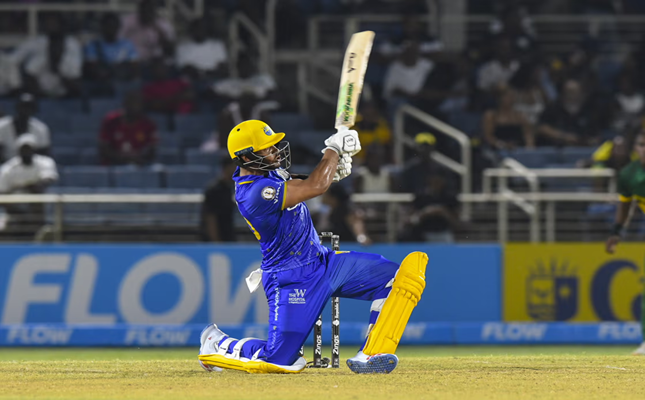
    Cricket West Indies (CWI) has unveiled a comprehensive player management strategy for three premier fast bowlers—Jayden Seales, Shamar Joseph, and Alzarri Joseph—ahead of an exceptionally packed international calendar. The organization’s deliberate approach prioritizes athlete health and performance optimization through carefully structured participation plans.

    Seales will become available for selection in the West Indies Championship starting April 9, with confirmed participation in the first two rounds. His continued involvement should Trinidad & Tobago Red Force advance to subsequent tournament phases will undergo assessment at that juncture.

    Shamar Joseph will enter competitive availability from April 13, with Guyana Harpy Eagles permitted to include him in managed practice sessions beforehand. Both bowlers will operate under structured loading plans developed by the Bowling Coach to ensure optimal preparation and integration.

    Alzarri Joseph will bypass the regional championship entirely after receiving a No Objection Certificate to fulfill Pakistan Super League commitments. His PSL participation forms part of a broader rehabilitation strategy following extended injury absence. CWI will meticulously monitor his workload throughout the tournament and during preparatory camps ahead of home series engagements.

    The strategic management reflects the unprecedented demands of West Indies’ upcoming schedule, featuring all-format contests against Sri Lanka, five ODIs versus New Zealand, and a two-Test series against Pakistan. Following home fixtures, players will transition to Caribbean Premier League competitions before embarking on tours to India and Bangladesh.

    Miles Bascombe, CWI’s Director of Cricket, emphasized the proactive nature of these measures: “Our fast bowlers represent invaluable assets requiring precise management across every format. These deliberate plans ensure their peak availability when competitive intensity reaches its maximum.”

    The organization reaffirmed its commitment to fielding optimal squads while balancing franchise cricket opportunities that complement broader performance objectives.

  • Tinubu, St Kitts And Nevis PM Meet, To Appoint Special Envoys

    Tinubu, St Kitts And Nevis PM Meet, To Appoint Special Envoys

    In a significant diplomatic development, Nigerian President Bola Ahmed Tinubu and St. Kitts and Nevis Prime Minister Terrance Michael Drew have mutually agreed to establish special envoy exchanges to enhance bilateral cooperation between their nations. The agreement was finalized during Prime Minister Drew’s official courtesy visit to the State House in Abuja on Thursday.

    The Caribbean leader revealed that the envoy appointments would serve as a strategic mechanism to advance diplomatic engagement and ensure existing agreements yield concrete outcomes. This framework is designed to facilitate broader collaboration between Nigeria, St. Kitts and Nevis, and the entire Caribbean Community (CARICOM) bloc.

    Prime Minister Drew emphasized the historical connections between the two nations, noting that many citizens of St. Kitts and Nevis trace their ancestral roots to Nigeria’s Calabar region. “This is our people. Our people in Saint Kitts and Nevis fundamentally came from Calabar here in Nigeria. So I always say we have come back home,” Drew stated during post-meeting discussions with journalists.

    The bilateral talks encompassed multiple sectors including educational exchange programs, agricultural development, food security initiatives, and cultural partnerships. Drew highlighted existing successful cooperation in healthcare, acknowledging that Nigerian-trained medical professionals have made substantial contributions to his nation’s development. “A lot of Nigerians have studied in my country, and they are doctors today. We have had a contingent of doctors who went to Saint Kitts and Nevis already,” he noted.

    Prime Minister Drew praised President Tinubu’s leadership and commitment to strengthening Africa-Caribbean relations, describing Nigeria as a nation of significant global importance while expressing gratitude for the gracious hospitality extended during his visit.

  • Tinubu receives St Kitts Prime Minister at Aso Rock – TheCitizen – It’s all about you

    Tinubu receives St Kitts Prime Minister at Aso Rock – TheCitizen – It’s all about you

    ABUJA, NIGERIA – Nigerian President Bola Tinubu hosted Prime Minister Terrance Drew of St. Kitts and Nevis in a significant diplomatic engagement at Aso Rock Presidential Villa on Thursday evening. The high-level meeting, which commenced at approximately 6:00 PM local time, marked the second bilateral discussion between the two leaders within a year, following their initial March 2025 summit.

    The State House media office confirmed the diplomatic encounter through an official statement and photographic evidence released Thursday evening. While specific details of the current discussions remain undisclosed, the meeting continues the trajectory of enhanced cooperation established during their previous engagement.

    The March 2025 dialogue between President Tinubu and Prime Minister Drew focused on expanding bilateral relations across multiple sectors including agricultural development, energy security, logistical infrastructure, and trade enhancement. During that previous meeting, Prime Minister Drew emphasized the Caribbean region’s strong interest in forging deeper connections with Nigeria, referring to Africa as “the motherland” and highlighting shared historical and cultural ties.

    Prime Minister Drew had previously articulated his administration’s commitment to achieving food sovereignty and revealed ongoing negotiations with several Nigerian corporations to explore collaborative ventures throughout the Caribbean region. President Tinubu characterized these diplomatic efforts as a strategic opportunity for African nations to broaden their international partnerships and consolidate bilateral relationships.

    The two nations maintain formal diplomatic relations through their membership in several international organizations including the Commonwealth of Nations and the Organisation of African, Caribbean and Pacific States. Despite these formal ties, neither country currently operates a resident embassy in the other’s capital, with diplomatic accreditation managed through multilateral missions in New York and London.

    According to United Nations COMTRADE statistics, current bilateral trade volumes between Nigeria and St. Kitts and Nevis remain modest, valued at under $500,000 annually. This latest high-level meeting signals potential for substantial growth in economic and diplomatic cooperation between the African economic powerhouse and the Caribbean nation.

    The summit occurs within the context of Nigeria’s expanding engagement with Caribbean Community (CARICOM) members, highlighted by President Tinubu’s landmark visit to St. Lucia in June 2025 – the first official engagement between a Nigerian head of state and CARICOM leadership.

  • Global community celebrates passage of UN resolution on Transatlantic slavery

    Global community celebrates passage of UN resolution on Transatlantic slavery

    In a historic move with profound global implications, the United Nations General Assembly has formally recognized the transatlantic trafficking of enslaved Africans and racialized chattel enslavement as humanity’s most severe crime. The groundbreaking resolution, championed by Ghana and supported overwhelmingly by 123 member states, establishes an unprecedented international framework for addressing slavery’s enduring legacy.

    The declaration, formally titled ‘Declaration of the Trafficking of Enslaved Africans and Racialised Chattel Enslavement of Africans as the Gravest Crime Against Humanity,’ received mixed international response. While CARICOM nations unanimously endorsed the measure and numerous African diaspora communities celebrated its passage, significant geopolitical divisions emerged. Fifty-two countries abstained from voting, including all European Union members, while Argentina, Israel, and the United States constituted the three opposing votes.

    UN Secretary-General António Guterres characterized the transatlantic slave trade as ‘a profound betrayal of human dignity’ that established exploitative global systems whose repercussions continue to shape modern societies. ‘Remembrance alone is not enough,’ Guterres emphasized, calling for concrete actions to address systemic racism, implement reparatory justice, and accelerate inclusive development for communities of African descent.

    The resolution mandates comprehensive measures including establishment of reparations frameworks, enhanced historical research initiatives, educational reforms, and healing programs. CARICOM, which has long advocated for reparatory justice, welcomed the declaration as a pivotal step toward addressing slavery’s harmful legacies through international cooperation and decisive action.

    This diplomatic achievement occurs alongside global initiatives including the UN’s Second International Decade for People of African Descent and the African Union’s Decade of Reparations, creating unprecedented momentum for addressing historical injustices through policy reform and developmental equity.

  • Power Beneath the Surface: Mark Brantley’s Bid to Make Nevis a Caribbean Geothermal Energy Power

    Power Beneath the Surface: Mark Brantley’s Bid to Make Nevis a Caribbean Geothermal Energy Power

    The Eastern Caribbean island of Nevis is spearheading an ambitious energy transformation through the development of its volcanic geothermal resources, a project that could redefine its economic future while establishing a replicable model for small island nations globally. Under the leadership of Premier Mark Brantley, the Nevis Island Administration is mobilizing significant multilateral financing to harness the island’s substantial geothermal potential, currently trapped beneath its dormant volcano.

    Nevis residents currently endure electricity rates exceeding 40 US cents per kilowatt-hour—among the highest in the Western Hemisphere and approximately triple the United States average. Nearly every cent of this expenditure flows out of the island to foreign oil suppliers, leaving the local economy vulnerable to global price fluctuations driven by distant conflicts and crises. Premier Brantley, who serves as both the island’s elected leader and Minister of Energy, has declared this arrangement untenable.

    The cornerstone of Brantley’s strategy leverages Nevis Peak, a dormant volcano sitting atop geothermal reservoirs identified as among the most significant in the Caribbean basin. The island’s position above a tectonic plate boundary brings geothermal heat closer to the surface than at most comparable sites, reducing both extraction costs and technical complexity.

    The project’s initial phase targets a 10-to-30-megawatt geothermal power plant, sufficient to meet the island’s entire domestic electricity demand. Successful implementation would slash electricity costs below US$0.15 per kilowatt-hour—less than half the current rate—while insulating consumers from global commodity market volatility.

    Beyond domestic energy security, the administration envisions transforming Nevis into a regional energy exporter. With surplus capacity, the island could develop green hydrogen and ammonia production, high-density data centers, ship-to-shore power systems, and food processing facilities. Future phases might enable electricity exports to neighboring islands including St. Kitts, Anguilla, and Antigua via subsea cable.

    The economic implications extend beyond power generation. Affordable geothermal energy enables large-scale desalination, addressing freshwater constraints while reducing dependence on food imports. This creates a cascade effect: cheaper energy enables cheaper water, which strengthens domestic agriculture, reduces import dependency, and builds economic resilience rarely achieved by small island states.

    Premier Brantley deliberately compares Nevis’s potential trajectory to Norway’s transformation through resource development, though he emphasizes the renewable distinction: “Nevis will become an energy economy and the Norway of the Caribbean. Unlike Norway, we will power our transformation with renewable energy.”

    The project has assembled an impressive financing coalition including the Caribbean Development Bank, Inter-American Development Bank, and Saudi Fund for Development, which have collectively committed US$37 million toward the current drilling phase. The Green Climate Fund and Italian government have also contributed to the broader financing structure. After previous setbacks, five internationally recognized drilling firms submitted bids in July 2025, representing the most competitive tender the project has seen.

    This institutional backing represents a form of public due diligence, with each organization concluding after independent assessment that Nevis is executing a credible plan. Daniel Best, Director of Projects at the Caribbean Development Bank, noted: “A 10-megawatt geothermal power plant on Nevis can generate more than 100% of the domestic demand. If successful, the project will go a long way to helping the Federation realize their sustainable energy goals.”

    The regional context illustrates the long-term commitment required for geothermal success. Guadeloupe’s Bouillante plant traces its origins to 1960s exploratory drilling, only commissioning its first unit in 1986. Dominica’s geothermal program began around 2010 and reached commercial commissioning in early 2026 after a 15-year journey involving financing restructurings and construction delays.

    For development finance institutions and private investors monitoring the Caribbean’s energy transition, Nevis represents a small island state with a confirmed resource base, committed multilateral backing, and clear delivery targets. As Premier Brantley frames it: “We are seeing the potential for energy security, water security, food security, economic security and environmental protection flowing from this resource development. This allows us not only to better secure Nevis’ future but also accelerates our achievement of the United Nations Sustainable Development Goals.”

    The project carries generational significance—the moment when an island that has consistently outperformed its circumstances finally builds the structural foundations its people have long deserved. When the first geothermal electrons reach the grid, residents paying 40 cents per kilowatt-hour today will have tangible evidence of what two decades of persistence and strategic coalition-building can achieve.

  • Antioch Baptist Church Night of Worship – March 2026

    Antioch Baptist Church Night of Worship – March 2026

    The Antioch Baptist Church extends a heartfelt invitation to community members for an inspirational evening of spiritual celebration. Scheduled for Thursday, March 26, 2026, at 7:15 PM, this special gathering will take place at the church’s Lime Kiln Sanctuary.

    This worship night will showcase exceptional musical ministries, including performances by the Earthen Vessels Ministry, renowned gospel artist Keisha Dickenson, and international worship leader Noellissa Swaby from Nevis. The event emphasizes accessibility and community connection, with no admission fee required for attendance.

    Church representatives have indicated that while entry remains free of charge, attendees will have the opportunity to participate in a voluntary soft offering collection during the service. This approach aligns with the church’s mission of creating inclusive worship experiences that welcome all community members regardless of financial circumstances.

    The Night of Worship represents part of Antioch Baptist Church’s ongoing outreach efforts to foster spiritual connection through music and communal prayer. The selection of artists reflects the church’s commitment to diverse worship expressions, featuring both local talents and international influences from the Caribbean region.

  • TAG Building Men Session – March 29, 2026

    TAG Building Men Session – March 29, 2026

    The Turn Around Agenda initiative has announced its upcoming ‘Building Men Session,’ a dedicated community event designed for young males aged 11 to 21. Scheduled for Sunday, March 29, 2026, at 4:30 PM, the gathering will take place at the Antioch Baptist Church, located within the Lime Kiln Commercial Development zone.

    This structured program aims to provide a supportive environment for adolescent and young adult males, focusing on personal development and community engagement. The session represents part of a broader effort to offer guidance and positive role modeling during formative years.

    While the original announcement did not specify the event’s curriculum, such initiatives typically address topics relevant to youth development, including leadership skills, civic responsibility, and personal growth strategies. The choice of a church venue underscores the community-based, values-oriented approach of the Turn Around Agenda program.

    The event stands as an open invitation, indicating the organization’s focus on accessibility and outreach to all young men within the specified age range across the community.

  • Message from the CARICOM Reparations Commission International Day of Remembrance of the Victims of Slavery and the Trans-Atlantic Slave Trade

    Message from the CARICOM Reparations Commission International Day of Remembrance of the Victims of Slavery and the Trans-Atlantic Slave Trade

    On the occasion of the International Day of Remembrance of the Victims of Slavery and the Trans-Atlantic Slave Trade, the CARICOM Reparations Commission has issued a powerful declaration demanding comprehensive reparatory justice. The Commission commemorated the approximately 15 million African men, women, and children who suffered through the brutalities of chattel enslavement across the Americas for more than three centuries.

    The statement acknowledged both the profound trauma inflicted through the Middle Passage and the systematic denial of basic humanity, while simultaneously honoring the courageous resistance and relentless defiance demonstrated by enslaved peoples against European-dominated racial oppression. This resistance ultimately contributed to ending one of history’s most extensive human rights violations.

    The Commission emphasized that the CARICOM Ten Point Plan for Reparations provides a strategic framework for addressing historical injustices through concrete measures. These include calls for formal restitution, comprehensive compensation programs, and the implementation of sustained initiatives to dismantle persistent structural and institutional racism rooted in colonial legacies.

    A significant development highlighted in the declaration is the African Union’s designation of 2026-2035 as the Decade for Reparations, which represents a historic commitment to strengthening global reparations movements. This initiative establishes a platform for enhanced collaboration between African nations, Caribbean communities, and the broader African diaspora in pursuing unified reparatory justice.

    The Commission characterized the transatlantic slave trade as a carefully orchestrated crime against humanity that systematically fueled European economic development while deliberately underdeveloping African and Caribbean regions. The enduring consequences of these exploitative systems continue to shape contemporary global inequalities.

    As the reparatory justice movement reaches a critical juncture, the Commission reaffirmed its commitment to ongoing advocacy, diplomatic engagement, and public education initiatives. The statement concluded with a compelling appeal to the international community to recognize that achieving justice for victims of African enslavement constitutes a fundamental advancement of universal human rights.

  • Statement from the Hon. Dr. Terrance Drew, CARICOM Chair and Prime Minister of St. Kitts and Nevis / reappointment of the Secretary-General of CARICOM

    Statement from the Hon. Dr. Terrance Drew, CARICOM Chair and Prime Minister of St. Kitts and Nevis / reappointment of the Secretary-General of CARICOM

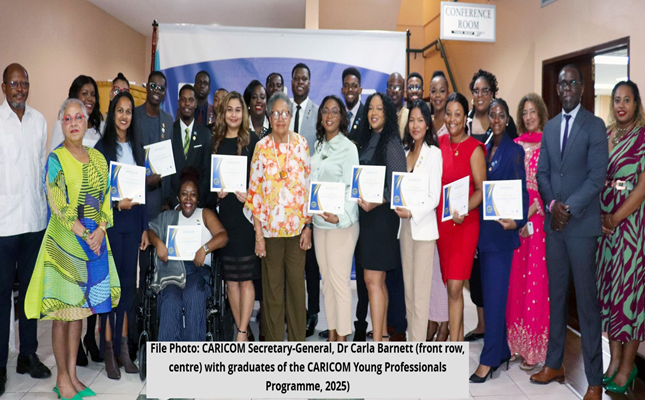
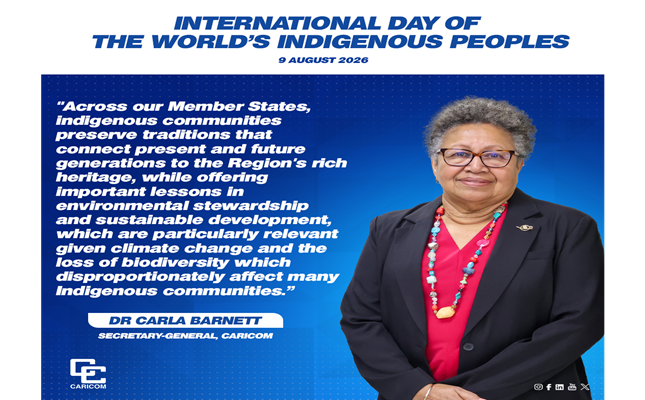
    In a significant move ensuring regional leadership continuity, the Caribbean Community (CARICOM) has confirmed the reappointment of Dr. Carla Barnett as its Secretary-General for a second term. The decision was formally ratified during the Fiftieth Regular Meeting of the Conference of Heads of Government, convened from February 24-27, 2026, in St. Kitts and Nevis.

    The announcement was made public on March 25, 2026, by the Hon. Dr. Terrance Drew, Prime Minister of St. Kitts and Nevis and current CARICOM Chair. The reappointment received the required majority support from CARICOM Heads of Government, demonstrating strong regional consensus for Dr. Barnett’s continued stewardship.

    Dr. Barnett’s second term is scheduled to commence in August 2026, extending her leadership of the regional body that represents approximately sixteen million citizens across fifteen Member States and six Associate Members. CARICOM, established on July 4, 1973, through the Treaty of Chaguaramas (later revised in 2001), stands as one of the developing world’s most successful integration models.

    The organization operates through four fundamental pillars: economic integration, foreign policy coordination, human and social development, and security cooperation. The CARICOM Secretariat, the Community’s principal administrative organ headquartered in Georgetown, Guyana, facilitates these objectives under the Secretary-General’s leadership.

    CARICOM’s vision centers on creating an integrated, inclusive, and resilient Community driven by knowledge, excellence, innovation, and productivity. The organization strives to function as a unified competitive force globally while ensuring citizens’ security, guaranteed human rights, social justice, and shared prosperity across economic, social, and cultural dimensions.

  • St. Kitts and Nevis Co-Sponsors Historic UN Resolution on Transatlantic Slave Trade

    St. Kitts and Nevis Co-Sponsors Historic UN Resolution on Transatlantic Slave Trade

    ABUJA, NIGERIA – March 25, 2026 – In a historic move toward global justice and historical reckoning, St. Kitts and Nevis has emerged as a co-sponsor of a groundbreaking United Nations resolution that formally recognizes the transatlantic slave trade as the most severe crime against humanity. The announcement came from Prime Minister Hon. Dr. Terrance Drew during his keynote address at the Afri-Caribbean Investment Summit in Nigeria’s capital.

    Prime Minister Drew revealed that Ghanaian President His Excellency John Mahama is leading the initiative, presenting the resolution to the UN General Assembly on March 25th. The resolution represents a monumental step in addressing historical injustices that have shaped the modern world.

    “St. Kitts and Nevis stands firmly behind this crucial initiative,” declared Dr. Drew. “Our nation proudly co-sponsors this resolution, and we await with great anticipation its passage through the United Nations.”

    The Prime Minister emphasized the resolution’s significance as a unifying force between African and Caribbean nations, marking a new era of coordinated diplomatic advocacy on the global stage. He framed the effort as part of a broader movement toward justice, reconciliation, and collective political action between regions with shared historical experiences.

    Demonstrating unwavering commitment to the cause, Dr. Drew asserted that even if the resolution faces initial obstacles, the coalition would persist: “Should it not pass today, we will continue our efforts until it succeeds.”

    The initiative reflects growing diplomatic alignment between Africa and the Caribbean, extending beyond economic cooperation to include shared advocacy for historical recognition and narrative shaping within international institutions. This collaboration represents a significant development in post-colonial diplomacy and the global movement for reparative justice.