标签: Saint Kitts and Nevis

圣基茨和尼维斯

  • Prime Minister Drew Meets with Deputy Prime Minister Hanley in Miami, Reaffirms Confidence in Government

    Prime Minister Drew Meets with Deputy Prime Minister Hanley in Miami, Reaffirms Confidence in Government

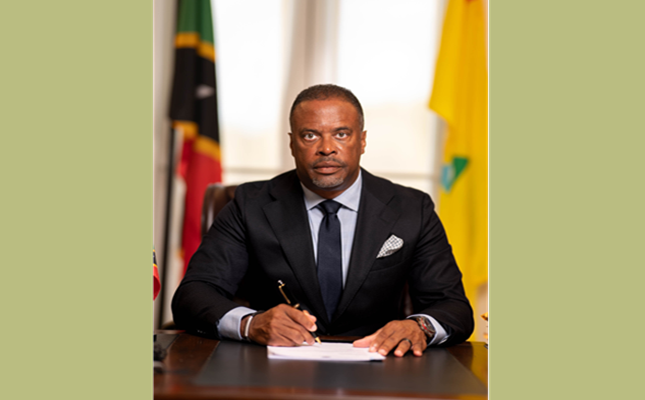
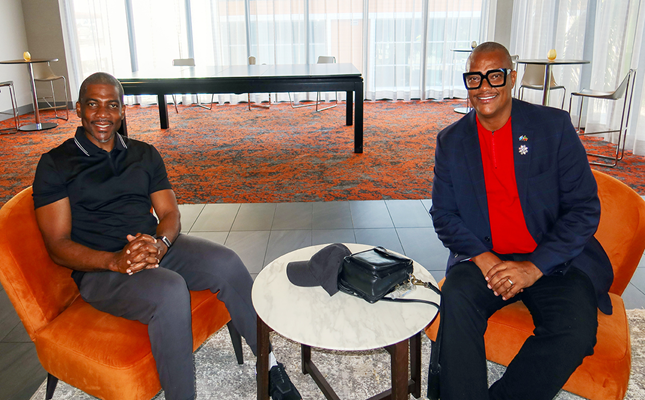
    In a high-level working meeting held in Miami on September 28, 2026, St. Kitts and Nevis Prime Minister Hon. Dr. Terrance M. Drew held in-depth discussions with Deputy Prime Minister Hon. Dr. Geoffrey I. Hanley, reaffirming unified commitment to advancing the federation’s national agenda and expressing full confidence in his government’s leadership.

    The gathering followed Hanley’s return from leading the St. Kitts and Nevis delegation to the 81st Session of the United Nations General Assembly (UNGA81) in New York City. Hanley traveled to Miami to deliver a comprehensive on-the-ground briefing to Drew on pressing domestic issues, the government’s ongoing policy work, and the outcomes of the federation’s diplomatic engagements during the UN assembly.

    Over the course of the meeting, the two senior leaders walked through detailed updates on all core domestic portfolios, reviewed key takeaways from the federation’s time at UNGA81, aligned on the government’s ongoing priority initiatives, and addressed a range of other matters critical to national development.

    In remarks released by the Prime Minister’s Office (PMO) following the meeting, Drew shared his positive assessment of the discussion. “It was a pleasure to welcome my Deputy Prime Minister and to receive a full update on the work of our Government and our Federation’s engagements at the United Nations,” Drew said. “I am encouraged by all that continues to be accomplished on behalf of our people.”

    Drew extended explicit gratitude to Hanley and his entire Cabinet for their consistent, committed leadership during this period. He also specifically recognized Hon. Konris Maynard, who stepped into the role of Acting Prime Minister while Hanley led the national delegation to the UN General Assembly.

    Addressing the public of St. Kitts and Nevis directly, Drew reaffirmed his unshakable commitment to the shared national vision for the federation. “To the people of St. Kitts and Nevis, I remain deeply grateful to God and my family, and for your prayers and support, which have been a genuine source of strength,” he said. “My commitment to you, and to the vision we share for our Federation, remains unwavering, and I look forward to returning to my full duties in due course.”

    This official press release was distributed by the PMO and published by local media outlet SKNVibes.com, which notes that it was run in its original submitted form without editorial corrections to spelling or grammar, and that the views expressed do not necessarily reflect those of SKNVibes, its sponsors, or its advertisers.

  • St. Kitts and Nevis vs Grenada: Sugar Boyz secure 3-0 win in Concacaf Nations League 2026 match – WIC News

    St. Kitts and Nevis vs Grenada: Sugar Boyz secure 3-0 win in Concacaf Nations League 2026 match – WIC News

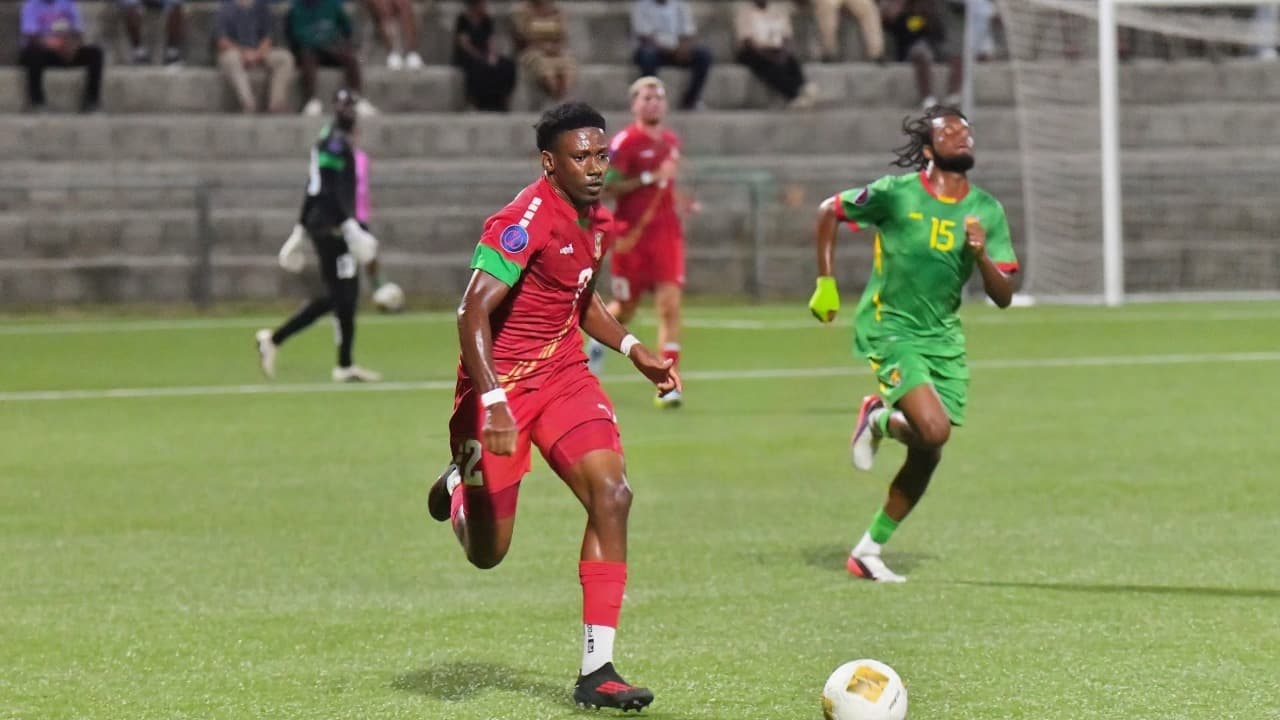
    In the 2026/27 Concacaf Nations League Group B action on September 28, St. Kitts and Nevis’ national men’s football team, nicknamed the Sugar Boyz, delivered a dominant performance to secure a second straight tournament victory, beating Grenada 3-0 in front of a home crowd at the SKNFA Technical Centre in St. Peter’s.

    Kickoff for the second group-stage fixture for both nations was scheduled for 8:00 PM local time, and the home side wasted no time asserting control over the match. Just 11 minutes after the opening whistle, forward Tiquanny Williams broke the deadlock, putting St. Kitts and Nevis ahead with a clinical finish. Williams doubled his tally and his side’s lead only six minutes later, in the 17th minute, putting Grenada on the back foot early in the contest.

    From the opening to the final whistle, St. Kitts and Nevis maintained full possession and tactical dominance, leaving Grenada unable to generate consistent offensive pressure or find the back of the net. The Sugar Boyz held their 2-0 lead comfortably through the first half and the opening stretch of the second, before Williams sealed his historic performance and the match result in the 76th minute. The forward converted a penalty to complete his hat-trick, pushing the final score to 3-0.

    The result marks a strong start to the tournament for St. Kitts and Nevis in League B, a division structured into four groups of four teams that uses a home-and-away round-robin format. With Monday’s win, the Sugar Boyz have picked up maximum points from their opening two fixtures, following a narrow 2-1 victory over Bonaire in their first Group C match. The six points they currently hold put them in a solid position to advance in the competition as group play continues.

    Looking ahead, both teams are set for their next group fixtures on October 2. St. Kitts and Nevis will face Cuba in Port of Spain, Trinidad and Tobago, while Grenada will take on Bonaire the same day.

  • AI Will Not Wait for the Caribbean: The Time for Regional Action Is Now- Op-Ed By Hon. Mark Brantley

    AI Will Not Wait for the Caribbean: The Time for Regional Action Is Now- Op-Ed By Hon. Mark Brantley

    # Caribbean Urged to Accelerate Collective AI Action Before It’s Too Late

    In an op-ed published September 28, 2026, Hon. Mark Brantley, Premier of Nevis and Opposition Leader for St. Kitts and Nevis, makes the case that the Caribbean cannot afford to delay coordinated regional action on artificial intelligence, as the transformative technology is already reshaping global work, governance, and society and will not wait for small island nations to catch up.

    Brantley opens with a local example that illustrates just how quickly AI is outpacing traditional planning: just a few years ago, the Nevis Island Administration set out to introduce coding education across all Nevisian schools, but today that ambition is already obsolete, because leading AI tools can now outperform most human coders. This small anecdote reflects a much larger global shift: there are defining moments in history when emerging technologies rewrite the rules of how societies organize, economies operate, and people live, work, and connect. AI is exactly this kind of paradigm-shifting technology, and it is already here to stay.

    The central question facing Caribbean societies today is no longer if AI will transform daily life, but whether regional leaders will proactively shape that transformation, or simply let it happen to them. Around the world, the urgency of this conversation has grown: global leaders, tech companies, researchers, and multilateral bodies are already grappling with once-science-fictional questions, from how to manage mass job displacement as AI outperforms highly trained humans, to how to protect critical infrastructure, democratic processes, and vulnerable populations from AI-fueled fraud, cybercrime, and disinformation, all while keeping human control at the center of technological development. Even global rivals like the U.S. and China are increasingly aligning on the need to address AI safety and human oversight, and King Charles III has recently convened top AI industry leaders to discuss the technology’s risks and opportunities. For the Caribbean, this means AI has become a critical global governance issue, and the region deserves a seat at the table.

    Brantley notes that the Caribbean Community (CARICOM) has already taken important first steps, and deserves credit for early action. In July 2026, CARICOM’s Council for Trade and Economic Development formally endorsed the UNESCO Caribbean Artificial Intelligence Policy Roadmap, a framework developed through regional consultations that focuses on four core priority areas: culture and creativity, governance and transformation, education and upskilling, and resilience and sustainability. CARICOM has also advanced AI preparedness through a range of other initiatives, including the 2025-2030 Strategic Framework for Regional Digital Resilience, the CARICOM Secretariat’s AI Action Plan, the 2026-2030 CARICOM-UNDP Regional AI Programme, the Caribbean AI Task Force, and the AI for SIDS 2.0 initiative. The regional body has also flagged growing risks from AI-enabled disinformation and called for expanded digital literacy, improved AI readiness, cross-regional information sharing, and stronger institutional collaboration. All of these existing efforts are critical and commendable, Brantley argues, but the breakneck speed of AI’s global development means the Caribbean must now accelerate these regional efforts dramatically: preparations that seemed adequate for yesterday are already insufficient for today, and will be dangerously inadequate for tomorrow.

    The next phase of regional AI engagement must center on urgent implementation, Brantley insists. He calls on CARICOM to immediately elevate AI to the highest level of regional political priority, and convene a special meeting of CARICOM Heads of Government focused explicitly on AI and the future of the Caribbean economy. This meeting should bring together a broad coalition of stakeholders, including national governments, academic institutions, educators, trade unions, private sector leaders, financial institutions, independent tech experts, and representatives of major global tech companies. The core goal of this summit would be to develop a unified Caribbean framework for thriving in the AI age.

    This regional framework would establish shared principles and protocols for a range of critical AI-related issues: responsible AI use, personal data protection and ownership, cybersecurity, intellectual property rules, government procurement guidelines for AI systems, ethical AI use in education and healthcare, protections against algorithmic discrimination, safeguards against deepfakes and disinformation, and clear requirements for algorithmic transparency and human oversight. Brantley emphasizes that for small Caribbean states, particularly those in the Organization of Eastern Caribbean States (OECS), developing standalone national AI regulatory frameworks is inefficient and prohibitively expensive. Regional cooperation allows small nations to pool limited expertise, negotiate from a position of collective strength, and set standards tailored to the unique needs of Caribbean societies.

    While unified regional regulation is a critical foundation, Brantley argues that regulation alone is not enough to prepare Caribbean populations for the changes AI will bring. It is impossible to ignore growing public anxiety about AI-driven job displacement: AI is already capable of carrying out sophisticated work across a wide range of sectors that employ large shares of Caribbean workforces, including accounting, law, banking, programming, marketing, customer service, and medicine. Given that most Caribbean economies rely heavily on tourism, financial services, public administration, and other service sectors, AI-driven job loss is not a distant problem faced by other regions—it is an urgent shared challenge for the entire Caribbean.

    At the same time, Brantley notes that the ongoing AI revolution will also create entirely new jobs, businesses, and industries that do not exist today. The regional responsibility is not just to mitigate harm, but to ensure Caribbean people are positioned to seize these new opportunities. This means integrating AI literacy into primary and secondary school curricula, providing retraining for existing workers, equipping educators with AI skills, modernizing university and technical training programs, and supporting local Caribbean entrepreneurs to build AI-native businesses, rather than just relying on AI products developed in other countries.

    To achieve this, Brantley calls for a region-wide public education program on AI, so that everyday people across the Caribbean—from teachers in Nevis and hotel workers in Antigua, to farmers in Jamaica, bankers in Barbados, small business owners in Saint Lucia, and university students in Guyana—understand how AI will affect their lives and livelihoods. The public needs to understand both the risks and the opportunities of AI, and digital literacy must be elevated to the same level of priority as traditional reading and writing literacy across the region.

    Brantley also warns that the Caribbean cannot afford to be passive rule-takers in global AI governance. Major global powers have already begun setting AI rules: the European Union has enacted its landmark AI Act, the U.S. is debating national regulatory frameworks, and China is building out its own AI governance structure. If the Caribbean does not engage proactively in these global discussions, the rules for AI will be written by and for large economies, and the region will be forced to accept standards that do not account for its unique needs. Brantley reminds readers that the Caribbean has experienced this dynamic before, in sectors ranging from financial services to taxation to trade, and must learn the lesson of past passivity.

    Ultimately, the Caribbean’s ambition should extend beyond just protecting itself from AI’s risks. AI can be a powerful tool to solve longstanding regional challenges, from improving disaster response and expanding access to specialized healthcare on small islands, to transforming agricultural production, personalizing education for Caribbean children, improving water management and expanding renewable energy infrastructure, upgrading public transportation, increasing government transparency and efficiency, and helping local entrepreneurs scale their businesses and access new global markets.

    Brantley concludes that the worst possible responses to AI are fear and complacency—both of which the Caribbean must reject. AI will not wait for the region to get comfortable with the technology; the revolution is already here. While existing work by CARICOM, UNESCO, the Caribbean Telecommunications Union, UNDP, and other regional partners provides a strong starting point, the region must now accelerate this work with extreme urgency and clear purpose.

    He closes with a call to action: convene regional leadership, engage with global AI leaders and researchers, establish unified Caribbean standards, prepare schools, retrain workers, educate the public, protect regional institutions, and invest in local innovators so that Caribbean people are not just consumers of AI developed elsewhere, but creators, entrepreneurs, and owners of AI technology that serves the region’s needs. At this critical juncture for Caribbean civilization, Brantley argues, the responsibility of regional leaders is not to stop the future, but to ensure the Caribbean and its people are ready to shape and benefit from the AI future that is already coming.
  • Nevis Premier Urges Urgent Caribbean Response to the Rise of Artificial Intelligence

    Nevis Premier Urges Urgent Caribbean Response to the Rise of Artificial Intelligence

    As the global race to adapt to artificial intelligence accelerates, the top leader of the Caribbean island of Nevis is sounding the alarm, demanding that regional governments move from idle discussion to immediate, coordinated action to ensure small island nations do not get left behind by the AI revolution.

    In an op-ed published September 27, 2026, Nevis Premier Honourable Mark Brantley laid out a clear case for urgent regional preparedness, noting that AI is already fundamentally reshaping core structures of modern society, from national economic operations to daily patterns of work, learning and social interaction.

    “Artificial Intelligence has arrived, and it is here to stay,” Brantley wrote. “The question confronting our Caribbean civilisation is therefore no longer whether AI will transform our lives. The more important question is whether we will shape that transformation- or simply allow it to happen to us.” Brantley emphasized that the breakneck speed of AI’s evolution means outdated preparation strategies that worked even a few years ago are already inadequate today, and will be dangerously insufficient for coming shifts. Delayed action, he warned, would leave Caribbean nations vulnerable to unmanaged disruption.

    Across the globe, governments and public institutions are already grappling with AI’s far-reaching impacts across sectors, Brantley noted. From widespread shifts in employment and industrial organization to emerging risks including AI-fueled fraud, cybercrime, and mass disinformation, leaders are working to strike a balance between leveraging innovation and maintaining meaningful human oversight of the technology. For small Caribbean nations, these challenges are not distant problems to address later — they are immediate shared concerns, Brantley argued.

    The premier called for the Caribbean Community (CARICOM) to adopt a unified, coordinated approach to AI governance, elevating the technology to a top priority for regional political engagement. He noted that collective action would allow small Caribbean states, including members of the Organization of Eastern Caribbean States (OECS), to develop effective, evidence-based AI standards far more efficiently and affordably than individual nations working alone. While common regional regulatory frameworks are a critical first step, Brantley stressed that regulation alone is not enough to protect Caribbean workforces and communities.

    Widespread concerns over AI-driven job displacement are well-founded, he said, and the region must confront this threat head-on. AI is already capable of carrying out sophisticated work across a wide range of high-employment sectors for Caribbean economies, from accounting, law, banking and software development to marketing, customer service, and even clinical medicine. With many Caribbean national economies relying heavily on tourism, financial services, public administration and other service sectors where AI disruption will be most acute, Brantley said this challenge cannot be dismissed as someone else’s problem. “It is a shared regional problem,” he emphasized.

    To position the Caribbean to benefit from the AI transition rather than suffer its worst disruptions, Brantley called for targeted investment in workforce preparedness. This includes updating national education curricula to build AI-relevant skills, expanding large-scale worker retraining programs for current employees at risk of displacement, and targeted support for local entrepreneurs looking to build new AI-enabled industries. Only through proactive, coordinated regional action can Caribbean nations ensure they capture the opportunities of the AI age while mitigating its risks, Brantley concluded.

    This report is based on a press release issued by the Nevis Island Administration and published by SKNVibes.com, which does not edit for errors or endorse the views expressed in contributed press materials.

  • Nevis Gender Affairs Expands SLAY Programme to Empower 14 Young Women

    Nevis Gender Affairs Expands SLAY Programme to Empower 14 Young Women

    CHARLESTOWN, Nevis – September 28, 2026 – The Nevis Island Administration (NIA) is scaling up its investment in youth female empowerment through the Department of Gender Affairs, expanding the popular Sisters Leading Ambitious Youth (SLAY) Girls Mentorship Programme to welcome 14 new participants for its second cohort. Under the unifying 2026 theme “Stepping Into Greatness,” the initiative connects emerging young leaders with experienced female mentors to equip them with the tools to build meaningful, successful futures.

    First launched in 2025 at Charlestown Secondary School with an inaugural group of eight participants, the programme has grown significantly in its second iteration to include students from both of Nevis’ secondary schools. The new cohort draws 11 participants from Gingerland Secondary School and three from Charlestown Secondary School, each matched one-on-one with a trained local mentor committed to their long-term growth.

    The formal launch of the second cohort took place recently at the Malcolm Guishard Recreational Park, where participants and their mentors were introduced to stakeholders, families, and programme partners. Each young woman was officially inducted into the programme by Deputy Governor General for Nevis Her Honour Hyleeta Liburd O.B.E., M.H., who marked the occasion by pinning commemorative pins on each new mentee.

    Honourable Senator Jahnel Nisbett, Nevis’ Minister of Gender Affairs, emphasized that the programme’s core mission is to create intergenerational learning opportunities, allowing young women to draw wisdom from the lived experiences of women who have already navigated key life and career milestones. “This is exactly what the mentors, the program coordinators, the board of directors, this is what everyone has collaborated to do to ensure that you all have the best opportunity to be successful in life in whatever area you choose to pursue,” Nisbett said during the ceremony.

    The minister also paid tribute to the volunteer mentors, highlighting the personal and professional sacrifices they make to show up consistently for their mentees. “They’re sacrificing their work, their personal time, their families to commit to showing up for our young ladies each and every single time. So I want to give our mentors a round of applause,” she added.

    Delivering the ceremony’s feature address, mentor Kaluwa Maitre-Avril shared heartfelt guidance with the new participants, urging them to embrace their unique identities and recognize their inherent self-worth. “I want my young ladies here to know that there may always be somebody that looks prettier, thinner, taller, may have more Instagram followers on social media, but please understand their greatness certainly does not subtract from yours. We can all be great together. You do not have to become somebody else to be the most extraordinary version of yourself. So, I want you to know your worth before the world agrees with you,” Maitre-Avril said.

    She also encouraged participants to reframe their relationship with fear, pushing them to pursue brave actions even when uncertainty arises. “Overcome fear. One of the things that I need you to learn very early is that it’s okay to be afraid, but I don’t want you to fear rejection. Don’t fear looking silly because you took the first step to do something brave. Say, “I am fearless.” Being fearless doesn’t mean that you will never be afraid. On the contrary, you will be afraid but just don’t stay in it and don’t be paralyzed by it.”

    Designed to support girls aged 11 to 19 from all social and economic backgrounds, the SLAY programme takes a holistic approach to improving young women’s lives through mentorship, skills training, peer support, and advocacy for gender equity and human rights. Programme activities are carefully crafted to foster deep, meaningful mentor-mentee bonds, boost self-esteem and public speaking skills, strengthen character, and help participants define and work toward their personal and professional goals. Over the course of the programme, participants will take part in a diverse range of activities including one-on-one check-ins, vision board workshops, creative paint-and-sip sessions, community church services, cooking and baking classes, floral arranging workshops, and collaborative team-building exercises.

    The Department of Gender Affairs reaffirmed its commitment to expanding access to the SLAY programme, framing it as a key investment in Nevis’ next generation of female leaders. Through ongoing initiatives like SLAY, the department works to create accessible, supportive spaces where young girls can learn, grow, and develop the confidence and life skills needed to turn their personal aspirations into reality.

  • Saint Kitts and Nevis Justice Reforms in the global spotlight at UN Crime Congress

    Saint Kitts and Nevis Justice Reforms in the global spotlight at UN Crime Congress

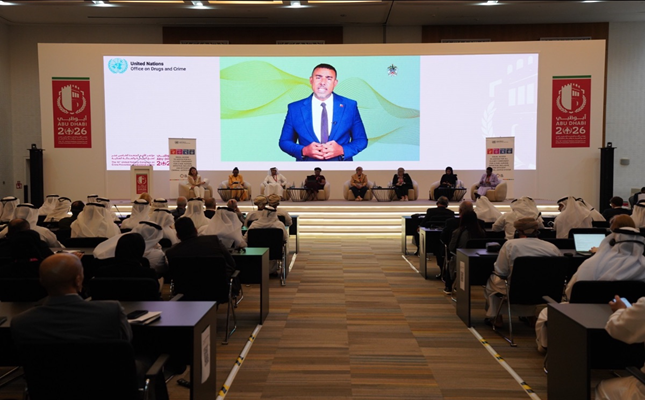
    Against the backdrop of growing global demand for fair, accessible criminal justice systems, the small Caribbean Federation of Saint Kitts and Nevis has emerged as an unexpected leader in justice reform, taking center stage at the 15th United Nations Congress on Crime Prevention and Criminal Justice in Abu Dhabi on Sunday, September 27, 2026.

    Invited by the United Nations Office on Drugs and Crime (UNODC) to share its groundbreaking progress with senior justice officials from across the globe, Saint Kitts and Nevis Attorney General and Minister of Justice and Legal Affairs Garth Wilkin addressed a high-profile thematic gathering focused on expanding access to justice for more effective and equitable systems. Wilkin joined a distinguished panel that included UNODC Executive Director Monica Juma, as well as cabinet ministers and senior government representatives from the United Arab Emirates, South Africa, Canada, the United Kingdom, Kenya, and Romania.

    UNODC’s invitation to Saint Kitts and Nevis reflected the international community’s recognition of the Federation’s consistent commitment to building a people-centered, evidence-based, inclusive, and accountable justice sector. The invitation also highlighted ongoing collaborative work between the Caribbean nation and the UN agency to advance equitable justice access for all citizens.

    The data shared by the Saint Kitts and Nevis delegation underscored the tangible impact of the country’s reforms. Compared to 2024, homicide rates dropped by 75% in 2025, hitting their lowest point in more than 20 years. This dramatic reduction has come from a fundamental shift in how the Federation approaches justice, Wilkin explained during his virtual address to the congress.

    “Rather than only how we bring people into the justice system more efficiently, we increasingly ask, what is the appropriate justice pathway for this person, this harm and this community?” Wilkin said.

    This person-centered approach has spurred two major policy innovations: a Diversionary Caution framework and a expanded Restorative Justice framework. Working in partnership with UNODC, more than 100 police officers, prosecutors, judges, and social service professionals have already received training to implement the Diversionary Caution system, which redirects eligible individuals away from traditional incarceration toward alternative resolutions that address the root causes of harm. The new Restorative Justice framework creates interconnected pathways for conflict resolution across police departments, prosecution offices, court systems, and local community groups. Looking ahead, the Federation also plans to launch the Community Justice Cup, a youth football initiative designed to teach conflict resolution and restorative values to young people across the islands.

    Wilkin emphasized that the Federation’s small size has been a strategic advantage in implementing and refining these reforms, positioning small island states as more than just recipients of global policy guidance. “Small States can therefore be not merely beneficiaries of justice reform, but important contributors to its development,” he noted.

    Looking forward, the next major priority for Saint Kitts and Nevis will be comprehensive correctional reform. Wilkin called for expanded international partnerships to support Small Island Developing States (SIDS) in building modern correctional systems centered on rehabilitation rather than just punishment. He argued that without intentional investment in outcomes during and after incarceration, even the most fair trials and effective prosecution leave the justice system incomplete. “If we invest in fair trials and effective prosecution but not in what happens during and after incarceration, the justice continuum remains unfinished,” he said.

  • CARICOM leaders reaffirm support for Guyana’s Rodrigues-Birkett for UN Secretary-General

    CARICOM leaders reaffirm support for Guyana’s Rodrigues-Birkett for UN Secretary-General

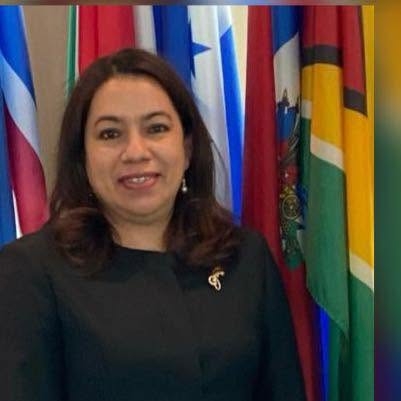
    As the 81st United Nations General Assembly General Debate enters its final stretch in Manhattan, New York, member nations of the Caribbean Community (CARICOM) have come together to publicly reaffirm their unified support for Guyana’s top UN diplomat, Carolyn Rodrigues-Birkett, as the bloc’s official candidate for the position of United Nations Secretary-General.

    Rodrigues-Birkett’s candidacy dates back to July of this year, when CARICOM heads of government formally gave their collective endorsement shortly after Guyana officially nominated her for the role. With a long career in public service, she currently holds the position of Guyana’s Permanent Representative to the United Nations, and previously served as her country’s Minister of Foreign Affairs. This background, regional leaders argue, has equipped her with the deep understanding of global development challenges needed to lead the UN effectively.

    Multiple CARICOM leaders used their speaking time at the General Debate on September 25 to voice their public backing. Deputy Prime Minister Geoffrey Hanley of St. Kitts and Nevis emphasized that his nation was proud to stand alongside CARICOM in endorsing Rodrigues-Birkett. He highlighted that her experience as an Indigenous woman from a small developing state brings a much-needed perspective to global leadership, pushing back against the unspoken norm that top UN roles must be held by representatives of large, powerful nations.

    “Global leadership should never be determined by the geographic size or economic weight of a country,” Hanley noted, adding that Rodrigues-Birkett’s deep grasp of the unique struggles facing developing nations is exactly the kind of leadership the UN requires in this current era.

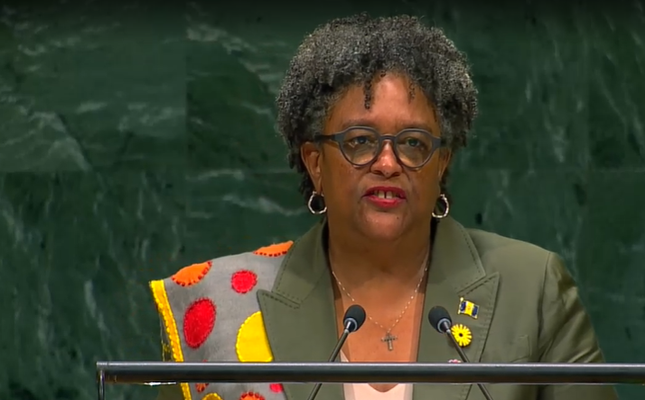
    Barbados Prime Minister Mia Mottley echoed this sentiment during her address, framing the endorsement as a step toward renewing global faith in multilateral cooperation. “At a moment when the international community is being called upon to renew its faith in multilateralism, we believe that Ambassador Carolyn Rodrigues-Birkett brings to this task the experience, the skills and the understanding to serve the entire membership of this organisation,” Mottley stated.

    Prime Minister Philip J. Pierre of Saint Lucia also added his voice to the chorus of support, while discussing the outgoing tenure of current Secretary-General António Guterres. “Saint Lucia wishes to express its endorsement of the candidate of the Republic of Guyana, Miss Carolyn Rodrigues-Birkett, for the post of Secretary-General,” Pierre said, pointing to her decades-long record of distinguished public and international service. He also reaffirmed Saint Lucia’s commitment to working alongside aligned nations to push for much-needed internal reforms within the United Nations.

    In addition to these three leaders, The Bahamas and St. Vincent and the Grenadines have also formally backed Rodrigues-Birkett, aligning with CARICOM’s collective endorsement of her candidacy.

    The race for UN Secretary-General comes as Guterres’s term concludes at the end of this year, and the selection process has drawn close international attention. If elected, Rodrigues-Birkett would make history as the first Caribbean national to ever hold the top UN post. However, her candidacy is not without controversy: media reports have indicated that the United States may oppose her nomination due to Guyana’s current diplomatic stance on the ongoing Israel-Palestine conflict.

    The 81st United Nations General Assembly General Debate is scheduled to conclude on September 28, the same day this announcement was made public.

  • Caribbean leaders renew calls for Taiwan’s meaningful participation in UN system at UNGA81

    Caribbean leaders renew calls for Taiwan’s meaningful participation in UN system at UNGA81

    Amid the 81st session of the United Nations General Assembly (UNGA) underway in Manhattan, New York, a bloc of Caribbean diplomatic allies of Taiwan have once again thrown their weight behind calls for the island’s meaningful inclusion in the UN system, bringing the long-contested cross-Strait issue back to the center of global diplomatic debate.

    Taiwan has remained locked out of UN bodies and most formal international mechanisms for decades due to firm opposition from the People’s Republic of China, which asserts the island as an inalienable part of its territory. Despite this exclusion, the self-governing island has repeatedly sought to contribute its technological capacity, public health expertise, and other resources to collective global action, according to its supporters.

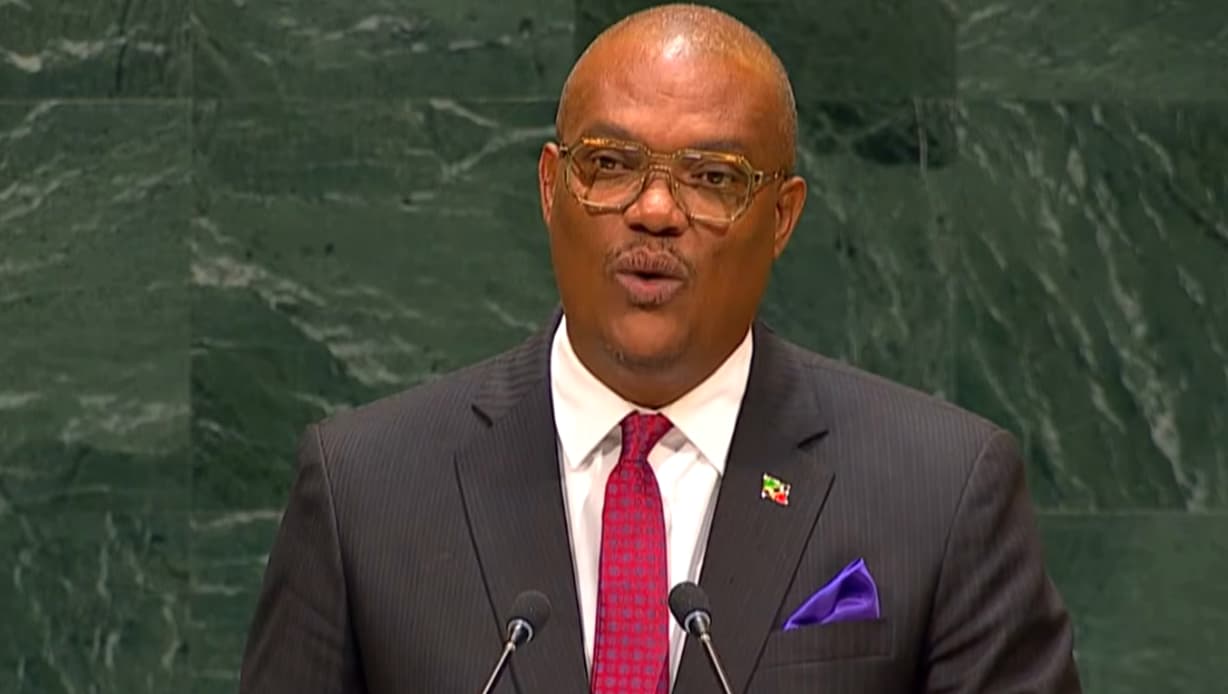
    Speaking during the General Assembly’s general debate, Geoffrey Hanley, Deputy Prime Minister of the Federation of St. Kitts and Nevis, reaffirmed his nation’s unwavering commitment to its diplomatic partnership with Taiwan and its backing for the island’s meaningful participation across the international community. Hanley recalled that earlier in 2026, St. Kitts and Nevis joined other like-minded nations in supporting Taiwan’s bid to participate as an observer in the 79th World Health Assembly. He added that the Caribbean nation would continue to advocate for Taiwan’s inclusion in the World Health Organization, the International Civil Aviation Organization, and other relevant UN-affiliated mechanisms, while noting that all disputes across the Taiwan Strait must be resolved through peaceful means.

    Philippe Pierre, Prime Minister of St. Lucia, used his address to the assembly to go a step further, stating his country’s explicit support for Taiwan’s full membership in the United Nations. Pierre framed his position as part of a broader push for comprehensive UN reform, arguing that any truly inclusive global body must ensure its decision-making structures accurately reflect the full diversity of the world it exists to serve. He noted that structural reforms, including an overhaul of the UN Security Council, are needed to boost the body’s legitimacy and effectiveness in tackling pressing global challenges and rebuild public trust in multilateral governance.

    For St. Vincent and the Grenadines, Prime Minister Godwin Friday anchored his support in the 45-year history of formal diplomatic ties and people-centered cooperation between his country and Taiwan. “I wish in this August body to recognize our country’s 45 years of diplomatic ties and friendship with Taiwan that has seen us work together in development, in disaster response, education and in public health,” Friday told the gathered leaders. He emphasized that Taiwan has consistently demonstrated that it is ready to act as a responsible stakeholder in the global order, and renewed his call for the island’s inclusion in the UN system and its specialized agencies.

    Belize Prime Minister John Briceño echoed these calls, tying the push for Taiwan’s participation to a broader argument about the importance of centering the voices of small and mid-sized states in global problem-solving. “We hold no illusion that a small state can resolve these crises, but smallness does not relieve us of the duty to speak or voice joins every call for the protection of civilians, for accountability and for the diplomacy,” Briceño said. He reaffirmed that open diplomatic engagement remains an essential foundation for securing lasting, durable peace across all global hotspots.

  • Geoffrey Hanley at UNGA81: St. Kitts and Nevis says there can be no hierarchy of human suffering – WIC News

    Geoffrey Hanley at UNGA81: St. Kitts and Nevis says there can be no hierarchy of human suffering – WIC News

    At the 81st session of the United Nations General Assembly held on September 25, 2026, Acting Prime Minister Dr. Geoffrey Hanley of St. Kitts and Nevis delivered a bold, principle-driven address centered on equity for small nations, consistent application of global rules, and urgent action on longstanding injustices and regional crises.

    Hanley opened by framing Caribbean nations’ approach to global challenges as rooted in unwavering respect for core foundational values: national sovereignty, territorial integrity, consistent international law, and diplomatic dialogue. Reaffirming the regional bloc CARICOM’s longstanding position on ongoing border disputes in the Western Hemisphere, he made clear that the organization endorses the International Court of Justice as the legitimate, peaceful pathway to resolve the ongoing border dispute between Guyana and Venezuela, as well as the existing judicial process addressing territorial differences between Belize and Guatemala.

    Beyond regional territorial disputes, Hanley called for the uniform application of international law across all active global conflicts, including Gaza, Ukraine, Sudan, Yemen, Chad, and the Democratic Republic of the Congo. For small island states like St. Kitts and Nevis, he argued, inconsistent application of global rules creates a dangerous precedent where might overrides right, leaving vulnerable nations at constant risk. “Civilians continue to bear an unconscionable burden” in all these conflicts, Hanley stated, emphasizing that the global community must uphold a single, universal standard for international law, applied consistently rather than selectively, and extend moral conscience evenly rather than for political convenience. “There can be no hierarchy of human suffering,” he stressed.

    On the matter of global leadership representation, Hanley announced that St. Kitts and Nevis joins the full CARICOM bloc in endorsing Carolyn Rodrigues-Birkett of Guyana for the position of United Nations Secretary-General. He framed her candidacy as a landmark step for equitable global representation: as a woman and a leader from a small developing nation, Hanley noted, her candidacy demonstrates that global leadership is defined by vision and integrity, not the geographic or economic size of a candidate’s home country.

    Hanley also highlighted a historic milestone in reparatory justice cooperation between African and Caribbean nations. In March 2026, the African Union’s reparations mechanism and the Caribbean Reparations Commission held their first official meeting, building on the framework of the Addis Ababa Declaration signed during the second Africa-Caribbean summit. Hanley argued that collaboration between the two regions must move beyond shared historical sympathy to tangible action across investment, trade, technology exchange, knowledge sharing, cultural cooperation, and coordinated global diplomacy. He referenced General Assembly Resolution 80/25/250, which formally classified the trafficking and racialized chattel enslavement of African peoples as the gravest crime against humanity, and called for the global movement for reparatory justice to transition from formal recognition of harm to concrete remediation. “Reparatory justice must move from recognition to remedy, and from words to action,” he said.

    Turning to the ongoing humanitarian and security crisis in Haiti, Hanley drew global attention to the deteriorating conditions ahead of the country’s first round of presidential and legislative elections: approximately 1.47 million Haitians remain internally displaced, and nearly half of the national population faces acute food insecurity. He called for the rapid deployment of the UN-authorized multinational gang suppression force, timely renewal of the mission’s mandate, and coordinated international support for Haitian-led recovery and governance efforts.

    Addressing other regional and global priorities, Hanley shared that St. Kitts and Nevis has delivered humanitarian relief to the Cuban people and to St. Kitts and Nevis nationals studying in Cuba, and urged constructive diplomatic dialogue between the governments of Cuba and the United States to resolve longstanding tensions. He also reaffirmed St. Kitts and Nevis’ support for Taiwan’s meaningful participation in international bodies including the World Health Organization and the International Civil Aviation Organization, and called for cross-strait differences to be resolved exclusively through peaceful means.

    Closing his address, Hanley emphasized that trust between nations is built through delivered action, not empty promises. “Let this assembly be remembered not for what was said here but for what was done after,” he concluded.

  • Barbados PM Mottley Calls for Greater Climate Financing for Vulnerable States

    Barbados PM Mottley Calls for Greater Climate Financing for Vulnerable States

    As world leaders gather for the United Nations General Assembly (UNGA) General Debate in Manhattan, New York, just weeks ahead of the 31st Conference of the Parties (COP31) climate summit, Barbados Prime Minister Mia Mottley is pushing the international community to shift from symbolic goal-setting to tangible, urgent implementation of climate action for climate-vulnerable developing states.

    Against a backdrop of accelerating global climate disruption, marked by record-breaking heatwaves across Europe and growing forecasts of a devastating super El Niño event, Mottley used her UNGA platform to confront developed nations over their unmet commitments to vulnerable economies. As the current president of the Climate Vulnerable Forum (CVF), she emphasized that while reducing carbon dioxide emissions remains the cornerstone of a global energy transition, progress has been far too slow to avoid catastrophic warming. That is why the CVF, backed by 74 member countries, has prioritized methane reduction as a core action item for COP31 — a focus that Mottley argues is particularly critical for small island developing states that face existential threats from sea-level rise and extreme weather.

    Mottley told the assembled audience that during April’s G20 Ministerial Dialogue, finance ministers from participating nations recognized methane cuts are not just an environmental imperative, but also a catalyst for economic growth, fiscal stability, and improved public health outcomes. Where the conversation breaks from past rhetoric, however, is on the issue of climate financing — a gap that Mottley quantifies in stark terms. By 2030, vulnerable countries need approximately $490 billion in annual climate financing to adapt to and mitigate the effects of climate change, but current annual inflows only reach roughly $90 billion. Mottley summed up the disparity with a relatable quip: “As young people in Barbados would say, ‘the math simply ain’t math.’”

    Beyond the overall financing gap, Mottley also drew attention to the unfair disadvantage climate-vulnerable nations face in global borrowing markets. She noted that these countries pay an average of 1.2 percentage points more in borrowing costs than advanced economies, a discrepancy that adds up to more than $62 billion in excess annual interest payments. “This cannot be fair,” she declared, pointing out that these unnecessary costs crowd out critical public investments in climate resilience, healthcare, education, and infrastructure.

    Mottley stressed that vulnerable nations are not waiting for the international community to act; they are already forging solutions through collaborative initiatives laid out in the Bridgetown Initiative, a framework spearheaded by Barbados to reform global climate finance. One key outcome of this work is the Vulnerability to Viability Compact, a partnership between the CVF, G20 nations, and the OPEC Fund for International Development that unites 74 countries and 16 development finance institutions. The compact’s goal is to expand access to low-cost, long-term capital for projects in education, healthcare, and water infrastructure. A second initiative, the Lifeline Fund, was established by CVF-coordinated central bank governors and will soon be operational to provide rapid liquidity support when climate shocks trigger balance-of-payments pressures for vulnerable economies.

    “So we are moving to help ourselves,” Mottley said, explaining that short-term lending cycles of 10 to 15 years make it impossible for vulnerable nations to build critical climate-resilient infrastructure, as high borrowing costs and quick repayment schedules crowd out essential investments. While Mottley celebrated the progress these homegrown initiatives have achieved, she warned that they cannot fix the deep-rooted flaws in the existing international financial architecture on their own.

    For nearly five years, the Bridgetown Initiative has argued that climate resilience, debt sustainability, and access to affordable finance cannot be addressed as separate issues, Mottley reminded delegates. For most vulnerable countries, the core challenge is not just a lack of available capital, but a lack of fiscal space to borrow and invest at reasonable terms that support long-term development and climate action.