标签: Saint Kitts and Nevis

圣基茨和尼维斯

  • NIA Recognises 10 Nevisians for Outstanding Contributions at Independence 43 Awards Ceremony

    NIA Recognises 10 Nevisians for Outstanding Contributions at Independence 43 Awards Ceremony

    As the Federation of St. Kitts and Nevis marked its 43rd year of independence, the Nevis Island Administration (NIA) turned a spotlight on 10 outstanding Nevisian citizens whose decades of service have shaped the island’s social, economic and cultural landscape at a special awards ceremony. Held on Saturday, September 19, 2026, at Charlestown’s iconic Elquemedo T. Willett Park, the event formed a centerpiece of this year’s national independence celebrations, carried out under the official theme “Celebrating our Freedom and Heritage; Showcasing our National Symbols.”

    The formal proceedings opened with the traditional inspection of the ceremonial parade, after which Deputy Governor General for Nevis, Her Honour Mrs. Hyleeta Liburd O.B.E., M.H., presented the awards to the 10 honourees. Recognition was extended across seven key categories that span nearly every sector of Nevis’ public and private life: Service, Community, Education, Entrepreneurship, Electricity Generation, Public Service and Tourism, reflecting the diverse ways local residents contribute to collective national progress. The award ceremony preceded traditional post-parade festivities including the March Past, Advance in Review Order, Feu de Joie and Three Cheers to the Nation.

    The lifetime achievement award in the Service category went to Mr. Ira Jeffers, whose cross-sector career has left lasting marks on education, national security, law, sports, and religious life. Jeffers was a pivotal figure in founding the Nevis Unit of the St. Kitts-Nevis Defence Force Cadet Corps, and remains an active servant leader in the Anglican Church, serving as a Lay Reader, member of the Diocesan Synod and Council, and Church Commissioner for Nevis.

    Community honoree Mrs. Sylvia Fahie earned recognition for her dual decades-long contributions to mathematics education and local community resilience. Over her teaching career, she taught mathematics and West Indian History, led curriculum development initiatives, organized regional mathematics fairs and competitions, led professional development workshops for new educators, and provided free tutoring to underserved students. Beyond the classroom, she has volunteered extensively with the Nevis Disaster Management Department, supporting the island’s preparedness and response efforts.

    Two individuals were recognized in the Education category for their decades-long commitment to expanding learning opportunities for Nevisians of all ages. Mrs. Floretta Adina Taylor retired after a 42-year career in education that saw her rise from classroom teacher to Assistant Principal, Principal, and finally Adult and Continuing Education Officer, where she expanded access to learning for adult learners and mentored a generation of new educators. Mr. Orion Jones was honored for his work advancing technical and vocational training on the island, building a successful independent electrical business after gaining cross-training in plumbing, masonry, and carpentry, and contributing to the construction of affordable housing across Nevis.

    Two entrepreneurs were recognized for their longstanding contributions to local economic opportunity and community service. Mr. Charles Webbe founded two enduring local institutions: the community snackette CINMACHAL, and Charlie’s Driving School, launched in 2000. For decades, his businesses have provided accessible goods, services, and certified driving instruction to multiple generations of Nevisian residents. Mr. Oswald Browne spent 42 years in Nevis’ electricity sector, rising from entry-level operator to Operator Supervisor, where he helped ensure the island’s power grid remained reliable for all residents. After retiring, he founded Browne’s Welding Works, a successful custom fabrication and repair business that continues to serve local industries and residents.

    Two honorees were recognized for their decades of service to critical public infrastructure and administration. Mr. Spencer Powell was honored for 40 years of dedicated work in Nevis’ electricity generation sector, joining the Nevis Electricity Department in 1985 and remaining with the utility NEVLEC until his retirement in 2025. He built a reputation for steady leadership, maintaining the island’s power supply through severe tropical weather events and mentoring dozens of younger plant operators throughout his career. Ms. Mildred Martin, recognized in the Public Service category, served more than 30 years in Nevis’ customs administration, holding posts at both the Vance W. Amory International Airport and Long Point Port, and accepting a special appointment as Collection Officer to recover outstanding government revenues. Like Powell, she prioritized mentoring early-career customs officers throughout her tenure.

    Rounding out the list of honourees was Ms. Clara Smithen, recognized for cross-sector public and private service. Over her career, she held roles at the Nevis Philatelic Bureau, Department of Agriculture, Ministry of Finance, Legal Department, and Government House, where she served as Administrative Officer and Private Secretary, while also volunteering extensively for local church and community initiatives. The final award, in the Tourism category, went to Mr. Hubert Jeffers, who has spent more than 40 years shaping Nevis’ world-class visitor experience. He held early roles at the Newcastle Bay Marina and Four Seasons Resort Nevis before launching a 30-plus year career as a taxi operator and tour guide, where he has shared his deep, personal knowledge of Nevis’ history, culture and natural beauty with millions of visitors, boosting the island’s global reputation as a top travel destination.

    Following the ceremony, the Nevis Island Administration issued an official statement thanking all government ministries, departments, community partners and individual volunteers who worked to organize both the awards ceremony and the wider schedule of 43rd Independence Anniversary events across the island, noting that the honourees embody the spirit of service and national pride that this year’s celebrations were designed to highlight.
  • ECSE CEO calls for new era of investment inclusion as Saint Kitts and Nevis launches Retail Bond

    ECSE CEO calls for new era of investment inclusion as Saint Kitts and Nevis launches Retail Bond

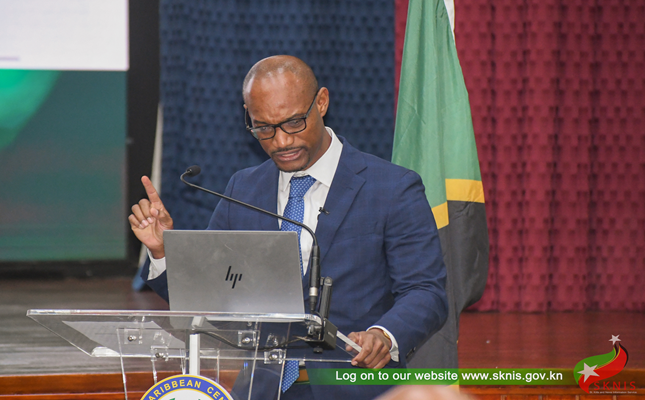
    BASSETERRE, Saint Kitts – On September 22, 2026, Saint Kitts and Nevis unveiled a groundbreaking first-of-its-kind Household and Non-Governmental Organisation Retail Bond, marking a pivotal step toward expanding access to capital market participation across the Eastern Caribbean. The official launch auction ceremony was hosted at the Eastern Caribbean Central Bank (ECCB), where Eastern Caribbean Securities Exchange (ECSE) Chief Executive Officer Stewart Haynes framed the initiative as far more than a new financial product, positioning it as a catalyst for broad-based wealth building across the region.

    Haynes emphasized that decades of progress in global financial inclusion have successfully expanded access to basic banking services, from checking accounts to savings vehicles, but that this work remains incomplete. For ordinary people to build long-term financial security, access to basic services is not enough—communities need intentional pathways to investment inclusion, he argued. “It is not enough to have a bank account. People need an investment account,” Haynes said during the ceremony. “It is not enough to know how to save. They need to know how to make that savings work for them.”

    Structured to lower barriers for entry for first-time and small-scale investors, the two-year retail bond requires a minimum investment of just 500 Eastern Caribbean dollars. The instrument carries a fixed 4.50 percent annual interest rate, with interest payouts distributed semi-annually and the full principal set to be repaid at maturity on October 26, 2028. This accessible structure intentionally opens capital market participation to ordinary citizens and small non-governmental groups that have historically been locked out of formal investment opportunities.

    Haynes noted that communities across the Eastern Caribbean already boast a strong, long-standing culture of saving through traditional channels including commercial banks and local credit unions. What the region needs now, he said, is a shift in mindset about how savings can work for savers. Instead of the common cycle of earning, spending, and saving only the leftover income, Haynes encouraged a new approach: prioritize savings first, invest early, and grow sustained generational wealth. “You do not have to wait until you’re wealthy to become an investor. Investing is one of the ways you become wealthy,” he explained.

    This message of expanded investment inclusion is a core priority for ECSE, as the regional exchange works to build deeper, more resilient, and more accessible capital markets that serve all segments of Eastern Caribbean society. The launch of the Saint Kitts and Nevis retail bond represents a tangible, actionable step toward that goal, creating a clear pathway for eligible citizens and organizations to participate in formal investment while contributing to the ongoing economic development of the entire Eastern Caribbean region. This press release was originally distributed by the Saint Kitts and Nevis Information Service (SKNIS) and published unedited by SKNVibes.com, with the views expressed not necessarily reflecting those of the outlet or its partners.

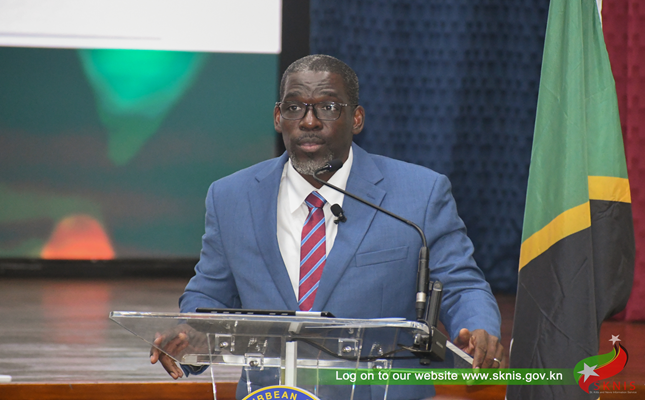
  • Senior Minister Douglas calls for deeper CELAC-India cooperation to advance agricultural diversification

    Senior Minister Douglas calls for deeper CELAC-India cooperation to advance agricultural diversification

    Against the backdrop of the 81st United Nations General Assembly in New York, a high-stakes ministerial gathering between the Community of Latin American and Caribbean States (CELAC) and India took center stage on September 22, 2026, where Saint Kitts and Nevis’ top diplomat made a pressing call for expanded cross-regional partnership centered on agricultural advancement.

    Speaking at the closed-door CELAC–India Ministerial Meeting, Right Honourable Dr. Denzil L. Douglas – Senior Minister and Minister of Foreign Affairs for the Federation of Saint Kitts and Nevis – formally reaffirmed his small island nation’s unwavering commitment to deepening institutional ties between CELAC and the South Asian giant. He also publicly commended Uruguay for its steering leadership of CELAC at a time when coordinated action between regional blocs and global partners has grown more critical than ever for advancing developing nation priorities.

    “Saint Kitts and Nevis is firmly committed to the continued development of the relationship between CELAC and India, as we seek to deepen cooperation among our countries and create partnerships that deliver tangible benefits for our people,” Douglas told attendees.

    The minister noted that 2026 has already marked a key milestone in bilateral relations between Saint Kitts and Nevis and India, with the Caribbean nation opening its resident High Commission in New Delhi earlier this year, a move that has laid stronger groundwork for expanded people-to-people and government-to-government collaboration.

    Douglas also outlined the broader context of Saint Kitts and Nevis’ ongoing national transformation: for more than four centuries, the country’s economy was almost entirely anchored in sugar cultivation, but in recent decades it has shifted toward a service-led growth model, with hospitality and tourism emerging as core revenue drivers. Even amid this transition, the federation has retained diversified agriculture as a central pillar of long-term national development and food security.

    It is this domestic push for agricultural evolution, Douglas explained, that makes expanded collaboration with CELAC and India a top priority. He specifically highlighted greenhouse crop cultivation and poultry production as two high-impact areas where new partnerships could deliver immediate gains, with additional opportunities for joint work in fertilizer access, poultry feed supply, technical skills training, agricultural digital innovation, renewable energy adoption for farming operations, and modern irrigation infrastructure.

    “As we advance agricultural diversification, we see significant opportunities to work with our CELAC partners and India in greenhouse crop farming and poultry, supported by greater cooperation in technology, training, renewable energy and irrigation,” Douglas added.

    The senior minister closed his remarks by calling for the growing formal relationship between CELAC and India to move beyond dialogue and translate into actionable, on-the-ground cooperation that advances inclusive sustainable development and builds long-term institutional capacity across CELAC’s developing member states.

    The September 22 ministerial meeting centered broadly on deepening political dialogue and cross-sector cooperation between CELAC and India, covering a range of shared priorities including trade and investment, scientific advancement, technology and innovation, global food security, public health, pharmaceutical development, and other areas of mutual interest.

  • Saint Kitts and Nevis Government launches inaugural Retail Bond to expand investment opportunities for households and organisations

    Saint Kitts and Nevis Government launches inaugural Retail Bond to expand investment opportunities for households and organisations

    BASSETERRE, Saint Kitts – On September 22, 2026, the Government of Saint Kitts and Nevis took a landmark step to democratize access to formal investment markets with the official launch of its first-ever Retail Bond tailored exclusively for households and non-governmental organizations (NGOs). The new initiative creates a low-barrier opportunity for citizens, local residents, and eligible groups to contribute directly to the nation’s economic growth while generating steady, guaranteed returns on their savings.

    Issued through the Regional Government Securities Market (RGSM), the two-year fixed-income instrument carries an annual interest rate of 4.5 percent, with interest disbursements scheduled every six months. The full principal investment will be returned to bondholders when the instrument matures on October 26, 2028.

    To break down traditional barriers to market entry, policymakers designed the bond with an intentionally low minimum investment threshold of just 500 Eastern Caribbean dollars (EC$). Following the initial investment, participants can add additional funds in increments of EC$100, with a cap of EC$125,000 per individual or organizational investor. This flexible structure was crafted to accommodate a wide range of financial capacities, from ordinary working families to small community groups.

    The launch event was hosted at the Eastern Caribbean Central Bank (ECCB) headquarters, where Financial Secretary for the Ministry of Finance Carlton Pogson framed the initiative as far more than the introduction of a new financial product. In his remarks, he emphasized that the bond’s core mission is to build a broader culture of long-term saving, strategic investing, and proactive financial planning across all segments of Saint Kitts and Nevis society.

    Pogson noted that the low minimum investment was specifically chosen to open participation to groups that have historically been locked out of formal investment markets: individual households, faith institutions, community associations, local cooperatives, and charitable organizations that aim to grow their reserves to support their community work. “This bond was designed with you in mind,” Pogson told the intended audience. “It is an invitation to participate in the financial future of our nation and our region in a way that is secure, structured and accessible.”

    For individual investors, the bond offers predictable, low-risk terms that align with medium-term financial planning goals: a defined two-year holding period, a guaranteed fixed return, and regular interest payments, with full principal repayment at maturity. Beyond individual financial benefits, the government also aims to shift widespread misconceptions about investing, Pogson explained. For too long, many people have viewed participation in securities markets as a privilege reserved only for wealthy individuals or large institutional investors. The new bond is intended to challenge that narrative, framing investing as a routine, responsible component of everyday household financial management.

    For local NGOs and community groups, the bond offers a secure avenue to grow their financial reserves, allowing organizations to strengthen their capacity to advance their public service and community missions. For households, it adds a low-risk, diversified option to their savings management strategies, expanding the range of tools available to build long-term financial stability.

  • U.S. Supports Preservation of Alexander Hamilton House in Nevis

    U.S. Supports Preservation of Alexander Hamilton House in Nevis

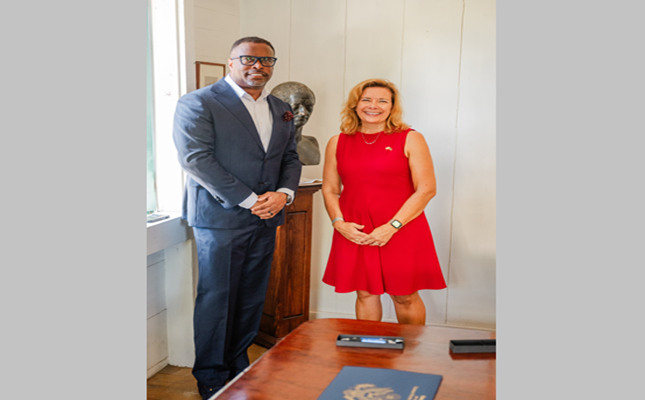
    In a formal ceremony held Tuesday, September 22, 2026, the United States government formalized a commitment to safeguard a shared transatlantic historical legacy, committing $245,000 from the U.S. Ambassadors Fund for Cultural Preservation (AFCP) to fund the full restoration of Alexander Hamilton’s historic birthplace home on the Caribbean island of Nevis. The grant agreement was signed by U.S. Chargé d’Affaires Karin Sullivan and Terysia Herbert, executive director of the Nevis Historical and Conservation Society (NHCS), marking a new milestone in decades of cultural partnership between the two nations.

    Born on Nevis in 1755 or 1757, Alexander Hamilton went on to become one of the most influential of the United States’ Founding Fathers, shaping the young nation’s core financial systems, government structure, and constitutional framework. The modest two-story home where he spent his childhood stands as one of the few remaining physical links to Hamilton’s early life, and acts as a living bridge connecting Nevis and the United States through their shared history. For local preservationists, the site is also a critical piece of Nevis’ own national cultural heritage, drawing history enthusiasts and tourists from across the globe each year.

    Speaking at the signing ceremony, Sullivan emphasized that the preservation project extends far beyond repairing and upgrading an aging historic structure. “Today is about more than a building. It is about people, the people who have cared for this place, recognized the importance of its story, and worked together to make sure that story continues to be told,” Sullivan told attendees. The event was also attended by Nevis Premier Mark Brantley, who praised the partnership and underscored the value of protecting Nevis’ rich cultural legacy while strengthening the long-standing historical ties between the island and the United States.

    This project is part of the United States’ Freedom 250 commemoration, a nationwide and global initiative marking the 250th anniversary of U.S. independence, which prioritizes cultural preservation projects that highlight enduring connections between the U.S. and communities around the world. The Hamilton House grant is not the first U.S. investment in Nevis’ historic heritage: it follows $400,000 in prior AFCP funding that supported two phases of restoration work at Nevis’ iconic 18th-century Bath Hotel, another landmark site with deep ties to early transatlantic history.

    Both U.S. officials and NHCS leaders have framed the joint effort as a long-term investment in shared history, with the goal of transforming the restored Hamilton House into an accessible educational space where local residents and international visitors alike can explore Hamilton’s Nevisian origins and the centuries-long bond between the two regions. The U.S. government has confirmed it will continue partnering with NHCS through the completion of the restoration project, and looks forward to the site’s eventual reopening to the public.

  • First Lady Diani Prince-Drew brings Caribbean voice to Concordia Annual Summit

    First Lady Diani Prince-Drew brings Caribbean voice to Concordia Annual Summit

    Against the backdrop of the 81st United Nations General Assembly in New York, the 2026 Concordia Annual Summit has emerged as a key venue for underrepresented global perspectives to take center stage. On September 21, Diani Prince-Drew, First Lady of the Federation of Saint Kitts and Nevis, made history as a featured speaker, bringing long-overdue Caribbean insights to one of the world’s most high-profile global cooperation gatherings.

    Prince-Drew joined a high-level panel discussion under the summit’s Advancing Human Rights & Social Progress umbrella, themed “Fostering the Future Together: A Global Commitment to the Next Generation”. She shared the stage with a cross-sector lineup of leaders: Charity Wallace, U.S. Special Envoy for Best Future Generations; Sarah Kemp of global tech giant Intel Corporation; and Elizabeth Pishny of Google. The conversation centered on forging stronger cross-sector collaboration between governments, private enterprises, and civil society stakeholders to open new pathways of opportunity for children and young people navigating an increasingly digitized global landscape.

    This panel built on the growing momentum of the “Fostering the Future Together” global initiative, following a series of foundational planning engagements held in Washington, D.C. earlier this year in March.

    For Prince-Drew, the summit was far more than a speaking opportunity: it was a critical platform to center the needs of young people living in Small Island Developing States (SIDS), a group often sidelined in global conversations about technology, educational advancement, and equitable development. During her remarks, she emphasized that global progress cannot be considered complete when youth in small island nations are locked out of the decision-making processes that will shape their futures.

    Beyond elevating regional concerns, Prince-Drew’s appearance at the summit moved forward plans for a dedicated Caribbean regional “Fostering the Future Together” event. The upcoming gathering will create a localized space to unpack the unique opportunities and barriers facing Caribbean youth, while deepening both regional and international partnerships designed to uplift the next generation.

    By participating in the 2026 Concordia Annual Summit, Prince-Drew has not only amplified the specific priorities of Saint Kitts and Nevis on the global stage, but also cemented the Caribbean’s place in international dialogue focused on building a more inclusive, promising future for all young people, regardless of where they live.

  • Restoring trust: Taiwan’s rightful place in the free world

    Restoring trust: Taiwan’s rightful place in the free world

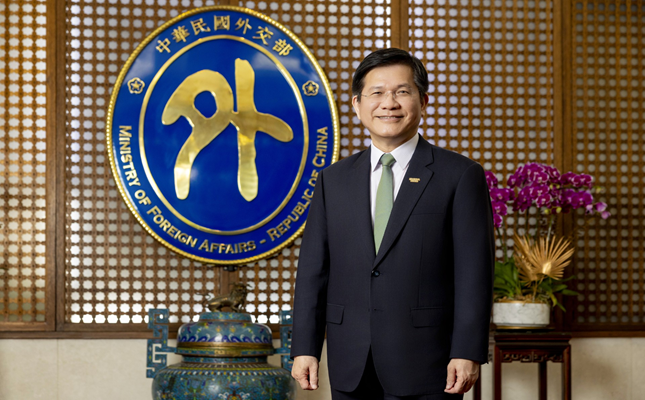
    In an opinion piece published September 22, 2026, Dr. Lin Chia-lung, Minister of Foreign Affairs for the Republic of China (Taiwan), makes the case for Taiwan’s rightful place in international institutions, framing the island’s inclusion as a critical pillar for defending the freedom-centered global order against rising authoritarian pressure.

    Lin argues that the post-World War II rules-based international system is facing unprecedented stress, as authoritarian powers actively work to weaken long-standing safeguards and rewrite global norms to advance their own geopolitical goals. Even the core principles of the United Nations Charter — the peaceful resolution of disputes and the ban on the threat or use of force against sovereign states — are now being openly challenged and deliberately ignored. The global community stands at a defining crossroads, Lin notes: nations must either unite to uphold justice, defend international law, and preserve collective peace and security, or watch the existing order collapse, taking with it the global commitment to freedom, self-determination, and democratic governance.

    This stark choice is most visible in the Indo-Pacific’s first island chain, where Lin says China has ratcheted up regional security pressure through persistent gray-zone aggression. These tactics, which include routine military intimidation, cross-border cyber intrusions, and economic coercion, are designed to unilaterally redraw existing regional rules and power dynamics at the expense of neighbors. Positioned as a frontline defender of freedom and democracy in the region, Taiwan remains committed to upholding the cross-strait status quo, Lin emphasizes. But preserving regional peace and stability is not solely a Taiwanese priority — it is a shared responsibility of the entire international community.

    The Taiwan Strait stands as one of the world’s busiest commercial shipping corridors and a critical artery for global supply chains. Its outsized importance to global security and economic prosperity has been repeatedly highlighted in joint statements from the G7, as well as bilateral and multilateral meetings between the United States, Japan, the United Kingdom, Australia, New Zealand, and other like-minded nations. A growing international consensus now recognizes that cross-strait peace and stability is a global public good.

    A key point of distortion undermining the integrity of the international rules-based order, Lin argues, is China’s deliberate misinterpretation of United Nations General Assembly Resolution 2758. Adopted in 1971 to resolve the question of China’s representation at the UN, the original resolution text never mentions Taiwan, does not rule on the island’s political status, and does not bar Taiwan from participating in the UN system. Despite this, China has systematically conflated the resolution with its own so-called “one China principle” to block Taiwan’s participation in the UN and dozens of other international intergovernmental bodies. If this misrepresentation goes unchallenged, Lin warns, it will set a dangerous legal precedent that could be used as a pretext for future military aggression against Taiwan.

    Even despite its ongoing exclusion from formal UN participation, Lin stresses that Taiwan remains committed to contributing meaningfully to global collective action. The island boasts world-leading strengths in advanced manufacturing, disaster risk reduction, and public health — all areas where its expertise can deliver tangible benefits to the international community.

    Taiwan’s foreign policy is built around advancing democratic partnerships, collective security, and global economic resilience, Lin explains. By collaborating with like-minded partners around the world, Taiwan works to expand democratic governance, protect human rights, and advance freedom globally. As a global leader in semiconductor manufacturing, artificial intelligence, and cutting-edge technology, Taiwan is also committed to building secure, resilient supply chains that do not rely on authoritarian regimes for critical inputs.

    Through its Diplomatic Allies Prosperity Project, Taiwan works to advance mutual shared development with its diplomatic partners, sharing technical expertise and resources to address local development gaps and build local institutional capacity. Concrete examples of these efforts include the development of an integrated national digital healthcare information system for Paraguay, construction of a strategic petroleum reserve facility in Eswatini, and a partnership to implement smart healthcare infrastructure at Palau National Hospital. These initiatives have improved local data management efficiency, strengthened national energy security, supported sustainable industrial growth, and advanced the United Nations Sustainable Development Goals in partner nations.

    As the 81st UN General Assembly gets underway, incoming General Assembly President Khalilur Rahman has named restoring international trust and reforming global institutions as the central themes of his presidency. Lin notes that Taiwan fully shares these goals and stands ready to contribute to achieving them.

    Restoring public trust in the United Nations, Lin argues, must start with upholding fair and equal treatment for all members of the international community. Institutional reform cannot be considered complete while a constructive, reliable contributor like Taiwan remains unjustly locked out of the UN system.

    Lin called on the global community to uphold core UN principles: inclusivity, leaving no community behind, peaceful dispute resolution, and rejection of the threat or use of force. These foundational principles underpin the entire rules-based international order, Lin says, and must be applied consistently to all nations, without exception.

    “The free world needs Taiwan — and a stronger, more credible United Nations needs Taiwan’s meaningful participation,” Lin concludes. Working in partnership with Taiwan will strengthen global collective security, boost economic and technological resilience, and build the collective capacity of free nations to push back against authoritarian pressure. Ensuring Taiwan’s meaningful participation in the United Nations and broader international system is therefore an essential step toward building a more inclusive, secure, resilient, and rules-based global order.

    This article was distributed as an opinion submission by SKNVibes.com, which notes that it has been published as received, without edits to spelling or grammar, and that the views expressed do not necessarily reflect those of SKNVibes.com, its sponsors, or advertisers.

  • Trump Weighs ‘Big Decision’ on Iran as Tensions Escalate

    Trump Weighs ‘Big Decision’ on Iran as Tensions Escalate

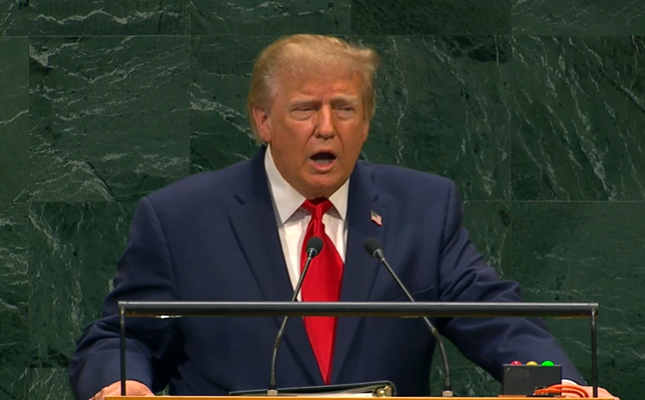
    Speaking from the floor of the 81st United Nations General Assembly in Manhattan on Tuesday, September 22, 2026, U.S. President Donald Trump has outlined a pivotal impending “big decision” on Iran, pitting a new negotiated agreement with Tehran against expanded military action that could target the very existence of the Islamic Republic, as regional tensions spill over to disrupt global energy markets.

    In his hard-hitting address to world leaders, Trump launched a sweeping condemnation of the Iranian government, framing it as the world’s leading state sponsor of terrorist activity. He argued that for more than half a century, the ruling regime in Tehran has fueled instability, violence, and bloodshed across the Middle East and beyond. “For 51 years, the fanatical Iranian regime has ruled by bloodshed and mass murder, spreading death and carnage and chaos across the entire Middle East and beyond,” Trump told the assembled delegates. “They were the bully of the Middle East, but they are the bully no more.”

    The president recounted that shortly after returning to office, his administration initiated bilateral talks with Iran, putting forward an offer of comprehensive economic collaboration in exchange for Tehran permanently abandoning its nuclear program and ending its financial and military support for militant groups across the region. According to Trump, that overture was flatly rejected by Iranian leaders. The breakdown of those negotiations, he said, opened the door to current U.S. military operations, which are backed by longstanding U.S. ally Israel.

    Trump emphasized that the core strategic goal of the ongoing campaign is to block Iran from crossing the threshold to develop a functional nuclear weapon, a red line he has repeatedly pledged to enforce. The escalating conflict has already generated ripple effects far outside the Middle East, most notably through widespread disruptions to commercial traffic through the Strait of Hormuz, the critical global chokepoint that carries roughly 20% of the world’s daily oil supply. Disruptions to shipping through the waterway have triggered widespread market anxiety over global energy security and upward pressure on crude oil prices.

    Citing recent media reports, Iran has signaled it would reopen the strategic strait to full commercial traffic within seven days if the U.S. draws down its military presence in the region and lifts its ongoing blockade of Iranian ports. Pushback against that claim came from Trump during his address, who noted that the U.S. Navy has now escorted more than one billion barrels of oil through the strait, and current shipping volumes are higher than they were at the peak of recent disruptions earlier in the conflict.

    The president also asserted that the U.S.-led military campaign has inflicted severe, lasting damage to Iran’s conventional military capabilities, including its naval forces, early-warning radar networks, air defense systems, ballistic missile stockpiles, and domestic drone production infrastructure. He used his address to praise the U.N. Security Council for its recent resolution condemning attacks on commercial shipping in the region and called on the international community to maintain coordinated pressure on Tehran to change its policy course.

    Turning to the core choice his administration now faces, Trump laid out both options clearly for the global audience. “Do I make a new deal?” he asked delegates, before offering the far more severe alternative: “Or do I annihilate the Islamic Republic and do it quickly, never giving them a chance to kill and destroy people and countries again?”

    Trump’s tough remarks came as both sides signaled continued openness to diplomatic progress. Iranian officials have already indicated they remain willing to return to negotiations under clearly defined terms, while U.S. Secretary of State Marco Rubio confirmed Tuesday that Washington is open to holding informal talks with Iranian representatives on the sidelines of the U.N. General Assembly, though no formal meeting had been scheduled as of Tuesday afternoon.

    According to reporting from Reuters, Trump told reporters he anticipates a potential agreement with Iran could be reached after the November 2026 U.S. midterm elections, even as he reiterated his commitment to maintaining harsh economic sanctions on Tehran in the interim. To date, the conflict remains at an impasse, with parallel diplomatic overtures and rising threats of further military escalation unfolding alongside growing global concern over sustained disruptions to energy supplies and international commercial shipping.

  • Police confirm Larry Armony succumbed to injuries following boating incident

    Police confirm Larry Armony succumbed to injuries following boating incident

    BASSETERRE, St. Kitts – A fatal recreational accident has shaken the local boating community after a man identified as Larry Armony died from injuries he sustained during an incident at Frigate Bay Marina earlier this week. The Royal St. Christopher and Nevis Police Force have officially confirmed Armony’s passing, marking the conclusion of emergency medical efforts that began after the accident unfolded.

    Law enforcement officials confirmed that they received the initial report of the incident on the morning of September 21, 2026, and first responders were dispatched to the marina location immediately. Initial investigations into the event indicate that Armony was in the water near the marina when he came into contact with a moving vessel, resulting in severe trauma to his pelvis and left leg.

    Emergency Medical Services personnel arrived promptly at the scene to provide urgent on-site care to Armony. Recognizing the severity of his injuries, the medical team quickly transported him to the territory’s main care facility, the Joseph N. France General Hospital, for advanced treatment. Despite the best efforts of medical staff, Armony succumbed to his injuries in the early morning of September 22, 2026.

    Local law enforcement has not yet released additional details surrounding the incident, including the circumstances that led to Armony being in the water or any information about the vessel involved in the collision. Police confirmed that formal investigations into the fatal boating accident are still active and ongoing, with updates to be released as more information becomes available.

  • Sir Clive Lloyd: If We Want West Indies Women At The Top, We Must Give Them What The Australians Give Theirs

    Sir Clive Lloyd: If We Want West Indies Women At The Top, We Must Give Them What The Australians Give Theirs

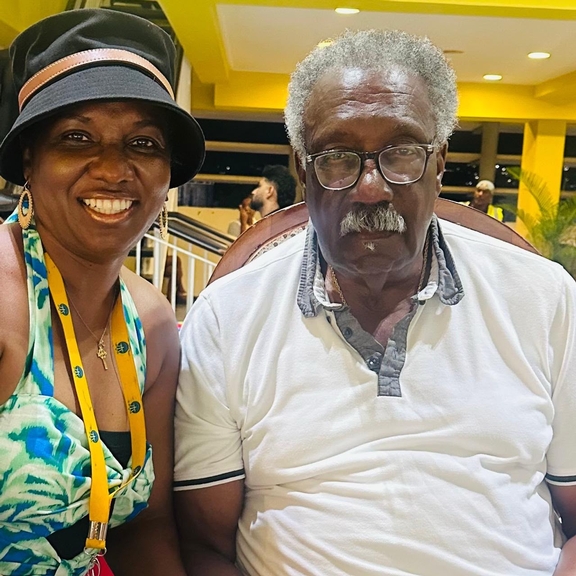
    BRIDGETOWN, BARBADOS – September 21, 2026 — As the architect of one of the most dominant dynasties in men’s cricket history, Sir Clive Lloyd knows better than most that sustained success on the international pitch is not born from raw talent alone. It is forged from intentional investment, structured support, and a systemic commitment to excellence. Now, the legendary former West Indies captain is turning his focus to the next era of Caribbean cricket, arguing that closing the gap with global leaders like Australia requires the same deliberate investment in women’s cricket that built the men’s program’s golden age.