标签: Saint Kitts and Nevis

圣基茨和尼维斯

  • Police Recover 59 Rounds of Assorted Ammunition in New Road

    Police Recover 59 Rounds of Assorted Ammunition in New Road

    A multi-agency security sweep conducted in late July in the New Road district of Basseterre, St. Kitts has taken dozens of unauthorized rounds of ammunition off local streets, law enforcement officials confirmed this week.

    The recovery operation, carried out July 28, 2026, brought together four specialized security units to comb the area: the Anti-Narcotics Unit and Special Services Unit of the Royal St. Christopher and Nevis Police Force (RSCNPF), the Joint Security Operational Tactical Team (JSOTT), and the St. Kitts-Nevis Defence Force (SKNDF). Acting on operational intelligence, teams searched a vacant plot along Agnes Skerritt Street, where they uncovered the cache of unregistered ammunition.

    A breakdown of the seized ordnance shows a broad mix of calibers commonly used in handguns and semi-automatic weapons: 15 9mm rounds, 10 .23 caliber rounds, 17 .38 Special rounds, 8 .40 caliber rounds, 6 .45 caliber rounds, and 3 7.62mm rounds.

    Following the discovery, the RSCNPF’s Crime Scene Unit processed the vacant lot to collect forensic evidence, and all recovered ammunition was moved into secure police custody for further examination. As of the latest public update, no suspects have been taken into custody in connection with the cache, and active investigations are ongoing to trace the origin of the ammunition and identify any individuals linked to it.

  • CTEC and the Question of Standards: Setting the Record Straight

    CTEC and the Question of Standards: Setting the Record Straight

    BRIDGETOWN, BARBADOS – As public discourse grows around the Caribbean Examinations Council’s (CXC) new Caribbean Targeted Education Certificate (CTEC), the organization’s Registrar and Chief Executive Officer Wayne Wesley has stepped forward to address widespread questions about the modular qualification’s academic standards, structure, and intended impact across the region’s education landscape.

    Wesley notes that public scrutiny of CTEC is a healthy part of educational innovation, and opens by framing the new certification as a targeted response to a decades-long crisis in Caribbean education: thousands of secondary students leave the system every year without recognized certification in Mathematics, a foundational requirement for further study, skills training, and entry to the workforce. Traditional one-size-fits-all assessment structures have failed to serve the needs of all learners, he argues, creating an urgent need for alternative pathways that recognize incremental progress.

    The most common criticism leveled at CTEC is that it represents a deliberate lowering of academic standards designed to inflate pass rates through easier assessments. Wesley pushes back firmly against this claim, emphasizing that CTEC’s Mathematics modules draw from the same syllabus, test the same mandated learning outcomes, and are held to the same rigorous quality assurance standards that underpin all existing CXC qualifications. The only difference between CTEC and traditional assessment models is the pathway to certification, not the bar for competence, he explains.

    Unlike traditional terminal examinations that require students to demonstrate mastery of an entire subject’s content in a single high-stakes sitting, CTEC allows learners to earn credit for focused, modular sections of the syllabus over time. This modular structure is not equivalent to simplifying content, Wesley stresses. Modular and stackable credentials have long been accepted as a legitimate assessment model by universities, professional bodies, and certification agencies across the globe, with academic rigor remaining the core priority for CXC.

    The modular approach directly solves a well-documented flaw of all-or-nothing high-stakes testing, Wesley argues. Many students master large portions of the Mathematics syllabus but walk away with no formal recognition of their achievement simply because they could not demonstrate full mastery on a single exam day. CTEC reframes success from a binary “pass or fail” outcome to a cumulative process: every completed module delivers documented, verified proof of learning, building incrementally toward the full qualification. This structure does not reduce expectations; it creates a more accessible, manageable pathway for learners to demonstrate their skills.

    Wesley also addresses transparency concerns around how CTEC credentials will be interpreted by employers and higher education institutions. He confirms that CXC agrees full transparency is non-negotiable for a credential to hold value: completion of a single CTEC module only certifies competence in that specific module’s learning outcomes, and does not represent completion of the full subject qualification. The full CTEC subject qualification is only awarded once all required modules are successfully completed and all certification requirements are met.

    To eliminate ambiguity for stakeholders, CXC plans to expand guidance for employers and higher education institutions, redesign official transcripts, and update certification documentation to clearly distinguish between partial module completion and full qualification achievement. The organization’s core goal, Wesley says, is to ensure every learner’s progress is recognized accurately and transparently.

    On questions of whether the full CTEC qualification is equivalent in mastery to the traditional terminal examination, Wesley notes that assessment validity depends on whether competencies are accurately measured and standards are maintained – not on whether testing occurs in a single sitting or spread across multiple sittings. The CTEC framework is built to require candidates to demonstrate proficiency across all required learning domains before awarding a full qualification. Recognizing that public confidence requires tangible evidence rather than just assurance, CXC will conduct ongoing evaluation of progression patterns, completion rates, performance outcomes, and qualification standards as the program scales.

    Critics have also raised concerns about the risk of a “pass and forget” phenomenon, where learners complete modules and do not retain earlier foundational knowledge as they progress. Wesley explains that cumulative reinforcement of earlier learning is built into the progressive modular pathway, and CXC has already implemented a maximum time limit for completing modules toward a full qualification to mitigate this risk. He notes that this challenge is not unique to CTEC, and CXC will continue to monitor learner progression and refine support structures as the program evolves, consistent with the organization’s commitment to pairing innovation with ongoing evaluation.

    Another pressing concern addressed is the risk that CTEC could deepen educational inequality if it becomes a de facto second-tier pathway primarily used by under-resourced schools, while more privileged institutions continue to rely exclusively on traditional assessment routes. Wesley stresses that this concern is taken very seriously by CXC, noting that CTEC was never designed to serve a specific group of learners, schools, or communities. Instead, it was built to expand opportunity for all diverse learners, including in-school students, out-of-school youth, adult learners, and those pursuing flexible learning routes.

    Wesley says the success of CTEC will not be measured solely by participation or pass rates. It will be judged by whether it expands access, supports consistent learner progression, delivers completed qualifications, earns stakeholder confidence, and reduces opportunity gaps. CXC’s goal is not to create a parallel, two-tier education system, but to broaden access to rigorous, recognized certification while upholding longstanding academic standards.

    Wesley concludes by emphasizing that CTEC is only one component of broader educational transformation across the Caribbean. The qualification is not a substitute for systemic education reform, nor a shortcut to improved outcomes. It is an additional pathway that allows learners to build competence, earn verified credentials, and progress incrementally toward recognized qualifications that open doors to future opportunity.

    Welcoming ongoing public debate about the future of Caribbean education, Wesley notes that the questions being raised about CTEC are not obstacles to its success – they are the exact questions responsible educational institutions must address to improve learner outcomes. As CXC moves forward with implementation, the organization remains committed to transparency, evidence-based policy, stakeholder engagement, and unwavering maintenance of academic standards. Ultimately, CTEC will be judged by one metric: whether it helps more Caribbean learners demonstrate real competence, earn recognized credentials, access new opportunities, and reach their full potential. That is the standard CXC uses to hold itself accountable.


  • Government’s Groundwater Drilling Program Records Major Breakthrough in Saddlers

    Government’s Groundwater Drilling Program Records Major Breakthrough in Saddlers

    In a landmark step forward for water security on the islands of St. Kitts and Nevis, the federal government has announced a highly successful outcome for the first well drilled under its ambitious national groundwater exploration initiative, bringing the country much closer to its goal of consistent 24-hour water service for all communities across St. Kitts.

    Launched as a EC$28 million priority project by the government, the Groundwater Drilling Program is being executed by St. Kitts’ Water Services Department in partnership with Trinidad and Tobago-based Water and Oil Well Services and a team of specialized international technical experts. The initiative forms a core pillar of the administration’s broader strategy to expand potable water production and eliminate chronic service interruptions that have plagued parts of the island for decades.

    Before drilling began at the Saddlers site, officials carried out extensive airborne geoscience mapping and detailed hydrogeological assessments across the island. These studies identified 17 high-potential locations for new groundwater extraction, with priority given to communities that have long faced unreliable, intermittent water access. Saddlers was selected as the first site for exploratory drilling out of these 17 candidates.

    Drilling operations at Saddlers have now been fully completed. The well reaches a total depth of roughly 640 feet, with the water table struck at approximately 500 feet below ground. Currently, the project team is carrying out standardized safe-yield testing to measure how much water can be sustainably drawn from this new source over the long term, to avoid over-extraction and ensure long-term resilience.

    Initial testing has already delivered extraordinary results: the new well produces roughly 175 US gallons of water every minute. Project Manager Joshua Ross called the Saddlers discovery “a very promising well,” emphasizing that this output represents an exceptional volume of fresh water from a single groundwater source. Once permanent pumping equipment is installed and final testing is wrapped up, crews will move forward to construct a dedicated pump house, install all required connecting infrastructure, and link the new water supply to St. Kitts’ existing distribution network.

    For the Saddlers region and surrounding communities — including Harris’ Village, Lavington and Belle Vue — this additional supply is projected to dramatically improve water access. Officials also noted that the large output of the new well means excess capacity can be redirected to neighboring areas during periods of high demand or supply shortages, strengthening the entire local water network.

    The scale of this breakthrough becomes even clearer when compared to the existing supply serving the Saddlers area: the current source only produces around 50 gallons per minute. The new well will add more than triple the existing volume to local supplies, drastically boosting the resilience of the area’s water system against droughts and peak demand.

    Chief Water Engineer Landrith Isaac explained that the groundwater program is being implemented in tandem with other major national water infrastructure investments. That includes the Basseterre Desalination Plant, which was officially brought online in February 2026 and already adds 2 million gallons of potable water per day to the national supply.

    According to Isaac, all these investments are coordinated as part of a unified national strategy to expand total water production, improve connectivity between separate regional water networks, and deliver a consistent, dependable supply to every community across St. Kitts. “Everything has to work together to ensure that everyone gets a 24-hour supply,” Isaac stated. Once all planned new groundwater wells are completed and integrated into the national system, officials project that St. Kitts will reach 99.9 percent island-wide coverage for consistent 24-hour water service.

    Early evidence from other communities already demonstrates how new groundwater sources can transform water access. Isaac pointed to the Cayon well, which was commissioned in 2024. Before the new well came online, Cayon residents endured years of regular shortages and interruptions; since the well entered service, the community has enjoyed uninterrupted 24-hour water access. The government’s goal is to replicate this success across every underserved community through the ongoing drilling program.

    With the first drilling phase at Saddlers successfully finished, the drilling rig has already been relocated to Newton Ground, where work on the program’s second well is already underway. As of the latest project update, drilling at Newton Ground has reached 108 feet, toward a target depth of 500 to 600 feet. Officials report that progress at the second site is moving faster than the first, thanks to lessons learned while navigating unexpected geological challenges during the Saddlers drilling.

    In addition to Saddlers and Newton Ground, the government has identified 11 other priority sites for exploration across the island: Black Rocks, Parsons Ground, Tabernacle, Sandy Point, St. Paul’s, Brimstone Hill, Old Road, Molineaux, Stone Fort, Challengers and Cayon. The program is systematically prospecting for new groundwater sources to build out a robust, distributed network of supply across St. Kitts.

    The full drilling program is expected to take approximately 18 months to complete, though timelines are adjusted to account for variable geological conditions at each site. Parallel to drilling operations, supporting infrastructure works — including new water pipelines, electrical connections, pump houses, and expanded storage capacity — are carried out as each well is completed. This phased approach allows new water sources to be connected to the public supply network as quickly and efficiently as possible.

    The Government of St. Kitts and Nevis reaffirmed its long-term commitment to solving the islands’ decades-old water access challenges through sustained, targeted investment and a structured, multi-pronged strategy. The ultimate goal remains clear: to deliver reliable, sustainable, full-time 24-hour water service to every community across St. Kitts.

  • Mile High Travels launches special charter flights for CPL 2026 fans

    Mile High Travels launches special charter flights for CPL 2026 fans

    As the 2026 Republic Bank Caribbean Premier League (CPL) prepares to kick off across multiple Caribbean host nations, regional travel provider Mile High Travels has launched a customized series of charter flights designed to connect cricket fans to every stop of the tournament, bringing new convenience to supporters looking to follow their favorite teams.

    The targeted charter service will operate from August 24 through September 12, 2026, matching the full timeline of the CPL tournament. The route network connects five key host territories: Antigua, St Kitts, Trinidad, Guyana and Barbados, with multiple weekly flights scheduled to give fans maximum flexibility to build their tournament itineraries around the matches they are most eager to attend.

    Beyond catering specifically to CPL attendees, the program also offers affordable, accessible inter-island travel for any regional passenger, filling a temporary gap in regional connectivity to match the surge in travel demand during the tournament.

    A unique added perk for cricket fans is the chance to share flights with the CPL players and franchise members they support. Throughout the group stage of the tournament, competing teams will travel between host islands using this same charter network, creating once-in-a-lifetime interaction opportunities for supporters.

    Industry observers note the new charter initiative underscores the rapidly growing global popularity of the CPL, which has long branded itself as the “Biggest Party in Sport.” CPL organizers have long prioritized expanding access to the tournament for fans across the Caribbean and beyond, and inter-island fan travel has been a core part of the event’s unique culture for years. Unlike any other global franchise cricket competition, CPL draws thousands of supporters who follow their teams from island to island, drawn by an unrivaled electric atmosphere that has become the tournament’s signature.

    Currently, seats for the special CPL charter flights are available for booking. Organizers expect tickets to sell out rapidly as the tournament’s international fan base continues to grow, and have urged interested fans to reserve their seats early to secure their preferred travel arrangements.

    Full details of the flight schedule, fare pricing, and booking processes are hosted exclusively on Mile High Travels’ official platform, where fans can also access additional information to plan their CPL 2026 travel.

  • St. Kitts and Nevis cruise passenger arrivals hit one million for first time since pandemic – WIC News

    St. Kitts and Nevis cruise passenger arrivals hit one million for first time since pandemic – WIC News

    More than six years after global travel shutdowns upended the Caribbean tourism sector, St. Kitts and Nevis has marked a major milestone in its cruise industry recovery: the small island federation has welcomed over 1 million cruise passengers in 2026 to date, hitting the threshold for the first time since the onset of the COVID-19 pandemic.

    According to official tourism data, the cumulative number of cruise ship visitors to the federation stands at 1,002,282 as of mid-August 2026, surpassing the 1 million mark months before the end of the calendar year. Marsha T. Henderson, St. Kitts and Nevis’ Minister of Tourism, called the achievement a powerful testament to the destination’s rebound and the renewed trust global cruise lines and travelers have placed in the island nation.

    While St. Kitts and Nevis had crossed the 1 million annual cruise passenger threshold prior to the pandemic, this year’s milestone carries unique meaning, Henderson emphasized. It reflects both the unwavering resilience of the local tourism sector and its frontline workers, as well as the restored confidence of global cruise industry partners that have resumed and expanded operations in the destination after years of scaled-back travel.

    Henderson noted that the economic benefits of a thriving cruise sector extend far beyond the port terminal walls, rippling through every corner of local communities and supporting household livelihoods across the islands. “Tourism does not stop at the cruise terminal. It reaches into our communities and into the homes of our people. It supports our taxi operators, vendors, artisans, restaurants, tour operators and countless other small businesses,” Henderson said. “Ultimately, our success must be measured by the opportunities we create and the lives we enrich.”

    Building on this year’s growth, St. Kitts and Nevis has already lined up multiple new initiatives to deepen its footprint in the global cruise market, with two major new partnerships set to launch in 2027. Starting November 2027, P&O Cruises will return to the federation to launch new turnaround operations — a move that will bring additional overnight visitor spending and extended tourist activity to the islands. In January 2027, the destination will also partner with Celebrity Cruises to launch a one-of-a-kind Sugarmas-themed sailing, highlighting the islands’ unique cultural heritage to draw niche, high-engagement travelers.

    Henderson framed the long-term trust St. Kitts and Nevis has built with travelers and industry stakeholders as “stored currency” that will continue to drive growth for years to come. In the immediate term, the federation is preparing to showcase its offerings to top travel industry professionals next week, when it hosts the American Society of Travel Advisors (ASTA) Caribbean Showcase from August 22 to 25, 2026. The event will position St. Kitts and Nevis as a must-visit Caribbean destination, giving ASTA members firsthand insight into the islands’ attractions, infrastructure, and hospitality to help them promote the destination to clients around the world.

    The milestone arrival also coincides with the federation’s annual Tourism Month celebrations. Officials have called on residents, local business owners, and visitors to participate in upcoming scheduled activities that honor the contributions of tourism workers and celebrate the sector’s central role to St. Kitts and Nevis’ national economy.

  • Nevis’ Teadrian Tross Returns from Goodwill Swimming Championships with Bronze Medal

    Nevis’ Teadrian Tross Returns from Goodwill Swimming Championships with Bronze Medal

    On a warm August day in 2026, crowds of local sports officials and proud family members gathered at Nevis’ Oualie Water Taxi Facility to welcome home a young athlete who made history for his small Caribbean nation. Twelve-year-old Teadrian Tross of Nevis returned from the 30th Goodwill Swimming Championships hosted in Couva, Trinidad and Tobago, with a bronze medal — the only medal earned by the St. Kitts and Nevis Aquatics Federation in the federation’s first ever appearance at the regional competitive event.

    Tross secured his third-place finish in the Boys 11–12 50m Freestyle race on August 15, the second day of the multi-day competition, when he clocked a new personal best time of 27.40 seconds. The achievement marked a milestone not just for Tross, but for the entire St. Kitts and Nevis aquatics community, which is still building its presence in regional competitive swimming.

    Ajaye Newton, Nevis’ Director of Sports, was among the group that greeted the young medalist on his return. In remarks following the homecoming, Newton shared that Tross’ winning performance did not come as a surprise, pointing to the young swimmer’s consistent dedication and strong results throughout his developing athletic career. Newton emphasized that both the island of Nevis and the entire Federation of St. Kitts and Nevis celebrate Tross’ hard-won accomplishment.

    “He’s going to grow from bound to bound and leap to leap. This bronze medal, I feel, is just a glimpse of what’s to come from Teadrian. He’s an exceptional ambassador and he does well every time he’s away. He went out and represented well and made all of us proud, so congratulations!” Newton said, correcting an earlier misstatement that referenced a gold medal.

    Newton also extended congratulations to Tross’ parents, Mackie and Fayola Tross, noting that their unwavering support and ongoing investment in their son’s athletic training have been foundational to his growth and early success. Tross echoed that sentiment, sharing that he pushed himself to achieve a strong result to honor the sacrifice and encouragement his family has given him.

    “To go to Trinidad and not do something big, it would just be a trip. To help them feel special for all the time they spend on me, I put out my best and came back with a medal,” Tross said.

    Beyond Tross’ historic bronze win, the entire six-member Team SKN turned in impressive performances at the championships, with every swimmer on the roster shaving time off their previous personal best records. The team’s roster also included Nevis’ Jazelle Connor, who competed in the Girls 15–17 division; Gaj Leonce and Rhaejaan Jacobs, who raced in the Boys 9–10 category; and Valentino Esposito and Saulo Sahely, who joined Tross in the Boys 11–12 division. For a federation making its debut at the regional event, the collective improvement across all team members signals a promising future for competitive swimming in St. Kitts and Nevis.

  • Warriors stay unbeaten in Saint Lucia

    Warriors stay unbeaten in Saint Lucia

    The 2026 Republic Bank Caribbean Premier League (CPL) saw the Guyana Amazon Warriors extend their flawless opening run on August 20, clinching a comfortable seven-wicket victory over hosts Saint Lucia Kings at the Darren Sammy Cricket Ground. Intermittent rain disrupted play four times throughout the fixture, with three delays coming during the Saint Lucia innings, draining any momentum the home side was able to build and shifting the tactical advantage firmly to the visiting Warriors.

    Warriors captain Imran Tahir won the toss and opted to put the Kings in to bat first. In a rain-interrupted PowerPlay, Andries Gous, playing his final match of the tournament, and Kamil Pooran, making his return from injury, got the home side off to a solid start, pushing Saint Lucia past the 50-run mark inside the first six overs. In the second phase of the innings, Tahir turned to his own spin and that of Mohammad Nabi to slow the scoring rate, and the Warriors’ bowling unit quickly put the squeeze on the Kings’ batting line-up. Most Saint Lucia batters failed to progress past the teens, with top-order batter Charith Asalanka the only exception, crafting a vital 35 runs to anchor the innings.

    A late flurry from pace bowler Matthew Forde offered some late attacking threat for the Kings, but he was dismissed by Shamar Joseph, mishitting a pull into the cross wind that landed safely in the hands of Glenn Phillips. Saint Lucia never managed to break free of the bowling pressure: the highest number of runs they took from any single over was just 13, leaving them with a modest total to defend. For the Warriors, Dwaine Pretorius delivered the standout bowling performance, claiming 3 wickets for just 29 runs. Joseph capped off the Kings innings perfectly, conceding only 7 runs in the final over to finish with figures of 2 for 25. All seven of the Warriors’ wickets came from well-executed catches, highlighting the side’s sharp clinical fielding.

    Chasing the low total, openers Glenn Phillips and Mavendra Dindyal did not rush to attack from the outset, instead building a solid foundation by adapting to the tricky ground conditions. The pair put on a 79-run opening stand, and the Kings bowlers were unable to generate enough pressure to break the stand early. The first wicket fell only after 10 and a half overs, when Phillips was caught by Forde, one delivery after being dropped by Amari Goodridge.

    Missed chances in the field proved to be a decisive gap between the two sides, with the Kings failing to convert multiple opportunities to derail the Warriors’ chase. Roston Chase and Joshua Bishop did briefly reignite the home side’s hopes in the final five overs of the match, but that hope was quickly snuffed out by Guyana’s Shimron Hetmyer and Quentin Sampson. The pair put on an unbroken blitz, blasting 35 runs from just 10 deliveries to seal the victory in dramatic fashion and keep the Warriors’ unbeaten tournament record intact.

  • Government Continues Cost-of-Living Support with Electricity and Water Reconnection Measures

    Government Continues Cost-of-Living Support with Electricity and Water Reconnection Measures

    Three years after a successful nationwide utility relief program marked the country’s 40th independence anniversary, the government of St. Kitts and Nevis is rolling out a new round of targeted support to help struggling households regain access to essential electricity and water services amid ongoing global economic headwinds. Led by Prime Minister Hon. Dr. Terrance Drew, the administration has partnered with local utility providers to roll out flexible reconnection schemes that build on the popular Independence 40 Reset initiative, keeping its longstanding people-first policy agenda at the forefront of governance.

    The original Independence 40 Reset launched in 2023 during the country’s milestone 40th independence celebrations, which delivered a fresh start for thousands of citizens and residents grappling with unpaid utility bills. The program cut through red tape to help households restore disconnected electricity and water services, addressing a critical barrier to daily life for vulnerable families and aligning with the administration’s commitment to centering livelihoods in policy making.

    Now, in August 2026, the government is renewing this commitment by collaborating with the St. Kitts Electricity Company Limited (SKELEC) and the national Water Services Department to create accessible, flexible pathways for customers burdened by utility arrears. From the start of August through August 31, SKELEC is running its targeted “Reconnect 15” Customer Reconnection Promotion, which offers eligible customers a clear path to service restoration: qualified households only need to put down a 15 percent down payment on their total outstanding balance to start the reconnection process. The promotion also cuts the standard reconnection fee to reduce upfront costs, and for qualifying customers, structured salary deduction arrangements are available to make ongoing repayments manageable and predictable for household budgets.

    Customers interested in taking advantage of the SKELEC program have been directed to reach out to the company’s Customer Service Debt Management Division to review their individual account status and confirm eligibility for the promotion. Parallel to the electricity initiative, the Water Services Department has opened its doors for customers with disconnected water service or large accumulated arrears to work one-on-one with department staff to find customized reconnection terms aligned with each household’s unique financial situation. The department is also urging customers who have not been receiving their monthly water bills, or who need to update outdated contact information, to connect with department representatives to avoid future service disruptions.

    Officials note that these new targeted reconnection initiatives are part of a broader, government-wide portfolio of policies designed to ease persistent cost-of-living pressures that have impacted households across the globe amid ongoing economic uncertainty. Unlike short-term band-aid solutions, the programs are structured to pair immediate relief with responsible long-term mechanisms that allow customers to regularize their accounts, maintain consistent access to utilities over time, and avoid future disconnections.

    A statement from the Prime Minister’s Office reaffirmed that the Drew administration remains fully focused on delivering tangible, meaningful progress for all citizens and residents, strengthening access to the essential services that underpin daily life, and upholding its core commitment to putting people at the center of all policy decisions.

  • St Kitts and Nevis’ Elevate students shine in CSEC exams With stellar results – WIC News

    St Kitts and Nevis’ Elevate students shine in CSEC exams With stellar results – WIC News

    In a landmark moment for second-chance education across the Caribbean, the first cohort of participants in St Kitts and Nevis’ Elevate Programme has delivered exceptional outcomes in the 2026 Caribbean Secondary Education Certificate (CSEC) examinations, marking a resounding early success for the government-backed social and educational initiative.

    Launched as a core pillar of the national government’s strategy to expand education, rehabilitation, empowerment and social support services, the Elevate Programme targets individuals seeking a new opportunity to earn secondary education certification and rebuild their personal and professional trajectories. For its first cohort of students, the results have exceeded even optimistic projections, cementing the programme’s transformative potential.

    Across two core subjects – English Language and Principles of Business – the cohort posted a perfect 100% pass rate, while 75% of participants successfully passed Human and Social Biology. Under CSEC grading standards, Grades I, II and III are all recognized as passing marks, with Grade I representing the highest level of achievement. The inaugural cohort earned five Grade I distinctions, six Grade II passes, and two Grade III passes across additional examined subjects, a performance that program leaders call a testament to the students’ dedication and the programme’s design.

    Prime Minister Dr. Terrance M. Drew quickly offered public congratulations to the participating students, highlighting what the milestone results reveal about the core mission of the Elevate Programme. In a public Facebook post following the release of results, Drew emphasized that the achievement goes far beyond test scores to underscore the transformative power of accessible opportunity. “This achievement speaks to something much greater: the power of opportunity and the value of a second chance,” he wrote. “Education must remain a pathway through which people can rebuild, refocus and create a better future for themselves and their families.”

    Program leadership echoed the prime minister’s remarks, noting that the strong performance aligns perfectly with the initiative’s foundational philosophy and long-term vision. In an official statement, management shared that the results reflect the programme’s goal of lifting entire communities by creating pathways for individual transformation through lifelong learning and personal growth. “This achievement reflects the vision of elevating the whole of society by creating opportunities for individuals to transform their lives through learning and personal development,” the statement read.

    Alicia Collins, coordinator of the Elevate Programme, echoed that framing, noting that the outcome represents far more than a set of examination grades. “This is more than an examination result; it is a testament to courage, commitment, and the belief that a person’s past does not determine their future,” Collins said.

    With this early success, the Elevate Programme is now positioned to become a model for second-chance education across the Caribbean region. Stakeholders expect the initiative’s proven outcomes will give St Kitts and Nevis a platform to take a leading role in advancing and expanding second-chance education opportunities for marginalized and underserved populations across CARICOM, turning a local education success story into a regional blueprint for social empowerment.

  • CXC reports sharp increase in examination irregularities and absenteeism

    CXC reports sharp increase in examination irregularities and absenteeism

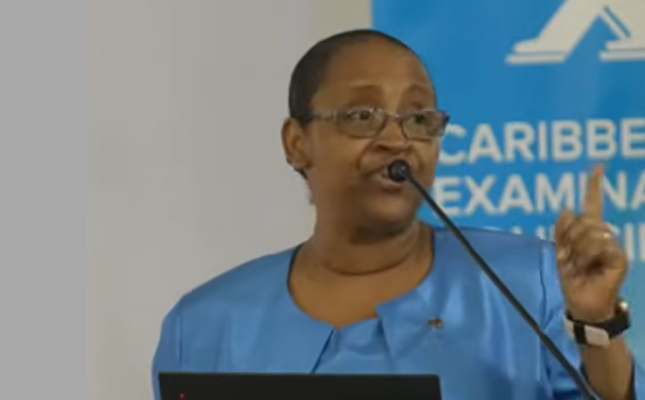
    The Caribbean Examinations Council (CXC) is facing two growing, interconnected challenges that threaten the integrity of regional secondary and post-secondary assessment systems: a significant spike in examination rule violations and record-high candidate absenteeism during the 2026 May-June exam sitting, a top CXC official has confirmed.

    Dr. Nicole Manning, CXC Director of Operations, shared updated figures during a results briefing in Anguilla, revealing that the body recorded 128 confirmed cases of examination irregularities this year, a 60% jump from the 80 cases documented in 2025. The most common violation was the use of prohibited electronic devices in exam rooms, followed by coordinated collusion between candidates, possession of unauthorized reference materials, and a new, previously unrecorded category: cheating facilitated by artificial intelligence.

    Manning emphasized that AI-enabled academic misconduct is an unprecedented emerging threat to CXC’s assessment standards, a challenge that will only grow as generative AI tools become more accessible to students across the region. In response, CXC has already developed formal standards and guiding frameworks to govern AI use in exams, joining Anguilla which has implemented its own national AI policy for education assessment. “This is a completely new issue for us,” Manning noted. “It is critical that we proactively put guardrails in place just as we have done for other emerging challenges in assessment over the years.”

    The CXC official warned that irregularities carry severe penalties for offending candidates, including full grade cancellation and permanent disqualification from future exams. She added that cheating is not limited to isolated, one-off incidents: some repeat offenders have been caught violating rules across multiple separate exam cycles. Broadly defined, examination irregularities include any inappropriate conduct during a sitting, ranging from disruptive, unruly behavior to unauthorized possession of cell phones and pre-prepared cheat sheets.

    Alongside rising cheating, CXC has flagged soaring absenteeism as a major concern for regional education systems. Nearly 36,000 registered candidates failed to show up for this year’s Caribbean Advanced Proficiency Examination (CAPE) and Caribbean Secondary Education Certificate (CSEC) assessments. Of that total, 3,534 absentees were registered for CAPE, the post-secondary entrance qualification, while 32,403 missed CSEC, the core secondary school leaving certification.

    Manning explained that a candidate who misses any required exam component is ineligible to receive a grade, meaning they forfeit the opportunity to earn the certification they registered for, a setback that can delay academic progression and career plans. She stressed that the alarmingly high absenteeism rate should be a priority issue for education ministries and institutions across the Caribbean, calling on parents, guardians and classroom teachers to step up engagement to encourage candidates to complete their scheduled exams. “This is a top concern for CXC, and we are working aggressively to support candidates to show up for their assessments,” she said.

    Internal CXC surveys have identified feelings of under-preparation as the most common reason students voluntarily skip their exams, but Manning urged candidates not to let low confidence keep them from taking the test. She also noted that CXC already has formal compassionate accommodations in place for candidates who are unable to attend or complete exams due to unforeseen personal crises, such as acute medical events or the death of a close family member. This year alone, 359 candidates received flexible accommodations through the program, ensuring they were not penalized for experiencing unexpected hardship. “These candidates did not face disadvantage despite serious personal challenges,” Manning said, “that is the safety net we want all eligible candidates to know is available to them.”