Nestled in the Eastern Caribbean, the small island of Nevis is on the cusp of a clean energy transformation that could reshape its economic and energy future. As of late March 2026, the Nevis Island Administration (NIA) has confirmed it is in the final stages of contracting with Iceland Drilling Company Limited to launch exploratory drilling for the island’s ambitious geothermal energy development project, marking the most significant milestone for the initiative to date.
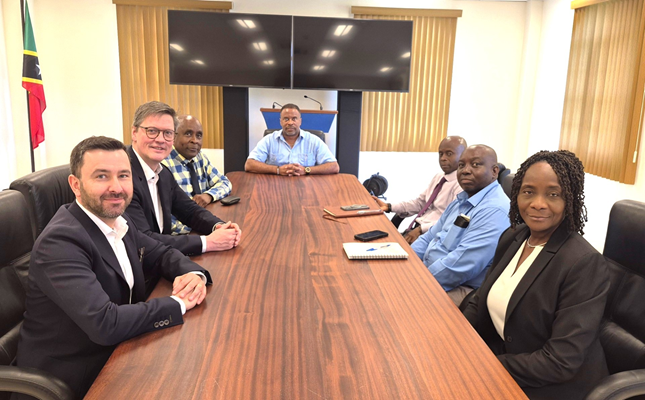
High-level stakeholder talks held on March 26 brought together key leaders from both sides to resolve remaining technical and contractual details. Leading the NIA delegation were Nevis Premier and Minister of Energy Mark Brantley, alongside NIA Cabinet Secretary Stedmon Tross, Permanent Secretary for the Premier’s Ministry Wakely Daniel, Nevis Electricity Company (NEVLEC) Acting General Manager and Chief Financial Officer Roma Merchant, and project coordinator Naftalie Errar. Representing the drilling firm were CEO Sveinn Hannesson and Legal Counsel Lyes Kennouche, who also held separate working sessions with NEVLEC, the local agency tasked with implementing the project.
In a monthly press briefing held March 30, Brantley shared a promising update on the project’s timeline. According to Brantley, Iceland Drilling has laid out an aggressive schedule that would see mobilization completed and drilling operations get underway as early as August 2026. The firm’s drilling rig is currently enroute to Iceland for mandatory repairs and retrofitting, after which it will sail directly to Nevis to begin work.
“I’m optimistic that we can make it, bearing in mind that we’re now in April,” Brantley told reporters. “But they feel that the drill rig … can then sail to Nevis to commence the drilling operations here, which will be a significant forward step in terms of our geothermal ambitions.”
Geothermal energy has long been framed as a game-changing opportunity for Nevis. Geological surveys confirm the island holds one of the Caribbean’s largest untapped geothermal resources, with estimates suggesting total potential output could reach as high as 900 megawatts—far more than the small island’s domestic energy needs.
The first phase of development is more modest in scope: the exploratory drilling phase will core multiple test wells to confirm resource viability, laying the groundwork for an initial 10 to 30 megawatt geothermal power plant. Once operational, this facility will be able to meet 100% of Nevis’ domestic electricity demand, while also delivering surplus power to neighboring St. Kitts, part of the broader Federation of Saint Christopher and Nevis.
Looking further ahead, the NIA’s long-term vision would turn Nevis into a regional renewable energy hub, capable of exporting low-cost, zero-emission geothermal power to other island nations across the Eastern Caribbean, many of which rely almost entirely on expensive imported fossil fuels for electricity generation.
Brantley emphasized the urgency of accelerating the project amid ongoing global energy market volatility, driven by simmering geopolitical tensions in major oil-producing regions. As both Premier and Minister of Finance, he warned that persistent spikes in global oil prices would inevitably translate to higher costs for nearly every sector of Nevis’ economy, from electricity rates to the price of imported food, local agricultural and seafood goods, and public transportation.
“That is why I keep saying to our people, we must remain engaged. We must watch the news. We must pay attention… because the reality is that once the price of oil goes up, everything goes up with it. The world is fuelled by energy,” Brantley said. “And I said that at this point because it simply reinforces why we must proceed with our geothermal potential in as aggressive a manner as we can.”
With contract finalization imminent and drilling on track to start as early as the third quarter of 2026, the Nevis geothermal project is entering its most critical implementation phase to date. If successful, the initiative will deliver long-term lower energy costs for local residents, reduce the federation’s dependence on volatile imported fossil fuels, and cement Nevis’ position as a leader in renewable energy transition across the Caribbean region.