标签: Jamaica

牙买加

  • BLAME THE MINISTRY!

    BLAME THE MINISTRY!

    As Jamaica grapples with a growing crisis of weapons possession and widespread student indiscipline across the nation’s public schools, the top leader of the country’s teachers’ union has issued a scathing rebuke of government inaction, accusing policymakers of actively undermining school administrators’ efforts to enforce order and hold violating students accountable.

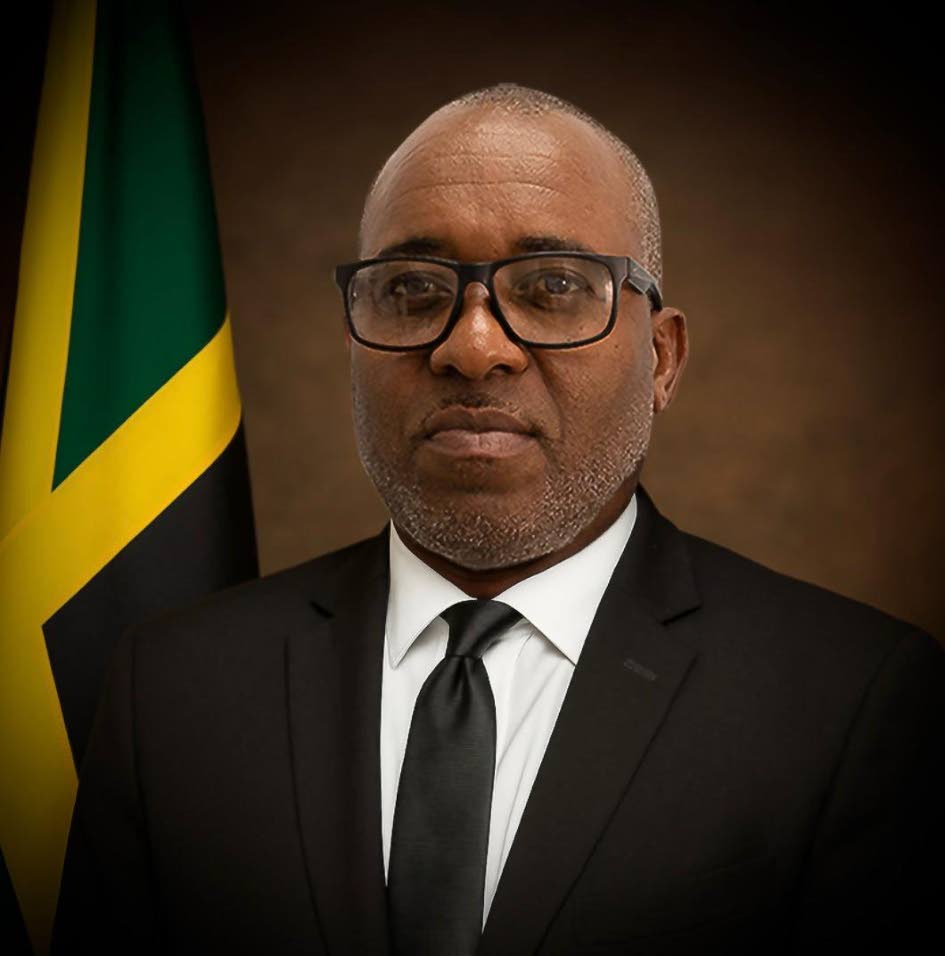
    In an exclusive interview with the Jamaica Observer published Sunday, Jamaica Teachers’ Association (JTA) President Mark Malabver outlined the deep scope of the problem, revealing that some campuses are now struggling to control gang activity infiltrating their halls.

    “The Ministry of Education already collects detailed data on every major infraction reported across our schools, so they are fully aware of the range and volume of weapons seized from students every year,” Malabver told the outlet. “Students are bringing an alarming variety of weapons onto campus. I don’t know what purpose this data is serving if no substantive action follows, but it is past time for meaningful intervention.”

    Malabver emphasized that the number of weapons recovered is significant, and called for coordinated action from school administrators, governing boards, and the education ministry to expel gang presence from campuses entirely. “Schools must be made a completely hostile environment for gangs,” he said.

    The JTA president confirmed that common edged weapons including knives, ice picks, and scissors are regularly carried by students to school, noting that while firearm seizures are not an everyday occurrence, they have happened repeatedly. “We have had students taken into law enforcement custody for carrying loaded firearms on campus,” he said. “This is not a new problem, but it points to a much wider crisis of systemic student indiscipline that has played out in deadly ways.”

    The most recent high-profile fatal incident took place on April 20, when 13-year-old Seaforth High School student Kland Doyle was stabbed to death by a fellow student in St Thomas. The fatal attack grew out of an on-campus dispute that spilled off school grounds, unfolding between 2:30 p.m. and 3:00 p.m. near the Morant Bay Transport Centre, close to a Teen Hub facility and an internet café frequently used by students. St Thomas Police Division Commanding Officer Rohan Ritchie confirmed three students have been taken into custody in connection with Doyle’s killing.

    Just one week before that fatal stabbing, law enforcement officers arrested four Papine High School students in Gordon Town, St Andrew, after breaking up a public brawl. The students were found in possession of multiple offensive weapons including knives, ice picks, and machetes. While no assault charges were filed because no formal victim reports were submitted, all four teens were formally charged with illegal weapons possession.

    The Jamaica Observer has requested official aggregated statistics from police on the total number and types of weapons seized from students across the island since last week. While the department promised to release the data this week, it has not yet been made public. Police have however repeatedly shared photos of seized student weapons on their public social media channels in recent months, highlighting the scope of the issue.

    In one of the most alarming revelations from the interview, Malabver stated that reports collected by the JTA point to a sharp rise in unprovoked violent attacks against teaching staff by students. “We have seen a significant jump in these unprovoked attacks, alongside persistent bullying across campuses,” he explained. “In one recent case in St Catherine, a student attacked a teacher from behind, causing severe injuries that forced the educator to miss months of classes while recovering. In far too many of these cases, teachers end up paying for their own medical costs out of pocket.”

    Malabver argued that the root of the current indiscipline crisis stems from multiple systemic failures, starting with lack of parental accountability, which the government has failed to address. “We are only treating the symptoms of the problem right now, not getting to the root cause. For me, the core issue is poor parenting,” he said. “There is currently no legislation on the books that holds parents legally responsible for the harmful behavior their children engage in while at school. Lawmakers need to take this gap seriously and pass new legislation to create that accountability.”

    Beyond parental accountability, Malabver pointed to gaps in school governance that let offending students avoid consequences, often when school boards fail to take timely disciplinary action. He went a step further, arguing that the Ministry of Education has inadvertently become complicit in undermining school-wide discipline policies.

    “Whenever school leaders enforce existing dress and grooming codes, ministry officials and even elected politicians often side with violating students instead of backing administrators,” he said. “We keep hearing that new policies are in development, stuck in one consultation phase or another, but where is the urgent, concrete policy to address the indiscipline crisis tearing at our schools? We need a firm, uncompromising approach to discipline, and right now the Ministry is failing to deliver that. They may deny this, but the facts speak for themselves.”

    The issue of weapons in Jamaican schools is not new: just a few years ago, St Catherine North Police, backed by Jamaica Defence Force personnel, carried out a coordinated search of a local high school and seized a large cache of weapons and contraband from students, images of which were widely shared on official police social media at the time.

  • WATCH: New Forest High’s 5K run/walk more than a race

    WATCH: New Forest High’s 5K run/walk more than a race

    MANCHESTER, JAMAICA – Stakeholders at New Forest High School have expanded the scope of impact from the institution’s annual 5K run/walk, with proceeds now set to support three key priorities: campus infrastructure expansion, athletic program development, and a new staff wellness initiative amid rising rates of illness among faculty. Board Chair Trisha Williams-Singh announced the updated fundraising goals during Sunday’s second staging of the popular community event, marking a decade since the school first opened its doors.

    As the 10-year-old institution continues to grow to meet student demand, the bulk of this year’s race proceeds will go toward constructing a long-awaited on-campus auditorium and upgrading the school’s existing sports programs. In a new addition to the event’s mission, a portion of funds will also be allocated to launch the New Forest High Staff Welfare Fund, a response to a sharp recent increase in reported illness among teaching and administrative staff.

    Williams-Singh emphasized that the dual focus of the event aligns with the school’s core values of community care. “We are not just raising money – we are modeling healthy lifestyles for our students and our community, while also stepping up to support our own team when they need help,” she explained. “When members of our school family face health challenges, we want to be able to respond to their needs immediately, rather than leaving them waiting for support.”

    The event has seen explosive growth in participation in just its second year, with registration numbers tripling from the 2023 staging to hit roughly 500 registered attendees this year. Williams-Singh noted that the outpouring of support extended beyond students and parents, with official delegations from local government agencies including the National Irrigation Commission and Agro-Invest joining the race. The high participation comes as no surprise, she added, given the school’s location within a regional agro-park that ties the institution closely to local agricultural industry stakeholders.

    Beyond the 5K fundraiser, the school is pushing to expand its academic offerings in agricultural science, a core focus of the 10-year-old institution. Williams-Singh said school leadership is advocating for approval to launch an Associate’s degree program in modern farming, to equip students with cutting-edge skills for the evolving agricultural sector. “Agriculture is not the same industry it was a generation ago,” she said. “We need to teach our students the new techniques and technologies that are shaping farming today, so they can build successful careers in this critical sector.”

    Garfield Green, Custos of Manchester, praised the school and its leadership for their proactive approach to community engagement and student development, calling New Forest High a standout institution in the parish. “This is one of the schools in Manchester I am most proud of,” Green said. “I have worked closely with them for years, and what stands out most is not just their commitment to academic excellence – it is the discipline and character they instill in every student. We have to commend the leadership, students, and parent body for building such a strong institution.”

    Omar Robinson, an educator and People’s National Party Councillor for the Alligator Pond division, echoed Green’s positive assessment, noting that community-focused fitness events like the 5K fill a critical need across Jamaica. The event, held just days after the national Jamaica Moves Day celebration of physical wellness, reinforces the growing push to address alarming rates of lifestyle-related disease across the country. “Events like this don’t just raise money for a good cause – they send ripples of positive change through the whole community,” Robinson said. “Physical fitness is a core part of long-term health, and we need to see these kinds of initiatives in every corner of Jamaica. We are facing growing lifestyle health challenges across the country, so every step we take to encourage healthy habits matters.”

  • Murder on holy ground

    Murder on holy ground

    In western Jamaica, two high-profile fatal shootings on church grounds have ignited urgent public and religious dialogue about whether traditional sacred spaces can still function as the sanctuaries communities have relied on for generations. The most recent tragedy unfolded last Wednesday, when 38-year-old church member Cora Thompson was killed outside Montego Bay’s New Testament Church of God mid-way through a scheduled fasting service. This killing echoes a 2021 attack that claimed the life of 51-year-old Andrea Lowe-Garwood, who was shot and killed during an active worship service at Agape Christian Fellowship Church in Falmouth, Trelawny.

    For centuries, churches across Jamaica and much of the world have held a unique social status: more than just gathering places for worship, they were understood as neutral zones of peace, where people facing conflict, persecution or hardship could find safe refuge. Today, regional religious leaders agree that while the core mission of the church to serve its community remains unchanged, the unwritten social respect that once shielded these spaces from violence has sharply deteriorated.

    Pastor Michael McAnuff-Jones, co-chairman of the Watchman Christian Leadership Alliance, frames this shift as a “thinning out of a kind of a moral shield” that once protected church grounds. “It may be that in a real sense, this historical kind of societal contract that is in people’s minds about the need for the church to be treated as holy ground, as sacred ground, has broken down,” he explained. “When people begin to see a church building as just another building with walls and a roof, then we have a shift in the way people respond.”

    Bishop Conrad Pitkin, senior pastor of Faith Temple Assembly of God in Montego Bay and custos of St James, traces this cultural shift to a broader collapse of foundational societal values. “They have lost respect for the church as a sanctuary. They have lost respect for the sanctity of life. There’s a disregard in our society for people,” Pitkin said. “It is not just a simple loss of respect alone, but the whole question of value has been eroded.”

    Bishop Roy Notice, chairman of the Jamaica Umbrella Group of Churches and administrative bishop of the New Testament Church of God in Jamaica, goes further, describing attacks on church property as an act of desecration that signals a deeper national crisis. “The society is kind of losing its soul” due to rampant violent crime and a widespread “lack of respect and regard for human life,” he argued.

    When asked whether the church, through spiritual practice and discernment, could have anticipated and prevented these tragedies through prayer, leaders offered a nuanced, grounded perspective that balances faith with the realities of living in an imperfect world. Notice noted that while divine revelation sometimes forewarns of coming harm, the church operates in a world where “evil is rampant.” “We don’t live in heaven,” he pointed out. “There are times when the Lord reveals it to us before it happens, and there are other times the Lord gives grace to take us through it. And there are other times when the impact is so great, the evil creates victims, and the Lord also guides us through that. So whatever happens, whether we sensed it and discerned it or whether we didn’t, God gives grace for all the occasions.”

    McAnuff-Jones echoed this sentiment, adding there is no guarantee of prophetic warning for every potential tragedy. “The reality of life is that we worship a God who intervenes in matters for His own purpose. God is sovereign, and there are times when bad things happen to good people. There are things that happen to Christians that happen to other people. There are things that happen to people who are not in the church; the same things happen to Christians,” he said, citing the historical persecution of the apostles and the crucifixion of Jesus as examples of violence against faithful people.

    Even amid rising violence and eroding social norms, religious leaders remain committed to upholding the church’s historic role as a place of refuge. Notice reaffirmed that despite the negative influence of broader societal instability, “the church continues to be a place of refuge, sanctuary, and a place of joy.”

    That said, reclaiming the historic safety and sacred status of church grounds will require collective action from across Jamaican society, leaders agree. Pitkin emphasized that broad systemic change is needed to reverse the current trend: “There has to be some level of reinforcement of values and attitudes in our society, and behavioural adjustment. A lot of things need to be done and we are going to have to do it.”

    McAnuff-Jones joined this call, pushing for a “new cultural consensus” that re-establishes church spaces as consecrated ground that demands respect. “People should not for one minute believe that this is a place where anything can happen and anything goes,” he said. “As to what God does when people do these things, that’s for God to decide. But I think it is fair to say that, you know, God is not to be toyed with and people should respect that.”

  • Jess says NaRRA Bill creates ‘free for all with billions of public dollars’

    Jess says NaRRA Bill creates ‘free for all with billions of public dollars’

    In the wake of Hurricane Melissa’s destructive path across Jamaica, a major political clash has erupted over proposed legislation designed to steer the country’s recovery and rebuilding effort. Zuleika Jess, the opposition’s justice spokesperson, has publicly condemned the current draft of the National Reconstruction and Resilience Authority (NaRRA) Bill, warning that its structural gaps pose severe threats to transparent governance and fair handling of billions in public funds.

    While Jess has made clear that the opposition does not question the urgent need for large-scale reconstruction after the storm, she argues that the proposed legislation intentionally removes core accountability safeguards that would prevent mismanagement and abuse of power. In a formal press statement, she characterized the current framework as an open door for unregulated spending of taxpayer money, putting billions at risk of misuse.

    Jess outlined multiple critical vulnerabilities in the bill that demand immediate intervention. Most notably, she pointed to Clause 18 of the legislation, which requires the new authority to design reconstruction programs and share details of involved parties and their roles with Cabinet before implementation. She warned that this vague requirement acts as blanket permission for political retaliation, giving the ruling government explicit power to exclude any individual or group viewed as politically opposed to the administration from working on recovery projects.

    Beyond the risk of political discrimination, Jess flagged another dangerously broad provision that allows the NaRRA to delegate its core functions to literally any person. She explained that this open-ended rule could put major public procurement decisions for multi-million dollar contracts in the hands of private individuals who face no requirement to answer to the public for their choices, eliminating any meaningful oversight.

    The bill’s arrangement for selecting an external auditor also comes under fire. Under the proposed framework, the NaRRA Chief Executive Officer selects the auditor, with only the Cabinet secretary providing formal approval. Jess argued this arrangement puts the oversight watchdog directly under the control of the very body it is meant to monitor, creating an obvious conflict of interest that renders independent auditing meaningless.

    Finally, Jess questioned why the legislation omits mandatory public registration of key reconstruction details, including full project budgets, funding sources, contracted companies, and hired professionals. Without making this information public, she contends, there can be no real public accountability for how recovery money is spent.

    Jess emphasized that the opposition stands firmly behind efforts to rebuild Jamaica after Hurricane Melissa, but refuses to support a bill that sacrifices good governance for speed. “The people of Jamaica deserve a recovery effort that is efficient, honest, fully transparent, and free from political interference,” she said, calling for an urgent joint select committee to conduct a full, comprehensive review of the legislation before it is passed.

  • Scallion burden eased

    Scallion burden eased

    In New Forest, Manchester, Jamaica, Agriculture Minister Floyd Green has confirmed that targeted support will continue reaching local scallion producers grappling with a major supply glut, delivered through a coordinated public-private partnership designed to absorb the region’s unexpectedly large harvest.

    Speaking to reporters during an on-site visit Sunday, Green outlined that the relief effort is already underway, with produce moving out of the New Forest agro-park steadily. Just one week prior, private sector partner GraceKennedy Group moved roughly 50,000 pounds of excess scallion out of the area. On the same day of Green’s announcement, the ministry launched its next phase of intervention, covering transportation costs for the produce in a new collaboration with food processor Walkerswood.

    Over the course of this week alone, the partnership will purchase 125,000 pounds of scallion from local growers to take excess supply off the market. Beyond Walkerswood’s commitment, Green confirmed that additional private firms have stepped in to buy a further 200,000 pounds of the crop. Altogether, the two-week relief intervention will move approximately 600,000 pounds of scallion, a volume that Green says will substantially ease the financial pressure on farmers who have been stuck with unsellable product.

    The crisis first drew public attention just over a week earlier, when Opposition Member of Parliament Peter Bunting, who represents Manchester Southern, raised alarms about plummeting demand and widespread spoilage impacting dozens of farmers in New Forest’s key agricultural belt during a community tour.

    Green pushed back against any suggestion that the ministry was slow to act, noting that officials began coordinating a response weeks before the issue gained public attention. After recognizing that strong growing conditions had led to a bumper harvest that outstripped existing demand, the ministry called together major Jamaican agro-processors to map out a solution.

    Officials learned that GraceKennedy had already stockpiled nearly three years of scallion inventory due to a recent industry-wide drop in demand, leading the firm to cut back on new purchases. With that context, the ministry partnered with Walkerswood to design the targeted buy-in initiative that is now being rolled out.

    Green also highlighted that the current overproduction is actually a sign of a remarkable recovery for the region’s agricultural sector. Just six months prior, New Forest’s farmlands were entirely flooded and severely damaged by Category 5 Hurricane Melissa. In the wake of the storm, the ministry implemented aggressive support measures to help growers restart production, including providing free irrigation water to all farmers in the New Forest agro-park through the end of February.

    That support paid off with a far larger harvest than initially projected, creating the current supply-demand imbalance. “One of the good things we have seen since Hurricane Melissa is a tremendous recovery, especially in our agro-parks,” Green said. “The reason we are seeing that recovery is because we have taken definitive steps to help the farmers get back on their feet.” He credited local growers for their extraordinary resilience in rebuilding their operations after the devastating storm, adding that the current intervention will help them stabilize their incomes and continue investing in future production.

  • Accused media gala shooter charged with attempted Trump assassination

    Accused media gala shooter charged with attempted Trump assassination

    WASHINGTON — A 31-year-old California man accused of opening fire near a high-profile media gala attended by sitting U.S. President Donald Trump appeared in federal court Monday to face charges of attempted presidential assassination and two related firearms offenses, marking the third alleged plot on Trump’s life in just two years.

    Cole Allen, the suspect in Saturday’s attack at the annual White House Correspondents Association (WHCA) dinner held at Washington’s Hilton Hotel, entered no plea during his initial arraignment. Dressed in a blue correctional jumpsuit, Allen was ordered to remain in federal custody ahead of his next scheduled court hearing. If convicted on the assassination attempt charge, he faces the possibility of spending the rest of his life behind bars.

    Prosecutors detailed the scope of Allen’s alleged preparations for the attack in court documents and statements: he was armed with a pump-action shotgun, a semi-automatic pistol, and three bladed weapons when he attempted to breach security perimeters surrounding the venue, the site of the WHCA’s flagship annual gala for more than 70 years. Multiple shots were exchanged during a chaotic confrontation at a security checkpoint before law enforcement officers managed to subdue Allen. Critically, officials confirmed Allen never advanced close enough to reach Trump or the hundreds of dinner guests gathered on the hotel’s lower level.

    The incident unfolded rapidly Saturday evening: moments after gunshots rang out, Secret Service agents rushed Trump out of the venue to safety. One law enforcement officer suffered a non-fatal injury when a bullet struck their bulletproof vest, and no other fatalities or serious casualties were reported, a outcome that law enforcement have described as a stroke of luck.

    In an interview with CBS Sunday, the 79-year-old president downplayed any sense of fear as guests scrambled for cover. “I wasn’t worried. I understand life. We live in a crazy world,” Trump told reporters. He added that he initially mistook the sound of gunfire for a dropped serving tray before recognizing the danger, and has called for the WHCA dinner to be rescheduled within 30 days. The incident has sparked renewed scrutiny of presidential safety protocols, with Trump himself noting the Hilton venue was “not a particularly secure” facility — a point that carries extra weight given this was the first time Trump had accepted the WHCA’s standing invitation to attend the gala during his presidency.

    According to reporting from the New York Post, Allen sent a message to his family shortly before launching his attack indicating he planned to target attendees “prioritized from highest-ranking to lowest.” In addition to Trump, Saturday’s event was attended by First Lady Melania Trump, Vice President JD Vance, multiple cabinet secretaries, senior congressional leaders, and hundreds of journalists and media figures.

    This latest alleged plot marks the third time Trump has been targeted for assassination since 2023. The first came during a 2024 campaign rally in Butler, Pennsylvania, where a gunman’s volley killed one audience member and left a minor wound to Trump’s ear. Just months later, a second suspect was arrested after a Secret Service officer spotted a rifle barrel protruding from bushes along the perimeter of a West Palm Beach golf course where Trump was playing.

    In the wake of Saturday’s incident, the White House has pinned blame for the violence on what it calls a “left-wing cult of hatred,” specifically calling out Democratic lawmakers who have repeatedly argued Trump is seeking to consolidate authoritarian power. Critics have countered that Trump himself has broken decades of political precedent with routine, aggressive insults directed at political opponents, the national media, federal judges, foreign heads of state, and the Federal Reserve chair, creating a poisoned political climate.

  • Teachers to wear black in protest as JTA puts members on alert

    Teachers to wear black in protest as JTA puts members on alert

    Thousands of educators across Jamaica are set to wear black clothing today and Tuesday as a visible act of protest against what the Jamaica Teachers’ Association (JTA) describes as systemic disregard for the teaching profession. The mass demonstration was announced by the JTA in an official press statement released over the weekend, at a time when months of drawn-out contract negotiations have left teachers increasingly disillusioned with the government’s lack of progress on core demands.

    In its statement, the JTA acknowledged that the extended negotiation process has placed an unmanageable burden on its rank-and-file members. Many teachers have reported deep-seated frustration, chronic professional exhaustion, and rapidly dwindling patience after months of unfulfilled promises and stalled talks. The association noted that the ongoing delay has not only tested educators’ willingness to compromise, but also eroded their sense of professional worth and dignity as public servants.

    JTA President Mark Malabver reaffirmed the organization’s unwavering solidarity with teachers across the island, emphasizing that the body understands the daily sacrifices educators make even amid ongoing uncertainty about their compensation and working conditions. Malabver stressed that the dispute extends far beyond base pay: the fight, he said, is fundamentally a battle for social justice, aimed at correcting long-standing inequities and ensuring that teachers receive the respect and compensation that matches their irreplaceable role in driving Jamaica’s national development.

    According to the JTA, Jamaica’s Ministry of Finance has recently extended a formal invitation for a new round of negotiation talks scheduled for Tuesday. The upcoming meeting is framed as a critical make-or-break opportunity to make tangible progress on the JTA’s outstanding list of claims. Two central issues top the association’s agenda: the long-unresolved graduate allowance dispute, and a suite of other outstanding matters related to members’ overall compensation and workplace welfare.

    Even with the new meeting scheduled, the JTA was candid about the lack of movement on these priorities to date. Despite the association’s repeated good-faith efforts to move the negotiation process forward over recent months, no significant breakthrough has been achieved on any of the core demands.

    Against this backdrop, the JTA has appealed to its members to extend a short window of patience to allow Tuesday’s talks to proceed without premature escalation. The association made clear that this appeal comes with a full understanding of the widespread anger and frustration that permeates the teaching profession right now. At the same time, members have been urged to remain vigilant and on high alert for further updates coming out of the negotiations.

    The JTA issued a clear ultimatum to the government: if no meaningful progress is made during Tuesday’s meeting, particularly on the graduate allowance issue and other core demands, the association will put the question of next steps directly to the full membership to decide what action to take. Teachers have been instructed to stand by for official updates immediately following the conclusion of the negotiation session.

  • Allyson Felix announces plans to compete in 2028 Summer Olympics

    Allyson Felix announces plans to compete in 2028 Summer Olympics

    Legendary American track and field sprinter Allyson Felix, the most decorated Olympic athlete in U.S. track and field history, has sent shockwaves through the global athletics community with a bombshell announcement: she is ending her two-and-a-half-year retirement to chase a spot at the 2028 Summer Olympic Games in her hometown of Los Angeles, multiple American media outlets have confirmed. In an exclusive interview with TIME magazine, Felix opened up about her unexpected comeback plans, revealing that she is gearing up to resume structured training next month alongside her long-time coach Bobby Kersee, with a detailed training roadmap already finalized. At 40 years old, Felix first hung up her spikes and retired from elite competitive sprinting back in April 2022, capping a historic career that included 11 Olympic medals — seven of them gold. In a break from the relentless schedule that defined her peak competitive years, Felix says she has no intention of competing full-time on the global Diamond League circuit. This adjusted approach is intentional, allowing her to prioritize time with her two young children while still pursuing her athletic goal. For Felix, the comeback is about far more than adding another medal to her collection; it is a deliberate challenge to outdated social expectations around age, motherhood, and women’s ambition. “So many of us have been told not to do the big, bold thing,” Felix explained in the interview. “You know, at this age, I should probably be staying home and taking care of my kids, doing all that. And just, why not? Let’s flip it on its head. Let’s go after the thing. Let’s be vulnerable.” If Felix qualifies for the 2028 Los Angeles Games, she will make history as one of the oldest American track and field athletes to ever compete at an Olympic Games, while breaking long-standing stereotypes about what mothers and athletes over 40 can achieve. The comeback bid has already drawn widespread praise from across the athletics community, with fans and fellow athletes alike celebrating Felix’s bold choice to redefine limits on her own terms.

  • From TV scripts to supply chains

    From TV scripts to supply chains

    Shanan Smart’s journey to becoming a leading Jamaican entrepreneur defies conventional career paths, blending a lifelong passion for science, years of groundbreaking work in media production, and a commitment to solving pressing local business challenges. Long before she navigated corporate boardrooms and coordinated complex logistics for her distribution company, Smart honed her creative instincts as a core team member behind one of Jamaica’s most beloved television institutions: *The Ity and Fancy Cat Show*. As a key creative force for the iconic program, she helped craft its signature humor, cultural resonance, and narrative rhythm that captivated audiences across the island and the Jamaican diaspora worldwide. Following the show’s widespread success, the creative duo behind it returned to television in 2019 with a new sitcom titled *Bigger Boss*, and brought Smart onto their growing team.

    The fast-paced, often unpredictable environment of television production taught Smart a foundational skill: how to build something impactful from limited resources. That experience refined her storytelling discipline and showed her how creative thinking can turn a simple concept into a powerful connection between diverse groups of people. Today, that same innovative spirit is directed toward solving a critical gap in Jamaica’s business ecosystem: after years of writing television scripts, Smart is now writing a new story for Jamaican enterprise through targeted supply chain solutions.

    As Chief Operating Officer of Smart Haves Distributors, Smart leads the company alongside her husband George, who serves as Chief Executive Officer. The couple founded the firm together in 2020, anchored by a clear mission: to improve lives across Jamaica by delivering high-quality essential goods and unmatched customer service. This mission has positioned the company to support local manufacturers and micro, small, and medium enterprises (MSMEs) as they navigate skyrocketing operational costs and persistent supply chain disruptions that threaten long-term business stability.

    Smart Haves fills a long-unaddressed need in Jamaica’s industrial market by connecting local businesses with consistent access to essential supplies, cutting indirect procurement costs by as much as 20 percent, and delivering the operational stability that local firms have long lacked. The company’s core client base is Jamaica’s manufacturing sector, the largest contributor to the country’s goods-producing industries, accounting for 8.9 percent of Jamaica’s total gross domestic product. Between 2020 and 2024, the sector expanded by more than J$6.7 billion, creating growing demand for reliable supply chain support.

    “Many managers and business owners do not realise how critical operational supplies are until they can’t get them,” Smart noted. “Local tax increases, international tariffs, and broader economic volatility make it extremely difficult for businesses to plan and budget accurately, since prices are constantly fluctuating. What we offer to businesses across the country is stability: reliability in pricing, on-time delivery, and customer service you can count on.”

    Smart’s winding career path before entrepreneurship included stints across seemingly disconnected sectors, each of which prepared her for her current role. She studied environmental biology, drawn to science from a young age by a deep curiosity about how natural and man-made systems work. She later transitioned into media production, where she wrote and produced content for television, before moving into a role in sales, operations, and training at iCreate.

    Looking back on her career, Smart now recognizes how every step built the skill set she needed to launch and run Smart Haves. “Science teaches you to ask questions and understand how systems function,” she explained. “Television production teaches you how to create something meaningful with limited resources. When you run a business, you need both of those skill sets.”

    George Smart credits much of the company’s rapid growth to his wife’s leadership and disciplined approach to operations. “Shanan has an incredible ability to see both the big picture and the small daily details that make a business run,” he said. “She’s an amazing mother, a trusted partner, and a business leader who approaches every challenge with patience and focus. Building both our family and our company together has been one of the most rewarding experiences of my life. Seeing the level of commitment and discipline it took for her to do both has been truly inspiring.”

    The couple’s professional partnership is built on a foundation of balanced trust and shared responsibility. While George leads business development and logistics strategy, Shanan oversees client relationships, inventory monitoring, and the operational systems that keep orders moving smoothly to clients across the country.

    Their business model prioritizes building long-term collaborative relationships with clients over one-off transactional sales. “We see our clients as partners,” Smart explained. “When their operations run efficiently, it means their employees keep working, their customers receive products on time, Jamaicans get better prices when they shop, and the entire country benefits.”

    While Smart Haves has already established a strong foothold in Jamaica’s distribution sector, Smart is already planning the company’s next phase of growth. Her long-term vision is to expand into a broader Smart Haves Group of Companies, with a new line of sustainable products that aligns with growing consumer and business demand for naturally derived ingredients.

    “We’re watching the market change in real time,” she said. “People are paying closer attention to what they use every day, and businesses have to keep up with that shift. For us, it aligns perfectly with one of our core values: sustainability. We pride ourselves on thinking ahead and being innovative. So we are excited to provide products that support healthier choices while still delivering the reliability our clients depend on.”

    When asked about navigating the overwhelmingly male-dominated business landscape, Smart gives an unfiltered, straightforward answer. She has had countless experiences where she has had to assert her expertise, prove her capabilities, and refuse to be dismissed or talked over by male colleagues. What makes her approach unique is that she never tried to conform to masculine norms to fit in.

    “My approach has always been to show up as myself. I am confident, capable, and clear. And I don’t take anything personally,” she said.

    Where many other women in male-led industries have altered their approach or tried to fit in as “one of the boys”, Smart has built her career on her own terms. Her advice to young women entering the workforce is clear: “Be yourself. If you think about it, most industries are male-dominated. You don’t need to be like the men. Learn your role, know your industry, and be disciplined. The road rises to meet the woman who walks it as herself.”

  • New national survey reveals cash remains critical in Jamaica’s payment trends despite digital growth

    New national survey reveals cash remains critical in Jamaica’s payment trends despite digital growth

    KINGSTON, Jamaica — A landmark new study has painted a nuanced picture of Jamaica’s evolving payment ecosystem, finding that while digital financial tools are growing in popularity across the island nation, cash has retained its central role in everyday financial life, functioning both as a go-to transaction method and a trusted financial safety net for most Jamaicans.

    The comprehensive analysis, dubbed the Payment Preferences in Jamaica Report, was commissioned by BRANCCH Consulting and Outsourcing Limited, marking one of the first large-scale, nationally representative examinations of how Jamaicans engage with cash and digital payment options amid ongoing global shifts toward cashless finance. To build a robust, accurate dataset, researchers drew responses from more than 600 participants spread across both urban population centers and rural communities, capturing diverse perspectives on payment habits, preferences, unmet needs, and emerging trends reshaping the sector.

    Core findings from the report confirm that cash still leads for day-to-day spending, making up more than 50% of all transactions and retaining the top spot as the most preferred payment method for regular purchases. Even as digital adoption grows, Jamaicans consistently turn to cash for small, everyday buys due to its unmatched accessibility and reliability.

    That said, digital payment options — especially debit cards and online bank transfers — have seen steady growth in usage, particularly for transactions ranging from mid-value to high-value purchases. Despite this upward trajectory, widespread adoption has been held back by a series of persistent barriers: low public trust in digital systems, spotty digital infrastructure across many regions, consumer concerns over hidden transaction fees, and inconsistent service reliability have all slowed the transition to a fully cashless financial ecosystem.

    The report also uncovered a notable disconnect between access to digital financial tools and actual usage. While more than 80% of Jamaicans have access to basic traditional banking services and 72% connect to the internet regularly, only 56% have access to mobile banking or payment apps. This gap makes clear that the challenge facing Jamaica’s digital transition is one of digital readiness and usability, not just basic availability of services.

    “Jamaica isn’t just undergoing a simple shift from cash to digital — we’re operating in a hybrid payment environment where both systems need to work efficiently for all users,” explained Marcus Brodber, chief executive officer of BRANCCH. “What the data shows very clearly is that cash remains essential for most Jamaicans. This isn’t just a matter of old habit: cash continues to deliver reliability, full control over personal spending, and universal accessibility in ways that digital systems have not yet been able to match.”

    The study also highlights the powerful cultural and social factors that shape payment behavior in Jamaica. The nation has a long tradition of strong reliance on peer-to-peer transactions and informal financial support networks, a pattern reflected in the survey data: 80% of respondents reported sending or receiving money from family members in the 30 days prior to taking the survey, reinforcing how trust and interpersonal relationships remain core drivers of financial decision-making.

    Importantly, the report also identifies clear opportunities for expansion and innovation in Jamaica’s payment sector. While digital tools are already broadly available to much of the population, adoption remains held back by inconsistent point-of-sale connectivity, low public awareness of the benefits of digital payments, and lingering gaps in user confidence — especially among older age groups and residents of rural communities.

    “Reliable, locally sourced data is absolutely critical to shaping the future of payments in Jamaica,” Brodber added. “If we are serious about driving greater efficiency, expanding financial inclusion, and fostering innovation across the sector, then policy and business decisions have to be rooted in how Jamaicans actually behave, not how we assume they behave. This report is just the starting point for more informed public dialogue, better targeted solutions, and meaningful progress across Jamaica’s entire payments landscape.”