
A Jamaican adult child has reached out to prominent women’s rights legal advocate Margarette May Macaulay for urgent help, detailing years of escalating abuse and exploitation their mother has endured at the hands of her husband. In a distressing plea shared with Macaulay’s public advice column, the child explains that their mother has been trapped in a toxic marriage for over a decade, and the ongoing abuse has now reached a point where the mother’s life is at imminent risk.
标签: Jamaica
牙买加
-

Major quake off Philippines kills at least 35, dozen still missing
A massive 7.8-magnitude offshore earthquake that struck the southern Philippines on Monday has killed at least 35 people, injured 134 more, and left a dozen others missing, local and national disaster officials confirmed. The quake, which hit south of General Santos – a coastal city home to roughly 720,000 residents – triggered immediate tsunami warnings across the wider Southeast Asia-Pacific region and reduced multiple buildings to rubble.
Within just two hours of the initial shock, the United States Geological Survey recorded a string of powerful aftershocks across the affected area, with the strongest registering a magnitude of 6.5, prolonging danger for local communities. In General Santos, the local command center has recorded 12 fatalities so far, with rescue efforts stretched thin across the disaster zone.
As darkness fell on the city, Agence France-Presse reporters on the ground witnessed rescue workers digging through the collapsed concrete of a well-known local grocery chain with their bare hands, locked in a desperate race to reach two employees trapped under the debris. For 35-year-old security guard Morphy Angcad, the waiting has been agonizing: his sister is one of the two missing workers. Refusing an offered hotel room to stay at the site, he told reporters, “I don’t want to leave this site until I see the body of my sister… (but) I’m hoping against hope that she is still alive.”
Dioslinda Deluvio, mother of the second missing employee Joey, shared her grief with AFP. Weeks before the disaster, her son had visited her and asked, “Ma, what is your plan for your life? Are you OK?” Now, she said, “All I can do is cry now, imagining the good things he did in the world.”
A few kilometers from the collapsed grocery store, hundreds of residents who fled their damaged structures prepared to spend the night out in the open, terrified of further aftershocks that could topple unstable buildings. “I’ll be sleeping here outside even if it’s uncomfortable, because I’m scared there will be an aftershock,” 34-year-old sales clerk Johnson Alerta told AFP. “I feel safer here.”
In Sarangani province, one of the hardest-hit local government areas, disaster chief Rene Punzalan reported that 14 people alone died in the coastal municipality of Glan, where a landslide triggered by the quake buried homes at the base of a mountain. “The landslide happened immediately after the earthquake, so many lives were lost,” Punzalan explained, adding that many remote communities have not yet been able to report casualty numbers. Outages have disrupted communication across large parts of the affected region, slowing the flow of information and complicating rescue coordination. “The greatest challenge is communication. The power was cut, so it’s hard to get updates,” he said.
Social media videos verified by AFP have captured the full scale of the destruction: a busy General Santos shopping center housing a popular Jollibee fast food outlet completely flattened, an empty school building crumpled into a heap of concrete, and young schoolchildren screaming as they clung to their teachers while the ground violently swayed during the quake.
After the quake struck, the Pacific Tsunami Warning Center issued an advisory warning that hazardous tsunami waves could reach coastlines across the Philippines, Indonesia, Palau, Taiwan, and Papua New Guinea. Philippine President Ferdinand Marcos Jr. immediately ordered an evacuation of all at-risk coastal communities, suspended classes across Mindanao – which was supposed to mark the first day of the school year Monday – and urged residents to prioritize safety over property. “Move to higher ground now. Do not wait,” he said. “Your life is more important than anything left behind.”
By mid-afternoon Monday, all tsunami warnings had been canceled across the region. More than 2,000 people who evacuated their coastal homes following the advisory remain in evacuation centers, awaiting official clearance to return to their properties as authorities continue to assess structural and geological safety risks.
The Philippines experiences near-daily seismic activity due to its location on the Pacific “Ring of Fire”, a seismically active arc that stretches from Japan through Southeast Asia across the entire Pacific basin. This latest major quake follows a string of deadly seismic events in recent years: in October 2023, two back-to-back quakes of 7.4 and 6.7 magnitude hit eastern Mindanao, killing at least eight people, just days after a 6.9-magnitude quake in central Philippines’ Cebu province claimed 76 lives.
-

Brazil’s Neymar ‘recovering well’ after injury ahead of World Cup opener
MORRISTOWN, U.S. – Brazil’s national football team has delivered an encouraging health update on Monday: Brazilian superstar Neymar is bouncing back at a solid pace from a nagging calf injury that had thrown his availability for the start of the country’s World Cup run into serious question.
As the Brazil Football Confederation (CBF) outlined in an official statement, the all-time leading goalscorer for Brazil completed a mandatory MRI scan earlier on Monday. The results of the scan confirmed that his rehabilitation is progressing according to the optimistic timeline the medical team laid out, lifting hopes that he will be fit to feature for Carlo Ancelotti’s squad during the tournament held in the United States.
Per CBF’s announcement, Neymar will stick to the structured recovery plan and targeted fitness regimen that has been mapped out exclusively by the Brazilian national team’s medical staff. There will be no adjustments to the program at this stage to avoid any risk of setback.
The 34-year-old forward, who currently plies his trade with Santos after previous spells at European giants Barcelona and Paris Saint-Germain, first received his calf injury diagnosis in late September. Since that announcement, he has been in a frantic race against the clock to regain full match fitness in time for the World Cup, which kicks off for Brazil this coming Saturday with a high-profile opening group stage match against Morocco in New Jersey.
This tournament marks Neymar’s fourth consecutive World Cup appearance, having been a core contributor to Brazil’s squads in the last three editions. His inclusion in the 2025 squad did draw some surprise across global football circles, however, as recurring injury issues have kept him from making any international appearances for Brazil since the end of 2023.
Head coach Carlo Ancelotti pushed back against concerns last week, doubling down on his confidence that the veteran attacker would be fit to feature in either the opening fixture against Morocco or Brazil’s second group stage match. Ancelotti also emphasized that the team would not rush Neymar’s return to action, prioritizing his long-term fitness over an early comeback, “There’s no reason to force him back before he’s 100% ready,” the coach noted.
-

From Jamaica to New York: Netania Mundell’s journey into global marketing
Career paths are rarely the straight, pre-planned trajectories many young professionals are taught to pursue. For 29-year-old Jamaican marketing leader Netania Mundell, the journey from a university accounting major to a leading digital activation role at global beverage giant Diageo is a masterclass in following natural talent rather than rigid expectations, and turning personal roots into professional superpower.
Today, Mundell serves as an associate of digital activation at Diageo, where she shapes marketing strategies for two of the company’s most iconic North American brands: Guinness and Smirnoff Ice. What makes her approach unique is a perspective rooted in her Jamaican upbringing: she rejects the idea that brands only exist in corporate boardrooms and polished campaign documents, instead arguing that brands live in the everyday moments, casual conversations, shared memories and cultural rituals of consumers. This people-first perspective blends perfectly with her own multi-faceted identity as a strategist, storyteller, cultural observer and creative.
Mundell’s personality is as dynamic as the brands she elevates: quick-witted, unapologetically authentic, and infectiously upbeat, she brings humor and transparency to every project she touches. “I am very unserious in the best way,” she joked in an interview. But beneath that approachable, lighthearted energy lies a sharp, empathetic professional with an innate ability to read people, culture and untold brand stories — a skill that has become her greatest competitive advantage.
That instinct was cultivated long before she entered the global marketing industry, in the close-knit, family-focused community of Portmore, St Catherine, where she grew up. Her father emerged as one of the most foundational influences in her life, offering unwavering support that helped her build the confidence to take calculated risks even when the future was unclear. That confidence would prove critical during her years at the University of the West Indies, where she enrolled to study accounting, only to slowly realize that the career she had mapped out on paper did not align with the creative, people-focused person she was growing into.
Rather than sticking to the pre-planned path, Mundell began leaning into her growing curiosity for marketing: she got involved in campus activities, joined the UWI Marketing Association, and opened herself up to new opportunities. That proactive choice paid off in 2018, when she landed a coveted internship at telecommunications leader Digicel, her first formal step into the marketing industry.
Around the same time, a second side of her professional identity began to grow organically on social media. On Twitter, audiences connected deeply with Mundell’s sharp humor, unique insights and unfiltered personality. As she navigated the uncertainty of post-graduation life, she turned that online following into the Netschat podcast, honing her skills as a creator and conversationalist. In an era where modern brands are expected to be culturally attuned, digitally native and emotionally intelligent, that hands-on creator experience gave her a rare edge that traditional marketing training could not provide.
One of Mundell’s most celebrated early career wins came during her time at agency Mystique, where she managed the KFC Jamaica account. For 2022 Valentine’s Day, she pitched a simple but clever concept for an Instagram Reel: a romantic video shot in the style of a love letter addressed to a partner, with a playful twist that revealed the deep affection was actually for KFC’s popular Big Deal meal. The campaign went viral organically, becoming one of the highest-performing organic Instagram posts in the brand’s history — a testament to Mundell’s ability to blend humor, relatability and smart brand storytelling.
For Mundell, what draws her to marketing above all else is the space the industry creates for unconventional, creative ideas. In 2022, she made another bold life and career choice: she left Jamaica to pursue a master’s degree in Integrated Marketing at New York University, rooting herself in one of the world’s most dynamic marketing hubs while still carrying her Jamaican identity with pride.
Now at Diageo, she brings that unique perspective to a global business environment that demands equal parts creative innovation and disciplined execution. Focused on Diageo’s North American beer and flavored malt beverage segment, she manages brand strategy for Guinness and Smirnoff Ice across the region, but sees her role as far more than just a regional position: it is an opportunity to infuse global marketing with the cultural awareness and human-centered perspective she gained growing up in Jamaica.
Looking ahead, Mundell expects her career to continue evolving at the intersection of creative storytelling, data-driven strategy and human behavior. Her advice for young professionals navigating uncertain career paths echoes her own journey: “Passion really has to drive you to be prepared. When opportunity comes knocking, you never want to be caught unprepared.” For Mundell, that willingness to follow her passion and prepare for new opportunities has turned an unconventional accounting detour into a thriving global marketing career.
-

Suspect in custody in Trinidad after body of missing 12-year-old found
PORT OF SPAIN, Trinidad – A tragic incident has sent shockwaves through a small coastal Trinidadian community after the body of a missing 12-year-old girl was recovered on a remote oil well access road, with a local man now in custody aiding law enforcement’s ongoing probe.
The victim, identified as Mercedez Layne, was first reported missing to authorities on Saturday. According to official police statements, the preteen had stayed overnight at her grandfather’s home before he placed her into a private vehicle arranged to take her back to her own residence. What was supposed to be a routine short trip quickly turned into a nightmare, when the child never arrived at her destination.
Alarmed by Mercedez’s disappearance, the girl’s mother and her grandfather traveled together to the Erin Police Station to file an official missing person report. Law enforcement immediately launched a coordinated search and investigation into the case. Following leads pulled from witness tips and a review of closed-circuit security camera footage, investigators were able to pinpoint the vehicle Mercedez was last seen riding in. The vehicle was later found abandoned; investigators processed the scene, documented the car with photographic evidence, and transported it to the Erin Police Station to be retained as evidence for the continuing inquiry.
On Sunday, a routine work check led to the grim discovery of the young girl’s body. An employee of a local oil company was heading out to inspect an oil well when he came across the body of a young female, lying face down along the unpaved access road leading to the well site. The worker contacted the Erin Police Station immediately, and first responders rushed to the remote location. After processing the crime scene, the body was formally confirmed to be that of the missing 12-year-old.
Local law enforcement confirmed to Caribbean Media Corporation that a 26-year-old man has been taken into custody in connection with Mercedez’s death, and remains in police custody as investigators continue to piece together the full circumstances of the case.
-

UN secretary-general to visit Haiti
UNITED NATIONS – In an official announcement made Monday by United Nations Deputy Spokesperson Farhan Haq, UN Secretary-General António Guterres will embark on a high-stakes solidarity visit to Haiti starting next Tuesday, a trip designed to bring global attention to the Caribbean nation’s spiraling security and humanitarian emergency.
During his time on the ground, Guterres will engage directly with Haitian men, women, and children whose daily lives have been upended by rampant gang violence. The visit will give the UN chief a first-hand look at the overlapping humanitarian and security challenges that have brought the country to its knees, as well as an opportunity to evaluate ongoing work by Haiti’s national government and the broader international community to reestablish stability and deliver critical aid to vulnerable populations.
A core part of Guterres’ itinerary will be a comprehensive assessment of UN support to Haiti as it confronts its deepening multidimensional crisis. This includes the organization’s logistical and operational backing for the new Gang Suppression Force (GSF), deployed under the parameters of UN Security Council Resolution 2793.
Haiti’s security situation has deteriorated dramatically in recent months, with well-armed criminal gangs now exercising control over as much as 85% of the capital Port-au-Prince. The gang occupation has crippled access to food, clean water, medicine and other basic necessities for the capital’s population, while fighters have carried out a wave of brutal violence that includes a sharp recent rise in gender-based violence and sexual assault.
To address the crisis, the UN Security Council recently approved a restructured international security mission, transforming the previous Kenya-led Multinational Security Support mission into the expanded Gang Suppression Force. The new force, which can deploy up to 5,500 uniformed personnel, is mandated to disarm and neutralize gang factions, and secure critical public infrastructure including schools, hospitals, and seaports that are essential to the country’s survival.
The scale of human suffering in Haiti already reaches historic levels: more than 1.45 million people have been internally displaced by violence across the country, and an estimated 6.4 million Haitians – nearly half the total population – require life-saving urgent humanitarian assistance, according to UN data.
Guterres is also scheduled to hold formal talks with Haitian Prime Minister Alix Didier Fils-Aimé, as the country prepares to hold general elections that are widely anticipated to take place before the end of 2025. The visit comes as Haitian authorities work to transition back to stable democratic rule after years of political and institutional collapse.
According to Haq, Guterres will travel to Haiti from the neighboring Dominican Republic, and will hold pre-visit meetings with Dominican authorities in the capital Santo Domingo before wrapping up his trip and returning to UN Headquarters in New York on June 17.
-

Crime an emotional burden on Jamaicans, says cop once held hostage by prisoners
QUEENS, N.Y. — At the 17th annual Fundraising and Awards Banquet hosted by the Ex-Correctional Officers Association of Jamaica, a 35-year veteran of the Jamaica Constabulary Force delivered an impassioned call to action, urging the hundreds of thousands of Jamaicans living in the diaspora to join the fight against violent crime and weapons trafficking back home.
Superintendent Errol Adams, a former correctional officer who survived being held hostage by death row inmates during a 1998 prison uprising at the St Catherine District Prison in Spanish Town, framed crime not as a localized Jamaican issue, but as a collective emotional weight carried by Jamaican communities spanning every corner of the globe. Even for families who have built new lives in New York, Toronto, London, Miami, or Fort Lauderdale, the fear of harm hitting elderly relatives, children, or loved ones who remain on the island weighs heavily, he said.
“Crime therefore has become more than a local issue, it has become an emotional burden carried by Jamaicans everywhere,” Adams told the gathered crowd of attendees, who included community leaders, diaspora organizers, and former Jamaican law enforcement officers.
Central to Adams’ address was the revelation that criminal networks have systematically exploited one of the diaspora’s most beloved traditions: the decades-long practice of sending barrels packed with household goods, food, and school supplies to support family members back home. What began as an act of love and mutual aid, he explained, has been manipulated by transnational criminal groups to smuggle illegal firearms into the country.
Adams outlined how traffickers hide weapons in seemingly ordinary shipments, stashing guns inside refrigerators, generators, industrial equipment, and shipped furniture. Contraband moves through a variety of channels, including commercial shipping containers, official cargo ports, private courier services, national postal systems, and unmonitored informal coastal landing spots scattered along Jamaica’s extensive shoreline. These operations are not opportunistic, Adams stressed; they are planned, strategic, and directly tied to global transnational criminal networks.
Adams called for the diaspora to take intentional, concrete steps to disrupt these networks. “The Diaspora must never allow love for family to be manipulated into support for criminality,” he said. Key steps for community members include rejecting unregulated proxy or informal shipping arrangements, verifying both the contents and intended recipient of every shipment they arrange, only using official, legal trade and shipping channels, and refusing any requests to participate in even seemingly minor illegal activities. He added that diaspora members also hold a unique role in sharing critical intelligence with law enforcement to help track and break up trafficking rings.
The veteran law enforcement officer acknowledged the ongoing challenges Jamaican security forces face in stemming the flow of weapons. Traffickers are highly adaptable, he noted: every time authorities upgrade security protocols at ports or entry points, criminals quickly pivot to exploit new vulnerabilities. Jamaica’s more than 1,000 kilometers of jagged coastline also creates nearly insurmountable logistical hurdles, as monitoring every remote beach, small fishing dock, and informal entry point is logistically impossible for even the most well-resourced security teams.
“When criminal creativity combines with organised trafficking networks, the consequences usually become deadly,” Adams emphasized.
He also laid out the far-reaching economic and social damage that persistent crime inflicts on Jamaica’s long-term development. Each year, the Jamaican government spends billions of dollars on policing, security operations, judicial processing, incarceration, and emergency medical response to violent crime — resources that could otherwise be invested in public education, critical infrastructure, universal healthcare, technological innovation, and youth development programs that lift communities across the country.
Adams did highlight recent progress in Jamaica’s crime reduction efforts, sharing official data showing significant gains between 2024 and 2025. In 2024, Jamaican security forces seized 833 illegal firearms, while recording roughly 1,141 murders and more than 1,000 non-fatal shooting incidents. By comparison, 2025 saw 1,201 illegal firearms seized, and the national murder count dropped to 673 — the lowest recorded total in 30 years. To continue this downward trend, Adams argued, Jamaica’s crime-fighting strategy must remain holistic, coordinated, and centered on partnership between security forces and communities at home and abroad.
Beyond the keynote address, the 2026 banquet served as a celebration of diaspora giving and community support. Three students from Copiague High School on Long Island were awarded the association’s annual 2026 scholarships, and the organization distributed monetary donations to three causes: the youth soccer team of the North Bronx Seventh-day Adventist Church, Team Jamaica Bickle, and the Tulloch Legacy Foundation’s Hurricane Melissa recovery efforts.
The night’s top honor, the 2026 Community Service Award, was presented to Caribbean Food Delights, the food conglomerate founded by iconic Jamaican entrepreneur and philanthropist Vincent HoSang. The organization was recognized for decades of sustained investment in community development projects across both the Jamaican diaspora and Jamaica itself. Janice Julian accepted the award on behalf of Caribbean Food Delights from association president Ronnie Hammick.
-

WATCH: Hundreds bid farewell to broadcaster Daniel Thompson
KINGSTON, Jamaica — On a solemn Saturday, hundreds of grieving community members packed the Marjorie Meyer Hall at Shortwood Teachers College, coming together to celebrate the life and say goodbye to one of Jamaica’s most beloved broadcast voices, Daniel ‘DT’ Thompson, who served the RJR Gleaner Group for nearly three decades.
A moving thanksgiving service was held to honor Thompson’s legacy, with heartfelt tributes pouring in from his colleagues at RJR Gleaner and peers across Jamaica’s media industry, who shared personal anecdotes and memories of his decades-long contributions to local radio.
Thompson passed away on April 30 following a sudden heart attack, cutting short a career that shaped Jamaican public broadcasting for a generation. Over 28 years of service with Radio Jamaica, Thompson built his reputation as a versatile, reliable presence on the airwaves, working every possible time slot and leaving an indelible impression on countless station programs. He launched and hosted his own successful show, most recently contributed as a regular anchor and contributor to the station’s widely popular audience-participation call-in program *Hotline*, and earned widespread recognition for the fan-favorite “X and Y” feature he co-hosted alongside collaborator Emily Shields.
Video footage of the memorial service was captured by photojournalist Llewellyn Wynter.
-

WATCH: 16 detained in St Elizabeth operation
A coordinated law enforcement sweep across Santa Cruz and surrounding communities in Jamaica’s St Elizabeth parish delivered measurable results Monday, with local police confirming 16 people taken into custody for questioning and an illegal handgun seized before the operation concluded without incident.
Launching the multi-faceted operation just before dawn at approximately 4:00 a.m., authorities focused their search on four key communities within the Santa Cruz policing district: Leeds, Goshen, Seven Corners, and Providence Acres, St Elizabeth Police Division Superintendent Coleridge Minto explained in an official video statement. Alongside the 16 detentions, officers recovered one unregistered 9mm Taurus pistol during a targeted raid on a local property, Minto added.
The superintendent highlighted that the operation proceeded peacefully thanks to widespread cooperation from local residents, even during the raid that recovered the prohibited firearm. No force was required to carry out the search, as occupants of the property complied fully with law enforcement instructions, and all detained individuals will receive due process in the court system, he emphasized.
The successful Monday operation is part of an ongoing, targeted crackdown on serious criminal activity across St Elizabeth, Minto confirmed, noting that a murder suspect already turned themselves in to authorities over the preceding weekend. He issued a clear warning to individuals with outstanding warrants who remain at large: the police division will not pause its anti-crime operations until all suspects linked to violent offenses including murder, armed robbery, and shootings are taken into custody.
Minto also issued a public appeal to anyone listed as a wanted person or person of interest to voluntarily resolve their legal status. He urged these individuals to secure representation from either an attorney or a Justice of the Peace, then report to the closest police station to face their charges in court.
Beyond anti-crime enforcement, the operation also included a traffic safety sweep. Sergeant Albert Simpson, acting head of the St Elizabeth traffic department, announced that officers issued more than 100 citations for moving and stationary traffic violations during the day’s activities. Simpson added that proactive traffic enforcement will continue moving forward, even as the parish has recorded a notable drop in road fatalities compared to the same period one year prior.
-
Integrated Diaspora Service moves to bridge gap between Jamaicans globally
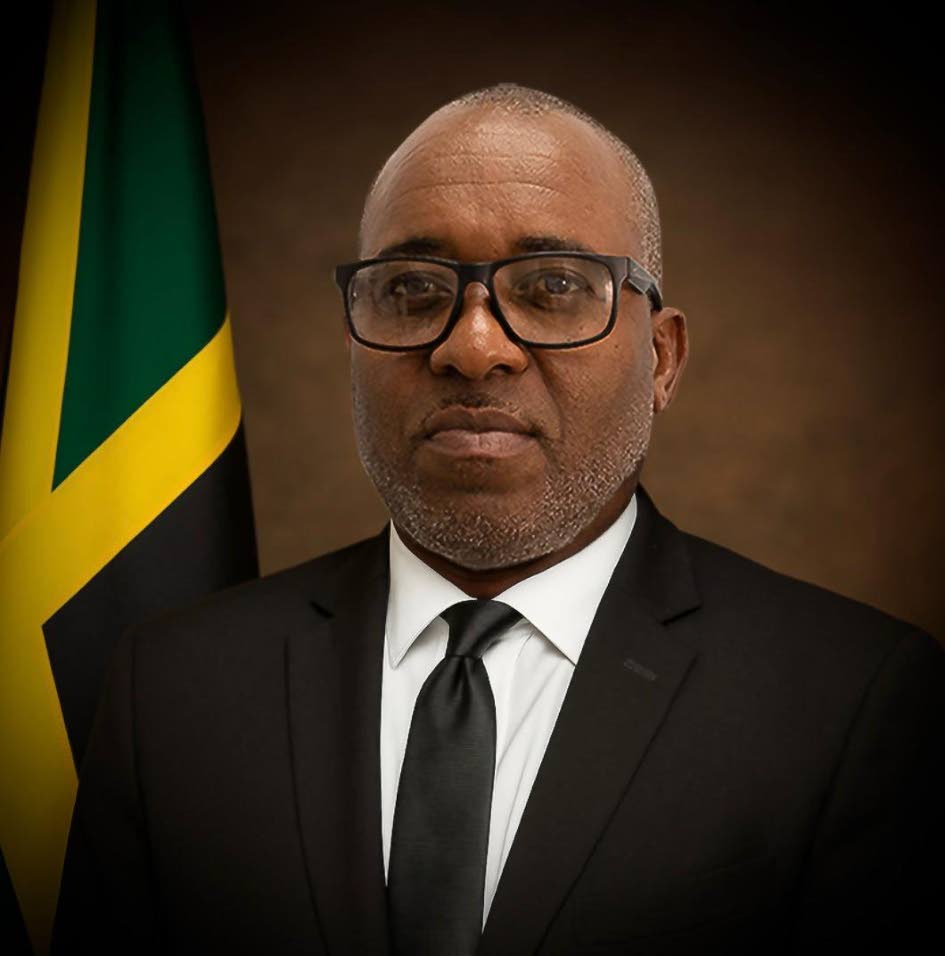
New York-based technology-enabled service provider Integrated Diaspora Services (IDS) has named Jamaican-American community leader Peter Gracey as its new Global Development Representative, in a strategic move designed to amplify empowerment for Jamaicans living across the globe and scale the company’s core operations.
The appointment aligns with IDS’ broader growth goals: expanding its global agent network, strengthening its end-to-end real estate service capabilities, and leveraging digital tools to deliver faster, more transparent client experiences under its unified one-stop service model, the firm confirmed in an official press announcement.
IDS Chief Executive Officer and Diaspora specialist Nordia Teape explained that the hire comes amid a sharp uptick in demand for the company’s services from Jamaicans in the global diaspora. Gracey, who most recently served as the Southern U.S. representative for the Global Jamaica Diaspora Council and has long worked as a Jamaican community activist, brings deep, on-the-ground credibility to the role, Teape noted.
Teape shared that demand for IDS’ offerings has jumped 50% in a recent short period, a surge she attributes largely to the launch of the company’s dedicated hotline 777 JAMAICA, which allows diaspora members to send service inquiries via text and guarantees a response within 24 hours. This year alone, IDS has rolled out a custom digital transaction portal that gives clients real-time access to track their service progress from any location worldwide.
Since its founding in 2020, IDS has connected with more than 7,000 diaspora Jamaicans through a mix of service transactions, one-on-one consultations, educational webinars, and digital outreach campaigns. While most service requests currently come from the U.S., U.K., and Canada — home to the world’s largest concentrations of Jamaican diaspora communities — the firm serves Jamaicans across Europe, Africa, the broader Caribbean, and other regions globally.
Teape, who co-founded IDS in March 2021 alongside business partner Percival Hurditt, emphasized that the company was built to solve a longstanding unmet need. “Jamaicans abroad wanted to invest in their homeland but could not always be in the country physically, so we built IDS to be their trusted hands on the ground,” she said. “We are Jamaicans; we know what it feels like to want to invest back home but don’t know who to trust.” With a combined 30 years of experience in the banking sector, Teape and Hurditt witnessed firsthand the bureaucratic barriers and frustrations diaspora Jamaicans encountered when trying to conduct business in Jamaica, motivating them to launch the firm.
Today, IDS offers a broad range of localized services for diaspora members, including land title processing, banking support, business facilitation, investment navigation, government service assistance, and full-service real estate support spanning purchases, sales, property maintenance, and land surveying. The firm’s core mission centers on accessibility, efficiency, and trust, with a vision focused on empowering the diaspora rather than overhauling existing systems — a approach rooted in centering the actual needs of the community it serves, Teape explained.
Teape noted that Gracey’s proven skills in communication, community connection, and leadership align perfectly with IDS’ core mission. As global development representative, Gracey will lead new global awareness initiatives to ensure all Jamaicans around the world know they now have access to a centralized, verified, and trusted hub for critical in-country services. The appointment also underscores IDS’ commitment to innovative diaspora engagement, with the company preparing to launch a new mobile app called Jamaica Stay Connected in the near future. The app will act as a single gateway for users to access all IDS services, creating a seamless, user-friendly experience for Jamaicans seeking assistance, guidance, and investment opportunities back home.
Speaking to the Jamaica Observer, Gracey framed his new role as an opportunity to educate, unify, and empower the global Jamaican diaspora by closing gaps between community needs and access to resources, public awareness, actionable steps, and economic opportunities. IDS currently collaborates closely with multiple Jamaican national institutions, including the country’s Ministry of Foreign Affairs and Foreign Trade, Jamaica National, and the Passport, Immigration and Citizenship Agency (PICA).