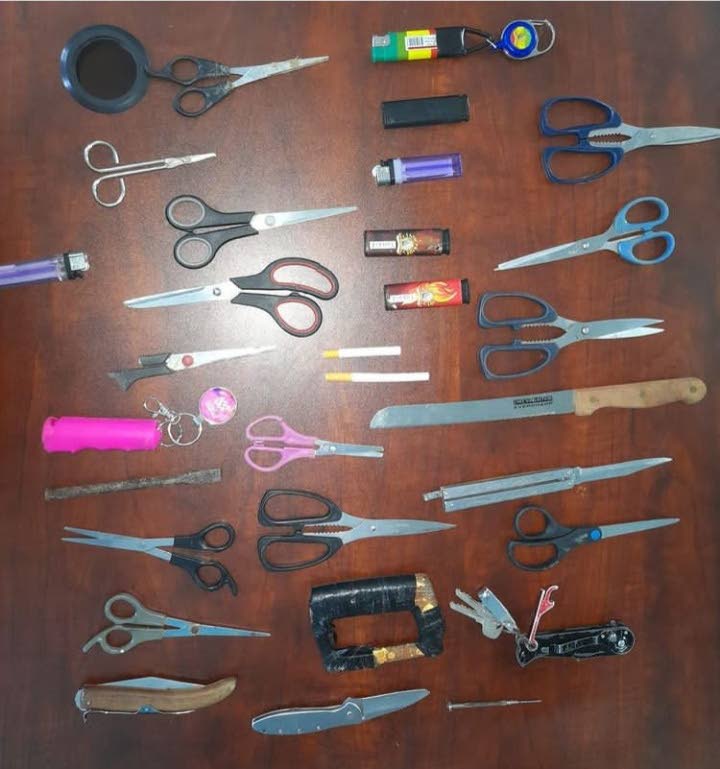
As Jamaica grapples with a growing crisis of weapons possession and widespread student indiscipline across the nation’s public schools, the top leader of the country’s teachers’ union has issued a scathing rebuke of government inaction, accusing policymakers of actively undermining school administrators’ efforts to enforce order and hold violating students accountable.
In an exclusive interview with the Jamaica Observer published Sunday, Jamaica Teachers’ Association (JTA) President Mark Malabver outlined the deep scope of the problem, revealing that some campuses are now struggling to control gang activity infiltrating their halls.
“The Ministry of Education already collects detailed data on every major infraction reported across our schools, so they are fully aware of the range and volume of weapons seized from students every year,” Malabver told the outlet. “Students are bringing an alarming variety of weapons onto campus. I don’t know what purpose this data is serving if no substantive action follows, but it is past time for meaningful intervention.”
Malabver emphasized that the number of weapons recovered is significant, and called for coordinated action from school administrators, governing boards, and the education ministry to expel gang presence from campuses entirely. “Schools must be made a completely hostile environment for gangs,” he said.
The JTA president confirmed that common edged weapons including knives, ice picks, and scissors are regularly carried by students to school, noting that while firearm seizures are not an everyday occurrence, they have happened repeatedly. “We have had students taken into law enforcement custody for carrying loaded firearms on campus,” he said. “This is not a new problem, but it points to a much wider crisis of systemic student indiscipline that has played out in deadly ways.”
The most recent high-profile fatal incident took place on April 20, when 13-year-old Seaforth High School student Kland Doyle was stabbed to death by a fellow student in St Thomas. The fatal attack grew out of an on-campus dispute that spilled off school grounds, unfolding between 2:30 p.m. and 3:00 p.m. near the Morant Bay Transport Centre, close to a Teen Hub facility and an internet café frequently used by students. St Thomas Police Division Commanding Officer Rohan Ritchie confirmed three students have been taken into custody in connection with Doyle’s killing.
Just one week before that fatal stabbing, law enforcement officers arrested four Papine High School students in Gordon Town, St Andrew, after breaking up a public brawl. The students were found in possession of multiple offensive weapons including knives, ice picks, and machetes. While no assault charges were filed because no formal victim reports were submitted, all four teens were formally charged with illegal weapons possession.
The Jamaica Observer has requested official aggregated statistics from police on the total number and types of weapons seized from students across the island since last week. While the department promised to release the data this week, it has not yet been made public. Police have however repeatedly shared photos of seized student weapons on their public social media channels in recent months, highlighting the scope of the issue.
In one of the most alarming revelations from the interview, Malabver stated that reports collected by the JTA point to a sharp rise in unprovoked violent attacks against teaching staff by students. “We have seen a significant jump in these unprovoked attacks, alongside persistent bullying across campuses,” he explained. “In one recent case in St Catherine, a student attacked a teacher from behind, causing severe injuries that forced the educator to miss months of classes while recovering. In far too many of these cases, teachers end up paying for their own medical costs out of pocket.”
Malabver argued that the root of the current indiscipline crisis stems from multiple systemic failures, starting with lack of parental accountability, which the government has failed to address. “We are only treating the symptoms of the problem right now, not getting to the root cause. For me, the core issue is poor parenting,” he said. “There is currently no legislation on the books that holds parents legally responsible for the harmful behavior their children engage in while at school. Lawmakers need to take this gap seriously and pass new legislation to create that accountability.”
Beyond parental accountability, Malabver pointed to gaps in school governance that let offending students avoid consequences, often when school boards fail to take timely disciplinary action. He went a step further, arguing that the Ministry of Education has inadvertently become complicit in undermining school-wide discipline policies.
“Whenever school leaders enforce existing dress and grooming codes, ministry officials and even elected politicians often side with violating students instead of backing administrators,” he said. “We keep hearing that new policies are in development, stuck in one consultation phase or another, but where is the urgent, concrete policy to address the indiscipline crisis tearing at our schools? We need a firm, uncompromising approach to discipline, and right now the Ministry is failing to deliver that. They may deny this, but the facts speak for themselves.”
The issue of weapons in Jamaican schools is not new: just a few years ago, St Catherine North Police, backed by Jamaica Defence Force personnel, carried out a coordinated search of a local high school and seized a large cache of weapons and contraband from students, images of which were widely shared on official police social media at the time.