标签: Jamaica

牙买加

  • Recurrent vaginal infections: Achieving the perfect balance of bacterial flora

    Recurrent vaginal infections: Achieving the perfect balance of bacterial flora

    Thirty-four-year-old schoolteacher Sandra walked into Dr. Daryl Daley’s Jamaican obstetrics and gynaecology practice visibly exhausted and defeated. For six months, she had battled persistent, socially debilitating recurrent vaginal discharge, cycling through four different clinicians and every conventional treatment on offer: oral antifungal medications, antibiotics, topical vaginal gels, creams, inserts, and even the probiotic yoghurt recommended by a fellow church member. Each intervention brought only temporary relief. What made her frustration even deeper was that she followed every recommended hygiene rule: she exercised regularly, ate a balanced diet, avoided scented soaps and lotions, changed sanitary products frequently, and showered daily. Still, the unwelcome symptoms returned, eroding her self-confidence, straining her intimate relationship, and upending her quality of life. When she pleaded for answers, Dr. Daley realized her story was far from unusual – he hears this exact question at least once every week from patients stuck in the same cycle of recurrence.

    For decades, conventional first-line treatment for abnormal vaginal discharge has relied on antibiotics and antifungals to eliminate pathogenic organisms. While this approach works well for most acute cases, a small but significant subset of women continue to experience repeat infections year after year. Dr. Daley argues that in modern women’s healthcare, it is past time to shift focus from just treating symptoms to addressing the root cause: disrupted vaginal microbial balance. The root of abnormal discharge lies in shifts to vaginal pH that allow harmful bacteria or yeast to overgrow. The core question, he says, is how to sustainably restore the healthy balance of beneficial bacteria that protects the female genital tract. The answer, he argues, lies in probiotics – an underdiscussed intervention that deserves far more attention in women’s health conversations than it currently receives.

    To understand why probiotics matter, it is first critical to understand how the healthy vaginal microbiome works. Contrary to common belief, a healthy vagina is not sterile. It hosts a carefully regulated, balanced community of microorganisms dominated by two key lactobacillus species: Lactobacillus crispatus and Lactobacillus iners. These beneficial bacteria produce lactic acid that keeps vaginal pH in the ideal range of 3.8 to 4.5, creating an acidic environment that is toxic to harmful pathogens, yeast, and many sexually transmitted organisms. This makes the balanced microbiome the body’s first line of defense against infection.

    But this delicate balance is easily disrupted. Antibiotic use, hormonal shifts, sexual activity, overzealous hygiene practices, dietary changes, and even hot, humid tropical climates common in regions like Jamaica can cause protective lactobacillus populations to decline. When that happens, opportunistic harmful organisms take over, leading to two of the most common causes of abnormal discharge: bacterial vaginosis (BV) and vulvovaginal candidiasis (yeast infections). For many women, this triggers a frustrating cycle: they get a round of treatment, symptoms clear up for a few weeks or months, only to return, sending them back to their clinician’s office again and again.

    This is where targeted probiotic therapy comes in. Probiotics are defined as live microorganisms that deliver measurable health benefits to the host when administered in adequate doses. While the general concept of probiotics is not new, their application to vaginal health is an emerging field backed by growing, compelling clinical research. The core logic is simple: if recurrent infections are fundamentally caused by a broken microbial balance, then restoring that healthy balance offers a far more durable long-term solution than just repeatedly killing off harmful organisms. Probiotic therapy aligns with the long-held adage that prevention is better than cure, addressing the root of the problem rather than just its symptoms.

    Multiple peer-reviewed clinical studies support this approach. Research shows that both oral and vaginal probiotic formulations containing well-researched strains – Lactobacillus rhamnosus, Lactobacillus acidophilus, and Lactobacillus reuteri – are able to successfully colonize the vaginal tract after oral administration. Once established, they rebalance the vaginal microbiome and significantly cut rates of BV recurrence. For women defined as having recurrent infections (three or more episodes per year), adding probiotic therapy as an adjunct to standard antibiotic or antifungal treatment delivers meaningful, measurable reductions in relapse rates compared to using conventional treatments alone.

    In his clinical practice, Dr. Daley recommends discussing probiotic therapy for three key groups of women. First, women with recurrent BV, particularly those who experience a relapse within just a few weeks of finishing standard treatment with metronidazole or clindamycin. Second, women with recurrent vaginal yeast infections, especially those who have completed multiple courses of antifungals with shorter and shorter gaps between episodes. Third, women who have just finished a course of broad-spectrum antibiotics for any condition: these medications wipe out protective vaginal flora along with the harmful bacteria they target, so probiotic supplementation during and after treatment can speed up the process of restoring microbial balance.

    Dr. Daley also emphasizes that probiotic therapy works best when paired with simple lifestyle adjustments. He counsels patients to avoid douching (a common practice that causes more harm than good in his region), choose breathable cotton underwear, avoid unnecessary antibiotic use, and steer clear of heavily scented feminine hygiene products that disrupt the natural vaginal environment.

    Not all probiotics are equally effective, and Dr. Daley urges women to approach the unregulated market with caution. Store shelves are flooded with probiotic products making broad, unsubstantiated health claims. Only specific strains have robust clinical evidence supporting their use for vaginal health: the combination of Lactobacillus rhamnosus, Lactobacillus acidophilus, and Lactobacillus reuteri in oral capsule formulations has the strongest backing. Some women also benefit from intravaginal probiotic preparations, especially in the immediate period after finishing conventional infection treatment. While fermented foods like natural unsweetened yoghurt, kefir, and fermented vegetables offer general probiotic benefits for gut health, they do not provide the targeted strain concentrations needed to reliably colonize the vaginal tract. For that, targeted probiotic supplementation is the most reliable option.

    Crucially, Dr. Daley stresses that women should always consult their gynaecologist before starting long-term probiotic use, rather than self-prescribing. Not all abnormal discharge is caused by BV or yeast: conditions like trichomoniasis and cervicitis require completely different treatment approaches, and misdiagnosis can delay life-changing appropriate care. A full clinical work-up to rule out sexually transmitted infections, underlying diabetes, cervical inflammation, and other conditions is a critical first step in managing recurrent discharge and infections.

    After completing this thorough work-up that confirmed Sandra had recurrent bacterial vaginosis, Dr. Daley put her on a treatment plan: an initial course of vaginal metronidazole gel, followed immediately by a two-month course of targeted oral probiotic supplementation with the three evidence-backed lactobacillus strains. Six months later, Sandra returned for her follow-up appointment with incredible news: she had experienced no recurrence of symptoms. For the first time in months, she said, she felt like herself again.

    Sandra’s successful outcome is not unique, but recurrent vaginal infections do not have to be an inevitable part of life for women. If you are struggling with repeated bouts of abnormal discharge and infection, Dr. Daley encourages you to have an open conversation with your clinician about whether adjunctive probiotic therapy might be right for you. In Jamaica, targeted probiotic products are available locally, and your ob/gyn can help you select the right formulation for your needs.

    Dr. Daryl Daley JP is a cosmetic gynaecologist and obstetrician based at 3D Gynaecology Limited, 23 Tangerine Place, Kingston 10, Jamaica. He can be contacted via email at ddaley@3dgynae.com.

  • Jamaica ‘future-proofing’ workforce with National Employment Policy Partnership with ILO

    Jamaica ‘future-proofing’ workforce with National Employment Policy Partnership with ILO

    As global industries undergo unprecedented transformation driven by artificial intelligence, climate-driven economic disruptions intensify, and non-traditional work models gain traction worldwide, Jamaica has positioned itself to take a proactive leadership role rather than simply responding to shifting labor market dynamics, the Jamaican government has announced.

    At the core of the country’s strategic approach is the development of an updated National Employment Policy (NEP), a forward-looking framework crafted to both address pressing current labor market challenges and equip Jamaican workers with the tools to access emerging opportunities and navigate upcoming disruptions.

    This strategic priority was solidified during closed-door high-level talks between a Jamaican delegation led by Minister of Labour and Social Security Pearnel Charles Jr and senior leadership from the International Labour Organization (ILO), held on the sidelines of the annual International Labour Conference in Geneva.

    Conversation between the two sides centered on constructing a labor ecosystem that can adapt seamlessly to multiple overlapping global shifts: rapid technological advancement, evolving demographic patterns, climate-linked economic shocks, changing cross-border labor mobility trends, and the fast-growing footprint of the digital platform economy.

    Both stakeholders reached a consensus that traditional employment policy frameworks are no longer fit for purpose, noting that updated approaches are critical to delivering sustained economic expansion, improved productivity, and long-term systemic resilience.

    Speaking after the discussions, Charles Jr highlighted that recent global and local shocks – including the COVID-19 pandemic and a string of severe climate events – have laid bare longstanding vulnerabilities in Jamaica’s labor market, while also opening new windows for innovative policy reform.

    “Every disruption we have faced has taught us critical lessons about resilience, adaptability, and the urgent need to reimagine how we approach work in the 21st century,” Charles Jr explained. “Our goal goes far beyond maintaining a low national unemployment rate. We are working to build a labor market where more Jamaicans hold in-demand skills, contribute meaningfully to productive sectors, are fully engaged in the economy, and ready for whatever changes come next. The National Employment Policy will serve as our clear roadmap to build resilience, boost productivity, and expand opportunity in a world that is changing faster than ever before.”

    Jamaica also formally outlined its interest in deepening collaboration with the ILO to co-develop the new NEP, with targeted focus on addressing emerging labor realities: the rise of artificial intelligence in the workplace, building climate-resilient employment, regulating and supporting platform-based work, facilitating orderly labor mobility, driving national productivity growth, and accelerating broad skills transformation across the workforce. The Caribbean nation further signaled its readiness to act as a replicable model for other Small Island Developing States (SIDS) that are navigating similar labor market transitions amid shared global challenges.

    In response, the ILO praised Jamaica’s proactive, forward-thinking approach to policy development, noting that the country’s ongoing labor planning efforts have already been cited as a best-practice example during discussions with government delegations from other world regions.

    A key focus of the talks was the shifting definition of productivity in an era increasingly shaped by artificial intelligence and digital work platforms. Participants explored collaborative strategies for governments, employers, and worker representatives to adapt to new technologies in a way that advances decent work, supports long-term business viability, and drives inclusive economic growth – rather than leading to widespread job displacement and worker exclusion.

  • Ingrid Murray: On faith, growth and why Caribbean women must learn to bet on themselves

    Ingrid Murray: On faith, growth and why Caribbean women must learn to bet on themselves

    For immigrant women entrepreneurs, turning perceived limitations into scalable, impactful business success is a rare achievement—but that is exactly the journey of Jamaican-born Ingrid Murray, CEO of New York-based Prospect Cleaning Service Inc.

    What began as a small, modest commercial cleaning startup has evolved into a multimillion-dollar enterprise serving high-profile clients across New York’s public and private sectors. Under Murray’s leadership, the firm has earned a spot on the prestigious Inc 5000 ranking of America’s fastest-growing private companies, carving out a respected reputation in the often underrecognized commercial cleaning and building maintenance industry. The company’s steady growth has been fueled by Murray’s signature ability to spot opportunity where others see roadblocks, paired with a commitment to operational excellence and intentional strategic expansion. Today, Prospect Cleaning Service delivers a full suite of commercial cleaning, facility maintenance, and environmental services across the entire New York region.

    The defining turning point for the company came amid the upheaval of the COVID-19 pandemic, when businesses across the country fought to stay afloat. Just as lockdowns and public health restrictions shut down most of the company’s existing client contracts—costing Murray 90% of her revenue almost overnight—the entrepreneur made a high-stakes bet that would redefine her business. With no guarantee of a return, she invested her company’s last remaining capital in specialized medical-grade sanitization equipment, a move that even her late husband initially viewed as unreasonably risky. The gamble paid off dramatically: Prospect Cleaning Service soon secured major public sector contracts that placed it at the center of New York’s critical pandemic sanitization response. The firm was tapped by the Metropolitan Transportation Authority to manage deep cleaning, disinfection, and sanitization services for Metro-North and Harlem Line stations across multiple upstate New York counties, and also provided round-the-clock cleaning services at Grand Central Terminal, one of the busiest transportation hubs in the nation.

    Murray’s business success, however, is rooted in a personal story shaped by migration, early responsibility, faith, loss, and the unique systemic barriers Caribbean women face when building professional careers. Growing up in Jamaica, Murray carried adult responsibility from her early teens: after her mother immigrated to the U.S. to build a new life for the family, 14-year-old Murray stepped into the role of primary caregiver for her younger brother. Like many Caribbean women, she learned early that she would always be the person others relied on—a lesson that shaped her adaptive, solution-focused leadership style today.

    “Growing up in Jamaica, I always envisioned a life of impact. I knew I wanted to create change and rise beyond the limitations I saw around me,” Murray shared. “A lot of people doubted me early on, so I became determined to show the world who I truly was — not who others assumed I would become. I used to say all the time, ‘When I go to America, I’m going to be rich.’ But it was never only about money. It was about proving to myself that my environment did not define my future.”

    Unlike popular narratives that frame success as mere positive visualization, Murray’s approach to achievement blends faith with deliberate, disciplined work. “For me, manifestation is about aligning my vision with what God has already designed for my life. It’s not simply wishing for something and waiting for it to appear. It requires discipline, faith, hard work and obedience,” she explained. “Without God, I would be nothing. Every success I have belongs to Him.”

    Even after building a nationally recognized company, Murray remains candid about the persistent barriers that hold back many Caribbean women entrepreneurs. “Fear of failure is one of the biggest obstacles. There’s also a lack of support, and often a lack of self-worth that develops from years of being underestimated or overlooked,” she noted. For her own part, Murray learned to push past doubt and criticism by focusing on execution: “Not everyone will understand your vision. Sometimes you have to keep building anyway.”

    Today, Murray frames success as something that must extend beyond personal achievement. Through targeted mentorship, philanthropic work, and outreach to aspiring women entrepreneurs, she has made it her mission to help other women recognize and activate their own potential. “Growing up without support or people believing in you can be deeply traumatic. Sometimes all it takes is one person truly listening to you, hearing your vision and reminding you that your life has value,” she said.

    Looking ahead, Murray plans to continue expanding her business and her impact, positioning herself as a gateway for the next generation of diverse leaders. “I am manifesting expansion — more businesses, new opportunities and becoming a gateway for future leaders who need guidance, wisdom and insight,” she said.

  • Denmark’s Eriksen collapses during Ukraine friendly

    Denmark’s Eriksen collapses during Ukraine friendly

    In a startling incident that has echoed across the global football community, Danish star Christian Eriksen collapsed on the pitch Sunday during an international friendly against Ukraine, marking the second major cardiac scare for the 34-year-old midfielder five years after his life-threatening cardiac arrest at the European Championships.

    The match, held in the Danish city of Odense, was halted permanently in the 64th minute when Eriksen fell to the turf with Denmark holding a 2-1 lead. Medical teams rushed onto the field to provide immediate care, and the referee called the contest 15 minutes after the incident, with Eriksen transported to a local hospital for further evaluation.

    Contrary to initial widespread concern, early updates from the Danish Football Association and the national team’s medical staff have delivered reassuring news. Team doctor Morten Boesen confirmed that Eriksen briefly lost consciousness but recovered awareness rapidly, and was even able to walk off the pitch unassisted. Boesen added that the cardiac pacemaker Eriksen has worn since his 2021 Euro incident functioned exactly as designed during the event.

    “Christian is doing well under the circumstances,” the Danish Football Association shared in an official statement posted to social media. Boesen also relayed a message from Eriksen himself: the player asked to extend his regards to all his teammates and confirm he is in stable condition. Medical teams are now conducting a full series of tests at the Odense hospital to pinpoint the exact cause of Sunday’s collapse.

    This incident brings back painful memories of Eriksen’s 2021 cardiac arrest, which occurred during a Euro 2020 group stage match against Finland. On that occasion, Eriksen collapsed mid-game, requiring emergency on-pitch resuscitation to save his life. Unlike Sunday’s match, UEFA, European football’s governing body, ordered Denmark to resume the fixture just hours after the incident, a decision that sparked widespread outrage across the sport.

    Danish legend Peter Schmeichel, whose son Kasper was Denmark’s starting goalkeeper at the time, labeled UEFA’s stance “absolutely ridiculous” and accused the organization of a blatant lack of compassion. Then-Denmark manager Kasper Hjulmand later admitted that the team never should have taken the pitch again that day. Despite the turmoil, Denmark rallied after the incident, advancing all the way to the tournament semi-finals before being eliminated by eventual champions England.

    After the 2021 incident, Eriksen was sidelined from professional football for more than six months. He was forced to leave Italian side Inter Milan due to national rules barring athletes with pacemakers from competing professionally. He made his comeback seven months later with English Premier League club Brentford, before earning a transfer to Manchester United, where he lifted both the FA Cup and League Cup. Currently, Eriksen plays for German Bundesliga side Wolfsburg, where he has one year remaining on his current contract.

    He also successfully returned to international football, representing Denmark at both the 2022 FIFA World Cup in Qatar and Euro 2024 hosted by Germany. Denmark ultimately failed to qualify for the 2026 World Cup, which is set to kick off next week in North America.

  • Ludicrous!

    Ludicrous!

    Last Friday, Jamaica faced a total islandwide power outage that quickly sparked rampant online speculation, with unsubstantiated conspiracy theories linking the blackout to the recent port visit of the U.S. Navy’s Nimitz-class nuclear-powered aircraft carrier USS Nimitz and a concurrent fire at the Jamaica Defence Force (JDF) headquarters at Up Park Camp. These unfounded claims have been formally dismissed as ludicrous fake news by the country’s top energy and transportation official, who has clarified that severe weather-triggered system failure is the sole confirmed cause of the outage.

    Speaking at a joint press briefing with leadership from Jamaica Public Service (JPS), the island’s main utility provider, on Saturday, Minister of Science, Energy, Telecommunications, and Transport Daryl Vaz addressed public confusion directly, pushing back against the viral misinformation that spread rapidly across social media platforms in the hours after the outage. Vaz emphasized that the outage was a straightforward technical failure within JPS’s energy infrastructure, rejecting outlandish claims that tied the blackout to the U.S. warship’s presence. He noted that the conspiracy theories were so baseless that he declined to repeat most of them publicly.

    JPS President and CEO Hugh Grant echoed Vaz’s statement, explaining the sequence of events that led to the total grid shutdown. Grant confirmed that unseasonable inclement weather damaged five critical transmission lines connected to major substations in Jamaica’s Corporate Area. The initial line failure triggered a cascading system collapse that cut power generation across the entire island, forcing a complete shutdown of the national power grid.

    The 1,092-foot nuclear-powered USS Nimitz, the lead vessel of its class and one of the largest active warships in the world, docked at Kingston Freeport Terminal last week as part of its 11th Southern Seas deployment, a regional tour focused on building maritime security partnerships and fostering diplomatic goodwill. According to the U.S. Embassy in Kingston and Jamaican government officials, the port call underscores the deepening security cooperation between the U.S. and Jamaica, a partnership expanded during the Trump administration focused heavily on countering illicit maritime activity in the Caribbean.

    Even before the blackout, the carrier’s arrival sparked public unease across Jamaica, as the visit coincided with severely strained U.S.-Cuba relations. At the time, the U.S. had ramped up economic sanctions against Cuba, including a strict fuel blockade, formally indicted former Cuban leader Raúl Castro, and top U.S. officials had publicly labeled Cuba a “failed state.” To calm public anxiety, Jamaican Foreign Minister Senator Kamina Johnson Smith had already publicly assured citizens that the USS Nimitz was not part of any covert U.S. plan to threaten or launch military action against Cuba. But the coincidental timing of the islandwide blackout just days after the carrier’s arrival rekindled speculation and fueled conspiracy theories.

    A second concurrent event — a fire that broke out Friday night at the Up Park Camp JDF headquarters barracks — added more fuel to viral misinformation, with social media users claiming the blaze was also tied to the power outage. This claim was also rejected definitively by both Vaz and Grant. Vaz pointed out that the USS Nimitz had already departed Jamaica for Florida, en route to New York, by 8 a.m. Friday, hours before the blackout occurred. He noted that while Jamaican culture often embraces lively speculation around unexpected events, the coincidental timing of the three events — the carrier visit, the base fire, and the blackout — does not indicate any hidden connection. The JDF confirmed in an official statement that multiple local fire units responded rapidly to the Up Park Camp blaze, and the fire was fully contained and extinguished with no reported injuries. Vaz added that fires are a common occurrence, and this one was no exception, stressing that there is zero evidence linking it to the power outage.

    As of Saturday’s press briefing, JPS was working to restore full power across the island after the cascading system failure, with officials updating the public on restoration progress while working to stem the spread of further misinformation about the outage’s cause.

  • Iran says Israel’s Beirut strike ‘crossed all red lines’

    Iran says Israel’s Beirut strike ‘crossed all red lines’

    Nearly a week after rising cross-border tensions between Israel and Hezbollah spilled into a major Israeli strike on Beirut’s southern suburbs, Iran’s highest military central command issued a stark public warning on Sunday. Speaking through its chief, General Ali Abdollahi of the Khatam al-Anbiya Central Command, Iran made clear it views Israel’s latest attack on the densely populated Beirut suburb as a blatant violation of long-standing unacknowledged boundaries for escalation in the region.

    In the official statement released to media outlets in Tehran, Abdollahi delivered an unconditional demand: the Israel Defense Forces must immediately cease all offensive operations across southern Lebanon and the Beirut suburbs that have served as a longtime stronghold for Hezbollah. The top Iranian commander did not stop at the demand for a de-escalation, adding a severe threat for any further expansion of Israeli military activity. If Israel chooses to widen its campaign in Lebanon or mount a retaliatory strike in response to any Iranian action, Abdollahi cautioned, it will open itself up to far more destructive consequences that Israeli leadership will deeply regret.

    Notably, the general chose not to directly reference the barrage of missile launches that Israeli air defense units confirmed they were intercepting over Israeli territory earlier on the same day. This omission comes amid long-standing dynamics where Iran has often avoided open attribution for cross-border attacks launched by its regional proxies, maintaining a deliberate level of strategic ambiguity around its direct involvement in escalating clashes between Israel and Lebanese militant groups. The warning marks one of the most high-profile public interventions by Iranian military leadership since the current round of cross-border fighting between Israel and Hezbollah began, underscoring growing fears that the localized conflict could spiral into a wider regional war that draws in major powers directly.

  • ‘IT’S WATERED DOWN’

    ‘IT’S WATERED DOWN’

    Against all expectations, Jamaica’s senior women’s national cricket team has built one of the most impressive dynastic runs in regional Caribbean cricket over the past half-decade, a streak of success that has confounded fans and analysts alike given the severe structural and resource constraints the squad operates under.

    Early in 2024, the Jamaican side pulled off one of the most dramatic tournament turnarounds in recent regional cricket history to claim the prestigious Super50 Cup title hosted in St Vincent and the Grenadines. Entering the final matchday of the group stage, Jamaica sat in fifth place in the standings, but a dominant victory over the already crowned T20 regional champions Leeward Islands earned them critical bonus points that pushed them all the way to the top of the table and secured the championship. This latest trophy adds to an unprecedented streak: in the last five consecutive years, Jamaica’s women have claimed five regional titles, including a historic T20 and Super50 double championship in 2024.

    But behind this extraordinary run of success lies a growing conversation about unmet potential. Head coach Shane Brooks, the strategic leader who has guided the team’s victories since 2022, argues that with improved institutional support from the Jamaica Cricket Association (JCA), the team could reach even greater heights. In an interview with the Jamaica Observer following the 2024 Super50 win, Brooks emphasized that the current system is leaving the team unnecessarily unprepared for competition.

    “We have a group of ladies that is the most successful in the last decade. They have won more trophies than anybody, yet the preparation is watered down,” Brooks said. “What I’d love is for us to have a programme that’s operational, one that is running. We really don’t have a [women’s] cricket programme in the country. We gather a month, or sometimes two months, before a tournament — and that’s not sufficient.” Unlike top regional competitors that offer full-time contracts and year-round training programs for elite female players, Jamaica’s structure lacks even consistent domestic club competition to keep players match-fit between national tournaments. The rushed crash-course preparation before major events has even led to preventable health issues, Brooks explained: “A lot of times these ladies find themselves on the injury list because of the crash course in getting them ready for a tournament.” Reflecting on the 2024 Super50 turnaround, Brooks noted that the squad entered the tournament underdone: “We had a shorter time to prepare the team. We were not as sharp as we would have liked but the duration of the tournaments allowed us to get better each passing day.”

    JCA leadership has acknowledged the gaps in the current system, citing chronic underfunding and conflicting scheduling priorities as the core barriers to building a consistent year-round program. O’neil Cruickshank, JCA’s manager of cricket operations and development, explained that while the association regularly includes women’s domestic tournaments on its official calendar, logistical and financial hurdles often derail those plans. Scheduling conflicts with regional tournaments organized by Cricket West Indies (CWI) and unavailability of top Jamaican players competing in overseas franchise competitions force regular rescheduling, he said. When push comes to shove, the association prioritizes preparing the national squad for regional competition over running domestic events when resources are tight. “When they come back it might be a case of having national teams to prepare, and if at the time the cash flow is not able to run [both] we would prioritise the national team preparation,” Cruickshank explained. Despite these ongoing challenges, Cruickshank confirmed that the JCA has formal plans in place to host both domestic T20 and 50-over tournaments for women in the upcoming summer, and acknowledged that more work is required to keep female cricketers active consistently.

    JCA President Dr Donovan Bennett echoed Cruickshank’s note that limited funding is the primary barrier to structural reform, but highlighted progress in youth talent development as a bright spot for the future of the sport. The association runs an active nationwide talent identification program led by former men’s national coach Junior Bennett, which has worked across the island to spot and nurture young female cricketing talent from a young age. That early development work, paired with Brooks’ skilled coaching at the senior and under-19 levels, has been key to delivering the team’s current streak of titles despite limited resources.

    Still, Brooks warns that Jamaica risks falling behind rival regional programs that have already prioritized investment in women’s cricket. Top competitors including Barbados, Trinidad and Tobago, and Guyana have implemented sustainable year-round programs, offered full-time contracts to elite female players, and support 12 months of annual training — a model Jamaica needs to adopt to maintain its competitive edge, Brooks argued. Without a full overhaul of the current underresourced structure, even the team’s remarkable current run of underdog success may not be sustainable against increasingly well-funded competition in the region.

  • Nia Robinson gets third on Diamond League debut

    Nia Robinson gets third on Diamond League debut

    On a busy Sunday of elite track and field action at Stockholm’s iconic Olympiastadion during the Bauhaus-Galan meet, Jamaican long jumper Nia Robinson made a memorable entrance to the Wanda Diamond League circuit, clinching a third-place finish in the women’s long jump competition. The World Athletics Indoor Championships finalist posted a wind-assisted mark of 6.80 meters, with the reading registering a tailwind of 2.4 meters per second well above the legal limit. Alongside her podium-topping jump, Robinson also notched a wind-legal 6.78-meter effort with a 1.3m/s tailwind — her best legal outdoor result of the current season. The result comes just four days after she earned another third-place finish at the Paavo Nurmi Games held in Turku, Finland, showing consistent strong form ahead of the global championship stretch.

    France’s Hilary Kpatcha took home the top spot on the long jump podium, also recording a wind-aided mark of 6.85m matched by the same 2.4m/s tailwind. Italy’s rising star Larissa Iapichino rounded out the top two with a 6.84m jump, which was also wind-assisted with a 2.1m/s wind reading.

    Robinson stood as the only Jamaican athlete to reach the podium across all events at the Stockholm meet, with her compatriots putting up solid but ultimately out-of-podium performances. In the men’s discus throw, Jamaican Roje Stona threw a solid 66.42m to finish just outside the top three in fourth place. The event was led by local favorite Daniel Stahl, the former Olympic and World Champion from Sweden, who secured victory with a season’s best 69.60m throw. Australia’s Matthew Denny, the current world seasonal leader, took second place with a 69.02m throw, while Slovenia’s Kristjan Ceh claimed third with a 67.67m result.

    In the women’s shot put, Jamaica’s Danniel Thomas-Dodd competed in her third event across three different countries in just eight days, a grueling schedule that saw her manage only one legal throw of 18.56m, finishing sixth overall. The competition was won by current world leader Jessica Schilder of the Netherlands, who set a new meet record of 20.89m. American Chase Jackson took second with a 19.91m throw, while Canada’s Sarah Mitton secured third with 19.89m.

    Rounding out the Jamaican contingent, Assinie Wilson placed seventh in the non-Diamond League men’s 400m hurdles, crossing the finish line in 49.13 seconds. Wilson, who has run four races in just over a week amid a packed competition schedule, finished behind winner Alison dos Santos of Brazil, the current world leader who took the win in 47.11 seconds. Dos Santos’ compatriot Mattheus Lima clocked a new personal best of 47.37 seconds to take second, while Germany’s Emil Agyekum also set a lifetime best of 47.72 seconds to round out the top three.

  • Blackout shame!

    Blackout shame!

    A sudden, total islandwide power outage that plunged Jamaica into darkness on a Friday evening has sparked official outrage, prompted regulatory demands for accountability, and left tens of thousands of residents still grappling with disrupted water service days after the initial failure. The incident, which unfolded at approximately 9:02 pm last Friday, knocked out electricity across the entire country, derailing weekend plans for households, halting business operations, cutting off water distribution systems, and interrupting public entertainment events.

    In the immediate aftermath of the collapse, Jamaica’s state power provider, the Jamaica Public Service (JPS), has pointed to severe, concentrated lightning activity as the trigger that damaged critical transmission infrastructure, sparking a cascading failure that brought down the entire national grid. JPS President and Chief Executive Officer Hugh Grant outlined the utility’s initial findings during a joint press briefing held on Saturday, noting that intense lightning strikes damaged key transmission infrastructure in Kingston’s Corporate Area.

    “What we do know is that, as a result of the significant lightning activity, we lost five of our transmission lines emanating from one of our significant substations in the Corporate Area. In parallel to that, we had a cascading effect, causing a loss of generation across the entire island. This cascading effect resulted in the shutdown of the entire grid. At that point, we were mobilised and the team responded,” Grant explained. Further inspection confirmed visible damage: a broken high-voltage conductor connecting the Hunt’s Bay and Newport stations, plus damaged equipment at the Rockfort substation, all aligned with lightning-related impacts. Grant emphasized that full technical analysis is still ongoing to map the exact sequence of events that led to total grid collapse.

    By 6:00 am Saturday, Grant said JPS crews had restored power to the entire national grid, though roughly 10,000 customers remained without power as of Saturday afternoon due to separate, localized weather-related damage in western and central parts of the country. He added that the company has now entered the investigatory phase, focused on identifying root causes, capturing actionable lessons, and implementing changes to prevent similar widespread outages in the future.

    For Jamaica’s Energy Minister Daryl Vaz, however, the total grid failure was unacceptable and a source of deep embarrassment. In comments to reporters, Vaz noted that a properly functioning power system should never experience a total national shutdown from an isolated local fault, calling the incident an unacceptable disruption for all Jamaicans.

    “This, for me as minister, is an embarrassment and one that I would not wish to experience again in my tenure in this position. I must say that when I got the call last night, I worked through the night with the JPS president straight back until 6 o’clock this [Saturday] morning, and he had his teams out there, but we lost a good night’s sleep that we should not have lost because the system should have been in a position that if there was one area that went down, it should not have caused the entire system to go down. Something went awry. There’s absolutely no two ways about that,” Vaz said.

    Vaz also highlighted a troubling history of repeated total grid failures in Jamaica dating back to 2006. Official investigations by the Office of Utilities Regulation (OUR) have documented six major islandwide shutdowns not caused by hurricanes, with the most recent prior outage occurring in April 2016. Past investigations have repeatedly cited preventable issues: protection system failures, defective relays left unreplaced for months, unaddressed maintenance gaps, human error, and inadequate risk assessment. Multiple past outages, including the 2006 and 2012 incidents, were also triggered by lightning strikes on transmission lines.

    Regulators have already formalized demands for accountability: the OUR has given JPS 48 hours to submit a preliminary incident report, and 30 days to deliver a full, root-cause analysis with recommended corrective actions. OUR Director General Ansord Hewitt said the agency will review the final report to assess its adequacy, issue any required regulatory directives, and verify that JPS has addressed lessons learned from past outages.

    Vaz went a step further, urging a full independent investigation to get to the bottom of the 2025 incident and prevent future recurrence, noting that dramatic technological advances since the 2016 outage should have reduced the risk of total system collapse. The Jamaican government has committed to building a reliable, resilient national power system for all residents and is demanding full transparency and accountability from JPS.

    The outage also triggered a secondary crisis for water supplies, as most water distribution infrastructure relies on electric power. As of 2:00 pm Saturday, roughly 65,000 water customers remained without service. Water Minister Matthew Samuda told reporters that full water restoration is expected to take an additional 24 to 48 hours, as crews need to recharge transmission lines and refill community storage tanks. The largest single impacted area is the Minard distribution system, which serves around 30,000 residents between Brown’s Town and Runaway Bay in St. Ann, where joint JPS and National Water Commission crews are working on site to resolve issues. Samuda noted that restoration progress is ongoing and moving in a positive direction, with significant reductions in the number of affected customers expected by Saturday evening.

  • Campbell blasts decision to cancel National 4-H Achievement Day 2026

    Campbell blasts decision to cancel National 4-H Achievement Day 2026

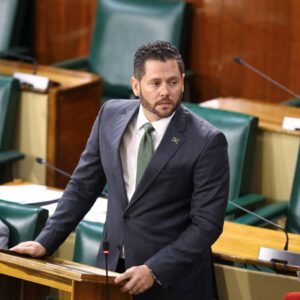
    KINGSTON, Jamaica — The sudden axing of the 2026 National 4-H Achievement Day has sparked sharp criticism from Dr. Dayton Campbell, Jamaica’s Opposition Spokesperson on Agriculture, who is calling on the ruling government to reverse the decision and increase long-term investment in youth agricultural programming.

    Campbell laid out his opposition to the cancellation during a June 3 address to the House of Representatives as part of the body’s annual Sectoral Debate. He noted that while Agriculture Minister Floyd Green has publicly committed to core priorities including youth engagement, hands-on agricultural training, and培育 the next generation of industry leaders—goals that command cross-party support—the last-minute scrapping of the signature national event has left students, parents, 4-H club leaders, educators, and agricultural sector stakeholders deeply unsettled.

    Far from being just a one-off public gathering, Campbell emphasized that National 4-H Achievement Day stands as one of Jamaica’s most critical platforms for young people to demonstrate their agricultural skills, creative innovation, personal discipline, and dedication to the future of the nation’s farming sector. The annual event does more than celebrate outstanding youth work: it fosters friendly, productive competition, connects emerging young agricultural professionals to career pathways in commercial farming, agribusiness, agricultural science, agritech, and rural entrepreneurship, and rewards hard work with national-level recognition.

    For many young Jamaicans, especially those growing up in remote and underserved rural communities, the event marks their first ever chance to participate in a national public stage, Campbell told lawmakers. That experience does more than showcase talent: it builds lifelong confidence, reinforces the message that agriculture is a dignified, ambitious career worth pursuing, and strengthens the critical interconnectedness between public education, agricultural growth, and broad national development.

    Against that backdrop, Campbell said the cancellation is not just disappointing—it demands a full, public accounting from the government. At a moment when national leaders across the political spectrum agree that Jamaica must attract more young people into the agricultural sector to secure long-term food security and industry growth, Campbell argued that opportunities for participation, recognition, and advancement should be expanded, not cut back.

    The opposition spokesperson has laid out three clear demands for the government and Minister Green: first, provide a detailed, public explanation to Parliament and the Jamaican people of what factors led to the 2026 cancellation; second, formally commit to restoring the National 4-H Achievement Day in 2027 with robust, guaranteed funding and institutional support; and third, organize an alternative national youth agricultural showcase before the end of 2025 to ensure that students who have already put in months of diligent work do not lose their chance to display their achievements.

    Campbell also called for increased and more transparent budgetary allocations for Jamaica 4-H Clubs, saying that open budget reporting is required to let Parliament verify whether sufficient public resources are going toward youth agricultural development. “If we are serious about the future of agriculture, then we must be equally serious about investing in the young people who will shape that future,” Campbell said. “They must see agriculture as a sector that offers opportunity, innovation, entrepreneurship, recognition, and a clear pathway to success.”

    He closed by noting that a government’s commitment to youth in agriculture cannot be measured solely by rhetoric—it must be demonstrated by the opportunities the state preserves and the investments it makes to set up the next generation for success.