标签: Jamaica

牙买加

  • ITA launches major recruitment drive as transition to statutory body gathers pace

    ITA launches major recruitment drive as transition to statutory body gathers pace

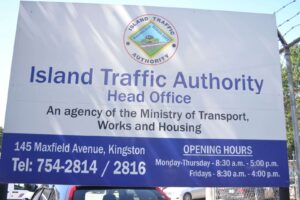
    KINGSTON, Jamaica — In a landmark step to reshape the country’s traffic management ecosystem, Jamaica’s Island Traffic Authority (ITA) has rolled out one of the most expansive hiring initiatives in recent memory, opening more than 30 vacancies to build out its operational capacity following a broadened mandate under the new Road Traffic Act.

    The open positions cut across nearly every core function of the organization, ranging from senior leadership roles in management, finance, legal services, and human resources to frontline operational posts in transport, procurement, communications, and records management. This cross-departmental hiring push signals a deliberate, large-scale expansion of both the ITA’s administrative capacity and regulatory reach, as the agency transitions out of its old institutional structure.

    When questioned by local media outlet Observer Online, ITA representatives confirmed that the recruitment drive is a core component of the agency’s institutional transition: moving from a subordinate department within the Ministry of Transport and Mining to an independent statutory body, a structural change mandated by the 2018 Road Traffic Act.

    “The roles we are filling align directly with the mandate laid out in the 2018 Road Traffic Act, which formally established the ITA as a standalone statutory body tasked with carrying out the expanded functions outlined in the legislation,” the authority stated in an official response. It added further context, clarifying that the shift formally ends its decades-long status as a department within the national ministry that oversaw transport and energy portfolios.

    To support this entirely new organizational structure and allow the ITA to fully carry out all responsibilities assigned by the new law, the agency must build out entirely new departments and fill key leadership positions that did not exist under its previous structure. The list of open senior roles includes directors for human resource management and development, finance and accounting, as well as specialized posts such as senior internal auditor, legal officer, communications officer, senior financial accountant, payroll manager, transport manager, and senior public procurement officer, among others.

    Ultimately, the overarching goal of these new appointments is to reinforce the ITA’s operational foundations and raise the quality of services it provides to Jamaican motorists and the general public. “These hires will strengthen the ITA’s overall capacity, streamline internal operations, and improve service delivery to the public by ensuring the organization has the full resources it needs to meet its regulatory and administrative obligations,” the authority explained.

    The 2018 Road Traffic Act, which began phased implementation across Jamaica starting in 2022, not only redefined the ITA’s institutional status but also vastly expanded its scope of responsibilities, while modernizing the country’s entire national traffic management regulatory framework. Long known primarily for its core work conducting motor vehicle fitness inspections and mandatory driver testing, the ITA now holds expanded responsibility for regulating national vehicle emission and safety standards, leading nationwide road safety public initiatives, and carrying out a broad suite of new administrative and enforcement functions connected to Jamaica’s entire transportation network.

    The sheer size of the current recruitment exercise makes clear that the ITA is now accelerating its work to put these new mandated responsibilities into practice, by building a more robust, full-capacity organizational structure capable of handling its expanded remit. The application window for all advertised positions closed last week, with the ITA expected to announce final appointments in the coming months as it completes its transition.

  • Gore seeks revenge against King as MRA EastRoc ‘Skate Revenge’ roars into Trelawny

    Gore seeks revenge against King as MRA EastRoc ‘Skate Revenge’ roars into Trelawny

    TRELAWNY, Jamaica — Jamaica’s motorsport community is gearing up for one of its most anticipated showdowns of the year, as the Skate Revenge sprint event prepares to kick off on June 14 at the iconic Trelawny Multi-purpose Stadium. At the heart of the day’s excitement lies a growing grudge match between two of the country’s top drivers: Doug Gore and Raynor King, whose last clash has left motorsport fans hungry for a rematch.

    The event, organized by the Montego Bay Racing Association (MRA), opens its gates to spectators at 6 a.m. with the first on-track action starting at 10 a.m. Beyond the headline rivalry, the event will bring together a stacked lineup of nearly 40 of Jamaica’s most talented drivers across rally, circuit, drift and drag racing disciplines, promising nonstop thrills for casual fans and diehard motorsport enthusiasts alike.

    The event’s iconic name “Skate Revenge” did not come by chance. It traces directly back to the season’s opening sprint event held this past March, where Raynor King claimed a narrow, last-minute victory over Gore in what quickly became the most talked-about race of the early season. With Gore now fully focused on evening the score, MRA officials say expectations for a dramatic, edge-of-your-seat rematch are at an all-time high. “Doug was his number one rival, so that’s why we got the name Skate Revenge because they said Doug is coming back for revenge,” explained Brandon King, a senior member of the organizing team.

    While the Gore-King rivalry serves as the event’s main marketing draw, the competition will feature far more than a single two-driver battle. The official entry list includes some of the biggest names in Jamaican motorsport, from rising young talents like Sebastian Rae and Zidan Madden to veteran competitors including Alan Chen, Chippy Addison, and Leslie Madden — with Chen only set to compete if final mechanical tweaks to his car are completed ahead of race weekend.

    One of the most inspiring storylines heading into the event is the comeback of Jason King, who is set to make his return to competitive motorsport just months after a freak accident in late 2025 cost him his leg. Fitted with a custom prosthetic, King has spent months training to get back up to racing speed, and says he has no intention of holding back when he hits the tarmac on Sunday.

    Organizers project that the overall entry field will surpass the 30-competitive turnout that made the March opening event such a success, with drivers traveling from across Jamaica to take part. “We’re hoping to have everybody out and have a very, very productive and exciting day when it comes down to racing,” Jason King noted.

    Unlike traditional wheel-to-wheel racing formats that often end in collisions and mechanical retirements, Skate Revenge uses a timed time-attack format that prioritizes individual driver skill, precision and consistent lap performance over aggressive overtakes. “It is a tarmac sprint event that will have drift cars, rally cars and circuit cars all going heads-up for the top spot and to determine who has the fastest time,” King explained.

    During the competition, each driver will tackle the purpose-built course one at a time, with vehicles departing the starting line roughly 60 seconds apart. Every competitor will get two timed flying laps, with their single fastest lap time determining final rankings and winners.

    In a break from standard Jamaican motorsport structure that divides competitors by their racing discipline, Skate Revenge groups entries by vehicle technical specifications, including engine size, forced induction systems like turbochargers, and aftermarket performance modifications. This unique format creates unprecedented cross-discipline matchups that fans rarely get to see on local tracks. “It is quite a very interesting match-up. You have different cars from different areas of racing actually racing in one class against each other,” King added.

    To meet the safety standards set by the Jamaica Motor Sports Commission (JMMC), the national governing body for motorsport, all competitors must complete rigorous safety checks before being allowed on course. Required safety equipment includes reinforced roll cages, fire-resistant racing suits, certified racing seats, impact-rated helmets, and six-point safety harnesses.

    For spectators, ticket pricing is set at J$2,000 for adult entry and J$1,000 for children, making the event accessible for families and large groups looking for a full day of entertainment.

    Skate Revenge is not just a standalone event: it marks the second stop on the MRA’s ambitious 2026 national motorsport calendar, a multi-event schedule designed to revive the country’s once-thriving rally scene and lay the groundwork for a return to top-tier international competition. After the June 14 event, the calendar continues with a two-day motorsport and camping festival in St Elizabeth on July 11-12, combining sprint racing, off-roading and outdoor leisure activities.

    Later in the year, organizers will host a retro-inspired navigation rally that harkens back to the golden age of Jamaican rallying, where competitors must follow pre-plotted routes and collect checkpoints across the countryside before reaching the finish venue. September 20 will see the MRA host its first full tarmac rally in more than a decade, with route assessments currently underway across Trelawny and St Elizabeth to find the best course. The season wraps up with the Great Spot Valley Gravel Sprint on November 8, before a three-season-closing rally from December 11-13 that organizers hope will be a defining step forward for the sport.

    Organizers have made no secret of their long-term goal: restoring Jamaica’s reputation as one of the premier motorsport destinations in the Caribbean, a status the country held during the heyday of the iconic Rally Jamaica event. “We want to take this thing back to the days of Rally Jamaica when we had proper international rallies and everything. That’s where we’re pushing to head back to,” King said.

  • Integrated Diaspora Service moves to bridge gap between Jamaicans globally

    Integrated Diaspora Service moves to bridge gap between Jamaicans globally

    New York-based technology-enabled service provider Integrated Diaspora Services (IDS) has named Jamaican-American community leader Peter Gracey as its new Global Development Representative, in a strategic move designed to amplify empowerment for Jamaicans living across the globe and scale the company’s core operations.

    The appointment aligns with IDS’ broader growth goals: expanding its global agent network, strengthening its end-to-end real estate service capabilities, and leveraging digital tools to deliver faster, more transparent client experiences under its unified one-stop service model, the firm confirmed in an official press announcement.

    IDS Chief Executive Officer and Diaspora specialist Nordia Teape explained that the hire comes amid a sharp uptick in demand for the company’s services from Jamaicans in the global diaspora. Gracey, who most recently served as the Southern U.S. representative for the Global Jamaica Diaspora Council and has long worked as a Jamaican community activist, brings deep, on-the-ground credibility to the role, Teape noted.

    Teape shared that demand for IDS’ offerings has jumped 50% in a recent short period, a surge she attributes largely to the launch of the company’s dedicated hotline 777 JAMAICA, which allows diaspora members to send service inquiries via text and guarantees a response within 24 hours. This year alone, IDS has rolled out a custom digital transaction portal that gives clients real-time access to track their service progress from any location worldwide.

    Since its founding in 2020, IDS has connected with more than 7,000 diaspora Jamaicans through a mix of service transactions, one-on-one consultations, educational webinars, and digital outreach campaigns. While most service requests currently come from the U.S., U.K., and Canada — home to the world’s largest concentrations of Jamaican diaspora communities — the firm serves Jamaicans across Europe, Africa, the broader Caribbean, and other regions globally.

    Teape, who co-founded IDS in March 2021 alongside business partner Percival Hurditt, emphasized that the company was built to solve a longstanding unmet need. “Jamaicans abroad wanted to invest in their homeland but could not always be in the country physically, so we built IDS to be their trusted hands on the ground,” she said. “We are Jamaicans; we know what it feels like to want to invest back home but don’t know who to trust.” With a combined 30 years of experience in the banking sector, Teape and Hurditt witnessed firsthand the bureaucratic barriers and frustrations diaspora Jamaicans encountered when trying to conduct business in Jamaica, motivating them to launch the firm.

    Today, IDS offers a broad range of localized services for diaspora members, including land title processing, banking support, business facilitation, investment navigation, government service assistance, and full-service real estate support spanning purchases, sales, property maintenance, and land surveying. The firm’s core mission centers on accessibility, efficiency, and trust, with a vision focused on empowering the diaspora rather than overhauling existing systems — a approach rooted in centering the actual needs of the community it serves, Teape explained.

    Teape noted that Gracey’s proven skills in communication, community connection, and leadership align perfectly with IDS’ core mission. As global development representative, Gracey will lead new global awareness initiatives to ensure all Jamaicans around the world know they now have access to a centralized, verified, and trusted hub for critical in-country services. The appointment also underscores IDS’ commitment to innovative diaspora engagement, with the company preparing to launch a new mobile app called Jamaica Stay Connected in the near future. The app will act as a single gateway for users to access all IDS services, creating a seamless, user-friendly experience for Jamaicans seeking assistance, guidance, and investment opportunities back home.

    Speaking to the Jamaica Observer, Gracey framed his new role as an opportunity to educate, unify, and empower the global Jamaican diaspora by closing gaps between community needs and access to resources, public awareness, actionable steps, and economic opportunities. IDS currently collaborates closely with multiple Jamaican national institutions, including the country’s Ministry of Foreign Affairs and Foreign Trade, Jamaica National, and the Passport, Immigration and Citizenship Agency (PICA).

  • US imposes visa restrictions on Nicaraguans after activist death

    US imposes visa restrictions on Nicaraguans after activist death

    In a sharp rebuke to the Nicaraguan government of Daniel Ortega and Rosario Murillo, the U.S. State Department announced new visa restrictions on Monday targeting more than 100 Nicaraguan officials and their immediate family members. The punitive measure comes in direct response to the death of 73-year-old Brooklyn Rivera, a detained Indigenous political leader who died in government custody late last month, a case that has drawn international condemnation.

    Rivera, a respected former congressman and head of Nicaragua’s Miskito Indigenous community, was taken into custody by Ortega’s administration in September 2023. From the day of his arrest, the left-wing authoritarian government never publicly outlined the formal charges against him. It was not until months later, in November 2024, that local press reports confirmed Nicaraguan authorities had informed the UN Office of the High Commissioner for Human Rights that Rivera’s congressional immunity had been revoked to open an investigation into allegations of serious crimes including treason.

    During his detention, Rivera was denied access to both legal representation and his family, a status that led Amnesty International to categorize him as a prisoner of conscience. His declining health became a global point of concern after the Nicaraguan government released photos showing the severely emaciated Rivera connected to a ventilator, prompting the U.S. to formally call for his immediate release. On May 30, Rivera died in custody; the Nicaraguan Ministry of Health announced his death the following day, attributing it to organ failure caused by a bacterial infection stemming from a prior COVID-19 infection. He was buried within 24 hours without any of his family members present, a detail that amplified international outrage.

    Speaking from exile in Costa Rica, Rivera’s daughter Tininiska Rivera told AFP the intentionally released photos of her dying father were a deliberate show of force. “They don’t care how they’re perceived abroad, they just want to demonstrate their control and power inside Nicaragua,” she said last week. The United Nations Secretary-General Antonio Guterres issued a formal call for an independent investigation into Rivera’s death on June 2.

    In his official statement announcing the new visa restrictions, U.S. Secretary of State Marco Rubio held the ruling Murillo-Ortega regime directly accountable for Rivera’s “horrific death” as a political prisoner. “The United States will not ignore the Murillo-Ortega dictatorship’s responsibility,” Rubio emphasized. This latest action brings the total number of Nicaraguan officials and their family members subject to U.S. visa bans to more than 2,350, all sanctioned for their complicity in enabling the authoritarian rule of Ortega and his wife, Vice President and co-ruler Rosario Murillo. The State Department did not release the names of the 100+ newly targeted individuals.

    The current crisis between Washington and Managua is rooted in more than 17 years of Ortega’s rule. An 80-year-old firebrand Marxist who rose to prominence leading a revolution against a U.S.-backed autocrat in the 20th century, Ortega has retained power since 2007 through a series of elections widely decried as unfair and non-democratic by the international community. He has faced consistent accusations of brutal repression to crush all political dissent, a crackdown that has pushed the small, poor Central American nation into deeper international isolation. Nicaragua’s government is already subject to sweeping economic and political sanctions from both the United States and the European Union. Since the crackdown on opposition intensified, thousands of Nicaraguans have fled into exile, hundreds of perceived and actual political opponents have been jailed, and dozens have been stripped of their Nicaraguan citizenship.

  • Jamaican author turns personal battle into mental health resource

    Jamaican author turns personal battle into mental health resource

    Late last year, a top Jamaican public health official sounded a urgent alarm over the country’s growing unaddressed mental health burden. In early October, Odean Forbes, Mental Health Officer for the Southern Health Regional Authority, shared grim data: the parish of St. Elizabeth alone records 100 new cases of clinically significant mental illness every single month. That startling figure came as no surprise to Ashlyn Anderson, a Jamaican writer and mental health advocate who has navigated her own battle with depression and spent years supporting others through similar struggles. Now, she is lifting the veil on this underdiscussed public health issue through her newly published book, *Reimagine Reframe Rise*.

  • Third time unlucky?

    Third time unlucky?

    Amid months of nationwide U.S. political upheaval driven by congressional redistricting, a heated intra-Democratic primary battle has erupted in Florida’s newly redrawn 20th Congressional District, where Jamaican-American candidate Dale Holness is mounting his third bid for the seat and criticizing a veteran white Democrat’s decision to enter the race.

    Holness, a former Broward County mayor and commissioner born in Jamaica, shared his deep disappointment with Debbie Wasserman Schultz’s decision to abandon her long-held 22nd District seat to run in the 20th, a heavily Democratic constituency with a voting population that is nearly 50% Black and home to a large community of Jamaican and Caribbean immigrants. In an exclusive interview with the *Jamaica Observer*, Holness argued that the 21-year congressional incumbent should stay in her original district, where she boasts $2.5 million in cash on hand and deep, decades-long roots with local voters. That move, he contended, would actually strengthen the Democratic Party’s overall chances of picking up more seats across Florida, as Wasserman Schultz would remain a far more competitive candidate in her home territory than she would be as a newcomer to the 20th.

    Wasserman Schultz’s internal campaign polls have claimed that the incumbent enjoys strong favorable ratings from the district’s Black electorate, but Holness has pushed back on that data, noting that poll outcomes are heavily shaped by sampling choices and question framing. More critically, he emphasized that the veteran lawmaker’s entrance into the race has already split the Democratic field and sparked significant anger and anxiety among the district’s Black community, who have raised widespread questions about whether the race will erode long-standing Black representation for the district.

    In response to the split, negotiations have been ongoing to consolidate support behind a single Black candidate to avoid splitting the vote, and Holness confirmed that a final agreement could come as soon as the Monday following the interview. Already, two Black candidates have exited the primary, with one set to launch a bid for a different congressional seat. Holness, who has collaborated with Wasserman Schultz on local projects in the past, acknowledged that every eligible candidate has a constitutional right to run for office, and despite his concerns, he remains optimistic about his own path forward.

    As of the first fundraising quarter before Wasserman Schultz joined the race, Holness led all candidates in campaign contributions, raising $312,000 with zero financial support from political action committees (PACs). By contrast, Federal Election Commission filings show Wasserman Schultz has already received more than $500,000 in PAC contributions for her 20th District bid. When asked whether he would consider stepping aside to support a stronger unified Black candidate, Holness said he would only withdraw if he becomes convinced another candidate is better positioned to win and serve the district. He emphasized his deep, long-standing ties to the 20th District, noting he has remained rooted in the community through its toughest challenges and has a comprehensive policy agenda to improve local quality of life.

    This marks Holness’ third attempt to win the seat: he first ran in a 2021 special election, losing by a narrow margin of just five votes to Sheila Cherfilus-McCormick. He lost again to McCormick in 2022, when he was vastly outspent by the incumbent. McCormick resigned from Congress in April 2024 after facing ethics investigations, and was later indicted by a federal grand jury on multiple fraud charges connected to the misuse of $5 million in Federal Emergency Management Agency disaster funds, some of which prosecutors allege was diverted to her 2022 campaign. McCormick has repeatedly denied all wrongdoing, and has announced she will still run for re-election.

    The winner of the August 18 Democratic primary is all but guaranteed to win the November 2026 general election in the deep-blue district. If Holness prevails, he will make history as the first Jamaican-born person ever elected to the U.S. Congress. Currently, the only congressperson of Jamaican descent serving in Washington is New York’s Yvette Clarke, who was born in the United States to Jamaican immigrant parents.

  • Jamalco strengthens technical education at Porus High with $2m donation

    Jamalco strengthens technical education at Porus High with $2m donation

    In Manchester, Jamaica, a leading local mining firm has turned its commitment to community development into tangible action for the next generation. Jamalco, a prominent regional mining operator, has recently handed over more than $2 million worth of specialized tools and machinery to upgrade the woodwork and electrical laboratories at Porus High School, a campus that serves dozens of communities across the company’s operating footprint.

    In an official statement released this Monday, the company outlined that the new donation is designed to address a longstanding gap in the school’s technical training capacity. For years, Porus High offered dedicated coursework in woodwork and electrical trades, but insufficient equipment left instructors unable to deliver the hands-on practice required for students to master their craft and prepare for industry-recognized certification. With the new tools in place, the school will now be able to fully equip students working toward national and international credentials through the National Council on Technical and Vocational Education and Training (NCTVET) and City & Guilds examination frameworks.

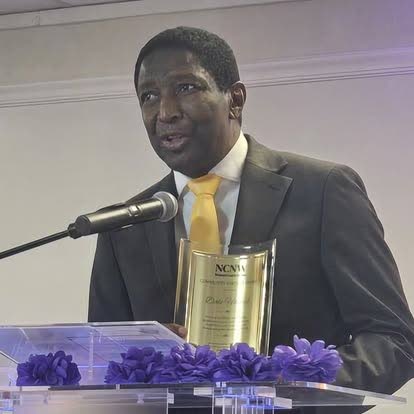
    At the formal handover ceremony, Jamalco’s General Manager Shanice Neisbeth-Castle delivered a motivating address to the assembled students, urging them to leverage this new opportunity to build intentional futures. “Every single time you step into the woodwork and electrical labs, visualise what you will look like 10 years from now and what you will achieve because you worked hard at developing this skill,” she told the crowd.

    Moments after the ceremony concluded, Derrick Garnett, the school’s lead industrial techniques teacher, was already walking groups of curious students through the new woodwork equipment, pointing out specialized features that will allow them to take on more complex projects than ever before.

    Christopher Buckmaster, Jamalco’s Director of Human Resources, Security and Corporate Services, explained that the lab upgrade is far more than a one-off donation: it is a core part of the company’s long-standing mission to empower young people through accessible, high-quality education. “Our contribution reflects our commitment to equipping students with the tools they need to transform their own lives and shape a better future,” Buckmaster shared. “Without access to the right tools, students are limited in developing the practical skills and technical knowledge required for further education and the workforce. This investment is about building capacity, expanding opportunities, and boosting students’ confidence in using these resources.”

    Dr. Garth Anderson, chairman of Jamalco’s board of directors, emphasized the deep community ties behind the initiative, noting that a large share of Porus High’s student body hails from local communities directly surrounding the company’s operations, including Harmons, St Toolies, Rheeveswood, and a number of adjacent neighborhoods. “This donation represents Jamalco giving back to the communities it serves,” he said. “It is a meaningful contribution toward advancing technical skills and empowering our young people.”

    Rhoda-Moy Crawford, State Minister for Jamaica’s Ministry of Education, Skills, Youth and Information, served as the event’s keynote speaker, and praised the partnership between the private mining firm and the public secondary school. She highlighted that the investment comes at a critical moment for Jamaica’s push to expand skills-based training that drives national economic growth. “The strengthening of these laboratories comes at a time when there is increasing demand for skills-based training,” she said. “We value public-private partnerships like this, as they play a vital role in advancing both our students and our country.” Crawford also encouraged students to care for the new equipment and make the most of the expanded learning opportunities now available to them.

    Audrey Blake, Vice Principal of Porus High School, echoed that sentiment, laying out the school’s long-standing challenge of under-resourcing technical programs. “While the school has dedicated classrooms for woodwork and electrical studies, they were previously under-equipped for effective practical instruction and examination readiness,” Blake explained in her overview of the project. “Jamalco was approached to assist, and they have delivered in a meaningful way. This equipment will support lifelong learning and skills development for our students for years to come.”

  • Brazil suspends dengue vaccine following two deaths

    Brazil suspends dengue vaccine following two deaths

    RIO DE JANEIRO, Brazil — Brazilian health authorities announced a temporary halt to the deployment of the world’s first single-dose dengue vaccine on Monday, triggering precautionary measures after two unexplained deaths linked to the inoculation prompted safety reviews.

    Developed through a public-sector initiative in Brazil and granted regulatory approval by national health bodies last November, the groundbreaking vaccine has already been administered to more than 500,000 people across the country between January and May of this year. As the first ever single-dose injection designed to protect against dengue, a mosquito-borne viral infection that triggers symptoms ranging from high fever, intense headaches, and severe muscle pain to nausea and skin rashes, and can turn fatal in rare severe cases, the shot was hailed as a major leap forward in public health responses to the disease.

    Preliminary post-vaccination surveillance data shows that of the 501,044 people who received the dose in the first five months of the year, roughly 0.7 percent — 3,703 individuals — developed symptoms that mirror those of natural dengue infection. Brazil’s Ministry of Health further confirmed that 42 recipients experienced more intense adverse responses, with three cases classified as severe. Those three severe events include the deaths of a 58-year-old man and a 48-year-old woman, while a third patient, a 38-year-old woman, required intensive care admission before making a full recovery and being discharged.

    Speaking at a public press briefing, Health Minister Alexandre Padilha emphasized that regulators have not yet compiled sufficient evidence to confirm a direct causal relationship between the vaccine and the three serious adverse events. Even so, he noted that the unexplained incidents represent a clear warning sign that demands immediate precautionary action.

    “As a safety measure, we have made the decision to temporarily suspend all vaccination campaigns using this product,” Padilha stated, adding that the government would not outline a timeline for reintroducing the shot until further investigation is completed. The minister also pointed out that these adverse effects were “completely unexpected” — no similar severe reactions were observed during earlier clinical trials that involved more than 16,000 volunteers across 14 Brazilian states. Those same trials recorded a 91.6 percent efficacy rate for the vaccine against the most life-threatening forms of dengue, a result that positioned it as a transformative tool for curbing the disease.

    Unlike the only other approved dengue vaccine on the global market, TAK-003, which requires two separate doses administered three months apart per World Health Organization (WHO) guidelines, Brazil’s single-dose candidate was designed to streamline and accelerate large-scale mass vaccination campaigns, a key priority for dengue-endemic nations. For context, Brazil bore the brunt of global dengue burden in 2024, recording more than 6,000 deaths from the virus — nearly half of all fatal dengue cases recorded worldwide last year. While public health outcomes improved significantly in 2025, the virus remains a leading ongoing public health threat in the Latin American nation.

  • Absolutely not true!

    Absolutely not true!

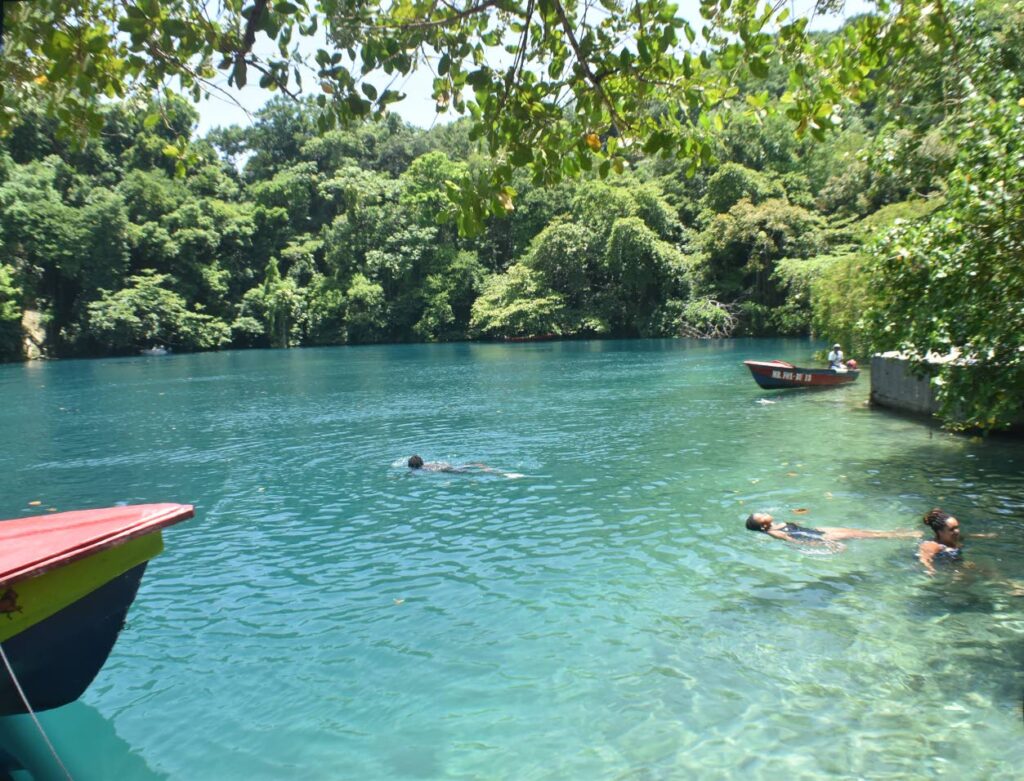
    For years, circulating claims that Jamaican locals were barred from entering the iconic Blue Lagoon in Portland have divided public opinion and spurred legal action. Now, a newly surfaced social media video has directly contradicted these allegations, offering on-the-ground footage of local residents freely enjoying one of the island’s most beloved natural landmarks.

    The identity of the videographer remains unconfirmed, but the narration in the clip, filmed in late 2024, aligns with the core goals of beach access advocacy groups. The creator explained he visited the site specifically to test claims of restricted entry, and met with a local Maroon leader with deep experience working on Portland coastal access issues during his trip. Walking through the property while filming groups of Jamaican visitors in swimwear, the narrator stated plainly: “I came here today because I was told that there is no access to Blue Lagoon, and as you can see there is full access.”

    While the video confirms open entry to the lagoon itself, the creator did acknowledge longstanding infrastructure challenges: parking along the narrow access road remains unregulated and limited, leading to inconsistent informal control of the area that has left the space without formalized public management. Independent verification from Jamaica Observer found no evidence of official access fees being charged, noting any unauthorized fees that have been reported are likely collected by unlicensed touts operating outside legal frameworks.

    Renowned globally as one of Jamaica’s most breathtaking natural treasures, Blue Lagoon holds a unique geographic and cultural appeal. Fed by a mix of fresh mountain runoff and Caribbean seawater, the 180 to 215-foot-deep lagoon shifts in hue from deep sapphire to bright turquoise over the course of the day, creating an otherworldly aquatic landscape that has drawn filmmakers, writers, and travelers from across the world for decades. As travel platform Pathculture notes, the unique blend of fresh and saltwater also creates a one-of-a-kind inviting temperature, making it a popular spot for swimming, boat tours, and quiet relaxation for both visitors and locals.

    Debates over public access to the site stretch back years, and have even landed in court. In 2023, two local advocacy groups — the Jamaica Beach Birthright Environmental Movement (JaBBEM) and Portland Environmental Action (PEA) — launched a lawsuit over access, focused on reopening the Blue Hole road, the historic public entrance to the national monument. PEA spokesperson Wilbourn Carr explained at the time that the groups raised concerns after the Jamaica National Heritage Trust (JNHT), the managing body for the site, signed a three-year agreement that routed public access across private land. The lawsuit seeks to secure permanent public entry by reopening the original public road, regardless of future changes to the private land agreement. The case remains ongoing as of 2025.

    Most recently, misleading social media claims in early 2025 alleged that the entire site would be sold to a private owner and entry restricted only to paying guests. In response, JNHT issued an official statement debunking these rumors, confirming that Blue Lagoon remains free and open to all members of the public. The trust noted that it has recently completed upgrades to the site, including renovated restrooms, improved landscaping, and new informational signage, and allows authorized craft vending along the shore.

    JNHT did acknowledge the longstanding parking challenge: limited public space means many visitors choose to pay a small fee to park at adjacent private properties like the nearby Tropical Lagoon Resort Limited, and the trust does not provide on-site security. The organization also confirmed that all land surrounding the lagoon has been privately owned for more than 50 years, a detail that has shaped the site’s management challenges for decades.

    In a March 2025 address to Parliament’s Standing Finance Committee, Culture, Gender, Entertainment and Sport Minister Olivia Grange outlined the government’s plans to upgrade the iconic site, confirming a proposed $20 million allocation to repair the Blue Lagoon dock as part of a broader rehabilitation project. Grange noted that designs and proposals for the work are complete, and repairs will move forward as soon as funding is finalized. She added that lifeguards are already stationed at the lagoon, but management remains complicated by the privately owned surrounding acreage.

    Addressing public concerns over the access route barrier installed in recent years, Grange clarified that the barrier is intended to manage vehicle traffic — not block public entry. “The barrier that’s there still provides access to the Blue Lagoon,” she said, explaining the measure was necessary to stop vehicles from entering the area where no adequate public parking exists. To resolve long-term infrastructure issues, the government is developing a comprehensive development plan that would create a designated public parking lot, with shuttle service to transport visitors to the lagoon entrance. Grange also confirmed that motorized water sports will remain banned at the site to protect the sensitive ecosystem and respect the boundaries of adjacent private landowners.

    The minister emphasized the government’s goal of striking a fair balance between preserving public access and supporting local communities that rely on the lagoon for income: “We will have to find a balance between the people having access and the people enjoying and earning from the Blue Lagoon.”

    In the viral social media video, the creator echoed calls for accurate discourse around the site, pointing to the recently renovated restrooms as an example of progress that misinformation overlooks. He urged access advocates and government officials alike to avoid spreading unsubstantiated claims, warning that repeated misinformation erodes public trust when genuine concerns arise. “Sometimes we do a disservice when we say things that are not true… Sometimes people will say the wrong things and it’s almost like crying wolf. When things are very serious we don’t take it seriously because a lot of misinformation goes out to the public. I just came here a while ago and there is access, but it’s more organised. We need to stop this misinformation campaign. While I agree there is not access to a lot of different places, let us keep it real, let’s be honest.”

  • Pope promises abuse victims Church will do more to change

    Pope promises abuse victims Church will do more to change

    MADRID, Spain – On the third day of his seven-day state visit to Spain, Pope Leo XIV held a pivotal closed-door meeting with six survivors of clergy-committed sexual violence, where he pledged the Catholic Church would deepen its institutional reforms to address the long-running abuse crisis that has shaken global confidence in the Church hierarchy, Vatican officials confirmed Monday.

    The hour-long gathering, held at the Vatican’s apostolic nunciature in Madrid, gave each survivor space to share their harrowing personal accounts of abuse and submit concrete recommendations to strengthen the Church’s response to these devastating cases. In a formal statement released after the meeting, the Vatican noted that Pope Leo committed to centering these proposals as a foundation for expanded action, with the goal of transforming the Church into a truly safe and spiritually healthy environment for all.

    Earlier the same day, speaking to a assembly of Spanish bishops, the pontiff described clergy sexual abuse as a devastating “scourge” that demands unflinching response: “We must meet this crisis with intentional listening, radical transparency, full accountability for perpetrators, just reparations for survivors, and a relentless commitment to prevention and a culture of care that puts vulnerable people first.”

    The meeting came amid public criticism from victim advocacy groups, who slammed the pontiff for excluding broader representation of survivors from the gathering. Speaking to AFP outside the nunciature, Juan Cuatrecasas, spokesperson for leading Spanish survivor organization Infancia Robada (Stolen Childhood), expressed deep disappointment: “We are disappointed that the pope, instead of listening to a sufficiently large and solid representation of victims, prefers to leave us out.”

    The scale of the abuse crisis in Spain is staggering: a 2023 official report from Spain’s national ombudsman estimated that at least 200,000 minors have suffered sexual abuse at the hands of Catholic clergy in the country since 1940. After decades of institutional denial and opacity from the Spanish Catholic Church, the national government led by Prime Minister Pedro Sanchez reached a landmark compensation agreement with the Spanish Church in March of this year, marking a major turning point for survivor justice.

    Pope Leo, who has repeatedly acknowledged the ongoing harm of the abuse scandal, reiterated Saturday that the crisis remains “an open wound” for the global Catholic community, which counts 1.4 billion adherents worldwide.

    Monday’s schedule also included a historic first: the 70-year-old, U.S.-born pontiff became the first pope to address the Spanish parliament, where his remarks received an extended standing ovation from lawmakers. In his address, he turned to pressing global issues, starting with the growing migration crisis that has reshaped European politics. He called for coordinated global action to address the “tragic drama” of forced migration, urging world leaders to create “safe and legal pathways” for migration and ensure all displaced people receive “a respectful welcome and real opportunities for integration.”

    His remarks align with the relatively liberal immigration stance of Prime Minister Sanchez, whose government has faced intense political pressure over the policy from the conservative Popular Party and far-right Vox, which is now Spain’s third-largest political party. The pope is set to travel to the Canary Islands later in his visit, a major Atlantic entry point for irregular migrants traveling from North Africa to Europe, where he will honor the thousands of migrants who have died during the dangerous ocean crossing.

    The pontiff also used the parliamentary address to make a forceful case for global peace, just hours after a deadly exchange of fire between Israel and Iran threatened to collapse a fragile regional ceasefire. Echoing his longstanding anti-war position – which has drawn fierce criticism from former U.S. President Donald Trump, alongside criticism of Sanchez – Pope Leo called for “patient dialogue” over armed conflict and escalating rearmament across Europe and the globe. “Weapons may impose a temporary silence but they can never build a genuine and lasting peace,” he told lawmakers.

    Closing his address, the pontiff reaffirmed the Catholic Church’s anti-abortion and anti-euthanasia stance, urging Spanish legislators to defend life “from conception to its natural end.” This position puts him at odds with Sanchez’s left-wing government, which has legalized euthanasia under regulated conditions and is pushing to enshrine abortion rights in the Spanish constitution.

    To cap off his full day of engagements, Pope Leo was scheduled to meet with the Madrid diocesan community at Real Madrid’s iconic Santiago Bernabéu Stadium. AFP correspondents on the ground reported that more than 80,000 supporters filled the venue an hour and a half before his expected arrival, singing hymns, waving flags of Spain, the Vatican and Latin American nations, and chanting “We are lions! We are lions!” – a playful reference to the name Leo, which means lion in Spanish.

    Thus far, the papal visit has drawn massive public turnout: event organizers reported that more than 1.5 million worshippers attended an open-air mass Pope Leo celebrated in central Madrid on Sunday.

    Upcoming stops on the visit include Barcelona on Wednesday, where the pontiff will bless the newly completed tower of the Sagrada Familia Basilica, Antoni Gaudí’s unfinished architectural masterpiece that recently became the tallest church in the world. The visit will conclude Thursday and Friday in the Canary Islands, where Pope Leo will be joined by Prime Minister Sanchez for formal engagements.