KINGSTON, Jamaica — In a development reshaping the global cannabis landscape, the Ganja Growers and Producers Association of Jamaica (GGPAJ) has publicly hailed the United States’ decision to reclassify cannabis from a strict Schedule I controlled substance to a less restrictive Schedule III, framing the policy shift as both a landmark opening and a critical wake-up call for Jamaica’s homegrown cannabis sector. The GGPAJ outlined its stance in an official press statement released Tuesday, breaking down the far-reaching implications of the U.S. policy change for Jamaican producers.
标签: Jamaica
牙买加
-

FID and JCF ink MOU to repurpose recovered assets
In a landmark step to modernize anti-crime strategy in Jamaica, the Financial Investigations Division (FID) and the Jamaica Constabulary Force (JCF) have formalized a groundbreaking partnership that repurposes lawfully seized criminal assets to boost national law enforcement operations.
The memorandum of understanding, signed during an official ceremony on Wednesday, April 22, 2026, grants the JCF controlled access to seized assets valued at approximately 174 million Jamaican dollars, earmarked to cover operational costs and specialized training programs for officers, the two agencies confirmed in an official joint press release.
This new arrangement is not an ad-hoc arrangement, but a core component of a deliberate national policy designed to change how Jamaica handles illicit proceeds. Instead of just removing criminally derived assets from illegal circulation, the framework actively redirects these resources to reinforce the state’s ability to deliver public security and uphold justice for all citizens.
The initiative forms the centerpiece of a broader national asset recovery strategy led by the FID, developed in close coordination with local government bodies and international law enforcement partners. The overarching goal of this effort is to disrupt and dismantle the financial foundations that allow transnational and local organized criminal networks to operate. By systematically identifying, freezing, and repurposing illicit wealth, the Jamaican government is sending an unambiguous message: illegal activity will never deliver long-term profit for perpetrators.
Speaking at the official signing ceremony, Dennis Chung, Chief Technical Director of the FID, framed the agreement as a model for 21st-century law enforcement collaboration. “This is what modern crime-fighting collaboration looks like: focused, coordinated, and outcome-driven,” Chung explained. “Our work does not end when we wrap up a criminal investigation. We go a step further to ensure that proceeds of crime are fully recovered and put to work for the public good. When these assets are used productively, Jamaicans can see clear, measurable benefits of our work, and it reinforces the core principle that crime does not pay.”
JCF Commissioner Dr. Kevin Blake echoed this sentiment, emphasizing that the agreement delivers tangible, visible results for the Jamaican public. “It is important that Jamaicans can recognise the tangible outcomes of supporting law enforcement,” Blake said. “This arrangement strengthens our operational capacity while demonstrating that resources once tied to criminality are now being used in service of the public. It reflects a broader commitment to building safer communities and improving the overall quality of life for our people.”
Observers and government officials have highlighted the pact as a leading example of strengthened inter-agency cooperation, where frontline enforcement, intelligence gathering, and financial investigation work in tandem to deliver long-term, sustained improvements to public safety. The agreement also reinforces the Jamaican government’s broader strategic focus on dismantling criminal networks: rather than relying solely on traditional enforcement action, the state is now systematically stripping away the economic incentives that allow organized crime to persist and grow.
-

Jermaine Delattibudiere elected general secretary of Pan-American Draughts and Checkers Confederation
KINGSTON, Jamaica — In a historic vote at the 24th Pan-American Draughts and Checkers Confederation (PAMDCC) General Assembly, Jamaica Draughts Association (JDA) President and Deputy Superintendent Jermaine Delattibudiere has been selected to fill the role of PAMDCC General Secretary for the 2026-2030 term, marking a groundbreaking milestone for Jamaican draughts governance.
This election breaks a 12-year streak of the general secretary position being held by representatives from Curaçao, and grants Jamaica its first-ever seat on the confederation’s top administrative body since PAMDCC was founded. Delattibudiere, who only took the helm of the JDA in June 2025, will carry a broad set of core responsibilities in his new regional role: drafting the confederation’s full 2026-2030 strategic development plan, overseeing all official correspondence between the PAMDCC, the World Draughts Federation (WDF), and the body’s 28 member nations, and managing technical regulatory compliance for all Pan-American draughts events.
In comments shared in a post-vote press release, Delattibudiere outlined his priorities for the confederation’s next term. “Our work will center on quality administration, transformative growth, member service, and structured institutional development,” he explained. “PAMDCC has expanded dramatically from just 4 founding members to 28 nations across the Americas. The next step is to build on that existing foundation, expand access through new youth outreach programs, raise event hosting standards across the region, and operate a fully transparent, high-performing administration to drive sustained growth. Jamaica stands ready to lead this collective effort.”
Delegates across the region voiced widespread support for Delattibudiere’s appointment, pointing to Jamaica’s recent work to bring all membership obligations fully up to date through 2026 and its consistent public commitment to growing the sport across the Caribbean. Regional stakeholders also celebrated a second major announcement from the assembly: the 2028 Pan-American 10×10 International Draughts Championships, officially branded “Reggae Draughts International,” will be hosted in Montego Bay, St James, Jamaica.
For Jamaica, Delattibudiere noted, the appointment comes with dual domestic goals: the country will maintain its strong international standing in Pool Checkers 8×8 draughts-64 while investing in growing competitive performance in 10×10 Draughts-100 ahead of the 2028 home championship.
Alongside Delattibudiere’s appointment, the general assembly re-elected Clifton Agata of Curaçao to the presidency by unanimous acclamation, with nearly the entire incumbent board retaining their positions. The full 2026-2030 PAMDCC leadership roster is as follows: President Clifton R. Agata (Curaçao), Vice President Ricardo Wever (Aruba), General Secretary Jermaine A Delattibudiere (Jamaica, replacing outgoing Hensley Rondei of Curaçao), Treasurer Lariza Wever-Maduro (Aruba), Tournament Director Amauri G Peralta Fernandez (Dominican Republic), First Youth Commissioner Carol Butcher (St Lucia), and Second Youth Commissioner Arwien Bhagwandas (Suriname). The only contested leadership shift came for the First Youth Commissioner post: incumbent Nicholas Ramsundar of Trinidad and Tobago chose to give up his seat to challenge Agata for the presidency, and lost by a wide margin.
Delattibudiere’s path to the general secretary role began earlier in 2025, when he traveled to Suriname as Jamaica’s sole delegate to the 23rd Pan-American 10×10 International Draughts Championship — logistical challenges had forced the JDA to cut its planned four-person delegation down to just its leader. With strategic guidance from Jamaica Olympic Association (JOA) President Christopher Samuda and in close coordination with PAMDCC President Agata, the JDA successfully cleared all outstanding membership dues and obligations to bring its status fully current through 2026, a requirement that secured Jamaica’s voting rights at the general assembly and cleared the way for Delattibudiere’s candidacy.
The 2028 Pan-American 10×10 championship, which will serve as the official qualifying event for the 2029 WDF 10×10 Draughts World Championships in the Netherlands, will include three competitive divisions: senior, women’s, and under-20. Jamaica’s winning hosting bid, developed with support from Samuda, will operate under JOA governance frameworks with additional backing from local government and non-governmental partners. The bid’s core arguments centered on the continental rotation principle and the long-unmet need for a major 10×10 championship event in the English-speaking Caribbean.
Typically, the week-long Pan-American Championship draws between 150 and 200 competitors and officials to the host nation, and Delattibudiere emphasized that the 2028 event will deliver long-term benefits far beyond the competition itself. “Hosting isn’t just about one week of games — it’s months of intentional preparation that will leave a lasting legacy for the sport,” he explained. “We’re hitting the ground running to expand our JDA Draughts in Schools Programme, adapting the successful model already implemented in Trinidad and Tobago to build sustainable local infrastructure. When all visiting federations leave Jamaica in 2028, they will take home practical tools to grow youth participation in their own countries. That’s how we push back against the distractions of social media and keep draughts a relevant, accessible sport for new generations.”
-

FIFA boosts cash payments for World Cup
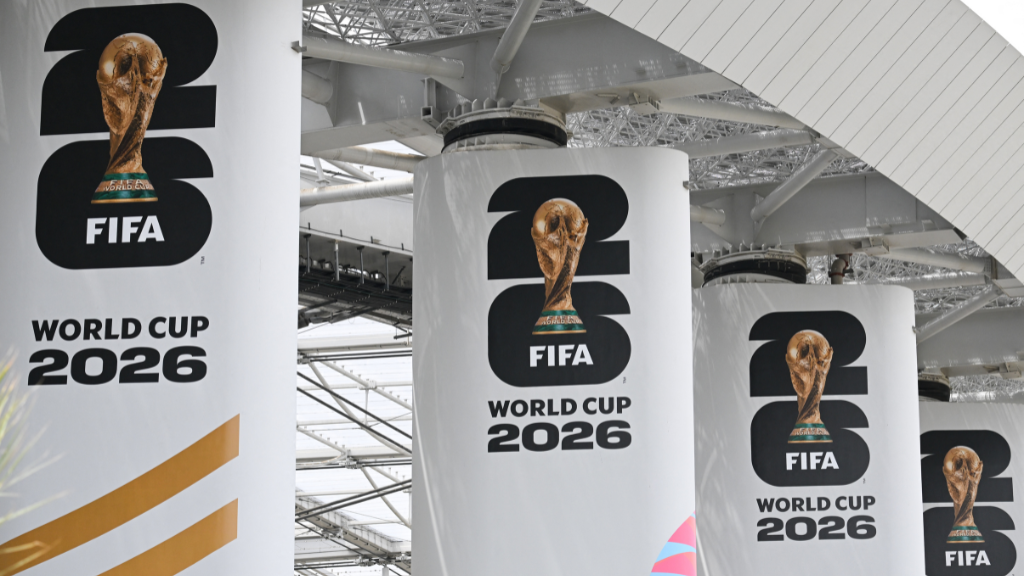
VANCOUVER, Canada – On the eve of FIFA’s annual Congress in Vancouver, global soccer’s governing body announced a landmark increase in total financial distributions for the 2026 FIFA World Cup, raising the total payout pot to nearly $900 million US dollars to address growing worries over ballooning participation costs for competing national teams. The adjustment, revealed Tuesday following a meeting of FIFA’s ruling council, pushes the total allocated funds from the initial $727 million announced last December to $871 million, marking one of the largest single revisions to World Cup participation payouts in the tournament’s modern history.
The substantial boost to the distribution pool comes after multiple FIFA member associations raised red flags over soaring operational expenses tied to the 2026 tournament, which is the first World Cup in history to be co-hosted by three North American nations: Mexico, Canada, and the United States. With matches spread across 16 cities spanning three countries, teams face far higher costs for cross-region travel, logistics, and on-the-ground operations compared to previous editions of the tournament, leading many associations to warn they could end up losing money even after receiving original participation payouts.
To directly ease these financial pressures, FIFA has adjusted multiple components of its distribution package. For all 48 qualified teams – a jump from 32 teams in prior tournaments that also expanded participation costs – preparation funding has been increased from $1.5 million to $2.5 million per side. The base payout for simply qualifying for the tournament has also been raised, from $9 million to $10 million per team. Beyond these direct cash adjustments, FIFA is also allocating additional funds to cover team delegation expenses and expanding the number of complimentary tickets allocated to each competing squad.
FIFA President Gianni Infantino framed the adjustment as a reflection of the organization’s unprecedented financial stability, noting in an official statement: “FIFA is proud to be in its most solid financial position ever, enabling us to help all our member associations in an unprecedented way. This is one more example of how FIFA’s resources are reinvested back into the game.”
The 2026 World Cup concludes FIFA’s current four-year competition cycle, which is projected to generate roughly $13 billion in total revenue for the governing body – a record high for any quadrennial cycle in soccer history. Last year, FIFA already announced that total prize money for the 2026 tournament would represent a 50% increase over the payouts distributed at the 2022 Qatar World Cup. The existing prize structure remains unchanged under the new announcement: the tournament champion will take home $50 million, the runner-up will receive $33 million, third place will earn $29 million, and fourth place will get $27 million.
-

Shenseea scores for Jamaica with FIFA World Cup 2026 soundtrack
Jamaica is still processing the bitter disappointment of the Reggae Boyz’s failed bid to qualify for the upcoming FIFA World Cup, but a thrilling new development has emerged to lift the national mood: one rooted in iconic basslines, global cultural influence, and undeniable rising star power.
On Tuesday, international dancehall sensation Shenseea announced a landmark career achievement via her social media channels: she has collaborated with legendary reggaeton pioneer Daddy Yankee to create a new track for the 2026 FIFA World Cup official soundtrack. Titled *Echo*, the collaborative single is already available for streaming on major global platforms.
Landing a spot on the soundtrack for the world’s biggest single sporting event is no minor accomplishment. The FIFA World Cup draws a cumulative global audience of billions, and its official and affiliated soundtrack tracks often transcend the tournament itself, becoming enduring cultural anthems that define eras of global sport and collective celebration. From Shakira’s 2010 breakout hit *Waka Waka* to Wizkid’s widely acclaimed contribution to the 2022 tournament’s sonic identity, these tracks do not merely accompany the action on the pitch—they become an indelible part of the World Cup’s global cultural heartbeat.
For Shenseea, the high-profile collaboration marks far more than just a personal career milestone: it catapults her into an elite tier of globally recognized musicians. Working alongside Daddy Yankee, the trailblazer who brought reggaeton from regional niche to worldwide mainstream popularity, places her at the creative intersection of two of the Caribbean’s most culturally influential musical movements, opening new doors for dancehall’s global expansion.
Beyond the individual win for Shenseea, the collaboration carries profound national significance for Jamaica. Jamaican music has long been a dominant global force, with homegrown genres including reggae and dancehall shaping popular music soundscapes across every continent. Even so, high-profile direct involvement in a FIFA World Cup soundtrack at this scale has remained a rare achievement for Jamaican artists, with formal official partnerships tied to the tournament’s musical identity few and far between for the island nation. This moment is not just a career breakthrough for one artist—it is a major win for Jamaica’s global cultural brand, shining a bright new spotlight on the country’s ongoing musical influence on the world stage.
-

Caricom reiterates support for Guyana in border dispute with Venezuela
GEORGETOWN, Guyana – As the International Court of Justice (ICJ) prepares to open oral arguments on the decades-long border dispute between Guyana and Venezuela, the 15-nation Caribbean Community (Caricom) has issued an official statement addressing recent diplomatic controversy that has heightened tensions in the region.
The dispute centers on Venezuela’s long-dormant claim to the 159,000-square-kilometer Essequibo region, which is currently recognized as part of Guyana’s sovereign territory under international law. The latest friction emerged earlier this month, when Venezuela’s Acting President Delcy Rodriguez wore a brooch displaying a map of Venezuela that incorporates the entire Essequibo region during two official diplomatic meetings with Caricom heads of government: Prime Minister Dickon Mitchell of Grenada on April 9, and Prime Minister Mia Mottley of Barbados earlier this week. Rodriguez characterized her visits as an effort to strengthen bilateral ties between the South American nation and Caribbean regional states.
Guyana’s President Dr. Irfaan Ali publicly raised “grave concern” over the incident, and followed up with an April 28 letter to Caricom Chairman Prime Minister Dr. Terrance Drew (who also serves as leader of St. Kitts and Nevis) outlining his government’s formal position. In the correspondence, Ali emphasized that Guyana fully upholds the right of all Caricom member states to conduct independent bilateral diplomatic relations with any external partner, including Venezuela. However, he stressed that displaying symbols advancing a territorial claim against a fellow Caricom member during official engagements within the community is deeply regrettable.
Ali warned that using Caricom-associated diplomatic meetings to promote a territorial claim against one of its members could be misinterpreted as community acquiescence or tolerance of the claim. “No action, whether deliberate or inadvertent, should create the impression that the community’s platforms may be used to advance claims now before the International Court of Justice,” he wrote. The Guyanese president added that the incident is more than a symbolic gesture: it represents a calculated, provocative assertion of a claim that Guyana has repeatedly and lawfully rejected, and that is currently awaiting final binding adjudication from the ICJ.
In its official response released Tuesday, Caricom reaffirmed its longstanding position that every member state retains full sovereign authority to manage its own bilateral relations with external partners, a foundational principle widely respected across the bloc. The regional grouping noted that all such diplomatic activity must align with the shared obligations and collective commitments outlined in the Revised Treaty of Chaguaramas, the binding legal framework that establishes Caricom, its core goals, and expected standards of conduct for all member states.
Under the terms of the treaty, Caricom members are committed to upholding the integrity and cohesion of the community in all external engagements. The grouping emphasized that while exercising their sovereign rights, member states must remain accountable to their collective treaty obligations, which require adherence to international law, respect for ongoing judicial processes, and the maintenance of good neighborly relations.
Consistent with these obligations, Caricom underscored that community diplomatic platforms and official engagements should not be used, either directly or indirectly, to advance or legitimize territorial claims that are currently the subject of active judicial proceedings before the ICJ. The bloc also reiterated that its unwavering, longstanding support for Guyana’s sovereignty and territorial integrity, and for the peaceful resolution of the dispute through the ICJ process, remains firm and unchanged.
Oral hearings on the merits of the dispute are scheduled to open at the ICJ on May 4, and are currently set to run through May 8, with a possible extension into the following week according to Guyana’s Attorney General and Minister of Legal Affairs Mohabir Anil Nandlall. The legal process dates back to 2018, when Guyana brought the case before the ICJ seeking formal confirmation of the legal validity of the 1899 Arbitral Award, which established the current border between the two countries. That border agreement was accepted by both parties for more than six decades, before Venezuela declared it null and void in 1962 and renewed its claim to the Essequibo territory.
The dispute has been handled in accordance with the 1966 Geneva Agreement, which lays out formal mechanisms for a peaceful negotiated settlement. After decades of unsuccessful bilateral talks, the United Nations Secretary-General referred the dispute to the ICJ for a final ruling. The court has already issued a preliminary ruling confirming it has jurisdiction to hear the case, clearing the way for the upcoming substantive hearings where both Guyana and Venezuela will present their full legal arguments to the bench.
-

JAMAICA IS OPEN!
As Jamaica’s 2024 summer tourist season kicks into high gear, island officials are extending a dual invitation to global travelers: come enjoy the country’s world-famous beaches, culture and events – and stay for the robust investment opportunities emerging from a remarkably fast post-disaster recovery.
Tourism Minister Edmund Bartlett made the call during an appearance on Fyah 105’s popular morning program *The BIM Show*, part of the outlet’s Radio Remote Week hosted at Sandals Ochi Beach Resort in the popular northern coastal town of Ocho Rios. He highlighted a stacked lineup of marquee summer events that draw crowds from across the globe, including the iconic Reggae Sumfest, Dream Weekend and Best Weekend Ever, as core draws for seasonal visitors.
Six months after Hurricane Melissa, one of the most destructive tropical systems to hit the Caribbean in recent decades, Bartlett said the speed of Jamaica’s reconstruction has surpassed all expectations. “After what was arguably the worst hurricane on the planet, you’d barely know we had one six months later,” he noted, crediting the rapid rebound to collective effort from Jamaican people, national leadership, and generous collaboration with the country’s global diaspora community.
In the first full quarter after the storm, Jamaica welcomed roughly one million international visitors, Bartlett reported, with the vast majority of hurricane-damaged hospitality properties already back to full operation. At the current pace of recovery, he projects the island will restore 90 percent of its pre-storm tourism capacity by the end of the calendar year.
Unlike many disaster-hit destinations that lose long-term airline partnerships, Jamaica has retained every single one of its international carrier connections – and even expanded its route network, according to Bartlett. Major airlines including Southwest, Breeze Airways, Virgin Atlantic, Wingo and Copa Airlines have all added new routes to the island in recent months, a clear sign of global industry confidence in Jamaica’s recovery trajectory.
Leading the charge for northern Jamaica’s tourist hub Ocho Rios is St Ann Mayor Michael Belnavis, who has rebranded the town as Jamaica’s “party capital” and is working to position it as a top global entertainment and ecotourism hub. “The entertainment industry here is extremely lucrative, and we’re investing in building it out to draw visitors year-round,” Belnavis explained, pointing to successful past events like the Easter We Vacay party series as proof of the parish’s growing global appeal.
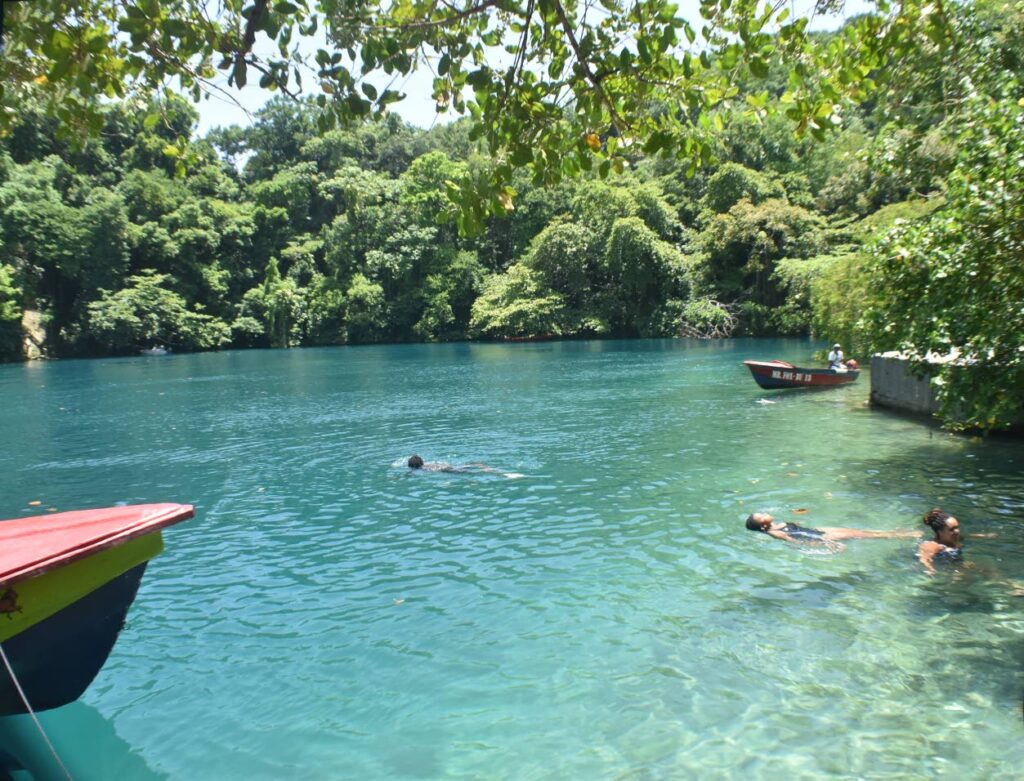
Beyond cultural events, St Ann boasts some of the most diverse natural attractions in the Caribbean, headlined by the world-famous Dunn’s River Falls – which Belnavis called “the number one tourist attraction in the entire Caribbean.” The cascading, ocean-fed waterfall is joined by other iconic natural experiences including the Blue Hole, scenic river excursions, snorkeling, white-water rafting, and newer one-of-a-kind offerings like the Poco Loco floating bar. “This is a destination defined by its aquatic beauty, paired with endless sun, warm seas and an unmatched welcoming energy,” he added.
Ongoing infrastructure investments, including the recent opening of a new purpose-built conference centre, are also growing the parish’s appeal for business and meetings tourism, with Belnavis predicting a coming real estate boom across the Ocho Rios area as demand for visitor and investor properties rises.
Sicourney Jackson, public relations officer for the Jamaica Tourist Board, reinforced the official message during Radio Remote Week, which brought 21 international radio outlets from the United Kingdom and Canada to the island to showcase Jamaica’s post-hurricane readiness. “Right here, right now, Jamaica is open and ready to welcome you,” she said, echoing Bartlett’s call for travelers to support the country’s recovery with a visit. Jackson acknowledged that full reconstruction is still ongoing – the island is not yet back to 100 percent pre-storm capacity – but said progress has been steady and remarkable, crediting frontline tourism workers who have sacrificed personal comfort to speed the industry’s rebound.
As global interest in travel to Jamaica continues to climb, local tourism and government stakeholders frame the island’s rapid recovery as both a demonstration of extraordinary national resilience and an open invitation. Whether travelers are chasing world-class cultural festivals, one-of-a-kind ecotourism adventures, or high-growth investment opportunities, the message from Jamaica is clear: the island is open for visitors and for business.
Radio Remote Week, which hosted international and local media outlets across Ocho Rios’ top attractions, gave journalists a first-hand look at the destination’s recovery, with outings ranging from electric ATV adventures at Mystic Mountain to rides on the resort’s famous Olympic-inspired bobsled track, and visits to the popular Poco Loco floating bar to cap off the week.
-

Mister and Mister Teen Universe International Jamaica pageants underway
After months of open applications and rigorous selection, two groundbreaking male pageants for Jamaican contestants — Mister Teen Universe International Jamaica and Mister Universe International Jamaica — are moving steadily toward their June 21 grand finale, with 10 handpicked candidates already deep in preparation.
-

Bus conductor in video assaulting schoolgirls in police custody
KINGSTON, Jamaica — A public transit bus conductor, whose violent confrontation with two female high school students spread widely across social media in recent days, has been placed into official police custody following a multi-day investigation. The Jamaica Constabulary Force (JCF) confirmed that the suspect was processed at the Kingston Central Police Station on Tuesday, April 28, 2026, after being formally transferred to the investigative team assigned to the assault case.
Investigative sources report that the conductor voluntarily turned himself in at the Half Way Tree Police Station after being contacted directly by law enforcement officials. Preliminary forensic and witness analysis has already confirmed that the man in custody matches the individual seen in the viral footage, which depicts a physical altercation between the conductor and the two underage students aboard a moving public passenger bus.
The clip has circulated rapidly across local and international social platforms since it was first posted, sparking widespread public outcry over the treatment of young people in public transit and the prevalence of violence involving minors in Jamaica. As investigators continue to interview witnesses and collect evidence to build their case, the JCF has issued a public appeal for any member of the community who holds additional details about the incident to step forward and assist with the probe.
In an official statement, the JCF emphasized that the agency views all violent incidents, especially those involving minor students, as an urgent priority requiring the full attention of law enforcement. The agency also urged the general public to prioritize legal, non-violent methods for resolving interpersonal conflicts, and asked for continued community cooperation as the investigation moves forward.
-

How To Plan Your Wedding Budget
For many engaged couples, mapping out a wedding budget ranks among the most overwhelming parts of wedding planning. But industry experts frame this foundational document not as a set of rigid restrictions, but as a guiding blueprint that shapes every element of your big day, from the venue you book to the closing track that wraps up your reception. When approached with intentional strategy and personalized priorities, a budget shifts from a source of stress to a tool that helps you invest in what matters most to you as a couple. Instead of automatically asking “Can we afford this item?”, you start asking “Does this align with what we value most?” — that shift in perspective is where the magic of intentional wedding planning begins.
One of the most effective frameworks for keeping spending on track is breaking the total budget into clear percentage-based allocations. While every couple can adjust these numbers to match their unique priorities, event management professional Shikima Hinds, Managing Director of Jamaica-based Shikima Hinds Events Concierge, has shared a balanced guideline tailored specifically for Jamaican weddings, where guest experience is the top priority.
According to Hinds, the largest share — 40 to 50 percent of the total budget — should go toward venue, catering and bar services. This category forms the core of your celebration, and it is the area where guests will most clearly notice and benefit from your investment. Next, 10 to 15 percent is allocated to hiring a professional wedding planner or coordinator. Hinds notes that the peace of mind a skilled planner brings is worth every penny, as they oversee seamless execution of every timeline and detail, freeing couples to enjoy their engagement and big day.
Design and decor, which includes florals, furniture rentals, lighting, and all the small details that turn an empty space into a personalized wedding experience, also gets a 10 to 15 percent allocation. For preserving memories long after the final dance ends, Hinds recommends allocating 10 to 12 percent of the budget to photography and videography, an investment that ensures your most cherished moments are captured authentically and beautifully. Entertainment, which covers everything from DJs and live bands to surprise performance acts, fuels the energy of your celebration and should take up 8 to 10 percent of the total budget.
Attire and beauty, from the wedding gown and groom’s formal wear to hair, makeup, and grooming services, makes up another 8 to 10 percent, a allocation that ensures you feel your absolute best in the moment and in photos. Stationery and invitations, which create your guests’ first impression of your big day and now include digital invites and custom wedding websites alongside traditional paper goods, take up a smaller 2 to 4 percent. For Jamaican weddings in particular, transportation and logistics are a critical 2 to 5 percent expense: coordinating guest travel between hotels and ceremony/reception venues can make or break the flow of the day, and planners recommend not overlooking the costs of parking and on-site security. Miscellaneous items and guest favors, including welcome gifts and personalized small touches that elevate the overall guest experience, account for 2 to 3 percent. Finally, a non-negotiable 5 to 10 percent contingency fund acts as a financial safety net, because unexpected costs always arise during wedding planning, and you will be grateful to have set aside funds to cover them.
Beyond the percentage framework, Hinds emphasizes that the real success of a wedding budget depends on how couples approach their spending choices. The first step is to sit down together as a couple and identify your top three priorities. Is farm-to-table catering the most important element for you? Do you dream of a designer decor scheme, or is a high-energy all-night dance party your top goal? Once you are clear on what matters most to you, you can confidently allocate more funding to those areas and cut back on elements that are less important to you as a pair. A wedding does not need every element to be top-of-the-line to feel luxurious — balance is the key to a successful, fulfilling celebration.
Hinds also warns couples not to overlook the impact of small, practical details: seamless transportation, clear parking arrangements, welcome gifts, and a curated itinerary for wedding weekend guests all leave a lasting positive impression, and these are the details that turn a standard wedding into a memorable experience for everyone in attendance. She also cautions against falling into the common “Pinterest trap”: it is easy to fall in love with hundreds of gorgeous ideas when scrolling social media and inspiration boards, but not every trending idea will align with your budget or your personal vision for the day. Impulsive, last-minute additions to your vendor list or design plan are some of the most common causes of budget overages, so staying focused on your original priorities and trusting your experienced event team is key.
Above all, Hinds encourages couples to have open, honest conversations about money from the very start of the planning process. A clear, agreed-upon budget reduces planning stress, prevents awkward misunderstandings between couples and families, and allows your planner and vendors to guide you effectively toward your goals. The point of budgeting for a wedding is not to restrict spending — it is to help you spend well, on the things that actually matter to you.
At the end of the day, a thoughtfully allocated budget does not limit your wedding vision — it empowers it. It lets you create a celebration that feels intentional, elevated, and most importantly, completely true to you as a couple.