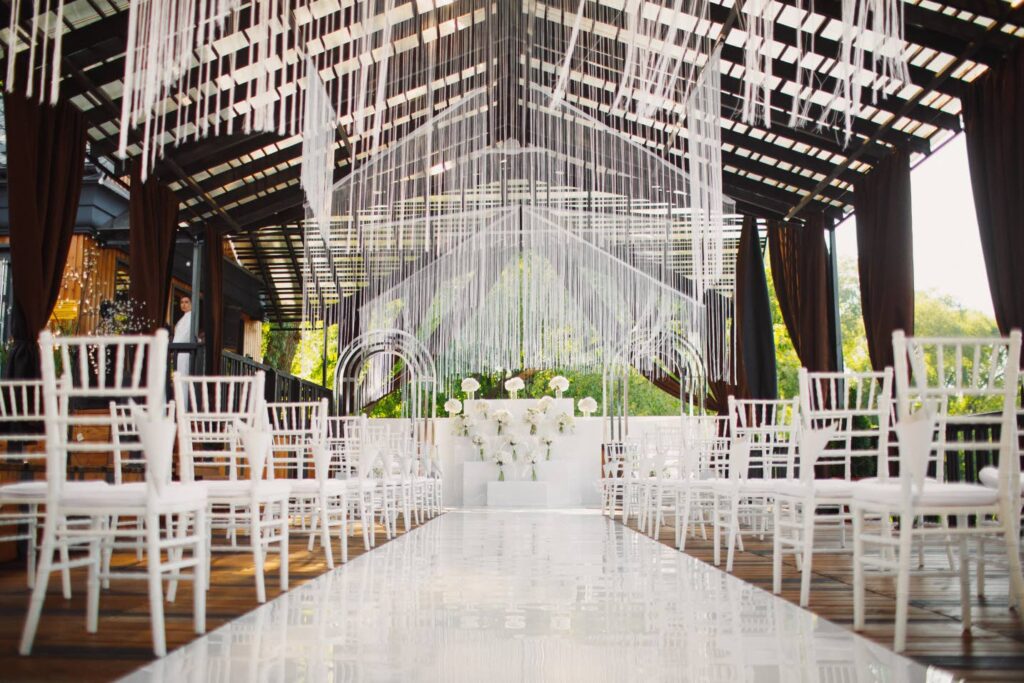
For many engaged couples, mapping out a wedding budget ranks among the most overwhelming parts of wedding planning. But industry experts frame this foundational document not as a set of rigid restrictions, but as a guiding blueprint that shapes every element of your big day, from the venue you book to the closing track that wraps up your reception. When approached with intentional strategy and personalized priorities, a budget shifts from a source of stress to a tool that helps you invest in what matters most to you as a couple. Instead of automatically asking “Can we afford this item?”, you start asking “Does this align with what we value most?” — that shift in perspective is where the magic of intentional wedding planning begins.
One of the most effective frameworks for keeping spending on track is breaking the total budget into clear percentage-based allocations. While every couple can adjust these numbers to match their unique priorities, event management professional Shikima Hinds, Managing Director of Jamaica-based Shikima Hinds Events Concierge, has shared a balanced guideline tailored specifically for Jamaican weddings, where guest experience is the top priority.
According to Hinds, the largest share — 40 to 50 percent of the total budget — should go toward venue, catering and bar services. This category forms the core of your celebration, and it is the area where guests will most clearly notice and benefit from your investment. Next, 10 to 15 percent is allocated to hiring a professional wedding planner or coordinator. Hinds notes that the peace of mind a skilled planner brings is worth every penny, as they oversee seamless execution of every timeline and detail, freeing couples to enjoy their engagement and big day.
Design and decor, which includes florals, furniture rentals, lighting, and all the small details that turn an empty space into a personalized wedding experience, also gets a 10 to 15 percent allocation. For preserving memories long after the final dance ends, Hinds recommends allocating 10 to 12 percent of the budget to photography and videography, an investment that ensures your most cherished moments are captured authentically and beautifully. Entertainment, which covers everything from DJs and live bands to surprise performance acts, fuels the energy of your celebration and should take up 8 to 10 percent of the total budget.
Attire and beauty, from the wedding gown and groom’s formal wear to hair, makeup, and grooming services, makes up another 8 to 10 percent, a allocation that ensures you feel your absolute best in the moment and in photos. Stationery and invitations, which create your guests’ first impression of your big day and now include digital invites and custom wedding websites alongside traditional paper goods, take up a smaller 2 to 4 percent. For Jamaican weddings in particular, transportation and logistics are a critical 2 to 5 percent expense: coordinating guest travel between hotels and ceremony/reception venues can make or break the flow of the day, and planners recommend not overlooking the costs of parking and on-site security. Miscellaneous items and guest favors, including welcome gifts and personalized small touches that elevate the overall guest experience, account for 2 to 3 percent. Finally, a non-negotiable 5 to 10 percent contingency fund acts as a financial safety net, because unexpected costs always arise during wedding planning, and you will be grateful to have set aside funds to cover them.
Beyond the percentage framework, Hinds emphasizes that the real success of a wedding budget depends on how couples approach their spending choices. The first step is to sit down together as a couple and identify your top three priorities. Is farm-to-table catering the most important element for you? Do you dream of a designer decor scheme, or is a high-energy all-night dance party your top goal? Once you are clear on what matters most to you, you can confidently allocate more funding to those areas and cut back on elements that are less important to you as a pair. A wedding does not need every element to be top-of-the-line to feel luxurious — balance is the key to a successful, fulfilling celebration.
Hinds also warns couples not to overlook the impact of small, practical details: seamless transportation, clear parking arrangements, welcome gifts, and a curated itinerary for wedding weekend guests all leave a lasting positive impression, and these are the details that turn a standard wedding into a memorable experience for everyone in attendance. She also cautions against falling into the common “Pinterest trap”: it is easy to fall in love with hundreds of gorgeous ideas when scrolling social media and inspiration boards, but not every trending idea will align with your budget or your personal vision for the day. Impulsive, last-minute additions to your vendor list or design plan are some of the most common causes of budget overages, so staying focused on your original priorities and trusting your experienced event team is key.
Above all, Hinds encourages couples to have open, honest conversations about money from the very start of the planning process. A clear, agreed-upon budget reduces planning stress, prevents awkward misunderstandings between couples and families, and allows your planner and vendors to guide you effectively toward your goals. The point of budgeting for a wedding is not to restrict spending — it is to help you spend well, on the things that actually matter to you.
At the end of the day, a thoughtfully allocated budget does not limit your wedding vision — it empowers it. It lets you create a celebration that feels intentional, elevated, and most importantly, completely true to you as a couple.