标签: Jamaica

牙买加

  • #WrayForTheWin

    #WrayForTheWin

    As the 2026 FIFA World Cup approaches, Jamaica’s most iconic spirit brand J Wray & Nephew has unveiled a groundbreaking new cross-cultural campaign titled “Jamaica Wins The World”, created in partnership with Brooklyn-based CHÉ Creative. Centered on the far-reaching global influence of the Jamaican diaspora, the initiative highlights how the island nation’s creative energy has shaped global culture beyond its borders – including the world of football.

    From reggae rhythms that dominate global airwaves to bold aesthetic choices that redefine international fashion, the imprint of Jamaican culture travels far and wide, uniting communities and inspiring sports fans across the globe even when Jamaica’s national team is not competing on the pitch. The campaign is intentionally crafted for Jamaicans living in the diaspora and anyone connected to Jamaican culture worldwide, inviting supporters of all national teams to celebrate the island’s enduring legacy and proudly showcase their connection to Jamaica throughout the 2026 tournament.

    To mark the campaign launch, the 200-year-old Jamaican spirits brand has released an exclusive, small-batch limited-edition capsule collection that sits at the intersection of fashion, cultural identity, and national pride. Produced in a limited run of only 30 two-piece sets, the collection draws direct inspiration from Jamaica’s iconic flag, merging local artistry with high-end design to give fans a stylish way to celebrate their Jamaican roots at matches, watch parties, and public events.

    The first piece in the collection is a collaboration with Rachel Scott, founder and creative director of luxury fashion brand Diotima, 2024 CFDA Fashion Awards Vision Award recipient, and 2024 American Womenswear Designer of the Year. Crafted from 100% silk, the oversized flag can be styled as a headscarf, statement top, or bold accessory. Scott incorporated Jamaica’s signature black, gold, and green color palette alongside a double-sided silhouette of the Jamaican Poinsettia – commonly known as the “Pride of Jamaica” – to create a wearable tribute to Jamaican heritage and identity.

    For Scott, the collaboration aligns deeply with Diotima’s core brand mission of creating high-quality craft rooted in meaningful cultural context. “Applying the house’s signature broderie anglaise embroidery to something rooted in Jamaican identity felt deeply personal,” she explained. “As a Jamaican, it means something to contribute to how we show up globally – on our own terms and in our own aesthetic language. I wanted to work with a motif that nods to the vegetation of the island, it cuts away at the fabric with embroidery, and we used the colour of the [Jamaican] flags, and the colours of Wray & Nephew.”

    The second piece in the capsule is a collaboration with Jamaican painter Cleark “Nurse” James of Nurse Signs. James brought his iconic hand-painted lettering style to the design, rendering the campaign’s slogan “Jamaica Wins The World” in vibrant national colors for a bold, recognizable tribute to Jamaican creativity.

    To lead the campaign rollout, Wray & Nephew assembled a collective of prominent Jamaican artists who have successfully carried the island’s culture to global audiences. Grammy-nominated Jamaican singer-songwriter Shenseea anchors the brand’s Influencer Collective, bringing her signature edgy energy to amplify the limited-edition wearable collection and host a high-profile World Cup watch party for fans.

    Designed to be both waved as a symbol of pride and worn as a fashion statement, the two-piece capsule collection aims to resonate deeply with football fans across the globe during the 2026 tournament. Fans are encouraged to join the global conversation by sharing their content with the hashtag #jamaicawinstheworld, and follow the campaign on Instagram via @wrayandnephewus, @wrayandnephewcanada, and @wrayrum.

  • Trump insists Iran deal ‘hours’ away, despite Israeli strike on Beirut

    Trump insists Iran deal ‘hours’ away, despite Israeli strike on Beirut

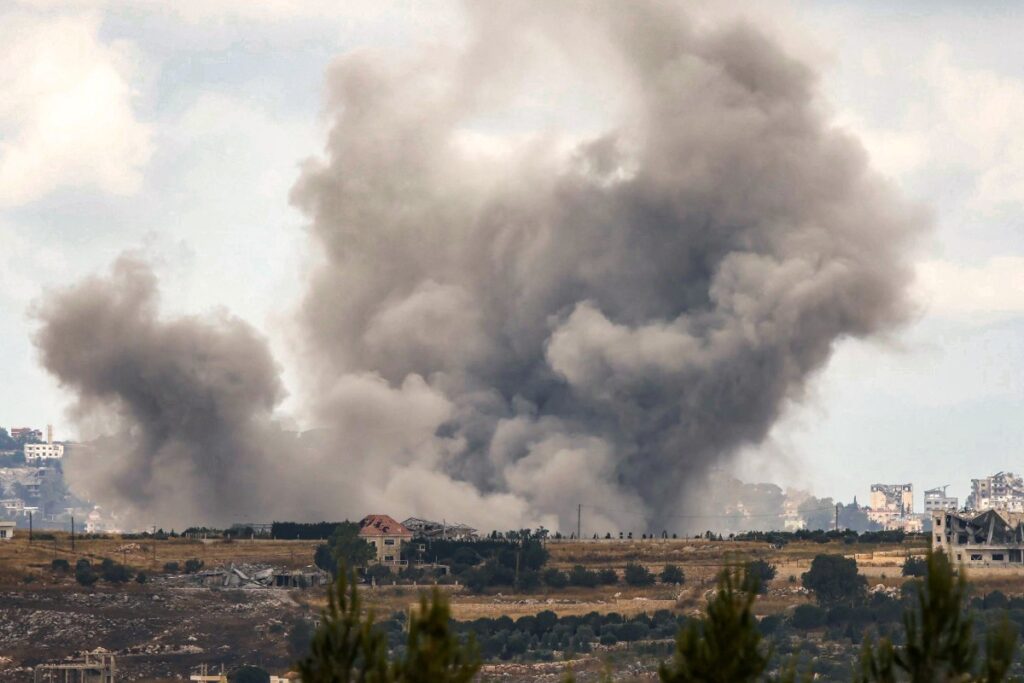
    On a Sunday that marked his 80th birthday, former U.S. President Donald Trump once again asserted that a historic agreement to end the ongoing Middle East conflict was mere hours from being finalized — but he lashed out angrily at Israel, blaming an unexpected airstrike on a Hezbollah stronghold in southern Beirut for throwing the diplomatic process off schedule. The attack has already drawn stark warnings of immediate retaliation from Iran, leaving a fragile push for peace hanging in the balance.

  • Samba Stalled

    Samba Stalled

    EAST RUTHERFORD, N.J. — The 2026 FIFA World Cup kicked off its Group C play at MetLife Stadium on Saturday with a dramatic 1-1 stalemate between five-time champions Brazil and 2022 semi-finalists Morocco, offering an early sign that Brazil’s quest for a historic sixth title will be far from straightforward under first-time foreign head coach Carlo Ancelotti.

    Morocco, who shocked the football world by reaching the final four four years ago, got off to a flying start under manager Mohamed Ouahbi, who had urged his squad to cast aside any intimidation facing the global powerhouse. That gameplan paid off in the 21st minute, when playmaker Brahim Diaz threaded a precision through pass that put Ismael Saibari through on goal. The PSV Eindhoven attacker outpaced Brazil center backs Marquinhos and Gabriel Magalhaes, then coolly lobbed a scooped finish over onrushing Brazil goalkeeper Alisson Becker to put the North African side ahead.

    Brazil, missing their all-time leading goalscorer Neymar, who continues his recovery from a 2023 calf injury that has kept him out of international action, struggled to find rhythm for much of the first half. But Real Madrid winger Vinicius Junior produced a moment of individual brilliance in the 32nd minute to level the score. Receiving a neat layoff from Bruno Guimaraes on the left edge of the 18-yard box, Vinicius cut inside onto his stronger right foot and fired a blistering strike past Morocco goalkeeper Yassine Bounou into the far corner of the net.

    The equaliser injected new energy into a sluggish Brazil side, and they came close to taking the lead before halftime, when Lucas Paqueta’s acrobatic volley was pushed away by a sharp save from Bounou. After the break, Ancelotti’s side pushed hard for a winning goal, capitalising on a quick throw-in to catch Morocco off guard, but Bounou was equal to Igor Thiago’s close-range effort. Later attempts from Raphinha and Danilo both sailed straight into the waiting hands of the Morocco keeper, who put in a man-of-the-match performance to keep his side level.

    Morocco nearly snatched a last-gasp upset in stoppage time, when Neil El Aynaoui’s long-range drive was parried by Alisson, who had to scramble quickly to block Ayoube Amaimouni’s follow-up rebound, preserving the share of the points for both sides.

    The result stretches Brazil’s unbeaten streak in World Cup opening matches all the way back to 1934, but the underwhelming performance has amplified questions about Ancelotti’s side as they aim to end a 24-year title drought. The Italian manager, who took the role to end Brazil’s longest ever stretch without a World Cup triumph, entered the tournament after a fifth-place finish in South American qualifying, but has repeatedly maintained his squad has the quality to compete with any side in the expanded 48-team tournament.

    Saturday’s match also carried nostalgic weight, as members of Brazil’s last World Cup-winning squad from 2002 — including Ronaldo, Roberto Carlos and Kaka — were in attendance at the New Jersey venue to watch the current generation begin their campaign.

    Looking ahead to the second round of group play, Brazil will face minnows Haiti in their next fixture, while Morocco will take on Scotland as both sides fight to secure a spot in the knockout stage of the tournament.

  • Minister Samuda to attend 11th Our Ocean Conference in Kenya

    Minister Samuda to attend 11th Our Ocean Conference in Kenya

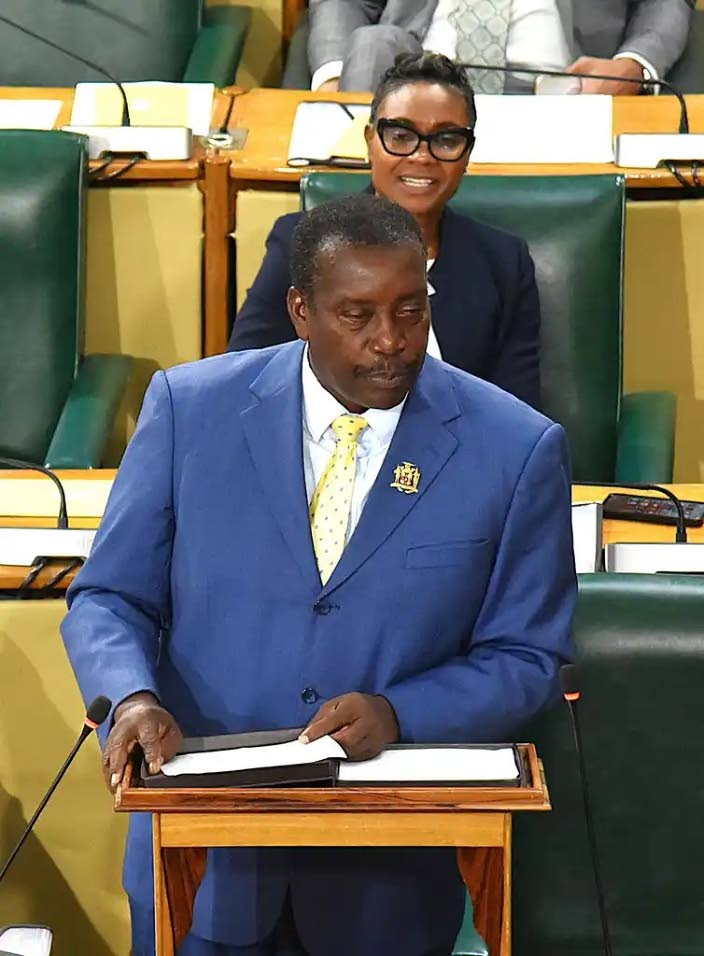
    In a move that underscores Jamaica’s longstanding dedication to global ocean protection and climate action, Jamaica’s Minister of Water, Environment and Climate Change Matthew Samuda will embark on a trip to coastal Kenya next month to take part in a landmark global environmental summit. From June 16 to 18, Samuda will join hundreds of international leaders and stakeholders in Mombasa and Kilifi counties for the 11th iteration of the Our Ocean Conference (OOC11), the first time this critical global gathering will be hosted on African soil.

    Organized around the unifying theme “Our Ocean, Our Heritage, Our Future,” this year’s conference brings together heads of state, senior policymakers, leading marine scientists, and private and civil society stakeholders from across the globe. The core mission of the three-day event is to accelerate tangible, actionable progress on three interconnected priorities: protecting vulnerable ocean ecosystems, boosting coastal communities’ ability to withstand climate change impacts, and building an inclusive, sustainable blue economy that benefits both people and the planet.

    In an official statement released by Jamaica’s Ministry of Water, Environment and Climate Change, the department outlined that Samuda’s attendance is far more than a diplomatic gesture—it is a clear reflection of Jamaica’s unwavering commitment to environmental stewardship and cross-border cooperation on global climate and ocean challenges. As a Small Island Developing State (SIDS) on the frontlines of climate change and sea-level rise, Jamaica has long emerged as a leading voice for stronger global collaboration and increased targeted investment in marine protection. The country has consistently pushed for frameworks that not only safeguard critical ocean habitats but also generate equitable, long-term economic opportunities for the coastal communities that depend on healthy marine ecosystems for their livelihoods.

    During his time at the conference, Samuda is scheduled to take part in a series of high-level plenary discussions focused on global ocean governance, as well as hold bilateral meetings with other ministers and stakeholder representatives. These engagements will center on strengthening international collaborative frameworks and showcasing the progress Jamaica has already made in advancing effective ocean governance and innovative environmental management practices.

    The statement reaffirmed that the Jamaican government remains fully committed to advancing domestic policies that protect the country’s rich natural resources, while continuing to contribute meaningfully to global collective efforts to tackle the climate crisis and preserve the long-term health of the world’s shared oceans.

  • Blood appeal

    Blood appeal

    Jamaica’s national blood supply system is grappling with a persistent, severe shortage that disproportionately affects access to rare negative blood types — particularly O-negative, the universal blood type critical for emergency care. Dr. Kamille West-Mitchell, director of the National Blood Transfusion Service, has issued an urgent public appeal for Jamaicans, especially those with O-negative blood, to donate regularly to rebuild strained stockpiles.

    Currently, the nation collects roughly 30,000 units of blood annually, a volume that meets only half of the estimated 60,000 units required to meet patient needs across the country. Compounding this gap is the natural rarity of negative blood types among the Jamaican population: just 1% to 3% of residents carry any negative blood type, including A-negative, B-negative, AB-negative, and O-negative. This leaves the national donor pool for these life-saving products extremely small.

    The strain is most acute for O-negative blood, a product with two overlapping, high-stakes demands. First, patients with O-negative blood can only receive transfusions from O-negative donors. Second, it is the default option for emergency scenarios where a patient’s blood type is unknown — a common occurrence in traumatic accidents, emergency surgeries, and unplanned violent incidents, where any delay in transfusion can be fatal.

    “If we don’t know your blood type — say you’ve been in a car crash or need emergency surgery — O-negative is the safe universal option we turn to to minimize risk,” West-Mitchell explained in an interview with the Jamaica Observer. “We have accidents, violence, all kinds of emergencies where people are bleeding and we don’t have time to test their type. We definitely need far more O-negative than we currently have.”

    On any given weekend, West-Mitchell’s team receives around 30 requests for O-negative blood that they cannot fulfill. Every night, roughly 200 patient requests for prepared blood units flow into the national blood bank, and demand consistently outpaces available supply. This shortage forces clinicians to carefully ration O-negative stock to cover the most urgent cases, from pediatric patients to trauma victims to O-negative patients in immediate need.

    West-Mitchell shared that many O-negative Jamaicans who do not donate often treat the need for their blood lightly, joking with her about the high demand. But for the blood service, the gap is no laughing matter. “It’s not the blood bank or the staff that wants your blood,” she explained. “It’s that at 4 a.m., I will get a call asking for O-negative for a patient in Mandeville, or a baby at Victoria Jubilee Hospital, and I have to say no. We can’t force people to donate — we can only ask.”

    Acknowledging common barriers to donation — fear of needles, busy schedules — West-Mitchell stressed that donors are only asked to give once a year at most, a small time commitment that produces outsized impact. For O-negative Jamaicans specifically, regular annual donation is critical to supporting both fellow O-negative community members and emergency patients of all blood types.

    “Only around 3% of our population has O-negative blood,” West-Mitchell noted. “We have to look out for one another. If you don’t donate, your O-negative brothers and sisters won’t have blood when they need it.”

    To ease public concerns, West-Mitchell emphasized that all donation processes follow strict safety protocols, with every precaution taken to protect donor comfort and health. She recalled a powerful encounter that drives her advocacy: a mother of a critically ill 5-year-old who watched her son receive a life-saving transfusion from an anonymous donor.

    “She looked up at the blood bag and said, ‘This person doesn’t even know my son, and they did this so he could get through the night,’” West-Mitchell shared. That moment, she said, underscores the direct, life-changing impact of every single donation.

    West-Mitchell extended her gratitude to the regular donors whose contributions keep the blood service running, noting that every unit of blood given to a patient comes from a stranger who gave up a small amount of time to help someone they would never meet.

    Expressing confidence in the Jamaican public’s longstanding culture of community care, West-Mitchell ended her appeal with a call to action: “When it comes down to it, Jamaicans care about Jamaica. One of the greatest ways to show that is to take a few minutes, brave the needle, and help a stranger. You never know who you might save.”

  • Trump turns 80 with cage fight at the White House

    Trump turns 80 with cage fight at the White House

    On a milestone Sunday marking his entry into his ninth decade of life, former and current U.S. President Donald Trump is celebrating his 80th birthday with an unprecedented, deeply divisive public spectacle: a full Ultimate Fighting Championship (UFC) card hosted directly on the White House South Lawn. Dubbed “UFC Freedom 250,” the event ties into nationwide festivities honoring the 250th anniversary of U.S. independence, bringing 14 top UFC stars to compete inside the promotion’s signature eight-sided caged octagon, built in a temporary 4,000-seat venue dubbed “The Claw” on the grounds of America’s most iconic executive residence. With an overall price tag estimated at $60 million, organizers and the White House insist the entire cost is being covered directly by the UFC, pulling no funds from public coffers.

    The event carries deep personal and political meaning for the billionaire president, who has long cultivated close ties to mixed martial arts (MMA) — a sport whose core fanbase of young, working-class men aligns closely with Trump’s own political base. Back in May, Trump welcomed participating fighters to the Oval Office, where he hyped the upcoming brawl as a one-of-a-kind historic spectacle, telling attendees “This is going to be an event you’re really gonna like.” In a dramatic entrance planned for the card, top competitors will reportedly walk out directly from the Oval Office before marching down to the South Lawn cage, a theatrical touch that blurs the lines between executive governance and sports entertainment.

    Between bouts, the event will weave in tributes to the U.S. 250th anniversary celebrations, including historical vignettes, performances by U.S. military bands, a military flyover, a military parachute demonstration, and a 10-minute fireworks display to close out the night. Weigh-ins for the fights are being held at the Lincoln Memorial, and organizers have set up giant screens on the National Mall to accommodate an additional 125,000 fans who cannot fit into the White House venue, effectively turning a large swathe of downtown Washington D.C. over to the birthday spectacle.

    Not surprisingly, the event has drawn sharp criticism from across the political spectrum and local communities. Critics argue that hosting a violent, glitzy extravaganza on the White House lawn is deeply inappropriate at a moment when the U.S. is engaged in active conflict with Iran, which has driven sharp increases in fuel and consumer prices that burden working American households. Last week, two local D.C. residents filed a lawsuit to block the event, arguing it amounted to public corruption, but a federal judge rejected the bid to halt the fights, clearing the way for Sunday’s bouts to proceed as planned.

    UFC officials have pushed back against claims that the event inappropriately mixes sports and politics. Chief Content Officer Craig Borsari told reporters this week that the promotion simply sees the occasion as “an unbelievable, incredibly unique opportunity to celebrate this country and our athletes.” Many competing fighters have echoed that framing, focusing on the unprecedented global exposure the White House venue brings to the sport. “We’re not in politics in any way but we have the opportunity to be exposed to the eyes of the world — we have to take it,” French top contender Ciryl Gane told AFP earlier this month. American fighter Michael Chandler, who is scheduled to compete on Sunday’s main card, called the event the “biggest fight event in combat sports history.”

    Beyond the controversy over the event itself, the over-the-top birthday celebration has also drawn attention to questions surrounding Trump’s health as he turns 80, making him the oldest person ever to hold the office of U.S. president. Trump has long sought to frame himself as unusually virile, frequently comparing his stamina to that of Democratic predecessor Joe Biden, who dropped his re-election bid after a widely panned debate performance against Trump. Though Trump’s personal physician has repeatedly stated the president is in excellent health, reports of recurring health issues — including bruised hands, a chronic vein condition in his legs, and frequent apparent drowsiness during official meetings — have circulated among Washington insiders. Trump himself has acknowledged ambivalence about hitting the 80-year milestone, saying in a recently posted official video, “It’s not a number I like, but I’m here nevertheless.”

    The spectacle also fits a long-established pattern of Trump’s approach to the presidency, observers note, pointing to his background as a reality television star and real estate developer known for large, high-profile public events. Last year, for Trump’s 79th birthday, he oversaw an unprecedented military parade in Washington celebrating the 250th anniversary of the U.S. Army. “He’s treating the presidency the way he treats his previous career, a big flashy show,” Peter Loge, director of George Washington University’s School of Media, told AFP. That pattern has held true for his 80th birthday: Trump is set to remain front and center throughout the event, taking in every bout between the gore and the glitz that has become a defining feature of his political brand.

    Adding another layer of political context to the day, there has been widespread speculation that Trump could announce a long-sought peace deal with Iran to coincide with his birthday, though Iranian officials have openly cast doubt on that timeline, leaving the prospect of a last-minute policy announcement uncertain as the country gathers for the fights.

  • Yaksta’s new album June 15

    Yaksta’s new album June 15

    One of Jamaica’s most celebrated authentic reggae voices, Yaksta — legally known as Kemaul Martin, also nicknamed the “Bush Lawd” — is making a major return to the global music scene with his most refined and impactful creative project to date: his second full-length album, *The Microphone Saved Me*, set to drop worldwide on June 15.

    Widely recognized for crafting raw, unfiltered, core reggae sound, Yaksta has carved out a reputation as a thought-provoking artist who uses culturally rooted music to push for collective awakening. His work is anchored in unshakable personal conviction and infused with spiritual purpose, a throughline that carries through his newest release.

    Spanning 15 carefully curated tracks, *The Microphone Saved Me* dives into a rich tapestry of themes: radical social change, personal growth, heartfelt gratitude, and enduring love. A key throughline of the album is Yaksta’s embrace of the next chapter of cross-house unity within the Rastafari movement, a theme woven into multiple tracks across the project.

    The album highlights the full range of Yaksta’s artistic talent, showcasing his versatile lyrical skill and unflinching approach to storytelling, while also revealing a lighter, more playful side that shifts seamlessly between sharp cultural commentary, spiritual reflection, and intimate personal anecdotes.

    Two defiant lead singles anchor the project: *Roar* and *The Return*. These unapologetic, reflective tracks have already sparked intense conversation among reggae fans worldwide, reaffirming Yaksta’s standing as one of the genre’s leading contemporary voices. Other standout tracks include *Order*, a smooth, powerful call for Rastafari unity; *Thankful*, a collaboration with artist Dre Tegs; the upbeat, uplifting *It’s Okay*; and *Through It All*, which explores the resilience required to navigate life’s hardships. Additional tracks including *Jah Live*, *For Sale* (featuring Silk Boss), *Life* (featuring The Gideon), *Splinters in My Heart* (in partnership with Troyton Music), *Pick Up* (a collaborative track with stablemates Matthew Malcolm, Kayland Arnold, and Sonic Gold), and *Next to Me* guide listeners through a cohesive narrative journey touching on struggle, resilience, personal accountability, growth, romance, and signature reggae rhythm.

    At its core, *The Microphone Saved Me* is a personal testimony of transformation and survival. It tells the story of an artist whose deep connection to music became a lifeline that allowed him to turn personal experience into bold, critical artistic expression.

    In a statement discussing the album, Yaksta emphasized the deeply personal and intentional nature of the project. “This album represents a journey of divine consciousness as a man,” he explained. “Every song comes from a real place. This is more than music, it’s a call to remain conscious in a world full of distractions; to stand firm in truth when compromise is celebrated; and to remember that growth, accountability, and purpose are still revolutionary. That’s the mission, and that’s the message.”

    Following its June 15 release, *The Microphone Saved Me* will be available for streaming across all major global digital music platforms, bringing Yaksta’s signature message and sound to audiences worldwide.

  • Skydiving plane crash kills 12 in Missouri

    Skydiving plane crash kills 12 in Missouri

    A catastrophic plane crash has claimed the lives of all 12 people on board a private skydiving aircraft that went down Sunday in rural central Missouri, United States, emergency response officials confirmed to AFP. The tragedy unfolded near Butler Memorial Airport, located just 60 miles south of Kansas City in Bates County, according to Dennis Jacobs, director of the county’s local Emergency Management Agency. Local media accounts detail that the plane was carrying 11 recreational skydivers and a single qualified pilot when it departed the airfield around 11:30 a.m. local time. Almost immediately after lifting off, for reasons that remain unclear at this early stage of investigation, the aircraft reversed course and came down in a field adjacent to a major state highway. In the immediate aftermath of the crash, state highway authorities closed the affected stretch of road to through traffic, both to support emergency response operations and to secure the crash site for official investigators. In the hours following the incident, multiple response teams arrived at the scene to conduct search and recovery operations and begin the preliminary probe into what caused the crash. These teams include local emergency medical and fire crews, officers from the Missouri State Highway Patrol, and technical investigators from two federal oversight bodies: the Federal Aviation Administration, which regulates civilian aviation, and the National Transportation Safety Board, which leads probes into major civil aviation accidents across the United States. As of Sunday evening, no further details on the identities of the victims or potential causes of the crash have been released to the public.

  • Covid-Special ed link?

    Covid-Special ed link?

    SAVANNA-LA-MAR, Westmoreland — Jamaica’s education system is facing an unprecedented crisis: a sharp, sustained surge in demand for special education services that has hit the country’s most urban regions particularly hard. Senior education officials say the spike tracks closely with major public health outbreaks over the past decade, with the sharpest rise coming among children born during the COVID-19 pandemic. To meet this growing need, the Ministry of Education has launched a targeted expansion initiative to convert underused school infrastructure into accessible special education hubs, while exploring cross-government collaboration to address gaps in long-term planning.

    Dionne Gayle-Smart, Assistant Chief Education Officer in the ministry’s Special Education Unit, outlined the scope of the crisis during an exclusive interview with the Jamaica Observer, held on the sidelines of the official opening of a new primary school block at Savanna-la-Mar Inclusive Academy in Westmoreland last Thursday.

    “Across the entire island, we are seeing consistent growth in the number of students requiring specialized support — from learners on the autistic spectrum to those living with attention deficit hyperactivity disorder, or ADHD,” Gayle-Smart explained. “Even here in Westmoreland, our unit has recorded a steady rise in placement applications for special education. Nationally, though, the situation in Kingston and St Andrew is particularly alarming.”

    Drawing on years of data tracking enrollment trends, Gayle-Smart noted that demand spikes have consistently followed major epidemic and pandemic events that have impacted Jamaica over the last 10 years. The country recorded its first large-scale chikungunya outbreak in 2014, followed by a Zika epidemic in 2016, and the national COVID-19 pandemic in 2020.

    “I am not a public health researcher, but the timeline lines up very clearly with these three major outbreaks,” she said. “In the years following each event, we have seen a measurable increase in the number of school-aged children presenting with neurodevelopmental conditions that require special education support.”

    Official unit data puts the increase in demand following the chikungunya and Zika outbreaks at roughly 25 percent, Gayle-Smart said. But the rise after COVID-19 has been far steeper, with demand jumping between 50 and 60 percent. Today, the children born at the height of the pandemic between 2020 and 2021 — who officials have dubbed “Covid babies” — are now entering primary school, bringing the crisis to a head.

    “When you map the timestamps, it lines up perfectly: the children born in 2020 are now five and six years old, and they are the cohort currently seeking special education services,” she added.

    To address the sudden influx of students needing support, the Ministry of Education has rolled out its flagship Inclusive Spaces Programme, an initiative that repurposes unused school infrastructure to expand specialized capacity without the cost of building entirely new facilities from the ground up. The program targets former primary and junior high schools, which have surplus space after the national phase-out of the junior high school model.

    “This is one of my core projects, and we are working to roll out these new accessible spaces across every region of the country,” Gayle-Smart said. “The vacant wings left after the junior high phase-out are being fully retrofitted and refurbished to serve as modern, inclusive learning environments for students with special needs.”

    The first two new inclusive hubs, located at Constant Spring Primary and John Mills Primary in the high-demand region of St Andrew, are scheduled to open to students this September. Additional hubs in St Catherine’s Region Six are set to welcome their first cohorts as early as January, reflecting the higher concentration of demand in Jamaica’s urban centers. But expanding access to rural regions like Region Four — which covers Westmoreland, Hanover, and St James — presents unique, complex challenges that officials are still working to resolve.

    “Working in the rural western parishes is a little bit ticklish,” Gayle-Smart acknowledged. “Many of the available vacant spaces are located in the mountainous interior, far from population centers, which creates major transportation barriers for students and their families.”

    To overcome this barrier, the ministry is currently exploring a partnership between the Inclusive Spaces Programme and the National Rural School Bus Programme to provide dedicated transportation for students accessing rural special education hubs. As of yet, however, no suitable site has been confirmed for a permanent inclusive space in Region Four. In urban centers within the region, such as Savanna-la-Mar and Montego Bay, existing school buildings are already operating at full capacity, leaving no vacant space to repurpose.

    “In the urban centers of western Jamaica, all existing school space is already in use, so repurposing is not an option,” Gayle-Smart explained. “That means we have to shift toward planning for new construction, which we are actively exploring at this time.”

    Beyond expanding physical infrastructure, the ministry is pushing for long-term systemic change through inter-ministerial collaboration with the Ministry of Health and Wellness, with the goal of identifying developmental delays and planning for future demand years before children reach school age. Gayle-Smart said early data sharing between health and education authorities would allow the ministry to proactively plan capacity, rather than reacting to sudden demand surges after they emerge.

    “A seamless, cross-ministerial partnership would make a world of difference for our students,” she explained. “If the Ministry of Health can share early data on children who show developmental markers or early signs of special needs at birth, we can forecast demand years in advance. If we had had that data after the 2020 COVID-19 peak, we would have known how many children would need support by 2025-2026, and we could have built capacity ahead of time. That kind of inter-sectoral planning is absolutely critical for addressing this crisis moving forward.”

    Jamaica’s experience is far from unique: the island’s surge in special education demand mirrors a growing global trend, with school systems across the world struggling to keep up with rising need. Recent U.S. federal data shows more than 8.2 million American students currently qualify for special education services, while a June 2025 BBC report found that one in five students in England now receives special education support — a 44 percent increase since 2016.

  • Germany thrash Curacao 7-1 in World Cup group match

    Germany thrash Curacao 7-1 in World Cup group match

    HOUSTON, Texas – Four-time World Cup champion Germany has secured its first opening-match victory at the global tournament since claiming the 2014 title, delivering a commanding 7-1 defeat to first-time qualifier Curacao in their Group E opener at Houston on Sunday. The lopsided result puts Hansi Flick’s (Julian Nagelsmann’s) side in a strong position to advance to the knockout round for the first time in a decade, though stiffer tests await against group opponents Ecuador and Ivory Coast in the coming matches.

    The opening 10 minutes of the match saw Germany take an early lead, with 22-year-old Felix Nmecha curling a stunning strike past Curacao goalkeeper Eloy Room in the sixth minute after a crisp build-up play from Florian Wirtz. The opening goal prompted an animated celebration from head coach Julian Nagelsmann, who let out a loud roar of approval on the sidelines. Nmecha, who like teammate Jamal Musiala represented England at youth international level before committing to Germany, nearly doubled his tally just minutes later with a powerful long-range effort that sailed just wide of the post.

    The Caribbean underdogs responded with a surprise equalizer in the 16th minute, when Livano Comenencia’s shot took a heavy deflection that wrong-footed 40-year-old German captain Manuel Neuer. Neuer, the oldest player to ever represent Germany at a World Cup and the first to compete in five editions of the tournament, could only shake his head as the ball found the back of the net, sending Curacao’s passionate fan group, the Blue Wave, into a frenzy in the stands. The moment also prompted a jubilant celebration from Curacao manager Dick Advocaat, 78, the oldest head coach in this year’s tournament, who leapt from his bench with arms raised.

    A mid-first-half hydration break gave Germany the chance to reset and refocus. “The goal we conceded was unnecessary, but that’s part of the game,” said young defender Nathaniel Brown after the match. “I’m proud that we didn’t let our heads drop after the equalizer.”

    Curacao’s desperate block-and-reboot defense held Germany off for nearly 20 minutes after the equalizer, with Room pulling off a brilliant save to tip Nico Schlotterbeck’s point-blank header over the crossbar. But the underdog defense finally cracked in the 38th minute, when Schlotterbeck found himself unmarked on a corner kick and headed home his first ever senior international goal to restore Germany’s lead.

    Germany extended their advantage to 3-1 just before halftime, when Kai Havertz converted a penalty after Nmecha was brought down in the box by Riechedly Bazoer. The European side picked up exactly where they left off when the second half kicked off, with Musiala slotting home from a tight angle just 69 seconds after the restart, stretching the lead to 4-1.

    Leroy Sane missed a clear chance to make it 5-1 just after the hour mark, firing wide with only Room to beat, but substitute fullback Nathaniel Brown made no such mistake minutes later, firing home his first ever international goal ahead of the second hydration break. Speaking after the match, Brown called the moment “indescribable”. “To score in my first ever World Cup match, with my whole family here in the stands, then to celebrate with the guys – it’s simply incredible,” the 22-year-old said.

    Substitute Deniz Undav, who has enjoyed a red-hot run of form for Germany, made it 6-1, notching his seventh goal in his last seven international appearances. Havertz wrapped up the scoring with his second goal of the match and 24th for his country in the final minutes, capping off a 7-1 win that replicated the iconic scoreline Germany recorded against host Brazil in the 2014 World Cup semi-final.