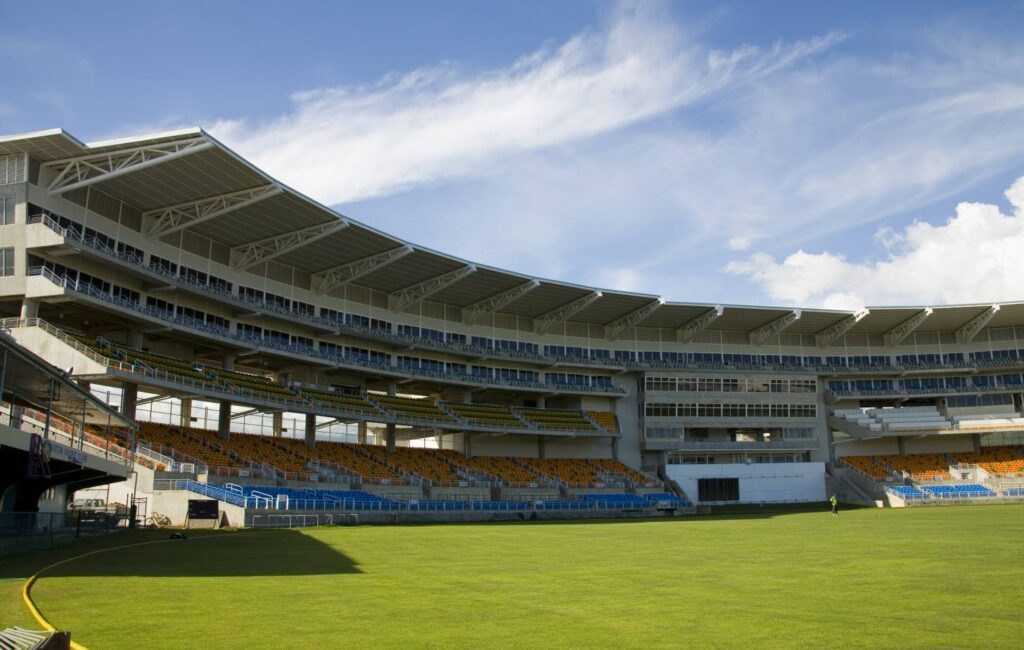
标签: Jamaica

牙买加

  • Kelly-Ann Murdock to act as director of corruption prosecution at Integrity Commission

    Kelly-Ann Murdock to act as director of corruption prosecution at Integrity Commission

    Jamaica’s anti-corruption watchdog, the Integrity Commission (IC), has a new acting head of corruption prosecution, following the early resignation of former director Roneiph Lawrence. Veteran prosecutor Kelly-Ann Murdock officially took up the role in a swearing-in ceremony held Tuesday, March 31, where Jamaica’s Governor-General Sir Patrick Allen administered the oath of office. The appointment was announced publicly this Monday via the Governor-General’s official Instagram account.

    In the official announcement post, the Governor-General extended his warm well wishes to Murdock as she embarks on her new leadership tenure. He emphasized that the role Murdock steps into plays an irreplaceable part in protecting institutional integrity and enforcing accountability across Jamaica’s national justice framework.

    Murdock’s appointment fills the vacancy left by Lawrence, who stepped down from the post last month to accept an appointment as a domestic judge in Jamaica. Lawrence’s tenure in the same role was marked by political controversy from the start: when he was appointed to the position in 2023, Jamaica’s ruling Jamaica Labour Party raised formal objections over his long-standing personal friendship with Dr Dayton Campbell, General Secretary of the opposition People’s National Party (PNP).

    According to public profiles published on the IC’s official website, Murdock brings a wealth of specialized prosecutorial experience to the role, built over years of service across Jamaica’s justice system and the broader Caribbean region. She previously held multiple senior roles at Jamaica’s Office of the Director of Public Prosecutions (ODPP), including legal advisor to the Director of Public Prosecutions, crown counsel, and Assistant Director of Public Prosecutions. Beyond Jamaica’s borders, Murdock also served as a prosecuting attorney in the Turks and Caicos Islands, gaining hands-on regional legal experience that the IC highlights as a valuable asset for her new role.

    Murdock’s professional legal credentials date back to December 2016, when she was formally admitted to the Jamaican Bar. Her academic background spans multiple top institutions across the Caribbean and North America: she earned a Bachelor of Science in both International Relations and Criminology from the University of the West Indies’ Mona Campus, followed by a Bachelor of Laws degree from the University of the West Indies’ Cave Hill Campus. She completed her foundational legal training with a Certificate in Legal Education from Jamaica’s Norman Manley Law School, and later pursued advanced professional development in project management and strategic leadership at Lambton College in Toronto, Canada.

    Over the course of her legal career, Murdock has overseen a wide portfolio of high-stakes, complex criminal cases, including many matters of major public interest, per the IC’s statement. The commission notes she contributed to the preparation of several landmark prosecutions, including work on what the IC describes as “one of the largest gang trials in Jamaica” — the commission did not release further details or identify the specific case in its public announcement.

    In a formal statement outlining Murdock’s appointment, the IC reaffirmed her commitment to core institutional values: “Mrs Murdock is committed to upholding the rule of law, strengthening public trust and advancing the principles of accountability, transparency and integrity in public service.”

  • US$15 million enough for FAST, says Holness

    US$15 million enough for FAST, says Holness

    Jamaican Prime Minister Dr. Andrew Holness has introduced a critical policy adjustment to the government’s flagship post-disaster recovery and economic expansion initiative, cutting the minimum investment requirement for the Facilitated Acceleration of Strategic Transformation (FAST) by 90% to unlock broader private sector participation.

    FAST operates as a complementary framework to the proposed National Reconstruction and Resilience Authority (NaRRA), the central government body tasked with leading rebuilding efforts in the wake of Hurricane Melissa, alongside delivering transformative long-term infrastructure projects including a new Kingston Public Hospital, the expansion of Vernamfield Airport, and a new government administrative campus at Heroes’ Circle. When the initiative was first unveiled during Holness’ March budget address, the prime minister set a minimum investment cap of US$150 million for projects seeking to access the FAST accelerated approval pathway. That threshold has now been lowered to just US$15 million, a change announced Tuesday during the opening of parliamentary debate on the NaRRA establishment bill.

    Holness told the House of Representatives that the adjustment follows a thorough review of Jamaica’s current investment climate and the volume of private capital the government aims to attract for its recovery and growth agenda. “After careful reflection on the investment landscape and the scale of private capital the Government would need to crowd in, we have decided to lower the FASTJamaica investment threshold from US$150 million to US$15 million. This is a deliberate decision to widen the door for resurgence. At US$15 million a broader universe of strategic investors — local, regional, Diaspora, international — can qualify for the FAST pathway,” the prime minister stated.

    He outlined the transformative potential of the adjusted threshold, noting that even 100 qualifying projects at the new minimum would generate US$1.5 billion in private sector investment, delivered at a much faster pace than traditional government-led projects. This influx of capital would translate to new job opportunities, expanded industrial and institutional capacity, and broad-based economic growth across every region of Jamaica, Holness added.

    Under the FAST framework, designated private-sector led strategic investment projects gain access to a dedicated, streamlined approval process designed to cut through bureaucratic red tape that has long delayed major developments in Jamaica. While NaRRA will not directly deliver these private projects, it will hold a core coordination role to speed up progress across government. “NaRRA will provide the power of expedition — coordinating across agencies, accelerating regulatory approvals, and compressing the enabling environment that a strategic investor needs to commit capital and commence execution,” Holness explained.

    The prime minister pointed to a widespread backlog of stalled projects across Jamaican government agencies, municipalities, and ministries, where many viable proposals have sat waiting for final approvals and clear decisions for months or even years. For projects that meet the new US$15 million threshold, the FAST pathway will change that: investors will receive a clear yes or no decision, secure all required permits and approvals, and be integrated into the coordinated FAST ecosystem administered by NaRRA.

    Holness emphasized that the new framework directly addresses a long-standing problem that has cost Jamaica dearly in lost economic opportunity. For decades, he argued, countless promising, job-creating private sector investments have opted to locate in other countries that offer more agile, faster approval processes, where decisions on major projects are delivered in weeks or months rather than years. “Too many promising, transformational, private sector investments that would create thousands of jobs, generate significant tax revenues, and reshape our economic geography have gone elsewhere. They have gone to countries that are simply more nimble, countries that can say ‘yes’ to strategic investors in weeks or months, not years,” he said.

    In a move to address concerns that speed would come at the cost of transparency and accountability, Holness stressed that the new system will maintain rigorous oversight standards. On the contrary, he claimed, NaRRA will operate with a level of management discipline, transparent reporting, and public accountability that has never been applied to large-scale government infrastructure delivery in Jamaica to date. To enforce this accountability, the recently established Jamaica Reconstruction and Resilience Oversight Committee (JAMRROC) — modeled after the widely respected Economic Programme Oversight Committee — will oversee NaRRA’s operations and ensure it adheres to strict governance standards.

  • WATCH: Swaby hails 2026 Carnival a major success despite shooting incident

    WATCH: Swaby hails 2026 Carnival a major success despite shooting incident

    KINGSTON, Jamaica — The 2026 Kingston Carnival season has been celebrated as a major economic win for the Jamaican capital, even as city leaders grapple with an outbreak of violence that left three people wounded over the weekend. Andrew Swaby, Mayor of Kingston, stressed that the annual celebration delivered widespread growth across multiple local industries, standing by his assessment of the event as a resounding success in spite of the shooting at the popular Big Wall carnival party.

    In an official statement released this week, Swaby emphasized that Carnival has solidified its position as a key economic driver for Kingston, injecting new energy into the city’s urban core and spurring activity across hospitality, retail, transportation and countless small business sectors. “Once again, the event has proven its lasting value, and its growing economic importance to our city cannot be overstated,” Swaby said. “I want to extend my sincere recognition to the mas bands, event organizers, and thousands of patrons who came together to make this year’s celebration a success.”

    Swaby detailed that the Kingston and St Andrew Municipal Corporation (KSAMC) embedded itself in the planning process from the very beginning, working hand-in-hand with event stakeholders to fine-tune logistics, coordinate public services, and lay the groundwork for smooth execution. This year’s event, he argued, serves as a powerful model for what public-private collaboration can achieve when paired with intentional strategic planning and a shared commitment to delivering a high-quality experience for all attendees.

    Among the most notable improvements highlighted by the mayor was a marked upgrade in waste management and post-event cleanup operations. Swaby reported that city crews cleared parade routes and event spaces far faster than in previous years following the annual road march, cutting down on environmental disruption and returning downtown streets to normal daily use in record time. He called this progress a major milestone, crediting the hard work and dedication of municipal cleaning teams and event staff. To address longstanding concerns about paint stains left on public infrastructure from Carnival activities, organizers and municipal officials tested all paint used in parades and events to ensure formulations could be easily and fully removed after the celebration, a proactive step designed to minimize avoidable disruption to the city.

    Even as leaders celebrated the event’s many wins, they did not shy away from addressing the violent incident that marred the final weekend of the season. Swaby issued a firm condemnation of the shooting at the Big Wall carnival party, which left three people injured: one a bystander, and including popular local podcaster Jaii Frais. Local reports confirm the incident involved music producer Jahvy Ambassador, associates of dancehall artist 450, and Frais, and Jahvy Ambassador has since been taken into police custody. Organizers of the Big Wall event have already issued a public apology for the violence.

    “We unequivocally condemn all acts of violence that took place at this event,” Swaby said. “Our thoughts are with everyone who was injured, and we extend our deepest wishes for a fast and full recovery to all three affected individuals.”

  • Stinking sore at UHWI

    Stinking sore at UHWI

    On Tuesday, Jamaica’s Parliamentary Public Accounts Committee (PAC) deepened its probe into longstanding mismanagement allegations at the University Hospital of the West Indies (UHWI), uncovering fresh troubling evidence of systemic improper governance that has raised serious alarms among lawmakers. The review was launched following the release of a damning special audit report from the auditor general into the public hospital’s daily operations and financial management. What PAC members heard during Tuesday’s hearing left many top committee officials stunned: senior UHWI executives confirmed that the major public health institution carries a staggering $40 billion in unpaid tax obligations to the state, and has not developed any formal structured repayment plan to resolve the massive liability. Compounding this revelation, the hospital continues to operate under a temporary tax compliance certificate, a temporary status that is meant only for entities working to resolve outstanding compliance issues, rather than holding billions in unpaid taxes. The hearing also exposed another contradiction in the hospital leadership’s previous accounts: UHWI executives had previously claimed that severe flooding at the facility destroyed key physical files linked to multiple millions of dollars in awarded contracts, but they walked back that explanation during questioning before the PAC. Lawmakers also pressed executives on reports that an outside private entity was allowed to use UHWI’s official tax-exempt import status to bring goods into the country, resulting in more than $10 million in unpaid customs duties that the public is now forced to absorb. UHWI representatives gave inconsistent, halting responses when asked to explain how the private company gained access to the hospital’s tax-exempt privileges. As one of the Caribbean’s leading public teaching and referral hospitals, the ongoing governance and financial irregularities at UHWI have sparked growing public concern about oversight of state-funded health institutions, and the PAC is expected to continue its review of the audit findings in upcoming hearings, with further questioning of hospital leadership planned.

  • Teenager kills nine, wounds 13 in Turkey school shooting

    Teenager kills nine, wounds 13 in Turkey school shooting

    ISTANBUL — Just 24 hours after a separate school shooting left 16 wounded in southeastern Turkey, a second mass shooting at a middle school in the country’s southern Kahramanmaras province has sent the nation into mourning, leaving nine dead and 13 injured in an attack that upended Turkey’s long history of rare school violence. The shooter, identified by local officials as a 14-year-old eighth-grade student, carried five licensed firearms and seven ammunition magazines belonging to his father, a former police officer, into the school campus on Wednesday morning. What followed was chaos: the teen opened fire indiscriminately across two classrooms, forcing terrified students to leap from first-floor windows to escape the gunfire. Dramatic, AFP-verified footage captured by a nearby resident shows students scrambling across the school courtyard, with roughly 15 gunshots audible across a 90-second clip of the attack.

    Turkey’s Interior Minister Mustafa Ciftci confirmed that nine people lost their lives in the shooting, and 13 wounded people were rushed to local hospitals, with six patients remaining in intensive care and three in critical condition as of Wednesday evening. The shooter himself died during the incident, and local governor Mukerrem Unluer told reporters it remains unclear whether the death was a suicide or an accidental killing amid the chaos of the attack. Law enforcement has since detained the shooter’s father, Ugur Mersinli, for questioning, per reporting from Turkey’s official Anadolu Agency. Video released by Turkey’s private IHA news outlet showed emergency workers evacuating covered bodies from the campus, while dozens of distraught parents gathered outside the school gates waiting for updates on their children. Law enforcement has locked down the campus perimeter, and top Turkish officials including the interior and education ministers traveled to Kahramanmaras to oversee the response, with prosecutors opening an immediate investigation into the incident.

    President Recep Tayyip Erdogan offered an official statement on social media platform X, calling the attack an unmitigated tragedy. “In this tragic attack, we unfortunately lost our bright young children and a devoted educator,” he wrote, adding that authorities would fully investigate every detail of the shooting and urging the public not to politicize the national grief. The Wednesday shooting follows a similar attack just one day prior, in Sanliurfa province’s Siverek district, where a former student opened fire with a shotgun at his old high school, wounding 16 people — 10 of them students — before killing himself during a police confrontation. Following the Tuesday attack, law enforcement detained one suspect and suspended four school officials from their posts, and ordered the affected school closed for four days.

    The back-to-back attacks have sparked urgent debate over school safety across Turkey. Main opposition Republican People’s Party (CHP) leader Ozgur Ozel argued that the violence can no longer be written off as a series of isolated events. “At this point, it is clearly evident that violence in schools can no longer be explained by isolated incidents,” Ozel wrote on X. “This issue has turned into a growing and deepening security vulnerability.” He called for immediate implementation of sweeping new security measures, including full access control at all school entry and exit points, increased on-campus security staff, upgraded campus camera systems, more frequent police patrols around school grounds, and updated emergency response plans. “The security of schools is entrusted to our state. No negligence or deficiency in this regard can be excused anymore,” Ozel added.

    Until this week, school shootings have been extremely rare in Turkey, which enforces some of the strictest gun control regulations in the region. All firearms in the country require official licensing, mandatory registration, mental health screenings and criminal background checks for owners, with heavy criminal penalties for unlicensed gun possession. The most recent high-profile school shooting prior to this week occurred in May 2024 in Istanbul, where a expelled former student shot and killed a private high school principal months after he was dismissed from the school.

  • Little support for petition to pay school ‘shadows’ more

    Little support for petition to pay school ‘shadows’ more

    A public campaign is pushing Jamaica’s national government to correct longstanding unfair pay practices for school shadows — trained special education support workers — in the country’s public education system, where many of these critical staff members currently earn less than the official national minimum wage.

    Launched on the official Jamaica House online petition platform on April 1, 2025, the appeal formally requests government intervention to uphold equitable compensation for these workers, who deliver specialized one-on-one support to students with disabilities learning in mainstream public school classrooms.

    Also widely referred to as shadow teachers or classroom aides, school shadows play an indispensable role in advancing inclusive education across Jamaica. Their core responsibilities go far beyond basic classroom assistance: they adapt learning activities to match each student’s unique needs, help young people navigate emotional and behavioral challenges, facilitate positive social connections with peers, and intentionally foster long-term independence rather than ongoing reliance on support.

    In their petition, organizers emphasize that the vital work school shadows do to enable vulnerable disabled students to access learning, stay safe, and contribute fully to school community life has been largely unrecognized, particularly when it comes to the personal investments these workers make in their own professional development. Many shadows pay for additional training and advanced qualifications out of their own pockets, yet even after meeting these updated professional requirements, the majority of public sector school shadows still earn wages that fall below Jamaica’s national minimum wage.

    Petition organizers call this systemic underpayment unjust, environmentally and professionally unsustainable, and misaligned with both Jamaica’s existing national labor regulations and the government’s stated commitment to educational equity. Currently, Jamaica’s national minimum wage sits at $16,000 per 40-hour workweek, and the government has already approved a scheduled increase to $17,000 per week that will take effect on July 1, 2026. Even with this planned adjustment, the petition notes that the current pay structure for school shadows remains unlawful and unfair, requiring urgent policy correction.

    The issue of school shadow compensation is not a new one for Jamaica’s education leadership. In 2024, then Education Minister Fayval Williams acknowledged that the public education system employed roughly 500 school shadows, and identified improved pay for these workers as an ongoing policy priority. All public sector school shadows are deployed through the Ministry of Education’s Special Education Unit, which provides specialized support for learners aged 3 to 21 with a wide range of disabilities, including hearing and visual impairments, learning disabilities, intellectual disabilities, emotional and behavioral disorders, and autism, alongside tailored support for gifted and talented students.

    Data from past discussions within Jamaica’s education sector highlights a sharp discrepancy between public and private sector pay for these roles. In a 2022 interview with the Jamaica Observer, then President of the Jamaica Independent Schools’ Association (JISA) Dr. Andre Dyer reported that private school parents who cover shadow teacher pay out of pocket often spend between $15,000 and $90,000 per month, depending on the worker’s qualifications, with lower costs only available when schools offer partial subsidies.

    Demand for qualified school shadows has risen steadily across both public and private Jamaican schools since the COVID-19 pandemic, when two years of suspended in-person learning exacerbated developmental and learning gaps that require targeted one-on-one support for many disabled students.

    Under Jamaica’s official petition framework, any registered citizen can launch or sign a public appeal on the Jamaica House portal. For a petition to qualify for formal review by the Office of the Prime Minister, it must gather 15,000 valid signatures within a 40-day window. If the appeal meets the platform’s participation standards, the Prime Minister’s office is required to issue a formal public response. The current petition on school shadow compensation is set to close on July 1, 2025, and as of reporting, it has not yet gathered any signatures. All petitions undergo a pre-publication review to confirm compliance with platform rules, and only eligible appeals are posted for public signing.

  • Jaii Frais retains Isat Buchanan in shooting case; makes first court appearance

    Jaii Frais retains Isat Buchanan in shooting case; makes first court appearance

    KINGSTON, Jamaica — A post-carnival shooting in the Jamaican capital has left three people wounded, including prominent local podcaster Jhaedee “Jaii Frais” Richards, and sparked an ongoing police investigation with two people now in official custody. The violent incident unfolded Sunday night at the Ranny Williams Entertainment Centre in St Andrew, immediately following the conclusion of official carnival festivities in the area.

    Following the shooting, Richards was taken into police custody as a person of interest connected to the attack. On Wednesday, he appeared before a local court to consider a police application for an extended remand, a request that would allow officers to hold him without formal charges beyond the 48-hour window mandated by Jamaican law. The court ultimately granted the police’s application, scheduling Richards’ next court appearance for Friday.

    Richards has retained prominent defense attorney Isat Buchanan to represent him throughout the investigation and upcoming court proceedings. Buchanan confirmed to local outlet Observer Online that he successfully petitioned the judge to order emergency medical care for his client, noting that the island’s police lockup facilities lack the capacity to properly treat the gunshot wound Richards sustained in the attack. Following the court ruling, Richards was transferred to a local hospital to receive care for his injury.

    “ We await the completion of the investigation and all I can say is trust the process,” Buchanan told reporters outside the courthouse Wednesday.

    Three people were hit by gunfire during the attack at the popular Big Wall after-party venue, according to official updates. Alongside Richards, the injured include a U.S. citizen and a member of dancehall recording artist 450’s personal entourage. The entourage member suffered critical injuries in the shooting but has survived and is currently receiving medical treatment, authorities confirmed.

    Richards is not the only person detained in connection with the high-profile incident. Jahvel “Jahvy Ambassador” Morrison, a well-known music producer and talent manager, has also been held in police custody since Sunday night immediately following the shooting. Morrison has retained top legal representation, King’s Counsel Peter Champagnie, to guide his case through the legal process.

    Local law enforcement has not yet released formal details on possible motives for the shooting, nor have they announced any timeline for the filing of formal charges against the two detainees. Investigations remain ongoing as officers work to piece together the sequence of events that led to the Sunday night attack.

  • Cash is still king

    Cash is still king

    Against a backdrop of global accelerating digitization of financial transactions, Jamaica’s payment ecosystem has defied widespread expectations of a rapid shift away from physical currency. Newly released data from the Bank of Jamaica’s 2025 Financial Stability Report reveals that cash still maintains an unshakable hold over the country’s everyday economic activity, even as digital payment networks continue their steady expansion across the island.

    The figures paint a clear picture of lopsided growth between cash and electronic transactions over the 12-month period ending December 2025. The total value of withdrawals from automated banking machines (ABMs) across Jamaica jumped 44% year-over-year, surging from $76.7 billion in 2024 to $110.2 billion at the end of 2025. By comparison, growth in digital point-of-sale (POS) card transactions was far more muted: these payments rose just 13%, climbing from $89.8 billion to $101.2 billion over the same timeframe.

    This data confirms that while card-based payments are still expanding, cash continues to account for a larger share of daily transactions across every sector of Jamaica’s economy. The shifting ratio of POS to ABM transaction value further underscores this trend: the ratio dropped from 1.68 in December 2024 to 1.46 in December 2025, a clear signal that cash usage is growing at a faster pace than electronic alternatives. Even as more businesses across the country now accommodate card payments, a larger volume of daily transaction value still moves through cash withdrawal infrastructure.

    Notably, the expansion of digital payment options has not slowed the surge in cash demand. The total number of POS terminals deployed across Jamaica grew by 7% year-over-year, reaching 34,151 by the end of 2025 as more merchants opted to accept card payments. In stark contrast, the total number of ABMs across the country remained almost entirely static, rising by just two units to 784 from 2024’s total of 782. Despite no meaningful increase in the number of cash access points, total withdrawal values skyrocketed, a clear indicator of sustained, robust demand for physical currency from both Jamaican households and businesses.

    The Bank of Jamaica confirmed that both cash and electronic payment systems operated without major disruptions throughout 2025, effectively supporting the full range of daily economic activity across the country. In its official commentary, the central bank noted that “these increases suggest sustained consumer spending activity and continued confidence in electronic and cash-access payment infrastructure.”

    At present, cash and digital payment methods are growing in tandem rather than one displacing the other, but this delicate balance was tested in a high-stakes scenario last year. When Hurricane Melissa knocked out widespread electricity and telecommunications service across parts of the island, access to both digital payments and ABM cash withdrawals was severely disrupted. The outage exposed how heavily Jamaica’s entire payment infrastructure relies on consistent, reliable basic services to function.

    In response to that event, the Bank of Jamaica emphasized that the post-storm disruption to ABM services “underscores the importance of operational resilience and contingency planning within the financial system infrastructure.”

    Beyond infrastructure planning, the pace of future shift toward digital payments will depend heavily on expanding access to inclusive financial services for all Jamaicans. To remove barriers to digital adoption, the Bank of Jamaica has rolled out a series of policy reforms: it has launched an electronic know-your-customer verification system to streamline account opening, introduced rules that allow consumers to switch bank accounts more easily between providers, and implemented measures to boost competition among commercial banks. The overarching goal of these reforms is to lower barriers for Jamaicans to open new accounts, change financial providers, and adopt digital payment tools for daily use.

    The central bank has also actively promoted its central bank digital currency (CBDC) to expand transactional access and improve the efficiency of digital payments across the country. Even with these concerted policy efforts to accelerate digital adoption, the latest 2025 data makes clear that cash remains the backbone of everyday economic activity in Jamaica for the foreseeable future.

  • Gov’t contemplates ‘COVID’ style measures amid rising oil prices — Vaz

    Gov’t contemplates ‘COVID’ style measures amid rising oil prices — Vaz

    KINGSTON, Jamaica — Jamaica is grappling with a growing crisis driven by skyrocketing international oil prices spurred by ongoing Middle East geopolitical instability, and Energy Minister Daryl Vaz has issued an urgent call for collective responsibility among all Jamaicans to cut energy use, while warning that the government could soon implement targeted movement restrictions to curb fuel consumption.

    Vaz outlined the government’s multi-pronged response to the economic fallout from Middle East tensions during a post-Cabinet press briefing held Wednesday morning, making clear that further price hikes are inevitable as long as the regional conflict continues.

    “You’re gonna see increases as long as this conflict in the Middle East continues. We [the Government] will do what we can do, but it is important that you do what you need to do to understand that you need to conserve starting today, today, today,” the minister stressed repeatedly, emphasizing the urgency of immediate action.

    Among the policy options under active consideration by the government is a return to COVID-era hybrid work-from-home arrangements, a measure that would cut down on commuting traffic and overall transportation fuel use. Vaz noted that final approval for any new conservation policies will rest with the full Cabinet, but argued that change is unavoidable given current patterns of travel.

    “The Government is gonna have to look at policies to limit movements, especially transportation movements. I don’t know whether or not we go back to a COVID-hybrid version of working from home; something has to happen, because the level of traffic that I am seeing on the road doesn’t show me that anybody realises that there’s a war and the price of fuel/oil is going to go up, and up, and up,” Vaz said.

    He added that while the government will finalize formal conservation plans following Cabinet deliberations, individual and community action is non-negotiable amid the unprecedented global price crunch. “it is 100 per cent the responsibility of every Jamaican to realise that we are in a major, major crisis as it relates to the price of oil internationally, and therefore, you need to take responsibility for your household, your business, [so] see what you can do,” he stated.

    Even as the government confronts soaring costs, Vaz moved quickly to reassure the public that Jamaica’s energy security remains solid. Long-term finished product supply contracts and domestic refining capacity operated by state-owned oil firm Petrojam have kept supply chains stable, meaning there is no risk of fuel shortages, only elevated prices. “So, it’s not a matter of not being able to buy [oil]; it’s the price. So there’s no need to panic,” he declared.

    To soften the blow of global price increases for consumers, the government has already implemented a range of mitigation measures through the Ministry of Energy, Ministry of Finance, and Petrojam, designed to avoid passing the full weight of global price hikes onto Jamaican households. Petrojam’s pricing committee also maintains continuous monitoring of global market conditions, adjusting ex-refinery prices in line with shifts.

    However, Vaz revealed that this existing price-capping mechanism has come at a steep cost: Petrojam has already accumulated between $1.3 billion and $1.4 billion in unrecovered losses that have not been passed to consumers. If the current framework remains in place through June 2026, total losses would reach $11.8 billion – an amount equivalent to two-thirds of the current fiscal year’s total revenue measures, which Vaz called “unaffordable, unsustainable.”

    Vaz also addressed the broader geopolitical context driving price volatility, noting that stalled talks between Iran and the United States have worsened market uncertainty. While he remains hopeful that a diplomatic resolution can be reached, he acknowledged that discussions have moved “in the wrong direction since Monday.”

    To address the dual goals of fiscal stability and consumer protection, the Cabinet has approved a new tiered pricing mechanism that will replace the current flat $4.50 price cap. The new framework will bring domestic fuel prices into closer alignment with global market movements, allow for controlled, predictable weekly adjustments, protect consumers from sudden sharp shocks for smaller price increases, and give Petrojam greater flexibility to respond to large global price swings.

    Vaz explained that the revised system will likely include three separate tiers of caps, adjusted weekly in response to global market changes, making it far more agile than the inflexible flat cap currently in place. “This will allow Petrojam to be more agile and respond in a more timely manner to price volatility. What does that mean? It means that the $4.50 cap cannot be sustained, and it means that we’ll have to have several different tiers of caps – probably three – that will speak to what’s happening in the market and, as I said, pricing is weekly. So it means that we can adjust on a weekly basis,” he said.

    Closing his remarks, Vaz rejected any suggestion that the government can continue absorbing massive losses to keep prices artificially low, given competing pressing national priorities. “But let me be blatantly and truthfully upfront in your face; the Government of Jamaica cannot stomach an $11.8 billion [loss] with all of what we have to do and all of the contending priorities, and anybody who tell you any different… rubbish! No Government in a situation like this can sustain that,” the minister argued.

  • Cash rich, credit poor

    Cash rich, credit poor

    When the Bank of Jamaica (BOJ) began rolling out monetary easing to counter slowing growth and falling inflation, policymakers expected lower policy rates to trickle down to households and businesses in the form of cheaper borrowing costs. Instead, a growing disconnect between central bank policy and real market conditions has exposed deep structural flaws in the country’s credit transmission mechanism, leaving policy stimulus trapped within the financial system.

    Between May 2025 and February 2026, the BOJ cut its benchmark policy rate twice: first from 6% to 5.75% as inflation cooled, then again to 5.5%, before holding rates steady in March 2026. The pause came as global volatility rose, driven by spiking international commodity prices and escalating geopolitical tensions that created new uncertainty for Jamaica’s economic outlook.

    In line with expectations, commercial banks passed rate cuts through to depositors: average deposit rates dropped from 2.7% to 2.1% over the easing cycle. But for borrowers, the story was vastly different. Far from falling alongside policy rates, average commercial lending rates actually ticked up, rising from 11.8% to 11.9% and staying largely stagnant even as funding costs for banks declined.

    This divergence has widened the long-recognized monetary policy transmission gap in Jamaica, with the benefits of lower interest rates never reaching the real economy. Instead of passing cheaper funding on to consumers and firms, financial institutions have absorbed the extra margin from lower deposit costs, leaving borrowing conditions unchanged at best.

    BOJ officials have repeatedly highlighted the structural barriers that block pass-through. In public statements and policy reports, the central bank has pointed to rigidities in domestic credit pricing, most notably the large share of fixed-rate loans on bank balance sheets that can only be repriced very slowly after policy shifts. These rigidities are now directly shaping credit outcomes across the economy.

    Data from the BOJ’s 2025 Financial Stability Report confirms that even after repeated rate cuts, lending activity remains well below historical trends. The credit-to-GDP gap stayed negative through the end of 2025, a signal that credit expansion is not keeping pace with the long-term trajectory of the economy. While loan growth has stayed in positive territory, the central bank described overall pressures in the financial cycle as “muted,” confirming that lower policy rates have not spurred a broad, economy-wide expansion in borrowing.

    This pattern has persisted into 2026, according to the latest available data. Private sector credit growth slowed to 6.9% in January 2026, down from 8% the previous month, with both household and business lending seeing a uniform moderation.

    The most striking part of this stagnation is that it comes as Jamaican commercial banks are operating from a position of unusual financial strength. In 2025, total assets of deposit-taking institutions grew 9.1% to hit 3.06 trillion Jamaican dollars, fueled by a 12.7% jump in total deposits. Liquidity levels far outpace regulatory requirements: the sector’s liquidity coverage ratio stands at 194.1%, nearly double the minimum regulatory threshold. Capital adequacy also improved, rising to 14.8% across the sector, well above regulatory benchmarks.

    Despite strong balance sheets and abundant low-cost funding, banks have remained deeply cautious about expanding lending. Instead of extending new credit to households and firms, institutions have opted to allocate extra capital to liquid assets and low-risk investments, locking policy stimulus within the financial sector rather than putting it to work in the real economy.

    Even as banks hoard liquidity, early signs of stress are starting to emerge in some segments of bank loan portfolios. Consumer non-performing loan ratios ticked up over 2025, even as mortgage delinquencies fell, pointing to uneven financial pressure across different household income groups. Corporate lending trends are similarly mixed, with credit growth varying widely across industries and no evidence of a broad-based increase in business investment borrowing.

    Beyond slowing credit growth, the BOJ has also flagged emerging risks in asset markets. Residential real estate prices have continued to outpace rental growth significantly, a trend that raises concerns about potential overvaluation. If prices correct back to sustainable levels, the BOJ warns that the adjustment could send shocks through the financial system via credit and collateral channels, as falling property values erode the value of security backing existing loans.

    Overall, the BOJ assesses systemic vulnerabilities in the banking sector as moderate, with risks concentrated in exposure to credit and interest rate volatility. The broader financial system remains resilient overall, but the persistent transmission gap has created a challenging policy dynamic for the central bank.

    The combination of strong bank balance sheets, abundant liquidity, and stagnant lending rates confirms that monetary easing is not reaching its intended targets. This dynamic erodes the effectiveness of BOJ policy at a moment when policymakers are already walking a tightrope, balancing lingering inflation risks against slowing domestic growth and rising uncertainty from global markets.

    To address these structural constraints, the BOJ has begun rolling out targeted reforms to improve credit market functioning. These include a new electronic know-your-customer framework to reduce barriers to opening new accounts, planned account portability rules to make it easier for customers to switch providers, and measures to increase competition among financial institutions. The reforms are designed to reduce frictions in the market and speed up the pass-through of policy changes to both deposit and lending rates.

    Even with these reforms in motion, the disconnect between cheaper funding and accessible credit remains in place. For now, policy has brought lower money costs — but easier access to credit for Jamaican households and businesses remains out of reach. The experience makes clear that rate adjustments alone may not be enough to stimulate borrowing and growth without deeper, systemic changes to how credit is priced and allocated across the economy.