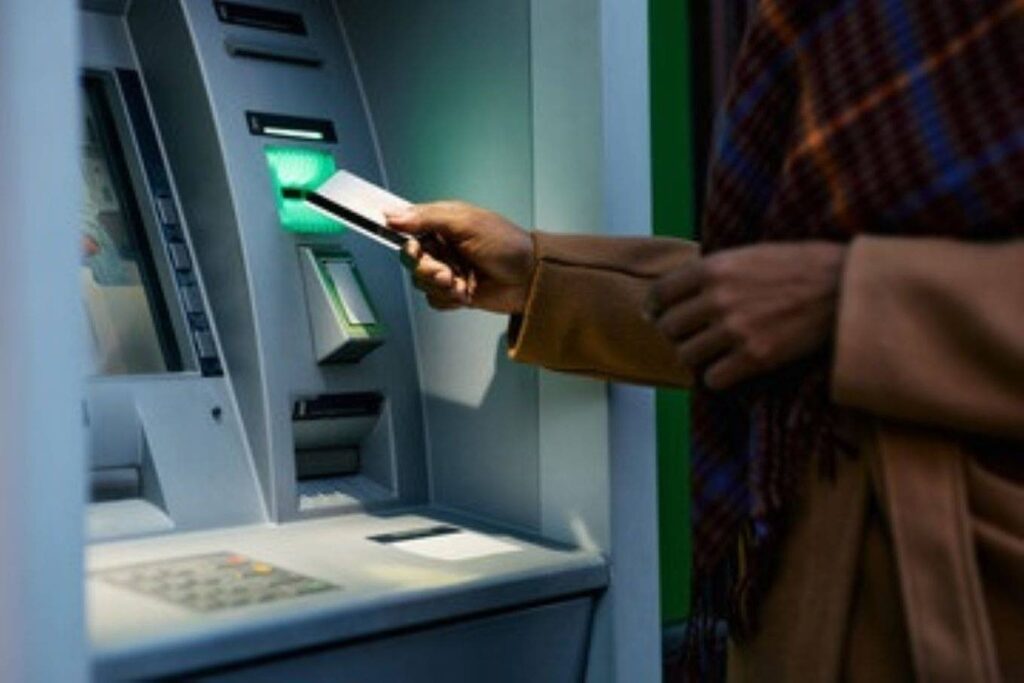
Against a backdrop of global accelerating digitization of financial transactions, Jamaica’s payment ecosystem has defied widespread expectations of a rapid shift away from physical currency. Newly released data from the Bank of Jamaica’s 2025 Financial Stability Report reveals that cash still maintains an unshakable hold over the country’s everyday economic activity, even as digital payment networks continue their steady expansion across the island.
The figures paint a clear picture of lopsided growth between cash and electronic transactions over the 12-month period ending December 2025. The total value of withdrawals from automated banking machines (ABMs) across Jamaica jumped 44% year-over-year, surging from $76.7 billion in 2024 to $110.2 billion at the end of 2025. By comparison, growth in digital point-of-sale (POS) card transactions was far more muted: these payments rose just 13%, climbing from $89.8 billion to $101.2 billion over the same timeframe.
This data confirms that while card-based payments are still expanding, cash continues to account for a larger share of daily transactions across every sector of Jamaica’s economy. The shifting ratio of POS to ABM transaction value further underscores this trend: the ratio dropped from 1.68 in December 2024 to 1.46 in December 2025, a clear signal that cash usage is growing at a faster pace than electronic alternatives. Even as more businesses across the country now accommodate card payments, a larger volume of daily transaction value still moves through cash withdrawal infrastructure.
Notably, the expansion of digital payment options has not slowed the surge in cash demand. The total number of POS terminals deployed across Jamaica grew by 7% year-over-year, reaching 34,151 by the end of 2025 as more merchants opted to accept card payments. In stark contrast, the total number of ABMs across the country remained almost entirely static, rising by just two units to 784 from 2024’s total of 782. Despite no meaningful increase in the number of cash access points, total withdrawal values skyrocketed, a clear indicator of sustained, robust demand for physical currency from both Jamaican households and businesses.
The Bank of Jamaica confirmed that both cash and electronic payment systems operated without major disruptions throughout 2025, effectively supporting the full range of daily economic activity across the country. In its official commentary, the central bank noted that “these increases suggest sustained consumer spending activity and continued confidence in electronic and cash-access payment infrastructure.”
At present, cash and digital payment methods are growing in tandem rather than one displacing the other, but this delicate balance was tested in a high-stakes scenario last year. When Hurricane Melissa knocked out widespread electricity and telecommunications service across parts of the island, access to both digital payments and ABM cash withdrawals was severely disrupted. The outage exposed how heavily Jamaica’s entire payment infrastructure relies on consistent, reliable basic services to function.
In response to that event, the Bank of Jamaica emphasized that the post-storm disruption to ABM services “underscores the importance of operational resilience and contingency planning within the financial system infrastructure.”
Beyond infrastructure planning, the pace of future shift toward digital payments will depend heavily on expanding access to inclusive financial services for all Jamaicans. To remove barriers to digital adoption, the Bank of Jamaica has rolled out a series of policy reforms: it has launched an electronic know-your-customer verification system to streamline account opening, introduced rules that allow consumers to switch bank accounts more easily between providers, and implemented measures to boost competition among commercial banks. The overarching goal of these reforms is to lower barriers for Jamaicans to open new accounts, change financial providers, and adopt digital payment tools for daily use.
The central bank has also actively promoted its central bank digital currency (CBDC) to expand transactional access and improve the efficiency of digital payments across the country. Even with these concerted policy efforts to accelerate digital adoption, the latest 2025 data makes clear that cash remains the backbone of everyday economic activity in Jamaica for the foreseeable future.