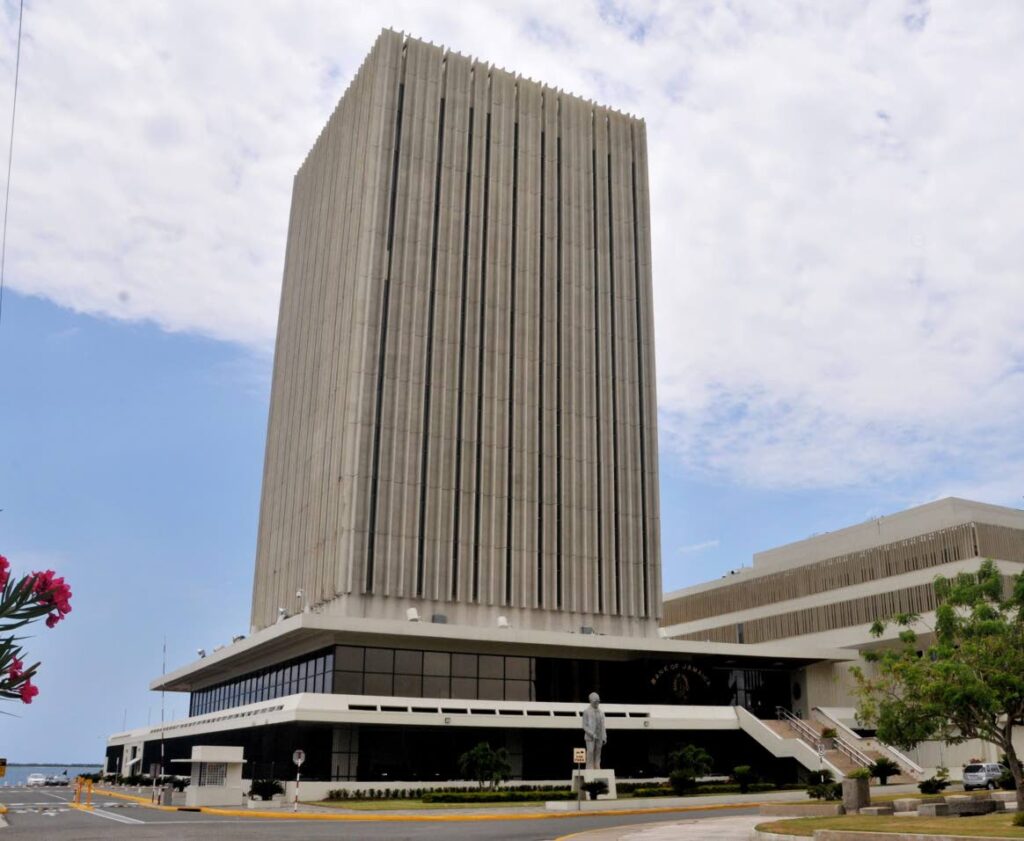
When the Bank of Jamaica (BOJ) began rolling out monetary easing to counter slowing growth and falling inflation, policymakers expected lower policy rates to trickle down to households and businesses in the form of cheaper borrowing costs. Instead, a growing disconnect between central bank policy and real market conditions has exposed deep structural flaws in the country’s credit transmission mechanism, leaving policy stimulus trapped within the financial system.
Between May 2025 and February 2026, the BOJ cut its benchmark policy rate twice: first from 6% to 5.75% as inflation cooled, then again to 5.5%, before holding rates steady in March 2026. The pause came as global volatility rose, driven by spiking international commodity prices and escalating geopolitical tensions that created new uncertainty for Jamaica’s economic outlook.
In line with expectations, commercial banks passed rate cuts through to depositors: average deposit rates dropped from 2.7% to 2.1% over the easing cycle. But for borrowers, the story was vastly different. Far from falling alongside policy rates, average commercial lending rates actually ticked up, rising from 11.8% to 11.9% and staying largely stagnant even as funding costs for banks declined.
This divergence has widened the long-recognized monetary policy transmission gap in Jamaica, with the benefits of lower interest rates never reaching the real economy. Instead of passing cheaper funding on to consumers and firms, financial institutions have absorbed the extra margin from lower deposit costs, leaving borrowing conditions unchanged at best.
BOJ officials have repeatedly highlighted the structural barriers that block pass-through. In public statements and policy reports, the central bank has pointed to rigidities in domestic credit pricing, most notably the large share of fixed-rate loans on bank balance sheets that can only be repriced very slowly after policy shifts. These rigidities are now directly shaping credit outcomes across the economy.
Data from the BOJ’s 2025 Financial Stability Report confirms that even after repeated rate cuts, lending activity remains well below historical trends. The credit-to-GDP gap stayed negative through the end of 2025, a signal that credit expansion is not keeping pace with the long-term trajectory of the economy. While loan growth has stayed in positive territory, the central bank described overall pressures in the financial cycle as “muted,” confirming that lower policy rates have not spurred a broad, economy-wide expansion in borrowing.
This pattern has persisted into 2026, according to the latest available data. Private sector credit growth slowed to 6.9% in January 2026, down from 8% the previous month, with both household and business lending seeing a uniform moderation.
The most striking part of this stagnation is that it comes as Jamaican commercial banks are operating from a position of unusual financial strength. In 2025, total assets of deposit-taking institutions grew 9.1% to hit 3.06 trillion Jamaican dollars, fueled by a 12.7% jump in total deposits. Liquidity levels far outpace regulatory requirements: the sector’s liquidity coverage ratio stands at 194.1%, nearly double the minimum regulatory threshold. Capital adequacy also improved, rising to 14.8% across the sector, well above regulatory benchmarks.
Despite strong balance sheets and abundant low-cost funding, banks have remained deeply cautious about expanding lending. Instead of extending new credit to households and firms, institutions have opted to allocate extra capital to liquid assets and low-risk investments, locking policy stimulus within the financial sector rather than putting it to work in the real economy.
Even as banks hoard liquidity, early signs of stress are starting to emerge in some segments of bank loan portfolios. Consumer non-performing loan ratios ticked up over 2025, even as mortgage delinquencies fell, pointing to uneven financial pressure across different household income groups. Corporate lending trends are similarly mixed, with credit growth varying widely across industries and no evidence of a broad-based increase in business investment borrowing.
Beyond slowing credit growth, the BOJ has also flagged emerging risks in asset markets. Residential real estate prices have continued to outpace rental growth significantly, a trend that raises concerns about potential overvaluation. If prices correct back to sustainable levels, the BOJ warns that the adjustment could send shocks through the financial system via credit and collateral channels, as falling property values erode the value of security backing existing loans.
Overall, the BOJ assesses systemic vulnerabilities in the banking sector as moderate, with risks concentrated in exposure to credit and interest rate volatility. The broader financial system remains resilient overall, but the persistent transmission gap has created a challenging policy dynamic for the central bank.
The combination of strong bank balance sheets, abundant liquidity, and stagnant lending rates confirms that monetary easing is not reaching its intended targets. This dynamic erodes the effectiveness of BOJ policy at a moment when policymakers are already walking a tightrope, balancing lingering inflation risks against slowing domestic growth and rising uncertainty from global markets.
To address these structural constraints, the BOJ has begun rolling out targeted reforms to improve credit market functioning. These include a new electronic know-your-customer framework to reduce barriers to opening new accounts, planned account portability rules to make it easier for customers to switch providers, and measures to increase competition among financial institutions. The reforms are designed to reduce frictions in the market and speed up the pass-through of policy changes to both deposit and lending rates.
Even with these reforms in motion, the disconnect between cheaper funding and accessible credit remains in place. For now, policy has brought lower money costs — but easier access to credit for Jamaican households and businesses remains out of reach. The experience makes clear that rate adjustments alone may not be enough to stimulate borrowing and growth without deeper, systemic changes to how credit is priced and allocated across the economy.