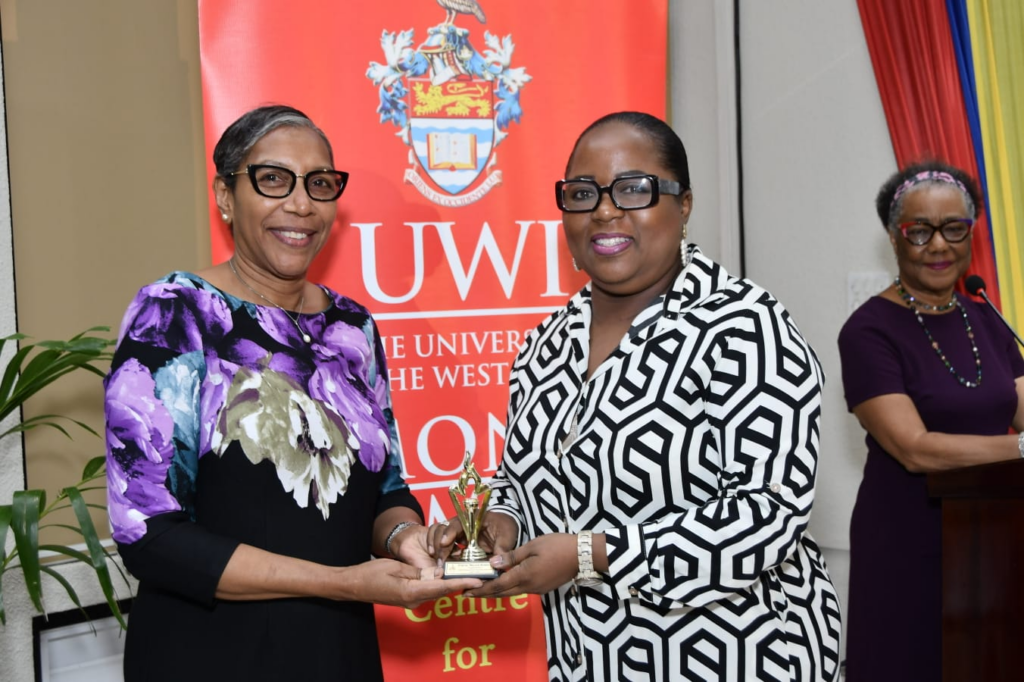
KINGSTON, JAMAICA – In a ceremony celebrating the quiet backbone of higher learning across the Caribbean, the University of the West Indies (UWI) gathered last Thursday to fête 37 exceptional educators, an event organized by the institution’s Centre for Excellence in Teaching and Learning (CETL) in partnership with the Office of the Deputy Principal.
At the apex of this year’s honorees was Ethnie Miller Simpson, who claimed the prestigious UWI Distinguished Teaching Award for the 2023–2025 cycle, a recognition reserved for academics who demonstrate extraordinary commitment and innovation in the classroom. Accepting the honor with characteristic humility, Miller Simpson drew heavily on insights shared by keynote speaker Dr Rohan Jowallah, Senior Instructional Designer at the University of Central Florida, to frame her own reflections on modern education.
One core concept from Jowallah’s address struck a particular chord with the award recipient: “the productive struggle of learning.” Miller Simpson argued that this idea perfectly encapsulates the dual journey of students and educators alike. For learners, it describes the challenging but rewarding work of pushing through complex material to earn a degree, while for teachers, it demands constant adaptation of teaching strategies and course content to keep lessons relevant, engaging, and aligned with a rapidly shifting world.
Going beyond classroom practice, Miller Simpson outlined a forward-looking agenda for Caribbean education. She emphasized that educators must continuously refine their approaches to ensure that learning translates directly to solving real-world challenges, while keeping pace with shifts across Jamaica, the broader Caribbean region, and the global economy. Most notably, she drew attention to the urgent conversation around “Assessment, Equity and AI: Governance in Caribbean Education,” identifying the meaningful integration of artificial intelligence into teaching as one of the defining challenges for the sector from 2026 onward.
Miller Simpson stressed that education in the AI era must move far beyond the superficial “cut-and-paste” work that has become increasingly common with generative AI tools. For both students and instructors, she argued, the responsibility now is to foster creativity and practical, applied understanding that delivers value beyond exam scores, preparing learners to contribute meaningfully to workplaces and communities across the region. She also posed a provocative question for regional stakeholders: should the Caribbean prioritize building and retaining ownership of its own homegrown AI systems, rather than relying on foreign-developed tools, to shape the region’s educational and economic future?
The recognition of these 37 educators comes as the University of the West Indies retains its long-held reputation for academic excellence, holding a spot among the top 3.6 percent of universities worldwide.