MADRID, Spain — Spanish authorities announced Wednesday that the MV Hondius, a cruise ship affected by a fatal hantavirus outbreak that has claimed three lives, is on track to dock at the Canary Islands’ Tenerife within three days, with mass passenger evacuation operations set to begin on May 11. The outbreak has triggered international concern over potential spread, though top global health officials have moved quickly to reassure the public that the situation does not mirror the scale of the COVID-19 pandemic.
Earlier on Wednesday, emergency response teams completed the evacuation of three individuals from the vessel: two symptomatic crew members and one close contact of a confirmed infection case. The ship had previously been anchored off the coast of Cape Verde, and after the evacuation operation was completed, it set sail for the Spanish archipelago. Medical personnel clad in full hazmat suits transferred the three evacuees from the cruise ship to a specialized ambulance boat, before the group was transported to Praia International Airport, Cape Verde’s main air hub in its capital, for onward travel.
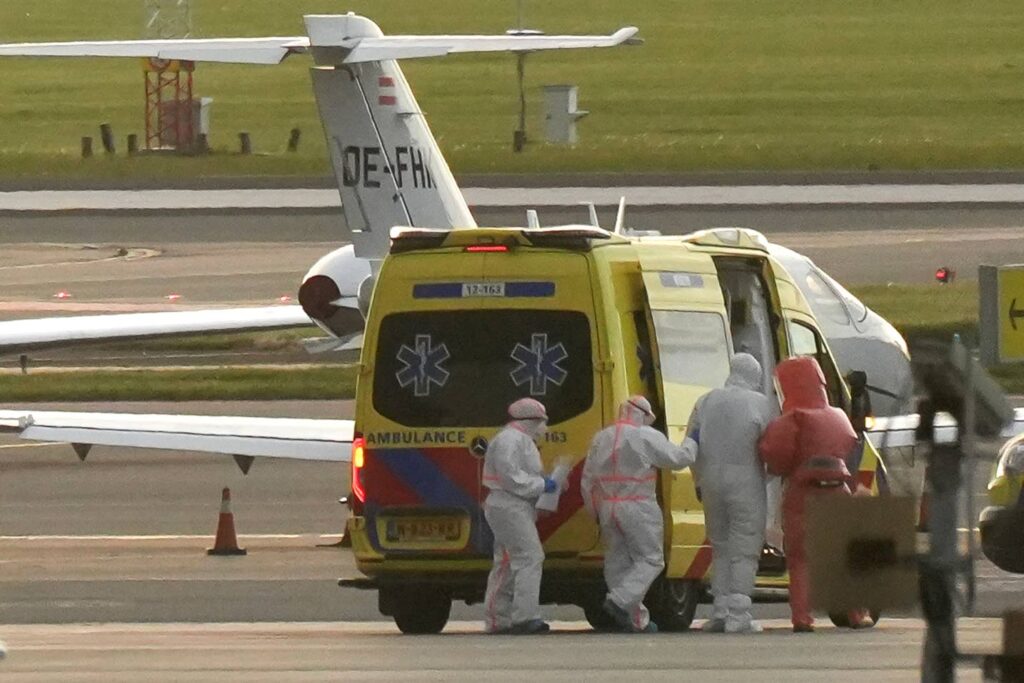
According to on-site AFP correspondents, a medical aircraft carrying two of the evacuated passengers touched down at Amsterdam Airport Schiphol in the Netherlands at 17:47 GMT. German emergency services confirmed they subsequently took custody of the third evacuee — the individual who had been exposed to an infected passenger on board — and transported the person to a specialized hospital in Dusseldorf for monitoring and treatment.
Virology experts have confirmed that the strain of hantavirus detected on the MV Hondius is the Andes virus, an uncommon subtype that is the only known hantavirus capable of spreading from person to person. World Health Organization (WHO) expert Anais Legand explained to AFP that based on the virus’s 1- to 6-week incubation period, the initial index case on the cruise could not have contracted the virus during the voyage itself. The ship departed Ushuaia, Argentina on April 1, and the first fatality linked to the outbreak was recorded just 10 days later on April 11.
Argentine health officials confirmed that the first couple killed by the virus had completed travel through Chile, Uruguay and Argentina before boarding the cruise in Ushuaia. In response to the outbreak, experts will travel to the southern Argentine port city to conduct testing on local rodent populations — the natural reservoir for hantavirus — to trace the origin of the infection.
Global and national health authorities have actively sought to calm widespread public anxiety over a potential large-scale global outbreak, noting that hantavirus is significantly less transmissible than the SARS-CoV-2 virus that caused the COVID-19 pandemic. WHO Director-General Tedros Adhanom Ghebreyesus told AFP that the current situation is not comparable to the COVID-19 pandemic, emphasizing: “The risk to the rest of the world is low.”