标签: Jamaica

牙买加

  • 11th Diaspora Conference ‘greatest homecoming experience’, says Jarrett

    11th Diaspora Conference ‘greatest homecoming experience’, says Jarrett

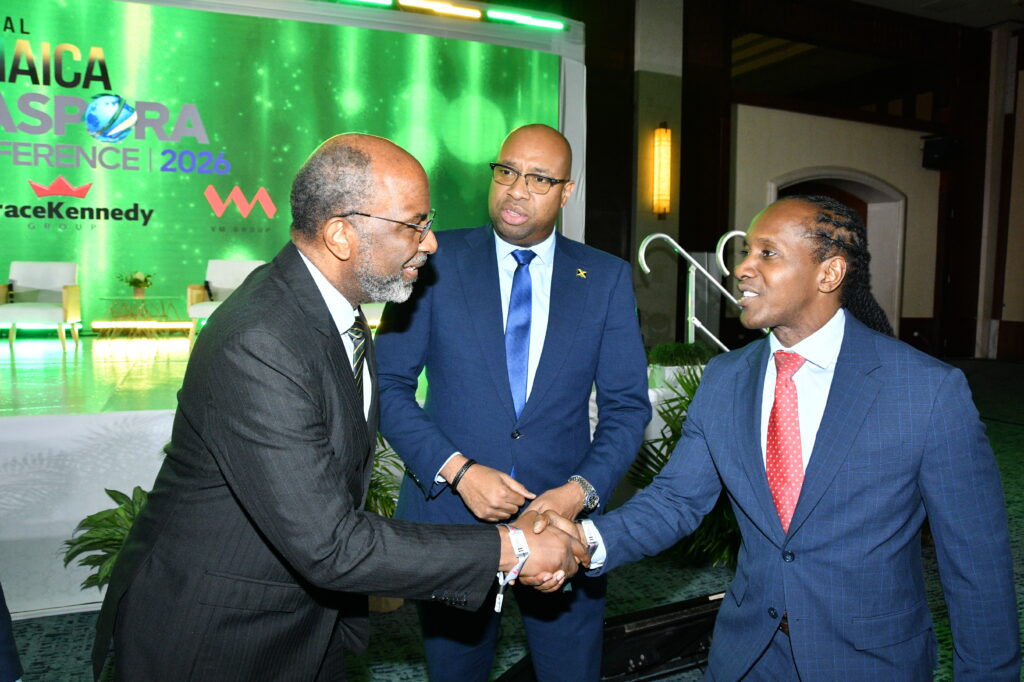
    MONTEGO BAY, St. James, Jamaica — The 11th Jamaica Diaspora Conference, the largest gathering of its kind in the event’s 22-year history, concluded last week after five days of collaborative discussions at the Montego Bay Convention Centre, with organizers hailing it as an unprecedented “homecoming experience” that has cemented the global Jamaican community’s role as a transformative movement for national progress.

    Held biennially under the central theme “Diaspora Partnerships: Rebuilding a More Resilient Jamaica” from June 14 to 18, this year’s conference drew more than 1,000 attendees spanning 15 countries, including Jamaicans living overseas and international allies committed to the island nation’s growth. Earl Jarrett, chairman of the conference and CEO of The Jamaica National Group, led post-event reflections highlighting how the gathering was intentionally shaped by input from the global Jamaican community itself.

    Unlike previous iterations, the full conference agenda was developed following a widespread survey of diaspora members, ensuring every debate and workshop centered the issues that matter most to Jamaicans living abroad. Topics on the schedule covered a broad cross-section of national priorities, ranging from foreign direct investment and returning resident policies to agricultural development, education expansion, philanthropic collaboration, technological innovation, public security, youth empowerment, disaster preparedness, and climate resilience. Jarrett emphasized that the depth of conversations benefited enormously from the direct, hands-on participation of on-the-ground delegates, who brought lived experience and concrete ideas to the table.

    The record turnout for this year’s conference, Jarrett noted, is far more than a milestone for the event—it is proof of the unwavering commitment Jamaicans overseas hold for their home country’s development and ability to withstand crisis. What began as individual and small-group efforts to support family and friends back in Jamaica has evolved into a cohesive, people-powered movement, he argued, pointing to the diaspora’s extraordinary response to Category 5 Hurricane Melissa, which devastated large swathes of the island in October 2025.

    “Organically, you all built formal and informal networks across the globe to support your schools, your hometown communities, your families, and Jamaica as a whole,” Jarrett told attendees in his closing remarks, praising the community’s consistent philanthropic leadership. “All those relief containers, all those donations that arrived after the hurricane—none of that would have happened without your independent, dedicated efforts. When I saw footage of donation drives, it wasn’t just Jamaicans giving—it was your neighbors, your colleagues, your friends who have come to care deeply about our country. These friends of Jamaica are part of this movement too, and when you count all of us together, Jamaica is a community of 6 million strong, far beyond our island borders.”

    Jarrett extended credit to the Jamaican government and all participating stakeholders for their work to pull off the successful gathering, but stressed that the conference’s real impact will be measured in what comes after the closing plenary. “Gathering us all together here is a wonderful thing, it’s important to reconnect and build relationships,” he said. “But this work isn’t just about conversation—it’s about turning the ideas and concerns raised here into tangible solutions. For years, the government has already adapted its bureaucratic processes and policies in response to feedback from past diaspora conferences, and that progress needs to keep going.”

    That call for sustained action beyond the conference hall was echoed by Alando Terrelonge, Minister of State in the Ministry of Foreign Affairs and Foreign Trade, who leads the government’s diaspora affairs portfolio. Closing out the event, Terrelonge reaffirmed that the true value of the week’s deliberations will not be judged by the quality of dialogue alone—but by the tangible actions delivered by both government and diaspora partners in the weeks, months, and years to come.


  • Inside the $164-million calculation

    Inside the $164-million calculation

    In a high-stakes forensic investigation that has captured Jamaica’s political attention, the country’s Integrity Commission has concluded that former legislator Dr. Andrew Wheatley holds roughly $164 million in assets and expenditures that cannot be traced to verifiable lawful sources of income, setting the stage for four criminal charges and a bitter public dispute over conflicting financial records. This is no simple he-said-she-said allegation: it is a granular, method-driven forensic accounting fight that turns on which income streams were counted, which were excluded, and what evidence remains out of public view five years after the probe first launched.

    The core of the conflict hinges on a source-and-application-of-funds analysis, a standard forensic tool that compares all confirmed lawful income against documented spending, asset purchases, and other uses of money across a multi-year period. Investigators began by compiling all verifiable income streams available to Wheatley, including parliamentary and employment salaries, confirmed rental earnings, investment returns, proceeds from verified property sales, documented business income, and approved loans. They then mapped all of Wheatley’s confirmed outlays: real estate acquisitions, new investments, loan repayments, estimated day-to-day living costs, and the net growth of his asset portfolio. After adjusting the calculation to credit all explanations investigators deemed satisfactory, all independently verified bank deposits, and consistent transaction patterns, the commission still found a $164 million gap between confirmed lawful income and recorded uses of funds. Crucially, investigators stress this is not an allegation that $164 million was stolen from the Jamaican government, but rather that the origin of $164 million in spending and assets cannot be linked to confirmed legal sources.

    Wheatley has forcefully rejected the commission’s final calculation, arguing that the investigation wrongfully excluded roughly $168 million in documented, fully lawful rental income, plus additional legitimate proceeds used to repay approximately $50 million in business loans. He insists every dollar of his assets and spending can be traced to legal sources, and that the commission’s analysis is fundamentally inaccurate, incomplete, and unfair. The commission pushes back on this claim, emphasizing that all verified rental income and credible explanations were already included in its final calculation before arriving at the $164 million gap.

    A key point of confusion for outside observers is the overlapping $168 million figures cited by both sides: one is the commission’s estimate of total bank deposits that remain unexplained after adjustments, while the other is the total rental income Wheatley says was wrongfully excluded from the analysis. The central unresolved question here is how much of Wheatley’s claimed rental income was already counted by investigators, how much was left out, and whether the two $168 million figures actually overlap.

    Digging into the granular disputes between the two parties reveals multiple unresolved points that will ultimately be settled in court. On the topic of rental income, Wheatley says he provided leases and bank records proving $168 million in lawful rental earnings that the commission failed to recognize. The commission counters that Wheatley only reported $143.3 million in rental income initially, and investigators only received supporting documentation for a subset of his properties, so they only credited income that could be independently verified. It remains unclear exactly which deposits were accepted, rejected, or already counted, and why the two sides report vastly different total rental figures.

    Next, Wheatley argues the commission failed to properly account for lawful, verifiable sources he used to repay $50 million in business loans. The commission notes that many of these loans should have been disclosed as liabilities in Wheatley’s mandatory statutory declarations, a requirement he allegedly failed to meet. It is still unresolved whether all loan proceeds and repayments were correctly traced, and whether all liabilities were properly disclosed as required by law.

    Disputes also surround a 20-lot real estate development held jointly by Wheatley and business partner Patrick Phipps. Six of the 20 subdivided apartments were transferred to Wheatley’s sole ownership, which he describes as his 30 percent commercial share of the joint venture, not an unreported gift as initially described by his legal team. The commission says it already considered this explanation, but remains concerned about the failure to disclose ownership interests in all 20 lots, and the subsequent disposal of 14 remaining lots while Wheatley was a joint owner. To date, Wheatley has not publicly detailed how the 14 lots were sold or transferred, where the proceeds went, and how these interests were disclosed in his mandatory filings.

    Other unresolved points include a down payment for land tied to Prosperity Realtor, which the commission says should have been reported as an investment in the landowning company that has not been disclosed; the sale of Wheatley’s former ownership stake in Western Medical Centre, which he says is a lawful business transaction, but the commission says the proceeds of the sale could not be verified from the records provided or obtained independently; and the commission’s claim that Wheatley failed to fully provide requested information despite repeated formal requests, which Wheatley denies, arguing he cooperated fully and investigators could have requested additional evidence if needed.

    The investigation stretched across five years, beginning with a formal referral in 2021, followed by multiple rounds of record requests, interviews, and updated analysis. The commission obtained additional third-party records earlier this year, before submitting its final investigation report and indicative prosecutorial ruling to Jamaica’s Parliament in June 2026. The Director of Corruption Prosecution has recommended four charges against Wheatley: knowingly making false statements in statutory declarations between 2013 and 2017 under the former parliamentary integrity law; knowingly making false statements in statutory declarations between 2018 and 2022 under the current Integrity Commission Act; failing without reasonable cause to provide information requested by the Director of Information and Complaints; and illicit enrichment under the Corruption (Prevention) Act.

    To date, these charges are only a prosecutorial recommendation, not a conviction, and Wheatley has repeatedly denied all wrongdoing, asserting he is entitled to the legal presumption of innocence and plans to vigorously contest the charges in court. Both sides have published summary accounts of their positions, but the core of the dispute will only be resolved through a full court examination of line-by-line financial records, including a full reconciliation of claimed rental income, loan documentation, full records for the 20-lot development, sale paperwork for the medical centre, ownership records for Prosperity Realtor, and the full forensic model used by the commission to calculate the $164 million gap. The outcome of this case will turn on tangible evidence, not persuasive rhetoric: the critical missing document is a full line-by-line reconciliation that shows what was claimed, what was proven, what was accepted, what was rejected, and why each decision was made.

    This reporting is based on the Integrity Commission’s public investigation report, the indicative prosecutorial ruling, and Dr. Andrew Wheatley’s official media statement released on June 17, 2026.

  • Messi’s father recovering from ‘health issue’ — family

    Messi’s father recovering from ‘health issue’ — family

    BUENOS AIRES, Argentina – The family of global football icon Lionel Messi has confirmed Thursday that the 68-year-old father of the eight-time Ballon d’Or winner, Jorge Messi, is recovering from an undisclosed medical issue. The announcement comes amid a wave of intense public and media speculation that erupted after Lionel Messi broke down in tears mid-match earlier this week, and the family has issued a sharp call for privacy around the strictly personal matter.

    Jorge Messi, who has long served as his son’s agent and most trusted advisor throughout his historic football career, is currently receiving ongoing medical care. In an official statement released Thursday, the family shared that he is recovering well and making positive progress relative to his condition, but declined to share any further details about the specific nature of his health problem.

    Speculation around Jorge Messi’s health began to spread rapidly on Tuesday, after the Argentina men’s national team captain gave an unusually emotional reaction following his opening goal in a friendly World Cup warm-up match against Algeria. Argentina went on to secure a dominant 3-0 win, with Messi scoring a hat trick, but all attention quickly shifted to the star’s uncharacteristic show of emotion: he collapsed into tears after putting his side ahead, and later acknowledged the moment was tied to personal struggles unrelated to football.

    “It was a matter unrelated to sports. I went through some difficult and complicated days,” Messi told reporters shortly after the match, confirming off-pitch turmoil without elaborating further.

    For nearly his entire professional career, Jorge Messi has been a constant presence alongside the star. He traveled with him through his trophy-laden stints at Barcelona, his tenure at Paris Saint-Germain, his current move to Major League Soccer’s Inter Miami, and every major international tournament with Argentina, including the 2022 World Cup victory that cemented Messi’s legacy as one of the greatest players in the sport’s history. Beyond his role as an agent, he is widely recognized as one of the most foundational sources of personal and professional support in Messi’s life.

    In their statement, the Messi family expressed profound frustration over the handling of the private health issue, saying they are deeply distressed by what they called a lack of sensitivity, respect, and ethical scruples from some media outlets and public figures who have turned the confidential family matter into public fodder.

    “We ask for responsibility, prudence, and humanity. A person’s health and the peace of mind of those around them should not be the subject of speculation or irresponsible media attention,” the statement concluded.

  • Jeremy Bembridge leads men’s 400m qualifiers

    Jeremy Bembridge leads men’s 400m qualifiers

    On the opening day of the Jamaica Athletics Administrative Association (JAAA) National Championships, held Thursday at Kingston’s iconic National Stadium, Racers Track Club’s Jeremy Bembridge put on a dominant opening performance to secure the top spot among all advancing athletes in the men’s 400-meter event. Crossing the finish line in 45.84 seconds to claim victory in his first-round heat, Bembridge outpaced runner-up Kimar Farquharson, an athlete representing Texas A&M University, who clocked a solid 46.06 seconds to also move forward in the competition.

    Reigning 2023 world 400m champion Antonio Watson also delivered a strong showing to advance, winning his own heat with a time of 45.91 seconds. Watson finished ahead of Shaemar Uter of Texas Tech University, who recorded a 46.14 second finish, and Emil Gordon of the University of Technology, Jamaica, who crossed in 46.66 seconds.

    Additional heat winners advanced to Friday’s scheduled semifinal round as well, including Bovel McPherson, who took his heat in 46.83 seconds. Zandrion Barnes also booked his spot in the next round with a 46.04 second finish, joining other qualifying athletes Reheem Hayles (46.09 seconds), Demar Francis (47.32 seconds), Delano Kennedy (47.39 seconds), and veteran Javon Francis (47.64 seconds). All advancing athletes will return to the National Stadium on Friday to compete for a spot in the event’s final round.

  • Afreximbank advances push for Caricom EXIM bank

    Afreximbank advances push for Caricom EXIM bank

    BRIDGETOWN, Barbados — As the African Export-Import Bank (Afreximbank) continues expanding its footprint in the Caribbean, a landmark plan to launch a dedicated regional export-import bank for the Caribbean Community (Caricom) is moving steadily through official approval channels, bringing new hope for easing the region’s long-standing access gaps to affordable development capital.

    Okechukwu Ihejirika, acting chief operating officer of Afreximbank’s Caribbean Office, shared updates on the proposal Wednesday on the sidelines of the Climate Smart Summit held in the Barbadian capital. Speaking to Observer Online, he confirmed that the draft plan for the Caricom EXIM Bank has already completed its presentation to Caricom’s Council of Foreign Ministers and is now advancing through the regional review process.

    “The initiative is currently under formal review. It was just presented to foreign ministers recently, so we expect to receive clearance from Caricom heads of government in the near term,” Ihejirika explained. He added that all feasibility studies for the project have been finalized, the full proposal has been circulated to relevant stakeholders, and implementation work will begin immediately once regional leaders formally approve the need for the new institution.

    The proposed bank is designed to directly address a persistent economic challenge across the Caribbean: both public sector bodies and private businesses have long struggled to secure low-cost, long-term financing to support trade expansion and development projects. If established, the institution would fill a critical gap in the regional financial ecosystem by tailoring lending products to the specific needs of Caribbean economies.

    In addition to advancing the new regional bank plan, Ihejirika announced a major expansion of Afreximbank’s own investment commitments to the region. When the bank launched its Caribbean regional hub in Barbados in 2023, it set an initial approved investment envelope of $1.5 billion. That cap has now been tripled to $5 billion to meet growing demand for financing across key strategic sectors.

    Afreximbank’s current priority areas for investment in the Caribbean include infrastructure development, cross-border trade facilitation, and projects that build climate resilience — a critical focus for small island developing states that are disproportionately vulnerable to extreme weather and sea-level rise. To date, since opening its Barbados office, the bank has already approved close to $700 million in credit facilities for projects across multiple Caribbean nations, Ihejirika said.

    Full additional details on the proposed Caricom EXIM Bank, including an analysis of its potential long-term impacts on regional development financing, will be featured in the upcoming Friday edition of *Business Week*.

  • South Africa hold Czechs, keep World Cup knockout dream alive

    South Africa hold Czechs, keep World Cup knockout dream alive

    ATLANTA, U.S. – A confident late penalty from Teboho Mokoena has preserved South Africa’s hopes of making history by advancing to the FIFA World Cup knockout stage for the first time, after the African side forced a 1-1 Group A draw against the Czech Republic on Thursday.

    The Czechs got off to a flying start in the match, with Michal Sadilek notching an early opener that put the European nation on track to claim just its second World Cup victory as an independent country. However, a handball in the box late in the second half opened the door for South Africa, and Mokoena converted the chance to level the scoreline, leaving both sides still in contention for a spot in the round of 16.

    Following the draw, both nations sit on one point apiece, two points adrift of co-hosts Mexico and South Korea, who were scheduled to face each other later the same day in the group’s other fixture. For either side to advance to the knockout rounds, a win in their final group stage match is now a near-certain requirement. South Africa will wrap up its group play against South Korea, while the Czech Republic faces a daunting test against Mexico at the iconic Estadio Azteca.

    Both teams entered Thursday’s fixture on the back of underwhelming opening-day defeats, but the Czech side moved quickly to reverse their poor early-tournament form. Bayer Leverkusen star Patrik Schick, the most high-profile player in a Czech squad that lacks the star power of past generations, missed a clear opening in the match’s first 60 seconds, sending a header wide of the target. It took just five more minutes for the side, managed by Miroslav Koubek, to break the deadlock nonetheless: Adam Hlozek delivered a cross into the box, Alexandr Sojka deftly cushioned the pass into Sadilek’s path, and the midfielder slid a calm shot past South African keeper Ronwen Williams to open the scoring.

    South Africa is making its fourth World Cup appearance, but has never advanced past the group stage in its previous tournament runs. Head coach Hugo Broos has overseen a clear turnaround in the fortunes of Bafana Bafana since taking the helm five years ago: the 2010 tournament hosts had not qualified for a World Cup since 2002, but claimed a third-place finish at the 2023 Africa Cup of Nations to book their return to the global stage. Still, their comeback tournament has exposed gaps in quality across the squad, especially in attacking positions.

    The Czech Republic failed to capitalize on its first-half advantage, wasting multiple chances to put the game out of reach early in the second half. Vladimir Darida hesitated too long on a clear shooting opportunity, while a long-range strike from Lukas Cerv was tipped over the crossbar by a flying Williams.

    The match, held at the Atlanta Falcons’ cutting-edge NFL stadium, drew thousands of empty seats despite being a World Cup group stage fixture. Fans in attendance did not hold back their displeasure with mid-half hydration breaks, even though the enclosed stadium was fully air-conditioned, greeting the pause with loud boos. The majority of the crowd in attendance were supporting South Africa, and their support finally paid off with seven minutes left in regulation time.

    A shot from Thapelo Maseko struck the arm of Czech defender Pavel Sulc, and referee Tori Penso – a member of the match’s all-female officiating team – awarded the penalty. Mokoena stepped up and drilled his spot-kick home, scoring South Africa’s first World Cup goal in 16 years and leveled the match. Five minutes later, the African side nearly claimed a full three points, but Czech keeper Matej Kovar made a key save to deny Relebohile Mofokeng, locking in the 1-1 final score.

    In the end, both teams left the pitch with a single point that could prove critical when Group A wraps up its final round of fixtures. The result leaves knockout stage hopes alive for both sides ahead of their final group matches.

  • TCN arrangement was initiated by US, says Morris Dixon

    TCN arrangement was initiated by US, says Morris Dixon

    KINGSTON, Jamaica — Top Jamaican government officials have moved to clear widespread public confusion surrounding the newly disclosed Third Country Nationals (TCN) transit agreement, confirming the arrangement was first proposed by the United States government rather than initiated by Jamaican authorities.

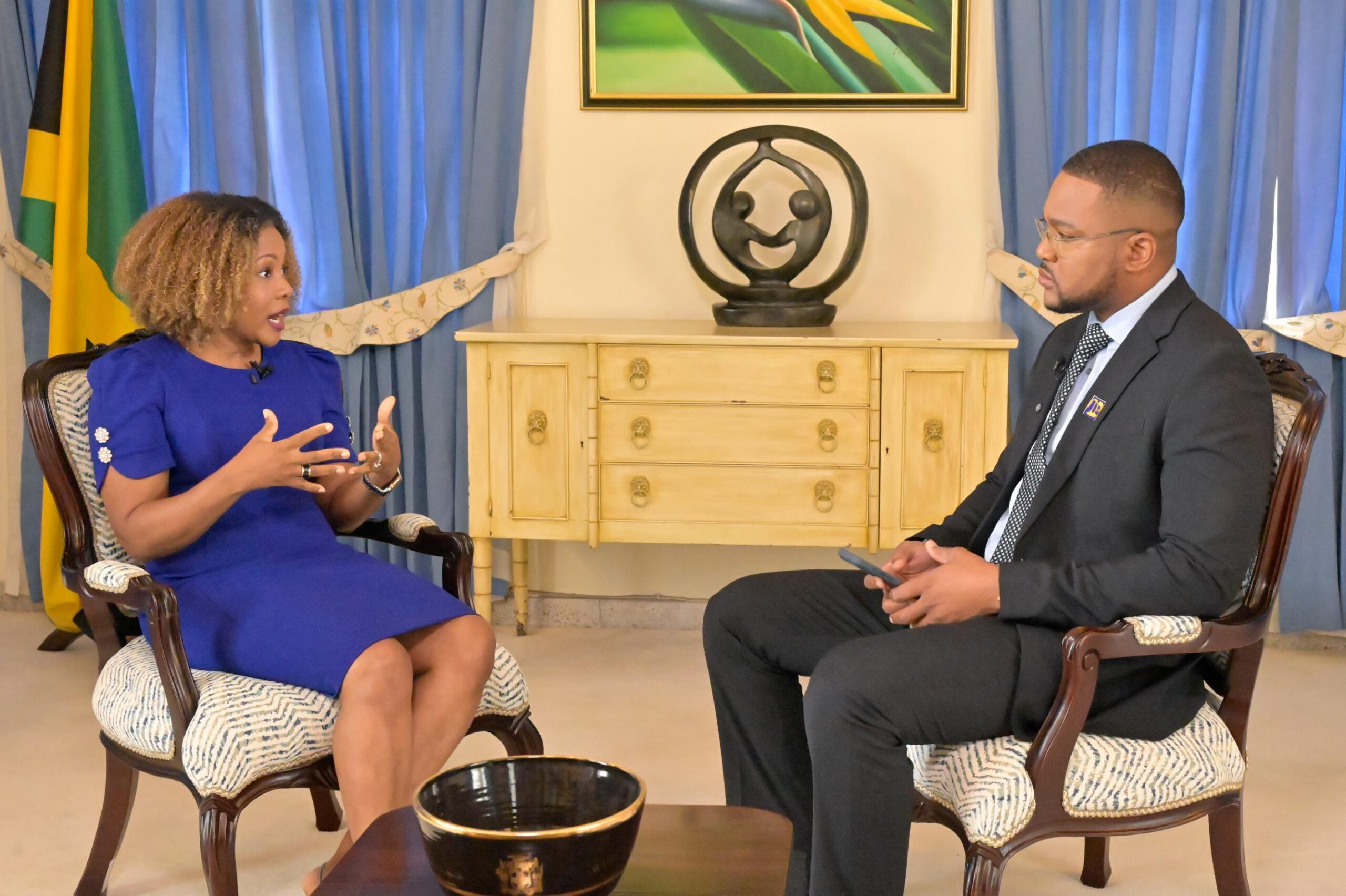
    Senator Dr Dana Morris Dixon, Jamaica’s Minister of Education, Skills, Youth and Information, laid out the origins of the deal during an official Ministerial Update hosted by the Jamaica Information Service (JIS) at Jamaica House this Thursday. She emphasized that the entire conversation around the TCN programme began with a formal approach from the U.S. to Jamaican diplomatic officials.

    Her public statement comes just days after news broke that Jamaican authorities had signed a Memorandum of Understanding (MoU) that enables the transit of people transferred from U.S. custody through Jamaican territory before they reach their final destinations. Morris Dixon was quick to draw a clear line between this transit agreement and a separate, unrelated policy discussion currently underway: a separate initiative led by Ambassador Audrey Marks, Minister without portfolio in the Office of the Prime Minister, focused on attracting skilled foreign workers to boost Jamaica’s domestic economy.

    According to Morris Dixon, Jamaican officials issued formal clarification of this distinction almost immediately after the confidential diplomatic cable at the center of recent media coverage was first drafted, noting that bilateral negotiations are almost always kept private to allow for flexible, iterative discussions between parties without unnecessary public speculation.

    The details of the agreement’s approval process were further outlined by Deputy Prime Minister Dr Horace Chang, who also serves as Minister of National Security and Peace, during Wednesday’s post-Cabinet press briefing at Jamaica House. Chang confirmed that the final decision to sign the MoU followed months of extensive cross-government negotiations, involving Jamaica’s Ministry of Foreign Affairs and Foreign Trade, the Ministry of National Security and Peace, the Office of the Prime Minister, and legal advisors from the Attorney General’s Office.

    Crucially, Chang pushed back against widespread misinformation that the agreement would open Jamaica to permanent migration from individuals transferred by the U.S. He stressed that all people processed under the deal are only in transit through Jamaica, and will not remain in the country as permanent residents. To enforce this, the two sides have agreed to a strict quota: no more than 25 individuals will be processed for transit every two weeks, regardless of destination, which includes the individuals’ home countries.

    Chang added that Jamaica retains full sovereign authority over the arrangement: Jamaican officials hold the right to refuse entry to any individual at any time, and both the U.S. and Jamaica can terminate the entire agreement without being required to provide long-form advance notice to the other party.

  • Food in every fashion

    Food in every fashion

    Last Wednesday, Jamaica’s Terra Nova All Suite Hotel became a hub for culinary innovation and cultural celebration, as emerging young food enthusiasts and seasoned industry leaders gathered for the 2026 Foodie Seminar. Held under the evocative theme “Unbreakable Spirit”, the full-day event featured expert-led panel discussions spanning critical topics from food safety and national food security to small business resilience, artisanal confectionery craft, and the future of Jamaica’s booming culinary sector. The seminar serves as a lead-up to the 27th Jamaica Observer Table Talk Food Awards, the island’s most prestigious annual celebration of culinary excellence, bringing together a diverse roster of 9 expert panellists from across the industry and non-profit space.

    Opening the seminar, veteran food regulatory inspector Allison Richards centered the conversation on one of Jamaica’s most pressing industry challenges: long-term food security. During her presentation, she challenged attendees and the broader public to question whether the island can truly achieve the capacity to feed its own population. Breaking down the four core pillars of food sustainability—availability, access, utilisation, and stability—Richards urged Jamaicans to align their local actions with the 2026 World Food Safety Day theme, “From burden to solution – safe food everywhere”. In a call to action that resonated across the room, she asked: “If every household grew just one thing, what do you think Jamaica would look like? Start with you.”

    Food security and the unbreakable spirit highlighted by the seminar’s theme took center stage in the conversation from Romario Creary and Adrian Wilson, co-founders of the fast-growing Soup King food brand. Just one week before the brand’s planned grand opening in 2025, Category 5 Hurricane Melissa devastated the island, triggering widespread fresh produce shortages and skyrocketing ingredient costs that threatened to sink their new venture. Rather than abandoning their dream, the pair persevered through the crisis, and this year celebrated the launch of their first permanent retail location. Wilson shared the brand’s unlikely origin story: back in 2015, he was operating a local car wash, and began serving homemade soup to waiting customers as a small weekend perk. Today, the car wash is gone, but the soup business has grown into a recognizable local brand. “Opportunity does not always come from creating something new; it can come from something that was always right in front of you,” Wilson told attendees. “Sometimes it comes from improving something very familiar.” Creary emphasized that passion for both product and community, paired with unwavering consistency, are the foundation of long-term success: “In order to innovate, you have to be consistent first…and then you will recognise avenues to innovate; those will come.”

    The conversation shifted to the intersection of food, community empowerment and mental wellbeing when Dr. Altreisha Foster, a former vaccine scientist who now owns boutique bakery Sugar Spoon Desserts, introduced her non-profit initiative “Cake Therapy”. The program provides a safe, supportive space for underprivileged young girls to build confidence and life direction through the art of baking. Foster explained that the initiative goes far beyond teaching baking skills: the kitchen acts as a metaphor for life, teaching participants to turn chaos into something meaningful, while offering a judgment-free space to create. “It is about human connection,” she said. “Food carries memories, it carries identity, it carries my culture.”

    Attendees left with overwhelmingly positive impressions of the day’s discussions. Shelly-Ann Brown and Garfield Allen, both employees of the National Certification Body of Jamaica, which certifies local food businesses, called the event exceeding expectations. “It definitely exceeded my expectations, the presentations were superb. The organisers should be lauded, and I think the presenters should be lauded,” Allen said. Brown echoed the praise, noting: “Having that interconnection, looking at building your own business and also social responsibility being included, it was just a beautiful connection…coming together just talking about food and how it is evolving, it was excellent.”

    Looking to the future of Jamaican culinary tourism and industry growth, Joseph Johnson, owner and CEO of popular Peckish restaurant, laid out his vision for downtown Kingston as the island’s next top culinary destination. Johnson argued that the area already has the foundational cultural and community infrastructure to grow into a world-class culinary hub, with an organic street food culture that mirrors the beloved open-air energy of Manhattan’s iconic street food scene. “What we are witnessing downtown is more than just restaurants. We don’t need to invent food culture downtown, we simply need to recognise it…downtown’s best days are ahead,” he predicted, outlining a vision of walkable streets lined with sidewalk cafes and open-air dining spots.

    Additional presentations covered the craft of Jamaica’s award-winning artisanal chocolate from panellist Nadine Burie, while industry leaders Suedi Ann Hamilton, Kishauna Armstrong, and Robyn Fox shared their own stories of resilience amid industry challenges. Throughout the day, attendees actively engaged with every panel, asking questions about accessing capital, building successful business partnerships, effective networking, and navigating day-to-day industry operations. Creary urged young emerging entrepreneurs not to rely solely on industry connections, stressing that self-belief and unwillingness to compromise on core values are far more critical: “It is very important, especially for younger persons, links are nice…but let me tell you, we can do it without that, we can do it [by] believing we can do it and don’t ever compromise yourself to [do] it. Hard work and exposure are key to the future of the culinary industry, through youth.” He also praised the Jamaica Observer for creating collaborative forums that lift up the next generation of culinary professionals.

    Jamaica Observer Managing Director Dominic Beaubrun, who attended the event with his son to expose the younger generation to industry opportunities, explained that the seminar was designed to highlight the full, complex ecosystem that supports the food Jamaicans enjoy every day. “We can’t really begin to pay homage to the level of service and effort and thought and ingenuity that goes into it, but here we are laying face to people and their experiences and stories, histories, successes, failures and learning, and all of that goes to inform and educate even more,” he said.

  • US serial killer jailed for life over Gilgo Beach murders

    US serial killer jailed for life over Gilgo Beach murders

    After a years-long investigation that gripped the American public and confounded law enforcement, the man known as the Gilgo Beach serial killer has been formally handed a permanent life sentence behind bars, closing a dark chapter of unsolved violence that haunted a New York coastal community for decades.

    Rex Heuermann, a 62-year-old former architect, received three consecutive life terms with no eligibility for parole during a Wednesday sentencing hearing in Long Island, more than a year after his 2023 arrest. The conviction caps a string of brutal killings that stretched from 1993 to 2010, when Heuermann targeted and killed eight women, then dismembered their bodies and scattered their remains across Gilgo Beach and surrounding areas of Long Island, just outside New York City. In a surprising April 2024 court proceeding, Heuermann pleaded guilty to all seven murder charges brought against him, plus an eighth killing that had not yet been formally filed.

    The Gilgo Beach murders stood as one of the most high-profile cold cases in U.S. history for more than a decade. Victims’ remains were first discovered between 2010 and 2011 along the protected barrier beach on Long Island’s South Shore, with one victim’s remains located as far as 70 miles away as early as 1993. For years, investigators had no viable leads, and the unsolved mystery drew widespread public attention, becoming the subject of multiple popular true crime documentaries.

    Critics have long argued that delays in cracking the case stemmed from implicit bias: most of Heuermann’s victims were sex workers, and many observers claim law enforcement would have prioritized the investigation far earlier if the victims had come from more privileged backgrounds.

    The break in the case finally came in 2022, when detectives connected a vehicle spotted with one of the victims to Heuermann, who was listed as the registered owner. From there, investigators built a robust case against the married father of two using cutting-edge forensic evidence: DNA recovered from a discarded pizza crust matched DNA found at the crime scene linked to the victims, and cell phone data directly tied Heuermann to locations connected to the killings. Additional evidence, including records of hundreds of internet searches about the ongoing Gilgo Beach investigation, was recovered from Heuermann’s suburban Massapequa Park family home. Searches recovered included chilling queries such as “Why hasn’t the Long Island serial killer been caught?”

    Wednesday’s hearing brought raw, emotional testimony from the family members of Heuermann’s victims, who shared the devastating, lifelong impact of his crimes with the court. In a rare moment of accountability from the defendant, Heuermann also addressed the court, acknowledging full responsibility for all the acts outlined during the proceedings. He was arrested one year prior outside his Manhattan architecture office, ending decades of speculation about the killer’s identity.

  • Jamaican wellness coach aims to transform PMOS care with app tailored to Caribbean women

    Jamaican wellness coach aims to transform PMOS care with app tailored to Caribbean women

    After a years-long, frustrating battle with undiagnosed Polyendocrine Metabolic Ovarian Syndrome (PMOS), Jamaican entrepreneur and coach Denesha Bailey turned her personal struggle into a solution for thousands of women across the Caribbean and beyond. What began as a quest to take control of her own health has evolved into *My Healing Notes*, a first-of-its-kind mobile wellness app built specifically to address gaps in PMOS education, support, and daily management that many women with the condition face globally.

    Bailey’s journey to a formal diagnosis stretched across five years. As early as 2020, she experienced persistent, debilitating symptoms including chronic fatigue that caused midday energy crashes, unexplained weight gain despite regular exercise, brain fog, anxiety, and irregular menstrual cycles. Medical providers initially dismissed her concerns, attributing her symptoms to lingering COVID-19 fatigue, and a gynecologist rejected her self-suspected PMOS diagnosis before a second opinion finally confirmed the condition in 2025. Like thousands of women worldwide, Bailey soon discovered that even after receiving an official diagnosis, accessible, region-appropriate guidance for managing the chronic metabolic disorder was nearly impossible to find.

    “A lot of women struggling with PMOS are not properly educated on what the condition is and how to manage it,” Bailey explained in an interview with Observer Online. “Many medical providers only tell patients to lose weight, and pay little attention to the condition if the woman isn’t currently trying to conceive. But PMOS worsens over time when left untreated, and even when you do learn the basics, practical, tailored resources are hard to come by. That’s the gap this app fills.”

    Launched into beta testing on March 18, 2026, My Healing Notes centers on a simple five-step daily management framework focused on sleep, nutrition, movement, supplementation, and stress reduction. Unlike generic wellness apps built primarily for North American audiences, the platform is intentionally tailored to Caribbean lifestyles, offering region-specific meal plans across six Caribbean sub-regions, including inclusive vegan options that rely on local staples rather than imported, expensive ingredients. Bailey is already updating the app to add more budget-friendly local alternatives, such as swapping imported salmon for affordable local mackerel, in response to early user feedback.

    The app combines core symptom tracking with educational resources and innovative AI-powered tools. Users can log and track daily meals, menstrual cycles, sleep patterns, mood fluctuations, and weight changes to identify personal symptom triggers. One of the app’s most groundbreaking features is its AI coach, which can scan packaged food labels to assess whether a product aligns with PMOS-friendly dietary guidelines, scan full plates of food to evaluate nutritional balance for PMOS management, answer user questions in real time, and suggest appropriate alternative products when an item is flagged as unsuitable. For context, PMOS is commonly linked to insulin resistance, which raises a person’s risk of developing type 2 diabetes, making dietary management a critical component of long-term health.

    To help address the often-overlooked social and emotional impacts of PMOS, the app also includes a shareable educational one-pager that users can send to partners to help them understand how the condition affects energy, mood, fertility, and sexual health. Looking ahead, Bailey is developing an on-platform “Expert Hub” that will connect users directly to a network of gynecologists, endocrinologists, nutritionists, mental health therapists, and fitness coaches with specialized training in PMOS care.

    Currently operating on a freemium model during its beta phase, the app will permanently keep all core educational resources free for users after June 15. Advanced premium features, including the AI-powered scanning tools, will be available via a $9.99 USD monthly subscription.

    Since its beta launch in March, the app has already attracted 297 active users and earned an average user rating of 4.4 out of 5. Early users report that the platform provides consistent accountability and accessible answers that they were unable to find from medical providers or generic wellness tools.

    Bailey’s own health transformation after following her five-step framework speaks to the app’s potential: she has lost 40 pounds, regained her energy, cleared the brain fog that impacted her work, and restored her confidence. After years of just surviving with undiagnosed PMOS, she wrote three books and built the app in a single month, crediting her management framework with giving her a new lease on life.

    My Healing Notes will see its full official launch at the end of June 2026, ahead of Bailey’s presentation at the Jamaica Ladies’ Expo on July 4. For Bailey, the app is more than a business venture—it’s a mission to empower women. Her long-term goal is to ensure every woman struggling with PMOS has access to the affordable, practical tools and knowledge they need to manage the condition effectively and live life at their full potential.

    PMOS, previously known as Polycystic Ovary Syndrome (PCOS), is a common hormonal disorder that affects an estimated 10 to 13 percent of women of reproductive age globally. Up to 70 percent of all cases remain undiagnosed, and the condition is one of the leading causes of infertility worldwide.