标签: Jamaica

牙买加

  • PNP spokesperson on environment welcomes landmark Dry Harbour mining ruling

    PNP spokesperson on environment welcomes landmark Dry Harbour mining ruling

    KINGSTON, Jamaica — In a watershed decision that has reshaped the conversation around environmental governance and constitutional rights in the Caribbean nation, Jamaica’s Constitutional Court has struck down a 2020 environmental permit issued to Bengal Development Limited for a planned limestone mining operation in St Ann’s ecologically fragile Dry Harbour Mountains. The court ruled the permit unconstitutional, void, and legally unenforceable, a decision that has drawn swift praise from opposition leadership.

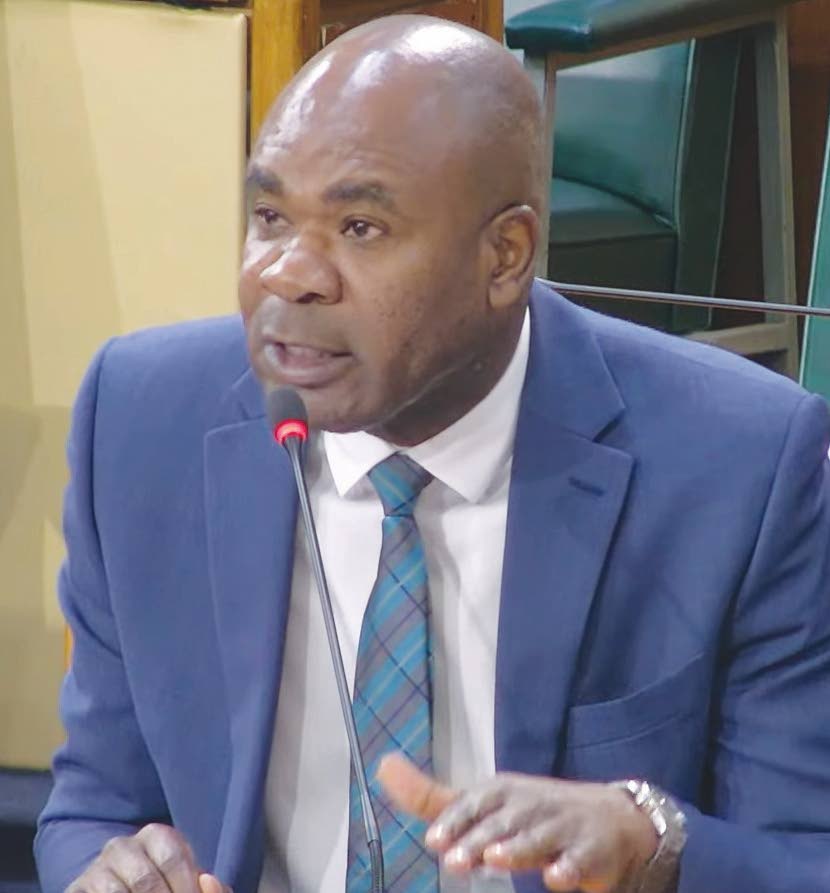
    Omar Newell, the Opposition Spokesperson on Environment and Climate Resilience, framed the ruling as a transformative win not just for local communities, but for all Jamaicans who advocate for a balanced approach to progress that prioritizes environmental protection over unregulated development. Speaking in an official statement released the same day the ruling was handed down, Newell emphasized that the judgment rejects the long-held narrative that economic growth must come at the cost of public health, natural ecosystems, and constitutionally protected rights.

    What makes this legal outcome particularly historic is that it marks the first time Jamaica’s judiciary has adjudicated on the environmental rights clause enshrined in the country’s Charter of Fundamental Rights and Freedoms, setting a binding precedent that will shape future environmental legal battles across the island.

    Newell reaffirmed that his party, the People’s National Party (PNP), has stood in firm opposition to the mining project since its earliest stages. As far back as November 2020, the PNP publicly denounced the then-administration’s plan to issue a provisional mining permit, sounding the alarm over the severe risks the project posed to the Dry Harbour Mountains — one of Jamaica’s most ecologically sensitive regions, home to unique biodiversity and critical watershed systems that supply water to communities across the area.

    “This historic ruling affirms that every person in Jamaica holds a constitutional right to a healthy and productive environment,” Newell said. “This judgment belongs to the residents of St Ann, who showed immense courage in standing up to powerful interests to protect their homes and way of life. It is a victory for every Jamaican who believes in sustainable development, open governance, and accountability from our public institutions.”

    Beyond celebrating the ruling, Newell used the moment to highlight a critical gap in Jamaica’s environmental regulatory framework. The judgment, he argued, lays bare the urgent need for stronger, politically independent environmental oversight that can make decisions based on scientific evidence rather than political pressure.

    “Jamaica can no longer rely on ministerial discretion to safeguard our natural heritage. We need an independent environmental protection agency, fully empowered to make evidence-based decisions that serve the national interest,” Newell explained. “Our environmental future, and the natural resources we leave for coming generations, depend on building strong, credible institutions with the authority to protect what matters most to all Jamaicans.”

  • Proven & ANSA McAL raising US$30 million via Roberts Manufacturing IPO

    Proven & ANSA McAL raising US$30 million via Roberts Manufacturing IPO

    Regional investment firm PROVEN Group Limited has announced it will divest nearly half of its holding in Barbados-based consumer goods manufacturer Roberts Manufacturing Company Limited, in a transaction valued at a maximum of US$15.63 million. The move is a core part of Proven’s strategic plan to boost cash reserves, trim outstanding debt, and clear the way for the resumption of ordinary shareholder dividend payments, which have been paused since mid-2025.

    This partial stake sale is being conducted alongside Trinidad-based conglomerate ANSA McAL Limited as part of Roberts Manufacturing’s total US$30.16 million initial public offering (IPO), ahead of the firm’s listing on the Barbados Stock Exchange (BSE). Prior to the offering, Proven and ANSA McAL hold a combined 100% controlling stake in Roberts, with Proven owning 50.5% and ANSA McAL holding the remaining 49.5%. If the IPO is fully subscribed, Proven’s holding will drop to 25.5%, while ANSA McAL’s stake will fall to 25% – leaving both existing owners with joint strategic control of the listed manufacturer.

    In its official IPO prospectus, Roberts emphasized that the transaction balances the needs of existing shareholders for liquidity with the continued stability of retained strategic oversight. “Providing liquidity to the Shareholders while retaining strategic control. This will enable capital reallocation, leverage reduction, and capital structure management at the shareholder level,” the document read.

    The divestment comes at a pivotal juncture for Proven, which has faced significant financial headwinds over the past three quarters. For the nine-month period ending December 2025, the firm swung from an operating profit of US$2.85 million in the prior year to an operating loss of US$2.66 million. The downturn was driven by spiking interest expenses, shrinking gross profit contributions from Roberts, and rising general operating costs.

    While a doubling of profit share from associate firm JMMB Group Limited – reaching US$5.66 million – pulled Proven to a pre-tax profit of US$3.01 million, this figure still represented a 44% year-over-year decline. Consolidated net profit for the period hit US$2.55 million, with US$1.45 million attributable to common shareholders.

    Proven suspended ordinary dividend payments in July 2025 to prioritize liquidity building and debt reduction amid elevated global borrowing costs and softening operating results. The company has signaled that it expects proceeds from two major property developments – Sol Harbour and Bahari Phase 1 – to support dividend resumption in the second half of 2026, a timeline that will be reinforced by the proceeds from the Roberts stake sale.

    “The Board remains committed to reinstating dividend payments at the earliest appropriate time, with the expectation that the completion of major property sales and the normalization of operating performance will provide a solid foundation for the resumption of shareholder distributions,” Proven noted in its recent third-quarter financial report.

    For its part, Roberts Manufacturing stands as one of Barbados’s most robust industrial assets, specializing in the production of edible oils, margarines, food shortenings, and specialty animal feed products. The company commands a dominant market share on its home island and exports its goods to 14 regional Caribbean markets.

    In its most recent full financial year, Roberts posted a 10% drop in consolidated revenue to US$66.87 million, stemming from the termination of a large animal feed contract and short-term cross-border shipment disruptions. Even amid this top-line decline, the manufacturer grew net profit by 41% to US$5.7 million, with shareholder-attributable net profit surging 73% to US$4.59 million. The strong bottom-line result was fueled by aggressive cost-cutting, lower effective tax rates, and the reversal of previous accrual balances.

    Since 2021, Roberts has returned a total of US$16.55 million to shareholders via dividends, including US$4.67 million in the 2025 financial year. Previously, the firm paid an annual management fee of US$2.8 million to its controlling owners and their affiliates, but this practice will end following the IPO. Going forward, Roberts has committed to distributing at least 50% of its available net profit as annual dividends to all public and private shareholders.

    The IPO marks the start of a new growth phase for the manufacturer, which has outlined plans to drive top-line expansion through targeted commercial investment and disciplined operational execution. The company is currently upgrading its shortening and margarine production facility, a project expected to boost output by 30% while supporting its goal of expanding its regional export footprint. Longer-term, Roberts is evaluating a secondary listing by introduction on the Jamaica Stock Exchange, as well as a follow-on public offering to raise additional equity for further expansion projects.

    The IPO opened for public subscription on April 16 and will close on May 7, with a minimum fundraising threshold of US$5 million required for the offering to proceed. Shares are priced at US$0.50 each for retail and institutional investors.

  • US Supreme Court weighs ending protected status of Haitians, Syrians

    US Supreme Court weighs ending protected status of Haitians, Syrians

    On Wednesday, the deeply divided U.S. Supreme Court convened to hear legal challenges to the Trump administration’s 2019 order to revoke Temporary Protected Status, or TPS, for hundreds of thousands of Haitian and Syrian migrants currently residing in the United States. The high-stakes case has far-reaching ramifications for more than one million TPS beneficiaries from a dozen additional nations who now face the threat of mass deportation.

    Created as a humanitarian protection program, TPS shields eligible migrants from deportation and grants them work authorization, granted exclusively to people who cannot safely return to their home countries due to active armed conflict, natural disaster, or other extraordinary, life-threatening crises. Haitian nationals first gained TPS eligibility in 2010, after a magnitude 7 earthquake killed more than 200,000 people and leveled much of the country’s critical infrastructure. More than a decade later, the Caribbean nation remains mired in systemic extreme poverty, widespread gang-related violence and kidnapping, chronic political collapse, and a shattered healthcare system that prompted the U.S. State Department to issue a Level 4: Do Not Travel advisory for all American citizens. Syria obtained TPS in 2012 at the outbreak of its ongoing devastating civil war, which has left the country fragmented and unsafe for returning civilians.

    As part of his broader hardline immigration agenda, former President Donald Trump made a 2016 campaign pledge to remove millions of undocumented migrants from the U.S., and made dismantling the longstanding TPS program a central policy priority. Since taking office, his administration revoked TPS protections for migrants from 12 countries beyond Haiti and Syria, including Afghanistan, Myanmar, Somalia, Venezuela, and Yemen.

    During Wednesday’s arguments, Solicitor General John Sauer, representing the Trump administration, told the court that the Department of Homeland Security’s TPS termination decision falls under executive authority and is not eligible for judicial review. Sauer argued that barring courts from reviewing such policy choices prevents inappropriate “judicial micromanagement” of executive-led foreign policy, and added that Trump’s past controversial remarks about Haiti were being taken out of context. He claimed the president’s comments, in which he referred to Haiti and other African nations as “shithole countries” and expressed a preference for migrants from Norway over Haiti, were referencing “problems of crime, poverty and welfare dependency” rather than expressing racial bias.

    Counsel for the Haitian and Syrian TPS holders pushed back forcefully against the administration’s arguments, arguing that unsafe conditions in both home countries remain unchanged, and that the TPS cancellation was driven at least partially by explicit racial animus. Ahilan Arulanantham, an attorney for the Syrian TPS petitioners, emphasized that the case centers on “the power to mass expel people who have done nothing wrong to countries that remain unsafe.” Liberal Justice Sonia Sotomayor echoed this concern during questioning, directly referencing Trump’s reported comments about Haiti to question whether discriminatory intent motivated the policy.

    Early indications from the court’s ideological split suggest the six-member conservative majority leans toward siding with the Trump administration’s position, while the court’s three liberal justices appear ready to oppose the move. A final ruling from the court will set a binding precedent that shapes the future of TPS for all beneficiaries across the country.

  • Two decades strong!

    Two decades strong!

    Few career trajectories in Jamaican reggae music carry as intimate and inspiring a narrative as that of beloved vocalist Romain Virgo. For generations of reggae fans across the globe, his rich, distinct voice is more than a familiar sound—it has become intertwined with personal memories, stretching all the way back to the early 2000s, when a nervous yet self-assured teenager stepped onto the Digicel Rising Stars competition stage for the first time.

    From his earliest appearances, it was clear that this young artist carried a rare, unmistakeable spark. It was not merely the crisp clarity of his vocal tone or the surprising emotional maturity of his delivery that set him apart—it was the raw, unfiltered sincerity he brought to every note. Week after week, as the competition unfolded, audiences watched the young aspirant pour his entire heart into every performance, unknowingly laying the groundwork for a decades-long career that would extend far beyond the bounds of a televised talent show.

    For fans who have tracked Virgo’s growth from his teenage debut, it often feels as though they have watched him mature in real time—a feeling the artist says he shares, especially as he gears up to mark 20 years in the professional music industry. “I am so grateful and so happy right now,” Virgo shared in an interview, his excitement palpable. “Next year marks my 20th anniversary in music, and we have huge, huge plans in the works. I can’t wait for it to get here. Nineteen years ago, I won Digicel Rising Stars, and that has been such a blessing in my life. I don’t know if I would have made it this far without that opportunity and the support of Digicel, so I have to shout them out every chance I get.”

    While Virgo has chosen not to reveal every detail of his anniversary celebrations to keep some surprises for fans, he made one thing clear: centering his loyal supporter base is non-negotiable. As he gets ready to honor not just the years he has already logged in the industry, but the fans who have stood by him through every step of his journey, Virgo says he is constantly overwhelmed by gratitude when he reflects on how far he has come.

    “Twenty years is such a huge milestone, and I didn’t want to let this moment pass without doing something special to mark it,” he explained, teasing what attendees can expect from the anniversary events. “When I stop and look at how far I’ve come, I’m just so grateful—that gratitude is what keeps me pushing forward. I want to enter this 20th year with nothing but gratitude and a plan to celebrate in a big way. We’re already deep in the planning phase… I can’t share everything right now, but I can promise it’s going to be magnificent. It’s going to be a really special year, and I’m so looking forward to it.”

    One of the centerpieces of his anniversary plans is a brand new collection of music, which will kick off a broader series of celebratory events across the year. Over the course of his nearly two-decade career, Virgo has grown into one of reggae’s most consistent and trusted voices, building a legacy of work that has stood the test of time. Track by track, performance by performance, he has proven that core values like consistency, artistic discipline, and unapologetic authenticity still hold tremendous value in the modern music industry.

    The shy teenager who once stood under the hot stage lights of a national competition has grown into a commanding, confident performer, equally at home playing small, intimate venues in his native Jamaica as he is headlining major festivals for crowds of thousands of international fans. Now a bonafide star, Virgo holds a well-earned place among the leading voices in modern reggae, a ranking that is a direct testament to his years of relentless hard work and dedication to his craft. As he counts down to his 20th career anniversary, Romain Virgo is stepping into this milestone moment equal parts excitement and intentional gratitude.

  • Gas prices up $4.50, diesel up $4.50

    Gas prices up $4.50, diesel up $4.50

    KINGSTON, Jamaica — Jamaican motorists are bracing for higher fuel costs starting this Thursday, April 30, after state-owned refinery Petrojam announced widespread increases to ex-refinery fuel prices across all product grades.

    The most impactful change for everyday drivers is a $4.50 per litre jump for both standard gasoline blends. Following the adjustment, 90-octane gasoline will be priced at $193.07 per litre, while the more widely used 87-octane blend will retail at an adjusted $185.63 per litre before retail mark-ups.

    The $4.50 per litre increase extends to other core fuel products as well. Regular automotive diesel will now cost $193.25 per litre, and the cleaner ultra-low sulphur diesel variant will hit $200.09 per litre after the adjustment. Kerosene, a product widely used for cooking and heating in many Jamaican households, will also see a matching $4.50 per litre rise, bringing its ex-refinery price to $182.64 per litre.

    Smaller but still notable increases are applied to liquefied petroleum gas (LPG) products, which are commonly used for residential cooking. Propane will rise by $1.94 per litre to $80.82, while butane will see a $2.43 per litre increase, settling at $89.23 per litre at the ex-refinery level.

    It is important to note that these published ex-refinery prices do not represent the final cost consumers will pay at retail outlets. Local fuel marketing companies and independent retailers will add their own standard operating margins and mark-ups to these base rates before the fuel reaches consumers at the pump.

  • Sweet relief!

    Sweet relief!

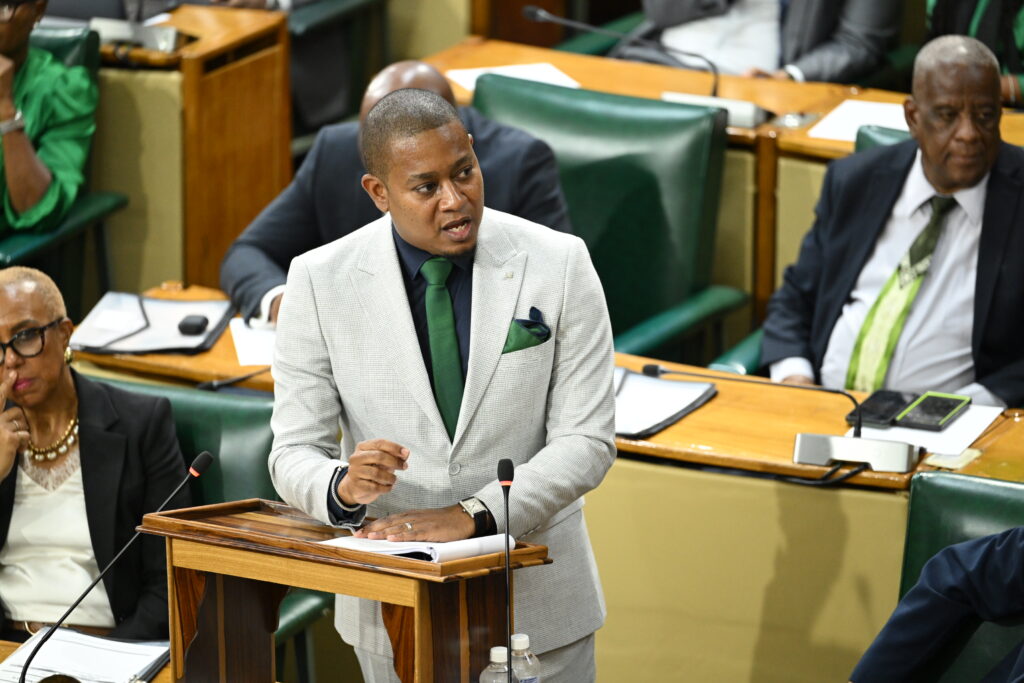
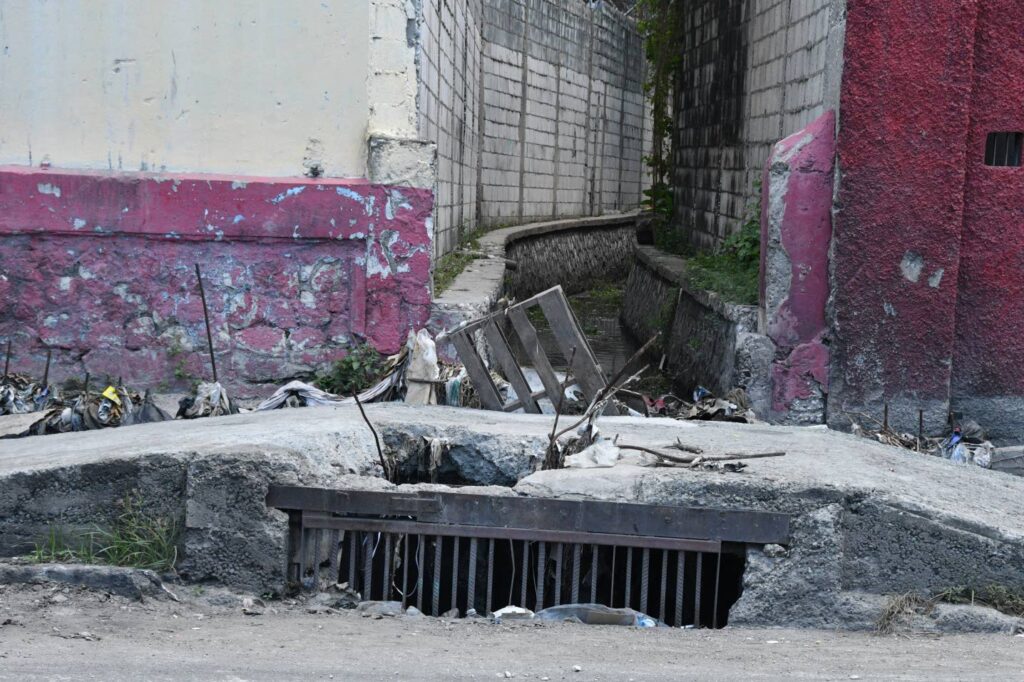
    For years, residents across two Jamaican communities have endured persistent foul odors, disrupted daily life, and public health risks caused by chronically malfunctioning sewage infrastructure. Now, they are finally set to get long-awaited relief after the government announced plans to permanently shutter both troubled facilities. Jamaica’s Minister of Water, Environment and Climate Change Matthew Samuda made the formal announcement Tuesday during his sectoral debate address to the House of Representatives, framing the decision as a fulfillment of a core promise to constituents who have advocated for change for years.

  • Forex: $158.12 to one US dollar

    Forex: $158.12 to one US dollar

    KINGSTON, Jamaica — Fresh data released by the Bank of Jamaica’s daily foreign exchange trading roundup shows that the United States dollar closed out its Wednesday, April 29 trading session with a moderate uptick against the Jamaican dollar. By the end of the trading day, one US dollar was pegged at 158.12 Jamaican dollars, representing a 16 cent increase compared to previous trading levels.

    Shifts were also recorded across other major global currencies on the same trading day. The Canadian dollar, for example, softened slightly against the Jamaican dollar, finishing the day at 115.15 Jamaican dollars per unit, down from its prior close of 115.36 Jamaican dollars. In contrast, the British pound extended its gains, ending the session at 213.88 Jamaican dollars per pound, an increase from its previous trading close of 212.99 Jamaican dollars.

  • 18 to consent

    18 to consent

    During Tuesday’s 2026/27 Sectoral Debate in Jamaica’s House of Representatives, opposition education spokesperson Damion Crawford has issued a bold call to raise the country’s age of consent from 16 to 18, framing the policy shift as a critical response to an unaddressed teen pregnancy epidemic that is driving mass school dropout across the nation.

    Crawford’s proposal comes amid a scathing broader critique of Jamaica’s public education system, which he argues is systematically failing the country’s youth. His argument centers on staggering official data: local institutions record an average of 6,000 school-aged girls becoming pregnant every year, and pregnancy accounts for 49% of all female secondary school dropouts. Most teen mothers do not return to formal education after giving birth, ending their academic trajectories prematurely. Extrapolating from annual pregnancy rates over the full 12-year compulsory schooling cycle for students aged 6 to 17, Crawford estimates that as many as 78,000 current students are children born to teen mothers still enrolled in school.

    The push for an upward age adjustment comes at a pivotal legislative moment in Jamaica. The country last updated its age of consent in 1988, when lawmakers raised it from 14 to 16 via amendment to the Offences Against the Person Act, with the explicit goal of cutting teen pregnancy and protecting vulnerable girls in the 14 to 16 age bracket. Today, however, a parliamentary joint select committee reviewing the Child Diversion Act is currently considering a close-in-age exemption that would legalize consensual sexual relations between 15-year-old girls and 19-year-old men — a move Crawford implicitly pushes back against with his call for a higher baseline age of consent.

    Beyond the teen pregnancy crisis, Crawford laid bare a cascade of overlapping failures plaguing Jamaica’s education sector, starting with chronic absenteeism. Defining chronic absenteeism as missing at least 10% of the school year (19 instructional days), he reported that every administrative region in the country records chronic absenteeism rates above the warning threshold. Rates range from a low of 17% in Region One and 18% in Kingston’s Region Two to 35% in Region Six, with some deep rural regions posting absenteeism as high as 55%. Citing World Bank analysis, Crawford noted that absenteeism directly drives dropout: the lower secondary dropout rate sits at 25%, while upper secondary stands at 15%. For male students, 41% leave school due to flagging interest in academics — a number that has risen sharply from 19% of dropouts in 2010 to 32% in 2017, a trend Crawford attributes to declining public perception of education’s value.

    Crawford also pushed back against the Jamaican government’s recent claim that all schools have fully reopened following the passage of Hurricane Melissa in October last year. He argued the announcement ignores widespread “hidden absenteeism,” as many schools have adopted a staggered hybrid schedule that only brings students in-person for two days a week, leaving them learning remotely for three. This arrangement, he claimed, has resulted in catastrophic learning loss of between 40% and 60% for affected students.

    The opposition spokesperson went on to criticize multiple government policy choices that he says exacerbate the system’s struggles. He called out a failed student bus transportation system that leaves many students unable to reliably attend classes, and the recent elimination of a 20% duty concession on motor vehicles purchased by educators. Crawford noted that school leaders and guidance counsellors regularly travel to track down truant students and reconnect them to learning, making personal transportation a critical tool for retention. He also added that the government has not increased funding for the Programme of Advancement Through Health and Education, a key social safety net supporting low-income students.

    The most pressing systemic threat, Crawford argued, is an accelerating exodus of teaching staff that the government has failed to address. He reported that annual teacher resignations have jumped fivefold over the past decade, from 350 resignations a decade ago to 1,800 resignations in 2026 alone. In 2022, 145 math teachers — 10% of the country’s total active math teaching workforce — left the profession. Crawford slammed the government for lacking any meaningful teacher retention strategy, and noted that the administration’s recent proposal of a 2% salary increase for educators amounts to an insult to the profession that drives more teachers away.

  • Jamaican schools arrive in Baltimore for Puma East Coast International Showcase

    Jamaican schools arrive in Baltimore for Puma East Coast International Showcase

    BALTIMORE, MARYLAND – One of North America’s most anticipated elite high school track and field competitions is set to kick off this weekend, and Jamaica’s top young athletic prospects have already touched down in Baltimore to compete for international honors. The fifth annual Puma East Coast International Showcase, hosted at Morgan State University’s Hughes Memorial Stadium, is scheduled to get underway at 10:00 a.m. Saturday, bringing together more than 1,200 of the best young sprinters, jumpers, and throwers from across the United States and Caribbean.

    Founded by former Jamaican Olympian Sanjay Ayre, the showcase has quickly earned a reputation as one of the premier high school track events on the U.S. calendar, offering rising young talent a chance to test their skills against international competition ahead of collegiate and professional careers. This year, Jamaica sends five of its most decorated high school programs to the meet: led by boys’ national championship winners Jamaica College (JC) and Hydel High School, the girls’ national championship runners-up. Rounding out the Jamaican contingent are Excelsior High, Holland High, and St. Andrew High School for Girls.

    Jamaica College arrives in Baltimore riding an unprecedented wave of momentum, fresh off extending one of the most dominant winning streaks in global track and field at last weekend’s 130th Penn Relays in Philadelphia. The JC boys’ 4x100m relay squad crossed the finish line in 40.03 seconds to claim the High School Boys’ 4x100m Championship of America gold, marking the 20th consecutive title Jamaica has claimed in the event, even in cold, difficult racing conditions. The winning quartet of Makaelan Woods, Nathaniel Martin, Elijah Smeikle, and anchor Kai Kelly have three members entered in this weekend’s showcase.

    Fifteen-year-old anchor Kai Kelly, already one of the most talked-about young sprint sensations in the world, will line up for the individual 100m in Baltimore after his game-winning anchor leg at Penn Relays. Kelly has turned in a historic season so far: he claimed the boys’ class two 100m national title at Jamaica’s Boys and Girls’ Champs with a 10.28-second clocking, followed by an Under-17 100m gold at the CARIFTA Games in 10.37 seconds. Makaelan Wood will contest the 200m, while Nathaniel Martin is entered in both the 100m and 200m.

    JC’s roster also includes standout discus thrower Joseph Salmon, who broke both the national junior and Champs records with a 67.55m throw to retain his class one discus title earlier this season. Salmon has carried that dominant form into subsequent competitions, claiming gold at both the CARIFTA Games and Penn Relays ahead of this weekend’s showcase. Additional key competitors for JC include 400m hurdler Rojay Black, middle-distance sprinter Omary Robinson, and sprinter DeAndre Gayle.

    Hydel High, Jamaica’s second-leading representative, brings three members of its own Penn Relays-winning High School Girls’ 4x400m Championship of America squad. Nastassia Fletcher, Aaliyah Mullings, and Sashana Johnson helped the team clock 3:32.85, the third-fastest time ever recorded in the championship event. Fletcher and Mullings will compete in the 400m hurdles this weekend, while Johnson is entered in the 200m. They are joined by multi-event star Zavien Bernard, who claimed the Penn Relays girls’ triple jump title to add to her double gold at Champs and high jump gold at CARIFTA.

    Holland High’s squad is led by sprint star Shanoya Douglas, a triple CARIFTA Games gold medalist who turned in one of the most impressive performances of the regional championships earlier this month. Douglas successfully defended her 100m and 200m CARIFTA titles, clocking a world-leading 22.11 seconds in the 200m that broke a 20-year-old championship record, lowered her own Jamaican Under-20 national record, and moved her into a tie for third on the all-time world Under-20 ranking.

    Excelsior High brings a roster anchored by rising hurdling star Jaeden Campbell, who set a new Champs meet record of 50.87 seconds to win the boys’ class two 400m hurdles title. He is joined by class one bronze medalist Kishawn Hoffman and anchor sprinter Malike Nugent, who led Excelsior to 4x100m gold at Champs. Excelsior will also field teams in both the 4x100m and 4x400m relays this weekend. St. Andrew High School for Girls rounds out the Jamaican delegation, with long jumper and sprinter Keianna Walker set to represent the program.

  • Auditor General’s Dept stretched thin

    Auditor General’s Dept stretched thin

    Jamaica’s top auditor has sounded the alarm over crippling personnel shortages that are blocking an immediate re-examination of recently recovered procurement documents from the University Hospital of the West Indies (UHWI), as overlapping high-stakes public sector audits stretch her department’s already thin resources to breaking point. Auditor General Pamela Monroe Ellis shared these constraints during a recent sitting of Parliament’s Public Accounts Committee (PAC), where lawmakers pressed for details on how her office would move forward after UHWI administrators announced the rediscovery of dozens of procurement files previously listed as missing.

    The controversy traces back to an earlier audit of UHWI’s procurement protocols, which flagged 51 contracts for which no supporting documentation could be produced during the initial review. That gap sparked widespread alarm over gaps in record-keeping, potential lapses in transparency, and possible non-compliance with national public procurement rules. During Tuesday’s committee sitting, UHWI Acting Chief Executive Officer Eric Hosin updated legislators: eight of the missing files, covering contracts valued at approximately $65 million, have been located in previously searched storage spaces, while another four contracts worth an estimated $35 million have had their documentation reconstructed from existing records.

    Following this update, PAC Chair Julian Robinson asked the Auditor General’s Department to outline its next steps, noting that the committee requires independent verification from the auditor general to confirm that the newly surfaced files are both complete and credible. Robinson also pushed for clarity on how the department will handle files that remain unaccounted for, and contracts that UHWI has now stated were canceled before execution.

    In her response, Monroe Ellis pushed back against the assumption that the rediscovery of files automatically resolves earlier concerns about procurement irregularities. She emphasized that any meaningful follow-up review would demand a full reassessment of every document, including rigorous checks to confirm authenticity, completeness, and alignment with procedural requirements. “I am not satisfied with just looking at a file to see that it exists. I would rather to have a more thorough audit done where I can have confidence about bona fides as well as accuracy,” she told the committee.

    Despite this commitment to rigorous oversight, Monroe Ellis made clear that an immediate review is not feasible, given that her department is already stretched thin by multiple ongoing major investigations. “I understand your desire to have some level of comfort and better particulars around this matter. But I really have to emphasise that I just do not have the manpower right now. We have other audits that we’re seeking to complete and it’s actually this audit team that is involved, and it will have a ripple effect,” she explained.

    The Auditor General added that the UHWI probe is just one component of a wider systemic audit of Jamaica’s entire public health sector, and that other major public audits have already been pushed back due to competing urgent national priorities. She specifically called out a post-Hurricane Melissa recovery spending audit that is currently consuming the bulk of her department’s audit capacity, and has already delayed a separate review of the Cornwall Regional Health Authority. “It is necessary for us to wrap those audits up to move on, which is why I’m asking for time to allow the team to complete their review of the Hurricane Melissa initiative, which is quite time-consuming, as well as the Cornwall Regional Hospital,” she said.

    Monroe Ellis’ testimony underscores the growing systemic pressure facing Jamaica’s national audit office, which is being forced to juggle a growing backlog of high-profile public interest investigations against a static ceiling on staffing and operational resources.