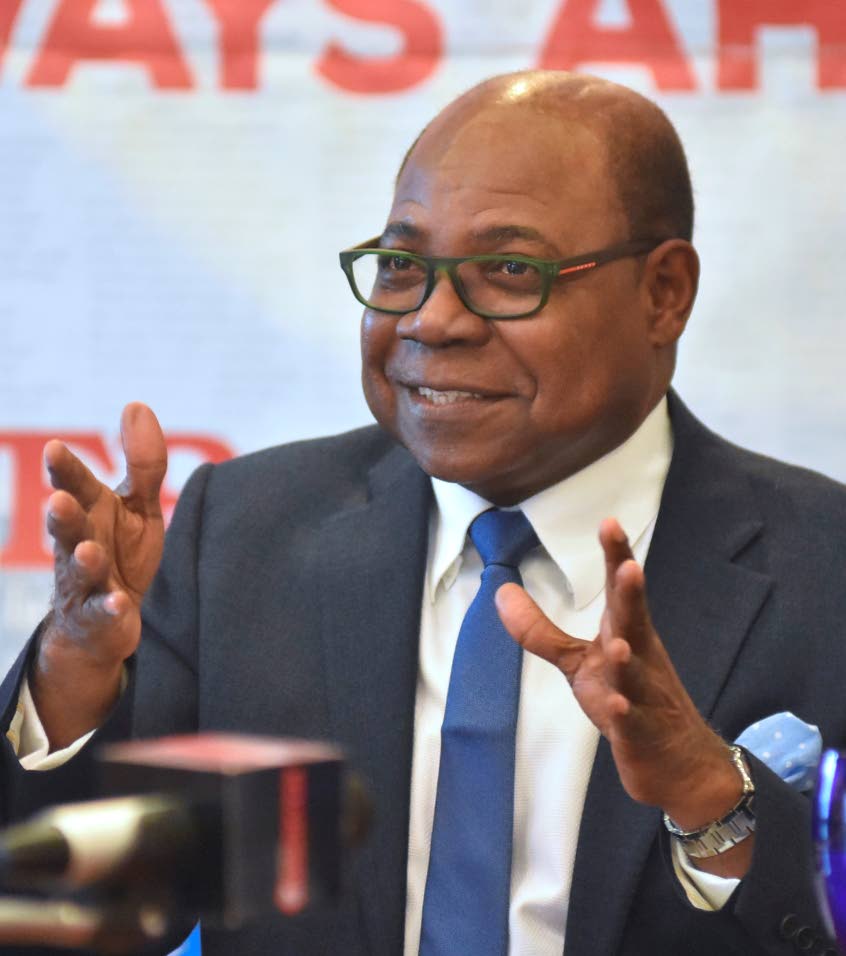
ST JOHN’S, Antigua and Barbuda – Ahead of the highly anticipated 2026 Caribbean Travel Marketplace trade exhibition kicking off in Antigua and Barbuda, Jamaica’s top tourism official has thrown down a clear gauntlet to the Caribbean Community (CARICOM), calling on the bloc to formally enshrine tourism as the region’s number one economic activity and unite to shield, grow and future-proof the critical sector.
Jamaica’s Minister of Tourism Edmund Bartlett pointed out a striking disconnect that has persisted in regional policy for years: while tourism accounts for more than 40 percent of gross domestic product across multiple Caribbean economies and sustains the livelihoods of millions of local workers and families, it has yet to earn a spot as a core priority on CARICOM’s overarching strategic roadmap.
“Tourism is no afterthought, no secondary industry – it is the very backbone of the Caribbean economy,” Bartlett emphasized. “The moment has arrived for CARICOM to treat it with the urgency, dedicated resources and political will that this transformative sector demands.”
Bartlett went on to highlight that tourism extends far beyond hotels and resort hospitality. Across the entire Caribbean basin, the sector acts as a central engine that powers growth across a wide swath of interconnected industries, from aviation and local agriculture to creative arts, infrastructure construction, regional financial services, and small and medium enterprise development. He argued that CARICOM’s broader economic integration goals can never reach their full potential if the bloc continues to relegate tourism to a peripheral issue, rather than centering it as the region’s leading economic driver.
“We cannot credibly claim to be advancing economic integration when we leave our largest industry to face global economic headwinds on its own,” Bartlett stated. “CARICOM must put in place a dedicated, high-level mandate for tourism – one backed by binding commitments, coordinated cross-border policies and collective investment frameworks – that matches the enormous weight the industry holds for every single member state.”
The minister laid out five key, long-overdue areas where coordinated CARICOM action is urgently needed: developing a unified regional tourism strategy, streamlining visa processes and cross-border travel facilitation, establishing a dedicated regional resilience fund to respond to industry shocks, accelerating the digital transformation of tourism services across the bloc, and investing in targeted human capital development for the tourism workforce.
Bartlett added that building local capacity to control the supply side of the regional tourism industry is also critical to reducing economic leakage and ensuring that more revenue from tourism stays within local Caribbean economies, rather than flowing to foreign entities.
“The world’s most successful tourism destinations do not achieve lasting success in isolation,” Bartlett noted. “Our regional cultural and natural diversity is our greatest strength – but that strength can only be unlocked if we harness it collectively under a CARICOM framework that places tourism at the very top of our shared agenda.”
Reaffirming his commitment to advancing this unified vision, Bartlett confirmed that Jamaica will continue to hold bilateral and multilateral discussions with regional counterparts across the Caribbean to build broad consensus for a coordinated Caribbean tourism integration agenda moving forward.