
KINGSTON, Jamaica — In a stark assessment of the country’s economic trajectory delivered during Tuesday’s Sectoral Debate in the House of Representatives, opposition trade spokesperson Anthony Hylton has claimed that Jamaica has moved backward on its promised goal of becoming a major global logistics hub. Hylton, who oversaw the initial planning and launch of the logistics hub initiative during the previous People’s National Party administration, used his parliamentary address to lay out long-standing structural flaws holding back the island nation’s economy.
标签: Jamaica
牙买加
-

Man City ease past Palace to keep pressure on Arsenal
MANCHESTER, U.K. — With two matches left in one of the most tightly contested Premier League title races in recent memory, Manchester City’s rotated squad delivered a comfortable 3-0 victory over Crystal Palace on Wednesday, pulling the defending contenders to just two points behind league-leading Arsenal. Manchester City manager Pep Guardiola opted to shake up his starting lineup, making six adjustments from the side that secured a 3-0 win over Brentford over the weekend. Star forwards Erling Haaland and Jeremy Doku were held in reserve for the Etihad Stadium clash, while Crystal Palace manager Oliver Glasner also made several changes to his own starting eleven.
Goals in the first half from Antoine Semenyo and Omar Marmoush put Manchester City in full control of the match under damp Manchester conditions, with a late third goal from Savinho putting the final polish on an impressive team performance.
The title momentum had swung firmly in Manchester City’s direction over the preceding weeks, until a costly 3-3 draw at Everton last weekend handed the upper hand back to Arsenal. Just two days before City’s clash with Palace, Arsenal fans held their breath as a late stoppage-time equalizer from West Ham United was disallowed following a VAR review, allowing the Gunners to hold on for a critical 1-0 win that preserved their lead at the top of the table.
City broke the deadlock in spectacular fashion in the 32nd minute. Phil Foden crafted the opening with a perfectly weighted backheel pass that put Semenyo clear on goal, and the winger finished calmly past Crystal Palace goalkeeper Dean Henderson into the far corner of the net. Eight minutes later, Foden picked up an assist once again, playing a simple touch into the path of Marmoush, who slotted home his third Premier League goal of the campaign to double City’s lead.
Towards the end of a low-key second half, fan-favorite defender John Stones — who will leave the club at the end of the current season — entered the match as a substitute to a warm standing ovation from the home crowd. Minutes after Stones’ introduction, Rayan Cherki dribbled the ball from his own half to create a third goalscoring chance, setting up Savinho who curled a finish past Henderson to put City three goals up.
The three points move City up to 77 points, two points behind first-place Arsenal with two games remaining. Crucially, City hold a one-goal advantage in overall goal difference over the Gunners, and have scored seven more goals across the season, giving them a key tiebreaker if the two sides finish level on points.
Up next for City is a FA Cup final clash with Chelsea at Wembley Stadium this Saturday, where the club will be chasing a domestic cup double having already lifted the League Cup trophy earlier in the campaign. Speaking before Wednesday’s kickoff, Guardiola defended his decision to rotate his squad, noting that the congested end-of-season schedule requires every member of the first-team squad to contribute. “When the schedule is so tight, everybody is fit, everybody needs to help,” Guardiola said.
Despite the narrowed gap, Arsenal remains the clear favorite to claim its first Premier League title since 2004, under manager Mikel Arteta. If Arsenal gets three points against already relegated Burnley next Monday, City will be forced to take all three points against Champions League-chasing Bournemouth the following day just to keep the title race alive heading into the final day. On May 24, the final matchday of the season, Arsenal travels to face Crystal Palace, while City — currently on a 14-match unbeaten run in the league — hosts Aston Villa at the Etihad.
Foden, who was integral to Wednesday’s win with two assists, emphasized that the title race is far from over. “It’s a team game at the end of the day. If you want to win titles and trophies it’s about a full squad and everyone playing their part,” Foden told Sky Sports after the match. “The aim is to keep pushing and keep them on their toes. We’ve seen a lot of things can happen on the final day. I’ve experienced many times when the game doesn’t go your way. We just have to keep pushing and doing our part.”
For Crystal Palace, all attention is now turning to their upcoming UEFA Conference League final against Rayo Vallecano in Leipzig on May 27. The match will mark Glasner’s final game in charge of the south London club, as he prepares to step down at the end of the campaign.
-

CXC says AI approach based on fairness and human judgement
BRIDGETOWN, BARBADOS — As artificial intelligence reshapes learning and academic evaluation across the globe, the Caribbean Examinations Council (CXC) has moved to clear up widespread uncertainty among regional students, teachers and parents, laying out a balanced, fairness-centered framework for integrating AI tools into School-Based Assessments (SBAs) that puts human oversight above automated detection.
In an eight-minute public video statement shared across CXC’s official website and social media platforms, Dr. Nicole Manning, the council’s Director of Operations, openly addressed both the transformative opportunities and growing challenges that generative AI tools have introduced to secondary and post-secondary academic work in the Caribbean. She delivered direct reassurance to educators and learners navigating this fast-evolving digital shift, emphasizing that the CXC’s approach is rooted in trust for Caribbean students’ commitment to demonstrating their own knowledge and skills.
One of the most pressing concerns raised by educators and families in recent months has centered on the reliability of commercial AI detection software, which multiple independent studies have found to produce frequent false accusations of academic misconduct. In response to these worries, Manning clarified that under the CXC’s newly updated Standards and Guidelines for the Use of AI in Assessments, AI detection tools will never serve as the sole evidence for penalizing a student or invalidating their submitted work.
“The core of our SBA moderation and assessment process has always been, and will remain, the close teacher-student relationship built over months of working together — reviewing drafts, holding conversations, providing guidance and observing a student’s progress firsthand,” Manning explained. “AI detection checkers are just one source of input, not the final verdict. Human experts will be involved at every stage of the process to guarantee every student is treated fairly.”
Founded in 1972 by regional Caribbean governments, CXC took over regional examination responsibilities from British examining boards, replacing the UK-focused O-Level system with localized curricula designed to reflect the Caribbean’s unique social, economic and cultural context. The council says it has already distributed clear, actionable guidance to all regional schools outlining acceptable and unacceptable uses of AI in assessment work.
Under the new rules, students are permitted to use AI as a supportive study tool: it can be used to clarify complex concepts, brainstorm project ideas, explain confusing academic terms, or draft structural outlines for assignments. The key requirement, however, is transparency: any student who uses AI in any part of their SBA must formally disclose the use via a required disclosure form, cite the AI tool as a source, and submit an originality report along with their final work. Students who do not use AI at all are not required to submit any additional documentation.
CXC classifies submitting work that is generated entirely or predominantly by AI without disclosure as an act of academic dishonesty. Such cases will be processed following the council’s established irregularities protocols, which involve collaborative review with the student, their classroom teacher, and school principal to reach a fair outcome.
Manning also recognized the heavy adjustment burden that AI integration has placed on the Caribbean teaching community, and pledged full institutional support from CXC, including dedicated resources and targeted training to help teachers navigate the AI landscape with confidence and consistent practice across all regional schools.
“You are not alone in this transition,” Manning said, addressing teachers directly. “We encourage you to have open, honest conversations with your students about responsible AI use, guide them on what is allowed and what is not, and help them understand that academic integrity is a value that extends far beyond the examination room.”
Closing her statement, Manning offered a direct message to Caribbean students, urging them to prioritize integrity in their academic choices. “Integrity is not about whether a machine can detect what you did,” she said. “It is about who you choose to be as a learner and as a professional.”
-

‘Flossing King’ Flippa Moggela facing drug charges in US again
Renowned Jamaican dancehall performer Flippa Moggela, legally named Andrew Kendrick Davis, has found himself back in the crosshairs of United States federal law enforcement, just four years after securing an early release from prison on prior drug trafficking convictions. The self-proclaimed ‘Flossing King’, who also performs under the stage name Flippa Mafia, is one of four defendants named in a newly unsealed federal drug conspiracy indictment filed out of New Jersey. His co-accused in the case are Damion Jones, Clifford Brown, and James McBride.
Prosecutors from the U.S. Attorney’s Office for the District of New Jersey outline that the four men are alleged to have coordinated a large-scale drug trafficking conspiracy between August 2025 and May 2026. The scheme, court documents claim, centered on the conspiracy to possess and distribute multiple quantities of controlled substances: no less than 500 grams of methamphetamine, at least 400 grams of fentanyl, and a minimum of five kilograms of cocaine.
As part of the ongoing multi-agency investigation into the alleged ring, a federal judge granted a warrant authorizing law enforcement to intercept communications from two mobile phones directly linked to Davis. Official criminal complaints filed as part of the case include what investigators describe as damning recorded discussions between Davis, one of his co-defendants, and an unidentified female that allegedly tie the artist to the conspiracy.
Court records detail a key investigative milestone on May 9, 2026, when surveilling officers watched a U.S. Postal Service employee deliver a package shipped from California five days prior to a pre-identified target address under active surveillance. A subsequent court-authorized search of the property led to the apprehension of one of Davis’ co-defendants, and investigators seized 10 pounds of suspected methamphetamine and two kilograms of suspected cocaine from the location.
Follow-up search and arrest operations across multiple locations resulted in the detention of all three remaining co-defendants, with additional physical evidence linked to the alleged conspiracy seized during the raids. Davis made his initial court appearance this week before U.S. Magistrate Judge Ann Marie Donio, when the previously sealed charges against him were officially made public.
As of press time, Davis remains in the custody of the U.S. Marshals Service, ahead of a scheduled bail hearing set for May 14 at the U.S. District Court for the District of New Jersey. This latest arrest marks a dramatic turn in Davis’ recent story: he was first convicted in 2016 as part of the high-profile Operation Next Day Air, a major federal takedown of a large-scale drug trafficking and money laundering network that counted Davis as a key target. Though he was handed a 25-year prison sentence for that conviction, he was granted early release on parole in 2022. Following his release, Davis returned to his music career, releasing a string of new tracks including *Inna Mi Zone* and *Own Don* in 2025, before his latest detention.
-

Wine consumption slides in 2025
PARIS, France – The global wine industry entered 2025 facing a rare confluence of interconnected challenges that pushed annual worldwide wine consumption to its lowest level in years, according to a new annual report released Tuesday by the International Organisation of Vine and Wine (OIV), the sector’s leading global trade body.
The organization’s full-year analysis confirms that global wine consumption dropped 2.7% in 2025, falling to 208 million hectoliters. This latest decline extends a persistent downward trend that has cut global consumption by 14% cumulatively since 2018, marking one of the longest sustained contractions the industry has ever recorded.
OIV officials framed the downturn as the product of overlapping long-term cultural shifts and short-term economic strain that have reshaped consumer behavior across nearly every major market. “This evolution reflects the interaction between longer-term changes in consumption patterns and a more difficult economic environment in recent years,” the OIV explained in its review. In most mature, established wine markets, shifting lifestyle priorities, evolving social norms and generational turnover continue to alter how consumers approach wine purchases and consumption, the organization added.
Since 2020, the global wine sector has also been battered by an unbroken string of external shocks that have eroded consumer purchasing power and confidence. The COVID-19 pandemic, escalating geopolitical tensions, widespread global trade disruptions and persistent inflationary pressures have all combined to create an increasingly challenging operating landscape for producers and distributors, the report noted.
Nine out of the world’s 10 largest national wine markets recorded volume declines in 2025, with three major economies driving the bulk of the global drop: China, France and the United States. The U.S., which holds the title of the world’s largest single wine market, saw consumption fall 4.3% last year. OIV attributes this decline to three core factors: shrinking household purchasing power amid ongoing inflation, a broader trend of reduced alcohol intake among younger generations of American consumers, and a growing market share for alternative alcoholic beverages that have siphoned demand away from wine.
When asked about the lingering impact of tariffs introduced by former U.S. President Donald Trump on global wine trade, OIV director John Barker told AFP that it remains difficult to separate that effect from the host of other headwinds currently hitting the U.S. market.
France, Europe’s largest national wine market and one of the world’s top wine-producing nations, recorded a 3.2% drop in domestic consumption in 2025. China, meanwhile, saw one of the steepest single-year declines globally: national wine consumption fell 13% in 2025, and has plummeted 61% overall since 2020. OIV notes that wine demand in China remains uniquely sensitive to shifts in household income and price point changes, making the market particularly vulnerable to broader economic slowdowns.
Against this backdrop of falling demand, global wine production actually ticked up 0.6% in 2025 to 227 million hectoliters. However, OIV emphasizes that this small increase only represents a partial rebound from a historically low production level recorded in 2024. The 2025 output marks the third consecutive year of below-average global wine production, a trend shaped by both growing climate volatility and proactive production adjustments made by producers responding to softer demand.
Despite the run of reduced output, OIV does not expect below-average production to trigger widespread supply shortages in the near term. Instead, the organization projects that current market conditions will lead to a gradual drawdown of existing industry stockpiles rather than broad gaps in supply. For the global wine sector, the core challenge going forward remains adjusting to the new reality of weaker global consumer demand, the report concluded.
-
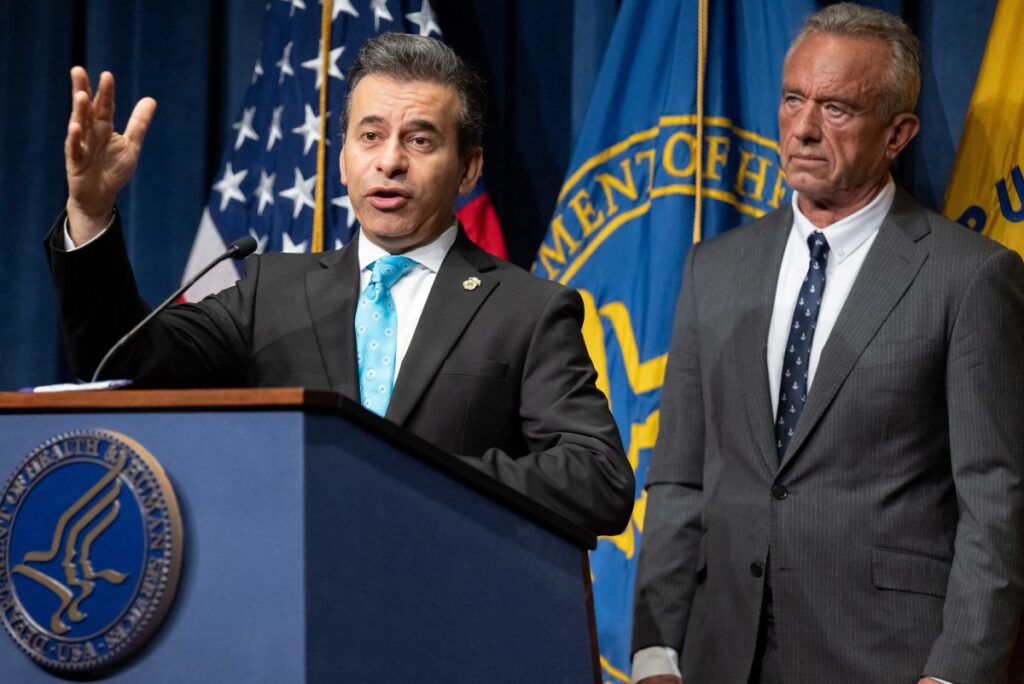
Trump announces departure of food and drug regulation chief
Less than 18 months after taking office to lead a promised overhaul of the U.S. Food and Drug Administration, Commissioner Marty Makary has stepped down from his role, wrapping up a tenure marked by cross-cutting criticism and escalating political friction that culminated in his exit Tuesday.
U.S. President Donald Trump confirmed the departure to reporters in Washington, confirming long-running rumors that a leadership change at the powerful regulatory agency was imminent. Describing Makary as a “terrific guy” and “hard worker respected by all,” Trump pushed back against speculation that he had dismissed the FDA chief, noting Makary had submitted a formal resignation via text message that Trump later shared on his Truth Social platform. Kyle Diamantas, a former top food safety official at the agency, will step into the role as acting commissioner immediately, the president announced.
A practicing surgeon and one-time Fox News contributor, Makary first rose to national prominence during the COVID-19 pandemic as a vocal contrarian who pushed back against mainstream public health guidelines and institutional medical consensus. When he was tapped to lead the FDA 13 months prior, he campaigned on a platform of sweeping regulatory reform. But his time in office left few stakeholders satisfied, drawing backlash from industry leaders, political activists on both sides of key policy debates, and established public health experts alike.
The final point of friction came over the Trump administration’s push to authorize the sale of fruit-flavored vapes, a policy Makary openly opposed over well-documented concerns that flavored e-cigarettes drive youth nicotine addiction. The administration moved forward with the policy despite Makary’s resistance, and the outgoing commissioner faced mounting pressure from the White House to sign off on the rule in recent weeks.
Other flashpoints galvanized criticism across the political and ideological spectrum. Anti-abortion conservatives who have spent years targeting the abortion pill mifepristone—first approved by the FDA 25 years ago—slammed Makary for dragging his feet on completing a long-promised regulatory review of the drug. Major pharmaceutical industry executives faulted his efforts to restructure the FDA’s drug approval process, arguing the changes created unnecessary delays and bureaucratic confusion instead of streamlining oversight. Public health leaders, meanwhile, accused Makary of pandering to anti-vaccine activists after the agency released an unsubstantiated memo linking COVID-19 vaccines to excess deaths, a claim that ran counter to decades of peer-reviewed research on vaccine safety.
Makary’s exit marks the latest high-profile shakeup at the Department of Health and Human Services, which is currently led by Robert F. Kennedy Jr., a well-known vaccine skeptic who has overseen a wave of departures from traditional public health leadership roles across HHS’ major agencies. Recent months have seen vacancies at the top of the Centers for Disease Control and Prevention and the Office of the Surgeon General, as Kennedy has pushed to replace veteran public health officials with allies aligned with his anti-vaccine and deregulatory agenda.
Peter Lurie, president of the nonpartisan food and health watchdog Center for Science in the Public Interest, framed Makary’s departure as another symptom of institutional decay at the top of HHS. “This is just more chaos at a beleaguered, battered Department of Health and Human Services,” Lurie said. “When you don’t have a CDC Director, an FDA Commissioner, or a Surgeon General, the obvious question is: Why do you have this HHS Secretary? Robert F. Kennedy Jr., is the cause of much of the chaos that has resulted in these job vacancies. HHS is rotting from the head.”
-
TransJam Highway reports 46% rise in profits, 30% increase in dividends in first quarter
KINGSTON, Jamaica — TransJamaican Highway Limited (TJH), the operator of Jamaica’s key highway concessions, has kicked off 2026 with standout financial performance, posting double-digit growth across all core revenue and profitability metrics while advancing its digital transformation of toll collection across its entire network.
In an official press statement released Tuesday, the infrastructure firm announced unaudited first-quarter results ending March 31, 2026, that far outpace year-ago performance. Total revenue for the quarter hit US$29 million, marking a 29% jump compared to the same three-month period in 2025. Net profit surged 46% year-over-year to reach US$13.2 million, with earnings per share climbing the same 46% to US$0.00106 per unit. Even earnings before interest, taxes, depreciation, and amortisation (EBITDA) — a key metric for measuring operating cash flow in infrastructure concessions — rose 31% to US$23.7 million, confirming the resilience and strength of TJH’s public-private concession operating model.
Beyond top and bottom-line growth, the company closed the quarter with a solidified balance sheet. Its debt service coverage ratio, a key indicator of financial health for debt-heavy infrastructure firms, improved to 3.43 times, a figure that well exceeds typical industry benchmarks. TJH officials emphasized that this strong ratio confirms the company’s ability to easily meet its ongoing debt obligations while still allocating capital to critical infrastructure upgrades, technological enhancements, operational overhauls, and consistent returns to shareholders.
In a move that underscores the board’s confidence in the company’s trajectory, directors approved an interim cash dividend of US$13 million, which was distributed to eligible shareholders in April 2026. This payout represents a roughly 30% increase compared to the interim dividend issued in the same period last year, delivering immediate tangible value to investors.
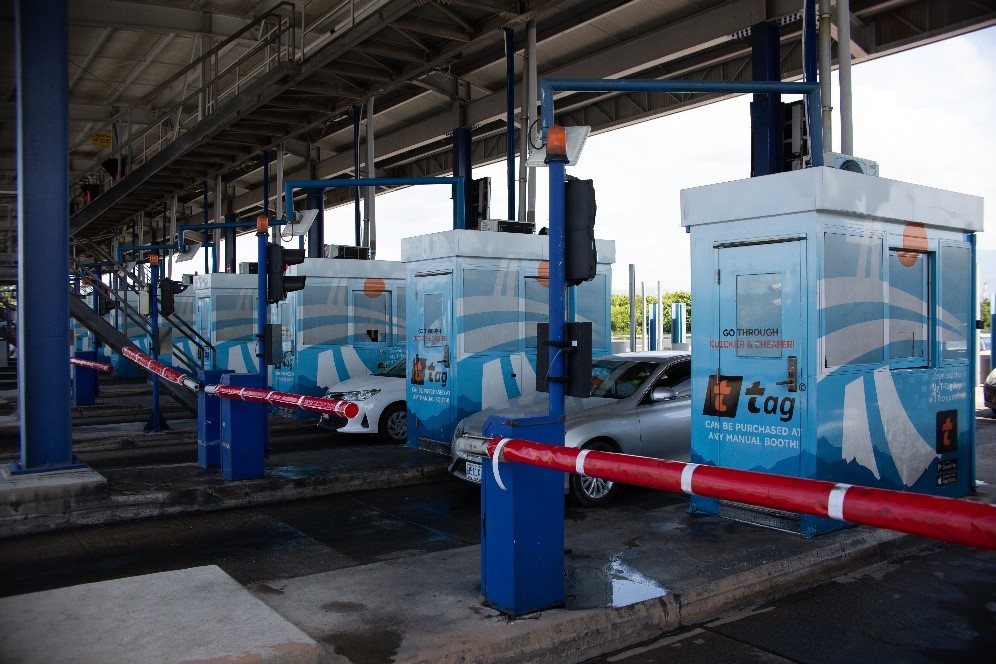
One of the company’s key ongoing strategic initiatives — expanding adoption of its contactless T-Tag electronic tolling system — also hit major milestones in the first quarter. Data from TJH shows that 54% of all motorists using its highway network now opt for T-Tag electronic payment, with peak-hour usage on the high-traffic Portmore Toll Road climbing to nearly 80%. The widespread shift away from cash and manual toll collection has delivered measurable improvements to traffic flow and driver convenience across the network, the company reported.
Even as overall vehicle volumes on TJH highways have risen over the past three years, the company recorded roughly 2.2 million fewer vehicle transactions through manual toll lanes in that period. This reduction in manual lane activity has directly cut down on bottlenecks and reduced average travel times for all motorists, according to the company’s internal analysis.
“The ongoing shift to electronic toll collection has dramatically boosted our operational efficiency while creating a safer, faster journey for everyone who uses our highway network,” said Ivan Anderson, Chief Executive Officer of TransJam Group, TJH’s parent company. “We’re now seeing faster vehicle throughput at every toll plaza, shorter wait times for drivers, more streamlined internal operations, and a noticeably better overall travel experience for our customers.”
Anderson added that TJH will continue pouring investment into information technology upgrades, expanded digital payment options, optimized toll lane configurations, and customer service improvements to modernize the tolling experience and meet growing transportation demands across Jamaica. The company also noted that it has fully integrated the new May Pen to Williamsfield (Phase 1C) highway segment into its network operations, a project that has already boosted overall revenue generation and extended TJH’s strategic reach across the island.
Looking forward to the remainder of 2026 and beyond, Anderson said the group is well positioned to sustain its growth trajectory, supported by consistent operating cash flows, steadily rising traffic demand, growing electronic toll adoption, disciplined capital allocation strategies, and ongoing debt reduction efforts.
“As we continue to scale our operations and expand our network, our core focus remains unchanged: we are committed to delivering long-term value to our shareholders while continuously improving efficiency, convenience, and the overall travel experience for the thousands of Jamaicans who rely on our highways every single day,” Anderson noted.
-

Trump posts graphic of Venezuela as 51st US state
WASHINGTON, D.C. – A provocative social media post from former U.S. President Donald Trump has ignited a fresh diplomatic firestorm between the United States and Venezuela, landing just as the former commander-in-chief traveled to China for a high-profile, high-stakes diplomatic summit. On Tuesday, Trump shared a custom map graphic on his personal Truth Social platform that showed the South American nation with a small U.S. flag inset and labeled the territory “51st State.”
The inflammatory post came one full day after Venezuelan interim leader Delcy Rodriguez publicly pushed back against growing speculation about U.S. annexation, stressing that her country had “never” entertained the idea of becoming an American state. The conversation around this provocative claim emerged in the wake of the capture of deposed former Venezuelan president Nicolas Maduro by U.S. forces earlier this year.
The rhetoric around the issue began building on Monday, when Trump appeared on Fox News and openly confirmed that he was weighing the possibility of adding Venezuela as a new U.S. state. This comment marked a continuation of months of public boasting from Trump about his administration’s influence over the oil-rich South American country.
Since Rodriguez stepped into the role of interim president, her administration has overseen a marked thaw in once-frosty U.S.-Venezuela relations. Her government has passed a series of economic reforms that have reopened Venezuela’s lucrative mining and petroleum sectors to international investment, with U.S. companies positioned as the primary beneficiaries of the new policies.
Amid the shifting diplomatic and economic landscape, Venezuela’s domestic political sphere remains fractured. Opposition groups have repeatedly demanded that Rodriguez schedule a national general election to solidify democratic legitimacy. When pressed on the timeline for a new vote during a May 1 press appearance, Rodriguez offered no clarity, saying only that she “didn’t know” when the election would take place, only that it would happen “sometime.”
The post has drawn quick criticism from political analysts across the Americas, who warn that inflammatory rhetoric of this kind risks undermining the fragile progress that has been made on normalizing relations between Washington and Caracas in recent months.
-

Dick Advocaat returns as Curacao coach for World Cup
A major shakeup has hit Curacao’s senior men’s national football team just months ahead of their first ever World Cup finals appearance, with the Caribbean side turning to the architect of their historic qualification to steady the ship.
Veteran Dutch manager Dick Advocaat, who masterminded Curacao’s surprise run to secure their spot in the global tournament, has stepped back into the head coach role following the sudden resignation of his short-tenured successor Fred Rutten. The confirmation came directly from Gilbert Martina, president of the Curacao Football Federation (FFK), in an exclusive phone interview with AFP from Caracas, Venezuela.
The 78-year-old Advocaat originally departed the post just three months after guiding Curacao to qualification, stepping down to prioritize care for his daughter who was facing a serious health crisis. Dutch football journalist reports now indicate that Advocaat only agreed to the comeback after seeing a significant improvement in his daughter’s condition, clearing the way for him to rejoin the national side’s World Cup preparations.
Following Advocaat’s exit earlier this year, the FFK hired another experienced Dutch tactician, 63-year-old Fred Rutten, to take over the role ahead of the tournament. But Rutten’s tenure quickly unraveled after two lopsided friendly losses in March that exposed clear gaps in the team’s performance under his leadership: Curacao fell 5-1 to Australia (another 2026 World Cup qualifier entrant) and suffered a 2-0 shutout defeat to China.
After what the FFK described as “constructive discussions” among federation leadership, Rutten formally submitted his resignation on Monday, opening the door for Advocaat’s unexpected return. The move brings Curacao’s World Cup campaign back into the hands of the manager who built the qualified squad, ending a period of uncertainty that had rocked the small Caribbean nation’s preparations for their debut on the world’s biggest football stage.
-

Visa launches tap-based identity verification with Fidelity Bank Bahamas
Global payment leader Visa has partnered with fintech firm Keyno and Fidelity Bank (Bahamas) to roll out an innovative tap-powered identity verification solution, eliminating the need for traditional passwords and one-time passcodes for card setup and user authentication.
Dubbed Tap to Confirm and Tap to Activate, the new system leverages the embedded EMV chip on every Visa card, paired with the company’s proprietary Chip Authenticate service, to complete identity checks directly through banking mobile applications. The first deployment of the technology is already live on Fidelity Bank (Bahamas)’s mobile platform, FIDSECURE, marking the first real-world adoption of this new authentication method.
The core design goal of the solution is to cut the finance industry’s long-standing dependence on vulnerable SMS verification codes, time-consuming call centre authentication checks, and clunky manual card activation workflows. As digital commerce continues to expand rapidly across the globe, reliable, user-friendly identity verification has become one of the most pressing pain points for retail banks and payment providers, Visa noted in its official launch announcement. The system turns every physical Visa card into a trusted digital identity credential, requiring only a simple tap of the card against a user’s mobile device to complete verification within the bank’s app.
Beyond new card activation, the tap-based system can also be deployed to secure higher-risk account actions, including password resets, changes to registered mailing addresses, large-value fund transfers, and adjustments to personal account spending limits. Visa emphasizes that the solution delivers robust EMV-level security, widely regarded as one of the most secure card authentication standards globally, while cutting down on the unnecessary friction that frustrates users during traditional verification processes.
Mike Romero, head of digital solutions for Visa’s Latin America and Caribbean division, explained that the company built the new tool by leveraging its existing global payment infrastructure to make identity checks both more convenient and more secure for consumers and financial institutions alike. “With tap authentication, Visa is transforming the card in your wallet into a secure, intuitive identity credential,” Romero said.
Robert J Steinman, chief executive officer of Keyno, added that the cross-industry collaboration between the three partners is focused on reimagining digital banking as a more accessible, secure, and trusted experience that only requires a single tap to work. Following the successful initial launch with Fidelity Bank Bahamas, Visa plans to roll out the tap-based verification system to more partner financial institutions globally starting in 2026.