标签: Haiti

海地

  • The PM in Rome is launching a new dynamic of cooperation for the recovery of Haiti

    The PM in Rome is launching a new dynamic of cooperation for the recovery of Haiti

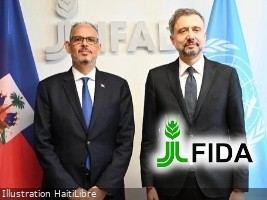
    In a diplomatic gathering held in Rome on Friday, May 8, 2026, Haitian Prime Minister Alix Didier Fils-Aimé led high-stake working discussions with senior representatives from the International Fund for Agricultural Development (IFAD) and a coalition of global development partners, opening a new chapter of coordinated international action to advance Haiti’s long-awaited recovery across multiple critical sectors.

    At the core of the talks were four foundational national priorities that the Haitian administration has identified as make-or-break for the country’s stability and growth: rural development, public security, institutional governance, and broad economic revitalization. Prime Minister Fils-Aimé used the platform to reaffirm his government’s unwavering commitment to scaling up targeted investments in Haiti’s rural regions, laying out a clear vision that links these investments to three core national goals: boosting domestic agricultural production, generating much-needed formal employment for Haitian citizens, and strengthening the country’s long-term food sovereignty to reduce reliance on uncertain international imports.

    A key policy priority highlighted by the prime minister was the urgent need to reopen the country’s major arterial road networks. He stressed that functional, accessible transportation corridors are a strategic prerequisite to connecting smallholder producers to domestic and regional consumer markets, laying the groundwork for a broader resumption of halted economic activity across the country. In addition to rural and economic priorities, discussions addressed institutional governance challenges, with participants agreeing on the importance of maintaining a robust, effective state presence in the capital Port-au-Prince while continuing to roll out development projects in provincial departments across Haiti.

    Fils-Aimé also used the meeting to outline ongoing institutional reforms the Haitian government has undertaken in the justice sector, particularly in the fight against systemic impunity. Among the key upcoming initiatives he detailed is the establishment of new specialized judicial mechanisms designed to investigate and prosecute two of the country’s most damaging challenges: large-scale financial crimes and mass atrocities that have long eroded public trust in state institutions.

    In response to the policy framework presented by Haitian authorities, attending international partners voiced unanimous support for the administration’s recovery guidelines. The global coalition, led by IFAD, reaffirmed their long-term commitment to aligning their support with Haiti’s national priorities, with a specific focus on advancing inclusive rural development, building the country’s environmental resilience to climate shocks, and catalyzing new productive investments that drive shared economic growth.

    The meeting marks a critical milestone in Haiti’s ongoing efforts to rebuild stability after years of political and humanitarian upheaval, bringing together national leadership and global stakeholders around a shared, coordinated agenda for sustainable recovery.

  • FLASH – Historic meeting between Haiti’s PM Fils Aimé and Pope Leo XIV

    FLASH – Historic meeting between Haiti’s PM Fils Aimé and Pope Leo XIV

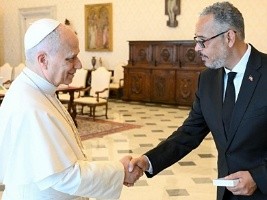
    In a landmark diplomatic and faith-based gathering held on May 9, 2026, Haitian Prime Minister Alix Didier Fils-Aimé took part in a historic audience with Pope Leo XIV at the Vatican, marking a high-profile moment to draw global attention to Haiti’s ongoing crises. The meeting marked the first stop on Fils-Aimé’s diplomatic visit to the Holy See, ahead of separate talks the prime minister held later with senior Vatican officials: Cardinal Pietro Parolin, Vatican Secretary of State, and Archbishop Paul Richard Gallagher, Secretary for Relations with States and International Organizations.

    During the closed-door discussion between the Pope and the Haitian prime minister, both leaders expressed mutual satisfaction with the longstanding positive ties between the Holy See and the Caribbean nation. Attendees also underscored the outsized, unique role the Catholic Church has played in Haiti throughout its current period of widespread political instability and humanitarian upheaval. The two dignitaries delved into the most pressing challenges facing the country, covering its fractured socio-political landscape, ongoing humanitarian crises, systemic migration pressures, and spiraling security conditions. They also echoed the critical need for coordinated support from the international community to help Haiti navigate its current difficulties.

    In a symbolic gesture of national pride amid struggle, Fils-Aimé presented Pope Leo XIV with an official jersey from Haiti’s national men’s football team. The team secured its spot in the 2026 FIFA World Cup finals against steep odds, a achievement that has stood as a rare unifying moment for the crisis-battered nation.

    Later the same day, at 4:00 p.m. local time, Fils-Aimé attended a special Mass for Peace in Haiti, celebrated at the Basilica of Saint Mary Major by Cardinal Parolin. The service drew a distinguished audience including senior Vatican officials, members of the global diplomatic corps accredited to the Holy See, and dozens of members of Haiti’s diaspora community based in Italy. The entire Mass was dedicated to prayer for peace, lasting stability, and national reconciliation across Haiti.

    Cardinal Parolin’s homily centered on the interconnected themes of hope, national reconciliation, and global solidarity with the Haitian people. He urged Haitians at home and abroad to commit to a “patient process of building justice and dialogue,” emphasizing that sustainable peace can only emerge from a sincere commitment to reconciliation across all segments of Haitian society. The cardinal voiced the Catholic Church’s deep concern over the widespread human suffering caused by ongoing gang violence, specifically calling out the crises of mass displacement and widespread malnutrition that have left millions vulnerable.

    Parolin reiterated that international partners must step up their “necessary contribution” and mobilize greater support for Haiti, stressing that the nation cannot be abandoned to face its security and humanitarian challenges alone. He issued a clear call for a “laying of the guns” by all armed factions, and reaffirmed that the Catholic Church remains a “leaven of peace” and an unwavering source of support for Haiti throughout its current transitional period.

    Following the conclusion of the Mass, Prime Minister Fils-Aimé addressed the gathered crowd to thank the Holy See for organizing the prayer service dedicated to his country. He reaffirmed the Haitian government’s core commitments: restoring national security, strengthening fractured national cohesion, and creating the conditions for a lasting return to institutional stability, most notably through the preparation of inclusive, democratic national elections.

    Fils-Aimé also highlighted the critical importance of interreligious dialogue in uniting the country, and recognized the central role the Catholic Church already plays in addressing Haiti’s most pressing social needs. He further acknowledged the outsized contribution that Haiti’s global diaspora has made and continues to make to national reconstruction efforts.

    In closing, the prime minister repeated his call for expanded support from the international community, and announced that Haiti is pushing for an international solidarity conference focused specifically on addressing the nation’s multiple crises. He expressed his hope that the Vatican gathering would help rekindle a sense of hope and unity among the Haitian people, even amid their most difficult trials.

  • Four defendants convicted in the US of conspiracy in the assassination of the President of Haiti

    Four defendants convicted in the US of conspiracy in the assassination of the President of Haiti

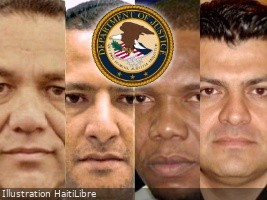
    Five years after the high-profile assassination of Haitian President Jovenel Moïse sent shockwaves across the Western Hemisphere, a federal jury in Miami has delivered a guilty verdict for four men charged with coordinating the deadly plot from U.S. soil. The September 2025 conviction closes a key chapter in the sprawling investigation into the July 7, 2021 attack that killed the sitting Haitian leader, wounded then-First Lady Martine Moïse, and exacerbated years of political chaos and instability in the Caribbean nation.

    Arcangel Pretel Ortiz, Antonio Intriago, Walter Veintemilla, and James Solages were found guilty on a slate of federal charges, including conspiracy to provide material support resulting in death, conspiracy to kill a foreign official, conspiracy to commit offenses against the United States, and violating federal law by organizing an expedition against a friendly nation. Additional charges applied exclusively to Intriago include a separate conspiracy count, smuggling tactical equipment from the U.S. to Haiti, and submitting false export documentation.

    Top U.S. law enforcement officials emphasized that the verdict delivers long-awaited accountability for a plot that used American territory as a launching pad for political violence abroad. “These defendants conspired to replace and ultimately to assassinate Haitian President Jovenel Moïse,” said Assistant Attorney General for National Security John A. Eisenberg. “Using U.S. soil as a staging ground for a violent plot overseas is a grave violation of our laws and, more fundamentally, our sovereignty.”

    U.S. Attorney Jason A. Reding Quiñones for the Southern District of Florida echoed that sentiment, noting the plot was driven by personal greed and ambition that destabilized a close U.S. partner. “These defendants pursued power, influence, and profit through violence. They supported a conspiracy that crossed borders, destabilized a friendly nation, and ended with the murder of a sitting president,” he said. “The jury has spoken, and the rule of law has answered.”

    Court documents and trial evidence laid bare the full scope of the conspiracy, which began taking shape in early 2021. The four men hatched a plan to violently overthrow Moïse, install a hand-picked replacement, and secure millions of dollars in lucrative government contracts for themselves after the coup. To execute their scheme, they built a cross-border network of co-conspirators across the United States, Colombia, and Haiti, recruiting 22 former Colombian Army soldiers and armed Haitian gang leaders to carry out the attack. To date, eight co-conspirators have already pleaded guilty to their roles in the plot, and six testified for the prosecution during the four defendants’ trial.

    Over the three months leading up to the assassination, the group refined multiple plans to kidnap or kill Moïse. An early plot to abduct the president at his sister’s home, drug him, and force his resignation fell through, and a second attempt to kidnap him upon his return from an international trip in mid-June 2021 also collapsed. The group ultimately settled on a direct assault on Moïse’s private residence, ordering their team of Colombian mercenaries to storm the home and kill the president. Black-market weapons and ammunition were secured by co-conspirators inside Haiti ahead of the attack.

    On the morning of July 7, 2021, Solages and the team of Colombian mercenaries, backed by local Haitian allies, carried out the attack. A specialized squad of former Colombian special forces operators dubbed the “Delta Team” led the assault, breaking into the residence and fatally shooting Moïse in his bedroom, while seriously wounding Martine Moïse. Ballistics evidence presented at trial matched bullets recovered from the president’s autopsy and the first lady’s surgery to a rifle used by members of the Delta Team. Thousands of pages of digital communications between the co-conspirators also confirmed the four defendants spent months coordinating and refining their plot.

    Each defendant played a distinct, key role in the conspiracy: Veintemilla, the group’s financier, funded the plot with a $175,000 loan raised through fraudulent U.S. pandemic relief funds, including Paycheck Protection Program (PPP) and Economic Injury Disaster Loan (EIDL) money that was funneled through a co-conspirator’s bank account. Within hours of the assassination, Veintemilla contacted a co-conspirator and bragged, “the rat (President Moïse) is in the box.”

    Pretel Ortiz, who went by the alias “Colonel Gabriel” and regularly wore counterfeit U.S. military uniforms and insignia, oversaw the plot’s tactical planning and coordinated directly with the Colombian mercenary team. Hours before the attack, he told his co-defendants, “I put my men on the ground and we are still fighting to reach the objective.”

    Intriago, Pretel Ortiz’s business partner, managed day-to-day logistics for the plot, including paying co-conspirators and sourcing equipment and supplies. In June 2021, he smuggled bulletproof vests, radios, flashlights, and tactical goggles from Miami to Haiti for the mercenaries, and traveled to Haiti later that month to meet with the group’s local allies. On the eve of the assassination, he messaged co-conspirators, “We finally got the tools to do the work.”

    Solages, the group’s on-the-ground liaison in Haiti, made repeated trips between South Florida and Haiti to coordinate with local gang leaders, source weapons and ammunition, and conduct surveillance on Moïse’s residence. During the July 7 attack, he accompanied the mercenary team and gave orders to kill every person inside the residence, reportedly saying they should eliminate “the dog, the cat, and parrot” to leave no witnesses.

    All four men now face the possibility of life in federal prison. Federal Judge Jacqueline Becerra of the Southern District of Florida has scheduled sentencing for the end of summer 2026. The case was investigated by FBI Miami and Homeland Security Investigations Miami, with support from the U.S. Department of State, the Bureau of Alcohol, Tobacco, Firearms and Explosives, the U.S. Department of Commerce’s Bureau of Industry and Security, and the Defense Department Criminal Investigative Service. A team of prosecutors from the Southern District of Florida and the Justice Department’s National Security Division led the trial.
  • The European Union plans to invest €328 million in Haiti by 2028.

    The European Union plans to invest €328 million in Haiti by 2028.

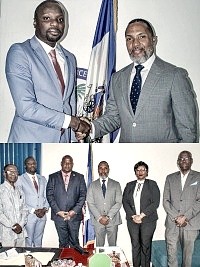
    A high-level diplomatic meeting held in Port-au-Prince on May 7, 2026, has cemented a new chapter of development cooperation between Haiti and the European Union, centered on a €340 million investment package slated for delivery by 2028. The gathering brought together Haiti’s Minister of Commerce and Industry James Monazard, Charles Jean Jacques, National Authorizing Officer of the European Development Fund (EDF), leadership from Haiti’s Investment Facilitation Center (CFI), Justin Petricks, Director General of the National Industrial Parks Company (SONAPI), and senior representatives from multiple Haitian government agencies.

    Discussions centered on the EU’s Global Gateway initiative, a flagship infrastructure and development partnership that already maintains an extensive active cooperation portfolio across Haiti. Under the current programming period ending in 2028, the full €340 million allocation will be directed toward core priority sectors including broad-based development projects, public infrastructure, healthcare services, primary and secondary education, renewable and conventional energy access, and sustainable transport networks.

    Beyond long-term structural development work, the European Union has reaffirmed its ongoing commitment to delivering emergency humanitarian support to the Haitian people, most notably through continuous airlift operations that deliver critical medical supplies to hard-hit regions facing ongoing instability and resource shortages.

    During the talks, participants mapped out a range of untapped opportunities for expanded bilateral economic cooperation and foreign direct investment that are designed to boost Haiti’s domestic industrial development and enhance the nation’s global competitiveness. Attendees also underscored the central role of the Global Gateway initiative as a foundational lever for deepening economic ties between the Caribbean nation and the 27-nation bloc.

    Minister Monazard opened the meeting by emphasizing that Haiti must take proactive steps to position itself as an attractive destination for targeted investment that drives inclusive economic growth, generates sustainable formal employment, and expands the country’s stock of critical public and private economic infrastructure. Moving forward, Monazard outlined plans to strengthen cross-institutional coordination mechanisms that will streamline Haitian stakeholders’ access to international financing facilities, and accelerate the delivery of large-scale structuring projects across high-priority strategic sectors: energy, agriculture, core infrastructure, and domestic manufacturing.

  • More than 1,600 people killed in Haiti in the first quarter of 2026 (Report)

    More than 1,600 people killed in Haiti in the first quarter of 2026 (Report)

    A new United Nations quarterly human rights report released in early May 2026 has painted a grim portrait of persistent insecurity across Haiti, confirming that more than 1,600 people were killed in gang-related and violence-linked deaths between January and March this year. As documented by the UN Integrated Office in Haiti (BINUH), the official death toll for the first quarter stands at 1,642, making this the fourth deadliest three-month period recorded in the country since 2022. An additional 745 people sustained injuries in the wave of violence that has gripped the Caribbean nation.

    Carlos Ruiz Massieu, who serves as the UN Secretary-General’s Special Representative for Haiti and head of BINUH, emphasized that even limited progress in stabilizing parts of the capital has not alleviated the daily suffering of most Haitian citizens. “Despite security advances in certain areas of downtown Port-au-Prince, insecurity is daily and unbearable for a large number of Haitians, and violence continues to spread beyond the capital, particularly in Artibonite and the Centre,” Massieu stated.

    Recent operations by Haitian security forces have yielded small gains over the past quarter, building on trends that emerged at the end of 2025. Security pushbacks have slowed the territorial expansion of major armed gangs in the core of Port-au-Prince, and led to a measurable drop in organized criminal activity across several residential neighborhoods of the capital. But these limited gains have done little to curb atrocities in areas that remain under gang control, where armed groups continue to systematically violate basic human rights. Reported abuses include targeted assassinations of community members, widespread kidnapping for ransom, coercive extortion rackets, and deliberate destruction of civilian property.

    The violence has increasingly spilled outward from the capital into rural and peri-urban regions, with some of the deadliest attacks recorded in the Artibonite department in late March. Between March 29 and 31, gang fighters launched coordinated, pre-planned assaults on 16 different communities in Lower Artibonite, a region that hosts multiple local self-defense groups formed by residents to protect their neighborhoods from incursions. The attack left at least 83 local residents dead and another 38 injured; witness accounts included harrowing details of victims being dragged from their homes in the middle of the night and executed execution-style in front of their families.

    The BINUH report also documented widespread sexual violence perpetrated by gang members against civilian populations over the quarter. In total, investigators confirmed at least 292 cases of sexual abuse, including gang rapes and organized sexual exploitation, with the vast majority of victims being women and adolescent girls between the ages of 12 and 17.

    Beyond gang-perpetrated violence, the report also raised serious alarms about alleged abuses by state security actors. BINUH received consistent allegations of summary executions and attempted extrajudicial killings involving members of the Haitian National Police, most of which were documented in specific neighborhoods of Port-au-Prince. These alleged incidents have left 33 civilians dead and seven others injured. Following the submission of BINUH’s findings, the Inspector General of the Haitian National Police has launched formal investigations into every documented case.

    The full 24-page quarterly report on human rights conditions in Haiti covering January to March 2026 is available for public download via HaitiLibre, the local Haitian news outlet that published the initial report findings.

  • Migration Forum : Minister Marc-Elie Nelson’s intervention in New York

    Migration Forum : Minister Marc-Elie Nelson’s intervention in New York

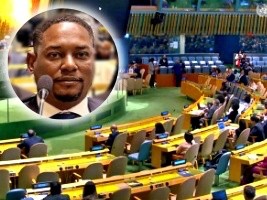
    As the second International Migration Review Forum (IMRF) — hosted by the United Nations at its New York headquarters — drew to a close on Friday, May 8, 2026, Haiti’s Minister of Social Affairs and Labor Marc-Elie Nelson delivered a key address calling on all UN member states to deepen cross-border collaboration to tackle the growing challenges of global migration management.

    Speaking to delegates on Haiti’s behalf, Nelson outlined the unique pressures the Caribbean nation faces, from surging irregular migration flows and devastating brain drain to the urgent need to expand protections for Haitian citizens residing and working outside the country’s borders. Against this backdrop, he highlighted the coordinated domestic reforms and initiatives the Haitian government has rolled out in recent years to bring more structure and fairness to migration movement.

    The cornerstone of these efforts is the National Migration Policy, a formal strategic framework adopted by the administration in 2023 that guides all government action on migration issues. This foundational policy has allowed the government to roll out a targeted contingency plan aligned with the 23 core objectives of the UN Global Compact for Safe, Orderly and Regular Migration, designed specifically to support the arrival and integration of returning Haitian migrants from the Dominican Republic. It also cleared the way for the development of a national care protocol for migrants, funded through a financial partnership with the Inter-American Development Bank (IDB).

    Nelson emphasized that guaranteeing all migrants equal access to critical basic services — including healthcare, primary and secondary education, and formal social protection — is a non-negotiable priority for his government. To advance this goal, Haiti’s 2025-2026 national budget has allocated 152 million gourdes to construct a new transitional accommodation center in the border town of Belladère. Since October 2025, the minister confirmed, the Haitian government has already welcomed and processed more than 170,000 returning migrants, upholding commitments to treat all people with full respect and human dignity throughout the process.

    In closing remarks, Nelson argued that future progress in global migration governance depends on targeted investment in data-driven policy, expanded pathways for regular, legal migration, and more aggressive coordinated action to dismantle transnational human trafficking networks. He concluded by urging the global community to adopt a unified approach to migration that centers humanity, inclusion, and full respect for the human rights of all migrants, regardless of their origin or immigration status.

  • Over US$16 million in emergency food assistance provided to Haiti

    Over US$16 million in emergency food assistance provided to Haiti

    Haiti’s deepening food insecurity crisis has received a critical boost, after the United Nations Food and Agriculture Organization (FAO) announced Wednesday, May 6, that it has secured more than $16 million in new funding from the Regional Humanitarian Fund for Latin America and the Caribbean. The allocation will deliver life-saving emergency food assistance to hundreds of thousands of the most vulnerable people across three of Haiti’s hardest-hit departments: Artibonite, Centre, and West.

    Against a backdrop of spiraling hunger that has pushed millions of Haitians into acute food insecurity, this funding will underpin a targeted emergency humanitarian intervention focused on rapidly cutting rates of severe food insecurity while protecting local food production systems. Unlike traditional food aid distributions that rely on imported delivered food stocks, the FAO’s innovative model centers on supporting small-scale local production to help affected households rebuild their own food access long-term.

    Under the program, FAO teams will distribute custom emergency food production kits to 326,600 people classified as facing acute food insecurity at IPC Phase 3 or higher — a tier that marks significant food consumption gaps and heightened risk of malnutrition. Each kit includes short-cycle crop seeds designed for fast harvests and small livestock including goats, chickens, and ducks, which will help restore the production and food consumption capacity of vulnerable households.

    The model combines fast-acting agricultural inputs with small-scale livestock rearing to deliver immediate improvements to household access to protein and nutrient-dense food, with visible results starting within just days of distribution. To ensure that beneficiaries are able to use the resources effectively, the program also includes ongoing technical guidance and regular follow-up visits from local agricultural experts.

    Designed to deliver tangible outcomes within 90 days of distribution — and in some cases even faster depending on the type of input — each single kit is projected to cover the complete food needs of a five-person household for close to six months. Beyond meeting immediate hunger needs, the kits empower families to grow their own food, helping them regain food sovereignty with dignity rather than relying on long-term external aid.

    Working alongside Haiti’s Ministry of Agriculture, Natural Resources and Rural Development, the FAO will coordinate directly with rural community groups to implement the program, ensuring that assistance reaches the people who need it most and translates quickly into tangible improvements in food access.

    Pierre Vauthier, FAO Representative in Haiti, highlighted the unique value of this community-centered production-focused model. “The importance of these interventions lies in their ability to enable households to quickly meet their own food needs, regardless of the circumstances, while reducing the need for irreversible survival strategies,” Vauthier explained. “They thus help save lives while, in the long term, reducing dependence on external aid.”

  • Presentation of OAS progress in support of Haiti

    Presentation of OAS progress in support of Haiti

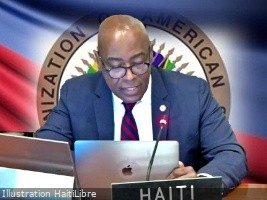
    On Wednesday, May 6, 2026, Organization of American States (OAS) Secretary General Albert R. Ramdin delivered a comprehensive progress update to the bloc’s Permanent Council in Washington, D.C., detailing the hemispheric body’s ongoing work to support stability and development in crisis-stricken Haiti. The update outlined measurable advances across five core priority areas: political mediation, electoral system preparation, security sector assistance, international coordination, and expansion of the OAS’s institutional footprint within Haiti.

    Ramdin emphasized that all OAS initiatives are centered on the principle of Haitian-led solutions, with a core focus on aligning national and international stakeholders and moving toward structured implementation of the widely endorsed Haiti Roadmap for Stability and Peace.

    One of the most critical achievements highlighted by the Secretary General was the OAS’s intervention during the period surrounding February 7, 2026, a window marked by severe institutional uncertainty in the Caribbean nation. Leveraging its formal good offices mandate, behind-the-scenes quiet diplomacy, and coordinated outreach to Haitian authorities, regional bodies, and global partners, the OAS played a key role in preserving executive branch continuity and preventing a far-reaching collapse of state institutions.

    On the electoral front, Ramdin noted that the December 2025 adoption of Haiti’s Electoral Decree marked a key turning point, shifting the process from broad planning to concrete, organized preparation. Through its Department of Electoral Cooperation and Observation, the OAS maintains an ongoing technical working group with Haiti’s Provisional Electoral Council, responding to requests for support in critical areas including electoral technology, voter information systems, and institutional capacity building.

    In the security domain, the OAS has evolved its support from planning to active operational assistance, Ramdin reported. Current engagement includes backing for the civilian component of Haiti’s Gang Suppression Force (GSF), alongside targeted initiatives to upgrade national police capacities, improve security infrastructure, deliver specialized training, strengthen anti-gang financial investigations, and boost security at Haiti’s key maritime ports and coastal borders.

    Ramdin also spotlighted progress on the development of the Haiti Roadmap Dashboard, a transparency and coordination tool designed to provide clearer visibility, full traceability, and greater accountability for all contributions and advances made by the international community. The first phase of the platform, which maps all ongoing OAS-led projects, is already complete, and the second phase will integrate data on bilateral support provided by individual OAS member states. Ramdin called on member state delegations to submit any outstanding contribution data to ensure the platform accurately captures the full scope of collective global support for Haiti.

    Haiti’s Permanent Representative to the OAS, Jean Josué Pierre, confirmed that the Secretary General’s report aligned with on-the-ground conditions in his country. He noted that while progress remains modest, Haiti is now seeing tangible signs of hope, with the capital gradually reclaiming space for normal daily life, peace, and improved security after years of widespread gang violence and institutional collapse. Pierre stressed that the immediate priority is to consolidate current gains and scale up international and national efforts. He also announced that Haiti would submit a draft resolution titled “Support for Haitian-Led Stabilization and Strengthening Coordination of Hemispheric Assistance” for debate at the upcoming OAS General Assembly, scheduled to take place in Panama in June 2026.

    In additional procedural updates, Ramdin confirmed that ahead of the June 22–24 General Assembly in Panama, the OAS will convene a new meeting of the Group of Friends of Haiti. The gathering will serve to review accumulated progress, align on next steps for implementation, and mobilize additional resources and political backing for the priorities laid out in the Haiti stabilization roadmap.

    Closing his presentation, Ramdin noted that the path to long-term stability in Haiti will continue to require consistent determination, coordinated action, and a shared commitment to Haitian sovereignty. “The road ahead will continue to require determination, coordination, and a shared sense of purpose. The OAS stands ready to continue contributing to this effort as a platform for alignment, a facilitator of dialogue, and a partner in implementation,” he said.

  • Leisure : Did you know ? #22

    Leisure : Did you know ? #22

    In the world of contemporary fine jewelry, a Haitian creative visionary has redefined what sustainable, culturally rooted luxury can look like, turning a once-overlooked local craft material into a globally celebrated staple of high-end design. Daphnée Karen Floréal, founder of the Haiti-based jewelry brand Bijou Lakay, has centering sustainable, locally sourced horn and bone as the core identity of her brand — a radical departure from the industry standard where these materials are often treated as secondary, decorative accents rather than central design elements.

    Founded in 2005, Bijou Lakay has grown from a small local venture into an internationally recognized name, with Floréal’s collections featured on runways and leading design fairs across North America, Europe, and Africa. What makes Floréal’s work groundbreaking is her innovative approach to working with horn and bone: she has integrated modern manufacturing techniques including precision laser cutting and high-gloss polishing, paired with bold, unexpected material combinations, to elevate these organic Haitian materials to meet the strict quality standards of the global luxury jewelry market.

    This innovative, ethically focused design strategy has earned Floréal a loyal following among discerning international consumers who prioritize sustainable, culturally authentic fashion. Her work stands as a powerful testament to the global competitiveness of Haitian craft and creative talent, opening new doors for other Caribbean designers in the international luxury space.

    This profile of Floréal comes courtesy of the popular QuizHaitiLibre general knowledge quiz platform, operated by Haitian news outlet HaitiLibre. The platform offers a wide range of free, no-registration general knowledge games covering topics from Haitian culture and history to global current events and science, designed to suit a range of audiences and skill levels. All games on the platform are available in both French and English, with three adjustable difficulty tiers: normal, intermediate, and advanced.

    As part of the platform’s May 2026 monthly content update, 30 new quiz games were added to the library on May 4, bringing the total number of available games to 119. New content is added to the platform every month, giving knowledge seekers endless new opportunities to test their skills and learn new facts across a wide range of themes. For casual users testing basic general knowledge and expert learners seeking more challenging topics, the platform caters to all interest levels.

    Users can access the full quiz library, explore the “Did You Know?” series of fun cultural and historical facts about Haiti, and try new games at any time via the official QuizHaitiLibre website.

  • Regarding quarry operations in Haiti, the Ministry requests assistance from the PNH and the FAd’H

    Regarding quarry operations in Haiti, the Ministry requests assistance from the PNH and the FAd’H

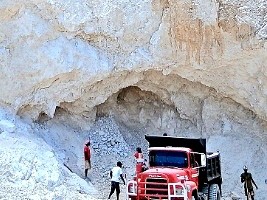
    Unregulated sand extraction has emerged as a growing environmental and public safety threat in Haiti’s western region, prompting local environmental authorities to formally request support from the country’s national police and armed forces to curb destructive illegal operations.

    In early May 2026, the West Departmental Directorate under Haiti’s Ministry of Environment (DDO-MdE), partnered with the Directorate of Environmental Inspection and Monitoring and deployed a team of trained environmental officials to conduct an on-site assessment of two heavily impacted zones: Pèlerin Laboule and Boutillier. Both areas have become hotspots for unregulated sand quarrying in recent years, a pattern that authorities have repeatedly tried and failed to address over the past decade.

    What the inspection team found on the ground confirmed longstanding concerns about noncompliance with national environmental rules. The delegation documented that nearly all ongoing extraction operations are being conducted outside the bounds of Haiti’s existing environmental protection standards, with extractors operating without permits and using reckless methods that clear vegetation and destabilize natural terrain.

    These unregulated practices have triggered a cascade of severe environmental and community harms. Geologically, the widespread removal of sand and topsoil has undermined the stability of hillside slopes, drastically increasing the risk of catastrophic landslides—an especially dangerous threat in a hurricane-prone tropical region like Haiti. The activity has also accelerated soil erosion across the region, degraded iconic natural landscapes, and created persistent quality-of-life nuisances for local residents, while also causing gradual damage to nearby roads, water infrastructure and residential properties.

    Following the assessment, David Cossy, head of the West Departmental Directorate of the Ministry of Environment, called for a unified, coordinated response from all branches of the Haitian state to reverse the damage and prevent future harm. Cossy formally requested the active involvement of the Haitian National Police (PNH), the Armed Forces of Haiti (FAd’H), judicial authorities, and local community stakeholders to strengthen oversight and enforcement of environmental regulations. Beyond state action, he also issued a public appeal for ordinary Haitians to remain vigilant and collaborate with regulatory bodies, specifically by reporting any observed illegal quarrying activity to the relevant authorities.

    The on-site inspection and subsequent request for support are part of a broader national initiative launched by Haiti’s current Minister of the Environment, Valéry Fils-Aimé. The initiative is designed to expand the Ministry’s regulatory capacity to protect Haiti’s fragile natural resources, and officials confirmed that new, more robust regulatory measures for the quarrying sector are currently in development. The updated rules are intended to clarify operational standards, strengthen penalties for noncompliance, and limit the ongoing environmental degradation that has plagued Haiti’s western department for years.

    Illegal sand quarrying is not a new issue in Haiti: a decade-long series of government crackdowns, temporary suspensions of operations, and quarry closures in high-risk zones across the west have failed to permanently resolve the problem. Past data has shown that as much as 89 percent of all quarry operations in Haiti’s western department operate without valid permits, highlighting the scale of the regulatory gap that authorities are now seeking to close.