
Haiti’s Prime Minister Alix Didier Fils-Aimé is set to lead a high-ranking government delegation on an official working visit to Rome and the Holy See from May 8 to 11, 2026, the Prime Minister’s Office has officially announced. This four-day mission marks a key step in Haiti’s ongoing push to deepen diplomatic ties with the Vatican and expand collaboration with its global network of international partners. It also underscores the Haitian government’s public commitment to strengthening joint work across humanitarian action, social progress, and long-term sustainable development initiatives for the country. The Vatican has formally confirmed that it will host the Haitian prime minister on May 9, 2026, as part of the scheduled itinerary. A core component of the visit’s Vatican program is an invitation extended by Cardinal Pietro Parolin for Fils-Aimé to take part in a special “spiritual mobilization” gathering and a Mass dedicated to peace in Haiti, both set to be held at St. Peter’s Basilica. While strengthening bilateral diplomatic relations is a central goal of the trip, the official government statement does not explicitly confirm whether Fils-Aimé will hold a private audience with Pope Francis. It does, however, confirm that the prime minister will hold discussions with the highest levels of the Vatican’s governing hierarchy. Beyond his engagements in the Vatican, Fils-Aimé will also hold a series of high-level diplomatic meetings with leadership representatives of major international organizations based in Rome during his stay in the Italian capital. These closed-door and public discussions are expected to center on Haiti’s most pressing national priorities, the Haitian government’s ongoing work to restore political and social stability across the country, and new opportunities for international solidarity and partnership that deliver tangible benefits to the Haitian people. In its official announcement, the Haitian government emphasized that the mission reaffirms its commitment to pursuing an proactive, dialogue-centered diplomatic agenda that prioritizes cooperation and delivers concrete solutions to the complex challenges currently facing the Caribbean nation.
标签: Haiti
海地
-

Digicel Haiti and CANAL+ join forces to revolutionize streaming
In a move set to reshape Haiti’s digital entertainment landscape, leading telecommunications provider Digicel Haiti and global entertainment giant CANAL+ have announced a transformative strategic partnership designed to expand sustainable access to premium streaming content across the country. Announced on May 7, 2026, the collaboration represents a watershed moment for Haiti’s growing streaming industry, with the two firms targeting an enhanced, more reliable, and widely accessible digital viewing experience for Haitian consumers.
Under the terms of the new agreement, Digicel Haiti subscribers on four existing packages – Access, Évasion, Évasion+, and Tout CANAL – will gain access to custom-tailored data plans built exclusively for streaming CANAL+ content through the provider’s official mobile application. This integration means users can enjoy CANAL+’s full catalog, which includes hit international series, blockbuster films, live professional sports, and exclusive original programming, anytime and anywhere across Haiti’s national coverage area.
Haiti has seen a steady, sustained rise in consumer demand for on-demand digital content in recent years, as more Haitians turn to streaming for entertainment and information. This partnership directly addresses a key gap in the local market: the need for high-performance, consistent connectivity that matches evolving consumer viewing habits. Digicel Haiti brings to the table its well-established reputation for extensive network coverage and robust signal strength across the country, while CANAL+ contributes its decades of global expertise as a leading provider of premium entertainment content. Together, the partners aim to deliver a seamless, high-quality streaming experience that does not force consumers to choose between accessibility and content quality.
“This collaboration is a clear demonstration of our ongoing commitment to elevating the digital experience for every Digicel customer in Haiti,” explained Jean-Philippe Brun, General Manager of Digicel Haiti, in a statement following the partnership announcement. “By combining our network infrastructure with CANAL+’s industry-leading content library, we are making premium entertainment far more accessible, while delivering data plans that are specifically optimized for consistent streaming.”
Beyond the immediate integrated data and content offering, the partnership lays critical groundwork for future collaboration between the two companies. Down the line, consumers can expect new bundled service packages, subscriber-only promotions, and innovative streaming features tailored to the Haitian market. Both firms share a core long-term goal: to democratize access to high-quality digital premium entertainment for as many Haitians as possible, unlocking new opportunities for the country’s growing digital economy.
-

Leisure : Did you know ? #21
In the 21st installment of HaitiLibre’s popular “Did You Know?” leisure series, published on May 6, 2026, readers are introduced to a little-known ecological treasure of Haiti: Miragoâne Pond. Spanning roughly 25 square kilometers, this unique freshwater body sits adjacent to the eponymous town in Haiti’s Nippes Department, standing out sharply from the country’s better-known Étang Saumâtre, which holds only brackish water. Unlike many of Haiti’s surface water systems that rely on direct rainfall runoff, Miragoâne Pond is nourished by a network of underground natural springs and seasonal mountain runoff, earning it the distinction of being the nation’s largest natural freshwater reserve.
This ecologically critical site boasts extraordinary biodiversity, serving as a habitat for multiple fish species found nowhere else on Earth and a key resting and breeding refuge for hundreds of types of aquatic migratory and resident birds. Beyond its ecological value, Miragoâne Pond plays an indispensable functional role for the surrounding region: it regulates local hydrological cycles to stabilize adjacent ecosystems, and it supports the livelihoods of thousands of local residents who rely on its waters for small-scale commercial and subsistence fishing. Despite its importance, the pond faces growing environmental threats. Accelerated deforestation on the hills surrounding the water body has led to increased soil erosion and silt buildup in the pond, making long-term protection of the site a pressing priority for Haitian environmental advocates and local authorities. This work to raise public awareness of Miragoâne Pond underscores the rich, under-documented diversity of Haiti’s aquatic landscapes.
The information featured in this “Did You Know?” entry is pulled from official answer resources for the quiz platform QuizHaitiLibre, HaitiLibre’s free, user-focused general knowledge project that launched earlier this year. The platform was designed to engage audiences of all ages and backgrounds, offering exclusive quiz games that do not require user registration or payment to access. Every quiz on the platform offers three tiered difficulty levels—normal, intermediate, and advanced—to match different user skill levels, and all content is fully available in both French and English to serve a broad global audience of users interested in Haiti and global general knowledge.
As of the platform’s most recent monthly update completed on May 4, 2026, 30 brand new quiz games have been added to the platform, bringing the total number of available games across all categories to 119. New games are added to the platform on a monthly basis to keep content fresh and engaging for returning users. The platform covers topics ranging from Haitian geography, history, and culture to global current events and general knowledge, with a dedicated expert section for users seeking more challenging questions. Users can access the full suite of quiz games at any time via the official QuizHaitiLibre website.
-
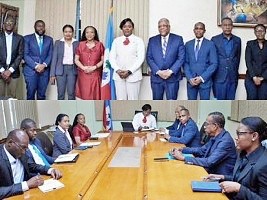
Important working session on the stabilization and economic recovery of Haiti
On June 5, 2026, senior Haitian government officials and leaders of the United Nations System in Haiti convened a critical working session focused on advancing the country’s urgent economic stabilization and recovery agenda, laying out clear collaborative next steps to address the Caribbean nation’s ongoing humanitarian and development challenges.
Leading the Haitian government delegation was Sandra Paulemon, Haiti’s Minister of Planning and External Cooperation, who was joined by Guy Roméo Latry, the Ministry’s Director General, and Paul Ruddy Mentor, Paulemon’s Chief of Staff. On the United Nations side, the meeting was hosted by Nicole Kouassi, UN Resident Coordinator in Haiti, alongside her specialized technical team.
The two sides centered discussions on five core priorities, starting with the governance of the UN-Haiti Global Cooperation Framework and the Peacebuilding Fund (PBF) steering committee. Additional agenda items included progress updates on Haiti’s Strategic Development Plan (PSDH), the finalization of the mid-term report for the Doha Development Agenda, and the rollout of Haiti’s national economic stabilization and recovery program.
This flagship recovery program is explicitly aligned with the Haitian government’s top national priorities, which center on enabling the safe return of displaced citizens to their home neighborhoods and the resumption of schooling for children across the country. It also prioritizes expanded access to safe drinking water and the rollout of a suite of essential social initiatives designed to rebuild Haiti’s damaged economic and community fabric.
In her opening remarks to the session, Minister Paulemon clarified the institutional leadership structure for the program: strategic direction is set by the Office of the Prime Minister, while the Ministry of Economy and Finance serves as technical coordinator and carries responsibility for all budgetary oversight.
Intervention zones for the recovery program have been selected through a multi-criteria assessment that weighs a region’s level of vulnerability, existing security pressures, and untapped economic potential. The program’s primary focus areas are fragile urban communities, strategic border transit corridors, and key agricultural basins that play a critical role in advancing national food security and creating much-needed local jobs.
Paulemon underlined the urgent need to mobilize international funding that is coordinated, predictable, and rapidly deployable to deliver tangible, on-the-ground improvements that directly improve the lives of the Haitian people. “The Haitian population cannot afford to wait for relief and recovery,” she emphasized, noting that the program’s goals extend beyond enabling displaced people to return home to rebuilding the lost household capital of vulnerable communities.
During negotiations, the Minister called for a revamped comprehensive cooperation framework between Haiti and the UN that is centered on measurable results and fully aligned with the government’s three core priorities: expanding national security, driving inclusive economic and social recovery, and laying the groundwork for upcoming national elections.
For his part, Guy Roméo Latry stressed that the Ministry of Planning and the United Nations system must reach consensus on clear, concrete deliverables embedded within the overall cooperation framework. He reiterated that the framework must deliver results that are tangible, visible, and measurable to the Haitian public, calling for an impact-first working approach that turns formal commitments into immediate, direct action that benefits local communities.
Paulemon and Kouassi also dedicated discussion to aligning Haiti’s Strategic Development Plan with the government’s current urgent priorities. The Minister called for expanded regular technical exchanges between planning department teams and the UN Resident Coordinator’s Office to align strategic references and eliminate any ambiguity around the strategic foundation for external development support to Haiti.
The working session also yielded tangible progress on two key administrative priorities: negotiators moved closer to finalizing the mid-term report of the Doha Development Agenda, and agreed on preliminary terms for the organizational structure and membership of the Peacebuilding Fund steering committee.
By the close of the meeting, both sides confirmed that the session had successfully consolidated strategic alignment between Haiti’s Ministry of Planning and the United Nations system. Participants recorded meaningful progress on strengthening governance mechanisms for both the Global Cooperation Framework and the Peacebuilding Fund, and established a clear timeline and roadmap for the next phases of implementing the national economic stabilization plan.
-
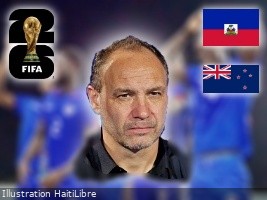
FIFA World Cup 2026 Preparation : Friendly Match Haiti vs New Zealand
As the 2026 FIFA World Cup rapidly approaches, co-hosted across Canada, the United States, and Mexico from June 11 to July 19, Haiti’s senior men’s national team, nicknamed the Grenadiers, continues its pre-tournament warm-up schedule with two new high-profile friendly matches locked in for early June 2026 in Florida.
Currently ranked 83rd in the FIFA global rankings, the Grenadiers have already completed two warm-up fixtures to test their form against competitive international opponents. Their first outing ended in a narrow 0-1 defeat to Tunisia, followed by a hard-fought 1-1 draw against Iceland that earned praise from fans and analysts alike for the team’s solid performance. Next up, the side will face 85th-ranked New Zealand at Fort Lauderdale’s Chase Stadium on June 2, kicking off at 8 p.m. local time. Just three days later, on June 5, Haiti will take on 53rd-ranked Peru at Miami’s DRV PNK Stadium for their fourth and final pre-World Cup friendly.
For the Grenadiers, these warm-up matches are critical preparation for their first World Cup group stage run, where they have been drawn into Group C with three challenging opponents. Haiti will open their 2026 World Cup campaign against Scotland at Boston Stadium on June 13, with kickoff scheduled for 9:00 PM ET. Scotland qualified for the tournament in dramatic fashion, marking their return to the World Cup finals after a 28-year absence, making this opening clash a highly anticipated matchup for both sides.
The team’s second group stage fixture will see Haiti take on five-time World Cup champions Brazil at Philadelphia Stadium on June 19, kicking off at 8:30 PM ET. Brazil remains the only nation to have qualified for every single edition of the FIFA World Cup, and despite finishing fifth in South American qualifying, the side is expected to enter the tournament with their signature attacking confidence and competitive pedigree.
Haiti will wrap up their group stage play against Morocco at Atlanta Stadium on June 24, with kickoff set for 6:00 PM ET. Morocco, the surprise semi-finalists of the 2022 Qatar World Cup, has emerged as one of the leading forces in African men’s football, making this final group game a tightly contested matchup with major stakes for both teams’ knockout stage hopes.
-

In New York, Minister Forbin highlights Haiti’s migration reforms.
Against the backdrop of ongoing political and security volatility in the Caribbean nation, Haiti’s top foreign policy leadership has taken the global stage at the United Nations to outline the country’s evolving approach to migration management. From May 5 to 8, 2026, the 2nd International Migration Review Forum is convening at UN Headquarters in New York, with Haitian Foreign Minister Raina Forbin and Minister of Social Affairs and Labor Marc-Elie Nelson leading the country’s official delegation to the high-level global gathering.
In a series of public remarks and diplomatic engagements throughout the forum, Forbin underscored that migration has risen to the status of a core national priority for the Haitian government, which has maintained consistent, long-term focus on addressing the interconnected challenges of cross-border movement, internal displacement, and citizen protection. She detailed the wide-ranging structural reforms Port-au-Prince has implemented in recent years, centering on overhauls to the national citizen documentation and identification system—an foundational step for formalizing migration governance, enabling access to public services, and reducing vulnerability to exploitation. Beyond administrative reforms, Forbin noted that the government has also ramped up efforts to streamline the regulation of migration flows, shore up border security infrastructure and protocols, and disrupt the operations of transnational criminal networks that profit from Haiti’s unstable security environment.
Forbin emphasized that these domestic reforms cannot deliver meaningful results without robust backing from the international community. She issued a clear call for global partners to step up their support for Haiti’s efforts to reestablish nationwide security, specifically urging the full, rapid deployment of the UN-backed Gang Suppression Force (GSF). The deployment of this stabilization force, she argued, is the critical first step to creating the secure conditions needed for long-term political stability and the organization of inclusive, credible national elections in Haiti. Forbin also called for coordinated global action to intensify the crackdown on transnational criminal groups that engage in migrant smuggling and human trafficking, criminal enterprises that deliberately exploit the economic insecurity and instability facing millions of Haitian citizens.
“Our ambition is clear: to ensure that every Haitian is protected and respected, wherever they may be, and to create the conditions so that migration is a choice, not a necessity,” Forbin told forum attendees.
The foreign minister also added a key priority for Haiti’s migration policy: the humane treatment of Haitian migrants returning to their country of origin. She stressed that all reintegration and return processes must be conducted with full transparency, uphold the inherent dignity of returnees, and prioritize compliance with international standards for fundamental human rights, regardless of the circumstances of their return.
-

Haiti is in a critical situation due to a lack of midwives.
On May 5, 2026, International Midwives’ Day brought sharp new attention to a growing public health emergency unfolding across Haiti, where a crippling shortage of properly trained midwives has pushed the country’s maternal health system to the brink of collapse. To mark the annual observance, Haiti’s Ministry of Women’s Affairs issued a public tribute honoring the midwives already serving on the frontlines of women’s sexual and reproductive health, framing these professionals as irreplaceable pillars of the country’s fragile care infrastructure. But the tribute also underscored a stark reality: the current number of active, internationally qualified midwives falls drastically short of meeting the needs of Haiti’s population.
Joint estimates from the Haitian Midwives Association (ASFH) and the United Nations Population Fund (UNFPA) put the current count of practicing, internationally trained midwives at just 300 to 455. This tiny workforce is tasked with serving more than 2.8 million women of reproductive age across the country, a burden that is unevenly distributed to compound the crisis. The vast majority of practicing midwives are concentrated in the Port-au-Prince metropolitan area, leaving remote rural regions with almost no access to qualified birthing care. In these underserved areas, unassisted home births remain the norm, putting both birthing parents and newborns at extreme risk of preventable complications or death.
According to World Health Organization (WHO) benchmarks, Haiti requires a minimum of 2,200 qualified midwives to deliver basic universal maternal health coverage and bring down the country’s devastating maternal mortality rate. Currently, Haiti holds the unenviable title of having the highest maternal mortality ratio in the Caribbean: 529 deaths for every 100,000 live births. Public health experts link a large share of these deaths directly to the midwife shortage, noting that more than 60% of all births in the country take place without the support of skilled medical personnel. The gap between current and required midwife numbers sits at roughly 1,900, a deficit that demands urgent coordinated action.
The data makes clear that targeted investment in midwife training through Haiti’s National Institute for Midwifery Training (INSFSF) is critical to closing the gap by the 2030 target. Beyond cutting preventable maternal and infant deaths, expanding access to qualified midwifery care also advances broader goals of ensuring all Haitian women can access dignified, respectful, and equitable healthcare. On International Midwives’ Day, the Ministry of Women’s Affairs reaffirmed its commitment to advancing women’s rights and strengthening public policies focused on sexual and reproductive health, acknowledging that midwives play a strategic role in driving long-term national development.
-

ONA partners with Haitian influencer Ariana Milagro Lafond
In a landmark ceremony held on May 2, 2026, Haiti’s National Old Age Insurance Office (ONA) formally launched a transformative partnership with one of Haiti’s most prominent digital creators, Ariana Milagro Lafond, who boasts over 16 million followers on TikTok. The announcement was made official by ONA Director General Lovely François, marking a pivotal shift in how the state social security institution engages with the Haitian public.
This collaboration kicks off a new chapter for ONA’s institutional work, merging the agency’s core social security mandate with modern digital communication strategies tailored to connect with young Haitians. The event was filled with moments that underscored the institution’s commitment to systemic change: updating its public image, forging stronger, more relatable bonds with the population, and reaffirming its foundational mission of ensuring all Haitian workers can access a dignified, financially stable retirement.
Through this partnership, ONA is explicitly acknowledging the power, talent and widespread impact of Haiti’s engaged, creative generation of change-makers. Lafond will serve as a critical bridge between the state institution and the country’s large, digitally active youth demographic. The collaboration carries a clear underlying principle, however: with great influence comes the responsibility to guide, lift up, and serve the public good.
Under the leadership of François, the partnership is rooted in a broader, long-term vision for ONA: building a more modern, accessible institution that meets citizens where they are, while expanding public social education across the country. The ceremony also doubled as a celebration of Haitian youth excellence, delivering a unifying message to the next generation: “We see you, we recognize your talent, and we encourage you to continue excelling in what you do best.”
Beyond the new collaboration, ONA used the event to reaffirm its three core commitments: building sustained connections between the institution and young Haitians, growing a national culture of proactive social security planning, and encouraging every working Haitian to take active steps toward building a dignified, secure future. In closing, the agency delivered a resonant re framing of youth’s role in Haiti: “Haitian youth are not a challenge to be contained, but a force to be supported, a resource to be valued, and a future to be built together.”
-

Addressing and numbering of the city of Cap
In a major step toward modernizing municipal operations and urban organization, the Cap-Haïtien Municipal Administration has formally signed a contract with Geo Society to deliver a city-wide addressing and property numbering project, a key initiative under the broader Cap-Haïtien Urban Development Project (CHUD).
Scheduled to span seven months, the initiative receives full financial backing from the World Bank and is executed in partnership with Haiti’s Ministry of Public Works through the ministry’s Central Implementation Unit. Once fully operational, the project will bring standardized geographic organization to the entire municipal territory through three core work streams: formal mapping and identification of all public streets, unique numerical numbering for every residential structure across the city, and clear boundary demarcation and identification of all zones and neighborhoods.
Actual on-the-ground work is not set to begin immediately, however. Full project launch remains conditional on two pending administrative steps: the finalization of a separate supervision contract with the National Center for Geo-Spatial Information (CNIGS), and the official issuance of a formal project commencement order by municipal authorities.
In a public statement announcing the contract signing, municipal leaders stressed that a unified, city-wide addressing system is far more than a cosmetic upgrade—it is a foundational infrastructure tool that will transform how the city is managed and served. For residents and public agencies alike, the new system will streamline critical daily and emergency operations: it will simplify accurate geolocation for everything from delivery services to visitor navigation, streamline national and municipal census data collection, improve the efficiency of municipal waste collection and routing, and cut response times for police, fire, and medical emergency services.
Beyond immediate operational gains, municipal officials note the project will also deliver long-term benefits, including enhanced quality of public services across the city, more data-driven and effective urban planning, and a more welcoming environment for local business growth and expanded economic activity across Cap-Haïtien.
-

Monitoring of major infrastructure projects at the Caracol Industrial Park (video)
In a working visit to Cap-Haitien last week, Haiti’s Minister of Economy and Finance Serge Gabriel Collin led a high-level government delegation to review the implementation timeline and on-ground progress of a collection of infrastructure projects backed by the Inter-American Development Bank (IDB). The delegation’s itinerary centered on the Caracol Industrial Park (PIC) and its adjacent zones, where three key development initiatives are currently underway. The first initiative is the construction of a 13.4 megawatt solar power plant purpose-built to supply energy to the industrial park, a project that aligns with growing regional efforts to expand renewable energy capacity. The second project is the development of two new industrial facilities, each spanning 11,776 square meters of usable space, with full financing provided by the IDB. Completing the trio of initiatives is an environmental restoration effort, funded by the International Fund for Agricultural Development (IFAD), focused on reviving the Caracol coastal mangrove ecosystem and upgrading infrastructure at Lake Phaéton. During the site visits, the delegation was able to directly assess construction and restoration progress, as well as document how each initiative is already contributing to the region’s broader economic and environmental development goals. In comments following the inspections, Minister Collin underscored the outsized strategic importance of the Caracol Industrial Park to Haiti’s northern economic corridor, noting that the expanded park is already acting as a major catalyst for new job creation and overall economic growth across the Great North region. The minister also emphasized that long-term success for these high-impact investments will require reinforced accountability, consistent discipline, and close collaborative coordination between all public, private, and multilateral stakeholders involved in the projects. He added that sustained alignment across partners will be critical to ensuring the projects deliver lasting benefits to local communities and support long-term economic resilience in northern Haiti.