标签: Haiti

海地

  • Haïti – Politique : La Chancelière Forbin en Mission au Panama

    Haïti – Politique : La Chancelière Forbin en Mission au Panama

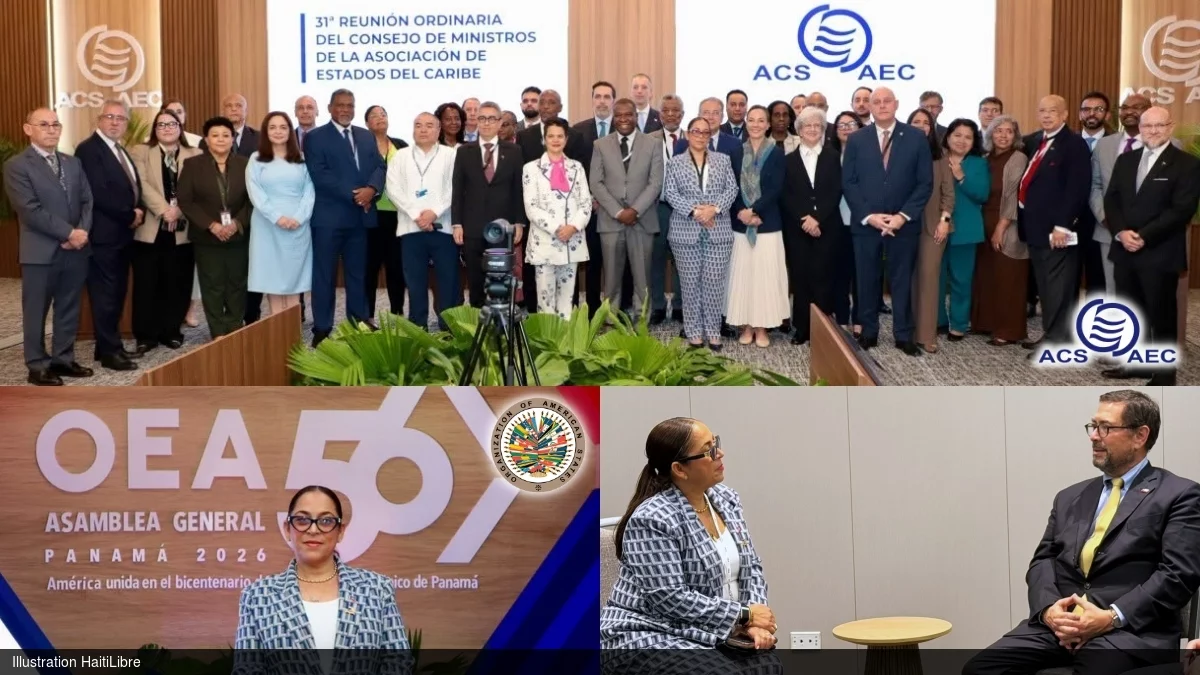
    On June 22, 2026, Haitian Foreign Minister Raina Forbin launched an official diplomatic mission to Panama, where she is set to participate in two major hemispheric and regional governance gatherings: the 31st ordinary meeting of the Council of Ministers of the Association of Caribbean States (AEC) and the 56th ordinary session of the General Assembly of the Organization of American States (OAS).

    Over the course of her mission, Forbin will take part in core ministerial deliberations, plenary sessions, and a series of bilateral meetings with both regional and international partners. These discussions are centered on advancing the Haitian government’s top national priorities, which include strengthening domestic security, laying the groundwork for upcoming national elections, driving post-crisis economic recovery, and expanding both regional and international cooperation partnerships.

    Alongside the official conference agenda, Forbin will hold dedicated consultations with Haiti’s international partners. The core goals of these talks are to reinforce existing cooperative frameworks and mobilize greater global support for Haitian authorities’ ongoing efforts to restore nationwide security, solidify democratic state institutions, and facilitate a return to full constitutional order.

    Already on June 21, ahead of the main conference proceedings, Forbin held a bilateral meeting with her Chilean counterpart, Francisco Pérez Mackenna. The two diplomats pledged to deepen collaborative work to address the unresolved situation of Haitian minor children currently residing in Chile, an issue that has gained public attention amid recent allegations of child trafficking originating from Haiti.

    During the meeting, Mackenna formally requested Haitian institutional cooperation to support monitoring and follow-up work for Haitian minors who have arrived in Chile. He also confirmed that Marco Aguayo, Chile’s special envoy, will travel to Port-au-Prince later this week. Aguayo’s mission will focus on gathering on-the-ground information to clarify the status of family reunification processes, formally document the legal status of each Haitian child in Chile, and update operational protocols to enable the reopening of Chile’s consular section in Port-au-Prince.

  • Haïti – Préscolaire au Secondaire : Volume minimal de jours de classe et charge horaire annuelle.

    Haïti – Préscolaire au Secondaire : Volume minimal de jours de classe et charge horaire annuelle.

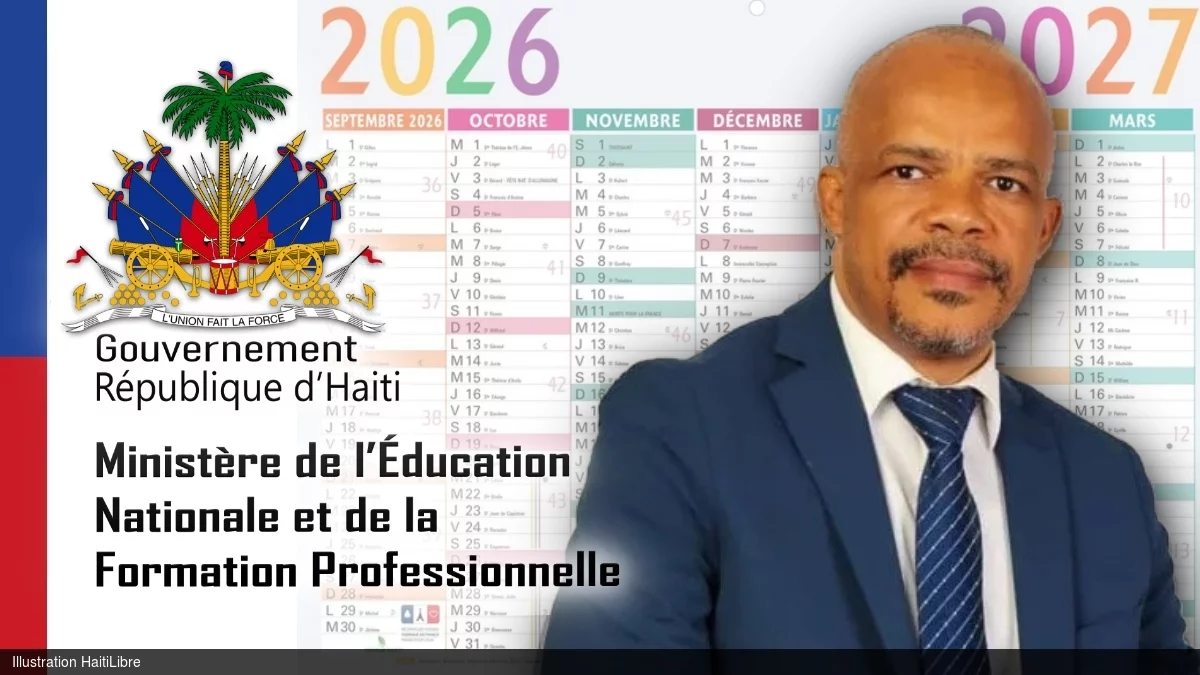
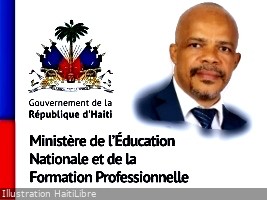
    On June 22, 2026, Haiti’s Minister of National Education, Vijonet Déméro, issued an official circular establishing binding national minimum academic time requirements for all education levels from preschool through secondary school, aimed at guaranteeing equitable, high-quality learning outcomes for students across the entire country.

    The new framework sets a consistent 36-week academic year and 180 required instructional days across all grade bands, with adjusted weekly and annual hourly targets tailored to each educational stage. For preschool programs, the rule mandates 24 hours of instruction per week, adding up to an 864-hour annual minimum. For the first and second cycles of fundamental education, the weekly requirement rises to 25 hours, resulting in a 900-hour annual total. Both the third cycle of fundamental education and all secondary education levels are required to deliver 30 hours of instruction weekly, reaching a 1,080-hour annual minimum.

    The circular clarifies that only days actively dedicated to teaching, learning activities, student assessments, and direct pedagogical support count toward the required 180-day total, excluding administrative or non-instructional days from the official count.

    To enforce compliance, the policy outlines clear implementation and accountability rules. All schools are required to align their annual academic calendars with the national calendar published yearly by Haiti’s Ministry of National Education and Professional Training (MENFP), which is structured around the new hourly quotas. In cases where unplanned, forced school interruptions occur—such as severe weather events, socio-political unrest, or other public emergencies—school leadership is legally required to implement immediate make-up instruction measures. All contingency recovery plans must receive formal approval from the relevant local Department of Education (DDE) to ensure the full annual hourly quota is met. Local DDE bodies are also tasked with conducting regular, rigorous compliance audits of both public and private educational institutions across their jurisdictions.

    Transitional provisions confirm that the new standards take effect immediately upon publication of the circular. The MENFP’s general directorate and relevant technical departments are responsible for widespread dissemination of the new rules and monitoring strict implementation. In closing the circular, the Ministry called on all stakeholders within Haiti’s education system to uphold their commitments to ensure all Haitian children access the guaranteed instructional time they are entitled to.

  • MSF suspends operations at the Isaïe Jeanty maternity hospital in Haiti

    MSF suspends operations at the Isaïe Jeanty maternity hospital in Haiti

    A deepening humanitarian crisis is unfolding in Haiti’s most densely populated urban neighborhood after international medical aid organization Doctors Without Borders (Médecins Sans Frontières, MSF) announced the full suspension of life-saving services at the Isaïe Jeanty Maternity Hospital, a key healthcare facility serving the Cité Soleil area of Port-au-Prince. The shutdown, which took effect on the morning of June 19, comes after more than a week of escalating violent clashes between rival armed groups that have turned the surrounding district into a combat zone.

    Tensions began to spike on the night of June 13-14, when open fighting erupted across three adjacent neighborhoods: Belekou, Fort-Dimanche, and Quai Jérémie. The violence quickly spilled over into the Chancerelles neighborhood, where the MSF-supported maternity hospital is located. Stray gunfire has repeatedly struck the hospital’s outer walls, sending waves of panic through the local population and forcing hundreds of residents to flee their homes in search of safety. By the evening of June 15, more than 100 displaced people, the majority women and children who escaped the fighting, had taken shelter within the hospital compound, where MSF teams were able to provide them with clean drinking water. One of those displaced was a woman who suffered a leg wound from a stray bullet while on hospital grounds; MSF medics provided immediate on-site treatment, while additional casualties from the clashes were treated at MSF’s separate medical facility in the Tabarre district of the capital.

    Local authorities were the first to suspend their operations at the site on the morning of June 16, after fighting intensified further. MSF teams remained on location for three additional days, working with reduced staffing to deliver emergency care, stabilize injured and pregnant patients, and arrange transfers to other functioning medical facilities across Port-au-Prince. As the security situation continued to deteriorate, however, MSF made the difficult decision to evacuate all remaining staff and shut down all hospital activities permanently for the time being.

    Speaking on the suspension, Nicolas Tessier, MSF’s Head of Mission in Haiti, described the impossible conditions medical teams had been working under. “We have tried to provide a minimum level of lifesaving support to people with a reduced team and limited capacity,” Tessier explained. “We treated several women who managed to reach the maternity hospital despite the insecurity, including one who gave birth to twins. But today we can no longer continue: the hospital is riddled with bullet holes, our teams are exhausted, and it has become extremely difficult for ambulances to refer patients and find facilities able to receive them.”

    The shutdown of the facility has pushed an already catastrophic healthcare situation in Cité Soleil over the edge. The neighborhood is home to roughly 300,000 residents, and even before the latest wave of violence, access to comprehensive sexual and reproductive healthcare was already extremely limited across the area. Thousands of pregnant women had already been forced to deliver babies at home in unsafe, unsanitary conditions, dramatically raising their risk of life-threatening obstetric complications. With the Isaïe Jeanty hospital now closed, access to such care has become virtually non-existent, leaving local women with almost no viable options to get safe medical treatment.

    This is not the first time MSF has been forced to halt services in the area due to gang violence. Back in May, the organization suspended operations at its general hospital in Cité Soleil, located just a few kilometers from the maternity facility. As gang-related violence continues to spread and security conditions worsen across the region, the entire local healthcare system is now at risk of total collapse. MSF has issued an urgent call for armed groups to respect international humanitarian law, protect civilian lives and infrastructure, and allow medical teams unimpeded access to treat people in desperate need of care.

  • Environment : Massive and illegal sand mining on the banks of the Massacre River

    Environment : Massive and illegal sand mining on the banks of the Massacre River

    During a reforestation initiative close to the shared border wall separating the Dominican Republic and Haiti, senior environmental officials from the Dominican Republic have sounded the alarm on widespread unauthorized sand mining operations taking place along the Haitian bank of the Massacre River.

    Armando Paíno Henríquez, the Dominican Republic’s Minister of Environment and Natural Resources, publicly outlined the scale of the ongoing activity this week, noting that unlicensed extraction has been a persistent problem for years. According to Henríquez, teams of Haitian workers travel to the river regularly, harvesting tons of sand manually with basic buckets before stockpiling the material on riverbanks. The mined sand is then loaded onto commercial trucks and distributed to buyers across northern Haiti for construction and other uses.

    In his remarks, Henríquez emphasized that the illegal activity is concentrated on the Haitian side of the waterway, placing it formally under Haitian jurisdiction per international border agreements. To address the issue, his ministry has already initiated coordination with Dominican Foreign Minister Roberto Álvarez, and is preparing a formal briefing to share with Haitian national authorities, even amid well-documented institutional instability and governance gaps in Haiti currently.

    The ministry’s first step toward resolving the crisis will be to open diplomatic discussions with Haitian officials, to lay out the full scope of the unregulated extraction and its cross-border consequences. Henríquez stressed that while the environmental harm is being generated on Haitian territory, the negative impacts spill over to communities on both sides of the border, including the Dominican border city of Dajabón and surrounding regions.

    Uncontrolled large-scale sand mining fundamentally alters the Massacre River’s natural riverbed, he explained. The activity triggers severe riverbank erosion, disrupts critical aquatic and riparian ecosystems, and dramatically increases the risk of catastrophic flooding for low-lying settlements on both sides of the international border. Without coordinated intervention from both governments, Henríquez warned, the environmental damage will only worsen over time, putting local communities and shared natural resources at growing risk.

  • 2026 World Cup : Migné’s press conference after the defeat against Brazil (video)

    2026 World Cup : Migné’s press conference after the defeat against Brazil (video)

    The 2026 FIFA World Cup group stage has delivered another decisive outcome for Caribbean side Haiti, whose tournament hopes all but ended following a lopsided 3-0 defeat to five-time champion Brazil at Philadelphia’s Lincoln Financial Field on June 19. In the immediate aftermath of the result, Haitian head coach Sébastien Migné addressed reporters to share his perspective on the match, the performance of his squad, and the final group fixture still to come.

    Opening his remarks, Migné acknowledged the heavy weight of disappointment hanging over the camp, even against an opposition as formidable as Brazil, currently ranked fifth in the global FIFA rankings. Despite the lopsided scoreline, he was quick to highlight the fighting spirit his players demonstrated throughout the 90 minutes. “The disappointment is immense tonight, even if the opponent is Brazil [5th in the world],” Migné told reporters. He added that his squad proved they belonged on the sport’s biggest international stage, saying: “We bent, but we didn’t break.”

    The result confirms Haiti’s elimination from knockout stage contention, but the team still has one remaining group match to play against 2022 World Cup semi-finalists Morocco, scheduled for June 24 at 6:00 p.m. local US/Haiti time at Atlanta’s Mercedes-Benz Stadium. Rejecting any calls for his side to approach the fixture with complacency, Migné framed the upcoming match as a valuable opportunity for his players to test their skills against another elite global opponent. Morocco, currently the top-ranked men’s national team on the African continent, represents another high-profile test that Migné says his squad is ready to embrace.

    Shortly after Migné’s press conference, the Haitian Football Federation (FHF) released an official public statement addressing the result and responding to the reaction of Haitian fans worldwide. The federation acknowledged that the outcome did not match the expectations of the Haitian football community, recognizing that the disappointment felt by supporters across the country and beyond is entirely understandable.

    “Football can bring joy, but also tears. On Friday, the result of the match was not what we all hoped for, and we understand the disappointment of every Haitian supporter,” the statement read. Even with the underwhelming result, the FHF emphasized that it remains deeply proud of the Grenadiers, who have carried Haitian national pride onto the world stage despite a challenging qualification and tournament run. “The road has not always been easy, but our respect for these courageous men who fight tirelessly for their homeland remains undiminished,” the federation added.

    Looking ahead to the final group fixture against Morocco, the FHF noted that the team will take key lessons from the defeat to Brazil to improve in their final outing, with one final match to play to represent Haitian football. The federation closed its statement by thanking the national team’s loyal fanbase for its unwavering support through both winning and difficult stretches of the campaign, ending with the rallying cry: “We are all Grenadiers!”

  • Number of people deprived of their liberty in the country’s prisons

    Number of people deprived of their liberty in the country’s prisons

    Fresh five-week trend data collected by Haiti’s Office of Citizen Protection reveals a small but measurable uptick in the total number of people held in 13 of the country’s correctional facilities, a shift driven almost entirely by a growing population of detainees awaiting legal processing.

    Between the June 8–12 reporting window and the June 15–19 window, the overall prison population grew by 0.5%, climbing 38 people from 7,256 to 7,294. The breakdown of this growth exposes a stark imbalance: the number of people held in pretrial detention rose 0.7%—an addition of 40 people, moving from 5,890 to 5,93—while the population of convicted prisoners actually saw a tiny 0.1% decline, dropping two people from 1,366 to 1,364. Officials attribute the small drop in convicted inmates to scheduled releases completed over the five-day period.

    A gender breakdown of the overall population growth shows 63% of the 38 new detainees are men, equal to 24 additional male inmates, while 37% are women, adding 14 more female prisoners. This gender split holds nearly identical for the growth in pretrial detention: 63% of the 40 new pretrial detainees are men (25 additional) and 37% are women (15 additional). The two-person decline in the convicted population was split evenly between men and women.

    In a rare positive shift within the data, the total number of minors held in the 13 facilities tracked declined over the same reporting period. The overall juvenile population fell 1.2%, dropping three people from 255 to 252. Breaking this trend down by legal status, the number of minors in pretrial detention fell 0.8% (two people, from 237 to 235), while the number of convicted minors saw a steeper 5.6% drop, falling one person from 18 to 17. Gender analysis of this decline shows the entire reduction came from the male juvenile population: both the two fewer pretrial juvenile detainees and one fewer convicted juvenile are boys, with no change recorded in the number of incarcerated female minors.

    The new figures add to ongoing conversations about Haiti’s overburdened justice system, where lengthy pretrial detention has long been documented as a major contributor to prison overcrowding and poor conditions inside correctional facilities.

  • OAS : Accelerate efforts for security and stability in Haiti

    OAS : Accelerate efforts for security and stability in Haiti

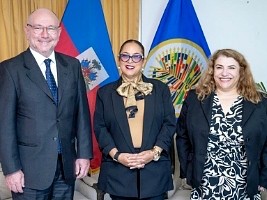
    Diplomatic talks between senior Haitian government officials and representatives of the Organization of American States have wrapped up this week with a shared commitment to speed up efforts to bring long-term security and stability back to the crisis-battered Caribbean nation. The meeting, held at Haiti’s Ministry of Foreign Affairs, was hosted by Haitian Foreign Minister Raina Forbin, who received Alberto Fohrig, the OAS Special Representative to Haiti. Fohrig was joined on the visit by Catherine Pognat, the OAS Country Representative for Haiti.

    During the discussion, Minister Forbin outlined the core priority actions advanced by Prime Minister Fils-Aimé’s transitional administration. These priorities center on three critical goals: reversing widespread insecurity, rebuilding weakened state institutions, and preparing to hold national elections that meet international standards of being free, inclusive, transparent and credible. Beyond institutional and electoral priorities, Forbin also stressed the non-negotiable importance of three additional priorities: supporting the reintegration of vulnerable youth into Haitian society, addressing the deepening national humanitarian crisis, and fully restoring constitutional order to the country.

    A major focal point of the talks was advancing the implementation of the OAS’s pre-existing strategic roadmap for Haiti. Forbin pushed for the formalization of a clear, binding implementation timeline for the roadmap, while reaffirming Haitian authorities’ long-standing commitment to ongoing collaboration with the hemispheric organization. She emphasized that the ultimate goal of this partnership is to turn agreed-upon policy commitments into tangible, measurable outcomes that directly improve the lives of ordinary Haitian citizens. Both sides left the meeting aligned on the urgent need to speed up all ongoing work to restore lasting security and stability across Haiti.

    Representatives from the OAS welcomed the concrete progress the Haitian government has already made on its core priorities, and reiterated that the organization stands ready to continue supporting Haitian efforts across three key areas: security sector strengthening, democratic governance building, and the development of a functional electoral process.

    The meeting also created space to explore the critical role that religious leaders and grassroots civil society organizations can play in advancing peace, encouraging civic responsibility, and mending fractured social cohesion across Haiti. Forbin shared detailed outcomes from the recently concluded National Conference of Religious Leaders for Peace, Stability, and Civic Responsibility, alongside outlining the next steps for the ongoing initiative.

    In closing, Forbin praised the OAS for its unwavering commitment to Haiti amid the country’s ongoing challenges, and reaffirmed the Haitian government’s dedication to maintaining close, productive cooperation with all of its international partners as it works to pull the nation out of crisis.

  • 2026 World Cup : Haiti, outclassed by Brazil, loses [3-0] and is eliminated (video)

    2026 World Cup : Haiti, outclassed by Brazil, loses [3-0] and is eliminated (video)

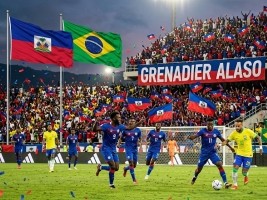
    In the second Group C match of the 2026 FIFA World Cup held on June 19, 2026 at Philadelphia’s nearly full-capacity Lincoln Financial Field, which drew 68,324 in-person spectators, Brazil’s Selecao secured a critical 3-0 win over Haiti’s national men’s football team, the Grenadiers. The result officially knocks Haiti out of the 2026 tournament, marking their second consecutive loss after a narrow 1-0 defeat to Scotland in their opening group fixture.

    Going into the match, Haitian head coach Sebastien Migné designed a defensive 5-4-1 formation to counter Brazil’s attacking 4-2-3-1 setup led by manager Carlo Ancelotti. Haiti’s resistance crumbled early, after right-back Carlens Arcus picked up a fourth-minute yellow card for an aggressive early challenge. Brazilian striker Matheus Cunha broke the deadlock in the 23rd minute, tapping home a precise setup from star winger Vinícius Júnior to put Brazil up 1-0. Cunha doubled his tally 13 minutes later, again connecting with a cross from Vinícius Júnior to extend Brazil’s lead to two goals. Just before halftime, in the third minute of stoppage time, Vinícius Júnior got on the scoresheet himself, converting a brilliant assist from Lucas Paquetá to make the score 3-0, putting the result out of reach before the teams entered the locker room.

    Migné made immediate tactical substitutions at the start of the second half, bringing on Wilson Isidor to replace striker Frantzdy Pierrot and Dany Jean Simon to take over from the yellow-carded Arcus. The adjustments yielded a more balanced second half, with the revised Grenadiers lineup showing more attacking enterprise and defensive discipline, successfully slowing down Brazil’s high-powered attack. Haiti managed to create a small number of promising chances, most notably through left-sided playmaker Jeanricner Bellegarde and striker Josué Casimir, but Brazil’s experienced defensive core led by center-back Marquinhos and goalkeeper Alisson held firm to keep a clean sheet. The full-time score remained 3-0 in Brazil’s favor.

    Despite the elimination, the match highlighted Haiti’s competitive spirit against a top-ranked global opponent. The result also reshapes Group C standings: Brazil bounces back from an opening-match draw with Morocco to claim the top spot in the group with 4 points from two matches, level on points with second-place Morocco, which also holds one win and one draw. Scotland sits in third with 3 points after one win, while Haiti remains at the bottom of the table with zero points from two matches and no goals scored.

    Now eliminated from contention for a spot in the Round of 32, Haiti will wrap up their 2026 World Cup campaign with a final Group C fixture against Morocco on June 24 at Atlanta’s Mercedes-Benz Stadium, kicking off at 6:00 p.m. local time. The Grenadiers will look to play the role of spoiler in the group’s final match, aiming to end their first World Cup appearance in decades on a positive high note against the 2022 tournament semi-finalists, currently ranked as the top national team in Africa.

  • Brazil : The time for a triumph has arrived ! Grenadye, alaso !

    Brazil : The time for a triumph has arrived ! Grenadye, alaso !

    On the eve of a highly anticipated 2026 World Cup showdown between Haiti’s national men’s football team, the Grenadiers, and global powerhouse Brazil, Haitian Prime Minister Alix Didier Fils-Aimé has issued a stirring appeal for unity across the entire Haitian community—both at home and in the global diaspora. The high-stakes match is scheduled to kick off at 8:30 p.m. local time on June 19, 2026, at Philadelphia’s Lincoln Financial Field, widely known as Philadelphia Stadium.\n\nIn a formal address released the same day, Fils-Aimé framed the fixture as far more than a simple sporting contest, positioning it as a moment to showcase the enduring strength and resilience that define the Haitian people. For a nation that has repeatedly navigated severe economic, political and social adversity, the Prime Minister argued that the match represents a symbolic new beginning: an opportunity to reaffirm collective faith in Haiti’s future and the ability of its people to overcome hardship. This spirit, he noted, is rooted in Haiti’s unique legacy of revolutionary leadership, collective sacrifice, and global solidarity that has shaped the nation’s identity for centuries.\n\nFils-Aimé also acknowledged the team’s hard-fought previous match against Scotland, where missed opportunities kept the side from securing a result that could have shifted their tournament trajectory. Even in the wake of that disappointment, however, he praised the Grenadiers for retaining their steely focus and unbroken morale. The players’ commitment to competing for Haiti’s national flag, he emphasized, has only grown stronger in the days following that match.\n\nThe Prime Minister extended his call to all Haitians, regardless of where they reside across the country’s 10 departments or across the globe, to rally around the team, sending positive energy and unwavering support to the side as they chase what would be one of the biggest upsets in modern men’s football history. For fans lucky enough to have seats inside the Philadelphia stadium, he urged them to make their support heard loudly, cheering the Grenadiers onto what could be a historic victory. For Haitians watching from rural communities, urban centers, mountain towns, and diaspora communities worldwide, he called for continued collective mobilization and unity behind both the team and the nation it represents.\n\nClosing with a message of hope, Fils-Aimé wished the team strength, wisdom, and clear guidance as they step onto the pitch. Repeating the iconic rallying cry that has accompanied Haitian football for generations, he declared: “Grenadiers, onward to victory for Haiti! Grenadye, alaso!”

  • Creation of the Haiti’s School and Vocational Guidance Unit

    Creation of the Haiti’s School and Vocational Guidance Unit

    Haiti’s Ministry of Education is taking a landmark step to transform its national education system, announcing the creation of a dedicated national support body aimed at tackling persistent academic failure, lifting up struggling students, and unlocking the potential of gifted learners across the country.

    In an official circular dated June 18, 2026, Education Minister Vijonet Déméro framed the new initiative around a core principle: that every student, regardless of their learning profile, deserves tailored psycho-educational support that matches their unique needs. To turn this commitment into action, the ministry has formally established the School and Vocational Guidance Unit, known by its Haitian Creole acronym UNOSP, which will operate as a central body under the Ministry’s Directorate General, led by a coordinator appointed by senior government authorities.

    UNOSP carries three defining core missions designed to address gaps that have long hampered Haitian education. First, the unit will target students facing learning challenges or at risk of dropping out of school, leading systematic identification, diagnostic assessment, and the development of customized psycho-educational remediation plans to keep students engaged and on track. Second, it will create formal, standardized pathways for supporting children with High Intellectual Potential (HIP), rolling out official identification protocols and designing enriched or accelerated learning tracks to help gifted students reach their full potential. Third, UNOSP will deliver structured career and vocational guidance, supporting students as they choose secondary, vocational, and university study paths, and helping them build personalized “Future Plans” that align both with their individual abilities and the current and emerging needs of Haiti’s labor market.

    To ensure accessible, localized support reaches every corner of the country, UNOSP has built a decentralized operational structure rooted in Haiti’s regional education system. Each of the nation’s Departmental Directorates of Education (DDE) will launch a local Departmental School and Vocational Guidance Service (SDOSP), which will act as the on-the-ground operational arm of the national unit. These local services will be staffed by a multidisciplinary team of qualified professionals including career counselors, educational psychologists, and social workers, who will collaborate closely with local school principals and education inspectorates to deliver seamless support at the community level.

    As the central coordinating authority, UNOSP has formalized collaborative partnerships with key stakeholders across the Haitian education ecosystem to deliver holistic, integrated support. It will work hand-in-hand with the School Health Directorate (DSS) to cross-reference medical diagnoses of visual, auditory, neurological, or psychological disorders with reported learning difficulties, ensuring students receive comprehensive care that addresses all root causes of academic challenges. It will also partner with the Ministry’s technical directorates covering curriculum, preschool, basic, and secondary education, as well as the Commission for School Adaptation and Social Support (CASAS), to co-design adapted curricula, structured guidance pathways, and enrichment programs that meet diverse student needs. Regional education bodies including DDEs and School District Offices (BDS) will implement national guidelines at the local level, with BDS and zone inspection offices providing on-the-ground monitoring, technical oversight, and critical data collection. Ultimately, local public and private schools serve as the first point of contact for identifying at-risk or gifted students and implementing individualized support plans, creating a layered support system that starts in the classroom.

    UNOSP has been granted formal regulatory and final decision-making authority over all matters related to educational guidance and support across Haiti. All assessments, psycho-educational reports, and guidance proposals submitted by school psychologists, principals, or DDE technical services must undergo formal review by UNOSP before taking effect. It is the only government body authorized to officially validate, approve, or reject high-stakes decisions affecting a student’s educational trajectory, including grade skipping or placement in accelerated programs for gifted learners, admission to technical, vocational, or specialized education tracks, and placement in remedial or adapted education programs. Critically, no final placement or educational adjustment can be imposed on a student or their family without the explicit official approval of the UNOSP Coordinator or their authorized departmental representative, protecting student and family autonomy in educational decision-making.

    In the final provisions of the circular, the Ministry ordered immediate implementation of the new structure, with the Directorate General, Human Resources Directorate, and all regional education authorities tasked with rolling out the framework within their jurisdictions. All affected bodies have a 90-day window from the circular’s publication to submit their full staff deployment plans to the Minister’s Office and the Human Resources Directorate, setting the stage for the new unit to begin operating across Haiti by the end of September 2026.