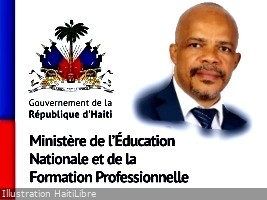
Haiti’s Ministry of Education is taking a landmark step to transform its national education system, announcing the creation of a dedicated national support body aimed at tackling persistent academic failure, lifting up struggling students, and unlocking the potential of gifted learners across the country.
In an official circular dated June 18, 2026, Education Minister Vijonet Déméro framed the new initiative around a core principle: that every student, regardless of their learning profile, deserves tailored psycho-educational support that matches their unique needs. To turn this commitment into action, the ministry has formally established the School and Vocational Guidance Unit, known by its Haitian Creole acronym UNOSP, which will operate as a central body under the Ministry’s Directorate General, led by a coordinator appointed by senior government authorities.
UNOSP carries three defining core missions designed to address gaps that have long hampered Haitian education. First, the unit will target students facing learning challenges or at risk of dropping out of school, leading systematic identification, diagnostic assessment, and the development of customized psycho-educational remediation plans to keep students engaged and on track. Second, it will create formal, standardized pathways for supporting children with High Intellectual Potential (HIP), rolling out official identification protocols and designing enriched or accelerated learning tracks to help gifted students reach their full potential. Third, UNOSP will deliver structured career and vocational guidance, supporting students as they choose secondary, vocational, and university study paths, and helping them build personalized “Future Plans” that align both with their individual abilities and the current and emerging needs of Haiti’s labor market.
To ensure accessible, localized support reaches every corner of the country, UNOSP has built a decentralized operational structure rooted in Haiti’s regional education system. Each of the nation’s Departmental Directorates of Education (DDE) will launch a local Departmental School and Vocational Guidance Service (SDOSP), which will act as the on-the-ground operational arm of the national unit. These local services will be staffed by a multidisciplinary team of qualified professionals including career counselors, educational psychologists, and social workers, who will collaborate closely with local school principals and education inspectorates to deliver seamless support at the community level.
As the central coordinating authority, UNOSP has formalized collaborative partnerships with key stakeholders across the Haitian education ecosystem to deliver holistic, integrated support. It will work hand-in-hand with the School Health Directorate (DSS) to cross-reference medical diagnoses of visual, auditory, neurological, or psychological disorders with reported learning difficulties, ensuring students receive comprehensive care that addresses all root causes of academic challenges. It will also partner with the Ministry’s technical directorates covering curriculum, preschool, basic, and secondary education, as well as the Commission for School Adaptation and Social Support (CASAS), to co-design adapted curricula, structured guidance pathways, and enrichment programs that meet diverse student needs. Regional education bodies including DDEs and School District Offices (BDS) will implement national guidelines at the local level, with BDS and zone inspection offices providing on-the-ground monitoring, technical oversight, and critical data collection. Ultimately, local public and private schools serve as the first point of contact for identifying at-risk or gifted students and implementing individualized support plans, creating a layered support system that starts in the classroom.
UNOSP has been granted formal regulatory and final decision-making authority over all matters related to educational guidance and support across Haiti. All assessments, psycho-educational reports, and guidance proposals submitted by school psychologists, principals, or DDE technical services must undergo formal review by UNOSP before taking effect. It is the only government body authorized to officially validate, approve, or reject high-stakes decisions affecting a student’s educational trajectory, including grade skipping or placement in accelerated programs for gifted learners, admission to technical, vocational, or specialized education tracks, and placement in remedial or adapted education programs. Critically, no final placement or educational adjustment can be imposed on a student or their family without the explicit official approval of the UNOSP Coordinator or their authorized departmental representative, protecting student and family autonomy in educational decision-making.
In the final provisions of the circular, the Ministry ordered immediate implementation of the new structure, with the Directorate General, Human Resources Directorate, and all regional education authorities tasked with rolling out the framework within their jurisdictions. All affected bodies have a 90-day window from the circular’s publication to submit their full staff deployment plans to the Minister’s Office and the Human Resources Directorate, setting the stage for the new unit to begin operating across Haiti by the end of September 2026.