标签: Haiti

海地

  • Politic : Democrats try to force a vote on extending TPS for Haiti

    Politic : Democrats try to force a vote on extending TPS for Haiti

    WASHINGTON — Congressional Democrats initiated a procedural maneuver on Thursday to compel a House vote extending Temporary Protected Status for approximately half a million Haitian immigrants facing imminent deportation threats.

    Led by Representative Ayanna Pressley, co-chair of the Congressional Haiti Caucus, lawmakers filed a discharge petition that would bypass standard committee procedures and force floor consideration of a three-year TPS extension. The controversial parliamentary tactic requires 218 signatures to succeed, representing a majority of the House membership.

    The urgent legislative action comes with Haiti’s TPS designation set to expire on February 3, 2026, potentially exposing between 350,000 and 500,000 Haitian nationals to removal proceedings. Many beneficiaries have established deep roots in American communities and occupy critical positions in healthcare and elder care sectors.

    At a Capitol Hill press conference, Pressley was joined by Representatives Maxwell Frost (FL-10) and Yvette D. Clarke (NY-09), alongside a coalition of immigration advocates and healthcare representatives. They emphasized the devastating human consequences of termination and its potential disruption to already strained medical systems.

    Industry representatives presented compelling data showing immigrant workers constitute approximately 25% of healthcare facility staff and over 30% of home care aides. While TPS holders represent a small demographic segment, they comprise 15% of all non-citizen healthcare professionals. Notably, more than 20% of Haitian immigrants work within healthcare sectors.

    The timing creates a particularly complex policy challenge as demographic projections indicate America’s population aged 65 and over will grow by 50% before 2050, while simultaneously facing an estimated shortage of 3.5 million healthcare professionals by 2030.

    Among organizations endorsing the extension were the American Business Immigration Coalition, National TPS Alliance, SEIU, Black Alliance for Just Immigration, National Domestic Workers Alliance, LeadingAge, Haitian Bridge Alliance, and Goodwin Living.

  • FLASH : Dismissal of the PM raises tensions between the international community and the CPT

    FLASH : Dismissal of the PM raises tensions between the international community and the CPT

    Haiti faces escalating political turmoil as the Presidential Transitional Council (CPT) has defiantly moved to dismiss Prime Minister Alix Didier Fils-Aimé, directly challenging pressure from the United States and other international partners. This controversial decision has triggered a significant diplomatic confrontation just weeks before the Council’s mandate expiration on February 7, 2026.

    The dismissal process encountered internal resistance from Laurent Saint-Cyr, the Council’s President pro tempore and Coordinator, who has blocked the resolution’s implementation. Saint-Cyr formally opposed what he characterized as “any resolution aimed at undermining governmental stability as February 7th approaches” in official correspondence to CPT members.

    The political drama intensified with the fluctuating position of Presidential Advisor Smith Augustin, who initially withdrew his signature from the dismissal resolution on January 21st, only to reverse course the following day and confirm his support for the Prime Minister’s ouster via WhatsApp message.

    International reaction has been swift and severe. The U.S. Embassy declared any government composition change by the non-elected CPT “null and void,” warning that supporters of such “disruptive steps” would be considered as “favoring the gangs” and acting against Haitian and international interests.

    The U.S. State Department’s Western Hemisphere Office delivered particularly harsh criticism, asserting that Haiti’s chronic instability stems from “corrupt Haitian politicians who use gangs and other armed groups to create chaos.” The statement explicitly labeled CPT members following this path as “criminals like the gangs they conspire with” rather than Haitian patriots.

    Canada expressed deep concern that replacing the Prime Minister would “weaken the stability and security of the country,” while the European Union, Germany, Spain, and France jointly warned that any leadership change would “jeopardize the encouraging momentum of the security forces against criminal gangs.”

    The United Kingdom similarly characterized the proposed government changes as “inopportune and destabilizing,” emphasizing that such moves would undermine security efforts precisely as the CPT’s mandate approaches expiration.

    This developing crisis represents a critical test for Haiti’s transitional governance amid ongoing security challenges and gang violence, with the international community presenting a united front against the CPT’s actions.

  • Economy : Towards a revision of the personal income tax

    Economy : Towards a revision of the personal income tax

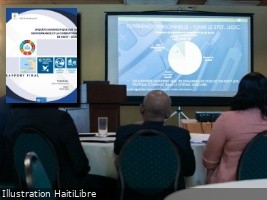
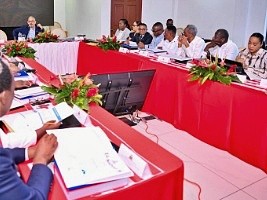
    Port-au-Prince, Haiti – In a significant move toward fiscal modernization, Haiti’s Ministry of Economy and Finance convened a high-level technical meeting on January 20, 2026, to advance revisions to the nation’s Personal Income Tax (IRPP) structure. Minister Alfred Fils Metellus led the session alongside members of the Tax Policy Committee (CPF), engaging economists and chartered accountants in substantive dialogue regarding proposed changes to the tax scale.

    The initiative represents a strategic effort to address systemic inefficiencies within Haiti’s current taxation framework. Ministry officials identified several critical areas for improvement, including the need to eliminate structural distortions and create a more equitable system aligned with contemporary economic realities. The revision process emphasizes technical precision while upholding fundamental taxation principles.

    Minister Metellus highlighted the reform’s potential impact on small and medium enterprises (SMEs), identifying them as crucial engines for economic expansion and employment generation. “Our objective is to establish a fiscal environment that actively promotes SME development through thoughtful policy adjustments,” Metellus stated during the proceedings. He further committed to maintaining inclusive dialogue with private sector stakeholders throughout the reform process.

    Technical discussions organized around four central pillars: equitable contribution according to economic capacity, systemic effectiveness promoting formal economic participation, simplified tax scale transparency, and overall structural coherence within Haiti’s tax architecture.

    CPF President Andral Joseph outlined complementary initiatives including the ongoing revision of Haiti’s General Tax Code and planned modernization of tax administration systems. Directors Romel Troissou and Carl-Edwice Estima presented analytical frameworks detailing multiple revision scenarios, emphasizing three core objectives: restoring fiscal justice, protecting low-income households, and maintaining budgetary sustainability.

    Prominent private sector representatives including economists Kesner Pharel and Duval Lucnaire contributed substantive assessments and recommendations. Their participatory engagement reflects a concerted effort to develop a taxation system characterized by enhanced fairness, operational transparency, and improved adaptation to Haiti’s distinctive economic conditions.

  • FLASH : More than 8,100 Haitians killed in 11 months (2025)

    FLASH : More than 8,100 Haitians killed in 11 months (2025)

    A stark United Nations assessment has revealed Haiti descended into unprecedented violence throughout 2025, with armed gangs inflicting a devastating human toll and bringing the nation to a critical juncture. According to the latest report from the UN Integrated Office in Haiti (BINUH), presented to the Security Council on January 15, 2026, more than 8,100 Haitians were killed between January and November 2025 due to armed violence, a figure believed to be a significant undercount given limited access to gang-controlled territories.

    The crisis has evolved beyond the capital, Port-au-Prince, with gang networks expanding their influence into strategic regions including Arcahaie, Mirebalais, Lascahobas, and the Artibonite department. This geographical spread has effectively paralyzed vital commercial and humanitarian routes, severely undermining state authority. Armed groups systematically targeted individuals suspected of collaborating with or resisting police forces, employing sexual violence primarily against women and girls as a punitive weapon of war.

    In response, the Haitian National Police (PNH), supported by the Haitian Armed Forces and the Gang Suppression Force (GSF), intensified counter-operations. These efforts succeeded in reopening several major national roads, though the overall security situation remains critically fragile. Despite a marginal 6.2% decrease in violence within the capital in the final quarter, violence exploded in provincial areas, nearly doubling in certain rural regions. The Artibonite and Center departments reported 1,916 deaths in 2025, a sharp increase from the 1,050 recorded during the same period in 2024.

    Beyond killings, gangs sustained campaigns of kidnapping for ransom, extortion, and systematic property destruction. These actions have severely hindered public access to essential services, including healthcare and education, while exacerbating severe food insecurity and economic hardship. The report also highlights a disturbing rise in child trafficking, with gangs coercing minors into various roles, including participation in violent attacks.

    The coordinated assaults, often executed with weapons of war on multiple fronts, signify a grave and deteriorating security situation that demands urgent international attention and a reinforced response to prevent further humanitarian catastrophe.

  • FLASH : Attempt to revoke the PM defeated by the USA

    FLASH : Attempt to revoke the PM defeated by the USA

    In a dramatic political showdown on January 21, 2026, Haitian Prime Minister Alix Didier Fils-Aimé retained his position after a failed dismissal attempt within the Presidential Transitional Council (CPT). The resolution for his removal initially garnered support from five council members before Advisor Smith Augustin unexpectedly reversed his position, refusing to provide the crucial final signature needed for passage.

    The four advisors who endorsed the dismissal motion were identified as Fritz Alphonse Jean, Leslie Voltaire, Louis Gérald Gilles, and Edgard Leblanc Fils. Their effort faced strong opposition from Laurent Saint-Cyr, the Council’s President pro tempore and Coordinator, who circulated a formal correspondence condemning the initiative.

    Saint-Cyr’s communication emphasized the critical need for governmental stability ahead of the February 7 institutional deadline, warning against ‘any initiative likely to fuel instability, confusion or a breakdown of trust’ that would carry ‘serious risks for the country.’ He advocated for structured dialogue representing Haiti’s diverse political sectors rather than rushed decisions.

    The decisive factor in quashing the dismissal attempt emerged from explicit diplomatic pressure from the United States Embassy. In unequivocal language, U.S. officials declared that changing Haiti’s government composition at this late stage would be considered ‘an effort to undermine’ American objectives for security and stability. The correspondence contained a direct threat that the U.S. would regard supporters of such measures as ‘acting contrary to the interests of the United States, the region, and the Haitian people’ and would ‘act accordingly.’

    This diplomatic intervention highlights the ongoing influence of international actors in Haiti’s fragile political transition and the continuing challenges facing the Caribbean nation’s governance structures.

  • Politic : The FNE undertakes structural reform

    Politic : The FNE undertakes structural reform

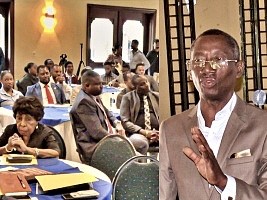
    In a significant address during the 33rd annual ‘Mardis de la Nation’ event on January 20, 2026, Élysée Collagène, Director General of Haiti’s National Education Fund (FNE), outlined an ambitious transformation agenda for the institution. The comprehensive reform plan aims to establish the FNE as an efficient, transparent, and financially sustainable organization capable of effectively supporting Haiti’s education system.

    Collagène’s administration began with a thorough institutional assessment that identified substantial administrative and organizational deficiencies. In response, the development of detailed financial and accounting procedures manuals has been designated as a strategic priority to address these systemic weaknesses.

    The reform initiative commenced with the temporary suspension of check distributions, creating necessary operational space for a complete overhaul of allocation mechanisms. This pause enabled the implementation of enhanced procedures designed to ensure both efficiency and integrity in fund distribution.

    A critical policy change now mandates that educational fee checks be issued exclusively to schools rather than individual recipients. This structural modification guarantees proper utilization of public funds while establishing comprehensive financial traceability. An oversight committee has been established to monitor strict adherence to this system, working directly with educational institutions and prioritizing support for children from the most vulnerable socioeconomic backgrounds.

    Confronted with application volumes dramatically exceeding budgetary capacity, the FNE has instituted a technical validation committee responsible for evaluating and selecting projects based on stringent eligibility criteria. These measures proved particularly crucial given the institution’s previous financial challenges, including a 2.3 billion gourdes debt burden in 2023.

    Through disciplined fiscal management, the FNE has achieved a remarkable financial turnaround, growing its treasury to 5.9 billion gourdes. This recovery establishes a solid foundation for sustainable operations and credible long-term support of Haiti’s national education objectives.

  • Politic : The problem of financing local authorities and local development

    Politic : The problem of financing local authorities and local development

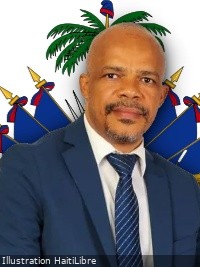
    PORT-AU-PRINCE, HAITI — A pivotal two-day workshop addressing Haiti’s systemic challenges in financing local authorities commenced this week at the Montana Hotel, spearheaded by Interior Minister Paul Antoine Bien-Aimé. The collaborative initiative between the Ministry of the Interior and Territorial Communities (MICT) and the National Federation of Haitian Mayors (FENAMH) convened national and international stakeholders to tackle one of Haiti’s most pressing governance issues.

    The high-level gathering witnessed participation from Minister of National Education, UNDP Resident Representative Xavier Michon, directors of multiple governmental agencies, and representatives from municipal associations across Haiti. This diverse attendance underscored the national significance of resolving funding disparities that hinder local development.

    Central to the discussions was the critical financial paralysis facing municipal governments, which lack both administrative autonomy and sufficient resources to provide essential public services. The workshop served as both diagnostic assessment and advocacy platform, aiming to establish effective mechanisms for equitable fund distribution that would enable meaningful decentralization.

    Minister Bien-Aimé delivered a forceful address demanding the repatriation of the Local Government Management Fund (FONDCT) to municipal control. Revealing that 90% of municipalities and all communal sections depend on these allocations, the Minister condemned the current concentration of public resources as fundamentally unjust and unsustainable. His declaration that ‘It’s time for the Ministry of the Interior and local authorities to manage the funds of local authorities again!’ signaled a potential paradigm shift in Haiti’s governance structure.

    FENAMH President Mayor Anténor Denoil echoed these sentiments, framing effective decentralization as essential for local development and constitutional compliance. The Minister of National Education further contextualized the crisis, explaining how chronic underfunding perpetuates regional disparities and deepens social inequalities.

    UNDP Representative Xavier Michon endorsed the initiative as a crucial step toward establishing practical financing mechanisms. The MICT reinforced that local financing represents the cornerstone for proportionate decentralization and sustainable community development throughout Haiti.

  • Justice : Launch of a pilot project to reduce prolonged pretrial detention

    Justice : Launch of a pilot project to reduce prolonged pretrial detention

    In a significant move to address systemic justice issues, the Haitian government has initiated a pioneering program aimed at reducing prolonged pretrial detention and alleviating severe prison overcrowding. On January 18, 2026, the Ministry of Justice and Public Security launched the “Mobile Initiative for Reducing Prison Overcrowding and Prolonged Pretrial Detention” pilot project.

    The inaugural session took place at the Port-au-Prince Court of First Instance under the supervision of Dean Attorney Bernard Saint-Vil. The court reviewed the cases of twenty individuals who had been incarcerated for several years without trial for minor offenses, invoking the Habeas Corpus Act to secure their release.

    All twenty detainees—including Wisnel Saint Fleur, Roosevelt D’Haïti, Dienix Georges, and seventeen others—were granted habeas corpus petitions and are scheduled for immediate release. The proceedings were attended by Chief Commissioner Patterson Dorval and Deputy Government Commissioner Choubert Baptiste, representing the Public Prosecutor’s Office.

    Prime Minister Alix Didier Fils-Aimé emphasized the government’s stance, stating: “Prolonged pretrial detention constitutes a serious violation of human dignity and the normal functioning of the justice system. The State can no longer tolerate this abuse. This initiative reflects our commitment to upholding the law in an orderly, just, and human rights-based manner.”

    The initiative comes in response to alarming statistics showing approximately 80% of Haiti’s prison population currently awaits trial without conviction. Developed by the Ministry of Justice, the project is implemented through a collaboration between the Center for Analysis and Research in Human Rights and the Mobile Institute for Democratic Education, with financial backing from the United Nations Development Programme in Haiti.

    The five-month pilot program will expand beyond Port-au-Prince to include the jurisdictions of Jacmel and Les Cayes, representing a comprehensive approach to addressing one of Haiti’s most pressing judicial challenges.

  • Politic : Demolition on Boulevard du Cap

    Politic : Demolition on Boulevard du Cap

    A controversial urban redevelopment initiative in northern Haiti has triggered significant economic and social concerns among business leaders. On January 9, 2026, municipal authorities launched “Operation Sidewalk Reclamation” along Cap-Haïtien’s strategic boulevard, a prime tourist and commercial corridor. Under the direction of Marc Merzius Présumé, Departmental Delegate of the North, and with Mayor Angie Bell present, the operation resulted in the complete demolition of at least 17 buildings and commercial structures deemed to be encroaching on public land.

    The North Chamber of Commerce and Industry (CCI Nord) has issued a formal statement expressing profound concern regarding the execution methodology of the demolition campaign. While explicitly refraining from challenging the legal basis of the operation, the Chamber’s President, Steve A. Mathieu, criticized the absence of reasonable notice, transparent planning, and proper consultation with affected businesses.

    According to the Chamber’s declaration, previous discussions with authorities had addressed general urban concerns in Cap-Haïtien but never specifically outlined demolition plans of this scale. The business organization condemned what it characterized as a “hasty, haphazard, and unilateral approach” that failed to consider the substantial economic, social, and human consequences for local enterprises and families.

    The statement further denounced reported incidents of power abuse and violence against individuals, including women attempting to exercise their right to peaceful protest. The Chamber expressed solidarity with victims while reiterating its commitment to participatory urban development processes that balance public interest, heritage preservation, and economic protection through dialogue and transparent governance.

  • 2026 World Cup : FIFA ranking of Haiti and its opponents (+ schedule)

    2026 World Cup : FIFA ranking of Haiti and its opponents (+ schedule)

    As the 2026 FIFA World Cup approaches, Haiti’s national football team, known as Les Grenadiers, has demonstrated incremental progress in the global standings. The latest FIFA rankings released on January 19th show Haiti climbing one position to 83rd place worldwide with 1294.49 points, while maintaining their 8th-place standing within the CONCACAF region behind Jamaica’s 1362.46 points.

    The upcoming tournament presents a formidable challenge for the Caribbean nation, who face particularly demanding opponents in Group C. Haiti will commence their campaign against Scotland on June 13th, 2026, at Boston’s Gillette Stadium. The Scottish team currently occupies 38th position globally with 1506.77 points, representing European football’s characteristically competitive style.

    Their second match on June 19th at Philadelphia’s Lincoln Financial Field pits them against five-time world champions Brazil, ranked 5th worldwide with 1760.46 points. The historical record between these teams reveals Brazil’s dominance, with four comprehensive victories in senior competitive matches dating from 1974 to 2016.

    The group stage concludes on June 24th at Atlanta’s Mercedes-Benz Stadium against Morocco, Africa’s football powerhouse and 2022 World Cup semi-finalists. Currently ranked 8th globally with 1736.57 points, Morocco presents another significant challenge. Notably, Haiti has no prior competitive history against either Morocco or Scotland at senior level.

    The only bright spot in Haiti’s historical record against these opponents came in 1999, when their under-20 squad secured a 4-3 victory against Brazil’s youth team—a reminder that football occasionally produces unexpected outcomes despite overwhelming odds.