标签: Haiti

海地

  • Investments : USD$69 for the modernization of Les Cayes airport and the rehabilitation of RN2

    Investments : USD$69 for the modernization of Les Cayes airport and the rehabilitation of RN2

    In a landmark move to boost economic connectivity and regional development in southern Haiti, the Inter-American Development Bank’s (IDB) Board of Executive Directors greenlit $69 million in non-reimbursable financing on Wednesday, June 24, 2026, for two critical infrastructure projects: the full modernization of Les Cayes International Airport and the rehabilitation of high-priority segments of National Route 2 (RN2).

    The airport modernization initiative marks a pivotal turning point for connectivity across southern Haiti, a region that has long faced limitations in reliable transportation for people, commercial cargo, and life-saving emergency supplies. The project is structured to bring the facility’s aviation safety protocols fully in line with global international standards, creating a resilient alternative transportation hub for the entire southern corridor. Work will be rolled out in sequential phases to minimize disruptions to existing operations, with capacity expansions designed to accommodate projected passenger and cargo demand through 2045.

    Key upgrades to Les Cayes Airport include expanding the main runway to a width of 30 meters, resurfacing the aircraft apron and updating pavement navigation markings, installing state-of-the-art aeronautical lighting and enhanced approach systems to support safer operations in all weather conditions, deploying cutting-edge meteorological observation technology, and constructing a reinforced perimeter fence to improve site security. The project also includes new purpose-built operational infrastructure, including a modern air traffic control tower and a dedicated rescue and firefighting facility.

    Complementing the airport upgrades, the initiative will deliver structural rehabilitation to 11 kilometers of RN2 along the busy Étang de Miragoâne–Carrefour Moussignac corridor. As southern Haiti’s primary arterial roadway connecting the region to Port-au-Prince and Haiti’s core economic centers, improved RN2 will create a more continuous, safe, and reliable route for all traffic.

    When completed, these two projects will work in tandem with other ongoing infrastructure investments in the region, including upgrades to the Port of Saint-Louis du Sud and the Les Cayes–Jérémie road link, to create a synergistic, interconnected transport network. The combined upgrades are expected to lower trade barriers, strengthen the country’s capacity to respond to natural disasters and public health emergencies, expand local access to national and international markets and essential services, generate sustained local job opportunities, and deepen regional economic integration across the Caribbean.

    The initiative will deliver immediate, tangible benefits to more than 61,000 annual air travelers and 6,500 daily roadway users, who will experience more reliable schedules, reduced travel times, and vastly improved safety. Beyond physical infrastructure, the program also includes dedicated technical assistance to build the institutional and operational capacity of Haiti’s Ministry of Public Works, Transport and Communications (MTPTC). This capacity building will improve the country’s ability to manage and execute major infrastructure projects, ensure the long-term sustainability of the new investments, and boost efficiency in future infrastructure maintenance and development across the country.


  • 2026 World Cup : Morocco narrowly defeats Haiti (4-2)

    2026 World Cup : Morocco narrowly defeats Haiti (4-2)

    On June 24, 2026, history was made at Atlanta’s Mercedes-Benz Stadium, when Haiti’s men’s national football team – nicknamed the Grenadiers, ranked 83rd globally – faced 7th-ranked Morocco’s Atlas Lions in their final Group C match of the 2026 FIFA World Cup, marking the first ever meeting between the two sides at the tournament, in front of a sold-out official crowd of 68,324 spectators. Though the North African side claimed a hard-fought 4-2 win, the Caribbean underdogs exited the tournament with widespread praise, pushing the tournament favorites to the final whistle in a performance that defied expectations.

    French head coach Sébastien Migné made two adjustments to Haiti’s starting lineup from their previous match against Brazil, bringing in forward Wilson Isidor of England’s Sunderland AFC and winger Lenny Joseph of Hungary’s Ferencváros TC, while regular starters Carlens Arcus and Frantzdy Pierrot started the game on the bench. Haiti set up in a 4-4-2 formation, with Johnny Placide (SC Bastia, France) starting in goal, Ricardo Adé (LDU Quito, Ecuador), Duke Lacroix (Colorado Springs Switchbacks, USA), Martin Experience (AS Nancy-Lorraine, France), and Josué Casimir (AJ Auxerre, France) forming the defensive line, Ruben Providence (Almere City FC, Netherlands), Jean-Jacques Danley (Philadelphia Union, USA), Jeanricner Bellegarde (Wolverhampton Wanderers, United Kingdom), and JK Duverne (KAA Gent, Belgium) completing the midfield, and Isidor and Joseph leading the attacking line.

    Migné made five substitutions throughout the second half to refresh his side: Louicius Deedson replaced Isidor, and Duckens Nazon replaced Providence in the 67th minute; Carlens Arcus replaced Duverne, and Dominique Simon replaced Danley in the 80th minute; and Pierrot came on for Joseph in the 83rd minute.

    The opening 45 minutes delivered end-to-end drama, with four goals split evenly between both sides. Haiti shocked the global football audience in the 10th minute, opening the scoring for their first ever World Cup goal when a low cross from Duverne deflected off Lenny Joseph’s backheel attempt, wrong-footing Moroccan goalkeeper Yassine Bounou and rolling into the back of the net for an own goal, putting the underdogs up 1-0.

    Haitian goalkeeper Johnny Placide put in a string of impressive saves in the 13th, 23rd, and 36th minutes to keep Morocco off the scoresheet, but Atlas Lions captain Achraf Hakimi finally found an equalizer in the 39th minute, slotting home after a cross took a deflection off a Haitian defender.

    Haiti refused to back down, and retook the lead just four minutes later in the 43rd minute. After Brahim Díaz gave away possession in Morocco’s half, Isidor hit a powerful long-range strike into the top corner, leaving Bounou with no chance and putting the Grenadiers up 2-1.

    Morocco leveled the score right before the halftime whistle, when Hakimi cut the ball back into the path of Ismael Saibari, who converted the chance to make the score 2-2 going into the break.

    After halftime, Morocco, the higher-ranked side, began to dominate possession and territory, putting consistent pressure on Haiti’s defense. The breakthrough finally came in the 78th minute, when substitute Soufiane Rahimi converted from a corner to put Morocco ahead 3-2, the first time the North African side had led in the match.

    The match’s final goal came in the 89th minute, when young substitute Gessime Yassine capitalized on a defensive miscommunication from Haitian defender Carlens Arcus, who had assumed the ball had gone out of play. A VAR review confirmed the goal was valid, sealing Morocco’s 4-2 win.

    In the final Group C standings, Brazil and Morocco both advanced to the knockout stage with seven points each: Brazil claimed first place on goal difference, with two wins, one draw, seven goals scored, and one conceded, while Morocco finished second with two wins, one draw, six goals scored, and three conceded. Scotland finished third with three points from one win in three matches, while Haiti ended their historic first World Cup campaign in fourth place with zero points, having scored two goals across three group matches.

  • Leisure : Did you know ? #35 (video)

    Leisure : Did you know ? #35 (video)

    In its latest installment of the popular twice-weekly general knowledge segment “Did You Know?”, Haiti-based online quiz platform Quiz.HaitiLibre has turned its spotlight to one of astronomy’s most intriguing cosmic objects: red dwarf stars. This 35th entry of the educational series shares lesser-known facts about these tiny, abundant stars that shape our understanding of the Milky Way and the search for life beyond Earth.

    Red dwarfs hold the title of the most widespread stellar bodies across the entire universe, accounting for roughly three-quarters of all stars within the Milky Way galaxy alone. Unlike the massive, blazing Sun that powers our solar system, red dwarfs are far smaller and cooler, a physical characteristic that gives them their distinctive dim, reddish hue. A particularly remarkable trait of these stars is their extraordinarily slow consumption of hydrogen fuel, which grants them a lifespan measured in hundreds of billions of years—far outstripping the current 13.8-billion-year age of the universe itself.

    For the global astronomy community, red dwarfs have emerged as a particularly fascinating area of study, largely because they frequently host systems of rocky planets similar in size to Earth. This has made them top candidates for searching for potentially habitable worlds beyond our own solar system, even as significant challenges remain. The habitable zone—the range of orbital distances where liquid water could theoretically exist on a planet’s surface—lies extremely close to a red dwarf’s dim surface. This proximity almost always leads to synchronous rotation, meaning one side of the planet is permanently exposed to stellar radiation while the other remains in perpetual darkness. Compounding this challenge, red dwarfs are prone to powerful, violent stellar flares that can strip away the atmosphere of any nearby orbiting planet, erasing any chance for life as we know it to evolve.

    Despite these formidable barriers to habitability, red dwarfs remain a primary target for astronomers hunting for extraterrestrial life, especially our closest cosmic neighbors. This educational fact feature is just one of hundreds of free quizzes available on Quiz.HaitiLibre, a digital platform that caters to knowledge seekers of all ages. As part of the platform’s June 2026 monthly update, 31 new quiz games were added on June 1, bringing the total number of available interactive quizzes to 150. The platform adds new content every month, covering a vast range of topics from local Haitian culture and current affairs to global general knowledge across science, history, and more.

    All quizzes on Quiz.HaitiLibre are exclusive to the platform, free to access, and require no user registration. Each topic includes three difficulty levels: easy, intermediate, and expert, to accommodate casual learners and experienced trivia buffs alike. The entire collection is available in both French and English, making it accessible to a broad audience of users.

  • News : Zapping…

    News : Zapping…

    On June 24, 2026, multiple interconnected and distinct developments unfolded across Haiti, spanning public safety, infrastructure progress, international economic cooperation, judicial proceedings, anti-corruption diplomacy, and consular services adjustments.

    The most urgent incident occurred on the morning of June 23, when ongoing violent clashes between rival armed gangs fighting for territorial control of Haiti’s critical industrial and port district left a parked vehicle destroyed by explosion. Around 9:10 a.m., an empty tanker truck parked along Boulevard de La Saline was hit by a projectile, whose origin remains unclear: authorities have not yet confirmed whether it was a stray bullet from crossfire or a deliberate targeted attack. Even though the truck had been declared empty of full fuel loads, residual flammable vapors trapped inside the tank ignited on impact, triggering a large explosion. The blast sent debris flying across the boulevard, damaging several other heavy goods vehicles parked in a line along the road, many of which also sustained direct bullet damage from the surrounding gang fighting.

    In a more positive development focused on long-term urban growth, Delmas Mayor Wilson Jeudy formally kicked off construction work on Chrétien Street, located in the Delmas 95 neighborhood at the intersection adjacent to the Jacquet Toto gas station. The project forms a core part of the municipal government’s broader initiative to modernize Haiti’s urban road network, a key investment expected to boost local economic activity and improve daily mobility for residents. Delmas City Hall has issued a public advisory alerting local commuters and residents to expect temporary traffic slowdowns and occasional disruptions to access along the route for the duration of construction work.

    On the international economic cooperation front, European Union officials wrapped up a working visit to Haiti’s CODEVI Industrial Park on June 23, where the bloc’s development model has drawn significant praise and interest from EU leadership. The European Union Ambassador to Haiti hosted senior TeamEurope representatives, including the French Ambassador to Haiti and the EU Ambassador to the Dominican Republic, for an on-site tour of the border-located industrial park. The delegation reviewed CODEVI’s successful development framework and explored the economic benefits of its strategic position near the Haiti-Dominican Republic border. The EU has already committed €9.5 million to fund an ambitious vocational and technical training project across Haiti, designed to upskill local workforces and align labor supply with the evolving needs of the country’s growing industrial sector, advancing the bloc’s goal of supporting inclusive economic recovery in Haiti.

    In a high-profile judicial development tied to one of Haiti’s most consequential political assassinations, former First Lady Martine Moïse has been formally summoned to appear at the Port-au-Prince Court of Appeal on June 30, 2026. Moïse will be questioned as part of expanded investigative proceedings ordered by the lead investigating judge overseeing the 2021 assassination of her husband, former Haitian President Jovenel Moïse, who was killed by attackers at his private residence overnight on July 6–7, 2021.

    Meanwhile, a senior Haitian anti-corruption delegation is currently in New York City for a week of strategic engagement at United Nations Headquarters, running from June 22 to June 26. Led by ULCC Director General Me Hans Jacques Ludwig Joseph, the delegation is holding talks with permanent missions to the UN from multiple countries, including Haiti itself, Canada, France, Latvia, and Panama. The discussions are focused on advancing long-term, sustainable capacity building for Haiti’s national anti-corruption efforts. The delegation is also scheduled to take part in a closed-door expert briefing for the UN Security Council, as well as a dedicated working session focused on reforming the UN system’s response to corruption challenges in Haiti.

    Finally, the Consulate General of Haiti in Paris has issued an advisory adjusting public opening hours for the week of June 22 to 26, 2026, due to severe weather conditions affecting the French capital. For this five-day period, the consulate will operate on an exceptional schedule, opening to the public from 9:30 a.m. to 3:30 p.m. daily. Regular consular operations and standard opening hours will resume on Monday, June 29, 2026.

  • Training : Start of the first week of the public policy program

    Training : Start of the first week of the public policy program

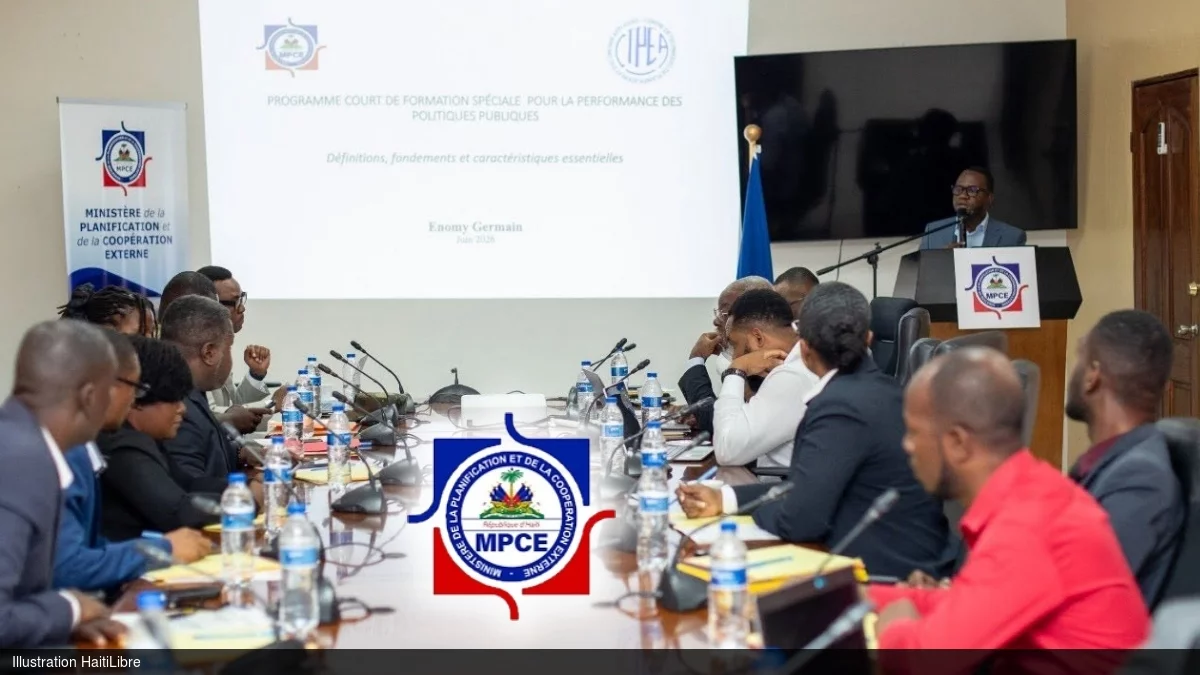
    In a key step to reform Haiti’s public administration and upgrade the technical capabilities of government personnel, two leading national institutions kicked off a week-long intensive public policy training program on Monday, June 22, 2026.

    Organized jointly by Haiti’s Ministry of Planning and External Cooperation (MPCE) and the Center for Planning Techniques and Applied Economics (CTPEA), the initiative is tailored specifically for staff from the country’s Study and Programming Units (UEP), the core government bodies tasked with policy design and development planning. The training curriculum blends theoretical instruction, real-world case studies, interactive simulations, and hands-on practical exercises to directly enhance participants’ on-the-job operational capabilities.

    The program’s curriculum focuses on the full lifecycle of public governance: from initial formulation and rollout to ongoing monitoring and final impact evaluation of public policies and public investment projects. Speaking on behalf of Minister Sandra Paulemon at the opening event, MPCE Director General Guy Roméro Latry shared his enthusiasm for the launch of the landmark initiative.

    Latry noted that developing an integrated curriculum covering everything from long-term strategic planning and public policy design to results-based management in such a condensed timeframe is an unprecedented achievement for Haiti. “Specific, actionable expertise is built not just through listening to lectures, but through applied, practical learning,” Latry said. He added, “No nation can advance without intentional planning, nor without strong, capable institutions that can articulate a clear long-term vision, map a sustainable development trajectory, and put effective implementation mechanisms in place.”

    The director general also underscored the outsized strategic importance of the Study and Programming Units across all government ministries and public agencies. Positioned as a critical connecting node in the process of designing, coordinating, and assessing public policies, these units are foundational to good governance. Strengthening their capacity, Latry emphasized, is a non-negotiable investment that will directly translate to better public service quality and more impactful government action that improves outcomes for the Haitian population.

    Throughout this first week of the broader program, participants will dive into core foundational concepts of public policy development and evaluation. Sessions will cover the defining characteristics of public policies, their core objectives and inherent limitations, and end-to-end frameworks for design, implementation, and impact measurement. Latry closed his opening remarks by encouraging all attendees to leverage the unique learning opportunity, bring full commitment and rigor to their training, and build collaborative networks for experience-sharing across the different participating government institutions.

  • Humanitarian Aid : New contribution of 900,000 euros from AECID

    Humanitarian Aid : New contribution of 900,000 euros from AECID

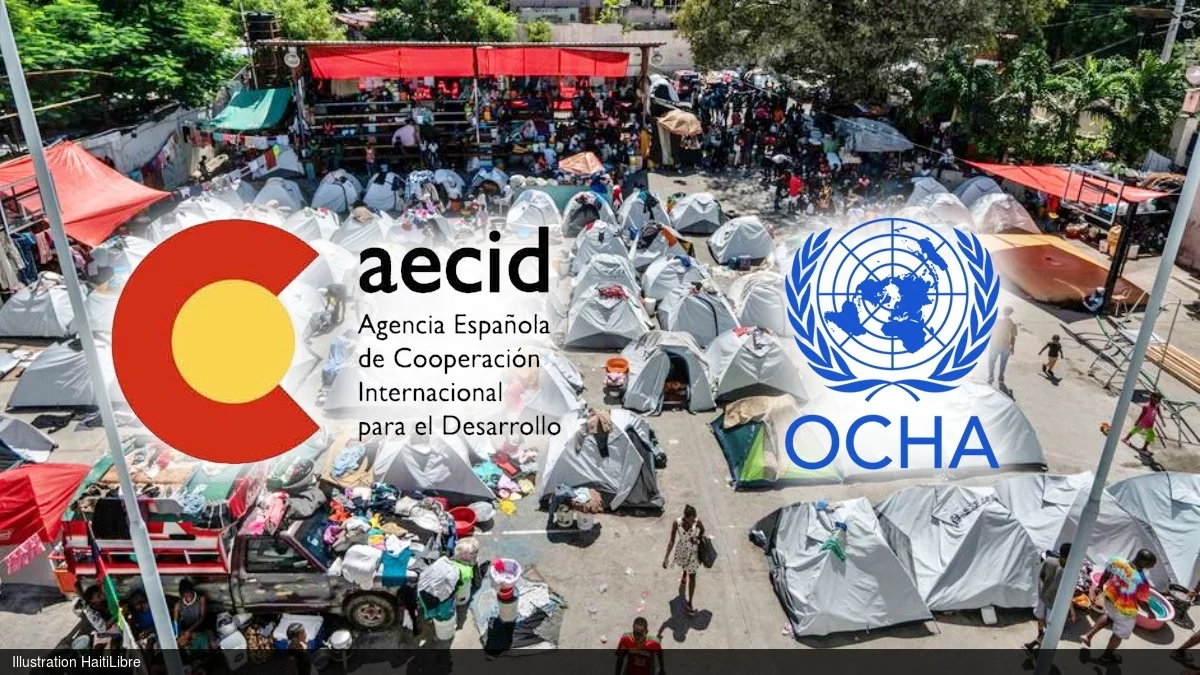
    Amid Haiti’s ongoing deepening humanitarian crisis, the Spanish Agency for International Development Cooperation (AECID) has announced a fresh €900,000 contribution to the Regional Joint Humanitarian Fund for Latin America and the Caribbean (RHPF LAC), a humanitarian financing mechanism overseen by the United Nations Office for the Coordination of Humanitarian Affairs (OCHA). Of the total new funding, €400,000 is co-financed through the collective contributions of Spain’s regional Autonomous Communities, reflecting broad domestic support for the international humanitarian response in Haiti.

    This new injection of funding marks a significant expansion of Spain’s long-standing commitment to Haiti’s vulnerable populations. Prior to this commitment, Madrid had already allocated a combined €1 million to the fund between 2024 and 2025, a prior investment that delivered tangible life-saving support to tens of thousands of Haitians last year. Official data from the humanitarian coordination framework shows that 32,390 at-risk Haitians, including 17,190 women and girls, accessed critical emergency assistance through Spain’s earlier contributions in 2025 alone.

    The latest funding will be directed to a broad range of high-priority humanitarian sectors that address the most urgent needs of Haitian communities impacted by persistent instability and displacement. These priority areas include camp coordination for the country’s growing population of internally displaced persons (IDPs), formal education for out-of-school children, emergency shelter provision, food security programming, public health services, civilian protection interventions, nutrition support for malnourished populations, and water, sanitation, and hygiene (WASH) infrastructure.

    Unlike top-down humanitarian aid models, the RHPF LAC centers local leadership, with all programming implemented by regional and local civil society organizations. The fund’s core mission is to drive sustainable, tangible improvement in Haitian communities by strengthening local response capacities, improving cross-stakeholder aid coordination, and boosting the overall effectiveness of interventions across Port-au-Prince and other hard-hit regions of the country. Key programming set to benefit from the new funding includes general food distribution, protection services for women and children who have survived gender-based violence, education access initiatives, and other life-sustaining humanitarian actions that address the most pressing gaps in the country’s crisis response.

  • Haiti’s Prime Minister pays tribute to public servants

    Haiti’s Prime Minister pays tribute to public servants

    June 24, 2026 – Haiti marked World Public Service Day this week with a series of official ceremonies recognizing the tireless work of civil servants across the country, as top government leaders praised the resilience and dedication of public employees operating amid widespread national challenges. The flagship celebration, held Tuesday at Port-au-Prince’s Montana Hotel and organized by the Office of Management and Human Resources (OMRH), brought together a cross-section of senior stakeholders: sitting cabinet members, diplomatic corps representatives, senior public administration officials, and other national dignitaries. The event was convened under the unifying theme “Proud to Serve : Let’s Build the Public Administration of Tomorrow Today.”

    In opening remarks, OMRH General Coordinator Madelain Fils-Aimé highlighted Prime Minister Alix Didier Fils-Aimé’s ongoing commitment to overhauling and modernizing Haiti’s public sector, before extending a formal tribute to civil servants who advance public welfare across the country every day. Taking the stage, Prime Minister Fils-Aimé echoed that recognition, telling attendees “There is no greater honor than serving your country.” He stressed that the foundational strength of the Haitian state depends entirely on the public workers who keep institutions running, even when facing significant security and operational obstacles. The prime minister also singled out for special commendation three key security institutions: the Haitian National Police (PNH), the Armed Forces of Haiti (FAd’H), and the Gang Suppression Force (GSF), noting their critical frontline work to curb widespread gang violence and improve national security.

    The celebrations extended beyond the central OMRH event to individual government departments, with the Ministry of Agriculture hosting its own tribute one day earlier on Monday, June 22, to honor its staff and leadership. Ministry Director General Pierre-Richard René Officiel commended the professionalism, dedication, and resilience of his agency’s employees, who continue to fulfill their core duties with unwavering commitment and a strong sense of public duty even amid the country’s ongoing crises.

    Agronomist Marcelin Aubourg, Haiti’s Minister of Agriculture, delivered a heartfelt tribute to the women and men who keep the ministry operational, emphasizing their irreplaceable contribution to sustaining and expanding the Haitian agricultural sector – a backbone of the national economy and food security for millions of Haitians.

    The Ministry of Agriculture’s event included two key ceremonial milestones: the formal presentation of permanent civil service appointment letters to more than 300 employees. For many of the recipients, the official appointment capped decades of service in contracted roles, with some having worked 15, 18, or even 20 years on temporary contracts before securing permanent status. The ceremony also recognized two standout employees who earned distinction through their exceptional dedication, professional conduct, and high-quality work, awarding them plaques of honor to celebrate their contributions to the ministry’s institutional standing.

  • Security : Canada announces $7.5 million CAD in support for the Haitian National Police

    Security : Canada announces $7.5 million CAD in support for the Haitian National Police

    Amid escalating gang-driven violence and political collapse in Haiti, Canada has unveiled a new $7.5 million CAD funding package dedicated exclusively to boosting the operational capacity of the Haitian National Police (PNH). The announcement, made by Canadian Foreign Minister Anita Anand on the sidelines of the Organization of American States (OAS) general meetings held in Panama, forms part of a broader $35 million CAD regional security initiative for the Caribbean.

    The core of the targeted $7.5 million contribution will go toward two critical police priorities: the full renovation and outfitting of a state-of-the-art training facility for PNH officers, and the rollout of specialized tactical training programs designed to sharpen the force’s ability to confront armed gangs and counter criminal activity linked to terror networks. By upgrading training infrastructure and skills, Canada aims to directly enhance the PNH’s on-the-ground effectiveness in rooting out gang control across Haitian communities.

    A portion of the funding has also been earmarked for community-focused infrastructure projects in Haiti’s highest-risk areas. These interventions are tailored to immediately reduce everyday violence in vulnerable neighborhoods, strengthen local social support systems, and prioritize outreach to women and young people – groups disproportionately targeted for recruitment by criminal gangs. This community-centered component is designed to address the root drivers of gang expansion beyond just military-style operations.

    Finally, remaining funds will be channeled into joint maritime security operations between regional partners and Haitian authorities. The primary objective of these operations is to disrupt gang supply lines by intercepting illegal shipments of firearms and narcotics that enter Haiti via coastal routes, cutting off the critical resources criminal networks rely on to sustain their power and violence across the country.

  • Haïti – Actualité : Zapping…

    Haïti – Actualité : Zapping…

    A collection of the latest developments from Haiti, dated June 23, 2026, covers a range of topics across aviation, culture, public service, legal affairs, sports, and anti-corruption initiatives.

    One month after an aborted launch of its new route, Haitian carrier Zed Airlines has announced it will restart scheduled passenger flights between Haiti and Montreal, Quebec, Canada. David Jean Charles, chief executive officer of the airline, confirmed the resumption of the service. Currently, Zed Airlines operates multiple international routes: services to Brazil depart from Port-au-Prince’s Toussaint Louverture International Airport, while flights to Miami and Atlanta run out of Cap-Haïtien. The airline has active expansion plans to add new routes to additional U.S. cities and Cuba, and is evaluating launching domestic services connecting Port-au-Prince, the Haitian capital, to Jacmel, Jérémie, and Les Cayes.

    In a cultural ceremony held Sunday, June 21, 2026, at La Réserve Resto in Pétion-ville, Roi St Clou was formally elevated to the rank of National Roi-Ati in Haitian Vodou tradition.

    To mark the United Nations’ World Public Service Day, which falls on Tuesday, June 23, 2026, Haiti’s Office of Management and Human Resources (OMRH) will host an honors ceremony at Hôtel Montana. Eighty public servants, nominated by more than 70 Haitian government institutions, will be recognized by the country’s Prime Minister during the event. All cabinet ministers, agency directors general, and other senior public figures have been invited to attend the official ceremony, where the Prime Minister will deliver a keynote address to attendees.

    In a high-profile legal development, attorneys for prominent Haitian businessman Dimitri Vorbe filed an emergency motion on Monday, June 22, 2026, accusing U.S. Immigration and Customs Enforcement (ICE) of violating a federal court order. Vorbe, 52, has been held in U.S. custody since September 2025. Following severe wildfires in southern Florida, ICE transferred Vorbe from the Krome detention center in Miami to the Natchez, Mississippi correctional facility — a move that directly contradicts a formal order from a U.S. federal judge barring Vorbe from being moved outside the Southern District of Florida. The businessman is facing an expedited expulsion proceeding initiated by U.S. Secretary of State Marco Rubio on foreign policy grounds, which he has repeatedly contested amid his challenge to his prolonged detention. Vorbe’s legal team is demanding his immediate return to Miami ahead of his scheduled July 10 court hearing, or alternatively, his immediate release from custody.

    Haiti’s national men’s football team, nicknamed the Grenadiers, held their first training session in Atlanta on the morning of Monday, June 22, as they make final preparations for their decisive final group stage match against Morocco on Wednesday, June 24. The squad reported that players are training with full determination to secure the best possible outcome in the critical upcoming fixture.

    Haiti’s Anti-Corruption Unit (ULCC), in partnership with the United Nations Office on Drugs and Crime (UNODC), has opened applications for the second edition of its annual anti-corruption summer school. The two-week training program will run from August 10 to August 21, 2026, and is open to undergraduate students enrolled in recognized Haitian universities. Eligible candidates must submit a completed application via the online portal at https://bit.ly/ecoledeteanticorruption, alongside a resume, cover letter, valid government-issued ID, and official proof of university enrollment. Applications will be accepted from June 22 through July 6, 2026, and all participants must be available to attend the full duration of the training program.

  • Haïti – Politique : Formation sur les «Fondamentaux des marchés publics» au bénéfice de cadres du MENFP

    Haïti – Politique : Formation sur les «Fondamentaux des marchés publics» au bénéfice de cadres du MENFP

    In a push to strengthen transparent public resource management across Haiti’s government institutions, Haiti’s National Public Procurement Commission (CNMP) has launched a three-day specialized training program focused on core public procurement fundamentals, designed exclusively for senior technical staff at the country’s Ministry of National Education and Vocational Training (MENFP).

    The training kicked off on Friday, June 19, 2026, with sessions scheduled across three non-consecutive Fridays: June 19, June 26, and July 3, 2026. Around 20 participants are taking part in the program, most of whom are members of MENFP’s newly established ministerial public procurement commission (CMMP) and senior leadership from the ministry’s Procurement Implementation Unit (UPM).

    The curriculum covers a broad range of critical topics aligned with Haiti’s evolving public procurement framework. Key modules include a deep dive into the country’s legal and regulatory structure governing public contracts, step-by-step guidance on procurement solicitation, monitoring, and contract execution processes, and a breakdown of special regulatory frameworks for different contract types, including client service contracts, supply contracts, and contracts issued during officially declared public emergencies. To ensure participants can apply new skills in real-world scenarios, the program also includes hands-on practical case study analysis, procedural simulation exercises, and applied problem-solving activities built to boost frontline operational capacity.

    Speaking at the official opening of the training, CNMP commissioner Elgo Eugène welcomed MENFP’s recent decision to establish an in-house public procurement commission, a move the CNMP actively encourages. Eugène emphasized the central role that well-regulated public procurement plays in upholding transparency in public sector management. “This work is essential to guarantee consistency, full traceability, and above all, credibility for our entire national procurement system,” he told attendees.

    The new MENFP CMMP, formally established on June 1, 2026, comprises five appointed members: Lutherking Emmanuel MARCADIEU, Jean Astrel MAGLOIRE, Myrlène Jean-Baptiste SÉIDE, Rigaud MATHURIN, and Ardine PLAISIR.

    Woodly Simon, Chief of Staff to MENFP Minister Vijonet Déméro, framed effective public procurement as a core lever of functional public action. “At the ministry, transparent, efficient, rule-compliant management is non-negotiable to ensure we get the most value out of every public resource,” Simon explained. He added that upskilling the ministry’s procurement leadership is a strategic investment that will improve activity planning, streamline program execution, and advance responsible stewardship of public funds.

    Lead trainer Marie Aurore Élisabeth Barthélemy Dalencourt further emphasized the broader societal and economic impact of well-managed public procurement. “When public procurement is governed by the principles of transparency, equity, and efficiency, it directly strengthens good governance and improves the quality of services delivered to all Haitian citizens,” she said. “Every actor involved in public contracting has a responsibility to uphold regulatory standards and best practices to ensure public resources are used to their maximum potential.”