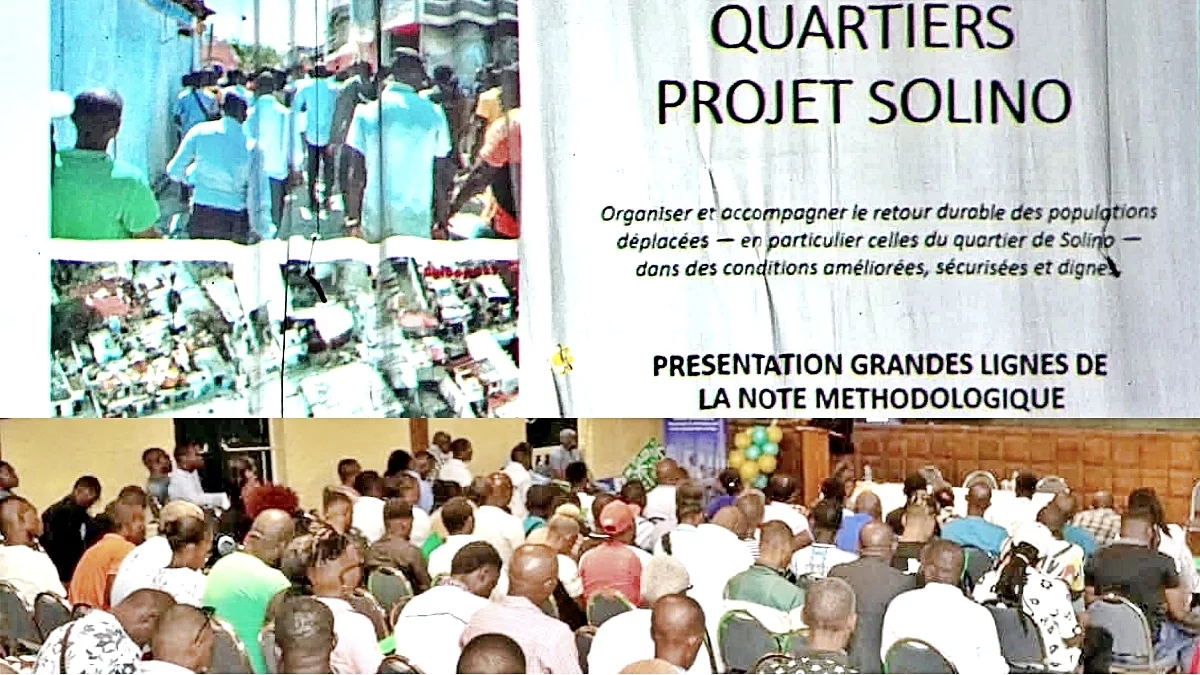
On July 25, 2026, Haiti took a landmark step toward national recovery and the repatriation of displaced residents with the official launch of the ambitious “Back to the Neighborhoods” (Solino) project. The launch ceremony, held as a community gathering at the Sainte-Rose de Lima Auditorium, kicked off what leaders frame as a people-centered reconstruction process rooted in inclusive dialogue, grassroots citizen participation, and renewed national hope.
For years, widespread instability and displacement have left thousands of Haitian families cut off from their homes, local communities, and basic sense of security. The Solino project represents the Haitian government’s formal, long-term commitment to reversing this crisis, going far beyond simple physical infrastructure repairs. At its core, the initiative is designed to restore a fundamental human right: displaced families’ ability to return to their original neighborhoods, familiar surroundings, and lives with dignity. It aligns with the government’s broader national goals of establishing long-term public security, mending fractured social cohesion, and creating stable conditions for a full return to normal daily life across the country.
The launch meeting, which included in-depth discussions with local community organizations, served a dual purpose: it introduced the public to the project’s operational framework and laid the foundational structure for local neighborhood committees. These committees will play an ongoing role in guiding reconstruction work and maintaining inclusive local governance throughout the initiative’s implementation.
Led by civil engineer Pascale Oriol, the Solino project is organized around four clear, prioritized core objectives: restoring long-term public security to target neighborhoods, rebuilding damaged residential and community infrastructure, revitalizing local economic and social life, and gradually formalizing and securing property rights for returning residents. The project’s first phase will involve a comprehensive neighborhood-by-neighborhood needs assessment, with long-term plans to position Solino as a replicable reconstruction model for other vulnerable communities across Haiti.
Oriol emphasized that the initiative marks a tangible shift from policy promises to actionable state commitment to the Haitian people. She highlighted three non-negotiable guiding principles for the project: full transparency in all decision-making and spending, sustained active participation from local residents in every stage of implementation, and a strict zero-tolerance policy to prevent corruption at any level.
The initiative is being rolled out through coordinated collaboration between multiple Haitian government bodies, including the Public Buildings Construction and Housing Unit (UCLPB), the Public Enterprise for the Promotion of Social Housing (EPPLS), the Interministerial Committee for Territorial Planning (CIAT), and the Ministry of the Interior and Territorial Communities (MICT), with technical and operational support from the International Organization for Migration (IOM) Haiti office. For national leaders, the partnership demonstrates the government’s commitment to turning popular hope for recovery into tangible, on-the-ground change.
Speaking on the project’s purpose, Haiti’s Prime Minister framed the safe return of displaced families not as just another policy goal, but as a binding national duty, a fundamental act of justice for displaced communities, and an indispensable step toward building a Haiti that is safer, more cohesive, and stronger for all citizens.