标签: Haiti

海地

  • FLASH FIFA World Cup 2026 : «D-Day» Draw, Haiti will know its opponents

    FLASH FIFA World Cup 2026 : «D-Day» Draw, Haiti will know its opponents

    WASHINGTON, D.C. – Haitian football stands at a pivotal moment as the nation prepares to discover its group stage opponents for the expanded 48-team FIFA World Cup 2026. The official draw ceremony, scheduled for Friday, December 5, 2025, at noon Port-au-Prince time at the Kennedy Center, will determine the competitive landscape for Haiti’s first World Cup appearance in over half a century.

    The draw mechanism will utilize four seeding pots based on FIFA rankings, creating 12 distinct groups of four teams each. This format marks a significant departure from previous tournaments, guaranteeing each participant three initial matches. Haiti’s Grenadiers have been positioned in Pot 4, alongside other qualified nations and playoff winners, setting the stage for potential matchups against global football powerhouses.

    A distinguished Haitian delegation will witness the proceedings firsthand, led by Monique André, President of the Federation’s Normalization Committee. The contingent includes technical staff headed by National Team Coach Sébastien Migné, administrative officials, and communications personnel. In a symbolic nod to history, Wilner Nazaire—captain of Haiti’s legendary 1974 World Cup squad—joins as FIFA’s special guest, bridging generations of Haitian football excellence.

    Following the draw, FIFA will convene on Saturday to finalize tournament logistics, including potential adjustments to match timings and venue allocations. The governing body will subsequently release the official competition schedule.

    The event will receive global broadcast coverage, allowing Haitian supporters worldwide to participate in this milestone moment as their national team reenters world football’s grandest stage.

  • Tourism : Presentation of the «iKat» digital embarkation and disembarkation card project

    Tourism : Presentation of the «iKat» digital embarkation and disembarkation card project

    Haiti has embarked on a significant digital transformation of its border control operations with the official launch of the “iKat” digital embarkation and disembarkation system. The pilot project was unveiled on December 4th, 2025, at Port-au-Prince’s El Rancho Hotel in a ceremony presided over by Prime Minister Fils-Aimé and organized by the Directorate of Immigration and Emigration (DIE).

    The high-profile event gathered representatives from multiple government sectors including the Presidential Transitional Council (CPT), the Prime Minister’s Office, the Ministry of the Interior, and Tourism Minister John Herrick Dessources. Also in attendance were Ms. J.E. Kathia Verdier, Minister for Haitians Living Abroad, alongside technical partners, financial stakeholders, airline representatives, and travel industry executives.

    Developed through a collaborative effort with the Haitian Institute of Statistics and Informatics (IHSI), the iKat system represents a strategic modernization initiative aimed at revolutionizing migration management. This digital platform will progressively replace conventional paper-based forms with an advanced electronic registration process. Travelers will be able to complete required documentation through online pre-registration up to 72 hours before their journey.

    The innovative system is designed to achieve multiple operational objectives: enhancing traveler facilitation through streamlined processes, strengthening migration control via digitized and centralized information systems, enabling authorities to conduct comprehensive pre-arrival and post-entry monitoring, and generating accurate statistical data for policy development.

    A critical feature of iKat is its capacity to establish a consolidated national database that will significantly improve oversight of foreign visitors exceeding the standard 90-day permitted stay. The platform will equip immigration officials with advanced authentication and analytical capabilities through interconnected data systems that can be securely shared with partner institutions, marking a substantial leap forward in border security technology.

  • Northeast : €3 million from the EU to strengthen community schools

    Northeast : €3 million from the EU to strengthen community schools

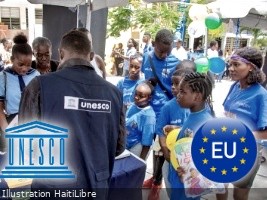
    In a significant move to bolster education systems in crisis-affected regions, UNESCO has unveiled two major programs supported by €7.7 million in funding from the European Union. The initiatives specifically target Haiti and Afghanistan, where educational infrastructure faces severe challenges due to ongoing instability.

    The Haitian component, receiving €3 million in EU support, will focus on strengthening community schools in the country’s northeastern region. These institutions serve tens of thousands of students in rural areas where educational access remains particularly vulnerable. The comprehensive program aims to integrate these community schools into the national education system while enhancing adherence to quality teaching standards.

    UNESCO Director General Khaled El-Enany emphasized the critical nature of educational continuity during crises, stating: “In times of crisis, school is a refuge that must never falter, and access to education is a right that must be guaranteed. These initiatives reflect UNESCO’s determination to provide people with opportunities to learn, to work, and to thrive – including in the most fragile and crisis-affected contexts.”

    Haiti’s education system faces unprecedented challenges amid one of the most unstable periods in the nation’s recent history. Escalating violence and deepening socio-economic turmoil have severely undermined public institutions, strained social cohesion, and placed essential services – particularly education – at serious risk.

    The UNESCO program will foster community participation and facilitate dialogue between families, teachers, and educational leaders, recognizing schools as vital spaces that support social cohesion and trust. Additionally, UNESCO will collaborate closely with national authorities to enhance the collection and utilization of education data, thereby strengthening the overall governance and management of Haiti’s education system.

  • FLASH : Additional USCIS Directives Regarding Haiti

    FLASH : Additional USCIS Directives Regarding Haiti

    In response to a recent fatal shooting incident in Washington D.C. involving an Afghan national, U.S. Citizenship and Immigration Services has enacted stringent new screening protocols targeting foreign nationals from 19 designated high-risk countries. The comprehensive policy shift empowers immigration officers to evaluate country-specific risk factors during case reviews, marking a significant hardening of U.S. immigration vetting procedures.

    The newly designated nations subject to enhanced scrutiny include Afghanistan, Burma, Chad, Republic of the Congo, Equatorial Guinea, Eritrea, Haiti, Iran, Libya, Somalia, Sudan, Yemen, Burundi, Cuba, Laos, Sierra Leone, Togo, Turkmenistan, and Venezuela. This directive builds upon previous immigration restrictions established during the Trump administration’s initial term.

    USCIS Director Joseph Edlow emphasized the security imperative behind these measures: ‘My fundamental duty involves ensuring exhaustive vetting and screening processes for all foreign nationals. This necessitates thorough evaluation of their origins and motivations. Recent tragic events have highlighted concerning vulnerabilities in our previous screening frameworks.’

    The updated guidelines specifically authorize immigration officials to consider nation-specific circumstances as potentially adverse factors during case evaluations. Critical considerations include assessing countries’ capacities to produce reliable identification documents and maintain adequate record-keeping systems.

    This policy enhancement reinforces the implementation of Presidential Proclamation 10949, which restricts entry of foreign nationals deemed potential threats to national security and public safety. The directive took immediate effect upon announcement, applying to all pending and new applications filed from November 27, 2025 onward.

  • FLASH : Joly Germine (Yonyon) sentenced to life without possibility of release

    FLASH : Joly Germine (Yonyon) sentenced to life without possibility of release

    In a landmark ruling with significant implications for international justice, former Haitian gang leader Joly Germine has been sentenced to life imprisonment without parole by the United States federal court. The sentencing on December 3rd, 2025, marks the culmination of a three-year legal process that began with Germine’s extradition from Haiti in May 2022.

    Germine, known by his alias “Yonyon,” led the notorious “400 Mawozo” criminal organization that orchestrated the abduction of 17 American citizens in Haiti on October 16, 2021. The victims, affiliated with Christian Aid Ministries, included twelve adults and five children ranging from an 8-month-old infant to teenagers. Court documents revealed that most hostages endured 62 days of captivity under armed guard in isolated conditions.

    The federal jury in the District of Columbia reached a guilty verdict on May 16, 2025, following an intensive 10-day trial. Germine faced convictions on seventeen separate counts, including one charge of conspiracy to commit hostage-taking and sixteen counts of actual hostage-taking of American citizens for ransom purposes.

    Evidence presented during trial proceedings demonstrated that Germine masterminded the entire operation, from the initial kidnapping to determining holding locations and establishing a $17 million ransom demand. Prosecutors established that the exorbitant ransom amount was strategically calculated to pressure the Haitian government into negotiating Germine’s own release from prison in exchange for the missionaries.

    The hostage situation unfolded dramatically over two months, with two captives released on November 20, 2021, due to one suffering serious illness. Three additional hostages gained freedom on December 5 after payment of a $350,000 ransom. In a dramatic turn of events, the remaining twelve hostages managed to escape on December 16, 2021, taking advantage of their captors’ momentary inattention during nighttime hours.

    This case represents a significant victory for international judicial cooperation and demonstrates the United States’ commitment to prosecuting crimes against its citizens abroad, regardless of where they occur.

  • Education : Presentation of preliminary results of the National Preschool Survey

    Education : Presentation of preliminary results of the National Preschool Survey

    Haiti’s Ministry of National Education and Vocational Training (MENFP) has initiated a comprehensive three-day workshop to present preliminary findings from the groundbreaking National Preschool Education Survey. The event, which commenced on December 1st, 2025, brings together educational technicians, departmental directors, international partners, and stakeholders to analyze critical data collected from 480 preschool facilities across the nation between May and June 2025.

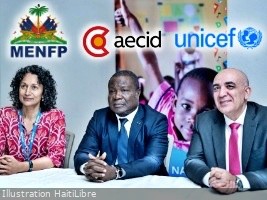
    Education Minister Augustin Antoine inaugurated the workshop by emphasizing the collaborative effort behind this milestone achievement. “This presentation represents the culmination of ten months of dedicated work by our Directorate of Preschool Education, supported technically and financially by UNICEF,” Minister Antoine stated. He additionally acknowledged the Spanish Agency for International Development Cooperation (AECID) for their financial backing and praised expert Professor Alain Mingat for his exceptional contribution to the survey’s execution.

    The comprehensive assessment evaluated multiple operational dimensions within Haiti’s preschool system, including infrastructure quality, educational support mechanisms, staff training protocols, nutritional programs, safety standards, and community engagement practices. The survey also examined linguistic approaches balancing Creole and French instruction, funding sources, and per-student expenditure patterns.

    Minister Antoine highlighted research demonstrating that children with preschool experience significantly outperform their peers in primary education. “Early childhood education serves as a strategic foundation for building a more equitable, inclusive, and resilient society,” he asserted, reaffirming his commitment to expanding quality early education opportunities nationwide.

    UNICEF Representative Geetanjali Narayan commended the survey’s completion, noting that “sharing these results constitutes an essential step toward developing a data-driven national early childhood education policy.” She called for additional international partners to support MENFP in policy formulation and implementation.

    Spanish Ambassador Marco Peñin reinforced his nation’s dedication to Haitian educational initiatives, stating that preschool education “forms an essential pillar for children’s cognitive, social, and emotional development.” He emphasized the particular importance of early educational support in facilitating language transition from Creole to French within Haiti’s unique multilingual context.

    The workshop’s final sessions, scheduled for December 3rd, will focus on analyzing investment scenarios for strengthening Haiti’s preschool education subsystem, with participation from technical, financial, and public funding institutions.

  • Politic : The Government accelerates preparations for elections

    Politic : The Government accelerates preparations for elections

    In a significant stride toward restoring constitutional governance, Haiti’s government has unveiled comprehensive electoral reforms during the 29th edition of the ‘Tuesdays of the Nation’ forum on December 2nd, 2025. Minister Delegate Joseph André Gracien Jean, overseeing electoral and constitutional affairs, detailed the administration’s progress in implementing the April 3rd, 2024 Agreement framework.

    Prime Minister Fils-Aimé’s administration demonstrated unwavering commitment to organizing credible elections through two pivotal actions: the full mobilization of the Provisional Electoral Council (CEP) and the unanimous adoption of the Electoral Decree by the Council of Ministers on December 1st. This legislative instrument marks a crucial milestone in Haiti’s political renewal process.

    The newly ratified decree introduces several groundbreaking provisions designed to transform Haiti’s electoral landscape. These innovations mandate 50% female representation in all decision-making positions, establishing one of the Caribbean’s most progressive gender quotas. The reform package further includes comprehensive updating of the electoral register under CEP supervision and strategic decentralization of tabulation centers across all ten departments to enhance transparency.

    Notably, the electoral framework expands democratic participation through two key mechanisms: formalized diaspora voting rights and innovative recruitment of polling staff from National Service (NS4) students, women’s organizations, and civil society groups. These measures aim to broaden electoral integrity and public trust.

    Concurrently, the government is implementing an extensive capacity-building program for political organizations, with over 100 parties currently receiving structured training across multiple departments. Minister Jean characterized these reforms as foundational to rebuilding Haiti’s nation-state infrastructure and modernizing its democratic institutions for long-term stability.

  • FLASH : Official visit to Haiti of Albert Ramdin, Secretary General of the OAS

    FLASH : Official visit to Haiti of Albert Ramdin, Secretary General of the OAS

    Albert R. Ramdin, Secretary General of the Organization of American States (OAS), commenced a pivotal two-day official visit to Haiti on December 2-3, 2025, marking his first diplomatic engagement with the Caribbean nation since assuming office. The high-level mission, involving extensive discussions with Haitian transitional leadership, focused on addressing the nation’s multifaceted crisis through coordinated regional support.

    Ramdin’s delegation received an official welcome in Cap-Haitien from senior Haitian officials including the Director of Protocol of the Ministry of Foreign Affairs, the Departmental Delegate, the Mayor, and police leadership before proceeding to the capital. In Port-au-Prince, the OAS delegation engaged in substantive talks with the Presidential Transitional Council (CPT) at the Villa d’Accueil, where Council President Laurent Saint-Cyr expressed appreciation for the OAS’s sustained commitment to Haiti’s stabilization, particularly regarding the finalization of the political roadmap.

    The dialogue centered on Haiti’s critical security situation as an essential precondition for credible elections, with both parties acknowledging recent progress including the adoption of the electoral decree. Discussions comprehensively addressed governance challenges, stability mechanisms, and electoral preparations, all contingent upon restoring national security. The conversation also examined the impending expiration of the CPT’s mandate in February 2026.

    Subsequently, Prime Minister Alix Didier Fils-Aimé convened a working session with the OAS delegation, detailing advancements in combating insecurity through enhanced operational capabilities of national forces and systematic measures to neutralize armed groups. The Prime Minister formally requested OAS member state support to strengthen the Gang Suppression Force (GSF) as a cornerstone of territorial security strategy, emphasizing that security restoration remains the administration’s paramount priority for enabling successful elections.

    Secretary General Ramdin commended the Haitian government’s publication of the Electoral Decree as a concrete and decisive step toward credible, inclusive democratic elections. He reaffirmed the OAS’s unwavering support for institutional stability during this critical juncture. The Prime Minister additionally highlighted the severe humanitarian situation, seeking OAS assistance for socialization, reintegration, and community support programs vital for social fabric reconstruction and sustainable peace.

    The first day concluded with an official reception honoring Ramdin at Pétion-ville’s El Rancho Hotel, attended by key governmental figures. The Secretary General’s itinerary included operational reviews at the OAS National Office, coordination with the Provisional Electoral Council and technical teams, and strategic meetings with international partners including the Pan American Development Foundation, Inter-American Development Bank, and World Bank representatives to align institutional, technical and security support.

    The mission also featured field assessments in Morne Casse, where Ramdin inspected the Tactical Center—a critical infrastructure enhancing security force capabilities—accompanied by the Justice Minister. Further site visits included the modernized Terrier Rouge police station, demonstrating infrastructure modernization efforts, and the National Identification Office, underscoring comprehensive approach to Haiti’s stabilization.


  • Sports : FIFA notes improvements in football governance in Haiti

    Sports : FIFA notes improvements in football governance in Haiti

    In a significant development for Caribbean football, FIFA has formally extended the mandate of Haiti’s Normalization Committee through November 30, 2026, recognizing substantial improvements in the nation’s football governance despite ongoing national challenges.

    The Haitian Football Federation (FHF) received official communication from world football’s governing body acknowledging concrete advancements in multiple areas. The extension comes as validation of the reform initiatives implemented through collaboration between FIFA, CONCACAF, and FHF members over recent years.

    Key governance improvements highlighted include the substantial progression in revising statutory frameworks and federal regulations. Additionally, FIFA noted the successful implementation and expansion of the club licensing system, which has elevated operational standards across 56 clubs and academies, ensuring enhanced management transparency and professional conduct.

    Remarkably, these administrative advancements have been achieved against the backdrop of significant national instability, making the progress particularly noteworthy.

    Sporting accomplishments formed a central part of FIFA’s assessment, with historic achievements across multiple national teams. The senior women’s squad made their inaugural World Cup finals appearance at the 2023 FIFA Women’s World Cup, marking a watershed moment for gender equality in Haitian sports. The U-17 national team secured qualification for the 2025 FIFA U-17 World Cup, demonstrating the vitality of youth development programs. Most notably, the men’s national team achieved historic qualification for the 2026 World Cup, serving as a powerful symbol of national resilience.

    FIFA acknowledged that certain critical milestones, including final statutory adoption and electoral processes, remain pending due to external factors beyond the Federation’s control, particularly Haiti’s ongoing political and security crisis.

    The Normalization Committee has reaffirmed its commitment to pursuing its mandate with rigorous dedication and responsible governance. As Haiti prepares for its return to global football prominence, the FHF has issued a call for unity, cooperation, and calm among all stakeholders in national football.

  • FLASH : Artibonite, Emergency Appeal for Help from SPNH-17

    FLASH : Artibonite, Emergency Appeal for Help from SPNH-17

    Haiti’s Artibonite region, historically known as the nation’s agricultural core, faces an unprecedented security crisis as armed gangs now control over 50% of police territories according to emergency reports. The SPNH-17 Police Union has issued an urgent appeal to national authorities after receiving multiple distress calls from officers overwhelmed by escalating gang violence.

    The deteriorating situation has paralyzed daily life across the region, with residents unable to work, travel, or conduct basic activities due to widespread terror. Despite the presence of Kenyan peacekeeping forces stationed at Pont Sondé, criminal elements continue their brutal campaign, exemplified by the November 29th atrocities where multiple civilians were burned and killed.

    SPNH-17’s emergency petition targets the Presidential Transitional Council, Police Superior Council, Acting Director General Vladimir Paraison, and departmental leadership, demanding immediate large-scale military intervention. The proposed operation requires comprehensive tactical deployment including:

    • Combat helicopters for targeted strikes on gang strongholds
    • Naval patrols to secure coastal waters from Montrouis to L’Estère
    • Special forces units to liberate blockaded communities including Gonaïves, Gros Morne, and Montrouis

    The police union emphasizes that current security measures have proven tragically inadequate against well-armed criminal networks. Their statement underscores the national strategic importance of Artibonite, describing it as both “the breadbasket of the country” and “the heart of Haiti” whose agricultural output sustains the entire nation.

    This crisis represents a critical juncture in Haiti’s ongoing security challenges, with implications for both national food security and regional stability in the Caribbean basin.