标签: Haiti

海地

  • Justice : Message by Martine Moïse on the assassination of President Jovenel Moïse

    Justice : Message by Martine Moïse on the assassination of President Jovenel Moïse

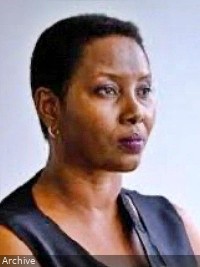
    In a powerful address to the Haitian nation and diaspora, former First Lady Martine Moïse has delivered a scathing indictment of Haiti’s judicial system, condemning its role in the political persecution and ultimate assassination of President Jovenel Moïse. The emotional statement marks 53 months since the controversial events that culminated in the president’s killing on July 7, 2021.

    Mrs. Moïse characterized Haiti’s justice system as a weaponized tool manipulated by a powerful minority to maintain control over the population. She asserted that the judiciary operates with complete impunity, serving oligarchs and corrupt politicians rather than the Haitian people. The system, she claimed, actively participated in destroying President Moïse’s character during his lifetime and continues to disrespect his legacy after his death.

    The former First Lady referenced specific events, including the February 7, 2021 judicial plot to overthrow the democratically elected president using fabricated court rulings and illegal warrants. She directly connected these judicial maneuvers to the eventual assassination, asking how the same system that participated in the crime could possibly deliver justice.

    Mrs. Moïse described an environment of extreme violence across multiple regions including Arcahaie, Montrouis, Saint-Marc, and Martissant, where citizens face brutal attacks without accountability. She invoked Haiti’s revolutionary heroes—Padrejean, Makandal, Boukman, Toussaint, and Dessalines—and their rallying cry of ‘Liberty or death!’ as inspiration for contemporary resistance.

    Despite the bleak assessment, the former First Lady maintained hope that justice would ultimately prevail, warning that ‘karma exists’ and there’s ‘a price to pay for every action.’ She concluded with a declaration that the Haitian people have reached their breaking point and that the current oppressive system must collapse.
  • Graduation : 100 young people with disabilities graduate in massage therapy and functional rehabilitation

    Graduation : 100 young people with disabilities graduate in massage therapy and functional rehabilitation

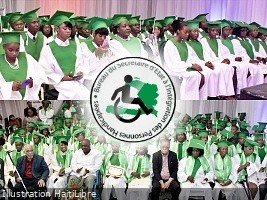
    Port-au-Prince witnessed a profoundly moving ceremony on International Day of Persons with Disabilities as 100 young Haitians with diverse disabilities—including visual impairments, mobility limitations, and other physical challenges—received professional diplomas in massage therapy and functional rehabilitation. These graduates successfully completed an intensive three-month vocational program designed to equip them with specialized healthcare skills.

    The Office of the Secretary of State for the Integration of Persons with Disabilities (BSEIPH) orchestrated this landmark event, which transcended conventional graduation ceremonies to represent a strategic advancement in Haiti’s national inclusion agenda. The occasion served as a powerful testament to human resilience, demonstrating how determination can overcome physical limitations and societal barriers. High-level government officials and international representatives attended, underscoring the ceremony’s significance within national development priorities.

    Secretary of State Génard Joseph articulated a transformative vision during his address, positioning persons with disabilities as active contributors to Haiti’s development trajectory. He emphasized that genuine inclusion requires moving beyond theoretical discourse to implement concrete measures including vocational education, psychological support services, employment accessibility, and facilitated civic engagement. The Secretary championed the concept of disabled individuals as valuable societal assets possessing professional expertise that benefits the broader community.

    The BSEIPH, in collaboration with its partner organizations, has committed to expanding these vocational training initiatives, creating additional pathways for young Haitians with disabilities to achieve professional certification, economic self-sufficiency, and meaningful social participation.

  • Education : Investment Scenarios for Haitian Preschools

    Education : Investment Scenarios for Haitian Preschools

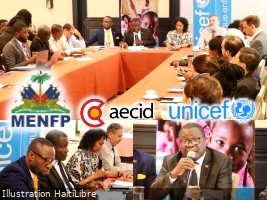
    Port-au-Prince, Haiti – Haitian education officials and international partners have concluded a landmark three-day workshop establishing comprehensive investment strategies to revolutionize early childhood education nationwide. The gathering marked a pivotal moment in Haiti’s educational development, focusing on implementing findings from the groundbreaking National Preschool Education Survey.

    Minister of National Education Augustin Antoine articulated a powerful vision for educational equity, emphasizing that “whether a child comes from wealthy or impoverished circumstances, they must receive identical educational opportunities. We are committed to standardizing the preschool sector and eliminating disparities between urban and rural regions.”

    The comprehensive survey data provides unprecedented insights into Haiti’s preschool infrastructure, detailing operational mechanisms, service diversity, cost structures, and systemic challenges. Minister Antoine highlighted the transformative potential of this information, noting it will “drive strategic planning and ground-level interventions to meet population expectations while bringing coherence to educational initiatives.”

    UNICEF Representative in Haiti Geetajanli Narayan characterized the collected data as “an invaluable foundation for guiding future policy and strategic decisions.” She emphasized the workshop’s role in evaluating “the most effective public policy options to ensure equitable expansion of public preschools while enhancing quality and sustainability of non-public services.”

    Professor Alain Mingat facilitated critical sessions exploring investment scenarios aligned with forthcoming National Preschool Policy priorities. The discussions culminated in a unified call for international cooperation agencies to bolster the Haitian government’s financial commitments to preschool education.

    The high-level participation underscored global support for Haiti’s educational transformation, featuring representatives from multiple international agencies including the French Development Agency, Inter-American Development Bank, UNESCO, World Food Programme, and diplomatic corps from France, Taiwan, Mexico, and Spain.

  • Colombia : Specialized training concludes for 23 Haitian police officers

    Colombia : Specialized training concludes for 23 Haitian police officers

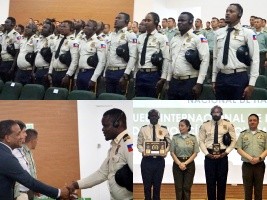
    In a significant bilateral cooperation effort, Colombia has successfully completed an intensive training program for 23 officers of the Haitian National Police (PNH). The closing ceremony, held on December 4th, 2025 at the Colombian International Police Training Center in San Luis, Tolima, was attended by Ambassador Rafael Orozco, Director for the Americas at Colombia’s Ministry of Foreign Affairs.

    This specialized training initiative represents a concrete implementation of the Colombia-Haiti Work Plan, stemming from commitments made during President Gustavo Petro’s official visits to Haiti in January and July 2025. The program was developed through collaborative efforts between Colombia’s Ministry of Foreign Affairs, Ministry of National Defense, National Police, and the Presidential Agency for International Cooperation (APC Colombia).

    Colombian police instructors delivered comprehensive training across five critical security domains essential for strengthening Haiti’s law enforcement capabilities. The curriculum focused on citizen security protocols, advanced criminal investigation techniques, tactical operations in both urban and rural environments, intelligence gathering methodologies, and strategies for combating smuggling operations.

    This capacity-building program underscores Colombia’s strategic commitment to supporting institutional strengthening and security stabilization in Haiti. The training approach emphasized knowledge transfer through practical, scenario-based learning designed to enhance the operational readiness and strategic decision-making capabilities of Haitian law enforcement personnel.

    The initiative reflects Colombia’s broader foreign policy objective of promoting regional security cooperation through technical assistance programs that respect national sovereignty while addressing shared security challenges. This cooperation model demonstrates how South-South collaboration can effectively contribute to peacebuilding and institutional development efforts in partner nations.

  • FLASH WC 2026 : The Grenadiers will play their 3 matches in the USA (Official schedule)

    FLASH WC 2026 : The Grenadiers will play their 3 matches in the USA (Official schedule)

    The official match schedule for Haiti’s national football team, the Grenadiers, in the 2026 FIFA World Cup has been finalized, positioning all three of their Group C matches within the United States. This announcement follows Friday’s draw ceremony that revealed Haiti would compete against Brazil, Morocco, and Scotland in the tournament’s initial stage.

    According to the published timetable, the Grenadiers will commence their campaign against Scotland on June 13, 2026, at Boston’s Gillette Stadium. Their second encounter pits them against five-time world champions Brazil on June 19 at Philadelphia’s Lincoln Financial Field. The final group stage match will see Haiti facing Morocco, the current African football powerhouse, on June 24 at Atlanta’s Mercedes-Benz Stadium.

    French coach Sébastien Migné provided strategic insights regarding the challenging group composition. “We face the legendary Brazilian team and Morocco, the sensational semi-finalists from the last World Cup,” Migné acknowledged. “This represents fantastic exposure for Haitian football and a tremendous reward for our players, but we must elevate our performance accordingly.”

    Migné emphasized the critical importance of their opening match against Scotland, noting that “nothing is impossible” in tournament football. He referenced his previous experience defeating Brazil with Cameroon as evidence that underdog victories remain achievable at the highest level.

    However, a significant concern overshadows the team’s preparation: the ongoing travel restrictions preventing most Haitian supporters from attending matches. The U.S. State Department confirmed to Politico that no special exceptions would be made for Haitian fans despite the World Cup hosting, maintaining visa eligibility restrictions established during the previous administration.

    Coach Migné expressed hope that political circumstances might evolve, stating: “We know there’s a large Haitian diaspora in the United States. We’re counting on them, and we hope that politically, now that Donald Trump has received the FIFA Peace Prize, he’ll continue in this direction and be more inclusive, because this should be a fantastic celebration for football and for Haitian citizens.”

  • Environment : Soil sampling and collection campaign

    Environment : Soil sampling and collection campaign

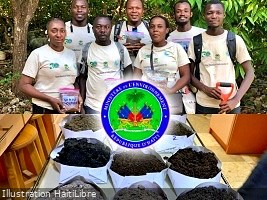
    In observance of World Soil Day 2025, Haiti’s Ministry of Environment has launched an ambitious national soil sampling campaign targeting the country’s severe land degradation issues. Under the theme “Healthy Soils for Healthy Cities,” the initiative represents a critical step toward environmental restoration and climate resilience.

    Environment Minister Moïse Fils Jean Pierre emphasized the fundamental importance of soil as “the matrix and substrate, the foundation of life” during the December 5th ceremony marking the campaign’s launch. The project, which gained approval from the Global Environment Facility in September 2021, forms part of a broader regional effort across eight Caribbean nations including Antigua and Barbuda, Belize, Barbados, Grenada, Guyana, Jamaica, and Saint Lucia.

    The comprehensive program has already trained 245 university students and young professionals in advanced soil sampling techniques. Participants received instruction in geospatial location mapping, specialized sample transportation methods, and data processing software applications. This educational component strategically positions youth as central actors in sustainable land management practices.

    Implementation involves collaboration between multiple Haitian institutions including the Ministry of Agriculture, the National Center for Geospatial Information, and both public and private universities. The Partnership Initiative for Sustainable Land Management (PISLM) provides overall coordination for the multinational project, which aligns with United Nations Convention to Combat Desertification objectives.

    The updated soil data collected through this campaign will serve as the foundation for developing evidence-based conservation strategies, enhancing environmental education programs, and promoting sustainable natural resource management across Haiti’s vulnerable ecosystems.

  • Entrepreneurship Forum : The BRH presents its program «Booster PME III»

    Entrepreneurship Forum : The BRH presents its program «Booster PME III»

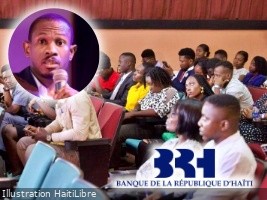
    In a significant move to revitalize Haiti’s economy, the Bank of the Republic of Haiti (BRH) unveiled its latest initiative, ‘Booster PME III,’ during the 11th Entrepreneurship Forum in Cap-Haïtien on December 4th, 2025. BRH Governor Ronald Gabriel underscored the critical role of Small and Medium Enterprises (SMEs) as \”one of the most powerful levers for revitalizing the Haitian economy,\\” highlighting their contribution to approximately 25% of the nation’s GDP and their vital function in job creation.\n\nExecutive Riphard Sérent detailed the program’s ambitious scope, which targets support for 300 businesses across three distinct regions of Haiti. The initiative will focus on a diverse range of sectors deemed essential for economic growth, including agriculture, agribusiness, tourism, crafts, and the emerging digital services industry.\n\nThe comprehensive support framework of Booster PME III is built on multiple strategic pillars designed to foster sustainable business development. These include financial empowerment through facilitated access to capital, intensive training and technical mentorship for project leaders, and a strong emphasis on improving financial literacy in alignment with the National Education and Training Plan (PNEF). The program also prioritizes enhancing governance standards within SMEs and specifically champions businesses established or managed by women, addressing gender disparities in entrepreneurship.\n\nFurthermore, the initiative strengthens Haiti’s financial inclusion objectives under the National Financial Inclusion Strategy (SNIF) initiated in 2014, while also working to improve SME accessibility to formal financial markets. This third phase represents the culmination of a sustained effort by the BRH, which has been intensifying its support for Micro, Small, and Medium Enterprises (MSMEs) for over four years through training, financing, and sector-specific research.\n\nWith the successful deployment of all three Booster PME phases, the central bank projects that it will have supported nearly 500 MSMEs by the conclusion of the 2025-2026 fiscal year, demonstrating its ongoing commitment to delivering concrete solutions that stimulate local growth and contribute to Haiti’s broader socio-economic transformation.

  • FLASH 2026 World Cup : Haiti knows its opponents

    FLASH 2026 World Cup : Haiti knows its opponents

    In a highly anticipated draw held on December 5th, 2025, FIFA has unveiled the group stage matchups for the expanded 48-team 2026 World Cup. Haiti’s national team, known as the Grenadiers, finds itself placed in the formidable Group C alongside football powerhouses Brazil and Morocco, plus European contender Scotland.

    The five-time World Champion Brazilian squad enters the tournament with a 5.2% probability of lifting the trophy according to FIFA’s statistical models. Morocco, the impressive 2022 World Cup semi-finalists representing African football’s growing strength, carries a 1.1% chance of ultimate victory.

    Haiti returns to the global football stage with immense national pride despite receiving a 0% probability rating from FIFA’s prediction algorithms. Scotland, recognized for their disciplined and competitive European style, registers a minimal 0.2% chance in the statistical forecast.

    Historical match data reveals challenging precedents for the Caribbean nation. The Grenadiers have suffered four consecutive defeats against Brazil in senior team encounters, with the most recent meeting ending 7-1 in 2016. Notably, Haiti has never faced either Morocco or Scotland in any previous international fixture.

    The complete tournament schedule featuring all 104 matches will be announced on December 6th, 2025, with final match details to be confirmed in March 2026 pending the outcome of remaining qualification playoffs. According to FIFA projections, Spain (17%), France (14.1%), and England (11.8%) currently rank as the three most probable champions of the 2026 World Cup.

  • Elections : Meeting on the political participation of women

    Elections : Meeting on the political participation of women

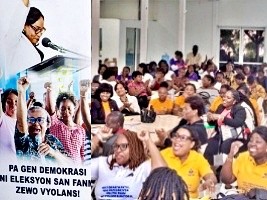
    PORT-AU-PRINCE, Haiti – In a significant move to strengthen democratic processes, Haiti’s Ministry of Women’s Affairs and Women’s Rights (MCFDF) convened a pivotal departmental conference on December 4th, 2025, at the Hotel Montana. The gathering, themed “No Democracy or Elections Without Women: Zero Violence!” (“Pa gen demokrasi ni Eleksyon San Fanm: Zewo Vyolans!”), marks the beginning of a nationwide campaign to empower Haitian women in the political arena and address systemic barriers to their participation.

    Minister Pedrica Saint Jean delivered a powerful address, asserting that Haiti’s democratic renewal is inextricably linked to women’s inclusion. “There is no democracy without women,” she declared, framing the conference’s mission to conduct a departmental assessment, document instances of electoral violence, gather local testimonies, mobilize community stakeholders, and develop context-specific solutions.

    The Minister highlighted numerous persistent challenges facing women in politics, including intimidation campaigns, physical and psychological threats, digital harassment, and systematic marginalization within political party structures. These obstacles, she noted, not only suppress female representation but fundamentally weaken the nation’s democratic foundations.

    International support was evident through UN Women Representative Marie Goretti Ndwayo, who commended Haitian women’s resilience amid political and security crises. She reinforced that women’s political engagement serves as a critical catalyst for national progress.

    Electoral Advisor Yves Marie Édouard and Minister Delegate for Electoral and Constitutional Issues Joseph André Gracien Jean both emphasized the necessity of enhancing security measures to create safe environments for women’s political involvement, free from fear of violence or coercion.

    The conference featured expert panels delving into themes of political participation and electoral violence, followed by interactive workshops where participants shared experiences and formulated actionable recommendations. This inaugural West Department meeting initiates a series of ten departmental conferences scheduled to conclude on December 10th, culminating in a National General Assembly on women’s political participation in Les Cayes from December 12-14.

  • Politic : Marco Rubio urges Nations to support the GSF

    Politic : Marco Rubio urges Nations to support the GSF

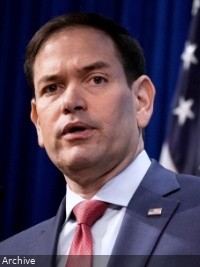
    In a significant diplomatic move on December 4th, 2025, U.S. Secretary of State Marco Rubio issued a compelling appeal for international collaboration to address the ongoing crisis in Haiti. Speaking at a high-profile signing ceremony at the State Department attended by Kenyan President William Ruto, Rubio urged nations across Latin America and the global community to contribute substantively to the Gang Suppression Force (GSF) initiative.

    This multinational security effort operates under the mandate of United Nations Security Council Resolution 2793, which was formally adopted on September 30, 2025. Rubio characterized Kenya’s involvement as demonstrating ‘an extraordinary, truly heroic role’ in stabilization attempts, setting a benchmark for international participation.

    The Secretary of State emphasized that unilateral efforts would prove insufficient, stating ‘We understand and believe they cannot do it by themselves.’ He explicitly called for both financial contributions and personnel deployments from partner nations, framing the situation as a test of global commitment to Haitian stability. Rubio quantified the need by suggesting that if five to ten countries committed resources equivalent to half of Kenya’s contribution, it would represent ‘an extraordinary achievement.’

    This appeal marks a strategic pivot in international approach to the Haitian crisis, transitioning from planning to operational implementation phases with heightened urgency for multilateral cooperation.