标签: Haiti

海地

  • FLASH : Detailed Baccalaureate Exam Schedule Dec. 2025

    FLASH : Detailed Baccalaureate Exam Schedule Dec. 2025

    Haiti’s education sector has commenced a significant academic undertaking with the initiation of the December 2025 Baccalaureate retake examinations. Starting Monday, December 15, 2025, approximately 44,460 candidates who previously failed their NSA and Philosophy components are participating in this critical testing period.

    The Ministry of National Education has released comprehensive examination schedules covering multiple academic streams. The testing framework encompasses four primary series within the S4 Baccalaureate program: Life and Earth Sciences (SVT), Mathematical and Physical Sciences (SMP), Economic and Social Sciences (SES), and Literature and Arts (LLA). Additionally, specialized Philosophy series (Philo A, Philo C, Philo D) are undergoing their respective examinations.

    The examination structure follows an intensive four-day format from Monday through Thursday, with morning sessions commencing at 8:30 AM and afternoon sessions beginning at 1:00 PM. Each academic series features distinct subject combinations with varying coefficients reflecting their academic weight. Core subjects including Philosophy, Chemistry, History and Geography, and specialized discipline-specific examinations are administered according to meticulously planned timelines.

    Subject coefficients demonstrate the relative importance of each examination, ranging from 100 to 400 points. The scheduling accounts for diverse linguistic requirements with English, Spanish, and Creole language examinations integrated throughout the testing period. Science-focused streams emphasize technical subjects including Physics, Mathematics, and Biology, while humanities-oriented series prioritize Social Sciences, Arts, and Literature components.

    This organized retake opportunity represents a crucial mechanism for educational advancement, allowing thousands of students to pursue academic certification and future opportunities through standardized assessment protocols.
  • FLASH : Terrorist attack plot

    FLASH : Terrorist attack plot

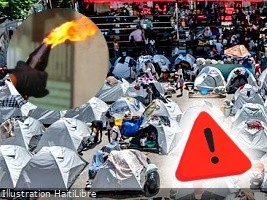
    Haitian authorities are on maximum alert following intelligence reports revealing an imminent terrorist plot against vulnerable populations in the capital. According to the Haitian National Police (PNH), extremist elements are preparing coordinated attacks using high-yield explosives and incendiary devices against internally displaced persons (IDP) camps in Port-au-Prince, with Bois-Verna district identified as a primary target.

    The intelligence division of PNH uncovered that the planned assault aims to generate widespread panic among civilians and undermine public confidence in national law enforcement capabilities. This calculated strategy seeks to destabilize security efforts and create chaos within the already fragile humanitarian infrastructure.

    In response to this critical threat, Haitian security forces have initiated comprehensive countermeasures. The police have deployed additional resources and implemented enhanced protective protocols around all IDP settlements. Surveillance operations have been intensified, with particular focus on intercepting potential attackers before they can execute their plans.

    The national police force has issued an official statement reaffirming its unwavering dedication to protecting civilian lives and property. “Our operational units remain fully engaged in combating armed criminal elements threatening national stability,” the statement read. “We are determined to maintain security for all Haitian citizens and restore lasting peace to our communities.”

    This security crisis develops amid ongoing nationwide efforts to combat gang violence that has displaced approximately 150,000 people throughout Haiti. The IDP camps, often overcrowded and under-resourced, represent particularly sensitive targets for groups seeking to amplify terror through attacks on humanitarian spaces.

    International observers have expressed grave concern over the escalating tactics employed by armed factions in Haiti. The attempted targeting of displaced populations marks a dangerous evolution in the conflict dynamics, indicating a willingness to violate fundamental humanitarian principles for political objectives.

    The police have urged residents to remain vigilant and report any suspicious activities to authorities immediately, while assuring that all necessary measures are being taken to neutralize the threat.

  • Gonaïves : Mission to evaluate the work of the Drinking Water Supply System

    Gonaïves : Mission to evaluate the work of the Drinking Water Supply System

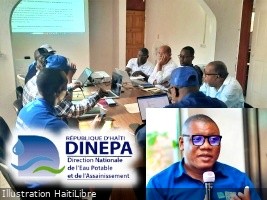
    In a significant move to address critical infrastructure delays, Haiti’s National Directorate of Drinking Water and Sanitation (DINEPA) has conducted a comprehensive evaluation mission of the Gonaïves Drinking Water Supply System rehabilitation project. Led by Director General Engineer Théophile Ostinvil, the inspection comes as part of the Grand-Nord Program—a major initiative funded by the Inter-American Development Bank (IDB) focusing on drinking water, sanitation, and hygiene improvements.

    The high-level delegation pursued dual objectives: assessing substantial construction delays that have pushed the project’s completion timeline to April 2026, and evaluating the performance of the Results-Based Technical Assistance program responsible for operational strengthening at the Gonaïves Technical Operations Center. The supervising firm TECINA received formal notice regarding these delays during the mission.

    This proactive governance approach aligns with DINEPA’s three strategic priorities: ensuring good sector governance, achieving financial autonomy through operational structures, and maximizing development within the drinking water and sanitation sector. The mission included technical meetings with both the Technical Assistance team and TECINA representatives to discuss project advancements and address field implementation challenges.

    Strategic decisions were made to enforce contractual commitments, particularly concerning the April 2026 amendment expiration. Director Ostinvil and his technical team conducted multiple site visits to evaluate rehabilitation progress, network expansion efforts, and the condition of hydraulic installations undergoing modernization.

    The intensified oversight demonstrates DINEPA’s renewed commitment to modernizing water infrastructure in Haiti’s strategic Grand-Nord region, particularly in densely populated Gonaïves where reliable drinking water access remains a pressing public need.

  • Politic : Intervention by Haitian Ambassador Lesly David at SELA

    Politic : Intervention by Haitian Ambassador Lesly David at SELA

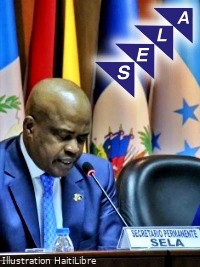
    In a landmark address at the 51st Ordinary Session of the Latin American and Caribbean Economic System (SELA), Haiti’s Ambassador Lesly David charted a bold course for regional cooperation. The session, convened in Caracas, Venezuela on December 11, 2025, marked a historic moment as Ambassador David, who also serves as Haiti’s envoy to Colombia and Ecuador, addressed the ministerial meeting in his new capacity as the elected Permanent Secretary of SELA—the first Haitian national to hold this prestigious position.

    Ambassador David positioned regional integration as ‘the most powerful tool’ available to counter global uncertainties, emphasizing that this approach transcends mere economic considerations. ‘It is not just about the economy, but about building collective unity, even from our differences,’ he declared before the assembly of member state representatives. The diplomat highlighted the paradoxical reality of a resource-rich region of approximately 660 million inhabitants that simultaneously remains ‘the most unequal region on the planet.’

    Drawing attention to persistent structural challenges, David noted that ‘millions of our citizens still live in poverty, and extreme poverty, remaining at alarming levels, particularly affecting women, young people and vulnerable communities.’ In response to these pressing issues, he presented the Permanent Secretariat’s Work Programme as a ‘concrete response to these challenges, a roadmap that transforms good intentions into measurable actions.’

    The comprehensive strategy rests on three foundational pillars: economic recovery, social development, and digitalization with infrastructure modernization. For economic revitalization, SELA committed to aggressively advance trade facilitation measures and organize the ‘Third China-Latin America and Caribbean Investment Cooperation Forum’ to attract essential foreign resources and technologies.

    Regarding social development, the organization will prioritize poverty eradication initiatives, formulate cooperative development policies, and implement virtual workshops focused on educational strategies for integrating migrant women and girls. These efforts specifically aim to transform migration from a potential source of exclusion into a development opportunity incorporating gender perspective frameworks.

    Concerning digital transformation, SELA pledged to promote comprehensive digitalization and develop sustainable, intelligent infrastructure throughout the region. Ambassador David emphasized that ‘modern infrastructure is the essential platform for the digital economy and that the synergy between these two pillars is crucial for development.’

    The session reaffirmed SELA’s continuing role as a principal mechanism for fostering regional integration through intra-regional cooperation, ultimately aiming to stimulate economic recovery and comprehensive development across Latin America and the Caribbean.

    Established in 1975 and headquartered in Caracas, Venezuela, SELA represents 28 member states after five decades of continuous operation. The organization specializes in promoting economic coordination, developing unified strategies for international engagement, and strengthening South-South cooperation through its recognized international legal personality.

  • Environment : Illegal exploitation of the Laboule quarries

    Environment : Illegal exploitation of the Laboule quarries

    The Haitian Ministry of Environment has issued a stern warning regarding persistent illegal quarrying activities in the geologically vulnerable Laboule region of Pétion-ville. Environment Minister Moïse Fils Jean Pierre confirmed that despite recent coordinated interventions with judicial and police authorities, unauthorized extraction operations continue to threaten the area’s stability.

    According to environmental assessments, the Laboule zone exhibits significant geological fragility with heightened susceptibility to devastating landslides and rockfalls. These conditions present imminent dangers to both property and human safety, prompting renewed regulatory action.

    The Ministry has clarified the constitutional foundation for its enforcement measures, citing Article 36.5 of Haiti’s amended 1987 Constitution which designates all mines and quarries as property of the state’s public domain, explicitly excluding them from private ownership claims.

    Environmental compliance requirements mandate that all quarry operations must adhere to protection standards outlined in Article 253 of the Constitution and Article 64.8 of the 2006 Framework Decree on Environmental Management and Citizen Conduct. Operators are further required to obtain formal authorization through an Operating Permit from the Bureau of Mines and Energy (BME) and the Ministry of Public Works and Communications (MTPTC), complemented by an Environmental No Objection Certificate issued directly by the Ministry of Environment.

    The prohibition on quarrying in these sensitive areas, initially established in 2010 and reaffirmed in both 2016 and 2021, remains fully enforceable. Minister Jean Pierre emphasized the government’s commitment to rigorous enforcement through judicial channels, warning that violators would face prosecution in collaboration with law enforcement agencies. The Ministry simultaneously appealed to operators’ civic responsibility, urging voluntary compliance in the interest of public safety and environmental preservation.

  • FLASH : 18 countries ready to deploy security forces to Haiti

    FLASH : 18 countries ready to deploy security forces to Haiti

    In a significant development for Haitian security, Organization of American States Secretary General Albert Ramdin confirmed on December 12, 2025 that eighteen nations have committed personnel to the newly established Gang Suppression Force (GSF). This multinational security initiative, authorized by the UN Security Council, will replace the previous Multinational Security Support Mission (MMSS) with a comprehensive strategy to address Haiti’s escalating gang violence.

    The international coalition will deploy approximately 5,500 personnel, primarily consisting of police and military units, following a roadmap developed under United States guidance. African nations are contributing the majority of forces, with additional support from Asian countries including Sri Lanka and Bangladesh, alongside several unnamed Latin American partners.

    Ramdin emphasized the operational challenges of integrating diverse international forces: ‘Eighteen countries have committed to providing forces. The key is that they all work together according to the same rules and regulations. That’s why the establishment of this new force is taking so long due to necessary training requirements.’

    The deployment will occur in phased increments rather than waiting for full force readiness. An initial contingent of 1,000 personnel is anticipated to deploy as early as January 2026, with approximately half of the total force expected to be operational by April 1st. This timeline coincides with the activation of the United Nations Support Office in Haiti (BANUH).

    The GSF’s strategic objectives include rapid intervention to mitigate gang impact, direct engagement with armed groups, and targeted operations to capture or neutralize gang leadership. The force represents the international community’s robust response to Haiti’s security crisis, building on existing efforts including Kenya’s recent deployment of a fifth police contingent to maintain pressure on criminal organizations.

  • Justice : Unwarranted search of the residence of Port-au-Prince Mayor Ralph Youri Chevry

    Justice : Unwarranted search of the residence of Port-au-Prince Mayor Ralph Youri Chevry

    Port-au-Prince Mayor Ralph Youri Chevry has publicly condemned an early morning police raid on his private residence that he claims violated constitutional protections and standard legal procedures. The incident occurred between 6:00 and 7:00 a.m. in the Juvenat neighborhood, involving multiple armed police units under the direction of Government Commissioner Fritz Patterson Dorval.

    According to Mayor Chevry, the operation began with gunshots that awakened him and resulted in the unjustified killing of his dog. He emphasized that no search warrant was presented despite his repeated requests, and no formal charges were brought against him during the nearly three-hour operation. One of his security agents was temporarily arrested but later released in the Delmas area.

    The police confiscated several weapons assigned to the mayor’s security detail, including a Galil AC 22 (Taurus), a T4, an AR-15 rifle, along with ammunition, a communication radio, and a surveillance drone.

    In his official statement, Mayor Chevry cited Article 24.1 of Haiti’s 1987 Constitution, which establishes the inviolability of homes and requires that any search be conducted according to legally prescribed procedures. He further referenced the Code of Criminal Procedure, which mandates that searches must be authorized by a competent judge, accompanied by a reasoned warrant, and executed in the presence of witnesses.

    Despite what he characterized as procedural violations, Chevry stated that he cooperated ‘calmly and responsibly’ during the operation, acknowledging the ‘specific circumstances’ while reaffirming his commitment to the rule of law, legal procedures, and transparency. The mayor emphasized his continued devotion to Port-au-Prince and Haiti, promising to provide further clarification through appropriate legal channels with his counsel.

    He concluded by urging respect for established facts to prevent ‘confusion or manipulation’ of the incident, which raises significant questions about police procedures and constitutional protections in Haiti’s ongoing governance challenges.

  • FLASH : DHS terminates Humanitarian Parole and Family Reunification programs for Haiti

    FLASH : DHS terminates Humanitarian Parole and Family Reunification programs for Haiti

    In a significant immigration policy shift, the Department of Homeland Security has announced the termination of all categorical Family Reunification Parole (FRP) programs for nationals from seven countries, including Haiti, Colombia, Cuba, Ecuador, El Salvador, Guatemala, and Honduras. The decision, effective immediately, marks a dramatic reversal from previous administration policies.

    The DHS justification centers on addressing what it characterizes as systemic vulnerabilities in the humanitarian parole system. Administration officials contend that the FRP programs enabled insufficiently vetted individuals to bypass established immigration protocols, creating potential national security risks. The department emphasized that parole authority was never intended for broad categorical use but rather for individualized case assessments as originally mandated by Congress.

    According to the federal notice published in the Federal Register, current FRP beneficiaries will see their parole status terminate on January 14, 2026, unless they have pending Form I-485 applications postmarked by December 15, 2025. Those with pending applications may maintain parole status until either their parole period expires or USCIS renders a final decision on their adjustment of status application.

    The policy change carries substantial implications for employment authorization, as termination of parole status will automatically revoke work permits derived from that parole. DHS has committed to providing individual notifications to affected persons regarding both parole termination and employment authorization revocation.

    The department is implementing a structured departure process, encouraging individuals without lawful status after program termination to utilize the CBP Home application to coordinate their departure. Financial incentives including exit bonuses, travel document assistance, and civil fine forgiveness are being offered to qualifying individuals who voluntarily depart by the established deadline.

  • Politic : Laurent Saint-Cyr, on an official trip to Washington D.C.

    Politic : Laurent Saint-Cyr, on an official trip to Washington D.C.

    WASHINGTON D.C. – In a significant diplomatic move, Haiti’s Interim President and Transition Council Coordinator Laurent Saint-Cyr commenced a pivotal two-day mission to the United States capital on December 11, 2025. This high-stakes visit represents a crucial effort by Haiti’s transitional leadership to address the nation’s multifaceted crisis through international cooperation.

    The Washington mission focuses on securing essential international backing for two critical initiatives: the rapid deployment of the Gang Suppression Force (GSF) and the comprehensive implementation of the Organization of American States (OAS) Roadmap. These parallel efforts constitute the foundation of Haiti’s strategy to restore national security and establish conditions conducive to democratic processes.

    This diplomatic engagement follows productive discussions held in New York on December 9 regarding international contributions to the GSF, where several nations and global partners expressed concrete support for the security initiative. During his Washington visit, Saint-Cyr will participate in the OAS-convened Group of Friends of Haiti meeting alongside numerous high-level bilateral, regional, and multilateral discussions.

    The agenda centers on three priority areas: enhancing security measures, coordinating humanitarian response efforts, and establishing frameworks for credible electoral processes. The OAS Roadmap, developed through collaborative dialogue between the international organization and Haitian authorities, will feature prominently in all negotiations.

    Saint-Cyr emphasized the Transitional Council’s dedication to strengthening strategic alliances and reinvigorating Haiti’s diplomatic presence to effectively combat the security crisis, protect vulnerable populations, and create necessary conditions for free and inclusive elections. The interim president is scheduled to return to Port-au-Prince on December 13, 2025, following the conclusion of these critical diplomatic meetings.

  • FLASH : New ! Fully refundable tickets, fast and hassle-free with Sunrise Airways

    FLASH : New ! Fully refundable tickets, fast and hassle-free with Sunrise Airways

    In a groundbreaking move for Caribbean aviation, Haiti-based Sunrise Airways has partnered with global travel services leader Protect Group to eliminate one of the region’s most persistent travel frustrations: inaccessible flight refunds. The collaboration introduces Refund Protect, an innovative service that guarantees immediate, hassle-free reimbursements for canceled flights under unforeseen circumstances.

    The service addresses long-standing challenges faced by Caribbean travelers who traditionally encountered complex paperwork and prolonged waiting periods when seeking compensation for disrupted travel plans. Through this partnership, passengers booking with Sunrise Airways can now opt for Refund Protect during the reservation process on the airline’s website.

    Refund Protect covers a comprehensive range of scenarios including personal emergencies, sudden illness, travel restrictions, and other unexpected disruptions. The system operates with remarkable efficiency: travelers receive direct, full ticket reimbursements minus a nominal service fee, completely bypassing traditional claims procedures that often involve extensive documentation and processing delays.

    The service availability extends to both domestic passengers within Haiti and international travelers visiting Caribbean destinations. Whether flying to Cuba, the Bahamas, or other regional hotspots, passengers can now book with unprecedented confidence, knowing their investment remains protected against unpredictable events.

    This strategic initiative positions Sunrise Airways as a forward-thinking leader in Caribbean aviation, potentially setting new industry standards for customer protection and service innovation. The move comes at a critical time when travel uncertainty remains a significant concern for both regional and international travelers exploring Caribbean destinations.

    The implementation reflects growing awareness within the aviation industry that flexible booking options and financial protection have become essential components of modern travel services, particularly in regions prone to unexpected disruptions and changing travel conditions.