标签: Haiti

海地

  • USA : Internationalization of the UEH

    USA : Internationalization of the UEH

    In a significant stride toward educational advancement, Elms College of Massachusetts and Haiti’s State University (UEH) have formalized a groundbreaking partnership through a memorandum of understanding signed this week. The ceremony, held at Elms College’s Merci Marlène and Jacques Louis Dumay Living-Learning Community and Cultural Center, brought together President Harry Dumay and Rector Dieuseul Prédélus alongside academic leaders, faculty members, and representatives from the Kellogg Program.

    The collaboration establishes an innovative continuing education program specifically designed for the professional development of Haitian educators, with particular focus on the UEH’s École Normale Supérieure (ENS) – Haiti’s historic institution for teacher training. Leveraging Elms College’s specialized expertise through its Division of Education and Center for Equity in Urban Education, the initiative will equip Haitian teachers with contemporary pedagogical approaches tailored to current educational challenges.

    Rector Prédélus characterized the agreement as a “historic moment” that signals the beginning of a strategic collaboration aligned with an ambitious vision: transforming UEH into a modern, competitive institution committed to international academic standards while maintaining deep roots in Haitian realities. He emphasized that “academic excellence cannot be decreed; it is built daily through rigorous work, intellectual openness, and continuous improvement.”

    The partnership represents a complementary alignment of strengths – Elms College contributes its technical expertise in teacher training methodologies, while UEH provides contextual understanding of Haiti’s specific educational needs and challenges. This cooperative model aims to create a multiplier effect where enhanced trainers will subsequently contribute to sustainably elevating Haiti’s entire education system through proven teaching methods and strengthened pedagogical skills.

    This agreement marks a new phase in UEH’s internationalization efforts, initiated under the leadership of its new Executive Council, demonstrating the institution’s commitment to global educational engagement while addressing national development priorities.

  • Politic : Caribbean countries call on the EU to strengthen its support for Haiti

    Politic : Caribbean countries call on the EU to strengthen its support for Haiti

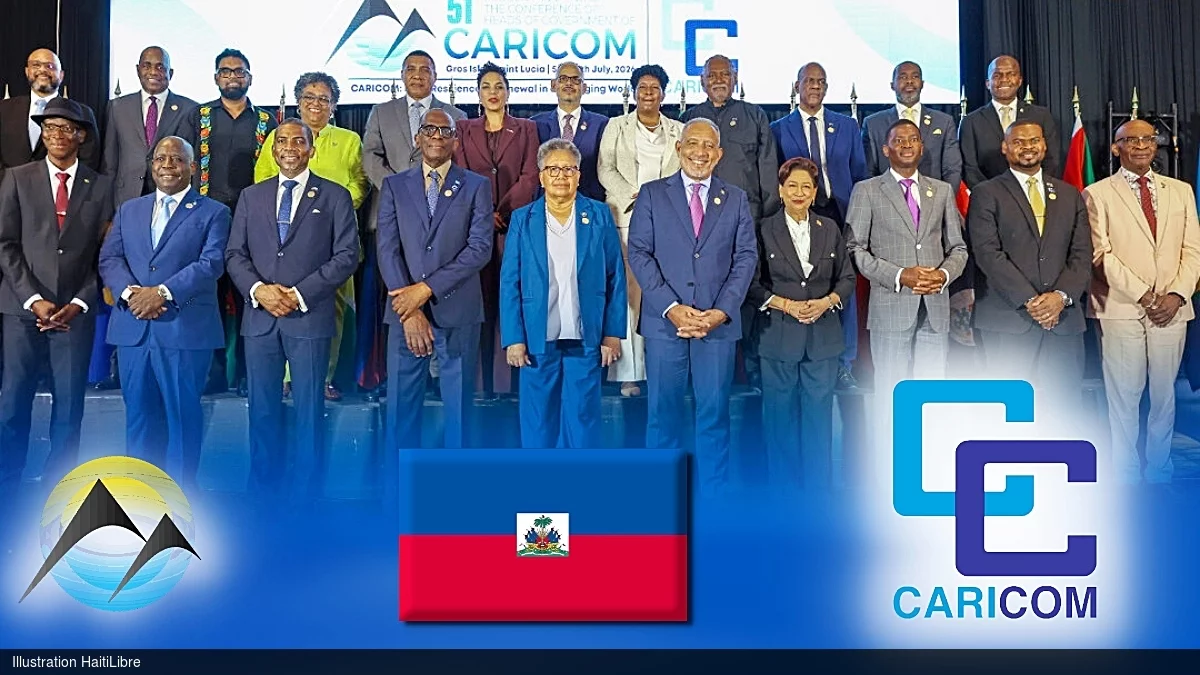
    ANTIGUA AND BARBUDA – Caribbean leaders have issued a compelling appeal to the European Union to significantly enhance its support package for Haiti during the inaugural plenary session of the Caribbean-EU Parliamentary Assembly (February 16-18, 2026).

    Gaston Browne, Prime Minister of Antigua and Barbuda, championed the regional initiative, advocating for a strategic partnership that transcends conventional trade relationships. He articulated that international law represents a fundamental necessity rather than a discretionary option for small states navigating complex global challenges.

    The Prime Minister emphasized the critical need for multidimensional security assistance, specifically calling for EU support in stabilizing Haiti’s security apparatus, facilitating free electoral processes, and restoring democratic governance. He underscored that the Caribbean Community (CARICOM) remains committed to legitimate, transparent progress led by Haitian stakeholders with international cooperation.

    Browne elaborated that effective intervention must address interconnected challenges including food and energy security, healthcare infrastructure, and protection against transnational criminal networks. ‘The security situation must be brought under control to alleviate the suffering of the Haitian people and enable free and fair elections,’ he stated, adding that comprehensive governance restoration requires holistic international engagement rather than isolated interventions.

    The assembly marks a significant diplomatic effort to reframe EU-Caribbean relations as a comprehensive partnership addressing both developmental and security concerns, with Haiti’s ongoing crisis representing an urgent priority for regional stability.

  • Security : Rotation of Guatemalan troops

    Security : Rotation of Guatemalan troops

    In a significant demonstration of international solidarity, Guatemala has executed a strategic rotation of its specialized military police forces within the multinational security mission in Haiti. The Central American nation, which initially deployed 150 personnel in January 2025, continues its steadfast commitment to regional stabilization efforts alongside contributions from Kenya, El Salvador, Jamaica, and the Royal Bahamas Defence Force.

    The Guatemalan contingent, distinguished by its specialized infrastructure protection mandate, has undertaken critical responsibilities including security for mission headquarters, dignitary protection, and civilian support operations. This deployment represents more than mere numerical contribution—it embodies a profound regional partnership between Central American and Caribbean nations confronting complex security challenges through collective action.

    The rotation operation, conducted on February 14 and 16, 2026, featured an official flag handover ceremony at Toussaint Louverture International Airport presided over by Chief of Defence Staff José Giovani Martínez. The newly deployed units bring enhanced operational expertise, reinforced discipline, and sharpened tactical focus to strengthen the Gang Suppression Force (GRF) during a pivotal phase of its mandate.

    The formal welcoming ceremony for incoming personnel occurred on March 18, 2026, at LSA1 under the leadership of GRF Commander Godfrey Otunge and senior mission directors. Commander Otunge expressed profound gratitude to Guatemala for its unwavering commitment, praising the professionalism and discipline exhibited by its officers. He emphasized the strategic value of diversity within the multinational force, noting how cultural differences foster cooperation and mutual learning among partner nations.

    This rotational deployment ensures operational continuity while injecting renewed energy and capability into the international security effort, reflecting the ongoing structured approach to achieving full operational capability in Haiti’s stabilization mission.

  • U-17 World Cup Morocco 2026 : Final qualifying round, our Grenadières know their opponents (Schedule)

    U-17 World Cup Morocco 2026 : Final qualifying round, our Grenadières know their opponents (Schedule)

    The path to the FIFA U-17 Women’s World Cup Morocco 2026 has been formally established following the official draw ceremony conducted by CONCACAF on February 18, 2026. The Confederation of North, Central American and Caribbean Association Football finalized the tournament groups at its headquarters in Miami, setting the stage for the decisive qualifying round scheduled for March 6-22 in Costa Rica.

    Twelve national teams have advanced to this critical qualification phase, including Haiti, Canada, the United States, Mexico, Jamaica, Puerto Rico, Bermuda, Costa Rica, El Salvador, Nicaragua, Panama, and the Dominican Republic. These teams were distributed into three distinct groups of four through the drawing process.

    The Haitian U-17 women’s squad, affectionately known as Les Grenadières and under the technical direction of French coach Frenoy Baptiste, was placed in Group B. Their group stage opponents will include the traditionally strong United States team, alongside Puerto Rico and Bermuda.

    Haiti enters this tournament phase with considerable momentum, having achieved a flawless performance in the preliminary qualifying round. The team secured four consecutive victories, earning maximum points from their matches while demonstrating offensive prowess and defensive stability. Their dominant performance included a decisive 3-0 victory against Guatemala that secured their advancement to this final qualifying stage.

    The upcoming tournament format will award four coveted berths to the World Cup finals. Automatic qualification will be granted to each of the three group winners, with an additional spot allocated to the highest-performing runner-up across all groups.

    Haiti’s Group B match schedule is as follows:
    – March 17, 2026: Haiti versus Puerto Rico
    – March 19, 2026: Haiti versus United States
    – March 22, 2026: Haiti versus Bermuda

    The upcoming matches represent Haiti’s opportunity to secure historic qualification for the U-17 Women’s World Cup, scheduled to take place in Morocco during October-November 2026.

  • Politic : ANESRS to Take Control of Higher Education in the Country

    Politic : ANESRS to Take Control of Higher Education in the Country

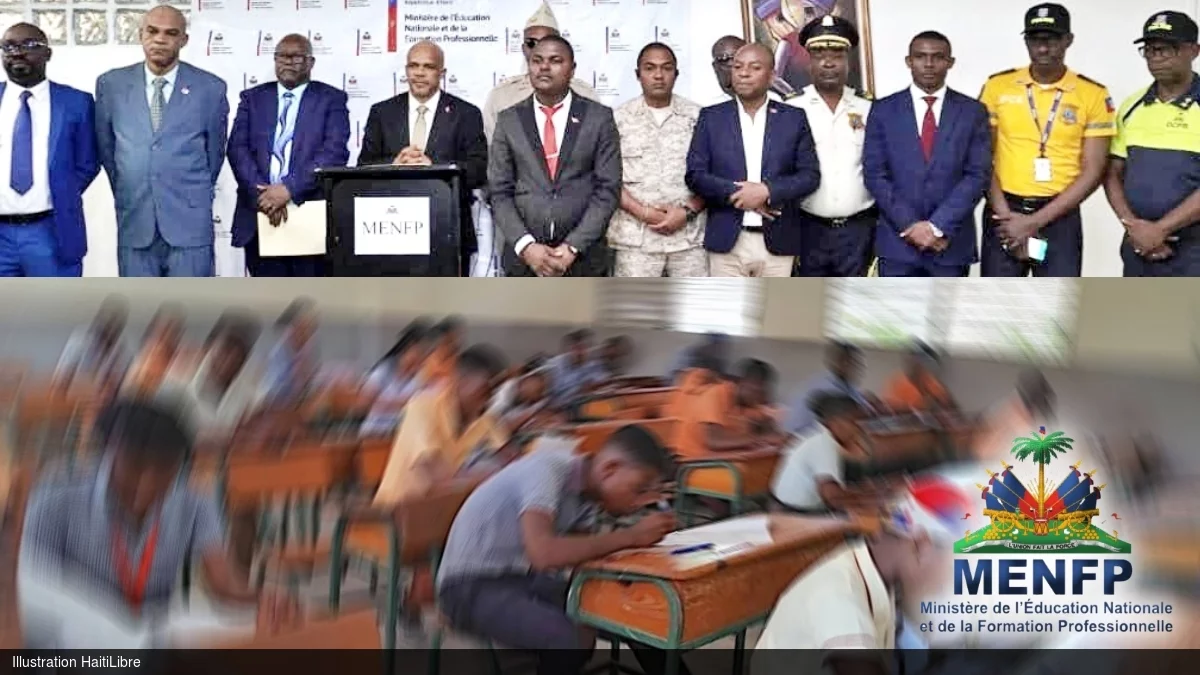
    Haiti’s educational landscape is undergoing a significant transformation as the newly created National Agency for Higher Education and Scientific Research (ANESRS) assumes comprehensive control over the nation’s tertiary education system. The Ministry of National Education and Vocational Training has officially announced that all matters pertaining to higher education and scientific research now fall under ANESRS’s jurisdiction.

    Established through a presidential decree in December 2025 and formally inaugurated on January 14, 2026, by the Presidential Transitional Council, ANESRS represents a monumental shift in Haiti’s educational governance. The agency will be responsible for standardizing academic programs, establishing faculty competency benchmarks, allocating research funding, and validating degrees and curricula across all public and private higher education institutions.

    According to Delima Pierre, Director General of the National Office for Partnership in Education, the agency’s primary mission is to regulate, harmonize, and elevate the quality of higher education and research throughout Haiti. This initiative aims to modernize academic governance and stimulate scientific innovation within the country’s educational framework.

    The Ministry of National Education will continue processing existing cases until February 27, 2026, after which all administrative, academic, and informational inquiries must be directed to ANESRS’s General Secretariat at their temporary headquarters in Delmas 83 or via email at desrs@menfp.gouv.ht.

    However, this restructuring has faced opposition from the Council of the State University of Haiti (CUEH), which has publicly denounced and contested the new entity. The seven-member ANESRS council includes representatives appointed by the executive branch, university leadership, educational ministry, scientific associations, and employer organizations, with Dr. Hérold Toussaint serving as president.

  • Economy : All the details on the digitized Professional Identity Card (CIP)

    Economy : All the details on the digitized Professional Identity Card (CIP)

    In a significant move to formalize its predominantly informal economy, Haiti has launched a digitized Professional Identity Card (CIP) system through the Ministry of Commerce and Industry. This initiative, supported by the Inter-American Development Bank, represents a pragmatic approach to addressing administrative challenges that have long hampered economic development.

    The digital CIP platform (guichet.mci.ht/cip) specifically targets individual entrepreneurs and sole proprietorships—the backbone of Haiti’s economy where over 80% of employment remains informal according to UNDP 2021 data. These micro-entrepreneurs, who regularly buy, sell, and provide services, now have a streamlined process for obtaining professional certification.

    The application process involves five key steps: creating an online account, uploading required documents (including national ID and tax number), digital payment via mobile money services MonCash or NatCash, online tracking with QR code verification, and final physical card collection from ministry offices.

    While currently excluding corporate entities, the system delivers tangible benefits including reduced processing times, decreased physical travel to government offices, enhanced payment traceability, and improved accessibility for unbanked entrepreneurs. These advantages are particularly valuable in a context where mobility constraints and administrative delays have traditionally discouraged formalization.

    However, the reform faces structural challenges including limited scope for complex business structures, underdeveloped data protection frameworks, restricted payment options, and need for better integration with other registration systems. The initiative also highlights the important distinction between the CIP (economic formalization tool) and Haiti’s National Identification Card (civil and political identity document).

    This digital transformation represents a gradual but meaningful step toward bringing Haiti’s significant informal sector—estimated to constitute over 50% of GDP—into the formal economy while adapting to local realities and constraints.

  • Football : Know all about the 2026 CONCACAF U-20 Championship

    Football : Know all about the 2026 CONCACAF U-20 Championship

    The road to the 2026 CONCACAF U-20 Championship officially commences with an intensive qualifying tournament that will determine which nations advance to the main event. Thirty-two member associations ranked 7th through 41st within the Confederation of North, Central American and Caribbean Association Football will compete for six coveted spots in the championship tournament.

    The qualification matches are scheduled to unfold across three host nations—Costa Rica, Curaçao, and Nicaragua—from February 23 through March 4, 2026. The competitive format will see the winner of each group secure automatic qualification to join the six pre-seeded nations: United States, Mexico, Honduras, Panama, Cuba, and Guatemala.

    Haiti’s U-20 national team, known as the Grenadiers, has been placed in Group D alongside Curaçao, Guyana, Saint Vincent and the Grenadines, and Anguilla. All of Haiti’s group stage matches will be held at the Rinaldo Jean Francisca Stadium in Willemstad, Curaçao. Their campaign begins on February 26 against Anguilla, followed by fixtures against Saint Vincent and the Grenadines (February 28), Guyana (March 2), and concludes with a decisive match against group hosts Curaçao on March 4.

    The culminating 12-team CONCACAF U-20 Championship is scheduled for summer 2026, running from July 25 to August 9. This tournament carries significant stakes as it will serve as the qualifying pathway to both the 2027 FIFA U-20 World Cup and the 2028 Summer Olympic Games. The championship format will feature three groups of four teams, with the top two from each group plus two best third-place finishers advancing to knockout rounds.

    CONCACAF has announced that further details regarding the host country for the final championship and the official draw will be disclosed at a later date.

  • Justice : RNDDH denounces the absurd, illegal, and arbitrary nature of 4 wanted issued by the DCPJ

    Justice : RNDDH denounces the absurd, illegal, and arbitrary nature of 4 wanted issued by the DCPJ

    PORT-AU-PRINCE, Haiti – The National Network for the Defense of Human Rights (RNDDH) has issued a scathing condemnation of four arrest warrants published by Haiti’s Central Directorate of the Judicial Police (DCPJ), labeling them as fundamentally flawed and legally unsound.

    The controversial warrants target four individuals: Arnel Belizaire (accused of financing terrorism, attacks, and conspiracy against state security), Ralph Youri Chevry (former President of Port-au-Prince Municipal Council facing similar charges), Smith Joseph (a member of presidential advisor Fritz Alphonse Jean’s cabinet charged with money laundering and terrorism financing), and Édouard Julcene (former Director of Port-au-Prince Customs Administration accused of illegal firearms trafficking, money laundering, and tax fraud).

    RNDDH’s analysis reveals critical procedural deficiencies in the DCPJ’s actions. The organization notes that none of the accused individuals were formally summoned prior to the issuance of warrants, violating fundamental judicial principles. Furthermore, comprehensive reviews of investigation reports from Haiti’s Central Unit for Economic and Financial Intelligence (UCREF) and the Anti-Corruption Unit (ULCC) show no records implicating the named individuals in the alleged crimes.

    The human rights organization particularly highlighted the case against Arnel Belizaire, describing the warrant as ‘a farce’ given his documented close relationship with DCPJ’s current director, Divisional Commissioner Justin Marc. According to RNDDH, Belizaire has maintained regular access to the judicial police institution since September 2025.

    RNDDH emphasized that proper judicial guarantees – including presumption of innocence, detailed notification of charges, and right to fair trial – must govern all investigations. These protections are enshrined not only in Haiti’s Constitution but also in international human rights instruments ratified by the country.

    The organization concluded that the DCPJ’s actions represent a dangerous politicization of judicial processes and recommended immediate suspension of the warrants pending proper legal procedures.

  • Sport : The D1 Trophy, a Reward, Technology and Excellence

    Sport : The D1 Trophy, a Reward, Technology and Excellence

    In a landmark moment for Caribbean football, the Haitian Football League (LHF) has introduced an extraordinary championship trophy that transcends conventional sports awards. This revelation comes following the thrilling conclusion of the National D1 Championship final on February 14, 2026, where Baltimore SC secured a 2-1 victory against Violette AC at Parc Sainte-Thérèse in Pétion-Ville.

    The newly unveiled trophy represents a profound synthesis of Haitian football heritage and technological innovation. Crafted from precision-machined 6061 aluminum with polished plating and laser-engraved details, the award stands 40.6 cm tall with an 11.4 cm diameter. Its design features an elegant ascending pillar symbolizing growth, ambition, and resilience—core values that characterize both the league and the Haitian spirit.

    American trophy specialist Bennett Awards, renowned for their five-decade legacy in creating awards for global sports, business, and entertainment entities, engineered this masterpiece. The trophy’s faceted architecture and openwork details pay homage to the deep community roots that sustain Haitian football, with each angle narrating a unique story of connection and achievement.

    Beyond its physical presence, the trophy embodies the highest ideals of athletic excellence. It recognizes not merely victory but the discipline, passion, and sacrifice required to reach footballing supremacy. When champions raise this award, they shoulder the pride of their cities, the weight of Haitian football history, and the aspirations of future generations.

    The LHF emphasizes that this is more than a trophy—it is a legacy artifact manufactured to international standards that honors the finest achievements in Haitian football while inspiring continued excellence across the sport.

  • Health : «An incarcerated person is not condemned to die of illness»

    Health : «An incarcerated person is not condemned to die of illness»

    In a groundbreaking humanitarian effort, Haiti’s Nippes Health Directorate (DSNI) has launched a transformative mobile healthcare initiative targeting incarcerated individuals at the Anse-à-Veau prison facility. This pioneering program represents a significant advancement in equitable healthcare access for one of the nation’s most vulnerable populations.

    The comprehensive medical outreach, conducted earlier this month, brought essential healthcare services directly to Haiti’s largest departmental penitentiary. Medical professionals provided critical consultations, conducted thorough health assessments, and distributed vital medications to address widespread health concerns among the inmate population. Patients presenting with influenza, fever, tuberculosis, and various common ailments received immediate medical attention, generating overwhelming satisfaction and gratitude among recipients.

    Dr. Esther Ceus Dumont, Director of DSNI, personally oversaw the initiative, emphasizing the fundamental principle guiding this mission: “An incarcerated person is not condemned to die of illness.” She articulated that while prison serves as a place for serving sentences, it should never become a site of medical neglect or torture through healthcare deprivation.

    The program extends beyond immediate medical intervention. In a follow-up technical assessment on February 12, health officials returned to evaluate the prison’s sub-center conditions, initiating plans for enhanced sanitation protocols and strengthened healthcare infrastructure. This dual approach combines curative treatment with preventive measures and structural improvements.

    Prison authorities have enthusiastically endorsed the initiative, acknowledging the critical importance of addressing substantial healthcare needs within correctional facilities. The DSNI’s program demonstrates an unwavering commitment to nondiscriminatory quality healthcare and reinforces community-based services for vulnerable populations throughout the Nippes department.