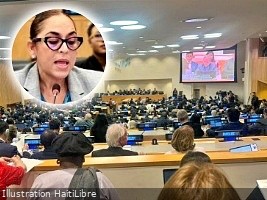
Against the backdrop of ongoing political and security volatility in the Caribbean nation, Haiti’s top foreign policy leadership has taken the global stage at the United Nations to outline the country’s evolving approach to migration management. From May 5 to 8, 2026, the 2nd International Migration Review Forum is convening at UN Headquarters in New York, with Haitian Foreign Minister Raina Forbin and Minister of Social Affairs and Labor Marc-Elie Nelson leading the country’s official delegation to the high-level global gathering.
In a series of public remarks and diplomatic engagements throughout the forum, Forbin underscored that migration has risen to the status of a core national priority for the Haitian government, which has maintained consistent, long-term focus on addressing the interconnected challenges of cross-border movement, internal displacement, and citizen protection. She detailed the wide-ranging structural reforms Port-au-Prince has implemented in recent years, centering on overhauls to the national citizen documentation and identification system—an foundational step for formalizing migration governance, enabling access to public services, and reducing vulnerability to exploitation. Beyond administrative reforms, Forbin noted that the government has also ramped up efforts to streamline the regulation of migration flows, shore up border security infrastructure and protocols, and disrupt the operations of transnational criminal networks that profit from Haiti’s unstable security environment.
Forbin emphasized that these domestic reforms cannot deliver meaningful results without robust backing from the international community. She issued a clear call for global partners to step up their support for Haiti’s efforts to reestablish nationwide security, specifically urging the full, rapid deployment of the UN-backed Gang Suppression Force (GSF). The deployment of this stabilization force, she argued, is the critical first step to creating the secure conditions needed for long-term political stability and the organization of inclusive, credible national elections in Haiti. Forbin also called for coordinated global action to intensify the crackdown on transnational criminal groups that engage in migrant smuggling and human trafficking, criminal enterprises that deliberately exploit the economic insecurity and instability facing millions of Haitian citizens.
“Our ambition is clear: to ensure that every Haitian is protected and respected, wherever they may be, and to create the conditions so that migration is a choice, not a necessity,” Forbin told forum attendees.
The foreign minister also added a key priority for Haiti’s migration policy: the humane treatment of Haitian migrants returning to their country of origin. She stressed that all reintegration and return processes must be conducted with full transparency, uphold the inherent dignity of returnees, and prioritize compliance with international standards for fundamental human rights, regardless of the circumstances of their return.