标签: Haiti

海地

  • Preparatory steps for the implementation of the new Haiti’s penal code and criminal procedure

    Preparatory steps for the implementation of the new Haiti’s penal code and criminal procedure

    On July 17, 2026, Haiti’s Ministry of Justice and Public Security kicked off a series of preparatory initiatives to roll out the country’s long-awaited new Penal Code and Code of Criminal Procedure, which are set to take legal effect on January 1, 2027. The official launch event, held under the unifying theme “Criminal Reform: A Collective Commitment to a New, Humane Justice System and a More Just Society”, drew a diverse cross-section of attendees, including senior government officials, core judicial system stakeholders, international technical and financial partners, law students, academic representatives from the State University of Haiti, and leaders of local civil society organizations.

    In his opening address, Justice and Public Security Minister Patrick Pélissier delivered a comprehensive progress update on the multiyear criminal legislation overhaul effort. He formally announced the rollout of a targeted train-the-trainer program designed to upskill all levels of judicial personnel across the country, framing the initiative as a non-negotiable foundation for the reform’s successful implementation. Minister Pélissier stressed that modernizing Haiti’s outdated legal framework is a critical prerequisite to boosting the justice system’s overall effectiveness, allowing it to meaningfully address the long-unmet expectations of the Haitian public.

    Prime Minister Alix Didier Fils-Aimé, who was represented at the conference by his Chief of Staff, underscored the transformative national significance of the new legal codes. He framed the adoption of the reforms as an assertion of Haitian sovereignty, designed to equip the nation with a judicial system that is aligned with 21st-century standards of efficiency and modernity. “This reform will contribute to consolidating the rule of law, strengthening institutions, and modernizing the judicial system,” the Prime Minister’s statement noted.

    Sabine Boucher, who chairs the Technical Coordination Committee tasked with developing the implementation training program, brought clarity to the cross-sector challenges the reform faces. She emphasized that the overhaul cannot be led exclusively by legal experts, calling for active mobilization of every stakeholder in the justice ecosystem and civil society — including judges, practicing attorneys, law enforcement officers, legal educators, and the next generation of legal professionals. Boucher argued that the quality of a nation’s legal codes cannot be established permanently through a single piece of legislation; instead, they evolve through critical application and informed adjustments, as law is a living structure continuously shaped by real-world practice and reasoned analysis. She closed by reiterating the urgent need to replace Haiti’s current criminal legislation, which dates back nearly 200 years, and adapt the national legal framework to meet the modern legal, social, and institutional needs of the country.

    Patrick Pierre-Louis, president of the Port-au-Prince Bar Association, highlighted the dual priorities of comprehensive judicial personnel training and maintaining transparency and credibility throughout the implementation process at the conference. He shared his optimistic expectation that the initiative would deliver tangible, transformative benefits for all of Haitian society.

    Speaking on behalf of the Embassy of Canada in Haiti, Jacob Gateau, Head of Mission and Political Advisor, reaffirmed Canada’s longstanding commitment to supporting Haitian authorities as they advance this rule of law-strengthening reform. Philippe Lamarche, representative of the United Nations Development Programme (UNDP) in Haiti, also welcomed the launch of preparatory activities, reiterating UNDP’s commitment to supporting the national reform commission and all local stakeholders involved in implementation. The initiative, he noted, is fully aligned with United Nations Sustainable Development Goal 16, which sets a global target for building inclusive, peaceful societies and strong rule of law institutions.

    As the launch makes clear, the January 1, 2027 entry into force of the new penal and criminal procedure codes marks a historic milestone for Haiti’s judicial system. The reform represents the Haitian government’s formal commitment to building a modern legal framework that delivers justice that is more effective, more humane, and centered on the needs of ordinary citizens.
  • ECOSOC : Minister Paulemon calls for adapting the SDGs to the realities of vulnerable countries

    ECOSOC : Minister Paulemon calls for adapting the SDGs to the realities of vulnerable countries

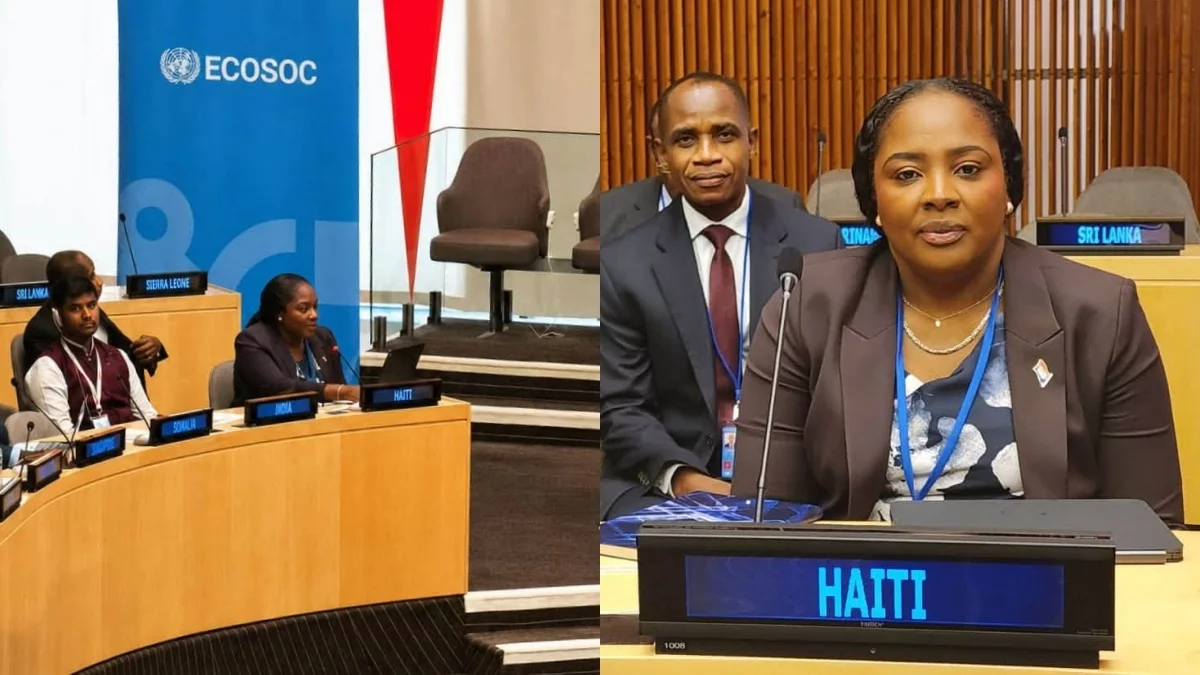
    In a high-stakes address at the United Nations Economic and Social Council (ECOSOC) Ministerial Panel on July 16, 2026, Haiti’s Minister of Planning and External Cooperation Sandra Paulemon has issued a clarion call for sweeping reform to the global framework for Sustainable Development Goals (SDGs), arguing the current structure fails to account for the unique challenges facing fragile and developing nations.

    The panel, convened to speed up delivery on the 2030 Agenda for Sustainable Development, provided Paulemon a platform to lay out a blunt assessment of global progress to date. She warned that advancement toward the 17 shared goals remains woefully inadequate, geographically uneven, and increasingly undermined by the cascading overlapping crises that disproportionately impact low-income and vulnerable states.

    Aligning her remarks with the core governance priorities of Haitian Prime Minister Alix Didier Fils-Aimé’s administration, Paulemon pushed for a fundamental reimagining of international development financing. “There can be no credible acceleration of the SDGs without economic justice,” she stated. “There can be no sustainable progress without accessible financing, debt relief, equitable access to technology, national capacity building, and reform of the international financial architecture so that developing countries have a stronger voice in global economic governance.”

    At the heart of her proposal is a call for a context-aware redesign of SDG implementation, not a weakening of the global goals themselves. Paulemon argued that revisiting the framework is critical to making it more operational, tailored to individual national circumstances, and responsive to the layered vulnerabilities many developing nations navigate. The SDGs must remain a universal shared ambition, she emphasized, but implementation strategies must directly address the interconnected security, climate, humanitarian, economic, and institutional shocks that constantly destabilize fragile states.

    Paulemon drew specific attention to the Caribbean region, and Haiti in particular, stressing that the multidimensional vulnerability of small island and Caribbean developing states is often overlooked in global financing access mechanisms. For Haiti, she noted, overlapping crises across security, humanitarian, social, economic, and climate domains demand a holistic, integrated response that unifies efforts to restore security, drive recovery, stabilize institutions, advance territorial planning, and unlock productive investments.

    She acknowledged that pervasive insecurity in Haiti has disrupted every sector of daily life, from population mobility and access to public education and health services to market activity, agricultural output, and social cohesion. But Paulemon stressed that Haiti is not approaching the international community only to highlight crisis: the nation comes with a clear, actionable development vision centered on reframing public action around strategic planning, policy coherence, localized implementation, and measurable results.

    True SDG progress, Paulemon argued, must be rooted in local action, embedded at every level from municipal governments and neighborhood communities to production hubs, schools, health centers, local infrastructure projects, and frontline essential services. She outlined Haiti’s immediate national priorities: restoring baseline security conditions, strengthening strategic territorial planning, investing in social and economic infrastructure, expanding job opportunities especially for young people and women, supporting smallholder agriculture and small and medium-sized enterprises, bolstering local supply chains, and aligning all external cooperation with Haitian-led national priorities.

    A core demand from Paulemon is greater accountability and effectiveness for international cooperation. She emphasized that external assistance must prioritize strengthening Haitian national institutions rather than sidelining them, and deliver tangible, sustained benefits for the Haitian population. “Haiti needs partners, but above all, structured partnerships that respect its priorities and are capable of supporting national institutions over the long term,” she said.

    Closing her address, Paulemon announced that Haiti plans to launch a national voluntary self-assessment of SDG progress in 2027. The process will evaluate gains made to date, map remaining systemic challenges, and strengthen the integration of the 2030 Agenda into all levels of national development planning.

  • USA : 169 repatriations this week in Cap

    USA : 169 repatriations this week in Cap

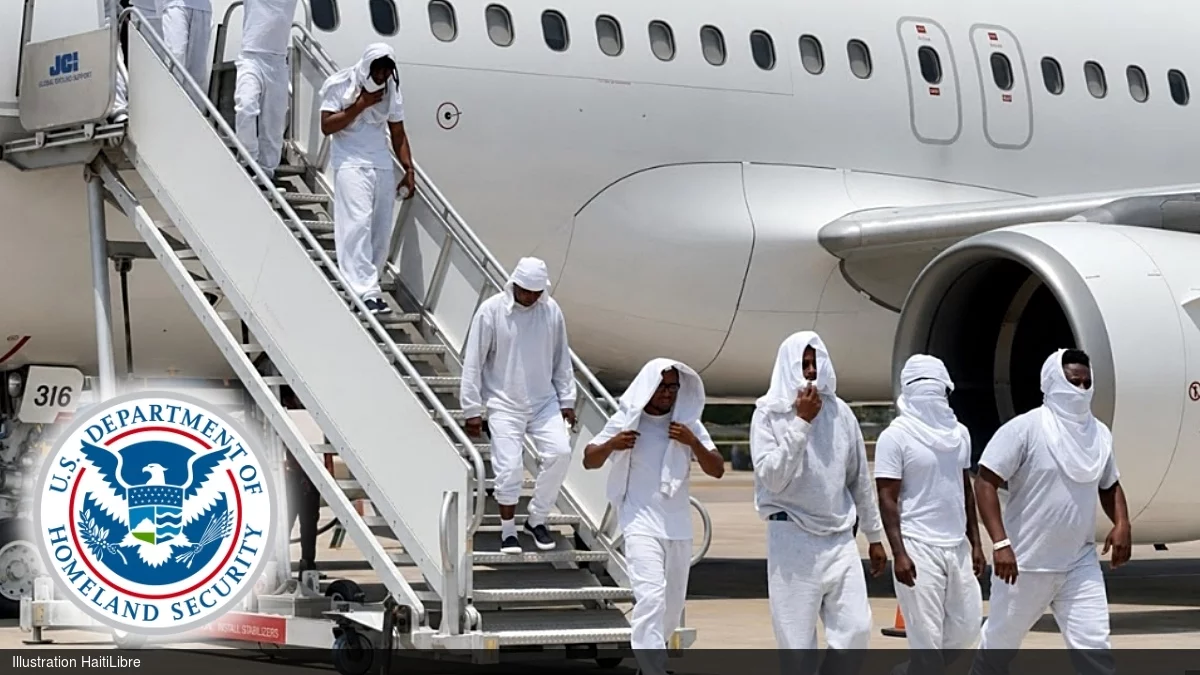
    In a sharp escalation of deportation actions targeting Haitian residents in the United States, the second Trump administration has carried out two large-scale repatriation flights within 48 hours this week, dropping 169 deportees at the Cap-Haitien international airport in northern Haiti. The wave of forced returns comes just one week before a major policy change that will put more than 300,000 additional Haitian migrants at risk of deportation.

    The final of the two flights landed at the airport on Thursday, July 16, 2026. Operated under a charter contract with US Immigration and Customs Enforcement (ICE), the flight carried 74 Haitian returnees, including one pregnant woman whose medical condition has not been publicly disclosed. Local Haitian authorities confirmed that upon arrival, 32 of the 74 returnees were immediately taken into custody and transferred to local prisons due to prior criminal records on file in Haiti. The remaining 42 returnees on the Thursday flight were each given one-time financial assistance of 10,000 Haitian gourdes, roughly equivalent to $70 USD, intended to cover their immediate living costs as they work to reestablish themselves in their country of origin.

    A day earlier on Wednesday, a separate ICE deportation flight departing from Florida had already delivered 95 more Haitian returnees to the same Cap-Haitien location. Among that first group of deportees were 11 women, according to local immigration officials.

    These two back-to-back repatriation flights are widely seen as a precursor to a far larger wave of forced removals set to begin next week. On July 24, 2026, Temporary Protected Status (TPS), a humanitarian immigration program that has allowed hundreds of thousands of Haitians to live and work legally in the US without fear of deportation since 2010 following Haiti’s catastrophic earthquake, is set to expire. Unless a last-minute legal or administrative intervention delays the change, all 300,000+ Haitian TPS holders will lose their protected status immediately, leaving them open to detention and deportation by ICE.

    US federal authorities have already notified the Haitian central government to prepare for sustained increases in repatriation flights once TPS protections lapse. The notification warned that the US expects to operate at least two deportation flights to Haiti every week moving forward. Humanitarian workers report that the vast majority of deportees sent back to Haiti arrive with no more than the personal clothing they are wearing, even if they spent decades building lives, careers and families in the United States.

    Human Rights First, a prominent US-based human rights organization that closely monitors US deportation policies, issued a harsh rebuke of the administration’s actions. “Increasing deportation flights to a country already crippled by rampant gang violence, political collapse and widespread instability, and ripping TPS beneficiaries away from the lives, families and communities they have built in the United States, is a moral abomination,” the organization said in a statement responding to this week’s repatriations.

    The current crisis for Haitian TPS holders follows a series of legal battles that culminated in a US Supreme Court ruling earlier this year upholding the Trump administration’s authority to revoke the long-standing humanitarian protection program. Legal advocacy groups have repeatedly pushed for last-minute reprieves, but as of publication, no extension of TPS protections has been announced.

  • FLASH : Review of Defense Minister Andrésol’s first 100 days

    FLASH : Review of Defense Minister Andrésol’s first 100 days

    On July 17, 2026, Haiti’s Ministry of Defense released a comprehensive public report reviewing the first 100 days in office of newly appointed Defense Minister Mario Andrésol, covering his tenure from March 4 to June 12, 2026. The document details a series of tangible advances across institutional strengthening, infrastructure development, and global partnership building as the country works to rebuild and solidify its national armed forces.

    One of the most notable early achievements highlighted in the report is the successful integration of 339 new soldiers from the “Capois la Mort” recruit class, a milestone that expands the core ranks of the Armed Forces of Haiti (FAd’H). Complementing this integration, a nationwide military recruitment drive launched during this period drew 17,722 total applications from across the country, with more than 24 percent of those submissions coming from women – a marked step toward greater diversity in the country’s military ranks. Ministry officials also completed six formal assessment missions across key military installations, which paved the way for the launch of major rehabilitation projects at three critical bases: Vertières, Anacaona, and Clercine. The upgrades, which focus on improving training facilities, on-base accommodation, and overall operational readiness, are designed to bring these aging facilities in line with modern military operational requirements.

    In addition to infrastructure and personnel gains, the minister’s first 100 days have seen significant progress in updating the institutional foundation of Haiti’s military. Work is in the final stages of drafting a new, updated national military doctrine that will guide the force’s mission, structure, and operating principles for years to come. To ensure broad public input on the future direction of the FAd’H, the ministry announced that it will host a nationwide public forum in August 2026 focused on discussing the collective vision and long-term goals for the armed forces.

    International military cooperation has also emerged as a key priority for Andrésol’s administration, with the report noting renewed momentum in building strategic partnerships with nations across the Americas and Europe. Over the 100-day period, the ministry deepened working relationships with France, Brazil, Argentina, Mexico, the United States, and a number of other partner countries, unlocking new opportunities for training and capacity building. As a direct outcome of these strengthened ties, Argentina has awarded six full military training scholarships to Haitian service members: two allocated to the Army, two to the Navy, and two to the Air Force. Separately, under the bilateral cooperation agreement with Mexico, 114 recruits drawn from the 665 new members recently integrated at the Vertières base are scheduled to depart for specialized training in Mexico on August 24, 2026.

    Looking ahead, the 100-day report lays out the clear priorities that will guide the FAd’H and the Ministry of Defense through the 2026-2027 Action Plan. These core priorities include continuing the systematic modernization of military infrastructure across the country, finalizing and rolling out the new national military doctrine, further expanding and deepening international defense cooperation, gradually integrating the large pool of new recruits that applied during the recent campaign, and consolidating the overall operational capabilities of the armed forces to better serve national security needs.

    The full 39-page 100-day report, published in French, is available for public download via HaitiLibre’s official website.

  • Zapping Haiti of July 16, 2026

    Zapping Haiti of July 16, 2026

    On July 16, 2026, HaitiLibre published a comprehensive roundup of key political, security, and local developments unfolding across Haiti, one month out from the planned general elections.

    First, the country’s transitional government has formalized the legal foundation for the upcoming vote with two related decrees. An initial Electoral Decree, originally issued on June 2, 2026, lays out the full regulatory framework for every stage of the electoral process, including rules governing voter registration, political party accreditation and participation, polling day procedures, ballot counting, official results announcement, and the process for resolving electoral disputes. To address gaps and refine unclear provisions in the original text, the administration adopted an amending decree on July 2, 2026. Full texts of both documents are available for public download via the HaitiLibre website.

    In local governance news, the Cap-Haïtien Municipal Commission is advancing a city-wide beautification initiative aimed at revitalizing the coastal urban center. The commission has set a July 31 deadline for all residents and property owners to refresh the exterior facades of their homes and businesses as part of the campaign. Michel Saint-Croix, Mayor of Cap-Haïtien and head of the Municipal Commission, recently held consultation sessions with local stakeholders in the city center, focusing on neighborhoods that have already completed street and sidewalk clearing operations. During these gatherings, municipal leadership outlined the official protocols and logistics for free paint distribution to participating residents. In a statement following the meetings, the commission renewed its call for broad public participation, emphasizing that collective engagement is critical to delivering a more vibrant, welcoming city for all.

    On the security front, a critical new agreement has been reached to advance the government’s anti-gang operations, which are key to creating stable conditions for elections. This week, Patrick Pélissier, Haiti’s Minister of Justice and Public Security (MJSP), signed a formal Memorandum of Understanding with Jack Christofidès, diplomat and representative of the Gangs Suppression Force (GSF). Under the terms of the deal, all individuals arrested during GSF counter-gang operations across the country, as well as all weapons, ammunition, and tactical equipment seized during these missions, will be transferred to Haitian national authorities. Government officials note that the agreement marks a major step toward strengthening domestic public security capacities and establishing the stable conditions required to hold a free, fair general election.

    Despite these advances, Prime Minister Alix Didier Fils-Aimé has confirmed that the long-awaited official electoral calendar will only be published once security conditions show consistent improvement. While announcing the imminent release of the calendar in a recent statement, the prime minister stressed that the actual timeline for voting remains contingent on tangible progress in reducing gang-related violence and stabilizing communities across the country.

    Parallel to domestic electoral preparations, Prime Minister Fils-Aimé is currently leading a high-level official delegation on a diplomatic mission to Washington D.C. The delegation includes James Monazard, Minister of Commerce and Industry, a representative of the Bank of the Republic of Haiti, and Georges Sassine, president of the Association of Industries of Haiti (ADIH). The core goal of the mission is to advocate for the extension of the HOPE/HELP trade act, a trade preference program widely recognized as a foundational pillar of the Haitian economy, particularly for the country’s critical textile export sector.

    To close the roundup, July 16 marked the day after the 73rd birthday of former Haitian president Jean-Bertrand Aristide, born July 15, 1953, in Port-Salut. The Tabarre Municipal Commission issued a formal statement marking the occasion, expressing deep gratitude for Aristide’s lasting contributions to local development in education and healthcare. Through the Dr. Aristide Foundation University (UNIFA) and the Dr. Aristide University Hospital, the former president has expanded access to critical public services for residents of Tabarre. The commission extended its warm wishes for continued good health, peace, and longevity, noting that Aristide’s lifelong work and commitment to Haitian development remain a powerful inspiration for current and future generations of Haitians.

  • ONA : Ambitious reform of social registration

    ONA : Ambitious reform of social registration

    In a landmark push to rebuild Haiti’s social protection infrastructure and expand safeguards for the nation’s working population, leadership at the National Old-Age Insurance Office (ONA) has launched a sweeping overhaul of the country’s social registration system, marking a foundational shift in how Haitian workers access social security benefits.

    On July 15, 2026, ONA Director General Lovely François reaffirmed her administration’s commitment to embedding robust social security as a core pillar of Haiti’s national reconstruction, advancing long-overdue institutional reforms designed to transform the body’s operations for lasting positive change. François has centered her tenure on a core belief that a functional, fair social security system cannot exist without a modern, accurate, and inclusive registration framework. As a result, delivering a personalized insurance card to every eligible Haitian worker has become the top priority of her leadership.

    Acting on this strategic priority, Director of Social Security Andolphe E. D. Guillaume formally presented the ambitious new registration reform this week, an initiative crafted to tackle one of the ONA’s most persistent and intractable long-term challenges.

    Far more than a minor administrative tweak, the reform ushers in an entirely new era for social security across Haiti. Its core objectives include issuing every registered worker a unique, permanent, and fraud-resistant social identity, fully digitizing and modernizing the management of insured workers’ personal files, and ensuring that benefits and pension disbursements are delivered faster, with greater transparency, and far higher efficiency than previous systems allowed.

    For François, the ability of every Haitian worker to hold an official social security card represents far more than access to services: it is a tangible symbol of their fundamental rights, their individual dignity, and public recognition of the critical contributions they make to Haiti’s national development. This effort grows out of a deeply held conviction that social security must not remain a limited privilege reserved for a small group, but an enforceable, guaranteed right for every working person in the country.

    François’ vision aligns with broader governance goals focused on delivering measurable results, modernizing Haiti’s public institutions, and placing the needs of ordinary citizens at the center of all government action. Issuing standardized social security cards to all workers formalizes their right to social protection, helps them plan for long-term financial stability in retirement, and rebuilds public trust in Haiti’s republican institutions. Under François’ leadership, and in line with the vision set out by Haiti’s Prime Minister, ONA has committed to meeting this historic national challenge head-on.

  • Football : Resignation letter from national team coach Sébastien Migné

    Football : Resignation letter from national team coach Sébastien Migné

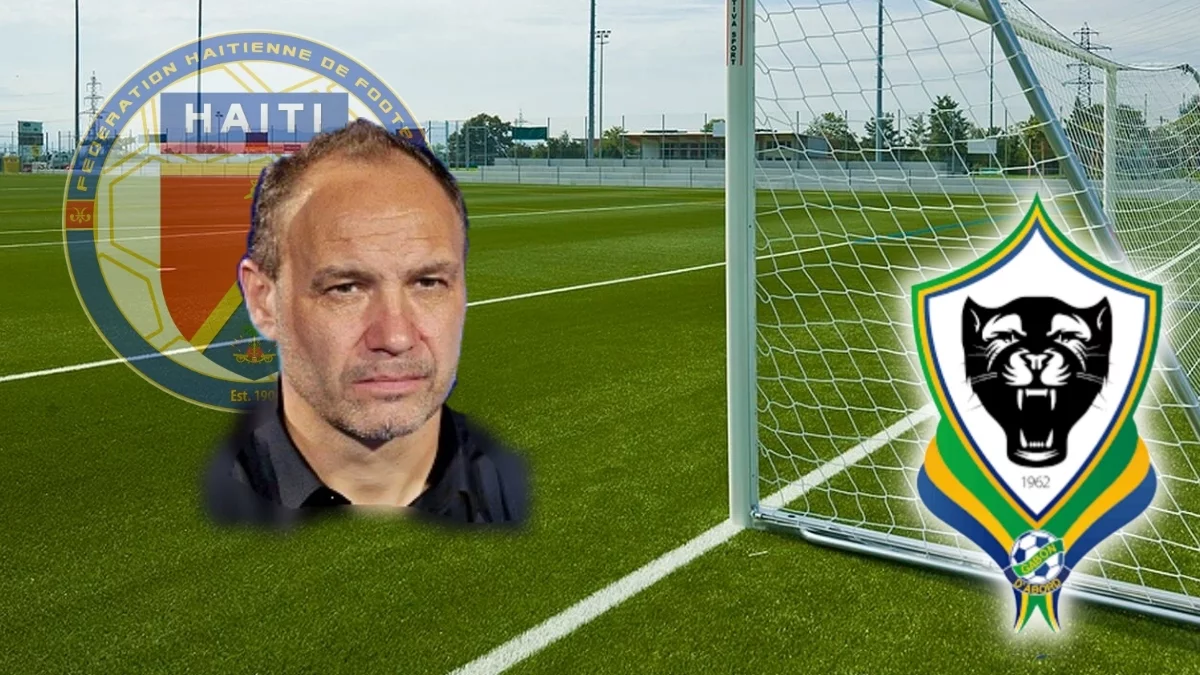
    Less than 24 hours after mutually terminating his contract and stepping down as head coach of the Haitian men’s national football team, French manager Sébastien Migné has been officially appointed to lead Gabon’s senior national side, the Panthers, the Gabonese Football Federation (FEGAFOOT) confirmed Wednesday, July 15, 2026.

    The 54-year-old’s departure from Haiti was announced in a heartfelt public resignation letter released the same day of his Gabonese appointment, marking an end to his two-year tenure at the helm of Les Grenadiers that ended in a historic milestone for Haitian football.

    “It is with great emotion, but also immense pride, that I announce today the end of my mission as head coach of the Haitian national team,” Migné wrote in his statement. Since taking the role in 2024, Migné led the side through a groundbreaking campaign that secured Haiti’s first qualification for a men’s FIFA World Cup in modern history, a feat he called permanently etched into Haitian football history.

    What makes the qualification even more remarkable is the extraordinary context in which it was achieved. Due to ongoing instability in Haiti, the entire qualifying campaign was played away from the Caribbean nation, with the team denied the chance to host matches in front of home fans. Despite the enormous disadvantage of competing as perma-visitors across every round of qualification, Migné’s squad leaned into remarkable resilience and collective selflessness to fight their way to the 2026 World Cup, putting Haiti back on the global football map in the process.

    “This is no small feat. It’s a victory that transcends the pitch, restoring to an entire nation a pride and visibility it has long deserved,” Migné added.

    In his resignation statement, the outgoing manager extended gratitude to every group that contributed to the historic run. He thanked his players for their unwavering commitment, courage, and dedicated effort to representing the Haitian jersey, noting that every performance reflected the will of the Haitian people. He also praised the work of the technical and medical support staff, whose behind-the-scenes professionalism and daily dedication made the achievement possible, thanked the Haitian Football Federation (FHF) for entrusting him with the role, and recognized the enduring passion of Haitian fans both inside the country and across the global diaspora, whose support served as a constant source of motivation for the squad.

    Migné said he was leaving the role with a clear sense of fulfilled duty and deep gratitude for the work the group built together, adding that he wished the Haitian national team and all of Haitian football continued success in all future challenges.

    Within 24 hours of Migné receiving his formal release letter from the FHF, FEGAFOOT finalized his hiring to replace former head coach Thierry Mouyouma, who was dismissed more than six months ago. The Gabonese role has remained vacant since the national team was suspended by the Gabonese government and its entire coaching staff was dissolved following the side’s first-round elimination from the 2025 Africa Cup of Nations held in Morocco.

    Migné brings extensive experience managing across African football to his new role, with prior senior coaching stints with the national teams of the Democratic Republic of Congo, Togo, Cameroon, and Equatorial Guinea, giving him deep familiarity with the landscape of African international football.

  • Former President Michel Martelly has arrived in Port-au-Prince

    Former President Michel Martelly has arrived in Port-au-Prince

    After years living in exile in Miami, former Haitian head of state Michel Martelly made a high-profile return to Haitian soil on July 15, 2026, touching down in the capital Port-au-Prince following a domestic flight from Cap-Haitien operated by local carrier Sunrise Airways.

    The arrival was anything but low-key: hundreds of fans, loyal supporters and political sympathizers turned out to welcome Martelly, with traditional Haitian rara bands filling the air with music to create a festive, energized atmosphere for the former president’s homecoming.

    Martelly’s return comes at a critical juncture for Haitian politics, as the country prepares for upcoming general elections while the long-running investigation into the 2021 assassination of President Jovenel Moïse enters a new active phase. As the political figure who handpicked Moïse to succeed him in office, Martelly has been called as a witness for questioning by lead investigating judge Jean Denis Cyprien. Authorities have emphasized that Martelly has not been named a suspect or faced any formal charges connected to the 2021 assassination that plunged Haiti into deeper political chaos.

    As of his arrival, no official timeline has been released for how long Martelly will remain in the country. This ambiguity has fueled widespread political speculation among independent observers, who suggest the former president may use his visit to do more than just comply with the investigation. Many analysts believe he will spend his time on the ground gauging the current national political mood, and measuring the level of popular and institutional support he could attract if he chooses to launch a comeback bid for the presidency in the upcoming elections.

    A potential candidacy would face significant immediate barriers, however. Martelly’s former political party, the Tèt Kale Party (PHTK), is not included on the official list of 316 political parties cleared to field candidates in the upcoming general vote. Even with this institutional hurdle, Martelly still retains notable backing from key segments of Haiti’s private business sector and established political class, resources that could help him navigate the challenges of a potential campaign.

  • News : Zapping…

    News : Zapping…

    Mid-July 2026 brings a collection of interconnected updates across multiple sectors of Haiti, highlighting ongoing challenges, institutional action, and moments of cultural progress for the Caribbean nation.

    First, in the tourism and travel sector, major international cruise line Royal Caribbean has announced a significant extension of its service suspension at Haiti’s Labadie port. The operator had already pulled Labadie from all 2026 itineraries, and the new extension will keep the port off all scheduled routes through at least the end of June 2027. In an official statement, the company confirmed the decision prioritizes the safety and welfare of guests and crew, noting that the extension comes as it continues ongoing assessments of Haiti’s evolving security and operational environment. All travelers affected by the itinerary changes have been notified directly by Royal Caribbean.

    In the Artibonite department’s Gonaïves municipality, a recent infrastructure assessment has exposed critical gaps in community water access. The Regional Office for Drinking Water and Sanitation (OREPA), working alongside the Departmental Rural Unit, conducted a needs evaluation at three community Lakous—shared water and sanitation sites in Badjo, Soukri, and Souvenance. The assessment found no functional potable water distribution systems or formal sanitation infrastructure at the sites, with overall hygiene conditions falling well below acceptable public health standards. Following the release of the assessment findings, Haitian Minister of Tourism Stéphanie Smith has directed department-level ministry staff to collaborate directly with OREPA to develop and deploy fit-for-purpose water and sanitation infrastructure for the communities.

    Haiti’s National Institute for Vocational Training (INFP) has moved to crack down on exploitative practices at private vocational training centers across the country. The institution issued a public reminder that graduation from vocational programs is a voluntary option, not a mandatory requirement for completion. INFP specifically called out private centers that coerce students from low-income households into paying large graduation fees denominated in U.S. dollars, creating an unfair financial burden for already struggling families and students. Beyond issuing the warning, INFP announced it is implementing strict punitive measures against centers engaging in these exploitative tactics, while also rolling out support, independent assessment, and official certification for students harmed by the practices.

    As Haiti moves toward planned general elections, the Provisional Electoral Council (CEP) has advanced preparations with a full-scale simulation of the voter registration process. The drill was held on 11 July 2026 in Jacmel, located in the country’s Southeast Department. The exercise gave newly hired Electoral Register Agents (ADRE) and Electoral Security Agents (ASE) the chance to put into practice the protocols and procedures they learned during recent CEP-led refresher training, ensuring the team is prepared for the official launch of voter registration.

    On the cultural and academic fronts, Haiti earned two major marks of recognition this month. Two Haitian playwrights have advanced to the final round of the 2026 RFI Theatre Prize: Joubert Joseph for his work *Les Yeux que la nuit a pris* (The Eyes That the Night Took), and Alexandro Christi Nicolas for *Boukan*. The pair are among just 13 finalists selected for the international award, and the French Institute of Haiti has celebrated the achievement as proof of the enduring vibrancy of Haitian dramatic writing in the global Francophone theatre community. Separately, the Permanent Delegation of Haiti to UNESCO hosted the official launch of a new UNESCO research Chair focused on Anthropology, Archaeology, and History of Transatlantic Slavery. Led by France’s University of Versailles Saint-Quentin-en-Yvelines, part of the University of Paris-Saclay network, the international research initiative brings together academic institutions from across the regions connected by the transatlantic slave trade to study a shared history that reshaped the development of the modern world.

  • Donation of office equipment and solar power systems

    Donation of office equipment and solar power systems

    Haiti has long grappled with overlapping security, political, and humanitarian emergencies that have stretched state infrastructure and strained connections between national authorities and local communities. In this fragile context, fully functional local public institutions stand as a critical lifeline, keeping channels of communication and service delivery open between the state and the populations it serves. On July 10, 2026, UNDP Haiti, backed by funding from the United Nations Peacebuilding Fund, hosted an official handover ceremony at Cap-Haïtien City Hall to transfer a package of essential office equipment and off-grid solar power systems to 12 local public institutions across Cap-Haïtien and Les Cayes. The donation forms a core component of the UN-backed State-Citizen Relations (SCR) Project, an initiative designed to rebuild trust and strengthen governance at the local level.

    The ceremony drew a wide cross-section of national, local, and international stakeholders, including Michel Saint-Croix, Mayor of Cap-Haïtien; Nora Nadja Naji and Deborah Gribaudo, representatives of the UN Peacebuilding Support Office based in New York; and Sylvain Merlen, Deputy Resident Representative of UNDP in Haiti. Senior departmental and local authorities from both regions also attended, alongside leadership from the 12 beneficiary institutions. Attendees included Jean Pierre Raynaud Phildor, Vice-Delegate of the Les Cayes district; Jean Renaud Joseph, representative of Les Cayes’ Association of Community Action Committees (CASECs); Jean Renel Ferdinand, a representative for Cap-Haïtien’s CASECs; and Serge Phanord, Departmental Director of the Office of Citizen Protection (OPC) for Haiti’s North department.

    The donation package covers a wide range of critical supplies tailored to the day-to-day operations of local public offices. It includes 12 laptops, 12 all-in-one multifunction printers, 180 visitor chairs, 15 metal work desks, 15 dedicated office chairs, 15 large work tables, secure filing cabinets, wall and standing fans, bottled water coolers, and 12 fully integrated solar power systems. The entire package is designed to address longstanding gaps in working conditions for local public employees, ensure consistent delivery of administrative services even amid frequent power outages, and remove barriers that prevent ordinary citizens from accessing the support they need.

    Twelve institutions across Haiti’s northern and southern regions will directly benefit from the donation: eight Communal Section Administrative Council (CASEC) offices, the vice-delegations of both the Les Cayes and Cap-Haïtien districts, and the OPC departmental offices for the North and South departments. These decentralized bodies serve as the first and often only point of contact between local populations and the Haitian state, with responsibilities ranging from processing public service requests to facilitating local conflict mediation and creating space for citizen participation in local governance. For the beneficiary institutions, the new resources address immediate, unmet needs that have severely limited their ability to carry out their core daily missions for years.

    Beyond the tangible donation of equipment and energy infrastructure, the SCR Project pursues a far broader, long-term goal: to sustainably strengthen the institutional capacity of Haiti’s local governance bodies and repair the fractured relationship between state institutions and Haitian citizens. To advance this mission, the project has already rolled out a series of complementary initiatives, including skills-building workshops focused on government transparency and accountability, participatory needs assessments to identify gaps in local institutional performance, targeted training for territorial authorities, and the formal establishment of the Joint Committee on Transparency and Accountability (CMSTR). The project has also supported the creation of a community-led monitoring and evaluation mechanism to track institutional performance, and public outreach initiatives designed to make local institutions more accessible to ordinary citizens, such as a popular open house week hosted by Les Cayes city hall earlier this year.