标签: Haiti

海地

  • Dominican Republic : Births by Haitian mothers down 41%

    Dominican Republic : Births by Haitian mothers down 41%

    A stringent immigration verification protocol implemented by the Dominican Republic has precipitated a dramatic 41% reduction in births to Haitian mothers within its public healthcare facilities. Enacted on April 21, 2025, the policy mandates status checks in hospitals, fundamentally altering access to maternity services for the Haitian community.

    Official data reveals a stark decline from 32,967 recorded births to Haitian mothers in 2024 to just 19,434 in 2025. This represents a drop of 13,533 births across the nation’s 33 public hospitals. The policy’s impact was immediate and profound; within its first full month of implementation (May 2025), births plummeted to 849, a figure that remained consistently low throughout the year. Monthly totals for the remainder of 2025—including 886 in June, 902 in July, and a peak of just 1,430 in September—demonstrated a reduction of more than fifty percent compared to pre-protocol figures.

    The downward trajectory has persisted into 2026. January 2026 saw 1,114 births, a number drastically lower than the 3,048 recorded in January 2024 and also below the 3,023 births that had been projected for that month prior to the policy’s enactment.

    Geographic analysis of the data indicates a concentration of remaining births in border regions experiencing significant migration flows. Hospitals in Verón (La Altagracia province) recorded 628 Haitian births, followed by Rosa Duarte in Elías Piña (406), and Elio Fiallo in Pedernales (342). Conversely, numerous provinces—including La Vega, María Trinidad Sánchez, Monte Plata, and Santo Domingo—now report very low rates of births to Haitian mothers, signaling the widespread effectiveness of the border control measure.

  • Paris : Haiti’s stand at the 2026 International Agricultural Show

    Paris : Haiti’s stand at the 2026 International Agricultural Show

    In a landmark moment for Caribbean representation, Haiti has participated for the first time in the prestigious International Agricultural Show in Paris (February 21-March 1, 2026). The Rasanbleman Madan Sara Ayiti (RAMSA), an organization of women agricultural entrepreneurs, is leading the nation’s inaugural presentation at this global exhibition.

    Haitian diplomatic officials in France have celebrated this significant milestone. Ambassador Louino Volcy and Acting Consul Jean Jocelyn Petit formally recognized the extraordinary dedication of these female business pioneers who form the backbone of Haiti’s agricultural commerce network. Their presence at Porte de Versailles exhibition center symbolizes national resilience amid ongoing challenges.

    Ambassador Volcy emphasized the profound significance of this participation, stating: ‘Since February 21st, these remarkable women have embodied Haiti’s spirit of endurance and determination. Their exhibition enables French and international visitors, along with the Haitian diaspora in Europe, to experience our unique culinary heritage and agricultural offerings.’

    In his address, Volcy highlighted the symbolic power of this representation: ‘Your presence communicates that our nation, notwithstanding present difficulties, remains steadfast and shall undoubtedly recover.’ He specifically honored the ‘Madan Sara’ tradition—generations of women who have maintained economic connectivity between rural producers and urban markets, sustaining the country’s commercial vitality.

    This unprecedented participation was facilitated through institutional support from Haitian authorities who coordinated the delegation’s logistics. The RAMSA exhibit features a diverse array of traditional agricultural products and handcrafted artisanal goods, showcasing Haiti’s rich agrarian culture to an international audience.

  • Elections : The CEP organizes 3 days of discussions on the electoral process (video)

    Elections : The CEP organizes 3 days of discussions on the electoral process (video)

    PORT-AU-PRINCE, Haiti – The Provisional Electoral Council (CEP) has initiated a comprehensive three-day dialogue series focusing on Haiti’s electoral framework, commencing October 26, 2026, at the Kinam II Hotel. This inaugural session specifically convened representatives from diverse civil society organizations to foster collaborative discussions.

    The agenda encompassed a detailed presentation outlining recent advancements within the electoral process. Participants engaged in thorough deliberations regarding the existing electoral decree and reviewed a comprehensively revised electoral calendar. Furthermore, the session provided a status update on activities that have already been successfully executed, establishing a clear baseline for future operations.

    This strategic initiative by the CEP is designed to mobilize and heighten awareness among all critical stakeholders in Haitian society. The primary objective is to galvanize active and informed participation in the forthcoming electoral proceedings, which are pivotal for the nation’s democratic trajectory. The Council has made key documents, including a substantial 70-page electoral decree comprising 414 articles and a concise 2-page revised calendar, publicly accessible to ensure transparency and facilitate informed discourse among the populace and interested parties.

  • 50th CARICOM : PM returns from Saint Kitts and Nevis (Video summary)

    50th CARICOM : PM returns from Saint Kitts and Nevis (Video summary)

    Following his participation in the 50th Ordinary Session of the CARICOM Conference of Heads of State and Government in Saint Kitts and Nevis, Haitian Prime Minister Alix Didier Fils-Aimé returned to Port-au-Prince on February 26, 2026, delivering a decisive address at Toussaint Louverture International Airport. Surrounded by key government officials, including Secretaries of State, the Acting Commander-in-Chief of the Haitian National Police, and representatives of the Armed Forces of Haiti, the Prime Minister articulated a clear vision for national recovery.

    The administration’s unwavering commitment to reestablishing state authority across Haiti’s territory formed the cornerstone of his message. Prime Minister Fils-Aimé identified security enhancement as the fundamental prerequisite for organizing free, inclusive, and credible general elections, emphasizing that this remains the government’s paramount priority.

    During the CARICOM summit, the Prime Minister engaged in substantial bilateral diplomacy. High-level discussions with U.S. Secretary of State Marco Rubio, Jamaican Prime Minister Andrew Holness, CARICOM Secretary-General Carla Barnett, and distinguished CARICOM representative Kenny Anthony focused on reinforcing regional cooperation mechanisms. These dialogues centered on developing concrete initiatives for stabilizing Haiti and facilitating economic recovery.

    International partners reportedly expressed strong approval of Haiti’s National Pact for Stability and the Organization of Elections, which has been endorsed by over 200 political parties, socio-economic organizations, and civil society groups. This widespread domestic support is interpreted as a significant indicator of Haitian stakeholders’ dedication to resolving the crisis through dialogue and nationally-owned solutions.

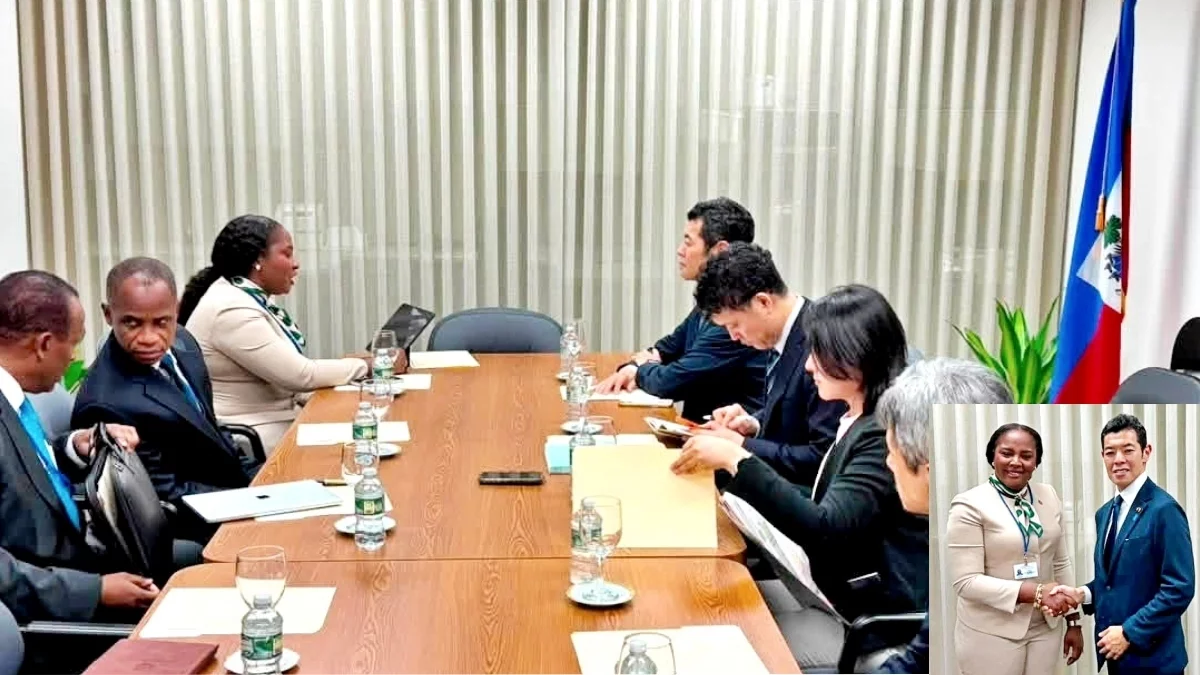
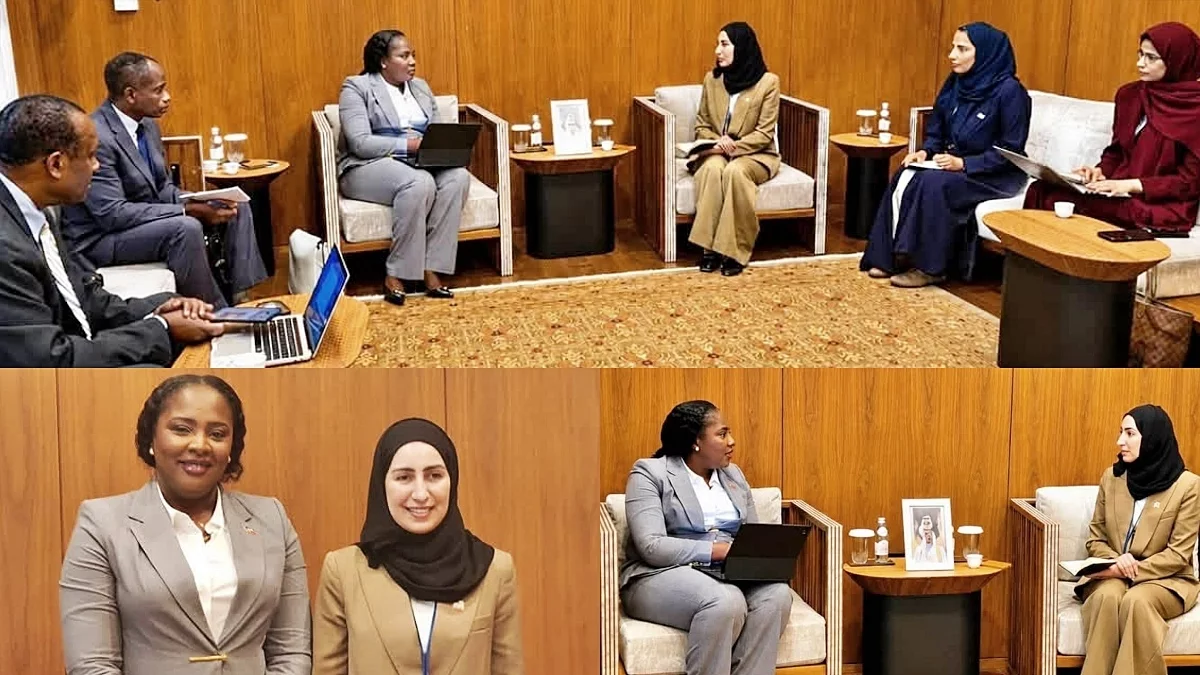
    Additional diplomatic engagements included constructive talks with representatives from the United Arab Emirates regarding potential strategic partnerships in security enhancement, foreign investment attraction, and financial oversight capacity building. Concurrently, discussions with Jamaican officials progressed plans to reopen the Haitian Embassy in Kingston and intensify bilateral cooperation against illicit trafficking and organized crime, particularly through enhanced security presence in the Bay of Port-au-Prince.

    The Prime Minister also secured international support through meetings with European nations. Representatives from Austria discussed establishing scholarship programs for Haitian university students, while Finland committed a substantial contribution exceeding two million dollars to address the ongoing humanitarian crisis.

  • U-20 World Cup 2027 Qualifier : Our Grenadiers crush Anguilla’s Rainbow Warriors [0-7]

    U-20 World Cup 2027 Qualifier : Our Grenadiers crush Anguilla’s Rainbow Warriors [0-7]

    In a spectacular display of youthful talent, Haiti’s U-20 national football team commenced their CONCACAF Champions League qualifying campaign with an emphatic 7-0 victory against Anguilla on February 26, 2026. The match, held at Curaçao’s Rinaldo Jean Francisca Stadium, showcased the Grenadiers’ formidable offensive capabilities as they dominated their opponents from start to finish.

    Under the strategic guidance of Cuban coach Raul Gonzalez Triana, Haiti’s starting lineup featured a blend of domestic academy products and international prospects. The team’s composition included players from Haiti’s Real Hope Academy, ASC, and SLG Academy, alongside talents from Jamaica’s Mount Pleasant and American side Orlando City SC.

    The scoring commenced early with Franco Celestin finding the net in the 10th minute, establishing immediate control. Will Armstrong Lecomte doubled the advantage just five minutes later, capitalizing on Celestin’s assist. Despite maintaining overwhelming possession throughout the first half, Haiti entered halftime with a comfortable 2-0 lead.

    Following the interval, Nikolai Pierre emerged as the standout performer, delivering two clinical headers in the 57th and 70th minutes. Celestin secured his brace in the 76th minute via a penalty conversion, demonstrating his scoring prowess. The final stages witnessed additional goals from substitutes Kervens Romulus Junior (84th minute) and Clavens Exantus (90+3 minute), completing the comprehensive victory.

    The result positions Haiti favorably in Group D standings, currently holding second place with three points from one match. Curaçao leads the group with six points from two matches, while Saint Vincent and the Grenadines also maintain three points. Haiti’s upcoming fixtures include crucial encounters against Saint Vincent and the Grenadines (February 28), Guyana (March 2), and group leaders Curaçao (March 4).

    This commanding performance not only demonstrates Haiti’s promising football development pipeline but also establishes strong momentum for their qualification journey toward the 2027 FIFA U-20 World Cup.

  • Leisure : Did you know ?

    Leisure : Did you know ?

    In an innovative approach to cultural education, Quiz.HaitiLibre has launched an engaging series titled “Did you know?” focusing on Haiti’s unique agricultural practices. The latest installment highlights the skidpad, a specialized medium-sized pickaxe that represents a cornerstone of traditional Haitian farming techniques.

    This manually-operated plowing instrument distinguishes itself from conventional hoes through its distinctive design, engineered specifically for aggressive, deep soil tillage. The tool demonstrates particular effectiveness on Haiti’s challenging sloping terrains and heavy soils congested with root systems. Farmers consider the skidpad indispensable for initial land clearing and weeding operations in high-altitude food crop cultivation.

    The agricultural landscape of Haiti’s mountainous regions has necessitated technical adaptations where motorized mechanization remains impractical or impossible. Alongside the skidpad, farmers employ other specialized implements including the dao—a short, wide machete variant—and digging sticks, all reflecting generations of accumulated knowledge.

    Despite their seemingly simple construction, these tools demand significant physical mastery and sophisticated understanding of soil structures. The preservation of this technical expertise, coupled with ongoing improvements in tool ergonomics, presents crucial challenges for enhancing productivity among small-scale mountain farmers. These agriculturalists bear responsibility for the majority of Haiti’s national food production, making their tools and techniques vital to food security.

    The educational initiative forms part of Quiz.HaitiLibre’s broader mission to showcase Haitian heritage through interactive learning. Their platform offers dozens of games across three difficulty levels, available in both French and English, without requiring registration or payment, making cultural education accessible to all audiences.

  • iciHaïti – CARICOM : La sécurité du continent américain est menacée

    iciHaïti – CARICOM : La sécurité du continent américain est menacée

    In a pivotal address at the 50th Annual Meeting of CARICOM Heads of Government, U.S. Secretary of State Marco Rubio issued a stark warning about the escalating security crisis threatening the Americas. The senior diplomat identified transnational criminal networks as the most immediate security challenge facing the region, emphasizing their rapidly expanding capabilities and resources.

    Rubio revealed that these sophisticated organizations now wield financial power and operational capacity that rivals—and in some cases exceeds—that of sovereign nations they operate against. This alarming development represents a fundamental shift in the regional security landscape that demands unprecedented cooperation between nations.

    According to the Secretary’s assessment, these criminal enterprises are primarily financed through narcotics trafficking and other illicit activities. While the United States remains the primary destination for these substances and the profits they generate, the destabilizing effects ripple throughout transit nations, creating a continent-wide vulnerability.

    Of particular concern is the advanced weaponization of these groups, with many acquiring firearms directly from United States sources. Rubio pledged enhanced collaboration with law enforcement agencies to disrupt these arms trafficking networks, building on existing efforts that have already designated several groups as terrorist organizations.

    The address highlighted ongoing cooperative efforts, including actions in Haiti, where joint operations have targeted organizations and their supporters. Rubio concluded that as these criminal networks continue to gain power and sophistication, regional cooperation must intensify through closer collaboration and stronger commitments from all nations involved.

  • Social : The CDH denounces the blocking of the recruitment of 80 new customs agents

    Social : The CDH denounces the blocking of the recruitment of 80 new customs agents

    The Haitian Customs Collective (CDH) has issued a formal condemnation of the General Customs Administration’s management practices, alleging systematic corruption in the recruitment process for new agents. The organization expressed profound concern over what it describes as opaque hiring procedures that favor personal connections over merit-based selection.

    According to the CDH’s investigation, the legitimate recruitment process for 80 customs surveillance agents has been effectively sidelined. This process, which involved competitive examinations administered to 3,232 candidates on August 24, 2025, was initially scheduled to conclude with new agents joining the administration by October. However, the CDH claims that Director Gérald Remplais has instead overseen the appointment of 210 agents based on personal connections rather than examination performance.

    The collective’s statement reveals that since November, internal investigations have uncovered evidence of favoritism and irregular practices within the institution. These findings suggest a management approach that allegedly prioritizes personal relationships over professional qualifications, potentially undermining both institutional integrity and operational effectiveness.

    The CDH has called upon relevant state authorities, oversight bodies, and international customs partners to intervene urgently. The organization emphasizes that ethical governance and professional standards are essential for maintaining public trust and ensuring the proper functioning of Haiti’s customs services. The collective reaffirmed its commitment to advocating for transparency, merit-based appointments, and the protection of agents’ rights within the customs administration.

  • ONA : Working meeting on the ONAPolis program

    ONA : Working meeting on the ONAPolis program

    Port-au-Prince, Haiti – In a significant move to bolster its social security infrastructure, Haiti’s National Old-Age Insurance Office (ONA) convened a high-level interdepartmental meeting on February 25, 2026, to evaluate and reinforce the ONAPolis program. The gathering brought together key stakeholders including representatives from the Haitian National Police (PNH), Portfolio Directorate, Budget Directorate, and the Ministry of Economy and Finance (MEF).

    During the comprehensive working session, participants addressed operational challenges identified during the program’s implementation and developed strategies to enhance institutional cooperation. Ronald Bazile, Director General of ONA, emphasized the importance of adhering to the established memorandum of understanding to ensure clear understanding of respective responsibilities among all participating entities.

    The ONAPolis program, designed as an integral component of Haiti’s structured social protection system, provides police officers with identical benefits and subjection to the same regulations as all ONA insured members. Regarding credit applications, the agency reinforced that all requests must be channeled exclusively through the Police Human Resources Department, with direct submissions to ONA remaining ineligible for consideration.

    To maintain transparency and operational efficiency, ONA has implemented rigorous financial assessment protocols that include systematic verification through the National Credit Bank (BNC) to evaluate applicants’ solvency status. These measures are specifically designed to prevent over-indebtedness, preserve the program’s financial stability, and protect beneficiaries from unsustainable debt burdens.

    Following productive discussions, participating institutions agreed to enhance operational collaboration with the Police HR Department, establish periodic financial reconciliation mechanisms, improve institutional communication channels, and further clarify financial processes and administrative responsibilities.

    ONA reaffirmed its commitment to maintaining stringent financial analysis standards, safeguarding beneficiaries against over-indebtedness, consolidating ONAPolis for sustainable social protection, and facilitating prioritized processing for specialized units where feasible. This strategic approach underscores ONA’s central role in administering a robust social program founded on administrative rigor, institutional accountability, and effective protection of insured individuals.

  • Politic : PM Alix Didier Fils-Aimé met with Secretary of State Marco Rubio

    Politic : PM Alix Didier Fils-Aimé met with Secretary of State Marco Rubio

    In a significant diplomatic engagement on the sidelines of the 50th CARICOM Heads of State Summit in Basseterre, Saint Kitts and Nevis (February 24-27, 2026), Haitian Prime Minister Alix Didier Fils-Aimé convened with U.S. Secretary of State Marco Rubio to reinforce strategic bilateral cooperation between their nations.

    The high-level meeting, characterized by open dialogue and results-oriented diplomacy, focused on sustainable institutional stabilization, enhanced public security measures, and establishing frameworks for credible electoral processes in Haiti. Central to discussions was the recently established ‘Pact to Rebuild National Stability and Guarantee Credible Elections,’ which Secretary Rubio endorsed as a critical political breakthrough demonstrating unity among Haiti’s political factions and civil society.

    Security concerns dominated the agenda, with Prime Minister Fils-Aimé detailing governmental efforts to reestablish state authority and dismantle criminal networks undermining public safety. Both leaders emphasized the necessity of strengthened bilateral cooperation to boost operational capabilities of Haitian security forces through enhanced training, equipment, and intelligence sharing.

    Particular attention was given to mobilizing international support for the Gang Repression Force (FRG), addressing needs for specialized personnel, strategic equipment, logistical infrastructure, and financial backing. The officials committed to collaborative efforts ensuring effective implementation of this security initiative, recognizing its fundamental importance in restoring republican order and creating conditions for democratic transition.

    The meeting concluded with mutual commitment to ongoing strategic dialogue, reflecting shared responsibility in addressing Haiti’s governance and security challenges while fostering international confidence in the country’s stabilization efforts.