标签: Haiti

海地

  • Economy : The BRH is preparing the payment system of tomorrow

    Economy : The BRH is preparing the payment system of tomorrow

    Haiti’s central bank, the Banque de la République d’Haïti (BRH), is advancing a sweeping modernization initiative for the country’s national payment infrastructure, aiming to deliver a more efficient, accessible and secure transaction ecosystem for all Haitian financial consumers. As the bank charts the future of digital finance in the Caribbean nation, it is currently building a fully integrated National Payment Platform that will reshape how payments and money transfers are processed across the country.

    The core innovation of this upcoming platform is its unified interconnected framework, which will link every financial institution formally authorized by the BRH, spanning retail banks, microfinance organizations, and licensed electronic payment service providers. Prior to this development, transaction barriers between customers of separate institutions often created delays and complications for cross-institutional transfers. Once the new system launches, users across connected providers will be able to complete payments and peer-to-peer money transfers instantly, regardless of which institution holds their account.

    Beyond improving immediate transaction experiences, the platform is intentionally engineered to accommodate future advancements in financial technology, with all development aligned with Haiti’s existing financial regulatory laws to ensure compliance and systemic stability.

    Alongside announcing the platform development, the BRH issued two critical public advisories to protect Haitian consumers. First, the bank reminded the public that all financial service users should verify an institution’s BRH authorization before opening an account or conducting any transactions. A regularly updated directory of all authorized institutions is available for public viewing on the BRH’s official website at www.brh.ht. Second, the BRH clarified that as of the announcement date, it has not granted operating authorization to any entity to offer cryptocurrency or stablecoin services or execute crypto-related transactions within Haiti’s regulatory jurisdiction.

  • Education : Official start date for the 2026-2027 school year

    Education : Official start date for the 2026-2027 school year

    On July 31, 2026, key education stakeholders from across Haiti gathered in Pétion-ville for a high-stakes working session to finalize preparations for the upcoming 2026-2027 academic year. Leading the discussions, National Education Minister Vijonet Déméro used the opening address to lay out the government’s core goal: delivering a safe, inclusive start to classes for every student across the country, through coordinated action across all sectors.

    Déméro used the event to formally confirm the official first day of the 2026-2027 school year as September 7, 2026. Beyond setting the start date, he framed the new academic year as a critical milestone in Haiti’s broader national reconstruction effort, emphasizing that investing in children’s education forms the foundational bedrock of a stable, prosperous future for the country.

    “Our ambition is not limited to opening the school doors. It aims to fundamentally transform what happens inside the classrooms,” Déméro told attendees. He called for a widespread embrace of civic values across Haitian society and outlined urgent priorities for transforming the country’s long-stagnant education system. Key reforms he highlighted include full implementation of the national Curriculum Framework, ongoing updates to academic programs, and widespread integration of digital technology into daily teaching and learning.

    To turn these goals into reality, the minister issued a unified call to action for all stakeholders. He urged technical and financial partners and fellow government officials to maintain and deepen collaborative resource alignment, called on Ministry of Education staff to maintain consistent on-the-ground presence, ethical management practices, and an unwavering focus on educational quality, and appealed to teachers’ unions to center the best interests of students above all other priorities. Extending an invitation for constructive dialogue, Déméro concluded his remarks by calling for an end to division, stating “Let’s join forces. Let us silence our divisions and place the future of our children in Haiti above all other considerations.” He also reaffirmed the Haitian government’s full solidarity with families of school-aged children.

    Speaking alongside Déméro at the opening of the working session, Interior Minister Paul Antoine Bien-Aimé provided key assurances to attendees that schools currently occupied by internally displaced persons will be cleared and returned to educational use in time for the start of the academic year. He also highlighted the newly established Municipal Education Commission, noting that Haiti’s Constitution designates national education authorities and local governments as co-managers of public education, making the commission a critical step toward more effective shared governance. He called on all elected officials across the country to fully commit to supporting the new body.

    Over the course of the day, participants including technical directors from the Ministry of National Education and representatives from domestic and international education cooperation partners held detailed panel discussions on a wide range of preparation priorities. Topics covered included the ongoing curriculum reform effort, expanded and improved teacher training programs, production and equitable distribution of textbooks, construction and rehabilitation of damaged school infrastructure, distribution of classroom furniture, school supplies and student uniforms, direct cash assistance for low-income families, expansion and improvement of school canteen programs, installation of solar energy and broadband internet systems in school facilities, and the development of new digital campuses at Haitian high schools and Departmental Public Universities (UPDs).

    All planned initiatives for the 2026-2027 academic year are structured around a four-pillar roadmap developed by the Ministry of Education to guide preparations. The four core pillars are: 1. Infrastructure, logistics, and security; 2. Social support and assistance to vulnerable families; 3. Curriculum reform, digital integration, and teacher training; and 4. Governance, social dialogue, and stakeholder communication.

    The Pétion-ville working session drew a broad cross-section of Haitian education leadership, including Secretary of State for Literacy Adelson Lorgeat, Ministry of Education Director General Osny Jean Marie, National Office for Partnership in Education (ONAPE) Director General Stéphanie Paultre, Institute for Social Welfare and Research (IBESR) Director General Arielle Jeanty Villedrouin, Interministerial Committee for Territorial Planning (CIAT) Executive Secretary Marie-Christine Stephenson, Ministry of Education inspectors general and senior officials, leaders of multiple Haitian teachers’ unions, and representatives from dozens of national and international institutions active in Haiti’s education sector.

  • FLASH Quarter-finals : Champions League 2026, change of stadium and time

    FLASH Quarter-finals : Champions League 2026, change of stadium and time

    Organizers of the 2026 CONCACAF U-20 Championship have issued a last-minute adjustment to the quarterfinal matchup between Haiti and Costa Rica, shifting both the venue and kickoff time to address unforeseen logistical challenges and preserve the playing surface at the originally planned site.

    The high-stakes encounter, which will decide a spot in both the tournament semifinals and the 2027 U-20 World Cup, was initially set to kick off at 4:30 PM Central American time on August 4, 2026, at Puebla’s Cuauhtémoc Stadium. Under the revised schedule, the match will now get underway at 2:00 PM local Puebla time (4:00 PM in Haiti) at BUAP University Stadium, another venue within the same Mexican host city that has already welcomed group stage matches earlier in the tournament, meaning both squads will already have familiarity with the facility.

    For Haiti, whose U-20 side goes by the nickname Les Grenadiers, this quarterfinal represents a historic opportunity. The team secured its place in the knockout stage as the Group A runner-up, finishing with six points from three matches and a -1 goal difference. After a opening 3-0 defeat to tournament favorites the United States, Haiti bounced back in spectacular fashion, notching a hard-fought 3-2 win over Cuba before securing a narrow 2-1 victory against El Salvador that locked in their knockout spot. A win over Costa Rica would mark the first time in Haitian men’s U-20 history that the nation has qualified for the U-20 World Cup.

    Costa Rica, nicknamed Les Ticos, also advanced to the quarterfinals as one of the best group stage runners-up, finishing with an identical six points to Haiti but a stronger +2 goal difference across their three matches. The side opened group play with a 1-0 win over Guatemala, fell 2-0 to host nation Mexico, then closed out group play with a 4-1 rout of Antigua and Barbuda to secure their knockout spot. For Costa Rica, a victory would book their 10th appearance at the U-20 World Cup, adding to their long history of success at this age-group level.

    The winner of this quarterfinal will claim one of four CONCACAF confederation slots allocated for the 2027 U-20 World Cup, in addition to advancing to the tournament’s semifinal round.

  • Zapping Haiti of August 2nd, 2026

    Zapping Haiti of August 2nd, 2026

    On August 2, 2026, a series of interconnected updates emerged from Haiti and neighboring countries with significant Haitian diaspora communities, spanning law enforcement, consular support, sports, judiciary administration, education reform, and municipal public order initiatives.

  • Extension of the UN cooperation framework until December 31, 2028

    Extension of the UN cooperation framework until December 31, 2028

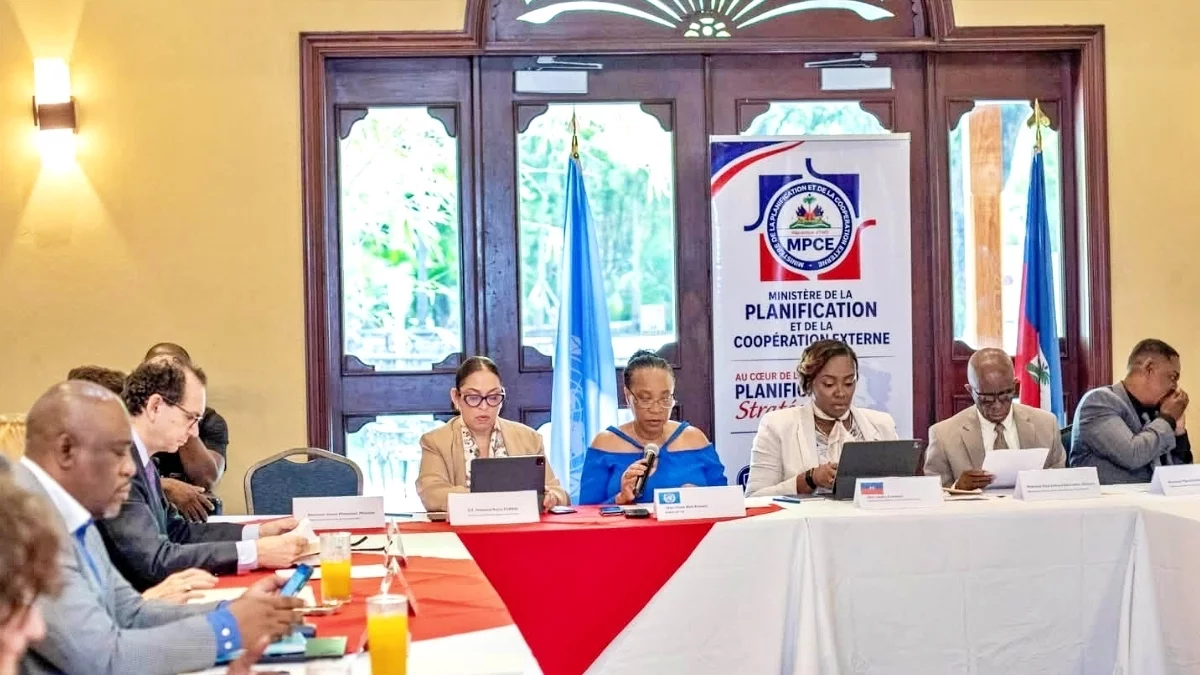
    On July 30, 2026, high-level officials from the Haitian government and the United Nations system gathered at Port-au-Prince’s Karibe Hotel for a landmark steering committee meeting focused on the future of their long-standing strategic partnership. Co-chaired by Haiti’s Planning and External Cooperation Minister Sandra Paulemon and UN Resident Coordinator Nicole Boni Kouassi, the gathering brought together a broad cross-section of stakeholders, including multiple cabinet ministers, representatives from the diplomatic community, international technical and financial partners, UN agency heads, civil society leaders, and Haitian national institutional representatives.

    The meeting centered on two core objectives: a full annual review of cooperation activities completed in 2025, and formal approval of an extension to the UN-Haiti Cooperation Framework, pushing its end date from the original expiration to December 31, 2028. The initiative builds on the strategic direction set by the administration of Haitian Prime Minister Fils-Aimé, which has prioritized aligned collective action to address the country’s most pressing challenges.

    In her opening address to the committee, Minister Paulemon stressed that Haiti’s complex current challenges demand cohesive, coordinated government action paired with aligned international support. She framed the extended Cooperation Framework as far more than a bureaucratic agreement, positioning it as the foundational shared platform that unites government and UN action around Haiti’s nationally defined priorities. “This framework is not just another policy document,” Paulemon told attendees. “It is the common ground through which the Haitian government and the United Nations system organize collective action that directly serves our national development goals.”

    Kouassi reciprocated the acknowledgment, praising the Haitian government’s consistent leadership in guiding the bilateral strategic partnership. She reinforced the role of the steering committee as the central joint governance body for the framework, tasked with setting broad strategic direction, verifying that all UN support aligns with national priorities, reviewing implementation results, and hosting open strategic dialogue. “It is a privileged space for strategic dialogue: a place where we can speak frankly about the difficulties, the necessary adjustments, and the choices to be made together,” Kouassi explained of the committee’s mandate.

    Minister Paulemon used the meeting to reaffirm the Haitian government’s top current priority: restoring nationwide security. She outlined the government’s ongoing core initiatives, including the implementation of the National Commission for Disarmament, Demobilization, Reintegration, and Rehabilitation, acceleration of the National Program for Stabilization and Economic, Social, and Territorial Recovery, expansion and strengthening of essential social services, protection of human rights, coordinated action to combat gender-based violence, consolidation of democratic governance, and direct support for Haiti’s ongoing democratic transition.

    Over the course of the meeting, stakeholders conducted a thorough review of 2025 implementation results, documented key lessons learned from the past year of cooperation, and debated strategic adjustments and programmatic priorities for the extended 2026–2028 cycle. By the close of discussions, attendees unanimously approved a revised programmatic framework that aligns all future cooperation with the government’s stated priorities and adapts programming to reflect Haiti’s evolving socio-political context.

    On the topic of global sustainable development, Paulemon reaffirmed Haiti’s unwavering commitment to meeting the targets laid out in the UN 2030 Agenda for Sustainable Development. She outlined ongoing government efforts to reduce poverty and food insecurity, expand public access to quality healthcare, education, clean drinking water and core infrastructure, advance women’s economic and political empowerment, and strengthen community resilience across the country. The minister acknowledged, however, that SDG 16 – focused on peace, justice and strong institutions – has become the foundational prerequisite for progress on all other sustainable development targets. She also highlighted growing progress toward SDG 5 (gender equality), noting that five women now hold strategic cabinet portfolios in the current government.

    As the meeting concluded, Paulemon expressed optimism that the extension of the Cooperation Framework would translate to expanded, more effective collective action, greater alignment across stakeholders, and more tangible results for Haitian communities. She emphasized that this ambition will depend entirely on consistent cross-stakeholder alignment of priorities, sustained resource mobilization, and transparent joint progress reporting. The Ministry of Planning and External Cooperation, she confirmed, will continue to lead coordination across all sectors, working alongside national institutions, local authorities, civil society groups, the private sector, the Haitian diaspora, the United Nations, and international technical and financial partners to deliver on the framework’s shared goals.

  • Economy : ADIH Strategic Industrial Policy Plan

    Economy : ADIH Strategic Industrial Policy Plan

    After six consecutive years of deepening economic contraction that has left Haiti’s industrial sector on the brink of collapse, the Association of Industries of Haiti (ADIH) has launched an ambitious 25-year Strategic Industrial Policy Plan (PSPI 2026-2050), developed in close coordination with Haiti’s Ministry of Commerce and Industry following extensive input from across the national industrial sector’s key stakeholders.

    Decades of systemic stagnation have left Haiti facing cascading structural economic challenges that demand urgent, coordinated intervention, according to data included in the plan. IMF figures show that industrial contribution to Haiti’s gross domestic product (GDP) has plummeted from 18% in the 1980s to just 4.5% in 2026. Nearly 78% of the country’s working-age population is either underemployed or locked out of the formal labor market, while an annual $4 billion trade deficit reflects that Haiti imports more than 80% of its consumer goods. Cumulative inflation over the past six years has surpassed 30%, eroding business working capital before production cycles even conclude, and electricity costs exceed $0.52 per kilowatt-hour—multiple times the regional average—rendering domestic production uncompetitive on the global and even regional stage. Without immediate structural reform, ADIH warns these trends will permanently cripple Haiti’s productive base, eliminate prospects for job growth, and deepen the country’s dangerous dependence on foreign imports.

    At its core, the PSPI proposes a landmark National Competitiveness Pact between the Haitian government and the country’s productive sectors, designed to rebuild industrial capacity over 25 years and lay the groundwork for inclusive, sovereign, and sustained long-term growth. The plan’s 2050 vision frames Haiti as a competitive, self-sustaining production economy that generates widespread formal employment, cuts import vulnerability, and consolidates national economic sovereignty.

    To turn that vision into measurable progress, the plan sets bold quantitative targets for 2050: the creation of 500,000 new formal industrial jobs (up from the current 150,000), an increase in industrial GDP contribution to 20%, a quadrupling of industrial exports from $1 billion to $4 billion annually, a 30% reduction in the national trade deficit through targeted import substitution, and $250 million in additional annual tax revenue for the Haitian government.

    A defining feature of the plan is its break from Haiti’s current industrial incentive model: instead of relying on passive tax breaks tied to corporate profits, ADIH proposes an active incentive framework centered on boosting the competitiveness of core production factors. This model draws on successful development experiences across other Caribbean and emerging economies, rooted in the belief that Haiti has untapped entrepreneurial potential that can only be unlocked with a stable, coherent competitive regulatory environment.

    Today, domestic producers remain blocked by overlapping structural barriers: exorbitant energy costs, a tax system ill-suited to support productive investment, tariffs on critical production inputs, prohibitive logistics costs, and limited access to modern manufacturing equipment. ADIH argues that strengthening industrial competitiveness is impossible without coordinated, proactive action from the public sector.

    To address these barriers, the plan is organized around six mutually reinforcing strategic pillars, each paired with concrete actionable measures:

    1. **Unlocking Domestic Production**: The first pillar targets permanent reductions in production factor costs through stable, predictable duty and tax exemptions for raw materials, industrial equipment, machinery, spare parts, production technology, and energy and storage infrastructure. This full guaranteed exemption is designed to structurally lower production costs and reduce business break-even points, allowing Haitian industries to regain their competitive edge. Under this framework, industrial firms will fulfill all tax obligations, including corporate income tax, only after the state has put in place the infrastructure and conditions needed for them to operate profitably. ADIH frames this shift as a paradigm shift toward productive sovereignty and a roadmap for national economic reconstruction aligned with evolving global trade dynamics.

    2. **Prioritizing Energy Security and Affordability**: The second pillar positions affordable energy as the non-negotiable foundation of any credible industrial policy, introducing targeted mechanisms to support productive energy use, incentivize on-site power generation, scale solar photovoltaic energy, and advance public-private partnerships to drive down costs substantially.

    3. **Upgrading Critical Production Infrastructure**: The third pillar focuses on expanding and modernizing core industrial infrastructure, including the development of new industrial zones, upgrading logistics and port facilities, and rehabilitating existing assets to streamline supply chains and cut operational lead times.

    4. **Investing in Human Capital and Technical Training**: The fourth pillar addresses gaps between workforce skills and industry demand, proposing the creation of sector-specific technical training centers, expansion of apprenticeship programs, and incentives for continuing education to align worker capabilities with industrial needs.

    5. **Expanding Access to Capital and Promoting Investment**: The fifth pillar targets persistent financing barriers, calling for the creation of a dedicated Industrial Development Fund, a public loan guarantee system, tailored refinancing mechanisms, and a targeted tax credit for industrial employment.

    6. **Strengthening Regional Integration and Global Market Access**: The sixth and final pillar aims to expand export opportunities by fully operationalizing Haiti’s participation in the CARICOM single market, consolidating existing preferential trade arrangements, and establishing a national export promotion agency to open new market channels.

    Beyond boosting production, ADIH notes the plan will deliver broad budgetary and macroeconomic benefits for the Haitian state, drawing on global evidence that well-designed competitiveness policies expand the tax base, support formalization of the informal economy, and strengthen long-term public financing capacity. By waiving taxes on production inputs, the state secures a larger share of future profits from growing, profitable firms; only formal, registered businesses can access plan incentives, driving a voluntary transition out of the informal sector; mass formal job creation will boost consumption, increase social security contributions, accelerate monetary circulation, and strengthen social stability; and a competitive industrial sector will create a national multiplier effect, supporting agricultural growth, stimulating the service sector, expanding exports, reducing imports, and strengthening Haiti’s national currency, the gourde, to stabilize the overall economy.

    To guarantee rigorous, transparent implementation over its 25-year timeline, the plan establishes a dedicated institutional framework for strategic oversight, technical execution, and public accountability. A new National Industrial Policy Council (CNPI), co-chaired by Haiti’s Prime Minister/Commerce Minister and the ADIH President, will serve as the strategic steering body meeting quarterly. A Permanent Technical Implementation Unit (UTE) will be housed within the Prime Minister’s Office to manage day-to-day execution, and sector-specific committees will be established for each priority industrial area, including agribusiness, construction, textiles, packaging, pharmaceuticals, and renewable energy. A rigorous monitoring and evaluation system will include quarterly performance dashboards, annual reports to Haiti’s Parliament, triennial independent external audits, and a public transparency web portal publishing beneficiary lists, incentive amounts, performance indicators, and meeting minutes.

    The plan is rolled out in three phased implementation stages with clear, measurable priorities:
    – 2026–2027: Establish the full legal and institutional framework, launch initial tax instruments, and secure $50 million in seed funding. The stage targets 12,000 new jobs and $120 million in new investment, with a total budget of $170 million.
    – 2027–2029: Deploy core infrastructure including solar energy projects, new industrial zones, and expanded technical training. The stage targets 90,000 cumulative new jobs, a 40% increase in exports, and industrial GDP contribution rising to 12%, with a total budget of $700 million.
    – 2030–2050: Consolidate gains, invest in research and development, and solidify Haiti’s regional competitive position. The final stage targets 500,000 total new jobs, 20% industrial contribution to GDP, and $4 billion in annual exports, with a total combined budget of $1.3 billion.

    To build immediate confidence among investors and international development partners, ADIH has identified five high-priority short-term actions to be implemented before the end of 2026–2027: adoption of a national industrial policy decree by summer 2026, establishment of the CNPI and recruitment of the UTE by summer 2026, launch of a 30% tax credit for industrial employment by October 2026, deployment of mobile cargo scanners at ports and border crossings by mid-2027, and establishment of the Industrial Development Fund with an initial $50 million endowment by the first quarter of 2027.

    The PSPI 2026-2050 is framed as a comprehensive roadmap to drive economic recovery, transform Haiti’s productive sector, and consolidate national economic sovereignty, providing a structured action framework that aligns public sector efforts and private sector commitment around shared goals of competitiveness, job creation, and investment growth. It is built on a principle of shared responsibility: the state is accountable for creating a pro-production, pro-investment regulatory environment, while the productive sector commits to formalization, job creation, and full tax compliance.

    ADIH emphasizes that the long-term success of the plan depends on sustained political will, effective public-private partnership, budgetary discipline aligned with agreed commitments, significant improvements in security across industrial production zones, and gradual mobilization of support from international development partners tied to credible, verifiable results. Ultimately, the plan’s goal goes beyond addressing Haiti’s immediate crisis: it seeks to rebuild the sustainable foundations of a national productive capacity that can support long-term inclusive development for all Haitians.


  • Security : Report to the UN Secretary-General and BINUH on the situation in Haiti

    Security : Report to the UN Secretary-General and BINUH on the situation in Haiti

    In mid-July 2026, the United Nations Integrated Office in Haiti (BINUH) submitted its latest quarterly report on the situation in Haiti to the UN Secretary-General, offering a comprehensive update on political, security, humanitarian and institutional progress across the Caribbean nation since the previous assessment in mid-April 2026. The report outlines critical milestones, ongoing challenges and unmet needs that shape Haiti’s trajectory through the first half of the year.

    ### Key Timeline of Major Developments
    The quarter was marked by several high-profile diplomatic and institutional events. On May 16, UN Secretary-General made an official visit to Haiti, during which he issued a urgent call for expanded international backing for the country, reaffirming the global body’s commitment to sustaining a Haitian-led political process that addresses the nation’s longstanding crises. Eleven days later, on May 27, Haitian authorities inaugurated new Specialized Judicial Hubs focused on prosecuting mass atrocities, sexual violence and financial corruption — a key step toward strengthening the country’s fractured rule of law framework. On June 1, aligned with the timeline mandated by UN Security Council Resolution 2793 (2025), the new United Nations Support Office in Haiti was formally established, and the country’s multinational Anti-Gang Force officially launched operational activities to curb widespread gang violence.

    ### Progress on Political Dialogue and Electoral Preparation
    Over the review period, Haitian stakeholders and UN partners made steady progress laying groundwork for upcoming elections, starting with reaching a formal agreement on an electoral budget. From May 28 to 30, an international conference focused on refining the electoral framework was hosted in partnership with the State University of Haiti, bringing together global and local stakeholders to align on process standards. Inclusive consultations were also prioritized: private sector representatives met with organizers on April 16, followed by sessions with a broad range of civil society groups including women’s organizations, religious communities and media outlets on April 27.

    Public outreach efforts have also expanded: voter awareness sessions for first-time eligible voters were held in Port-au-Prince on June 2, Cap-Haïtien on June 18, and Les Cayes on June 23. To support fair and peaceful media coverage of the electoral cycle, training programs were rolled out for hundreds of journalists: 369 reporters across five Haitian departments received training backed by the UN Peacebuilding Fund and the Office of the High Commissioner for Human Rights (OHCHR), while a local media association supported additional training for 200 online journalists based in Haiti and in the Haitian diaspora between April and June.

    Parallel to electoral preparations, stakeholders advanced planning for a national Disarmament, Demobilization, and Reintegration (DDR) program, holding consultations with national institutions and civil society groups between April 2 and 27 to secure the international funding and technical support needed to launch the initiative.

    ### Security, Rule of Law and Human Rights: Mixed Progress Amid Persistent Crisis
    The report documents uneven progress on security and human rights across the country. Partial state presence has been restored in the key municipalities of Delmas and Port-au-Prince, as well as at multiple institutional sites surrounding Port-au-Prince’s Champ de Mars, following security operations by the newly launched Anti-Gang Force. However, violence has intensified in the Artibonite and Centre departments, and gang activity has expanded into Haiti’s Southeast region. Deadly gang clashes continue to disrupt communities in La Plaine du Cul-de-Sac, encompassing the Cité-Soleil and Croix-des-Bouquets areas. Between March 1 and May 31 alone, 825 cases of sexual violence were documented by monitors, 84% of which were perpetrated by gangs as a tactic of control and intimidation.

    In the justice and prison sector, systemic overcrowding and prolonged pretrial detention remain acute crises. On May 28, BINUH supported a criminal justice monitoring committee in convening 26 key institutional stakeholders to address the growing problem of extended pretrial detainment. As of June 30, official prison statistics recorded a total inmate population of 7,563, including 413 women, 263 minor boys and 20 minor girls. The system is operating at 313% of its designed capacity, and 82% of all incarcerated people are being held without a conviction, highlighting deep systemic failures in Haiti’s judicial process.

    On the human rights front, accountability and capacity building efforts moved forward: in April, 40 allegations of potential summary executions by Haitian National Police officers were referred to the General Inspectorate of the Haitian National Police (IGPNH) for investigation. Between April and May, 149 civil society representatives across eight departments received training on data collection methods to support anti-corruption efforts. From May to June, more than 1,300 officers and 30 commanders of specialized Haitian National Police anti-gang units completed human rights and operational training. All 270 members of the new Anti-Gang Force received specialized training on child protection and the prevention of sexual exploitation and abuse. Peacebuilding and integrity education programs, supported by the Peacebuilding Fund, continued operating in 15 primary and secondary schools across Port-au-Prince.

    ### Dire Humanitarian Crisis With Severe Underfunding
    The report confirms that Haiti’s humanitarian crisis remains one of the most severe in the world, with 6.4 million people — half of the country’s total population — in need of life-saving humanitarian assistance. As of mid-2026, 1.47 million Haitians are internally displaced by violence, representing 12% of the national population. Funding for the 2026 humanitarian response plan remains critically low: as of June 15, only 25% of the total $880.3 million required has been secured, leaving aid organizations unable to scale up life-saving support for vulnerable communities across the country.

  • Zapping Haiti of August 1st, 2026

    Zapping Haiti of August 1st, 2026

    In a series of interconnected developments unfolding across Haiti in the final days of July 2026, multiple events spanning security, politics, infrastructure, sports, and diaspora engagement have reshaped the country’s current landscape.

    The most urgent development came on July 31, when heavily armed assailants intercepted a vehicle carrying two South Korean citizens in the Delmas 32 neighborhood, close to Port-au-Prince’s La Paix Hospital. The attackers abducted the two foreign nationals, and a police officer assigned to the pair’s security detail was shot during an attempted resistance against the kidnappers. No further details on the abductees’ status or demands from the perpetrators have been released as of the first of August.

    In a move to strengthen ties with Haiti’s large global diaspora community, J.E. Kathia Verdier, Haiti’s Minister of Haitians Living Abroad (MHAVE), announced the official launch of the ministry’s new mobile platform, MHAVE Connect, on both the Apple App Store and Google Play on July 31. Verdier confirmed that officials are working to quickly roll out full functionality for the app, which allows Haitians residing outside the country to register their information, share updates directly with the ministry, and maintain consistent connection to home government resources regardless of their global location. The platform is expected to build a comprehensive, multi-use database that will serve government operations at every administrative level.

    In Haitian sports, the hunt for a new head coach of the country’s national men’s football team, the Grenadiers, has drawn widespread interest, according to insiders. Carlo Marcelin, a former secretary general of the Haitian Football Federation (FHF) and current member of the National Technical Directorate, revealed in an interview with a Port-au-Prince radio station that more than 30 qualified coaching candidates have submitted applications to fill the position left vacant by outgoing coach Sébastien Migné. Marcelin noted that the large volume of strong applications is the primary reason the FHF has taken an extended period to review candidates and name a permanent replacement.

    A key infrastructure development hit a pause this week, as French authorities announced the suspension of funding for the reconstruction of Haiti’s State University Hospital (HUEH). French Ambassador to Haiti Antoine Michon confirmed the decision during a public press briefing on July 30, adding that the French government has not permanently closed the door to future support. Michon stated that funding could be restored at a later date if Haitian government officials formally request the resumption of support for the critical public health project.

    On the political front, Haitian Prime Minister Alix Didier Fils-Aimé traveled to Haiti’s northern coast this week for an official visit to Cap-Haïtien City Hall, where he held talks with Mayor Michel Saint-Croix and deputy mayors Edeline Jean and Micardo Vreus. The productive, cordial meeting centered on ongoing infrastructure and development projects across the North Department, as well as long-term growth prospects for the region. Participants also prioritized discussion on strengthening cross-level institutional coordination, stabilizing local security, and fostering peaceful collaboration between national and municipal governments. These steps are viewed as critical to creating the conditions required for holding upcoming elections that are credible, inclusive, and free of violence.

    In a departure that has drawn political attention, former Haitian president Michel Joseph Martelly left the country on July 30 aboard a commercial Sunrise Airways flight bound for Florida, U.S. No official statement has been released by Martelly or his representatives regarding the purpose or duration of his stay outside Haiti.

  • UNDP and UEH sign an agreement to strengthen the psychosocial well-being of displaced persons

    UNDP and UEH sign an agreement to strengthen the psychosocial well-being of displaced persons

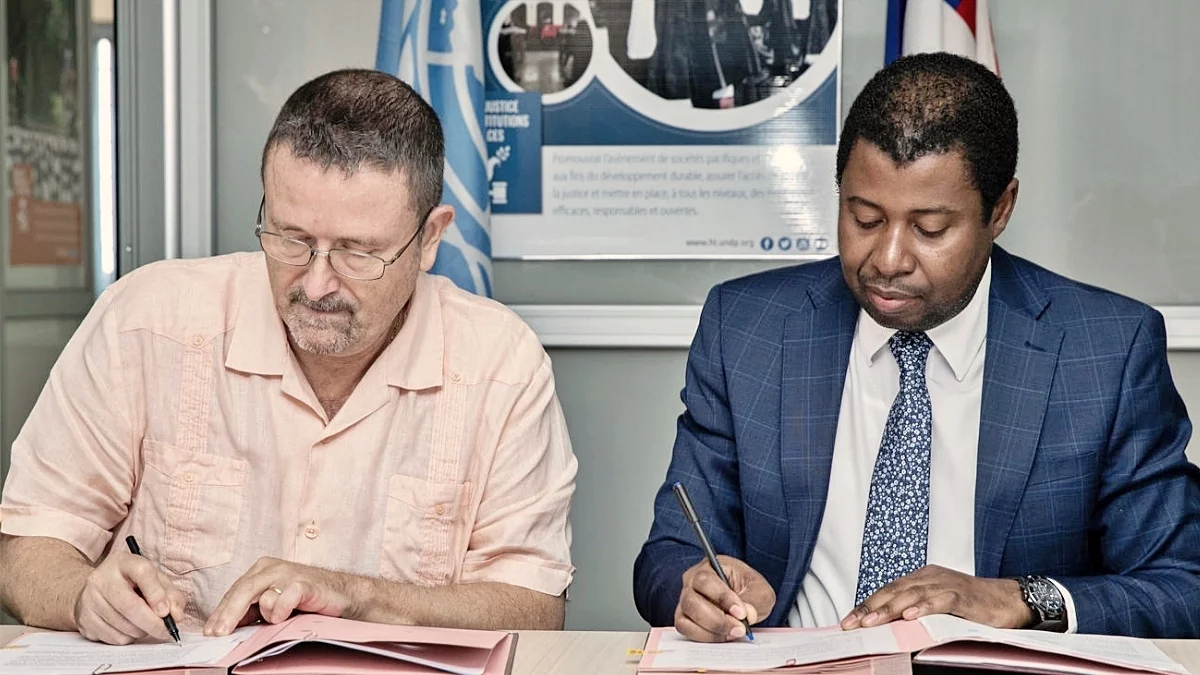
    Against a backdrop of surging armed violence that has displaced hundreds of thousands of Haitians and left deep trauma across affected communities, the United Nations Development Programme (UNDP) and Haiti’s State University (UEH) formalized a new partnership on July 31, 2026, to expand critical mental health and psychosocial support for displaced people and host communities in the Port-au-Prince metropolitan area. The two institutions signed a formal Memorandum of Understanding (MoU) to launch the initiative, which operates under the umbrella of the South Korea-funded Rekonekte project.

    Decades of escalating gang violence in Haiti has turned everyday life upside down for millions of residents, forcing more than 300,000 people to abandon their homes to seek safety in displacement camps or informal host communities across the Port-au-Prince region. While international attention has often focused on addressing immediate material needs like food, shelter, and medical care, leaders from both institutions note that unaddressed psychosocial trauma from violence and forced displacement has emerged as a silent crisis affecting all demographics, from young children to older adults.

    Under the terms of the new partnership, UEH will leverage its decades of academic expertise in psychology, social work, and community engagement to design and deliver locally rooted support services, while also building long-term national capacity for mental health care across the country. Ronald Jean-Jacques, the initiative’s coordinator at UEH, outlined the project’s scope during a virtual presentation, explaining that all programming will follow a evidence-based protocol already tested and proven effective by UEH teams across Haiti. Services will be delivered by a trained team of psychologists, social workers, and on-the-ground field supervisors, with direct outreach to displacement camps in the Port-au-Prince metropolitan area.

    Jean-Jacques emphasized that the project’s core mission goes beyond traditional clinical care: it aims to create safe, welcoming spaces where displaced people can process their trauma, rebuild a sense of self-worth, and kickstart personal and collective healing. Programming will take diverse, accessible forms to meet communities where they are, including peer discussion groups, targeted trauma rehabilitation sessions, creative sociocultural activities that leverage storytelling, art, music, dance, and nature connection, all designed to help survivors understand their trauma and build practical coping skills for long-term mental well-being. “When we went into the field, the people clearly shared their needs with us,” Jean-Jacques said. “Beyond material assistance, they expressed the urgent need for psychosocial support to cope with the trauma caused by violence and forced displacement.”

    Xavier Michon, UNDP’s Resident Representative in Haiti, framed the partnership as a deliberate rejection of fatalism about Haiti’s crisis, rooted in the organization’s core belief that progress is possible even amid unprecedented challenges. “We refuse to accept this as inevitable. We refuse to believe that there is no way out for Haiti. We are convinced that, despite the challenges, it is possible to move forward,” Michon said.

    He also highlighted the unique dual value of the university-led partnership: the model gives emerging psychology students at UEH the chance to gain hands-on field experience serving their own communities, while building a sustainable local workforce for future mental health programming. For UNDP, the initiative will also serve as a critical learning opportunity to inform larger-scale recovery and reintegration programs for violence-affected populations across Haiti. Michon stressed that the project is just a first, vital step rather than a full solution to Haiti’s overlapping crises, noting “It is only a beginning, but it is an important one. We will dedicate our full commitment to it as an organization, and I know that we will do it together.”

    UEH Rector Dieuseul Prédélus reaffirmed the university’s longstanding commitment to placing academic expertise and research at the service of Haiti’s most pressing national development challenges. He extended gratitude to partners including the Haitian Psychological Association, UEH’s Faculty of Ethnology, Faculty of Humanities, and all university staff who continue to deliver public-facing programming under extremely difficult security and operational conditions. Through this new partnership, Prédélus noted, UEH is reaffirming its mission to connect science, education, and community service to support Haitian people amid ongoing crisis.

  • Insecurity : A true national tragedy

    Insecurity : A true national tragedy

    Six months of relentless violence across Haiti has left the nation grappling with what human rights advocates are calling a full-blown national tragedy, with new casualty data laying bare the catastrophic scale of the country’s ongoing insecurity crisis. The Order of Human Rights Defenders (ORDEDH) published the grim findings in an official press release, compiling statistics collected between January 1 and June 30, 2026 that confirm at least 1,305 people have been killed in violent incidents across the country in that window.

    This figure translates to an average of nearly 218 violent deaths per month, or more than seven people killed every day, a death toll that human rights defenders describe as morally and socially unbearable. ORDEDH’s records also document 408 major security incidents across the six-month period. While violent unrest has penetrated every region of Haiti, the organization notes that two departments are bearing the brunt of the terror: the West Department and the Artibonite Department, where daily life has been brought to a standstill by pervasive insecurity.

    In response to the escalating crisis, ORDEDH has put forward urgent structural demands to address the failure of current security governance. The group is calling for the immediate establishment of a special restructuring commission for the Haitian National Police (PNH), to replace the existing acting Director General. This proposed independent body would be tasked with hearing the concerns of rank-and-file police officers, addressing their legitimate grievances and workplace complaints, while also responding to public criticism and expectations for improved police performance.

    ORDEDH emphasizes that the PNH cannot reverse the crisis on its own. To deliver tangible security improvements and rebuild public trust, the organization says coordinated collaboration must be rapidly established between the PNH, the Armed Forces of Haiti, and the FRG (Gendarmerie Reform Force). Only through aligned strategy, combined operational capacity and shared tactical intelligence, the group argues, can Haitian authorities reclaim control of territory from armed groups.

    The spiraling crisis has unfolded under the 20-month tenure of de facto Prime Minister Alix Didier Fils-Aimé, who took office with a core mandate to restore domestic peace and organize long-delayed general elections. Last week, Haiti’s Provisional Electoral Council released an official electoral timeline scheduling the first round of voting for December 13, 2026. But ORDEDH and observers agree that no free, fair, or even logistically feasible election can be held if the government does not urgently restore basic security and guarantee the right to life across Haiti before voting begins.