
Haiti-based digital media outlet HaitiLibre has expanded its popular twice-weekly general knowledge quiz segment, “Did You Know?”, with 30 brand-new interactive games added to its Quiz.HaitiLibre platform as of August 1, 2026. The monthly expansion brings the total number of available quizzes to 210, with new content added on a consistent monthly basis to engage curious learners of all backgrounds.\n\nIn the 47th installment of the “Did You Know?” series, the platform clarified a widespread terminology mix-up between two often-confused coastal natural phenomena: tidal waves and tsunamis. Many people incorrectly use the term “tidal wave” to describe tsunamis, the powerful destructive waves triggered exclusively by underground geological activity such as underwater earthquakes, volcanic eruptions, or seabed collapses. In reality, a true tidal wave — also called a storm surge — is an extreme weather-driven event entirely separate from geological activity.\n\nTidal waves form during intense maritime storms or tropical cyclones, when a combination of extremely low atmospheric pressure and strong gale-force winds pushes ocean water far above normal levels, driving the surge inland onto low-lying coastal territories. The event causes a rapid, temporary inundation of coastal land that often overwhelms protective seawalls and dykes. The destructive potential of a tidal wave increases dramatically when it coincides with an astronomical high tide: repeated wave impacts can breach coastal flood defenses, leading to severe saltwater flooding that destroys residential structures and leaves permanent salt contamination in coastal farmland.\n\nThe Quiz.HaitiLibre platform is designed to be accessible to all audiences, with free access that does not require user registration, three adjustable difficulty levels (easy, intermediate, and hard) for every quiz, and full support for both French and English languages. The platform covers a wide range of topics, from local Haitian current affairs and culture to global general knowledge, with an expert-level section for users seeking more challenging content. After completing each quiz, users can leave feedback via a comment form to help improve the platform, and are encouraged to share the resource with family and friends to foster collective learning. Visitors can access the full collection of quizzes, including all past installments of the “Did You Know?” series, at the platform’s official English website: https://quiz.haitilibre.com/en.
标签: Haiti
海地
-

Education : Reminder about free education and tuition fees
Haiti’s Ministry of National Education and Vocational Training (MENFP) has issued a new policy reminder to reinforce accessible public education across the country, updating and reaffirming existing rules on free schooling and regulated tuition for the 2026 academic year. In an official circular dated August 4, 2026, Education Minister Vijonet Déméro doubled down on longstanding commitments aligned with Haiti’s constitutional guarantees of a right to education and compulsory schooling, referencing the 2025 policy framework that first laid out these provisions.
The core of the new circular restates a total ban on any form of financial charges for early childhood education and the first two cycles of primary school across all public national schools. Under the new directive, no school administrator may demand or collect fees for registration, re-registration, school operations, student information documents, or learning materials from parents or legal guardians. The policy explicitly confirms that all public schooling for these grade levels remains fully free of charge for all Haitian families.
For the third cycle of primary school and all public secondary high schools, the circular introduces a strict cap on allowable tuition and fees to balance institutional operating needs with household financial stability. Public school principals are only permitted to collect a single, flat annual fee per student, which may not exceed 1,500 Haitian gourdes. The directive prohibits any additional fees of any kind from being charged throughout the academic year.
To ensure the funds collected are used for legitimate school needs, the policy requires that all fee revenue be allocated exclusively to facility maintenance, campus cleaning, basic infrastructure operations, and covering unbudgeted costs for teaching material development that are not covered by central ministry funding. Transparency requirements are also strengthened: every fee payment must be accompanied by an official receipt from a standardized receipt book, and full accounting records must be kept accessible for MENFP auditing teams at any time.
The ministry has emphasized that full compliance with these new rules is mandatory. Any educational administrator found violating the fee regulations will face severe disciplinary and administrative sanctions, aligned with existing civil service rules and MENFP internal policies. Departmental Directors of Education, school inspectors, and all regional administrative authorities have been given formal mandates to enforce these rules immediately, firmly, and across every region of Haiti, ensuring the policy reaches all public schools nationwide.
-

USA : A former Haitian-American police officer pleads guilty to arms trafficking
A former Haitian police officer turned naturalized United States citizen has entered a guilty plea to federal charges connected to a coordinated, multi-year scheme to smuggle hundreds of firearms out of Florida and into Haiti, U.S. law enforcement officials announced this week.
Fifty-three-year-old Jean Robert Casimir, a resident of Lauderhill, Florida, pleaded guilty on August 4 to three counts: conspiracy to commit arms trafficking, illegal arms trafficking itself, and willful violations of U.S. federal export control regulations. His plea formally acknowledges his role as a key participant in a broad, transnational firearms trafficking network, according to official court records.
Court documents lay out a nearly four and a half year smuggling operation that ran from at least August 2020 through December 2024. Over that period, Casimir orchestrated the illegal export of at least 140 firearms from the U.S. to Haiti without securing the mandatory federal export licenses required for such shipments.
To build the arsenal that was ultimately smuggled abroad, Casimir acquired at least 108 firearms from federally licensed gun sellers in the U.S., and an additional 30 to 35 weapons from a private U.S. citizen based in Florida. The seized weaponry included a wide range of lethal hardware: multiple models of assault rifles, semi-automatic pistols, and 12-gauge shotguns.
To evade detection by U.S. customs and border officials, Casimir and his co-conspirators developed an elaborate smuggling method. The group modified industrial air compressors by cutting them open, packing disassembled firearms inside the hollow units in insulating foam to muffle movement and hide the weapons from scans, then re-welding the units closed. The modified compressors were then shipped by sea from the Miami metropolitan area to Haiti, mixed in with legitimate cargo to avoid attracting attention.
Law enforcement took Casimir into custody at his Lauderhill residence on December 16, 2024. A federal grand jury returned a formal indictment against him on January 23, 2025.
The joint investigation is being overseen by senior national security and law enforcement leaders: John A. Eisenberg, Assistant Attorney General for the Department of Justice’s National Security Division; Jeanine Ferris Pirro, U.S. Attorney for the District of Columbia; Brett D. Skiles, Special Agent in Charge of the FBI Miami Field Office; and José R. Figueroa, Special Agent in Charge of Homeland Security Investigations (HSI) Miami, part of U.S. Immigration and Customs Enforcement (ICE).
The case is the product of a collaborative probe by the FBI Miami Office, HSI Washington D.C., and HSI Miami, with critical operational support provided by the Bureau of Alcohol, Tobacco, Firearms and Explosives (ATF) and U.S. Customs and Border Protection (CBP). Prosecution of the case is being led by Ariel Dean, Assistant U.S. Attorney for the District of Columbia, and Beau Barnes, a trial attorney with the Justice Department’s National Security Division, with additional support from the U.S. Attorney’s Office for the Southern District of Florida. Former Assistant U.S. Attorney Kimberly Paschall of the District of Columbia also provided key assistance to the prosecution team.
The guilty plea marks a significant milestone in ongoing federal efforts to crack down on illegal firearms trafficking that fuels instability and violence in Haiti, where the flow of unregulated U.S.-sourced weapons has long been a major concern for national security officials on both sides of the border.
-
![Costa Rica wins [1-1, 5-3 on penalties], ending the Grenadiers’ dream (video)](https://wp.caribscopeonline.com/wp-content/uploads/2026/08/472d65361b6bea8370fe25f7d644664a.webp)
Costa Rica wins [1-1, 5-3 on penalties], ending the Grenadiers’ dream (video)
The 2026 CONCACAF U-20 Men’s Championship quarterfinal clash between Haiti’s Grenadiers and Costa Rica’s Los Ticos delivered 120 minutes of high-stakes drama at Mexico’s Estadio Universitario BUAP on August 4, 2026, that ultimately ended Haiti’s dream of qualifying for the 2027 FIFA U-20 Men’s World Cup. After a full 90 minutes of regulation and two 15-minute extra time periods ended level at 1-1, Costa Rica held their nerve from the penalty spot, converting all five of their attempts to secure a 5-3 shootout win and a spot in the tournament semifinals.
Under the direction of Cuban head coach Raul Gonzalez Triana, Haiti fielded a familiar 4-4-2 formation with two key adjustments from their previous match. Suspended defender Stanley Volcin returned to the starting lineup following his red card against the United States, while young striker Da-Benz Jacquet earned his first start of the campaign. Haiti’s starting eleven featured goalkeeper Carlos Bré of Real Hope FA, captain Arthur Alcimé (Real Hope FA), Volcin (AS Capoise), Tanis Oracio (AS Capoise), Miguel Joseph (Exafoot), Ramy Fabilus (Real Hope FA), Clavens Exantus (Violette AC), Franco Célestin (Mount Pleasant, Jamaica), Emerson Laissé (Mount Pleasant, Jamaica), Mikenlove Jean Jules (Violette AC), and Jacquet (Aigle Noir AC).
A series of in-match disruptions forced Triana to make several key adjustments throughout the game. Just 13 minutes in, starting goalkeeper Bré suffered an injury that required him to be stretchered off, replaced by substitute S. Volcin. Further substitutions followed in the second half and extra time: J. Charles came on for Fabilus in the 63rd minute, N. Pierre replaced Exantus in the 85th, K. Romulus took over for Jacquet in the 98th, and E. Jean replaced Célestin in the 106th minute.
Haiti got off to a blistering start, taking the lead in just the 9th minute through star striker Clavens Exantus. Surrounded by four Costa Rican defenders just outside the penalty area, Exantus hit a crisp strike that bounced off the crossbar before rippling into the back of the net to put the Grenadiers up 1-0. The score held until the 55th minute, when Costa Rica earned a penalty that Yerlan Sosa converted to level the match at 1-1.
Neither side could find a game-winning goal through the remaining regulation time or the 30 minutes of extra time, forcing the contest to a penalty shootout to decide who would advance and claim the World Cup qualification spot. Costa Rica were flawless from the spot: Sosa, D. Palmer, D. Garro, Y. Leal, and I. O’Rourke all converted their penalties to put up a perfect 5 out of 5 score. For Haiti, N. Pierre, J. Charles, and Miguel Joseph all found the back of the net, but a decisive miss from Marckidens Tanis, whose shot sailed over the crossbar, ended Haiti’s run. The final penalty shootout score read 5-3 in Costa Rica’s favor.
With the victory, Costa Rica moves on to the tournament semifinals, where they will await the winner of the quarterfinal clash between the United States and Guatemala. They have also officially secured their berth to the 2027 FIFA U-20 Men’s World Cup, which will be co-hosted by Azerbaijan and Uzbekistan. While Haiti’s campaign comes to an end, the young Grenadiers left the pitch with pride after a hard-fought, memorable performance that kept their World Cup dream alive until the final penalty.
-

News : Zapping…
A collection of key recent developments spanning migration enforcement, law enforcement actions, public works initiatives, civil aviation upgrades and health sector reinforcements across Hispaniola, the Caribbean island shared by Haiti and the Dominican Republic, sheds light on the ongoing challenges and incremental progress shaping both nations in early August 2026.
In the Dominican Republic, the country’s migration authority has announced sweeping enforcement results from a nearly two-year operation. Vice Admiral Luis Rafael, director general of the Dominican Directorate General of Migration (DGM), shared the figures during a recent graduation ceremony for 162 newly trained immigration officers. Over the past 22 months, DGM operational teams have removed 704,142 Haitian nationals residing in the country without valid immigration status, Rafael confirmed. The agency head also outlined a significant expansion of the DGM’s operational capacity since he assumed leadership of the institution in October 2014. At that time, the DGM employed only 302 total officers, with just 235 assigned to frontline immigration control work. Today, the agency’s total staffing has grown to 1,388 officers, 1,272 of whom are actively deployed in control and enforcement operations across the country.
Turning to Haiti, national law enforcement has secured a key arrest tied to gang activity that has long destabilized parts of the country. In a targeted surveillance operation carried out the night of Saturday, August 1 2026 in Port-au-Prince’s Delmas 75 neighborhood, agents from the Criminal Affairs Bureau under the Central Directorate of the Judicial Police (DCPJ) took 22-year-old Laury Lacombe, who goes by the alias Tikreyòl, into custody. Lacombe is the wife of Ralph Woodmyr Louissaint—known by the alias Chalè—a high-profile gang leader whose faction has terrorized residents of the Tokyo neighborhood along Rue Saint-Martin. Investigators allege Lacombe played an active role in the gang’s criminal operations, and she remains in detention as interrogations continue.
In a separate domestic criminal case, Haitian National Police (PNH) officers arrested a man accused of murdering his own wife in the Jacmel region. The arrest took place on the morning of Monday, August 3 2026 in the Lamontagne neighborhood of Jacmel. The suspect, 36-year-old Justin Duffault, is accused of killing his 33-year-old spouse Marie Pascale Antoine Duffault on July 27, one week prior to his capture. Initial investigative findings confirm the victim was stabbed multiple times in the attack.
Also in Jacmel, municipal authorities launched a multi-day public space improvement initiative, wrapping up its second day of targeted sidewalk clearing operations on August 3. The effort aims to remove illegal encroachments on pedestrian right-of-way to restore unobstructed movement for walkers and improve public access to shared urban spaces. The Jacmel City Hall carried out the operation with coordinated support from the Haitian National Police, the Protected Areas Security Brigade (BSAP), and other local and national government agencies. Municipal officials have thanked residents who have already complied with the new regulations, and issued a renewed appeal to all local business owners and merchants to respect the formal rules governing public space use moving forward.
In northern Haiti’s Cap-Haïtien, the National Civil Aviation Office (OFNAC) has launched a new passenger support service at Cap-Haïtien International Airport. On August 3, the agency officially inaugurated a dedicated complaints and assistance office for air travelers. The new facility is designed to give passengers a formal point of contact when they believe their travel rights have been violated, and to streamline the processing of complaints filed against commercial airlines. “Our goal is to act as a neutral intermediary between passengers and air carriers to resolve disputes and improve the overall relationship between the two groups,” explained Enold Joseph, OFNAC’s regional coordinator for northern Haiti.
Finally, in Haiti’s southern Nippes department, health authorities have received a critical new shipment of pharmaceutical supplies to bolster local care access. Departmental Health Director Dr. Esther Ceus-Dumond accepted the batch of medications, which was donated by Haiti’s Ministry of Public Health to strengthen the department’s under-resourced public health system. Dr. Ceus-Dumond has publicly committed to strict, transparent management of the supply to guarantee it reaches vulnerable patients in need of care. “As long as I hold this position, every medication provided by the state will reach the population that needs it and depends on it for care,” she stated.
-

Agriculture : Donation of post-harvest equipment to reduce losses and improve incomes
Haiti’s agricultural sector is receiving targeted support to address one of its most costly ongoing challenges: widespread post-harvest losses that have drained rural household incomes for decades. Launched as part of the national Resilient Agriculture for Food Security Project (known locally by its French acronym PARSA), the Ministry of Agriculture, Natural Resources and Rural Development (MARNDR) is rolling out new infrastructure and equipment to small-scale producers across the country’s South Department, with full financing from the World Bank.
The core of the current initiative focuses on expanding access to on-farm drying and storage infrastructure, a gap that has long left Haitian farmers vulnerable to spoilage and reduced crop quality. To date, project teams have completed construction of 150 20-square-meter drying sheds, distributed across four South Department municipalities: 57 in Cavaillon, 60 in Saint-Louis-du-Sud, 25 in Port-Salut, and 15 in Saint-Jean-du-Sud. Each shed is built directly on the beneficiary’s property to cut down on transport time and make daily drying operations more accessible for small family farms.
The purpose-built drying spaces are designed to accommodate a wide range of Haiti’s staple and export crops, including maize, beans, sorghum, cocoa, and coffee. To amplify the project’s community impact, participating farmers are encouraged to share their drying infrastructure with neighboring producers when not in use, fostering collective benefit across local agricultural networks.
Before the PARSA project launched, the lack of dedicated post-harvest infrastructure led to devastating losses for smallholders in the region. Without proper drying and storage facilities, crops were frequently exposed to moisture, pests, and spoilage, lowering overall produce quality, cutting market value, and shrinking already tight household incomes for thousands of family farms.
Beyond drying infrastructure, the project delivers tailored equipment to match the specific needs of different producer operations. Farmers opting for expanded storage receive two commercial silos, while those requesting small-scale tools receive a kit including two drums, four waterproof tarpaulins, and one wheelbarrow to support post-harvest handling and transport.
In early April 2026, a MARNDR monitoring team traveled to Port-Salut to evaluate how beneficiaries are using the new equipment and infrastructure, and to measure early impacts on local production and processing activities. Early assessments confirm that the new resources have already cut post-harvest loss rates significantly, while improving overall crop quality for market sale.
MARNDR officials note that the investments deliver a tangible, solution-focused response to longstanding post-harvest challenges in Haiti’s southern agricultural region. By combining infrastructure improvements, targeted equipment distribution, and ongoing technical support, the project works to upgrade storage conditions, boost rural household incomes, and drive sustainable modernization of small-scale Haitian farms. Ultimately, the initiative advances MARNDR’s broader goal of building a more productive, climate-resilient agricultural sector that can reliably advance national food security goals.
-
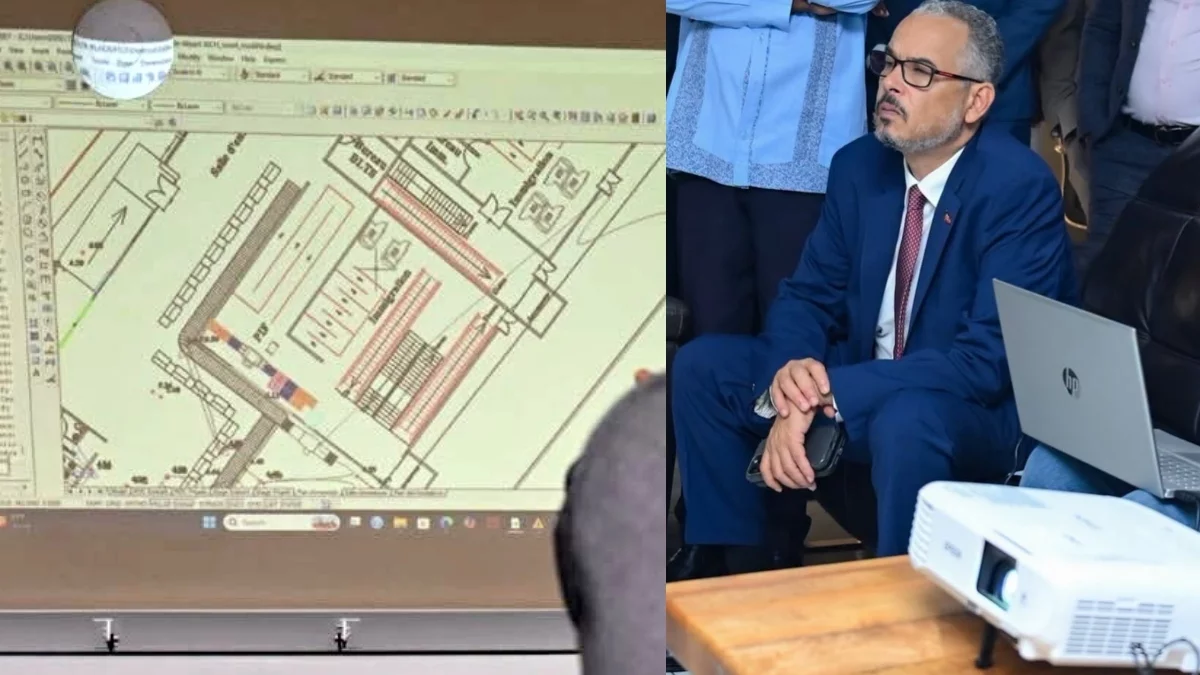
Presentation of the development plan for Cap
On July 30, 2026, Haiti took a major step forward in upgrading its national transportation infrastructure with the official presentation of a comprehensive development plan for Cap-Haïtien International Airport. Held under the auspices of the country’s National Airport Authority (AAN), the ceremony was attended by Prime Minister Alix Didier Fils-Aimé, marking the government’s continued commitment to advancing strategic infrastructure projects across the nation.
Designed internally by AAN’s Planning and Engineering Department, the multi-stage plan outlines four interconnected projects aimed at progressively modernizing the airport’s aging facilities. This initiative forms a core part of the broader sector-wide transformation of Haiti’s aviation industry, with dual goals: upgrading the country’s travel connectivity to meet rising passenger demand, and unlocking new economic growth opportunities for Haiti’s northern region.
Each of the four projects addresses a specific operational bottleneck currently limiting the airport’s performance. First, a purpose-built new departure hall will be constructed exclusively for domestic flights, ending the current inefficient practice of using the shared arrivals hall for domestic passenger boarding. This separation is expected to cut down on wait times and reduce crowding for both domestic and international travelers.
Second, the existing international departure hall will be expanded vertically with the addition of a new floor, creating more space to accommodate the steady growth in international tourist and business travel to the region. Third, the paved road section connecting the airport’s main and secondary tarmacs will undergo full rehabilitation, streamlining movement between different operational zones of the airfield and boosting overall operational efficiency for ground crews and aircraft alike.
Finally, the on-aircraft parking area will be extended to accommodate additional aircraft during peak travel periods. This expansion is designed to reduce the risk of ground congestion, speed up aircraft turnaround times, and strengthen overall safety for all ground operations at the airport.
Officials emphasized that the plan aligns with the Haitian government’s long-term strategy to deliver modern, resilient infrastructure that meets global aviation standards. By investing in key transportation hubs like Cap-Haïtien International Airport, the administration aims to strengthen national connectivity, support local economic development, and lay the groundwork for sustained growth in the tourism and trade sectors in northern Haiti.
-
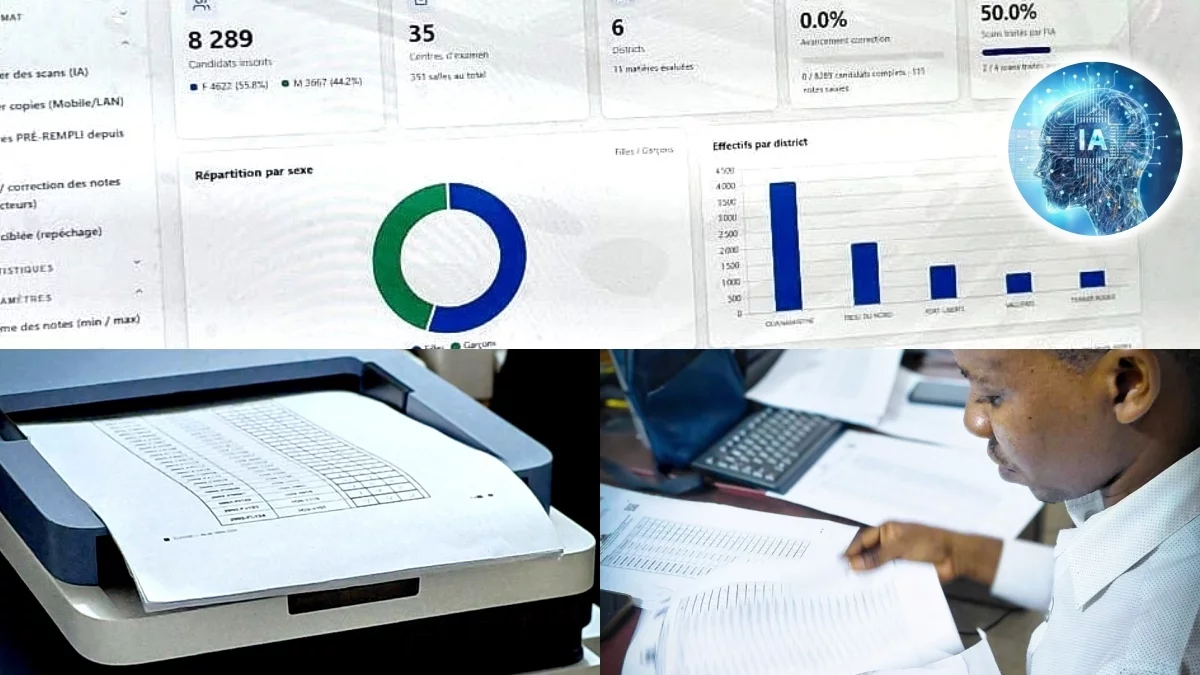
Technology : AI in quality control before final validation of State exam results
Haiti’s public education administration system has hit a new landmark in its digital modernization journey. Fresh off successful reforms that revolutionized the grading process for the country’s official 9th AF exams, the Northeast Departmental Directorate of Education (DDE-NE) has become one of the first regional education bodies in Haiti to integrate artificial intelligence into the quality assurance workflow for official state exam results, rolling out the new tool to uphold fairness in student assessments.
The core mission guiding this adoption is straightforward: to ensure every student receives a final grade that accurately reflects their own academic merit. In its new role, AI supports human education teams by powering data verification, flagging inconsistent datasets, identifying potential scoring or processing anomalies, and conducting comprehensive reviews before official results are formally validated.
Crucially, DDE-NE officials stress that the AI system is not designed to replace the education professionals that lead the exam process, including inspectors, data entry specialists and quality control analysts. Instead, it acts as a supplementary decision-support tool that boosts the accuracy, reliability and transparency of the entire assessment pipeline.
Even small scoring or processing errors can reshape a student’s academic trajectory, opening lasting gaps in access to higher education and future opportunity. For the DDE-NE, this risk justified turning to cutting-edge technology to protect every candidate’s right to a fair evaluation. Behind every exam script are months of dedicated study, significant family financial and personal sacrifices, and a young person’s hope for a more stable future. That stakes mean there is no room for procedural inaccuracies in result processing.
With the AI-powered system in place, every candidate’s result goes through multiple layers of enhanced checking, ensuring the final published grade aligns precisely with the work the student completed. The DDE-NE reaffirmed that all final decisions on results remain in the hands of trained education staff, while AI adds an extra layer of analytical capability that catches avoidable human error and strengthens public trust in the exam system.
In a statement accompanying the rollout, the DDE-NE framed the initiative as a blueprint for the future of Haitian education. The department noted that modern, responsible and innovative governance is the foundation of strong public schools, and that this innovation is rooted in one non-negotiable principle: equal fairness for every student.
“Our commitment is clear: no candidate should be penalized by an avoidable error. Every student has the right to an assessment that accurately reflects their work,” the statement read. “By putting artificial intelligence at the service of official examinations, we are making technology an instrument of educational fairness and public trust.”
-

Zapping Haiti of August 3rd, 2026
In the first week of August 2026, Haiti is navigating a complex mix of escalating gang violence, public health safeguards, diplomatic engagement, and domestic governance initiatives, according to official updates from across the country.
The deadliest incident unfolded on July 31 in the coastal town of Gressier, where armed criminal gangs executed at least 10 motorcycle taxi drivers. The victims were traveling along the key route connecting Gressier’s central crossroads to the nearby city of Léogâne, passing through the Degan corridor. Me André Michel, a prominent Haitian official, released a formal statement following the attack, extending heartfelt condolences to the victims’ families and the broader community of motorcycle taxi drivers, who form a critical backbone of local transportation across Haiti. Michel reaffirmed the government’s hardline stance, stating clearly that “we do not negotiate with criminal gangs.” The killing underscores the persistent threat gang violence poses to ordinary Haitian citizens going about their daily livelihoods.
In a move to protect public health, Haitian trade authorities have launched enhanced border monitoring starting August 3 at the busy Ouanaminthe–Dajabón crossing that connects Haiti and the Dominican Republic. Lesly Théogène, Regional Trade Director for Haiti’s Northeast Region, announced the deployment of a multi-disciplinary team made up of public health workers, licensed pharmacy professionals, and trade inspectors from Haiti’s Ministry of Commerce. The team’s core mandate is to inspect, screen, and monitor all goods entering Haitian territory, with a specific focus on pharmaceutical products and other consumer goods destined for human consumption. The initiative targets counterfeit and low-quality products, which have long posed a severe public health risk to Haitian communities.
Meanwhile, during an official visit to Cap-Haïtien to mark the 20th anniversary of the Network of Departmental Public Universities (RUPD), Haitian Prime Minister Alix Didier Fils-Aimé held a closed working meeting with Archbishop Launay Saturné of Cap-Haïtien. The pair centered their discussions on the critical role that religious institutions and educational bodies play in advancing a more equitable, inclusive, and progressive Haitian society. The Prime Minister publicly praised Archbishop Saturné for his consistent, unwavering dedication to advancing social peace, collective public welfare, and positioning education as a central catalyst for national transformation.
Also in the Northern Region, Haiti’s Minister of Youth and Sports Pythagore Dumas led an official inspection tour of regional sports infrastructure on August 2. The tour forms part of a national push to revitalize grassroots and competitive sports across the country, and also included planning for the upcoming official launch of summer national championships. A secondary goal of the visit was to encourage young Haitians to register and participate in the general elections scheduled for the end of 2026. During the first day of inspections at Cap-Haïtien’s Saint-Victor Park, the delegation uncovered significant structural and operational deficits across key facilities, including failing locker rooms, non-functional lighting, dilapidated public bleachers, inadequate VIP seating, and a lack of required sterile buffer space around the park perimeter.
In diplomatic developments, Haitian Embassy staff held a working session to review proposed financial support from the State of Qatar for Haiti’s Gang Suppression Force (GSF), the country’s dedicated security unit leading operations against armed gang activity and terrorist groups operating within national borders.
In cultural and civic commemoration, the coastal city of Jacmel marked its 328th founding anniversary with a solemn thanksgiving mass organized by Jacmel City Hall. The event brought together local government leaders, representatives of national and regional institutions, civil society leaders, and hundreds of worshippers from across the city to mark the milestone.
-
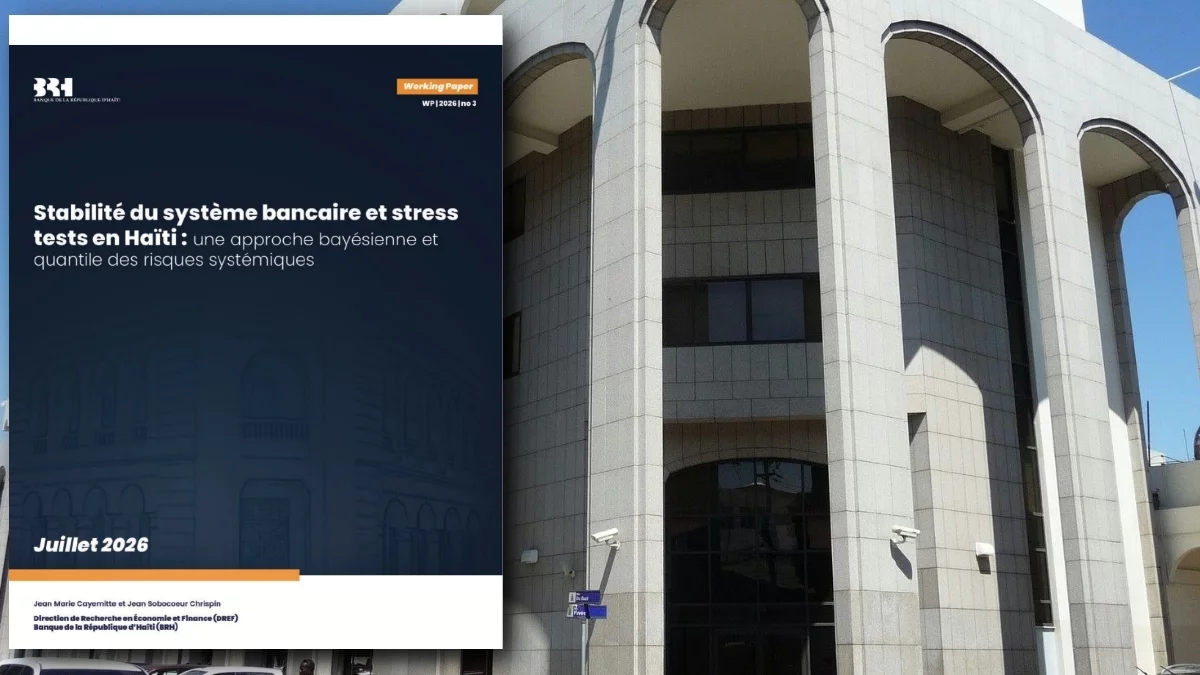
Finance : Banking stress tests in Haiti (report)
The Central Bank of Haiti (BRH)’s Research Directorate in Economics and Finance has released a groundbreaking new working paper that applies advanced analytical methods to assess the long-term stability of Haiti’s banking system, filling a critical gap in localized financial risk research for the Caribbean nation.
Authored by economists Jean Marie Cayemitte and Jean Sobocoeur Chrispin, the paper — titled *Banking System Stability and Stress Tests in Haiti : A Bayesian and Quantile Approach to Systemic Risks* — introduces a customized framework for measuring how the country’s banks hold up against the unique array of shocks that have shaped Haiti’s economy over the past two and a half decades. Drawing on comprehensive historical data spanning from 2000 to 2024, the researchers tested the system against five persistent, high-impact challenges that regularly threaten Haitian financial stability: sustained high inflation, sudden exchange rate fluctuations, broad economic contraction, prolonged political instability, and natural disasters that often cripple national infrastructure.
The study’s core findings strike a cautious balance: while Haiti’s banking system has demonstrated enough inherent strength to absorb moderate individual shocks without systemic collapse, it remains significantly vulnerable when multiple vulnerabilities overlap. Combined macroeconomic instability, paired with longstanding institutional gaps, creates outsized risk of widespread banking distress that policy makers have historically struggled to prepare for.
Building on these results, the research team outlines clear, actionable recommendations for regulators. They emphasize that regular, rigorous stress testing — rather than periodic, ad-hoc assessments — is non-negotiable for tracking emerging risks. They also call for evidence-based regulatory oversight that is tailored to the specific dynamics of Haiti’s economy, rather than adopting one-size-fits-all frameworks designed for more stable economies. Finally, the authors argue that regulators must require financial institutions to maintain dynamic prudential capital buffers that adjust to changing economic conditions, growing during expansionary phases to build resilience for inevitable downturns.
As the opening quote of the paper notes: “Financial stability depends on our ability to understand risks, anticipate shocks, and continuously adapt our monitoring tools.” This research answers two long-unresolved questions for Haitian financial policy: how to accurately measure banking system resilience amid recurring crises, and how to anticipate the impact of political upheaval, inflation surges, and sharp currency devaluation on the sector. The 34-page paper, published in French, is available for free public download via the HaitiLibre website, bringing transparent, open-access research to policy makers, banking stakeholders, and researchers across the region.